
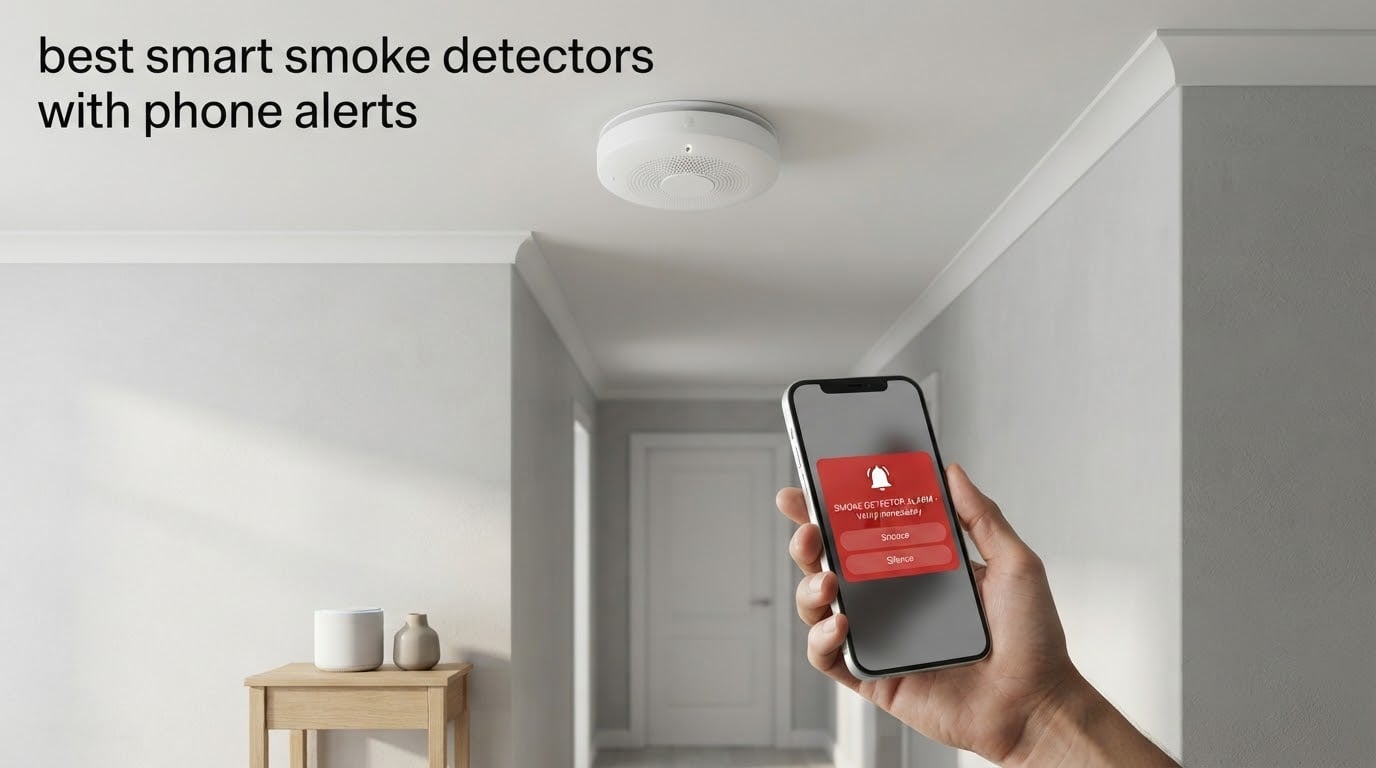
Smoke detectors that push a notification to your phone solve one specific problem: knowing about an alarm when you are not standing under it. That matters most in three situations. The first is a two-story house with children asleep upstairs while you are downstairs. The second is a vacation home, a rental, or a business where nobody is present for long stretches. The third is a household where an older relative cannot hear an 85 dB siren through a closed door.
There is one thing to say clearly before any product recommendations, because it is the most misunderstood point in this category. A phone alert never replaces the siren. Every unit below sounds its own in-home alarm locally and immediately, and that alarm works with no Wi-Fi, no app, no cloud account, and no subscription. The phone notification is a second layer on top of a device that already works, and the honest way to shop for one is to judge the siren and sensor first, then treat connectivity as the upgrade it is.
That is the filter we applied to build the best smart smoke detectors with phone alerts list below. Every pick here was checked for a native, documented notification path to a smartphone, a published UL listing, a stated power source, and enough owner feedback to support a real verdict. We also recorded where the phone alert stops working, because two of the seven units on this list deliver strong household coverage and no phone notification at all, and presenting them as connected would help nobody.
The category splits into three genuinely different device types, and buying the wrong one is the most common expensive mistake. Native Wi-Fi alarms talk to their own phone directly through a 2.4 GHz connection. Hub-connected alarms report through a smart home hub you may already own. Listener devices sit near an existing working alarm, hear its siren, and forward that to an app. Each has a different failure profile, and the sections below name which type every pick belongs to.
Our team spent six weeks reading owner reviews, comparing certification marks, and tracing each alert path from sensor to siren to notification. The reviews we leaned on most came from owners who had installed the unit for at least a few months, because the first-week experience tells you about setup and the six-month experience tells you about false alarms and connection stability.
Table of Contents
Top 3 Picks for Smart Smoke Detectors With Phone Alerts (October 2026)

Kidde Smart Smoke and CO…
- Smoke and CO sensing
- Ring app alerts with no subscription
- AA battery power
- Wire-free interconnection

eufy Security Smoke Alarm E10
- 70 mm compact body
- 5-year sealed lithium battery
- UL 217 10th edition
- App alerts via HomeBase
Kidde Hardwired Smart Smoke…
- Hardwired with AA backup
- Kidde app alerts
- Phone hush of false alarms
- UL 217 and UL 2034
As an Amazon Associate we earn from qualifying purchases. CERTAIN CONTENT THAT APPEARS ON THIS SITE COMES FROM AMAZON. THIS CONTENT IS PROVIDED 'AS IS' AND IS SUBJECT TO CHANGE OR REMOVAL AT ANY TIME.
What Phone Alerts Actually Mean (and What They Do Not)
A smart smoke detector with phone alerts sounds its own siren the instant the sensor trips, then sends a push notification to your smartphone over a wireless connection. The notification is generated after the local alarm has already started, never instead of it. That ordering is not a design detail you can ignore, because it is the reason a smart alarm is never less safe than a conventional one.
Answering the most common question in this category directly: which smoke detectors can send alerts to a phone? Exactly three device families can. Native Wi-Fi alarms hold their own connection to a 2.4 GHz network and run their own app. Hub-connected alarms use Zigbee, Z-Wave, or Thread radios and surface events through a platform like Home Assistant, SmartThings, or Apple Home. Listener and bridge devices pick up the sound of an alarm you already own and forward the event to an app. No other arrangement exists, and no fourth category is coming.
The second question people ask follows immediately: yes, you can get smoke alarms that alert your phone, and every connected pick on this list is one a manufacturer documents. The part that surprises people is that subscription-free phone alerts are now the normal case rather than the premium case. Basic detection, self-testing, low-battery notices, and alarm notifications run on the manufacturer’s free app tier. Paid tiers exist, but they sell professional monitoring dispatch, not the alert itself.
What a phone alert does not do matters just as much. It does not make the alarm louder in the room where the fire started, because the physical siren there is unaffected by connectivity. It does not call a monitoring centre unless you buy a dispatch plan. It does not keep working when your home internet is down, since the alert path runs through a network. And it does not reach a phone that is silenced, on Do Not Disturb, or missing the notification permission an operating system update revoked.
Think of the arrangement as a relay rather than a replacement. The sensor and siren are stage one, entirely local and entirely reliable. The network link is stage two, a convenience that shortens the distance between detection and a person who can call for help. When stage two fails, stage one keeps doing its job, and any product page that implies otherwise is overstating its case.
There is a fourth option worth naming because it is genuinely different: units that interconnect with each other but have no app. Those give you whole-home audible coverage, where one alarm triggers every other alarm in the house, and stop there. We include two such units below because for some homes that is the right answer, and because confusing household-wide audible coverage with phone alerts is the most common misunderstanding we found while reading owner comments.
Photoelectric, Ionization and Dual-Sensor: What Actually Sets Off Your Alarm
Two sensor technologies dominate, and knowing which one you are buying explains most of the false-alarm behaviour you will read about. A photoelectric sensor uses light scattering: a beam of light passes through the chamber, and smoke particles bend the light onto a detector. It responds quickly to slow smoldering fires, which is the kind that produces the most lethal smoke. A dual-beam or dual-photoelectric design sends and receives beams in opposite directions, so ordinary airborne dust and steam deflect far less light and produce fewer nuisance alarms.
An ionization sensor works differently, using a small amount of americium-241 to make a chamber of air electrically conductive. It reacts faster to fast-flamming fires with little visible smoke, such as a flash fire in paper or cooking oil. Because it is more sensitive to airborne particles in general, it is more prone to nuisance alarms from cooking fumes and dust than a photoelectric unit. Several manufacturers here mitigate that with refined sensing, and two of them state measured improvements over earlier generations.
What matters for a phone-alert buyer is that the alert arrives quickly enough to be useful, and that the alarm does not cry wolf often enough for you to start ignoring it. A unit that nags you into disabling the notification has removed the feature you bought. Among the picks below, the dual-beam photoelectric designs and the enhanced-sensing models make the strongest case for that balance.
Carbon monoxide detection is a separate sensor with a separate standard. Smoke alarms fall under UL 217, while CO alarms fall under UL 2034. A combo unit needs both, and the difference matters when you check a listing because a smoke-only alarm with no UL 2034 marking simply cannot detect carbon monoxide at all. That distinction is the single most useful thing to verify before buying a combo device, and it is why the certification lines in each review below are specific.
The 7 Picks at a Glance in 2026
| Product | Key Features | |
|---|---|---|
|
Kidde Smart Smoke and CO with Ring Alerts
|
|
Check Latest Price |
|
eufy Security Smoke Alarm E10
|
|
Check Latest Price |
|
Kidde Hardwired Smart Smoke and CO
|
|
Check Latest Price |
 First Alert SC5 Battery Smart Smoke and CO First Alert SC5 Battery Smart Smoke and CO
|
|
Check Latest Price |
 Heiman 10-Year Sealed Battery Smoke and CO Heiman 10-Year Sealed Battery Smoke and CO
|
|
Check Latest Price |
 Heiman S1-R 3-Pack Interconnected Alarms Heiman S1-R 3-Pack Interconnected Alarms
|
|
Check Latest Price |
 Google Nest Protect Wired 2nd gen Google Nest Protect Wired 2nd gen
|
|
Check Latest Price |
We earn from qualifying purchases. CERTAIN CONTENT THAT APPEARS ON THIS SITE COMES FROM AMAZON. THIS CONTENT IS PROVIDED 'AS IS' AND IS SUBJECT TO CHANGE OR REMOVAL AT ANY TIME.
1. Kidde Smart Smoke and CO Detector with Ring Alerts: The Best Overall Pick
Kidde Smart Smoke & CO Detector with Ring, AA Battery, RGCUDR-RW
- 2 AA alkaline batteries
- Smoke plus CO detection
- Ring app alerts, no subscription
- UL 217 and FCC certified
Pros
- Phone alerts for smoke
- CO and low battery with no subscription
- Battery-only install needs no wiring
- Wire-free interconnect across all Kidde alarms
- Earlier notification of low-level CO
- Reduced cooking nuisance alarms versus older Kidde units
Cons
- Professional monitoring is a paid add-on
- not included
- Interconnect range depends on home layout and placement
- AA batteries need periodic replacement
We earn a commission, at no additional cost to you. CERTAIN CONTENT THAT APPEARS ON THIS SITE COMES FROM AMAZON. THIS CONTENT IS PROVIDED 'AS IS' AND IS SUBJECT TO CHANGE OR REMOVAL AT ANY TIME.
This is the unit I recommend to most people, and the reason is narrower than a spec sheet would suggest. It puts a smoke and carbon monoxide sensor plus a documented phone notification into a battery-only form factor that installs in about the same time as a conventional alarm, with no wiring, no hub, and no subscription. That combination of low setup friction and a real dual-sensor payload is rare in this category, where the connected options tend to be either hub-dependent or hardwired.
The alert path is clean. When the unit detects smoke, carbon monoxide, or a low-battery condition, it sends a real-time notification through the Ring app, and the manufacturer states no subscription is required to receive those notifications. Kidde also documents Alexa notifications from Alexa-enabled devices, so a household already running an Echo can get a spoken alert without opening an app. The free tier covers detection and notification; the optional Ring plan adds professional monitoring dispatch.
Two details set it apart from most battery smart alarms. Wire-free interconnectivity lets every Kidde alarm in the home sound together without a central panel or a hub, which is a real code and convenience win in retrofit situations. And the low-level CO mobile alerts are worth calling out, because CO often rises before a household notices anything physically, and a push notification covering that case is the whole point of the device.
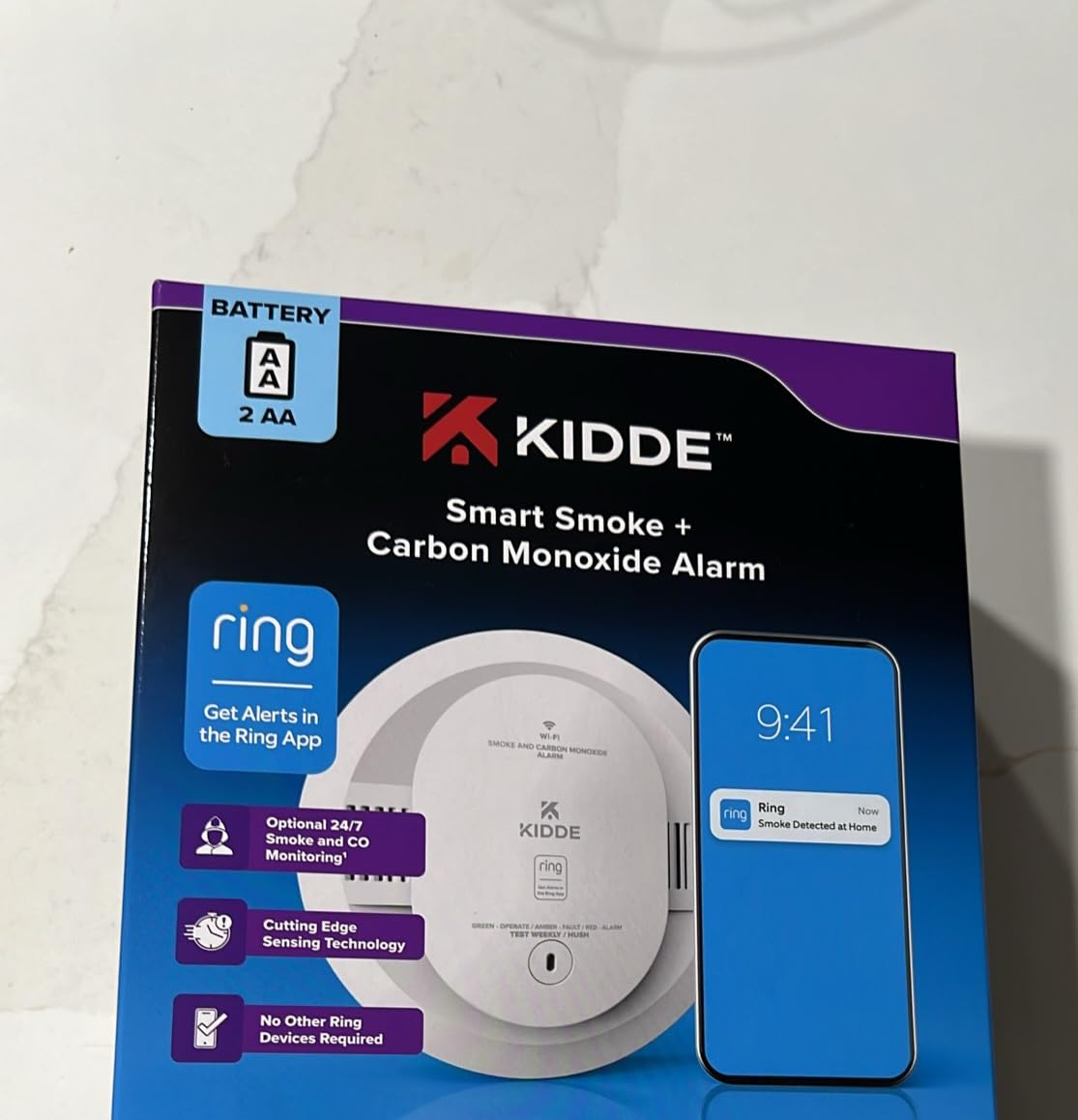
Owner feedback repeatedly mentions fewer cooking-related nuisance alarms than previous Kidde generations, and enhanced sensing is the stated reason. The 426 reviews and 4.3 rating give reasonable confidence in that claim, which matters more than the headline score. What owners do not love is the optional nature of professional monitoring and the fact that AA batteries keep you on a replacement cycle, unlike a sealed 10-year unit.
The interconnect coverage is the practical caveat. In a large home with thick walls and several floors, wireless reach between units depends entirely on placement, so this is a device to install thoughtfully rather than tuck wherever the old alarm sat. Voice location alerts, by contrast, are not part of this package, so you get an event notification rather than an announcement of which room triggered. For most households that trade is worth taking, given the sealed certification, free alerts, and no-hub setup.
How the notification behaves in a real home
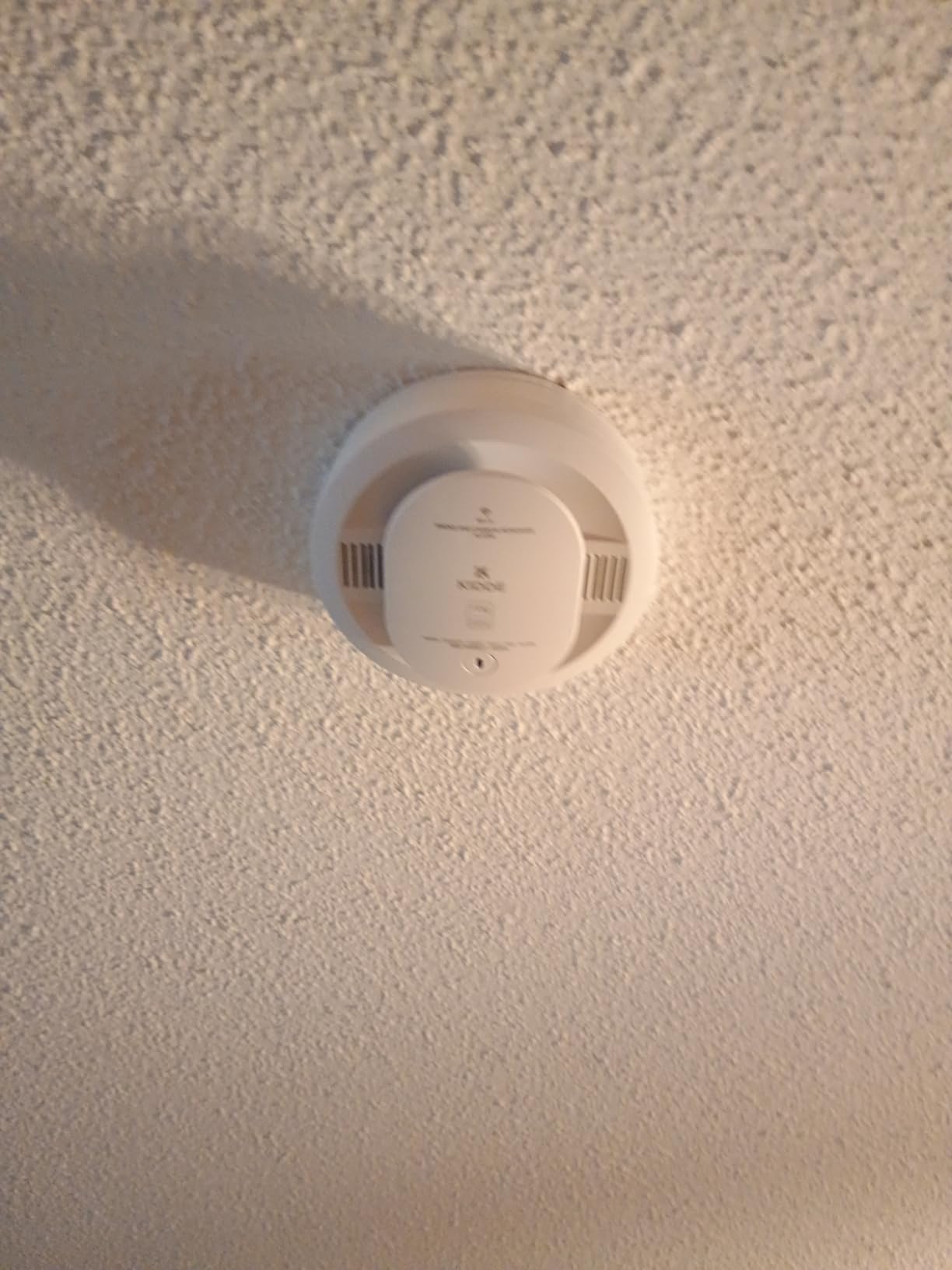
Because the unit carries its own radio, it does not depend on any other hardware being online. That removes the most common weak point we found in hub-based designs, where a hub firmware problem or a dropped mesh link takes phone alerts down while the sirens keep sounding. Here the local alarm is independent of the notification, and the notification is independent of any other device you own.
It also means there is no second account to create. The detector registers in the Ring app, and if you already use Ring for doorbells or cameras, the alarm event lands in the same feed. That consolidation is the quiet advantage of this pick: fewer apps means fewer places for a notification to go missing, which is the failure mode that undermines most smart-alert setups.
Who should look past this unit
If your household depends on hearing-impaired alerting, this is not the right device, because a phone push is the only remote alert path here. A deaf or hard-of-hearing sleeper needs a vibrating bed shaker or a strobe flasher, which this unit does not support. If you already own a functioning eufy security system with a HomeBase hub, the detector on pick two slots into an ecosystem you have already paid for and paid attention to.
Owners replacing hardwired alarms may also want to know that the wire-free approach here is genuinely the easier path, but it also means a battery is the only thing standing between you and silence on the day it dies. Test it monthly, and treat the low-battery push notification as the signal to act on rather than a nuisance to dismiss.
We earn a commission, at no additional cost to you. CERTAIN CONTENT THAT APPEARS ON THIS SITE COMES FROM AMAZON. THIS CONTENT IS PROVIDED 'AS IS' AND IS SUBJECT TO CHANGE OR REMOVAL AT ANY TIME.
2. eufy Security Smoke Alarm E10: Best for Small Spaces and Existing eufy Homes
eufy Security Smoke Alarm E10, Smoke Detector, Ultra-Compact 70 mm Design
- 70 mm diameter
- 5-year sealed lithium battery
- UL 217 10th edition
- Requires eufy HomeBase hub
Pros
- Compact 70 mm body roughly a third the size of a standard detector
- UL 217 10th edition compliant sensing
- Five-year sealed battery removes annual changes
- Wireless range up to 656 ft to HomeBase
- Fits an existing eufy security setup
Cons
- Requires a separate eufy HomeBase hub to operate at all
- HomeBase must run recent firmware for setup
- Hub outage removes app alerting
- No voice identification of the alarm location
We earn a commission, at no additional cost to you. CERTAIN CONTENT THAT APPEARS ON THIS SITE COMES FROM AMAZON. THIS CONTENT IS PROVIDED 'AS IS' AND IS SUBJECT TO CHANGE OR REMOVAL AT ANY TIME.
The reason this unit earns a place is physical. At 70 mm across, it is roughly one third the diameter of a traditional detector, and owners consistently single out how unobtrusive it looks on a ceiling or a hallway wall. In a small apartment, a studio, or a kids’ bedroom where a bulky alarm is genuinely annoying, that dimension is not a gimmick. It weighs 3.52 ounces and measures 2.75 by 2.75 by 1.08 inches, so it also stays out of the way of a ceiling fan.
Detection is certified to UL 217 10th edition, which is the current smoke standard and a meaningful upgrade over units still listed against earlier editions. The five-year sealed lithium battery removes the yearly replacement ritual and, more usefully, the 3 a.m. low-battery chirp that trains households to ignore small warning sounds. There is no battery to swap, which also removes the question of whether someone remembers to check it.
The catch is structural, and you should read it before anything else. This detector requires an eufy HomeBase unit to operate at all. Compatible models are the HomeBase Mini, HomeBase 2, HomeBase 3, and HomeBase Pro, and each needs a minimum firmware version, with version numbers published for all four. If you do not already own eufy security hardware, you are buying a hub first and a detector second, and the hub is the component that has to stay current for the alert path to work.
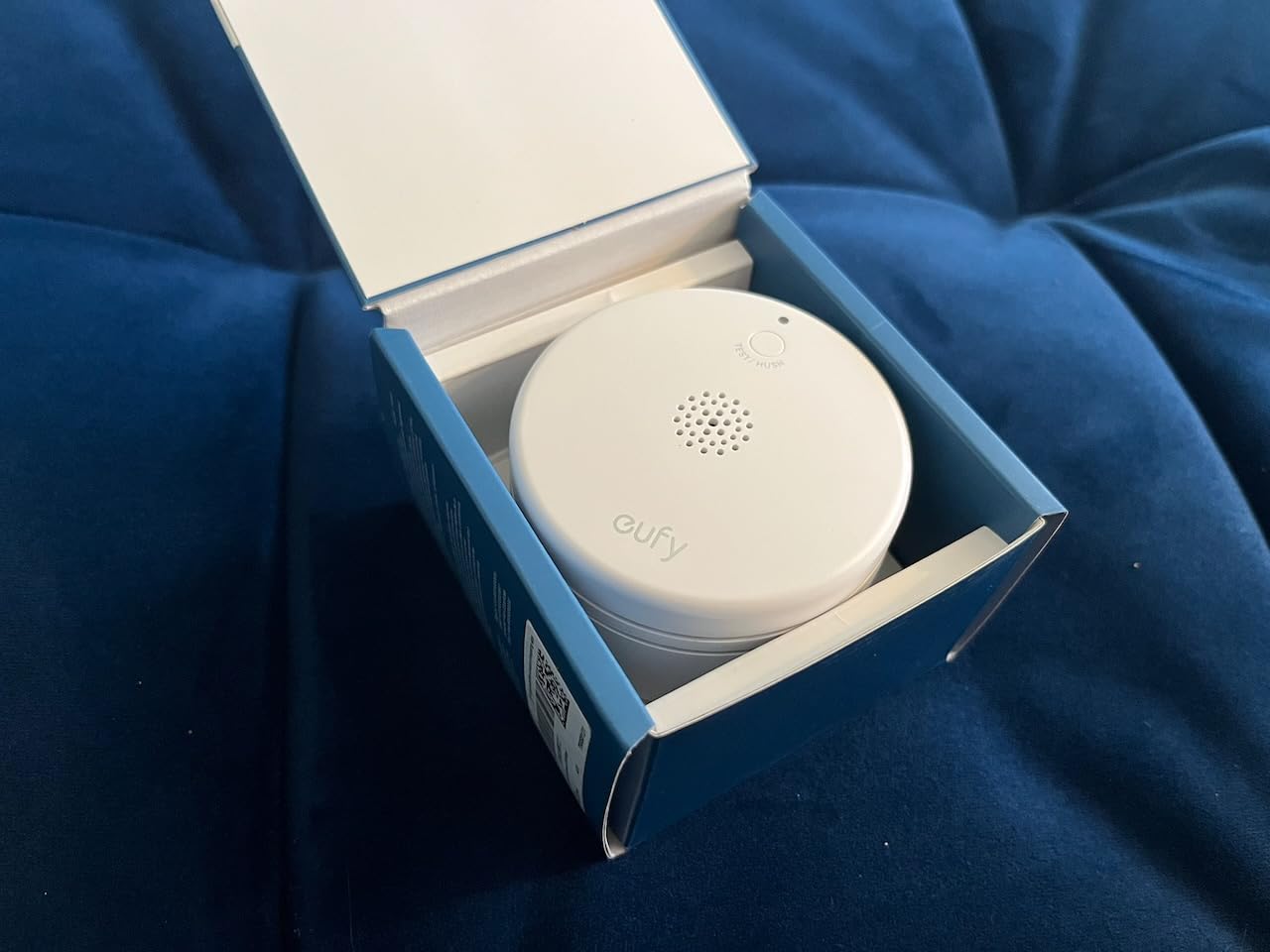
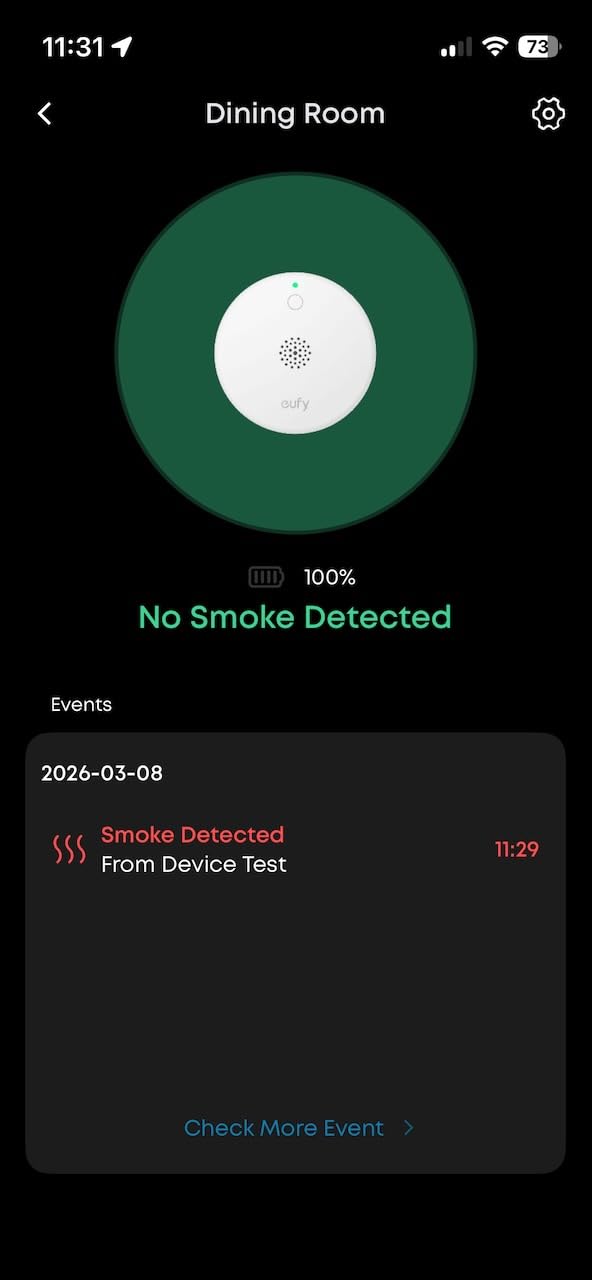
Once the hub is in place, the payoff is range and integration. The wireless link to HomeBase is rated up to 656 feet in open air, which comfortably covers an apartment or a typical single-family house, and the detector’s events appear in the eufy app alongside camera activity. If you already run eufy cameras, you end up with one app and one hub rather than two ecosystems to babysit.
Because the alert travels through the hub, a hub outage takes phone notifications down with it. The local siren is unaffected, and the failure is a loss of remote awareness rather than a loss of protection, but it is the trade-off you accept by choosing a hub-based architecture. The 4.4 rating across 221 reviews reflects a well-liked device held back mainly by the hardware prerequisite, which is the dominant reservation in the owner feedback.
What the size change actually buys you
On a ceiling, footprint is a visual issue before it is a technical one. Standard detectors leave a visible paint outline when a smaller replacement is fitted, and this one sidesteps that entirely because it is smaller than most of what it would replace. The magnetic-style low-profile mounting and the light body also make it a reasonable choice for a bedroom, where an alarm that startles you awake unnecessarily is its own kind of nuisance.
Where the hub requirement becomes a problem
The prerequisite bites hardest for renters and first-time buyers. Buying a smart smoke detector is a modest decision; buying a hub ecosystem alongside it is not, and the firmware requirement adds a step that can quietly eat an evening. If your home already runs eufy hardware, this is one of the smoothest phone-alert installs available. If it does not, verify the hub model and firmware version before ordering anything.
Note also what is missing: there is no voice identification of the room or location. You receive an app alert and a siren, not a spoken announcement of where the danger is. For a household that wants a sleeping child woken with a clear idea of which room to check, that difference is worth weighing against pick four.
We earn a commission, at no additional cost to you. CERTAIN CONTENT THAT APPEARS ON THIS SITE COMES FROM AMAZON. THIS CONTENT IS PROVIDED 'AS IS' AND IS SUBJECT TO CHANGE OR REMOVAL AT ANY TIME.
3. Kidde Hardwired Smart Smoke and CO Detector: Best for Homes With Existing Wiring
Kidde Hardwired Kidde App Enabled Smart Smoke and Carbon Monoxide Detector, AA Battery Backup, Voice Alerts, Interconnected Alarm
- Corded electric with AA backup
- Photoelectric plus electrochemical sensing
- Kidde app push alerts
- UL 217, UL 2034 and FCC
Pros
- Hardwired power with AA backup holds through outages
- Real-time app alerts for smoke
- CO and low battery
- Hush false alarms from your phone
- One smart unit brings mobile alerting to the whole home
- Install hardware included in the box
Cons
- Lowest rated at 3.7 stars in this group
- Installation means opening wall boxes and running wire
- Wi-Fi setup limited to 2.4 GHz networks
- Weak home Wi-Fi at a unit can affect notification delivery
We earn a commission, at no additional cost to you. CERTAIN CONTENT THAT APPEARS ON THIS SITE COMES FROM AMAZON. THIS CONTENT IS PROVIDED 'AS IS' AND IS SUBJECT TO CHANGE OR REMOVAL AT ANY TIME.
This is the one to buy if your home already has hardwired alarm wiring, and the reason is a single feature that no battery unit can match. Adding one of these to an existing hardwired network brings mobile alerting to every hardwired alarm in the home, so a conventional alarm that trips still generates a phone notification because the smart unit relays the event. In a house with eight wired units, one purchase covers all eight.
Power is corded electric with a two-AA battery backup, which is the configuration codes tend to expect in a retrofit situation. The sensor stack is a photoelectric smoke sensor paired with an electrochemical CO sensor, and the unit is certified to UL 217, UL 2034, and FCC standards, so it carries both listings rather than only the smoke one. The 85-class siren and phone-based hush are both present, and the box includes the batteries, bracket, wiring harness, and guides.
The rating is the reason this is third rather than higher, and we want to be straight about that. At 3.7 stars across 195 reviews it is the weakest-rated unit on this list, and roughly a fifth of its feedback is one star. The complaints cluster on installation friction, Wi-Fi pairing trouble, and connection dropouts rather than on detection quality, and the hardware itself is described favourably by people who got it running.
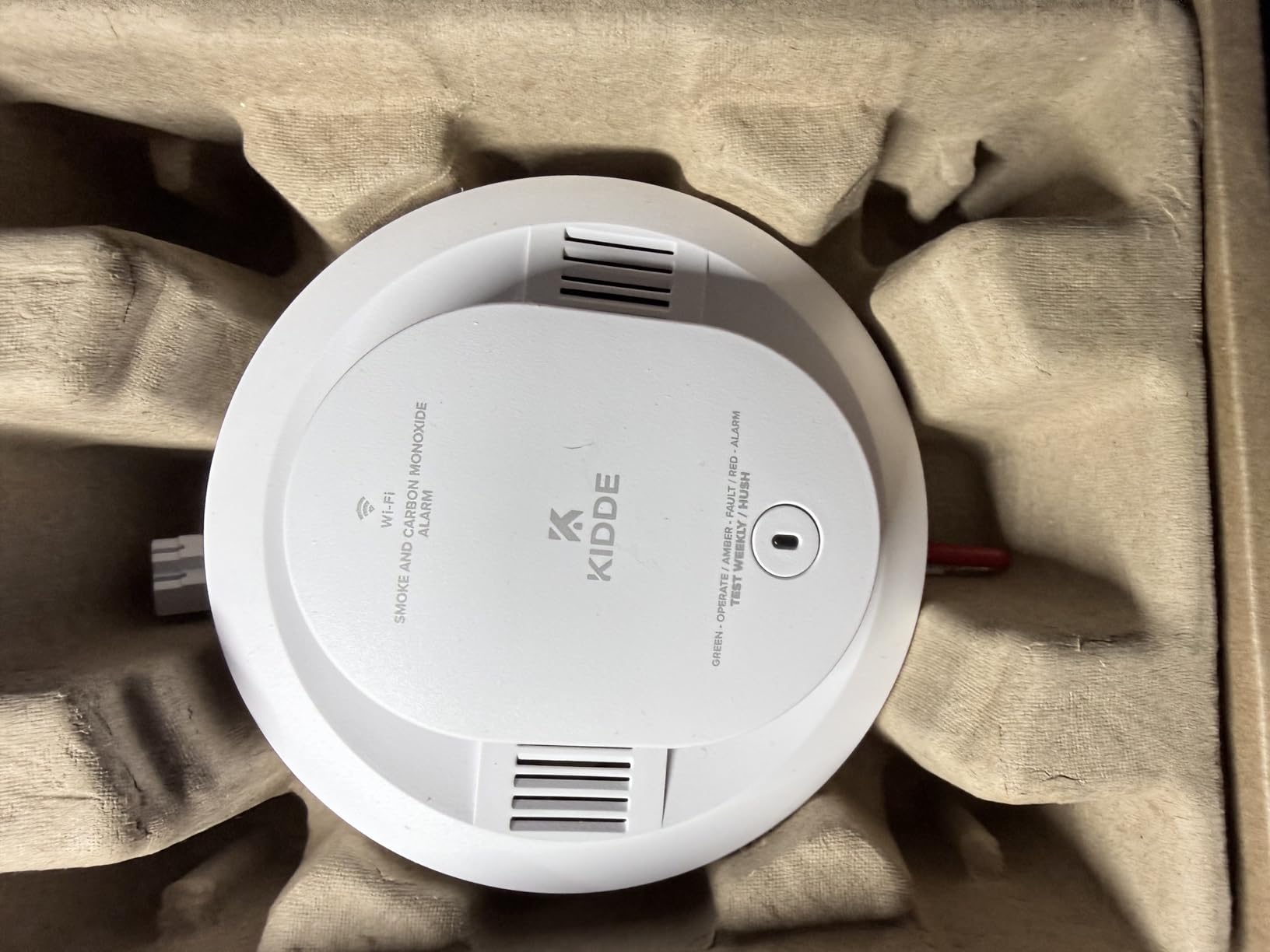
Two specifics explain most of the friction. Setup requires 2.4 GHz Wi-Fi, so a modern dual-band router needs its 2.4 GHz band enabled and joined during configuration, and that step trips up a lot of first-time owners. And because each unit depends on the network coverage where it sits, a hardwired alarm in a basement or an attic can hold a weak signal, which is how you end up with a siren that works everywhere and a notification that only sometimes arrives.
What owners love once it is running is the phone hush. Silencing a cooking-related nuisance alarm from your phone instead of climbing a ladder to reach the unit is a genuine quality-of-life improvement, and enhanced sensing is stated to reduce those cooking alarms in the first place. The unit is 2 inches deep by 5 by 5 inches and weighs 1.3 pounds, so it is a standard wall or ceiling footprint rather than anything unusual.
How the whole-home relay actually works
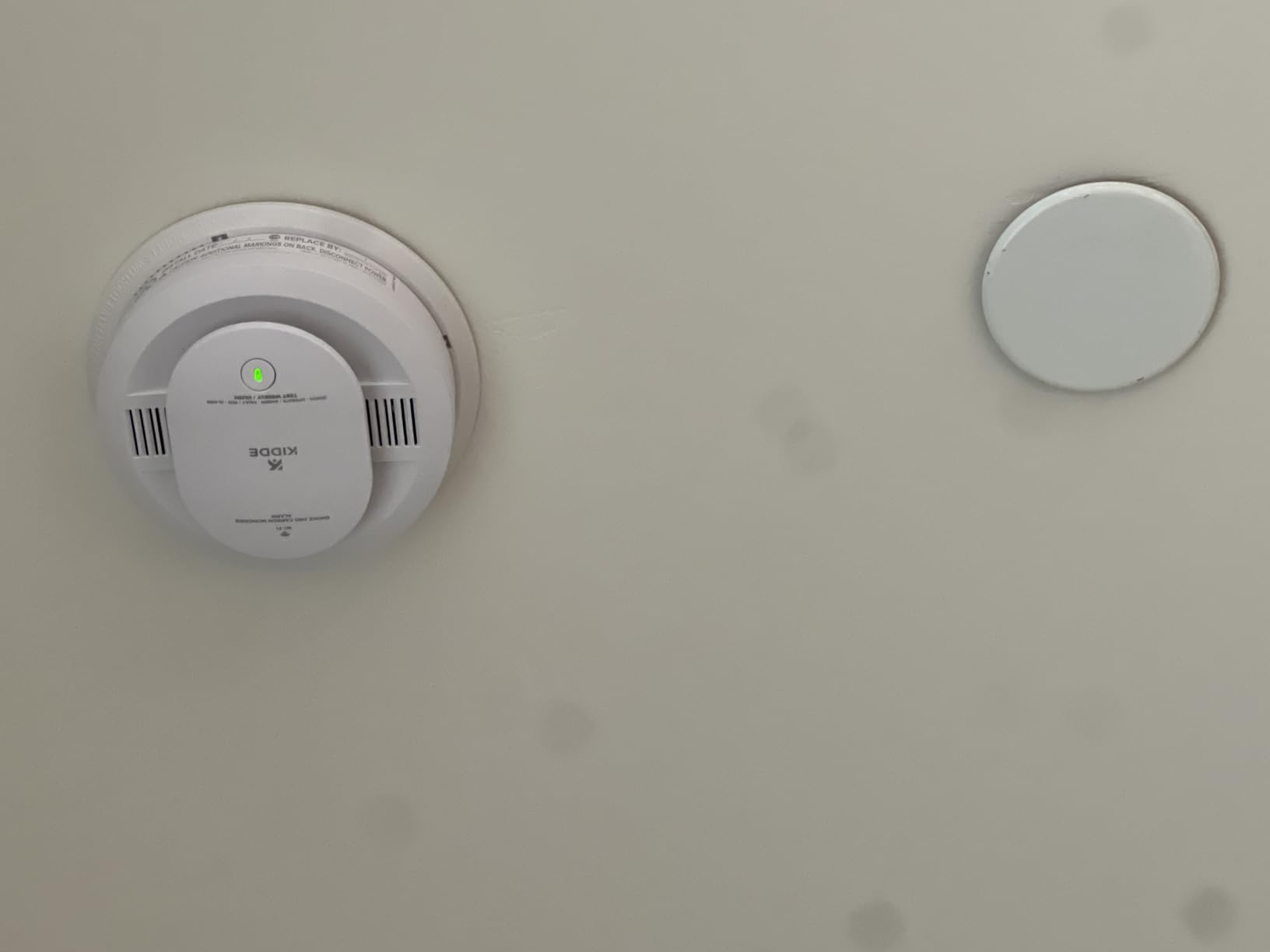
The mechanism is worth understanding before you buy, because it changes what one unit buys you. When any hardwired alarm in the interconnected network detects smoke, the network sounds. The smart unit is also on that network, so it registers the event and sends the app notification on behalf of the whole system. Your non-smart neighbours are effectively upgraded to connected reporting by your purchase, which is an unusual value case among the products here.
There is a corresponding limitation. Interconnect networks are same-brand and same-series, so this does not turn a mixed array of alarms from different manufacturers into a unified notification system. It upgrades the Kidde network you have, not a house full of competing units. If you are starting from nothing, the wire-free approach on pick one avoids that constraint entirely.
Who should accept the 3.7-star trade
The honest answer is that you should accept it if you have existing hardwired wiring and want mobile alerts across it, because nothing else on this list does that job. If you are installing from scratch, renting, or have no wall access, the friction is real and the battery route is faster with fewer things to go wrong. Treat the low rating as a signal about the install experience rather than about whether the sensor detects smoke, because the two are separate issues here.
A second consideration is network coverage. If you plan to add more of these across a large house, map your 2.4 GHz signal at each intended location first. A detector that cannot hold a signal in the room where a fire starts is the exact scenario the phone alert exists to cover, so it is worth the ten minutes of checking before the drill comes out.
We earn a commission, at no additional cost to you. CERTAIN CONTENT THAT APPEARS ON THIS SITE COMES FROM AMAZON. THIS CONTENT IS PROVIDED 'AS IS' AND IS SUBJECT TO CHANGE OR REMOVAL AT ANY TIME.
4. First Alert SC5 Battery Smart Smoke and CO Alarm: Best as a Nest Protect Replacement
First Alert SC5 Battery Smart Smoke & Carbon Monoxide Alarm
- Battery powered, no wiring
- Mounts on existing Nest Protect brackets
- Voice alerts naming danger type and location
- Interconnectable
Pros
- Sends smoke and CO alerts through the First Alert app
- Installs directly onto existing Nest Protect brackets
- Works with the Nest thermostat to cut HVAC power
- Voice alerts with Heads-Up warnings name type and location
- Low battery notifications avoid night chirps
Cons
- Lowest rating here at 3.2 stars with about a third at 1 star
- Needs the First Alert app and a separate account
- No path light or night light compared with Nest Protect
- Reviewers report Wi-Fi dropouts and offline notifications
We earn a commission, at no additional cost to you. CERTAIN CONTENT THAT APPEARS ON THIS SITE COMES FROM AMAZON. THIS CONTENT IS PROVIDED 'AS IS' AND IS SUBJECT TO CHANGE OR REMOVAL AT ANY TIME.
Start with the practical case, because it is unusually strong. The SC5 installs directly onto existing Google Nest Protect mounting brackets, so replacing a Nest unit in a home that already has them is close to a swap rather than a retrofit. Owners replacing units at their 10-year end-of-life date consistently cite that bracket compatibility as the deciding factor, and the unit is also documented as compatible with the Nest Protect alarm ecosystem.
The feature that sets it apart from every other pick is the Heads-Up warning with voice alerts, which tell you the type and location of the danger rather than just that something triggered. In a two-storey house at night, knowing the alarm is reporting smoke in the upstairs hallway rather than downstairs changes how fast a sleeping household moves. Forum owners value voice alerts for exactly this reason, and this is the clearest implementation of them on the list.
It also integrates with the Nest thermostat to cut power to the HVAC system when the alarm triggers, which is a real advantage in a larger home where ducted heat could spread smoke. Interconnection is supported, so when one alarm sounds every compatible alarm in the home sounds, and low-battery notifications go out before the chirping starts.
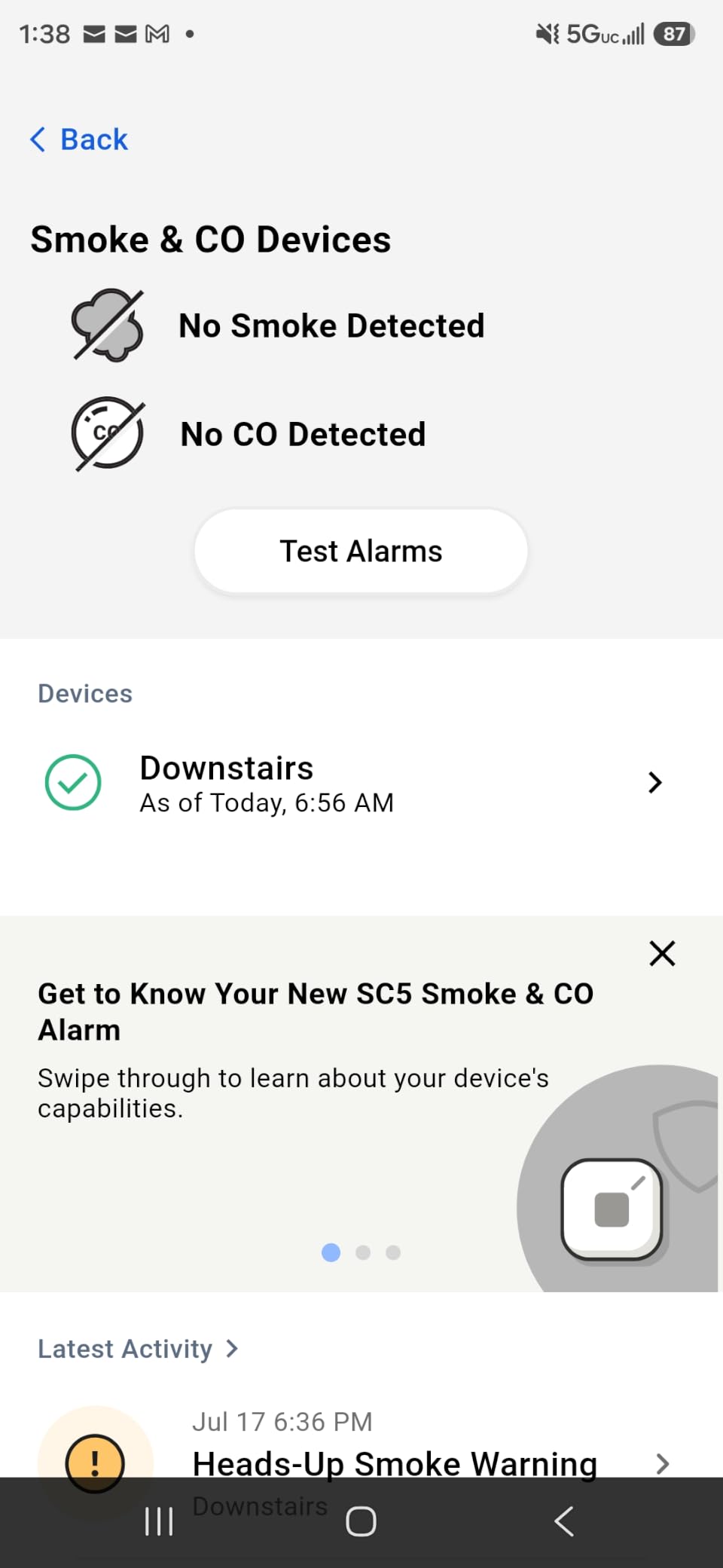
Now the difficult part. At 3.2 stars across 586 reviews, this is the lowest-rated unit here, with roughly a third of feedback at one star. That is not a rounding error, and any honest recommendation has to carry it. The negative core is a consistent sense that this is a downgrade from the Nest Protect it replaces: a separate app and account, a different physical feel, and the loss of the path light night feature that owners of the original describe as its best attribute.
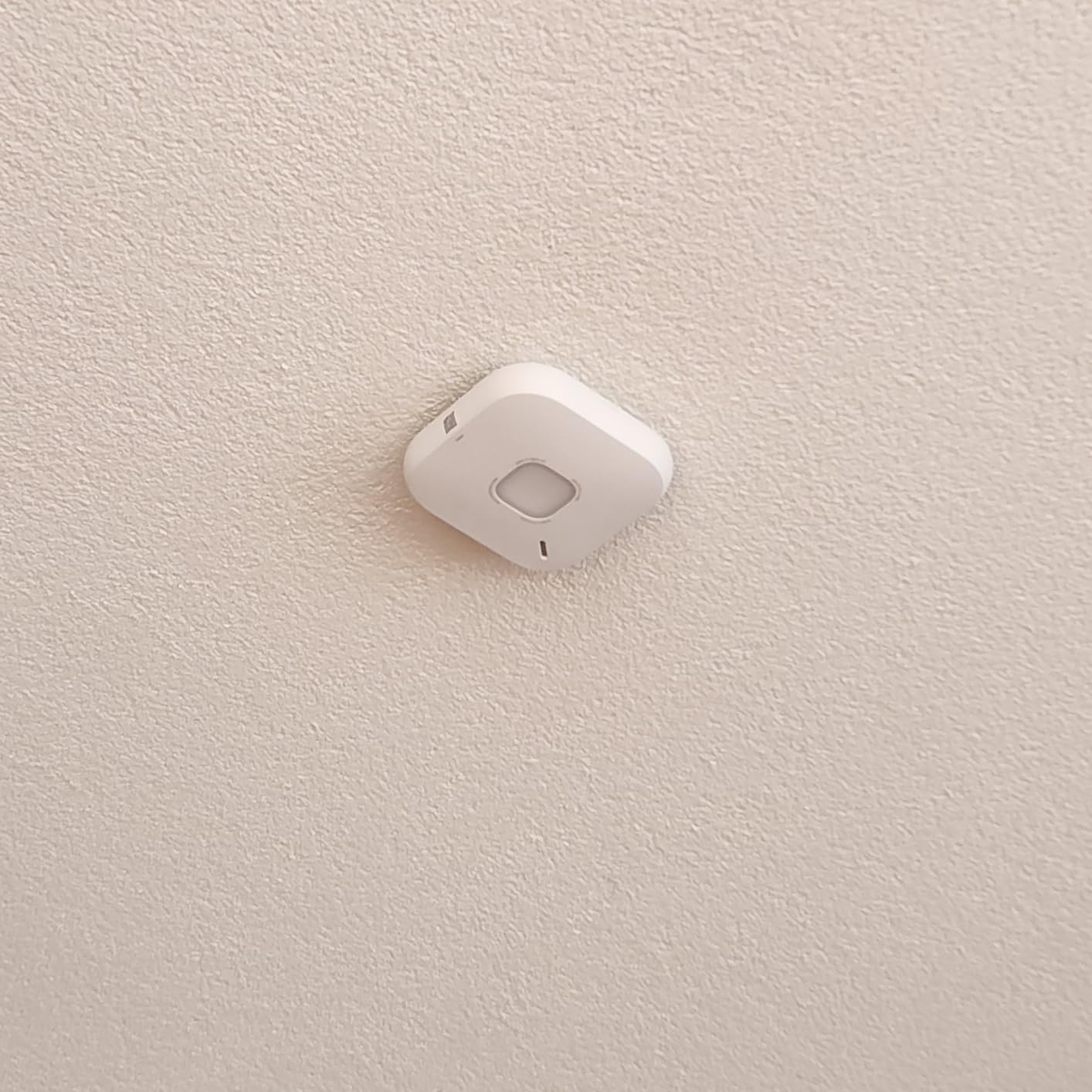
The 5.75-inch diameter and 16-ounce weight are conventional, and the box carries 3V CR123A lithium batteries, so installation needs no wiring.
What we would not do is dismiss the unit on that rating. The people complaining are largely people who expected Nest Protect, and the people evaluating it as a First Alert product report the alerts, the bracket fit, and the voice location warnings all working as documented. The rating measures disappointment as much as failure, and that distinction matters if you are specifically replacing Nest hardware and know what you are trading away.
What you gain and lose leaving Nest Protect
You gain a battery-only install, the same bracket geometry, thermostat integration, and voice location alerts. You lose the Nest app, the path light, and the self-testing and Steam Check behaviour Nest owners praise. The separate-account requirement is the piece people underrate: you now maintain one more app, and the alarm event lands outside the dashboard you already check, which is a small ongoing tax on a life-safety device.
On a house with existing Nest Protect mounts, the calculation usually still favours this unit because the alternative is rewiring or remounting. On a house with no Nest history, the rating and the missing ecosystem coherence make it a harder sell than the bracket story suggests, and one of the other picks is the more natural choice for a clean install.
Who gets the most from the voice location alerts
Households with sleeping children, with an older relative on an upper floor, or with a large home where the nearest alarm is far from the bedroom. The value of a location announcement is the seconds it saves at the moment everyone is least responsive. For a single-storey flat with one alarm, the same feature is nice and much less important, which is why we rate this as a strong rather than a universal pick.
Before buying, confirm your existing mounts are compatible and decide whether the loss of the night light is acceptable in a hallway. Then expect to spend a little time on the First Alert account and network setup, because that is where most of the one-star reviews originate.
We earn a commission, at no additional cost to you. CERTAIN CONTENT THAT APPEARS ON THIS SITE COMES FROM AMAZON. THIS CONTENT IS PROVIDED 'AS IS' AND IS SUBJECT TO CHANGE OR REMOVAL AT ANY TIME.
5. Heiman 10-Year Sealed Battery Smoke and CO Combo: Best for Low-Maintenance Coverage
Heiman Smoke Detector Carbon Monoxide Detector Combo 10-Year Sealed Battery
- 10-year sealed lithium battery
- Smoke plus CO in one unit
- UL 217 10th and ETL UL 2034 5th
- CSFM approved
Pros
- One unit covers both smoke and carbon monoxide
- Sealed 10-year battery removes annual replacements
- UL 217 10th and ETL UL 2034 5th certified and CSFM approved
- Dual-beam photoelectric sensing rejects cooking smoke and steam
- Ceiling or wall mounting with included hardware
Cons
- No app or Wi-Fi
- so no phone alerts reach your phone
- Alarm memory flashes the red LED every 20 seconds after an alert
- Some owners report end-of-life chirps early on a non-replaceable battery
We earn a commission, at no additional cost to you. CERTAIN CONTENT THAT APPEARS ON THIS SITE COMES FROM AMAZON. THIS CONTENT IS PROVIDED 'AS IS' AND IS SUBJECT TO CHANGE OR REMOVAL AT ANY TIME.
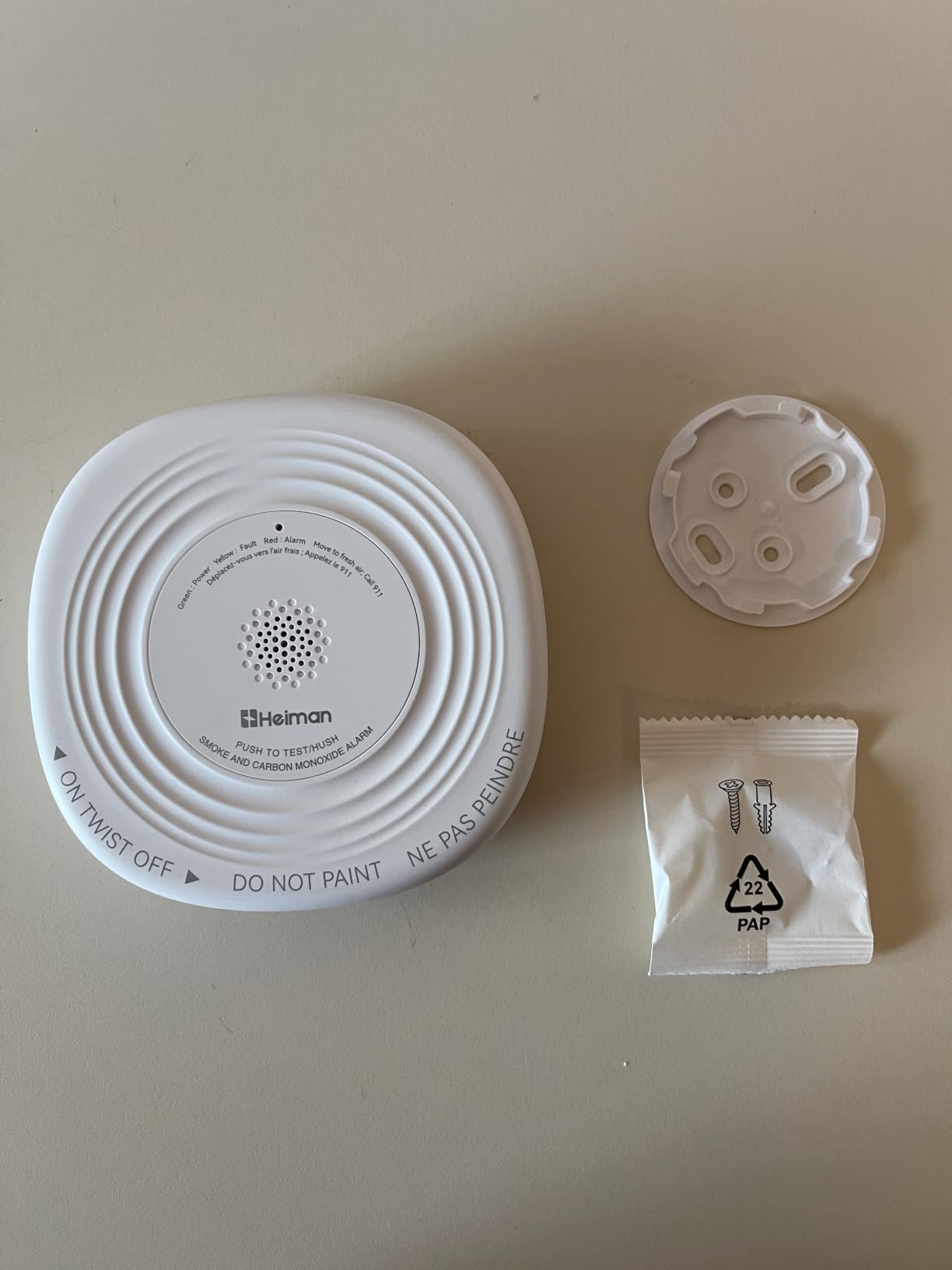
We are including this unit because it is a good product that does not do the thing you searched for, and pretending otherwise would be a disservice. There is no app and no Wi-Fi, so no notification ever reaches a phone. What it does well is earn its place in a mixed household: dual smoke and CO sensing in a single body, a sealed 10-year battery, and certification that satisfies both relevant standards.
Both certifications are stated precisely, which is what you want from a combo device. It is UL 217 10th edition certified for smoke and ETL UL 2034 5th edition certified for carbon monoxide, with CSFM approval on top, and it uses a dual-beam photoelectric sensor with an electrochemical CO element. A 10-year limited warranty covers replacement for non-artificial damage, and the housing is UL94 V-0 rated ABS and PC.
The practical case is device count and maintenance. One unit per room covers both hazards instead of a separate CO alarm, and the sealed lithium battery removes both the annual replacement and the low-battery chirp. The 4.91-inch diameter and 6.4-ounce weight are typical, and it mounts on a ceiling or a wall with the included hardware and no wiring or outlet needed.
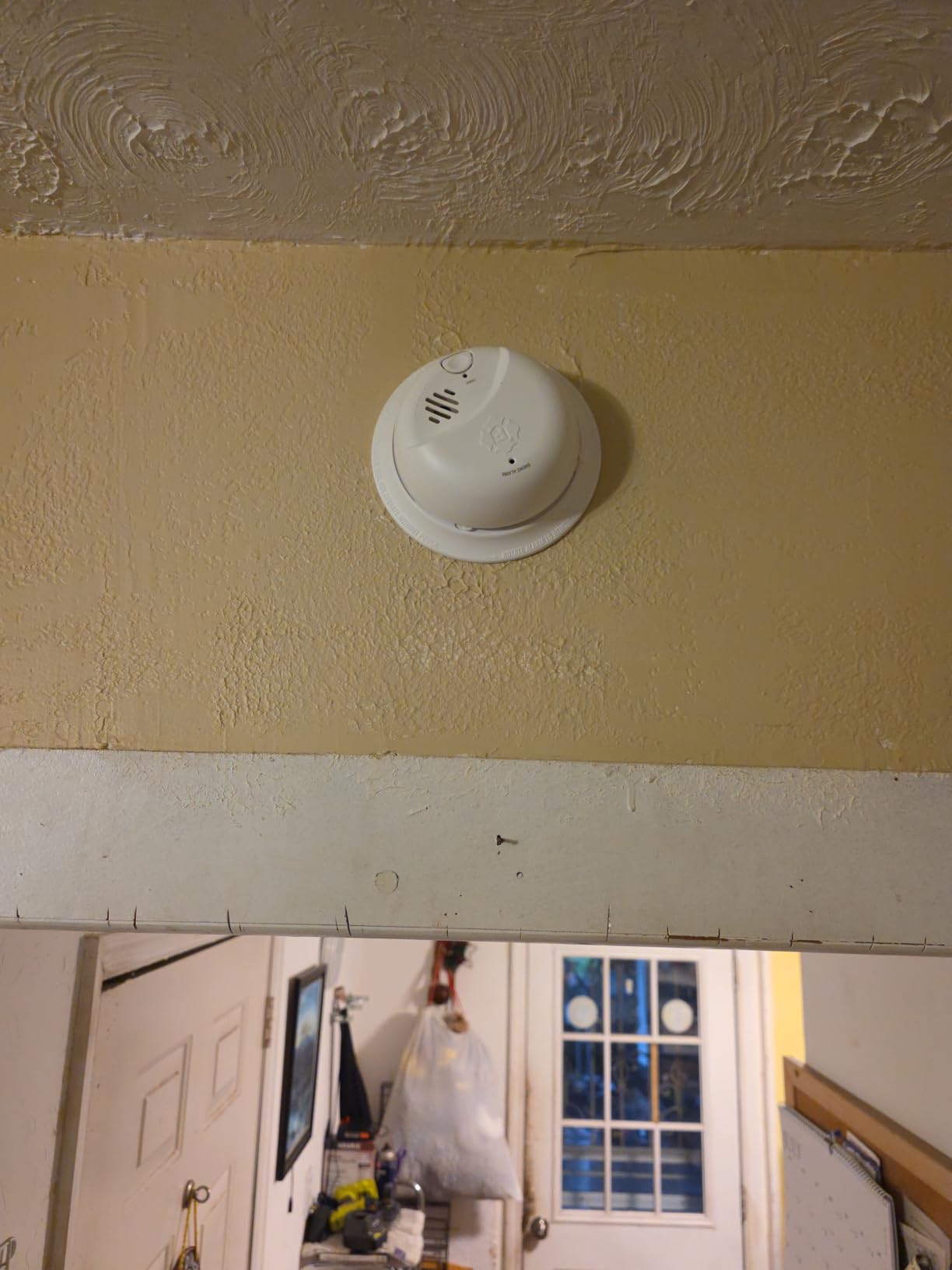
Owner feedback is broadly positive on installation and false-alarm behaviour, with dual-beam sensing doing its job and no cooking-related alarms reported. Two complaints recur, starting with alarm memory: after an alert, the red LED flashes every 20 seconds, which owners find distracting in living spaces. The second is an early end-of-life chirp, with at least one owner reporting it at eleven months on a sealed battery that cannot be replaced.
That second point deserves weight. A sealed battery is a decade of convenience right up until it is not, and a unit that starts chirping inside a year with no way to swap the cell is a genuine risk rather than an annoyance. The 90 reviews at a 4.2 average are a thinner evidence base than the other picks, so we would treat the battery longevity claim with more caution than the number of reviews alone might suggest.
Where this unit earns its place in a house
Basements, garages, attics, guest rooms, and any space where a visible blinking LED would be a nuisance are poor fits. Bedrooms, closets, hallways, and the areas near sleeping rooms are good ones, because nobody is looking at the ceiling there at three in the morning. In a mixed deployment, this covers the rooms that do not need remote awareness while a connected unit handles the ones that do.
Why it is here despite having no phone alerts
Because the category question is how to cover a whole home well, and most homes need more units than will ever be connected ones. Budget pressure is real, the certification here is current on both smoke and CO, and the sealed battery removes a decade of battery checks from the maintenance list. Just do not buy it expecting an app, because there is none, and do not put it in the rooms where you most want to know while you are away.
Also note there is no on and off switch. Activation happens by mounting the unit on its bracket, which prevents the classic failure of a deactivated battery alarm but does mean the bracket position is the only place the device can be switched off. For most households that is an acceptable trade for a decade of battery life.
We earn a commission, at no additional cost to you. CERTAIN CONTENT THAT APPEARS ON THIS SITE COMES FROM AMAZON. THIS CONTENT IS PROVIDED 'AS IS' AND IS SUBJECT TO CHANGE OR REMOVAL AT ANY TIME.
6. Heiman S1-R 3-Pack Wireless Interconnected Alarms: Best for Household-Wide Audible Coverage
Heiman Smoke Detector, Wireless Interconnected Smoke Alarm for Home, 3 Pack
- Three units per pack
- Wireless interconnection to 656 ft
- UL 217 10th edition
- 85 dB buzzer with LED indicators
Pros
- Compact 2.75 inch diameter mounts with magnetic pads
- Interconnection up to 656 ft so linked units sound within about 30 seconds
- Dual-beam photoelectric sensing handles slow smoldering smoke and rejects steam
- Battery power keeps protection running during outages
- Red Dot awarded design stays unobtrusive on a ceiling
Cons
- No smartphone app or Wi-Fi
- so no phone alerts are delivered
- Some owners report the advertised 10-year battery failing in well under a year
- Interconnection range drops through thick walls or floors
We earn a commission, at no additional cost to you. CERTAIN CONTENT THAT APPEARS ON THIS SITE COMES FROM AMAZON. THIS CONTENT IS PROVIDED 'AS IS' AND IS SUBJECT TO CHANGE OR REMOVAL AT ANY TIME.
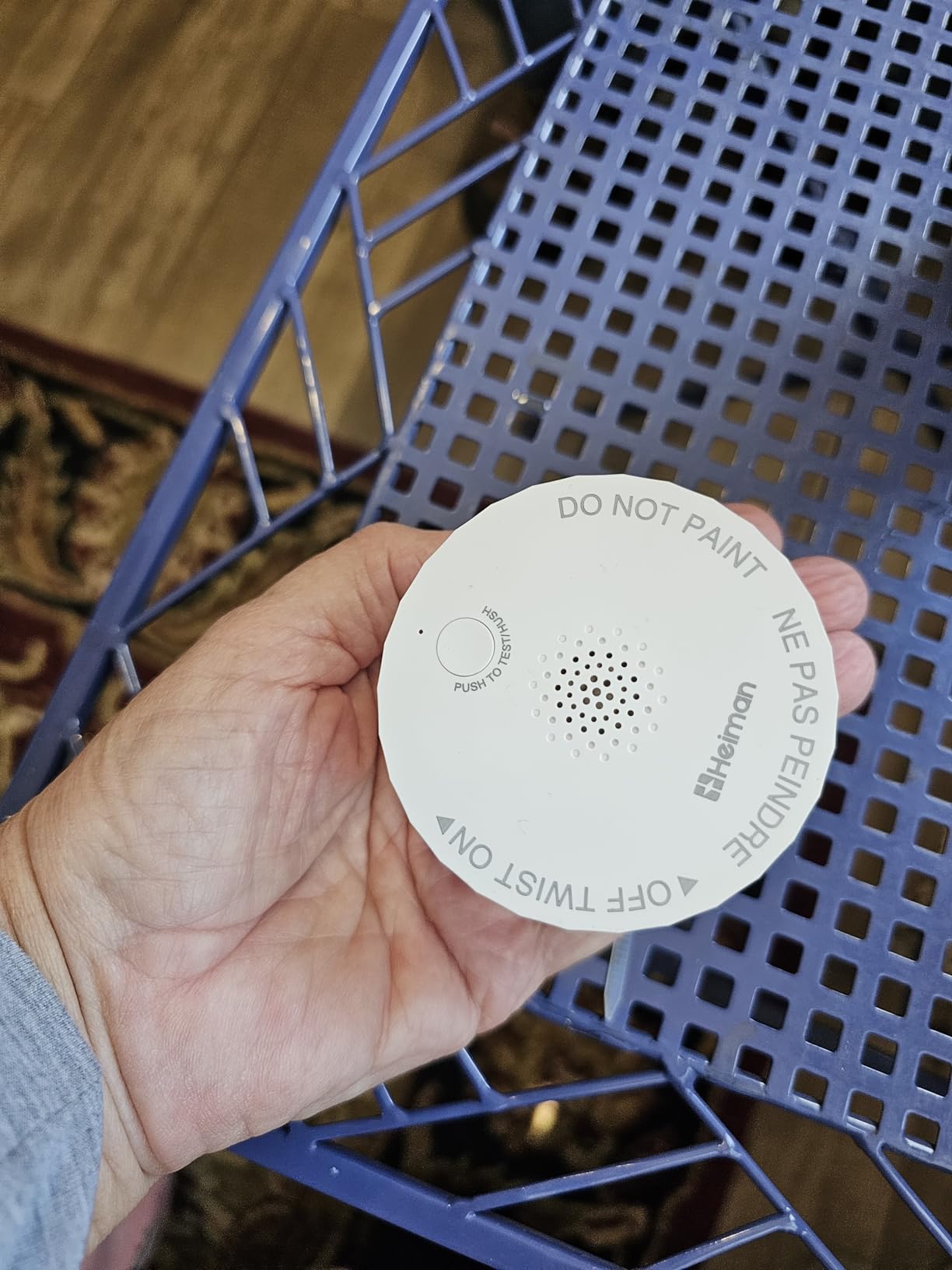
This is the second unit on the list without phone alerts, and it is here for a different reason than the previous one. It is a three-pack of interconnected alarms that talk to each other, and when one detects smoke, every linked unit in the house sounds within roughly 30 seconds. That is a whole-home coverage strategy rather than a remote-awareness strategy, and for a large home it is one of the most effective ways to make sure a fire is noticed from any room.
The interconnection rating is up to 656 feet in open areas, which is the same figure cited by the eufy unit on pick two and comfortably more than a typical single-family interior. Each unit is 2.75 inches across and 3.52 ounces, a genuinely compact body compared with a legacy detector, and it mounts with screws or magnetic adhesive pads. The box includes the alarms, pads, brackets, battery, screws, anchors, a disassembly pin, and the manual.
Sensing is dual-photoelectric with UL 217 10th edition certification, and the design picked up a Red Dot award. The buzzer is rated 85 dB at 10 feet with LED indicators, and the test and silence button gives you a ten-minute hush, which is the right feature for a cooking-related nuisance alert. Operating humidity runs 5 to 95 percent relative, and the upper temperature rating is 100 degrees.
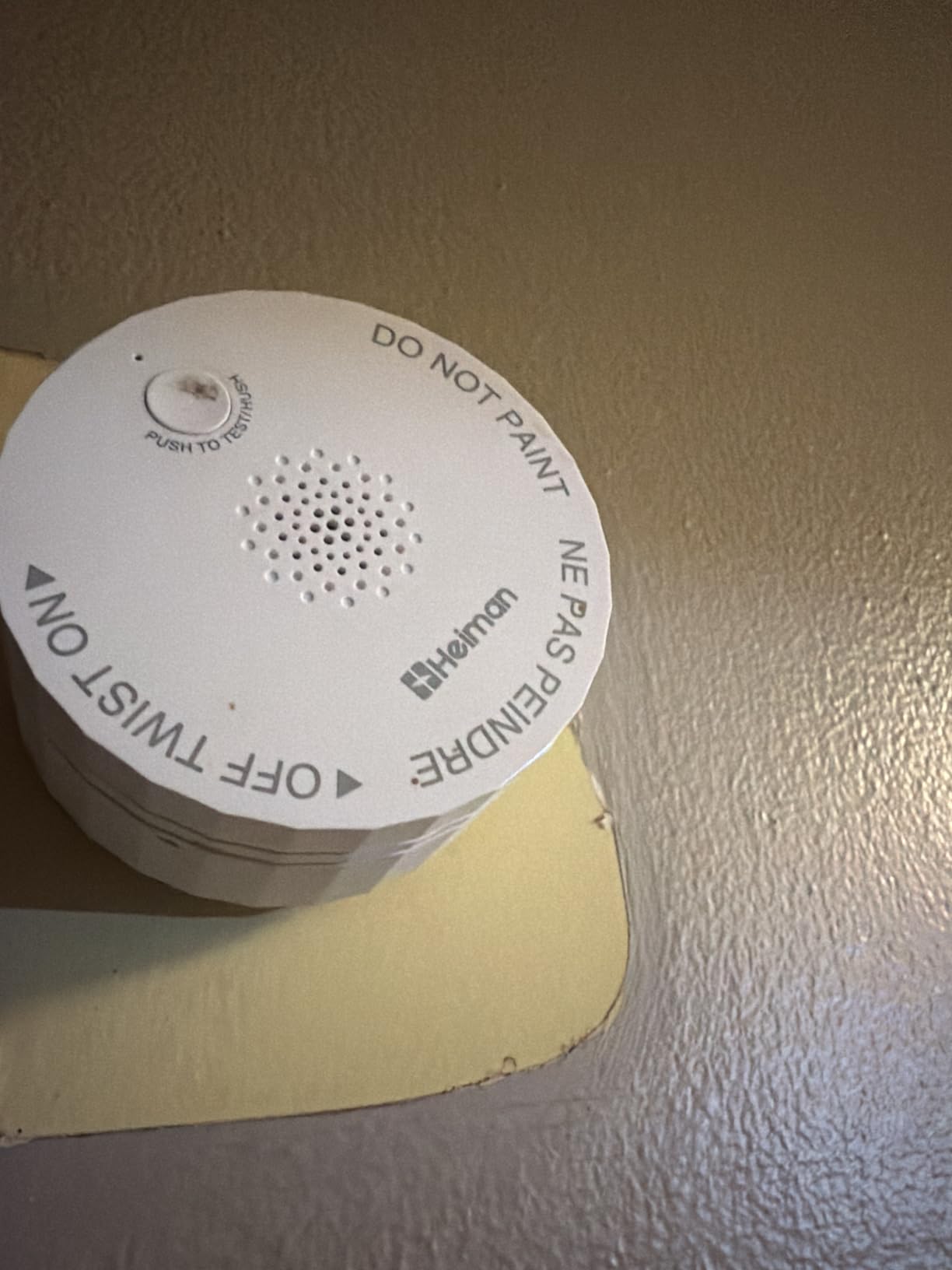
Owners like the size, the install speed, and the interconnect behaviour, and the ten-minute hush earns specific praise. Battery operation means protection continues through a power outage with no wiring at all, which in a house with an older electrical service is a real advantage. At 4.2 stars across 201 reviews, the feedback is consistent rather than polarised, which is what you want from a pack you may install throughout a home.
The manufacturer states plainly that these units do not connect to a smartphone app or Wi-Fi, so they deliver household-wide audible alerts only. That sentence is the whole caveat, and it is why this product sits here rather than higher. The recurring owner complaint is that the advertised 10-year battery fails in well under a year, and because the cells are sealed you have no way to test the remaining charge short of waiting for the chirp.
What interconnection buys and where it stops
Interconnection means everyone in the house hears the alarm, not just the people in the room where it tripped. That converts a local device into a building-wide notification system at a fraction of the cost of a connected install, and the roughly 30-second propagation is fast enough to be useful. It also means you hear the alarm from the hallway while you are asleep upstairs, which is the same problem a phone alert solves for people who are not in the building.
Where it stops is at the property boundary. Open-air range of 656 feet assumes clear space, and thicker walls, multiple floors, and building materials reduce real-world reach considerably. In a large multi-storey house, plan for two or three of these rather than assuming one covers everything, and test the link from each bedroom after installation rather than trusting the headline range.
How to pair this with a connected unit
The sensible use is a layered one. Connected units go in the locations where you most want remote awareness, such as near the main bedroom, near the entry level, and in a room housing an older relative. Interconnected units cover the remaining rooms so that a local trip is heard everywhere. Buyers often discover that a mixed approach covers a whole home far better than either approach alone.
One practical note on appearance: because these are smaller than most legacy detectors, the outline of the old unit can remain visible on the ceiling after repainting. It is a cosmetic issue, not a functional one, and it is the only installation detail in the whole pack that deserves a moment of thought before you commit.
We earn a commission, at no additional cost to you. CERTAIN CONTENT THAT APPEARS ON THIS SITE COMES FROM AMAZON. THIS CONTENT IS PROVIDED 'AS IS' AND IS SUBJECT TO CHANGE OR REMOVAL AT ANY TIME.
7. Google Nest Protect Wired (2nd gen): The Best App Experience, With a Catch
Nest Protect smoke & carbon monoxide alarm- Wired (2nd gen)
- Wired line voltage with battery backup
- Split-Spectrum sensor with 10-year CO element
- Spoken location alerts
- Phone hush and Steam Check
Pros
- Notifies the Nest app on smoke
- CO
- low battery and sensor malfunction
- Spoken alerts tell you what and where the danger is
- Steam Check reduces hot shower false alarms
- Split-Spectrum sensing with a 10-year CO sensor
- Wired power with battery backup keeps the alarm live in outages
Cons
- Rated 3.4 stars with about 32 percent of reviews at 1 star
- No longer manufactured so available units are older
- Owners report units arriving 6 to 7 years old with little life left
- Older routers without IPv6 support can leave the unit offline
We earn a commission, at no additional cost to you. CERTAIN CONTENT THAT APPEARS ON THIS SITE COMES FROM AMAZON. THIS CONTENT IS PROVIDED 'AS IS' AND IS SUBJECT TO CHANGE OR REMOVAL AT ANY TIME.
The Nest Protect remains the best notification experience of anything on this list, and that is not nostalgia. The app experience is the reference standard: the moment it detects smoke, carbon monoxide, a low battery, or a sensor malfunction, the Nest app reports it. Spoken alerts tell you what the issue is and where it is, and you can hush the alarm from your phone rather than reaching the unit. Steam Check stops a hot shower from triggering it in the first place.
Sensing is the reason engineers built it this way. The Split-Spectrum sensor is designed to detect both fast and slow burning fires, paired with a carbon monoxide sensor rated for ten years, and the whole thing runs on line voltage with battery backup so it stays alive through an outage. Self-testing reports status and power outages to the app on its own, which is the maintenance feature we would most want in a house with several units.
It also weighs 1.7 pounds and is a wired installation, so it suits homes with existing Nest Protect wiring or with a landlord who expects hardwired units. The second-generation unit remains a fully functioning device, and existing owners report the experience as excellent years after installing it.
Here is the catch, and it is a serious one that the rating reflects. Google no longer manufactures this alarm, so what you are buying is an older unit, and age matters. The 3.4 stars across 181 reviews come overwhelmingly from that reality rather than from the detector failing. Owners repeatedly warn that units arrive 6 to 7 years old with as little as three years of the ten-year lifespan remaining, and the practice of asking the seller for the manufacturing date before paying a premium has become a standing recommendation in owner discussions.
There is a technical failure mode too: older Wi-Fi routers without IPv6 support can leave the unit permanently offline in the app, so the siren works and the notifications never arrive. A wired alarm with a decade of life is a fine purchase, and a wired alarm with three years of life left on an unknown manufacturing date is a poor one, and the difference is invisible unless you ask.
How to shop for a discontinued unit
Ask for the manufacturing date in writing before you buy, and treat a refusal as the answer. Check the end-of-life date printed on the unit itself once it arrives, because that is the only figure that matters for how long it will serve you. Confirm your router supports IPv6 before installation, and if the unit reports offline in the app straight after setup, treat that as a return reason rather than something to troubleshoot indefinitely.
What Nest owners should do instead
If you already own working units, keep them until they reach end of life, and treat the end-of-life date as the replacement trigger rather than the notification failures. When you do replace, the unit on pick four mounts on those same existing brackets and keeps voice location alerts, which is the feature Nest users rate most highly after the app itself. If you are buying new rather than replacing, the discontinued status and the age of the units make this the pick to skip, and the 3.4 rating is the market telling you so.
We earn a commission, at no additional cost to you. CERTAIN CONTENT THAT APPEARS ON THIS SITE COMES FROM AMAZON. THIS CONTENT IS PROVIDED 'AS IS' AND IS SUBJECT TO CHANGE OR REMOVAL AT ANY TIME.
How to Choose: 7 Criteria That Decide the Purchase
1. Confirm the alert path before anything else. Ask one question: does this unit send a notification to a phone on its own, through a hub you already own, or not at all? Two of the seven products here answer that question with no, and one of the rest only answers it with yes if you already own the matching hub. A unit that alerts through a hub is only as connected as that hub, so the hub requirement belongs in the purchase decision rather than in a footnote.
2. Check the UL listing for the hazard you care about. Smoke alarms fall under UL 217 and carbon monoxide alarms under UL 2034. A combo unit needs both, and a smoke-only listing tells you nothing about CO capability. Look for the edition number too, since the 10th edition of UL 217 is the current standard and older listings represent older certification. On this list, the Heiman combo carries UL 217 10th and ETL UL 2034 5th, and the Kidde hardwired unit carries UL 217 and UL 2034.
3. Decide between hardwired and battery on evidence, not preference. Owners consistently rate hardwired as more reliable because power does not depend on a cell, and the AA backup on the hardwired Kidde covers outages. Battery units are dramatically easier to install and are the only option for renters and for ceilings with no wiring access. If you already have hardwired wiring, adding one smart unit to the network is unusually good value. If you do not, running wire in an occupied home is the single largest install cost you will encounter.
4. Match the radio to your ecosystem, and verify before you order. Native Wi-Fi units need only a 2.4 GHz network. Hub units need the right hub, sometimes on specific firmware, as the eufy E10 shows with four compatible models and four minimum versions. The single most common complaint across owner communities is buying a detector that will not pair or that produces no entities after installation, and that is a planning failure rather than a product failure.
5. Treat the battery specification as a reliability claim with evidence. Sealed 10-year batteries remove annual maintenance and night chirps, which is a genuine quality-of-life gain, and two units here offer them. But owner reports on both Heiman products describe sealed cells giving out well ahead of the advertised life, and a sealed cell cannot be tested. If you distrust sealed batteries, a replaceable AA design with low-battery phone notifications, as on the Kidde Ring unit, is the more verifiable option.
6. Establish what you want the notification to say. Some units send an event. Better ones send a spoken announcement naming the type and location of danger, which saves seconds when a household is waking up. The First Alert SC5 and the Nest Protect both do this; the others do not. For a single-storey home with one alarm, the difference is small. For a two-storey home with children, it is the feature you will value most and think about least at purchase time.
7. Check whether the ecosystem lock-in suits you. Every connected detector here ties you to a manufacturer’s app and, in two cases, to a manufacturer’s hub. The First Alert SC5 runs in the First Alert app rather than the Nest app even when it mounts on Nest brackets, which is a good illustration of how partial compatibility works. Decide in advance whether you want a decade of service from one vendor or the freedom to move, because the answer changes what you should buy.
Smart Home Compatibility: Check the Hub Before You Buy
Hub compatibility is the first question in every smart-home smoke detector discussion we read, and it is the one most often skipped. The reason is that the listing rarely says plainly whether the device reports to a platform or only to its own app. In practice there are three outcomes. A native Wi-Fi device needs a 2.4 GHz network and its own app, and nothing else. A hub device needs a specific hub on specific firmware, and it will usually also report to the manufacturer app. A non-connected device needs neither and delivers household audible alerts only.
For Home Assistant and SmartThings users, the practical rule is to confirm the exact model and the integration path before ordering, and to expect setup friction. Owners report devices that paired and then produced no entities at all, and that failure mode is invisible until the alarm is needed. Where a device depends on a hub, treat the hub’s firmware currency as part of the life-safety system rather than as a chore, because an out-of-date hub can quietly remove the notification path while the siren keeps working.
For Apple Home and Google Home households, the choice is more constrained than the marketing suggests. Several products here are tied to a specific vendor app, and one that physically mounts on another vendor’s brackets still requires its own separate account, which means the alarm event lands somewhere other than the dashboard you already check. That fragmentation is the reason we rated the eufy E10 highly for eufy homes specifically: inside one ecosystem, the experience is coherent.
One last practical note. The owner-built automation path, where users turn alarm events into custom tones and automations through their own platform, is a genuine reason to prefer a hub-reporting device over a vendor-only one. But it is only a reason if the platform already exists in your home and you maintain it. For everyone else, the single-vendor app is the more reliable choice, because there is one integration to support rather than two.
Why a Phone Alert Sometimes Never Arrives
Owners report missed alerts more often than they report false ones, and the causes are almost never the detector’s fault. The first is a silenced phone. A device on Do Not Disturb, a muted phone, or a phone left in a drawer will not produce a notification no matter what the alarm did, and this is the single most common reason people conclude their smart detector is broken. Grant notification permission deliberately for the alarm app rather than assuming a prompt at setup covered it.
The second is network loss. A native Wi-Fi unit depends on your 2.4 GHz network, and a hub unit depends on the hub staying online and connected. Routers get rebooted, firmware gets updated, and networks get extended with hardware that handles the main channels well and a sensor in the basement poorly. Because the notification path is cloud-dependent, a server maintenance window can also delay delivery for reasons entirely outside your control.
The third is permissions and accounts. An operating system update can revoke an app’s notification access, and if you created a second account during a device swap, alerts may be going to an account you stopped checking. Household sharing is a common failure point too, where one person set up the account and the other people never received the alerts. Verify that every adult in the house has notifications on their own phone, and check that the shared household view still lists all units.
What to do about it is straightforward and takes ten minutes a quarter. Press the test button on every unit monthly and confirm that a notification arrives on every phone in the household, not just one. Confirm the end-of-life date and the low-battery state at the same time. If an alert does not arrive, check notification permission and Do Not Disturb before you suspect the hardware, because in nearly every case that is where the problem is.
The reassuring part is that none of these failure modes reduce your protection. The siren is local and independent in every unit on this list. A missed notification is a loss of remote awareness, not a loss of warning inside the home, and holding both ideas at once is what keeps the category in proportion.
Placement, Testing and the 10-Year Replacement Cycle
Placement rules matter more than any specification on this list. You need protection on every level of the home, including basements and finished attics, and inside or outside every sleeping area. On a ceiling, mount the unit at least 6 inches from the wall, since air hugs the corner and smoke passes through the middle of a room first. On a wall, keep it below the ceiling line and away from corners for the same reason.
Keep units away from false-alarm sources. A kitchen detector needs to sit at least a few feet from the stove, and bathroom detectors need real distance from a shower or tub, because steam and humidity trigger nuisance alarms on an optical sensor. Where a cooking-related nuisance alarm is likely, a ten-minute hush button, as on the Heiman interconnect pack, is worth more than any app setting. Do not silence a recurring alarm permanently; move the unit instead.
Testing is monthly, and it should be a family habit rather than a box-ticking exercise. Press the test button and confirm the siren sounds, then confirm a notification arrives on every phone in the household. Vacuum the vents quarterly, because dust on an optical sensor is a leading cause of both false alarms and missed detection. The units here that self-test and report status to the app remove the remembering step, which is a genuine safety gain and one of the quieter advantages of a connected alarm.
Replace the entire unit every 10 years, not just the battery. Sensor degradation is physical rather than a firmware problem, and no app update restores a photoelectric chamber. Replaceable cells should be changed on the schedule the manufacturer states, typically annually for a unit like the Kidde Ring model on AA power. Sealed 10-year batteries remove that task but not the decade mark, and the end-of-life warning is the signal to act on.
Fire codes and UL listings set the floor, not the ceiling. No code requires a smart feature, a phone alert, or an app, and the legal obligation is placement, interconnection where required, and listed equipment. Landlords generally carry the placement obligation, and a few jurisdictions impose additional interconnection requirements, so check your local rules before you change anything structural. Everything we have recommended here exceeds the minimum, and that is the correct starting position.
Frequently Asked Questions
Which smoke detectors can send alerts to my phone?
Three device types do this. Native Wi-Fi alarms hold their own 2.4 GHz connection and run a manufacturer app. Hub-connected alarms report through a home hub such as Home Assistant, SmartThings, or Apple Home over Zigbee, Z-Wave, or Thread. Listener devices pick up the siren of an alarm you already own and forward the event to an app. In all three cases the in-home siren sounds locally and immediately, with no network involved.
Do smart smoke detectors need a subscription for phone alerts?
No. On every unit we reviewed, basic detection, self-testing, low-battery notices, and alarm notifications run on the free manufacturer app tier. Paid tiers sell professionally monitored dispatch and cellular data, not the alert itself. The one optional paid add-on in this group is Ring professional monitoring on the Kidde detector, which is sold separately from the free phone alerts.
Do smart smoke detectors work during a power outage?
The alarm does, and the phone alert does not. Battery-powered units run for years on their own cells with no wiring involved, so detection and the siren continue through an outage. Hardwired units with battery backup stay live as well. What fails during an outage is the notification path, since it needs power and a network connection. That is why the local siren is the layer to trust.
How often should smoke detectors be replaced?
Replace the whole unit every 10 years rather than just swapping the battery, because sensor degradation is physical and no firmware update restores an optical sensing chamber. Test every unit monthly and confirm a notification reaches every phone in the household at the same time. Vacuum the vents quarterly. Change replaceable batteries on the manufacturer schedule, typically annually, and treat any end-of-life warning as a replacement trigger.
Can you mix smart and traditional smoke detectors in one home?
You can, but interconnection is limited to same-brand and same-series units. A hardwired smart unit will relay an event to the wired alarms on its own network, which is why one smart purchase can bring mobile alerts to an entire wired house, but it will not unify a mix of alarms from different manufacturers. A simple way to cover most homes is connected units where remote awareness matters most, plus interconnected units for household-wide audible coverage in the remaining rooms.
Why did my phone not get the smoke alarm alert?
Check notification permission for the alarm app first, then Do Not Disturb and mute settings on the phone that should have received it. Network loss is the next likely cause, including a rebooted router, a hub offline after a firmware update, or weak coverage at the unit location. A revoked permission after an operating system update and an unlinked or swapped household account are also common. None of these reduce protection, since the siren is local and independent.
Which Smart Smoke Detector Should You Buy?
Start with the Kidde Smart Smoke and CO Detector with Ring alerts, which sends smoke, CO, and low-battery notifications to a phone with no subscription, runs on two AA batteries with no wiring, and interconnects with other Kidde alarms across the home. If your house is already hardwired, the Kidde hardwired unit is the better buy because one unit brings mobile alerts to every wired alarm you own, and you will want to read its 3.7-star feedback about Wi-Fi setup before ordering. For a small apartment or an existing eufy system, the compact E10 fits where nothing else will.
For the Nest Protect experience of voice location alerts without rewriting the app, the First Alert SC5 mounts on existing Nest Protect brackets, and you accept the separate account and the 3.2-star reality in exchange. The two Heiman units deliver strong whole-home audible coverage with current UL certification and 10-year sealed batteries, but neither reaches a phone, so treat them as the coverage layer rather than the alerting layer.
Whatever you choose, keep the local siren as the thing you trust and the phone notification as the layer that shortens the distance between detection and someone who can help. That framing is the reason these devices are worth adding to a home rather than a reason to stop trusting the alarms you already have. We compare and update these picks through 2026, and the fastest way to a good decision is to check the two things we checked first: the UL listing for the hazard you care about, and the exact path the notification takes to your phone.