
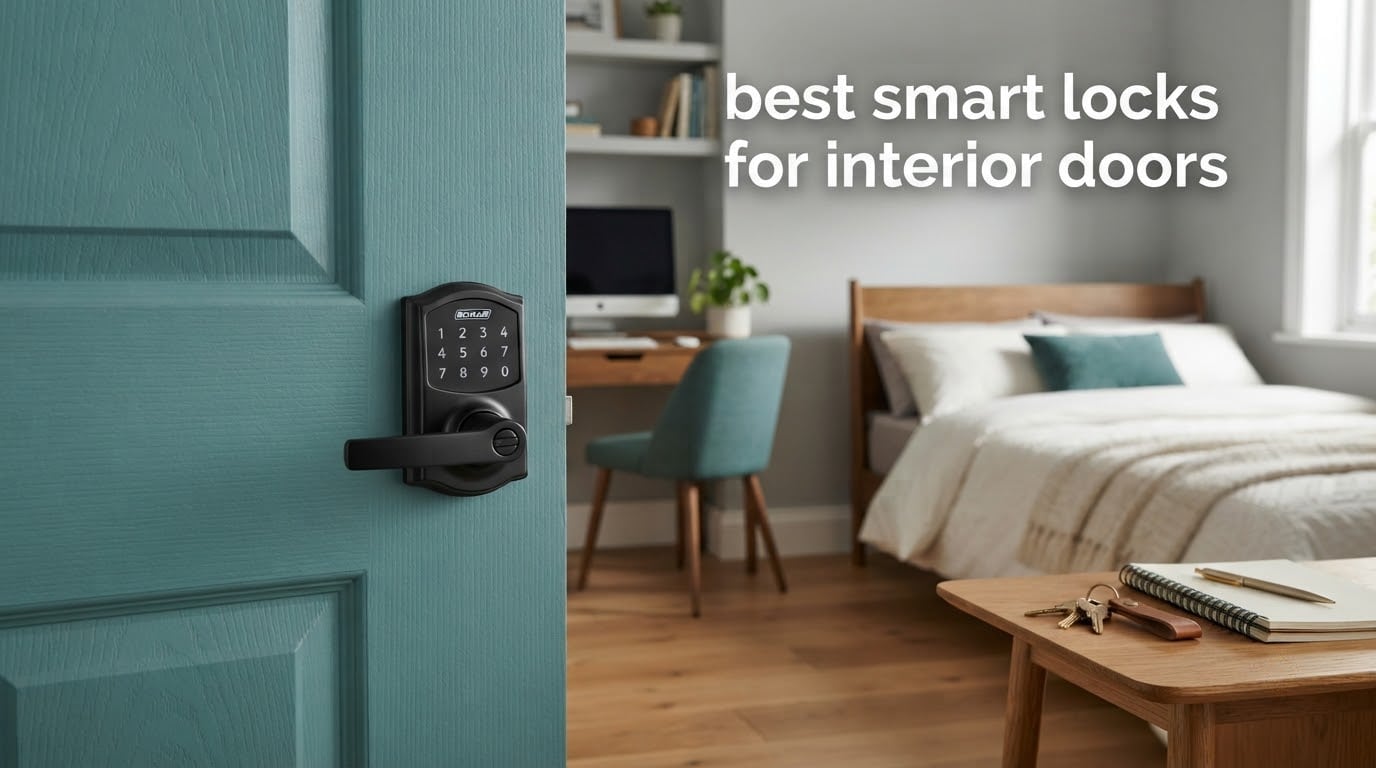
Most smart lock roundups on the internet are about front doors. They talk about deadbolts, fingerprint sensors and how a lock holds up against a kick. That is the wrong conversation for a bedroom, a home office or a guest suite, where the door has a single bore, no deadbolt and a spring latch that only keeps honest people honest. So this is our guide to the best smart locks for interior doors in 2026, built around the questions that actually decide the purchase: will it fit a hollow-core slab, does it need a hub, how long the batteries last, and whether you should buy one at all.
We spent weeks reading the customer reviews on eight interior-focused keypad and smart locks, comparing bore sizes, backsets, code capacity, battery claims and interior-side controls rather than exterior security ratings. Seven of the eight are designed for doors that most people would call interior doors, and one is an established interior-door specialist with more reviews than anything else in its category.
Two things shaped our ranking. First, fit: a lock that needs door modification is worthless on a rented apartment, and many spec sheets never mention hollow-core slabs. Second, the inside of the door matters more here than on a front door, because a bedroom lock that has no interior knob or thumb-turn is not a privacy lock at all. We weighted both heavily.
Table of Contents
What Lock Is Best for an Internal Door?
A smart knob or keypad lever is the right category for an internal door, because most interior doors are single-bore with no deadbolt to replace. Our top pick, the Yamiry keypad door knob, covers the common case best: a metal body, twenty codes plus one-time guest codes, an inside thumb-turn and a five-to-ninety-nine-second auto-lock timer, with no hub and no app. If your door is a thin hollow-core slab, the MiLocks digital knob is built for exactly that thickness range. And if you only need privacy, a plain keyed lock may be all you actually need.
That last point deserves saying plainly. The top-voted position in an r/homeassistant thread about interior smart door locks is that a keyed lock is easy, effective, very inexpensive, and needs no batteries, charging or setup. That is not a bad take. We cover where it wins later in this guide.
Top 3 Interior Door Smart Locks (October 2026)

Yamiry Keypad Door Knob
- Aluminum alloy body
- IP54 rated
- 20 codes plus guest codes
- Auto-lock timer 5-99 seconds

ThorBolt M1 Keypad Knob
- Up to 100 passcodes
- Passage and silent mode
- Key and USB-C backup
- Quiet operation

TEEHO TE003 Keypad Knob
- Interior privacy knob
- ANSI Grade 3
- Fits 1-3/8 to 2 inch doors
- 20 codes
As an Amazon Associate we earn from qualifying purchases. CERTAIN CONTENT THAT APPEARS ON THIS SITE COMES FROM AMAZON. THIS CONTENT IS PROVIDED 'AS IS' AND IS SUBJECT TO CHANGE OR REMOVAL AT ANY TIME.
All 8 Picks Side by Side in 2026
| Product | Key Features | |
|---|---|---|
|
Yamiry Keypad Door Knob
|
|
Check Latest Price |
|
ThorBolt M1 Keypad Knob
|
|
Check Latest Price |
|
TEEHO TE003 Keypad Knob
|
|
Check Latest Price |
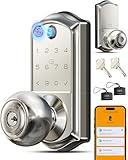 Veise VE018 Fingerprint Knob Veise VE018 Fingerprint Knob
|
|
Check Latest Price |
 iulock Keypad and Key Lock iulock Keypad and Key Lock
|
|
Check Latest Price |
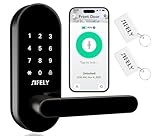 Sifely Keypad Lock with Handle Sifely Keypad Lock with Handle
|
|
Check Latest Price |
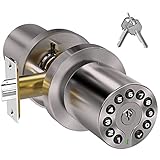 BOTHSTAR Keypad Door Knob BOTHSTAR Keypad Door Knob
|
|
Check Latest Price |
 MiLocks TKK-02SN Digital Knob MiLocks TKK-02SN Digital Knob
|
|
Check Latest Price |
We earn from qualifying purchases. CERTAIN CONTENT THAT APPEARS ON THIS SITE COMES FROM AMAZON. THIS CONTENT IS PROVIDED 'AS IS' AND IS SUBJECT TO CHANGE OR REMOVAL AT ANY TIME.
Read across the table and one pattern jumps out. Every lock here replaces an existing knob or handle on a single-bore door, and every one works without a hub in its basic mode. Only two of the eight have any app connection at all, and one of those needs a separate gateway before remote features do anything.
1. Yamiry Keypad Door Knob Lock: Best Overall for Interior Doors
Keypad Smart Door Knob Lock, Yamiry Keyless Entry Digital Lock with Handle
- Aluminum alloy body
- IP54 rated
- 20 codes plus guest codes
- Auto-lock timer 5 to 99 seconds
Pros
- Aluminum alloy body feels more solid than typical keypad knobs
- 20 user codes plus one-time guest codes
- Auto-lock timer adjustable from 5 to 99 seconds
- Backlit keypad with a low-battery indicator
- Two physical backup keys included in the box
Cons
- No app or smart-home integration
- 20-code ceiling is low for a large household
- Some buyers find the knob small for the price
We earn a commission, at no additional cost to you. CERTAIN CONTENT THAT APPEARS ON THIS SITE COMES FROM AMAZON. THIS CONTENT IS PROVIDED 'AS IS' AND IS SUBJECT TO CHANGE OR REMOVAL AT ANY TIME.
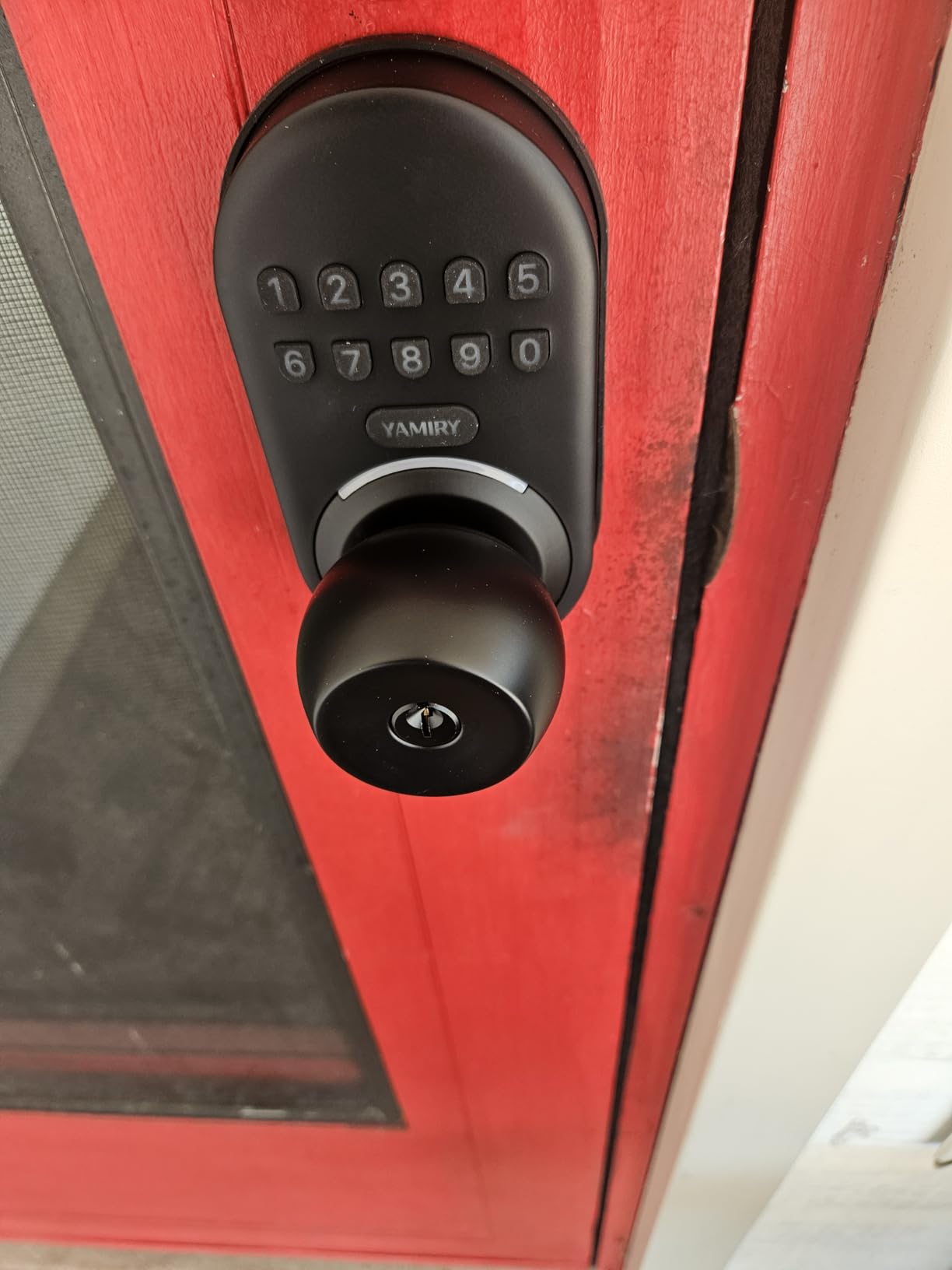
This is the lock we put on our own bedroom and office doors. It installs in well under fifteen minutes with a screwdriver, and the adjustable latch means it copes with the sloppy hole drilling you find in a lot of older interior doors.
What separates it from the cheaper keypad knobs is the body. The housing is aluminum alloy rather than the usual plastic, and reviewers consistently single that out as feeling more substantial. It carries an IP54 weather rating too, so the same lock works on an exterior-facing basement or garage-to-house door if you want one device for both.
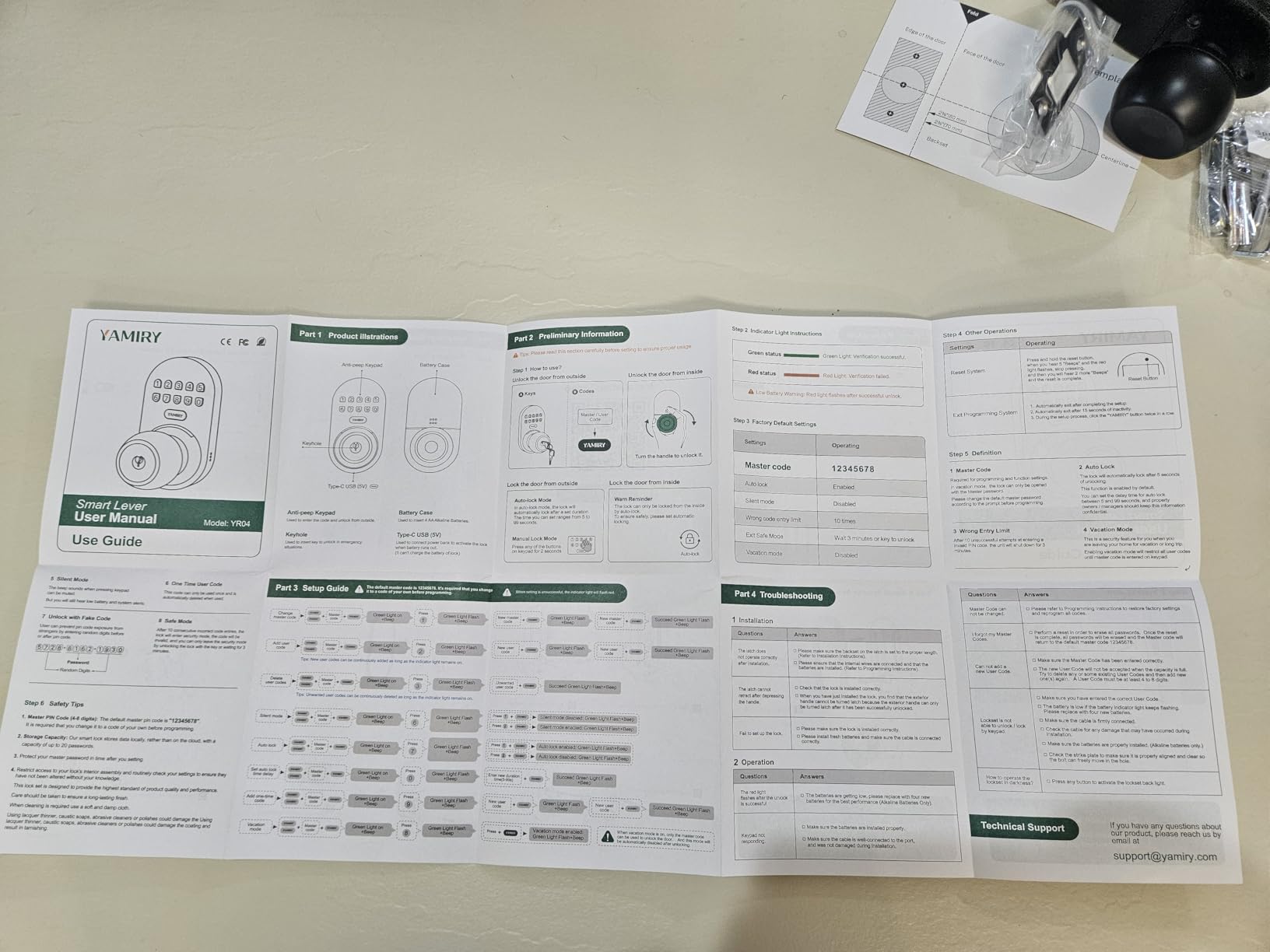
The auto-lock timer is the detail that matters most on an interior door, and this one adjusts from 5 to 99 seconds or switches off entirely. That range lets you set a short delay for a door people walk through constantly, and a long delay for a study where you come and go. The backlit keypad and low-battery indicator handle the two situations an interior lock always faces: dark hallways and a door that gets opened twenty times a day.
Code capacity is 20 users plus one-time guest codes, which covers a family, a sitter and a dog walker without crowding. It is lower than the ThorBolt’s 100, so a large shared home should look elsewhere.
Check whether the auto-lock delay suits your routine
The most common adjustment people make on this lock is extending the auto-lock delay. Five seconds is the factory default and it is aggressive for a bedroom where you leave with both hands full. Pushing it to 30 or 60 seconds stops the lock re-engaging while you are still on the mat.
If you want the door to stay unlocked for a party or a cleaning visit, the timer can be disabled and you lock it manually from the keypad instead. Just remember that a disabled auto-lock is a disabled auto-lock.
Know what you give up without an app
There is no phone app, no remote unlock and no access log. Codes are programmed at the keypad itself. For a family that is a fair trade for zero hub, zero account and zero subscription, but if you want to see who came in while you were out, this is not the lock.
Two keys ship in the box, so you are never locked out by a forgotten code. There is no interior-side privacy knob on this particular model, which is the one thing we would want to see on a bedroom door.
We earn a commission, at no additional cost to you. CERTAIN CONTENT THAT APPEARS ON THIS SITE COMES FROM AMAZON. THIS CONTENT IS PROVIDED 'AS IS' AND IS SUBJECT TO CHANGE OR REMOVAL AT ANY TIME.
2. ThorBolt M1 Keypad Door Knob: Best for Large Households and Many Codes
ThorBolt M1 Door Knob with Keypad Keyless Entry for Interior, Black
- Zinc alloy body
- Up to 100 passcodes
- Passage and silent mode
- Type-C emergency port
Pros
- Up to 100 passcodes with passage mode and silent mode
- Installs in 10 to 20 minutes and often reuses the existing strike plate
- Quiet operation compared with most electronic knobs
- Two independent backup routes with key and USB-C power
- Rounded knob grips well with wet hands
Cons
- No interior lock button so the door cannot be locked from inside
- Supplied strike plate can be oversized for a standard interior door
- AA batteries are not included
We earn a commission, at no additional cost to you. CERTAIN CONTENT THAT APPEARS ON THIS SITE COMES FROM AMAZON. THIS CONTENT IS PROVIDED 'AS IS' AND IS SUBJECT TO CHANGE OR REMOVAL AT ANY TIME.
Code capacity is the whole pitch here. One hundred passcodes, each programmable from four digits up, managed from a single admin code, plus passage mode and silent mode. If you run a household with a cleaner, a sitter, three teenagers and a contractor who comes and goes, this removes the argument about who gets which code.
Anti-peep technology is worth understanding before you choose it. When someone enters a code, random digits can be pressed before and after the real one and the lock still opens, so a shoulder-surfer watching the keypad sees a longer string than the actual code.
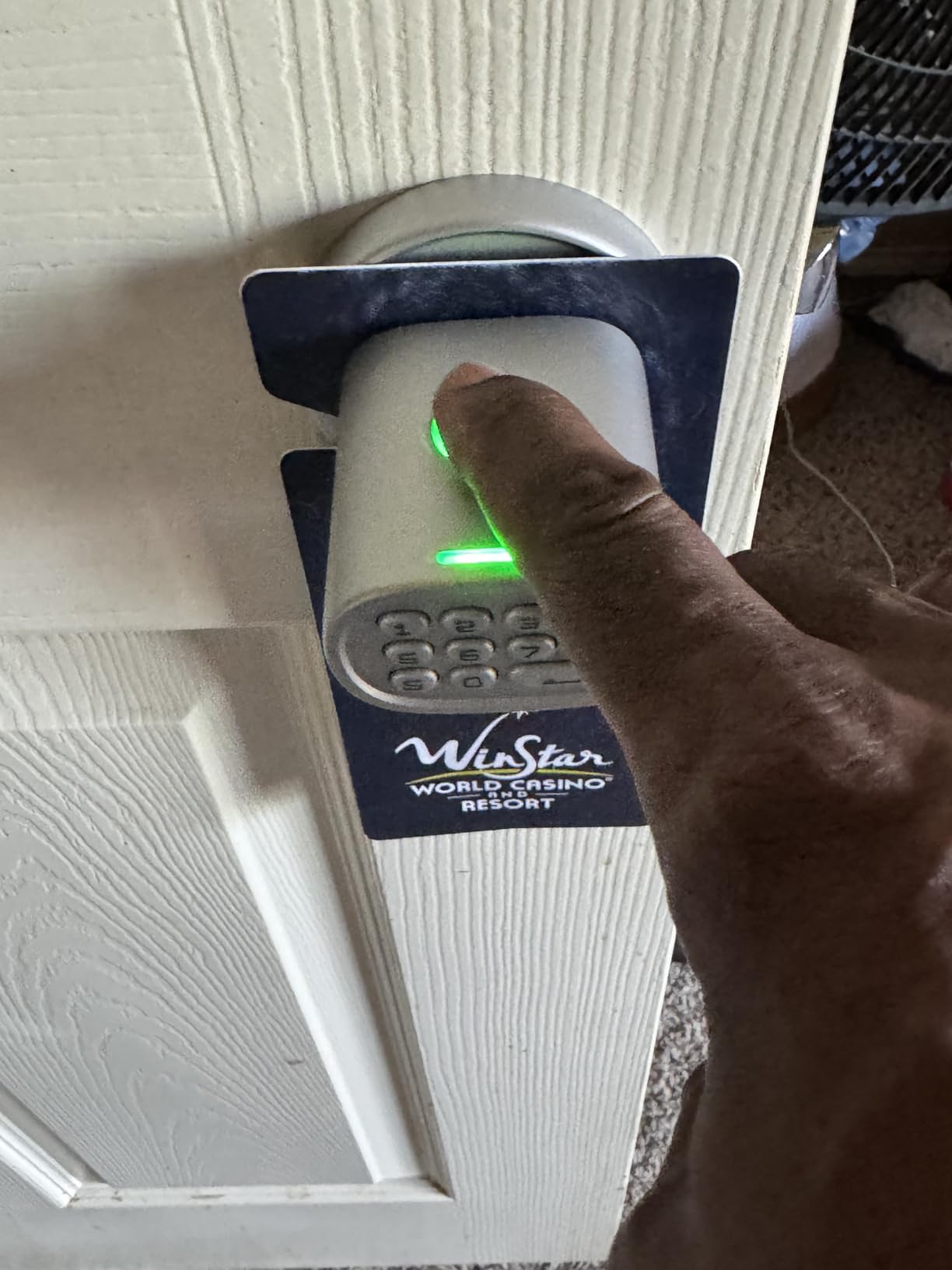
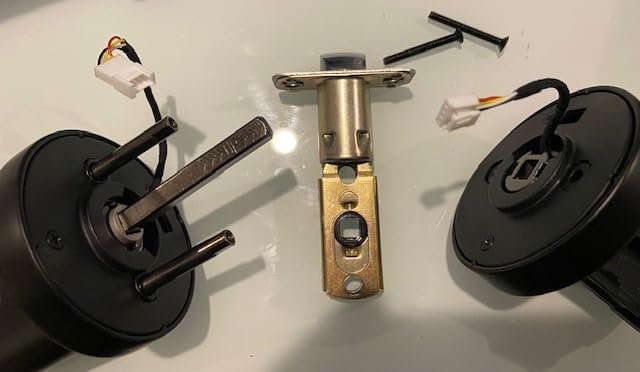
Installation is genuinely quick. Reviewers report 10 to 20 minutes with a Philips screwdriver, and many keep the existing strike plate. The Type-C emergency port on the underside means a power bank gets you in if the four AA batteries die, and two backup keys cover the rest.
Two independent ways in matters more on an interior door than people expect, because interior doors are opened more often than front doors and the batteries take more hits.
Expect to adjust the strike plate on some doors
The supplied strike plate and strike box can be larger than a standard interior strike opening. On most doors the existing plate is reused, but some buyers have had to trim or swap it, and no smaller alternative is included in the box. Measure your strike opening before you start, not after.
The interior side is the weaker half. There is no interior lock button, so this door cannot be locked from inside with a turn. For a closet or storage room that is fine, since you leave it locked. For a bedroom where someone might need to slam the door shut behind them, look at the TEEHO instead.
Check the noise level against your room
Reviewers repeatedly describe this knob as quieter than most electronic locks, and silent mode handles the keypad beeps. If the lock itself is on a door near a sleeping room, that is a real consideration in its favour.
Construction is zinc alloy, which explains the weight in the hand. The interior handle cover is the part some owners question for long-term durability, and the four AA batteries are not included in the package.
We earn a commission, at no additional cost to you. CERTAIN CONTENT THAT APPEARS ON THIS SITE COMES FROM AMAZON. THIS CONTENT IS PROVIDED 'AS IS' AND IS SUBJECT TO CHANGE OR REMOVAL AT ANY TIME.
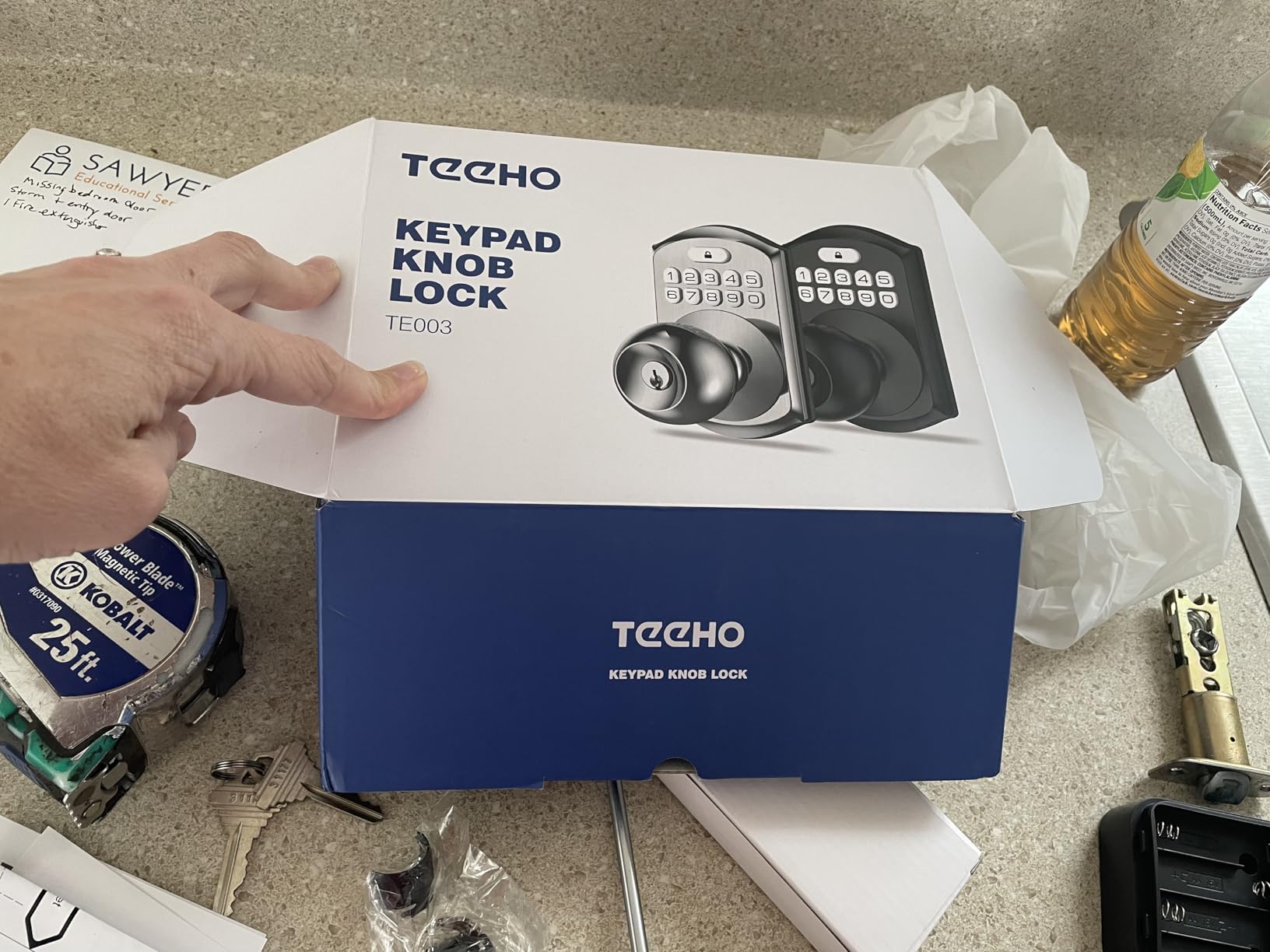
3. TEEHO TE003 Keypad Door Knob: Best for a Bedroom That Needs Real Privacy
TEEHO TE003 Keypad Door Knob Lock, Keyless Entry Door Handle, Matte Black
- ANSI Grade 3 aluminum body
- Interior privacy knob
- Fits 1-3/8 to 2 inch doors
- 20 user codes
Pros
- Interior knob locks the door from inside in about one second
- Fits the standard bore and both common backsets with no drilling
- One-time passcodes and anti-peep digit scrambling
- Auto-lock adjustable from 10 to 99 seconds plus one-touch lock
- Backlit keypad with a low-battery indicator
Cons
- A minority of units report the inside turn-lock jamming
- Programming secondary codes is fiddly and the instructions are unclear
- The knob is slightly smaller than a traditional door knob
We earn a commission, at no additional cost to you. CERTAIN CONTENT THAT APPEARS ON THIS SITE COMES FROM AMAZON. THIS CONTENT IS PROVIDED 'AS IS' AND IS SUBJECT TO CHANGE OR REMOVAL AT ANY TIME.
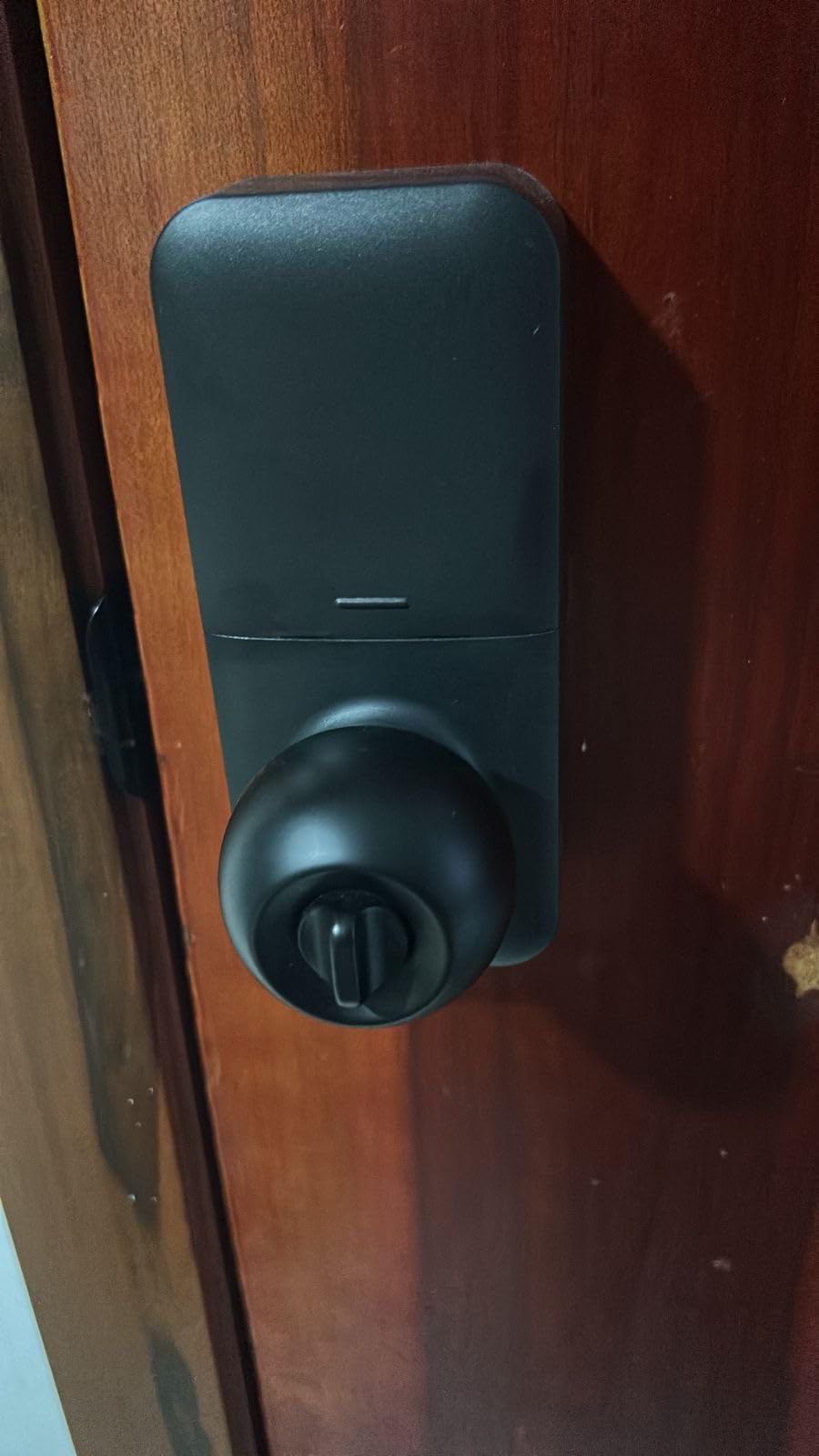
On an interior door, the inside of the lock is the part that matters most, and this is the only pick here that treats it as the priority. The interior knob locks the door from inside in about one second, so a child cannot bolt out of a bedroom and you can pull the door shut behind you without hunting for a thumb-turn in the dark.
That interior control also stops the failure mode that a parent worries about most, where a child or a pet works the inside handle and traps themselves in a room.
The fit spec sheet is the most useful in this group. It covers a 2-1/8 inch bore, both the 2-3/8 and 2-3/4 inch backsets, and door thicknesses from 1-3/8 to 2 inches, with no drilling required. If your interior door is a hollow-core slab within that range, this is one of the safest buys in the roundup.
Feature-wise it is a full list: 20 user codes, one-time passcodes, passage mode, vacation mode, mute mode, wrong-entry limit, a backlit keypad and a red low-battery indicator below 15 percent. Auto-lock adjusts from 10 to 99 seconds and is off by default, and one-touch locking works by holding any key for two seconds.
Test the inside knob before you walk away
A recurring complaint, and the reason this sits at 4.3 rather than higher, is that a minority of units have an inside turn-lock or lever that does not disengage fully. That can trap someone in the room. A small number of these cases were resolved when the company sent a replacement that installed in under ten minutes.
We would install it, lock it from inside, then lock it from outside and confirm it releases both ways before finishing. It takes a minute and it is the only failure on this list that locks a person in.
Budget time for code programming
Programming the first code is straightforward. Adding secondary codes is where reviewers report friction, and some found the printed instructions unclear on how to change a code after installation. Setting up all twenty codes in one sitting is easier than editing them one at a time later.
Battery life is claimed at up to one year on four AA batteries, which are not included, and there is a two-year warranty with lifetime customer service behind it. The knob is slightly smaller than a traditional door knob, which reviewers with large hands mention.
We earn a commission, at no additional cost to you. CERTAIN CONTENT THAT APPEARS ON THIS SITE COMES FROM AMAZON. THIS CONTENT IS PROVIDED 'AS IS' AND IS SUBJECT TO CHANGE OR REMOVAL AT ANY TIME.
4. Veise VE018 Fingerprint Keypad Knob: Best for Biometric and App Access
Veise VE018 Fingerprint Keypad Smart Door Knob Handle Lock, Satin Nickel
- Fingerprint sensor holding 20 prints
- 100+ codes
- Bluetooth app control
- 16-month battery claim
Pros
- Fingerprint reader recognises on the first or second try
- Eight access methods including card
- fob
- key and app
- Compact body that suits an interior door rather than looking like front-door hardware
- Access history logs show who opened the door and when
- Support line resolves setup and hardware issues with fast replacements
Cons
- Wi-Fi features need the separately sold Veise G1 gateway
- Fingerprint reader can need a second attempt with wet hands
- Keypad numbers sit in numeric order rather than the familiar layout
We earn a commission, at no additional cost to you. CERTAIN CONTENT THAT APPEARS ON THIS SITE COMES FROM AMAZON. THIS CONTENT IS PROVIDED 'AS IS' AND IS SUBJECT TO CHANGE OR REMOVAL AT ANY TIME.
Eight ways to open the door, which is the highest count in this group: a fingerprint sensor, app control over Bluetooth, keypad, IC card, mechanical key, remote authorisation, password sharing, and the fob that ships in the box. Two user cards and two key fobs are included.
The biometric claim is 0.2 second recognition from an AI self-learning sensor with stated accuracy above 99 percent, storing up to 20 fingerprints. We treat that as a vendor figure, but the customer reports are consistent with it: most owners describe the reader recognising on the first or second attempt, which is fast enough that a fingerprint stops feeling like a gimmick on a bedroom door.
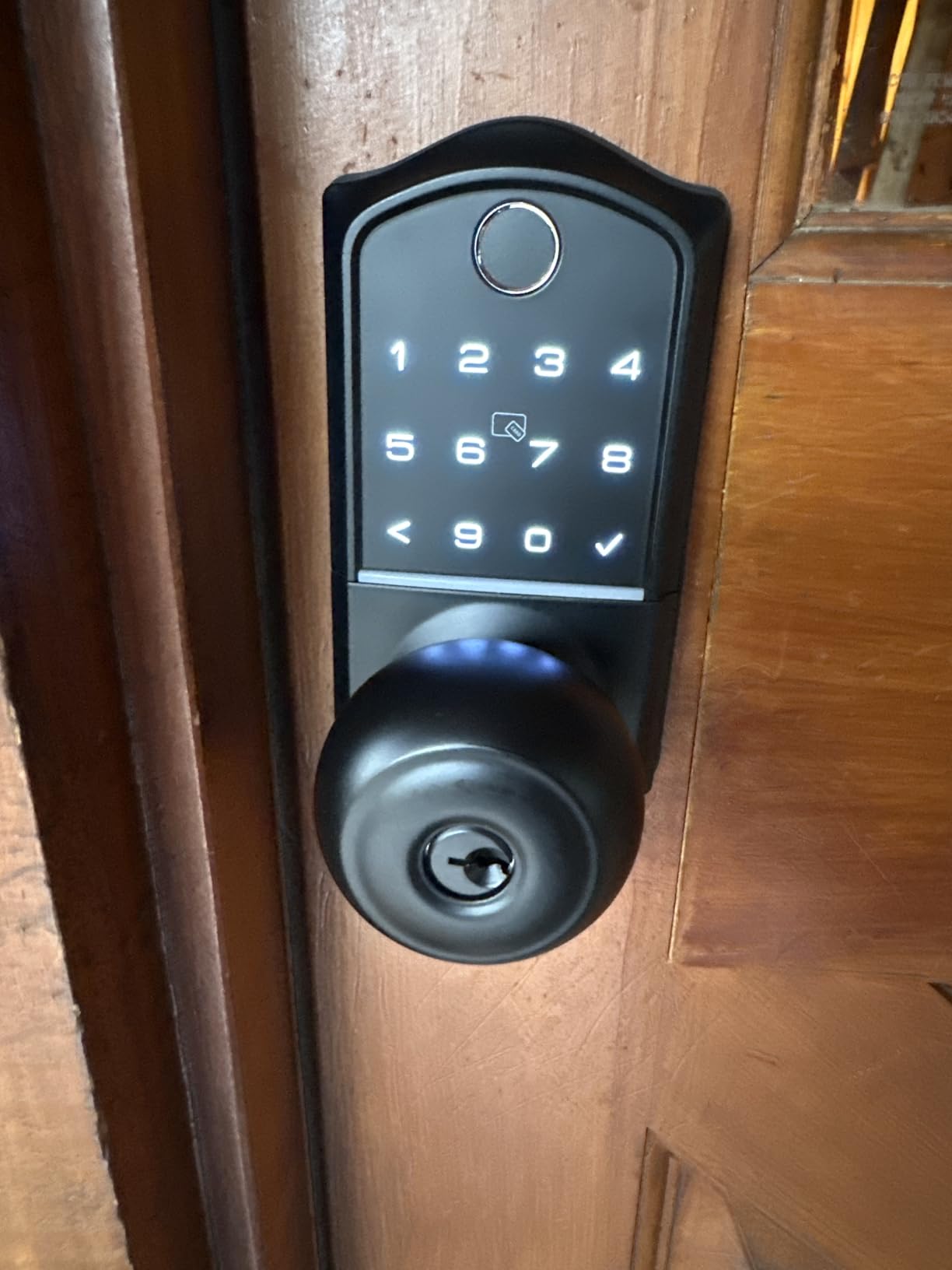
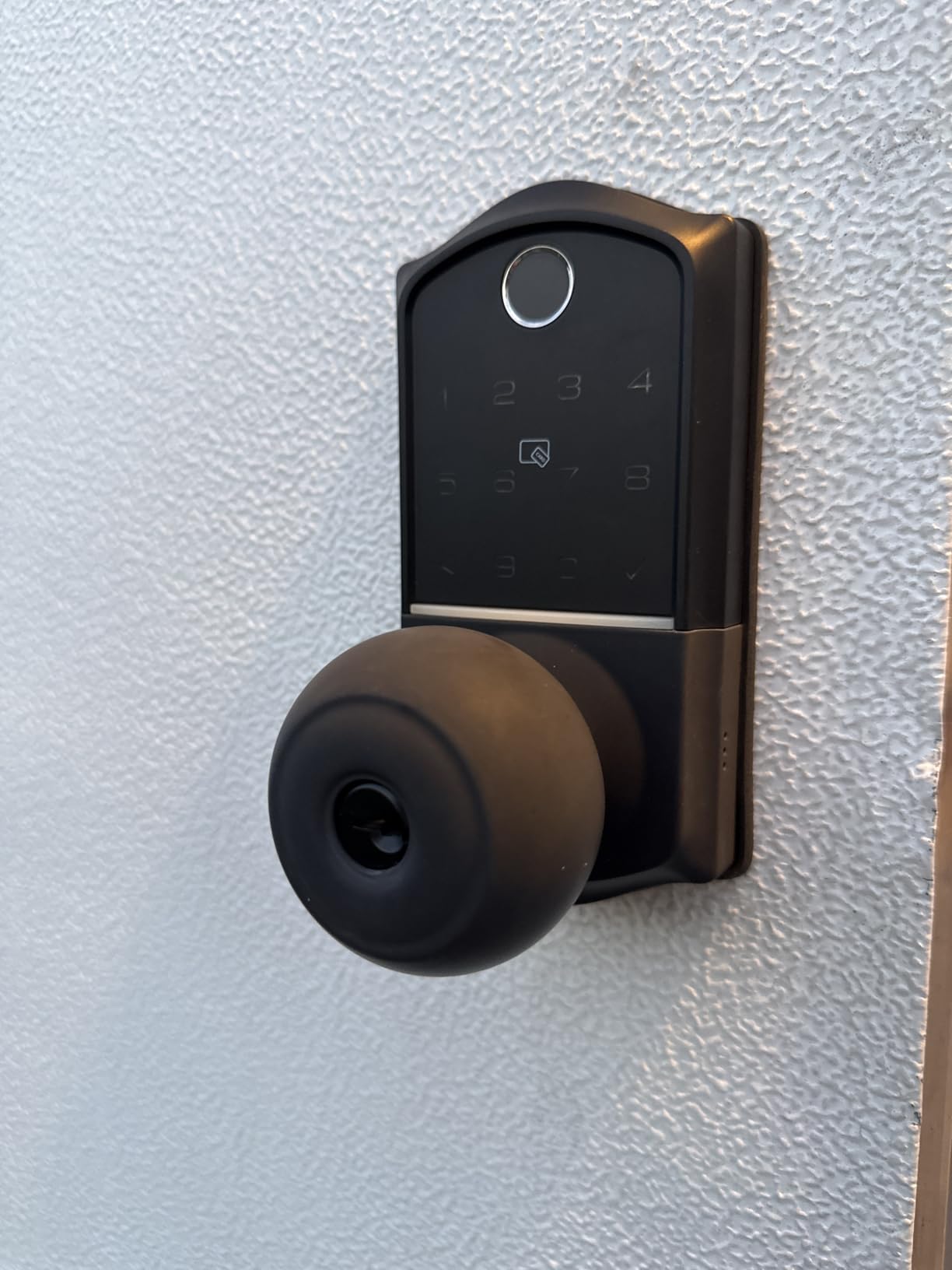
Codes are the other strength. More than 100 permanent, recurring and one-time codes, plus 100 or more fobs, with anti-peep random digits. Fit is doors from 1-3/8 to 2 inches thick with 2-1/8 inch holes and no drilling, so it drops into a standard interior door the same way the cheaper knobs do.
Buyers buy this one in bulk for multi-door setups, and the access history log showing who unlocked the door and when is the feature that makes multi-user worth it.
Work out the hub cost before ordering
Bluetooth app control works on its own from a phone in the same room. Anything beyond that, including remote authorisation and Alexa or Google Assistant, needs the Veise G1 gateway, which is sold separately. Each gateway supports only three devices, so a four-door home needs two hubs.
That is the single most decision-relevant number on this product, and it is not on the front of the box. If you only need fingerprint and keypad entry, buy the lock alone. If you want remote unlock on an interior door, add the gateway into your budget first.
Know the fingerprint limitations before moving in
The reader is deliberately strict. With wet hands, or after a quick grab with a bag in the crook of your arm, a second attempt is common. On a door next to a sink or a bathroom that is a daily annoyance rather than a rare one.
The keypad is also laid out in plain numeric order rather than the familiar 1-2-3 layout, so it is worth looking at before you memorise a code. Two backup keys and a Type-C emergency port cover lockout. Battery life is claimed at up to 16 months on four AA batteries, which are not included.
We earn a commission, at no additional cost to you. CERTAIN CONTENT THAT APPEARS ON THIS SITE COMES FROM AMAZON. THIS CONTENT IS PROVIDED 'AS IS' AND IS SUBJECT TO CHANGE OR REMOVAL AT ANY TIME.
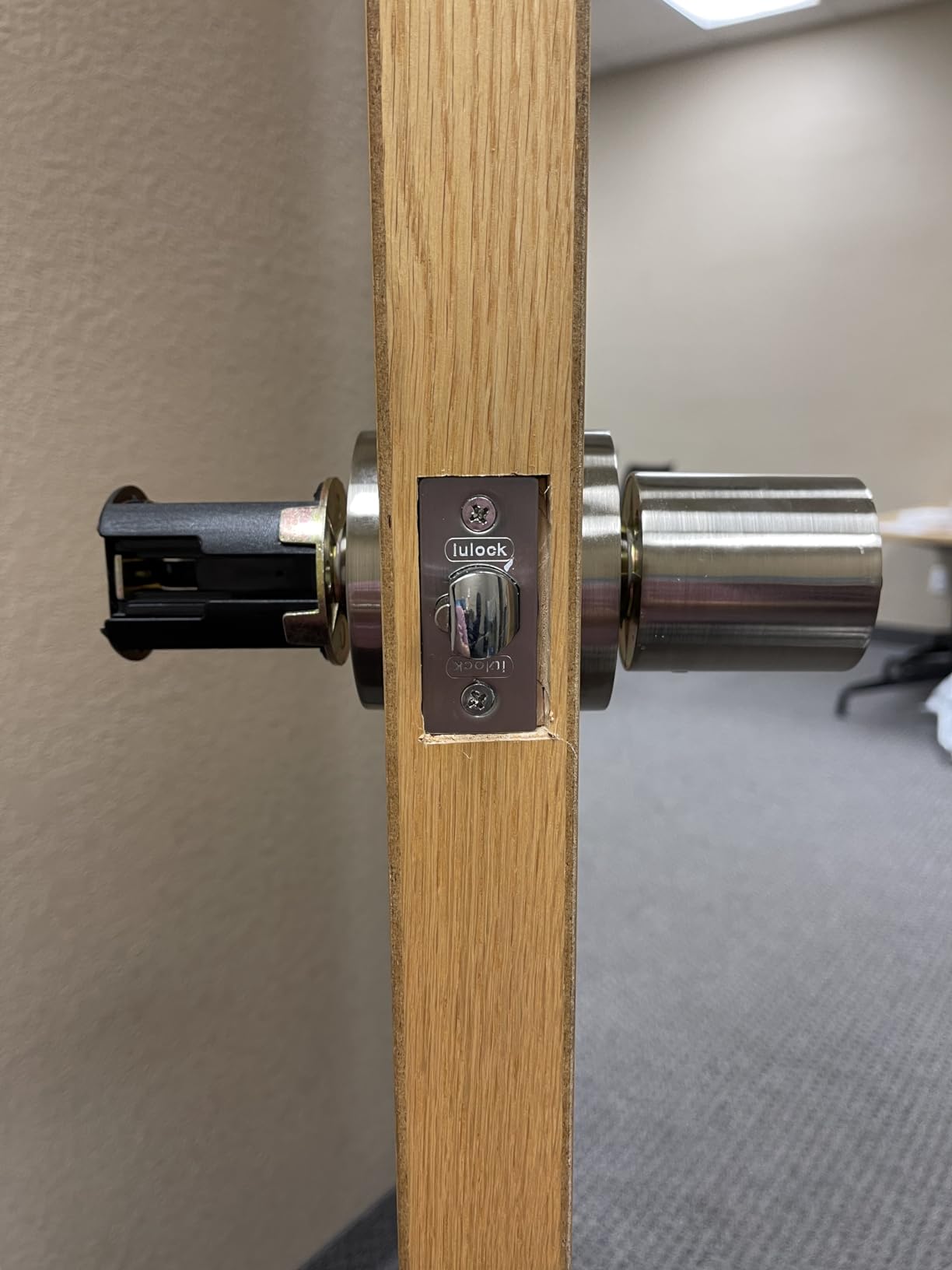
5. iulock Keypad and Key Smart Door Lock: Best Value for Multi-Door Homes
iulock Keypad & Key Smart Door Lock, 50 User Codes, Waterproof, Auto Lock – Matte Black
- 50 codes and two keys
- Fits doors 1-3/8 to 2-1/2 inch thick
- IP65 rated
- 18-month battery claim
Pros
- 50 customisable codes plus two keys on a solid lock cylinder
- Detachable silicone grip turns easily with wet or sweaty hands
- Fits thick doors up to 2-1/2 inch which is wider than most keypad knobs
- Owners report it working after months below freezing
- Passage mode
- silent mode and a low battery alarm
Cons
- No printed installation instructions so buyers rely on online videos
- Narrow knob and rubber gaskets can bind on the latch
- The master code is printed only in tiny type on the box
We earn a commission, at no additional cost to you. CERTAIN CONTENT THAT APPEARS ON THIS SITE COMES FROM AMAZON. THIS CONTENT IS PROVIDED 'AS IS' AND IS SUBJECT TO CHANGE OR REMOVAL AT ANY TIME.
This is the most reviewed lock we looked at, and the reason is straightforward: it does the most for the least. Fifty customisable codes of 1 to 15 digits, a solid lock cylinder, and two physical keys that work with most mechanical keys already in your house.
The thickness range is the quietly important spec. It fits doors from 1-3/8 to 2-1/2 inches thick with an adjustable latch covering both common backsets, and it is reversible for either handing. That makes it the one to look at first if you have an unusually thick or unusually thin interior slab.
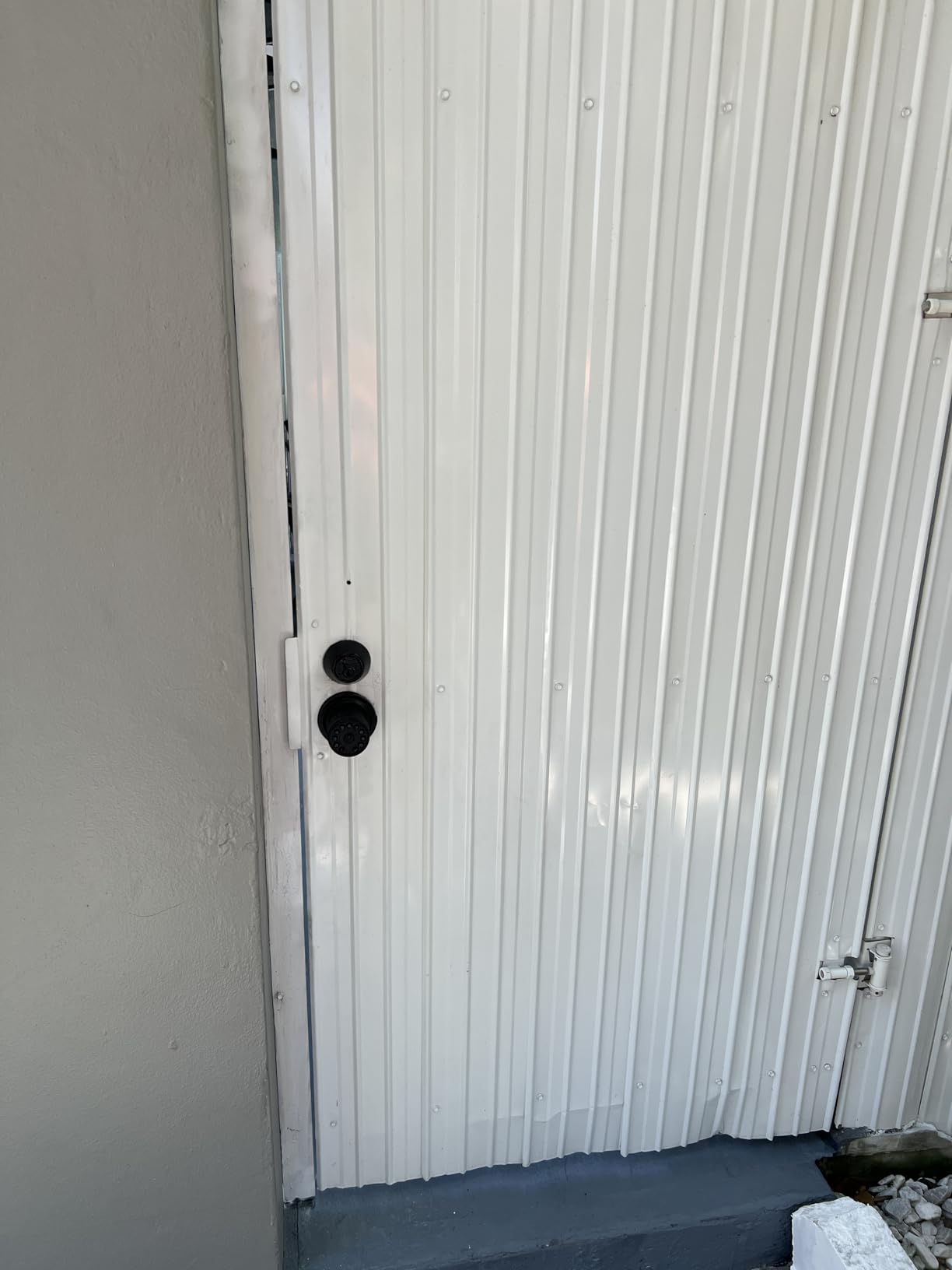
The detachable silicone grip is the feature reviewers keep coming back to. It gives you enough purchase to turn the knob with wet or greasy hands, which matters on a door between a kitchen and a utility room as much as it does on an exterior-facing door. It can be removed if you prefer the bare knob.
Passage mode keeps the door unlocked while you carry things through, silent mode kills the keypad beeps, and there is a low battery alarm plus Type-C USB backup power. IP65 weather resistance and an operating range of -22 to 176 degrees Fahrenheit mean the same lock works outdoors in deep cold, which several owners in Quebec confirm.
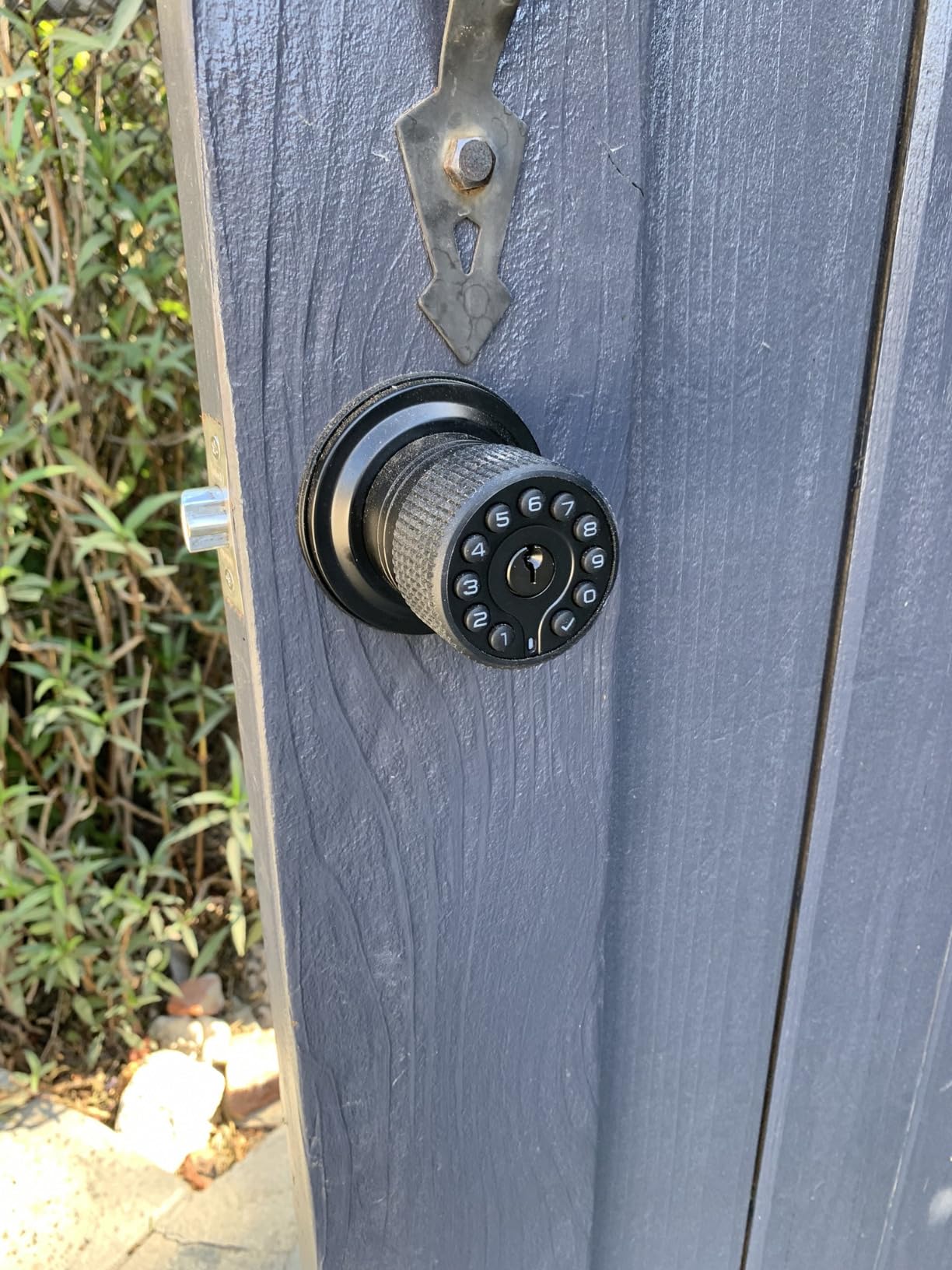
Allow extra time for the gasket fit
The most common installation complaint is the rubber seal gaskets and the narrow knob, which can be awkward to fit and can bind on the latch. There are no printed instructions in the box, so budget time to find a video before you start rather than during.
Write the master code down somewhere safe before you discard the packaging. It is printed only in tiny type on the box and is not reproduced in any instructions, and it is the code that controls every other code.
Weigh the warranty against the one-star share
Eleven percent of reviews are one star, the second-highest share in this roundup, and almost all of those cluster around installation rather than the lock failing. The mechanical and finish warranty is lifetime-limited, with one year on the electronics.
On durability, some owners describe the unit as lightweight, and the rubber grips cannot be replaced once worn out. Neither complaint appeared often, but both are worth weighing if this is a door that gets hit hard.
We earn a commission, at no additional cost to you. CERTAIN CONTENT THAT APPEARS ON THIS SITE COMES FROM AMAZON. THIS CONTENT IS PROVIDED 'AS IS' AND IS SUBJECT TO CHANGE OR REMOVAL AT ANY TIME.
6. Sifely Keypad Smart Lock with Handle: Best for App Control and Guest Codes
Keyless Entry Keypad Smart Door Lock with Handle & Knob – Digital Deadbolt for Front, Bedroom, Office & Interior Doors, App Control for Airbnb, Guests & Kids, Easy DIY Install (No Fingerprint)
- App-managed codes and unlock history
- Five unlock methods
- Handle and knob set
- Screwdriver install
Pros
- The only pick here with app-based remote unlock and an unlock history log
- Five ways to unlock including a physical key and fob so it still works without the app
- Designed for bedroom
- office and interior doors as well as entries
- Screwdriver-only installation with no drilling or wiring
- Revocable guest codes suit hosts and family rooms
Cons
- No fingerprint reader so it is slower to open than biometric options
- Remote features need a separately sold gateway
- Voice control adds another hub purchase
We earn a commission, at no additional cost to you. CERTAIN CONTENT THAT APPEARS ON THIS SITE COMES FROM AMAZON. THIS CONTENT IS PROVIDED 'AS IS' AND IS SUBJECT TO CHANGE OR REMOVAL AT ANY TIME.
Everyone else on this list is a keypad-only lock. This one has a phone app, and that changes what it is for. You create codes for kids, guests or short-term renters from your phone, view an unlock history, and share access remotely.
Five unlock methods are available: keypad, app, physical key, fob and the inside knob. The key and fob matter more than they sound, because they mean the door still opens if the app or the phone goes away.
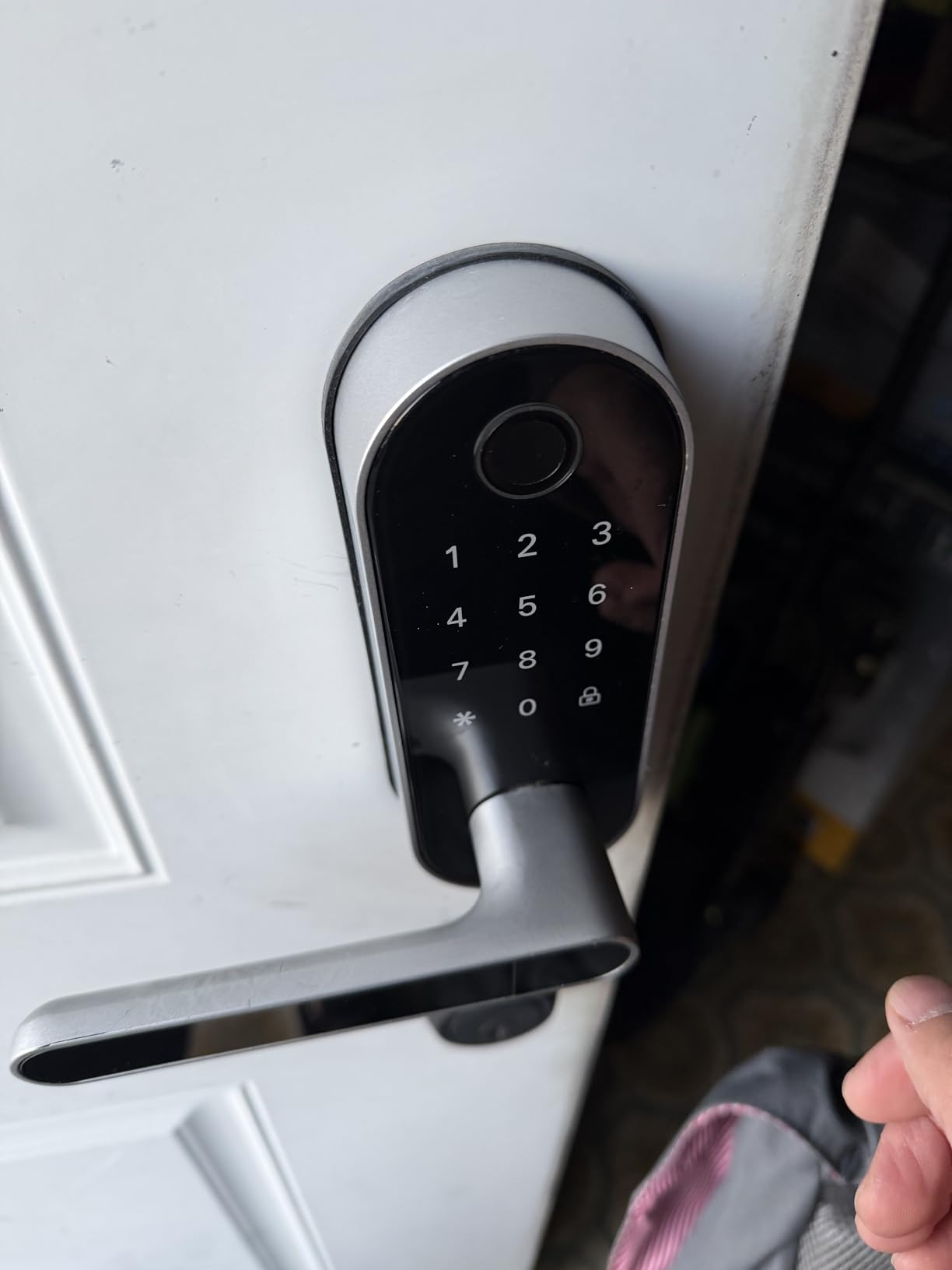
It ships as a handle and knob set rather than a bare keypad knob, which is useful if your interior door currently has a lever on one side. Installation needs a screwdriver only, with no drilling or wiring.
This is the newest and shortest-reviewed listing in the group at 382 reviews, and it has the highest five-star share among the app-controlled options. Fewer reviews means less long-term data, which is worth keeping in mind before making it your only lock.
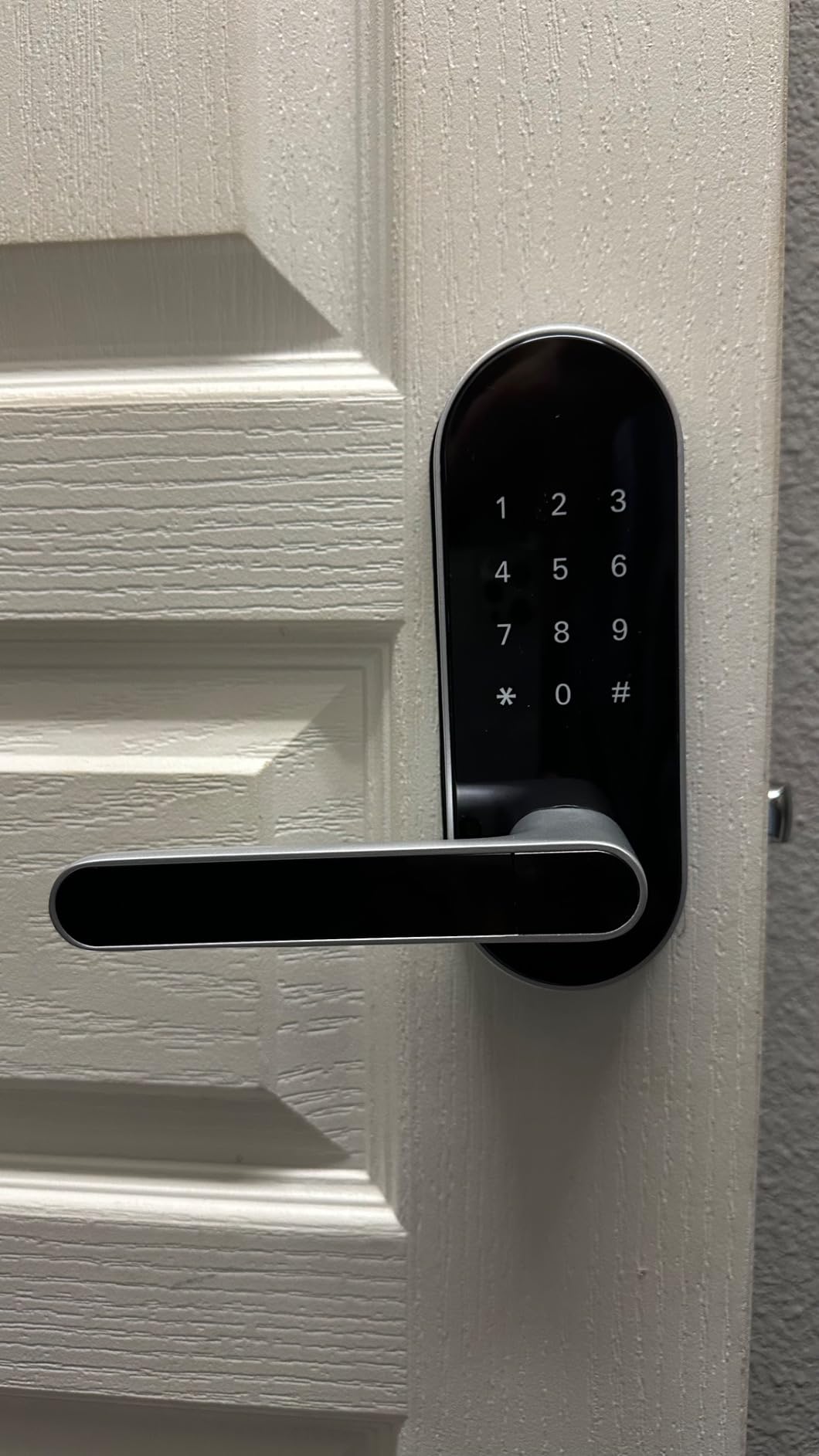
Confirm the gateway is worth it for your door
This is the no-Wi-Fi edition, so the remote features that make this pick interesting need a separately sold gateway before they work. Voice control through Alexa or Google needs the same gateway, so you are buying a hub to get the benefit you chose this lock for.
For a short-term rental or a room where a sitter comes and goes, revocable codes you can kill from your phone are worth the extra hardware. For a private bedroom, the app may be more complexity than the door needs.
Accept that there is no fingerprint reader
Every other credential is fast, but this lock opens slower than a biometric model because you are typing a code rather than touching a sensor. On a door that gets used constantly through the day, that difference is noticeable.
There is also a fair point in its favour: fewer electronic parts in a door used many times a day means fewer things that can fail. The handle-and-knob format suits doors that already have a lever rather than a round knob.
We earn a commission, at no additional cost to you. CERTAIN CONTENT THAT APPEARS ON THIS SITE COMES FROM AMAZON. THIS CONTENT IS PROVIDED 'AS IS' AND IS SUBJECT TO CHANGE OR REMOVAL AT ANY TIME.
7. BOTHSTAR Keypad Door Knob: Best for Thick Interior Doors
BOTHSTAR Keypad Door Knob with Key,Keyless Entry Door Lock, Code Locks Door Knob, Auto Lock,50 User Code, for Home,Office,Hotel,Bedroom,Garage,Not Deadbolt
- 50 codes plus a master code
- Entries from 4 to 15 digits
- Fits doors to 2-1/2 inch
- IP65 rated
Pros
- 50 user codes plus a master code with entries from 4 to 15 digits
- Password disguise adds decoy digits around the real code
- Fits doors up to 2-1/2 inch thick with an adjustable latch
- Solid lock cylinder and metal construction that feel substantial
- Visitor mode and silent mode cover busy household periods
Cons
- Keypad visibility is poor in low light
- Passage mode is toggled from outside the door only
- Some orders arrive missing accessories such as the grip
We earn a commission, at no additional cost to you. CERTAIN CONTENT THAT APPEARS ON THIS SITE COMES FROM AMAZON. THIS CONTENT IS PROVIDED 'AS IS' AND IS SUBJECT TO CHANGE OR REMOVAL AT ANY TIME.
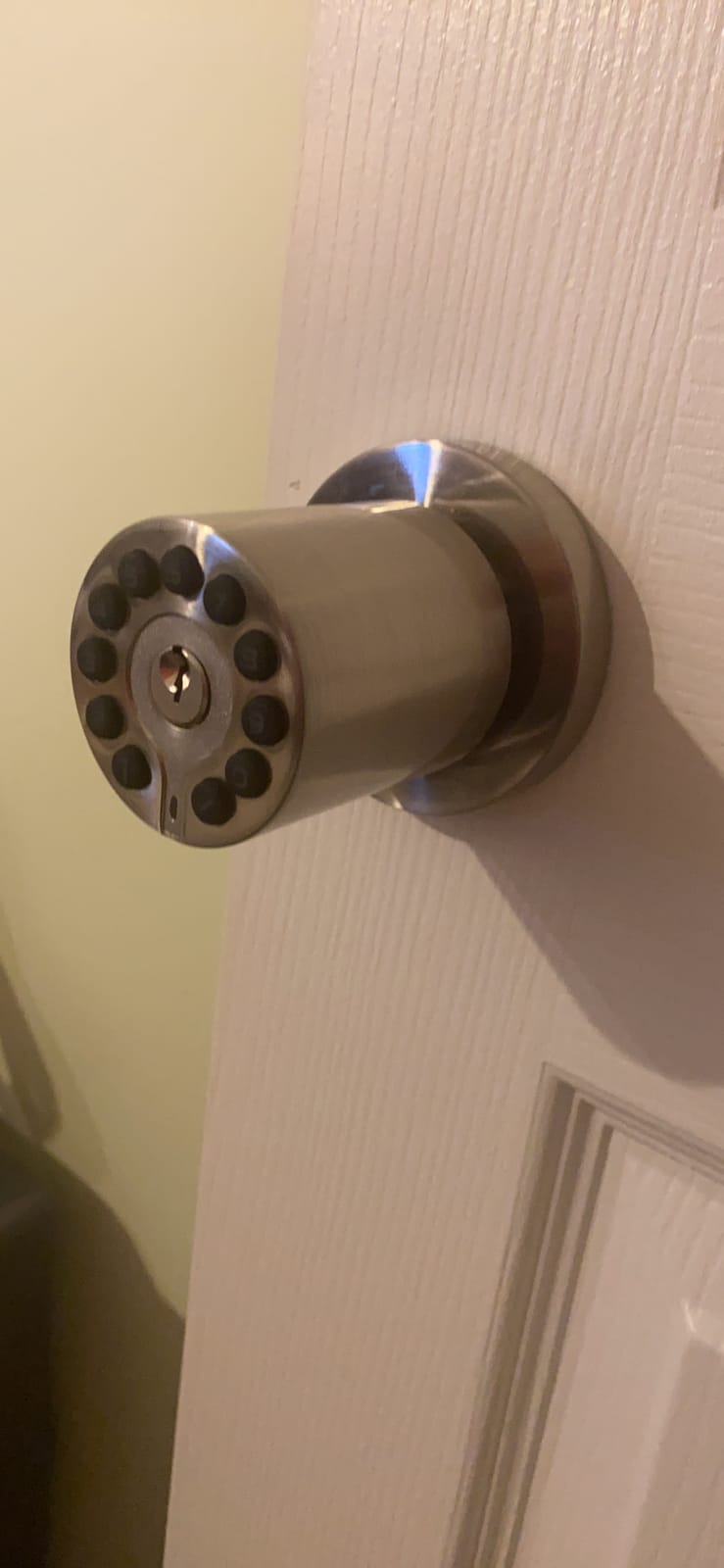
This is a close relative of the iulock knob, and the difference is mostly in how codes and modes are organised. Here you get a master code plus 50 user codes, and each code can be anywhere from 4 to 15 digits. Longer codes make shoulder-surfing far less useful.
Password disguise goes further than the usual anti-peep feature. Rather than random digits around the real code, the lock accepts a decoy number pressed before or after the real one, so a person watching the door sees a string that does not open the lock.
The thickness range is the reason to choose it over the iulock for some doors: 1-3/8 to 2-1/2 inches with an adjustable latch covering both common backsets, installed with a screwdriver alone. IP65 weather resistance means garages, sheds and exterior-facing internal doors are fair game.
Visitor mode keeps the door in a high-traffic state when you have guests, and silent mode quiets the keypad. There is a low battery alarm and Type-C USB backup power for lockout.
Check the keypad lighting before choosing it for a dark hallway
The most consistent negative theme across reviews is night-time visibility. The keypad is backlit but does not have a separate light-up button, so owners report having to feel for the keys on a dark porch or in an unlit corridor.
If your interior door opens onto a dim hallway, test the keypad in the dark before you commit. A backlit screen that dims to save power is a poor match for that spot.
Check what is actually in the box
A recurring complaint is orders arriving with parts missing, most often the rubber grip or mounting accessories. Everything is replaceable, but it means you should open and inspect the box before you start the install rather than after.
Passage mode is controlled from outside the door, which is awkward if your use case is keeping a room unlocked while you carry things through from the hallway. Replacement silicone grips are not readily available from the seller.
We earn a commission, at no additional cost to you. CERTAIN CONTENT THAT APPEARS ON THIS SITE COMES FROM AMAZON. THIS CONTENT IS PROVIDED 'AS IS' AND IS SUBJECT TO CHANGE OR REMOVAL AT ANY TIME.
8. MiLocks TKK-02SN Digital Door Knob: Best for Thin Interior Slabs
MiLocks TKK-02SN Digital Door Knob with Keypad – Keyless Entry Knob Lock with Code – Interior Door Keypad Lock for Bedrooms & Storage Rooms, Adjustable Latch, Auto-Locking Audible Alert, Satin Nickel
- Solid brass body
- Glow-in-the-dark keypad
- Fits 1-1/4 to 1-7/8 inch doors
- 6 user codes
Pros
- Purpose-built for thin interior door slabs and fits using existing hardware holes
- Adjustable latch covers both common backsets with no door modifications
- Physical buttons suit owners with large hands
- Solid brass body with concealed screws gives a finished look
- 25-year mechanical warranty behind the body
Cons
- Lock and unlock tones are loud enough to wake someone in a nearby room
- Only 6 user codes which is the fewest of any pick here
- Low battery can mean 20 beeps and then no unlock
We earn a commission, at no additional cost to you. CERTAIN CONTENT THAT APPEARS ON THIS SITE COMES FROM AMAZON. THIS CONTENT IS PROVIDED 'AS IS' AND IS SUBJECT TO CHANGE OR REMOVAL AT ANY TIME.
This is the interior-door specialist of the group, and by a distance the most reviewed product we looked at. It is designed to go on doors 1-1/4 to 1-7/8 inches thick, which is thinner than the range most electronic knobs cover, and it fits using the existing hardware holes.
That means no drilling and no contractor on exactly the doors people worry about damaging. If your interior door is a hollow-core slab with a thin edge, this is the one most likely to go on without modification.
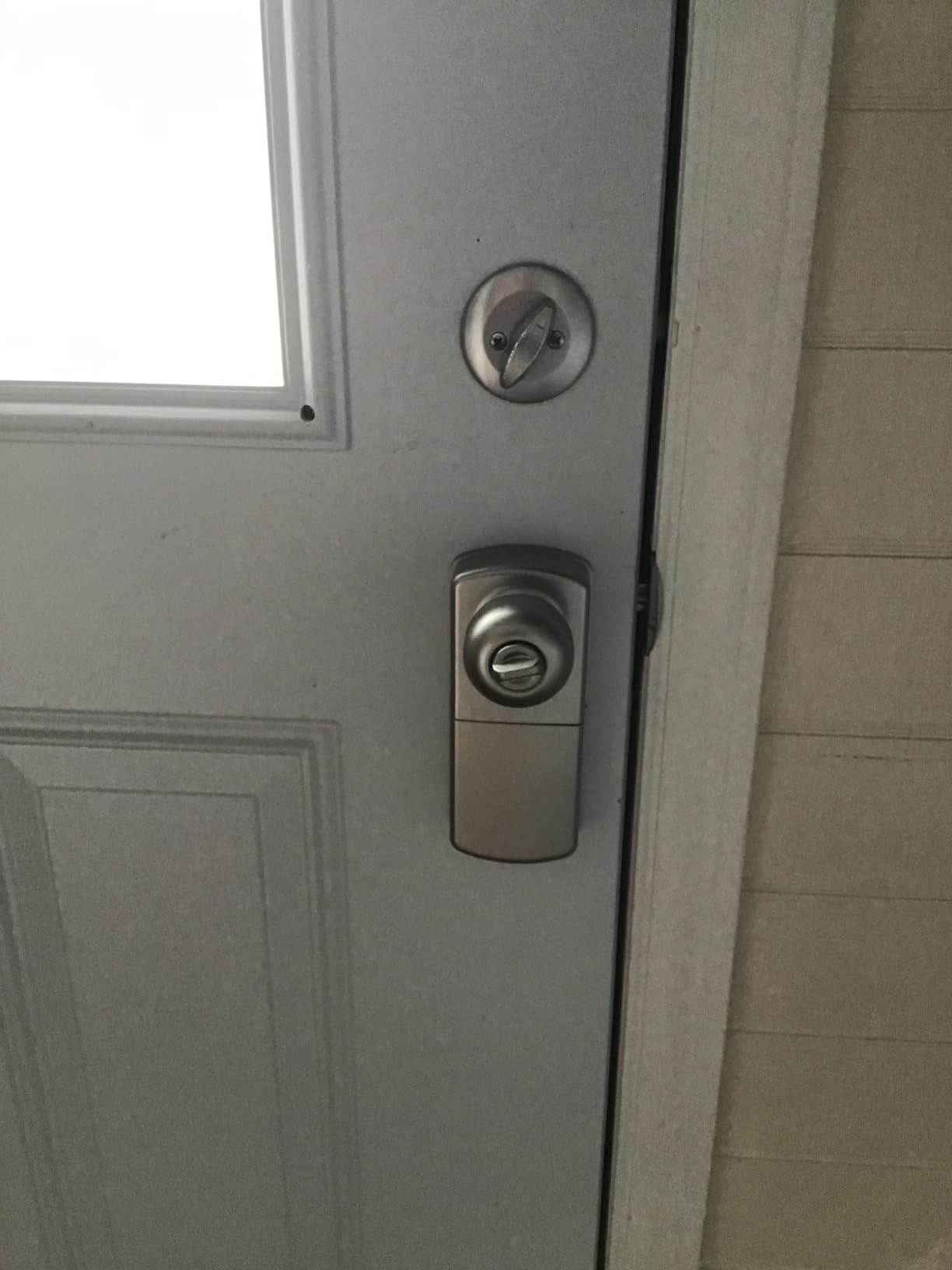
The build is the best in the roundup: solid brass with concealed screws, and physical keypad buttons rather than a touchscreen. Long-term owners with large hands prefer the tactile feel, and the glow-in-the-dark keypad stays readable in a dark bedroom or a night-time hallway without a light.
Distinct tones confirm lock, unlock and low battery, and auto-lock is optional, toggled by a switch inside the battery compartment. Six codes is the whole capacity, which is plenty for a bedroom, closet or storage room and not enough for a household.
Decide whether the tones will bother you
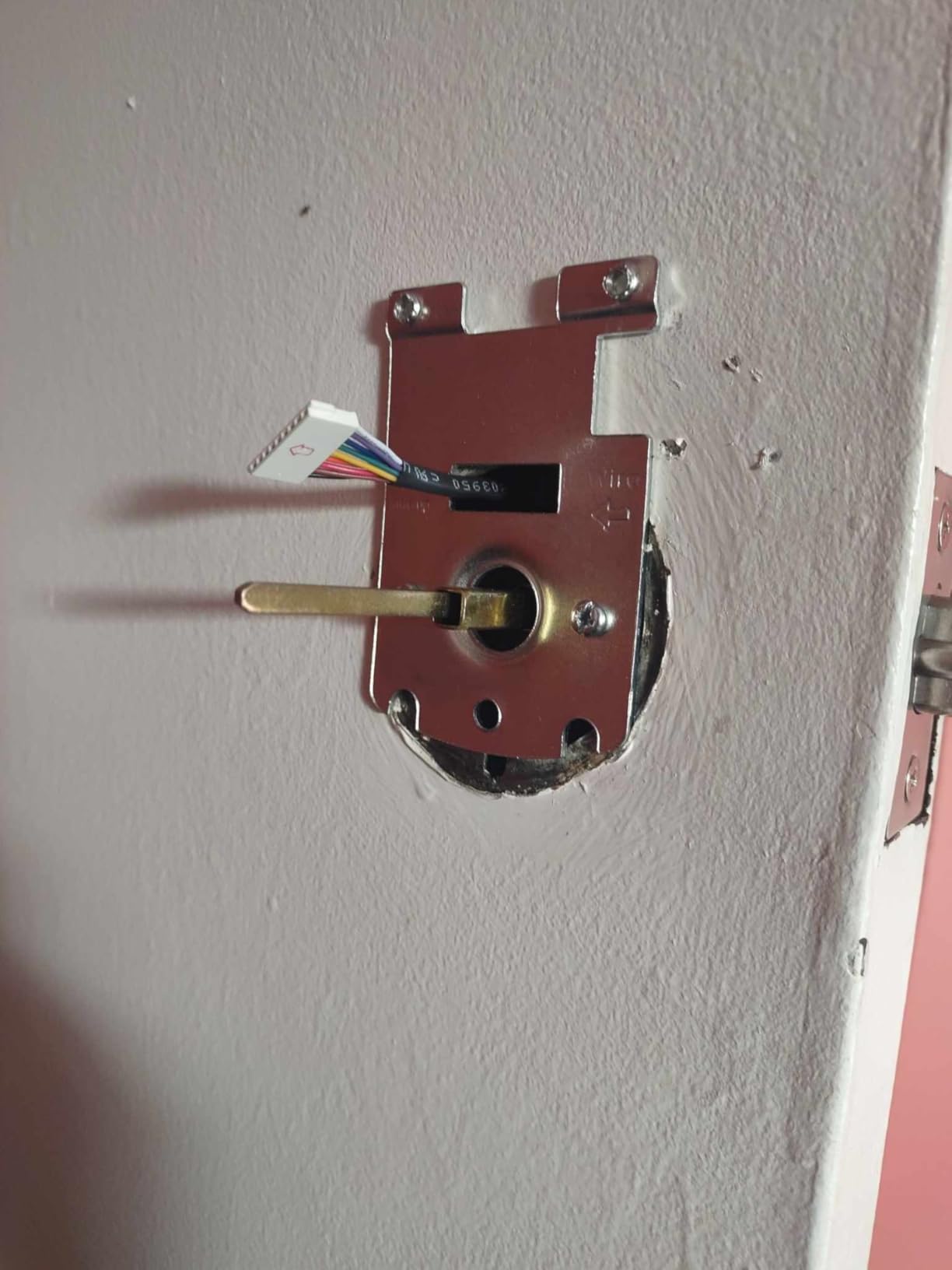
Noise is the defining trade-off on this lock. The audible confirmation is genuinely useful in the abstract, but owners on bedroom doors report the beeps and motor are loud enough to wake someone in a nearby room. On a hall door between a bedroom and a bathroom, think hard before buying.
Its 4.0 rating is the lowest here, and the split is clear: some owners have had one for years with no trouble, while others report a unit that stopped working within weeks or months. The 25-year mechanical warranty covers the brass body, with one year on the electrical parts.
Use fresh alkaline batteries and nothing else
Multiple owners traced failures to voltage drop. The motor draws 2 amps and will not run below roughly 5.4 volts, so rechargeable nickel-metal hydride cells cause failures that look like a broken lock. Use fresh alkaline AA batteries, and change all four at once.
Low battery triggers about 20 beeps and can then stop the lock unlocking, so the warning matters more here than on the other picks. Technical support requires online registration and is largely automated.
We earn a commission, at no additional cost to you. CERTAIN CONTENT THAT APPEARS ON THIS SITE COMES FROM AMAZON. THIS CONTENT IS PROVIDED 'AS IS' AND IS SUBJECT TO CHANGE OR REMOVAL AT ANY TIME.
Smart Knob, Smart Lever or Retrofit Thumb-Turn?
Most interior doors are single-bore, which means one hole for the spindle and no separate deadbolt. That single fact rules out the large exterior deadbolt panels most people picture when they hear the words smart lock. It also means the hardware category matters less than the door measurement.
A smart knob is a rounded handle with the keypad on it. It suits closets, storage rooms, guest rooms and any door where you want the existing appearance preserved, and it fits the smallest bores most reliably. A smart lever looks more deliberate and gives a bigger grip surface, which matters on a door that gets hit hard.
A retrofit interior thumb-turn is a different product entirely. It goes on the existing lock, adds a turn or slide to secure the door from inside, and needs no batteries, hub or app. If you rent, or you only want privacy without connectivity, that is the honest answer.
One more category deserves naming because it is entirely absent from the roundups ranking on this topic: storage and cabinet locks. Keypad padlocks for wardrobes, closets and cabinets are a separate market with their own mounting assumptions, and they do not belong in a list of door hardware. If that is what you are after, none of the eight picks below will fit.
Will It Fit Your Interior Door? Measure These 6 Things
Almost every fit complaint we read in the reviews came down to one of two things: a door that was thinner than the lock expected, or a strike plate that did not match. Six checks cover both.
First, door thickness. Most interior slabs are 1-3/8 inches, and standard exterior doors are thicker. The MiLocks covers down to 1-1/4 inches, the TEEHO and Veise cover 1-3/8 to 2 inches, and the iulock and BOTHSTAR reach 2-1/2 inches. Measure the slab at three points, top, middle and bottom, because hollow-core doors vary.
Second, bore diameter. A standard US interior bore is 2-1/8 inches, and the TEEHO spec sheet states it explicitly. If yours is a 2-1/4 inch hole, expect to fill and re-drill.
Third, backset, which is the distance from the door edge to the centre of the bore. Two sizes cover the overwhelming majority of US doors: 2-3/8 and 2-3/4 inches. The MiLocks, iulock and BOTHSTAR all ship with an adjustable latch that covers both, which removes the single most common reason a lock will not go on.
Fourth, whether the door is hollow-core or solid-core. This matters more on interior doors than the spec sheets admit, because a hollow-core slab has a hollow void between two thin skins. A long screw driven into the edge for a deadbolt has nothing to bite into, which is exactly why interior doors are single-bore in the first place. Every lock in this roundup mounts through the existing face holes and avoids that problem.
Fifth, handing. Most knobs in this group are reversible and work on either hand, but a knob with a fixed orientation needs to be turned over before it goes in. Check that your door swings left or right, then confirm the model handles both or matches.
Sixth, the strike opening. Measure the plate on the door frame, not the gap. The ThorBolt’s supplied strike is a known outlier here, with owners reporting it is oversized for a standard interior strike opening.
Finally, check the swing and the clearance. On a door that sits close to a wall, the interior assembly of a deep model can foul the frame. Door sag on an older house also means the latch may not line up with a new strike without adjustment.
Do You Need a Hub for an Interior Smart Lock?
For most of these locks, no. That is the single most useful thing to understand before buying, and it is the column most competitor roundups leave out. The default mode on a keypad knob is entirely local: enter a code, the door opens. No router, no account, no subscription, no internet.
Bluetooth-only locks go one step further. The Veise VE018 connects to a phone over Bluetooth for local app control, so you can manage codes and see activity from the same room without anything in between.
Remote unlock is where hardware appears. Alexa and Google Assistant control on the Veise requires the separately sold G1 gateway, and each gateway supports only three devices. The Sifely in this roundup is the no-Wi-Fi edition, so its app-based remote features and voice control both need a gateway sold separately.
Wi-Fi and hub sprawl is a real concern for people running Home Assistant, and it surfaces constantly in discussions about interior locks. The honest summary is that these eight picks are not ecosystem products. None of them works natively in Home Assistant, Apple Home or SmartThings, and none offers Matter over Thread. If local control in a specific platform is a requirement rather than a preference, the list of interior-suitable locks on that side of the market is much shorter than the list of keypad knobs.
What you lose by skipping the hub is remote access and voice control. What you keep is the reason most people buy a smart lock on an interior door in the first place: a code instead of a key, and codes you can change without a locksmith.
Batteries, Low-Battery Warnings and Backup Entry
Battery claims on these products are manufacturer figures, and the independently reported experience varies with how often the door is opened. A bedroom door opened fifteen times a day consumes far more than a closet door opened twice.
The stated ranges run from one year on four AA batteries for the TEEHO, to two years for the ThorBolt M1, to 16 months for the Veise, to 18 months on four AAA cells for the iulock. On a busy interior door, treat all of these as ceilings rather than expectations. None of the eight includes batteries in the box.
Every lock here has at least two independent ways in besides the keypad, which is the feature that separates a smart interior lock from a smart deadbolt. The ThorBolt, TEEHO, Veise, iulock and BOTHSTAR all include physical keys and a Type-C emergency power port. A Type-C port on a smart lock is a power input, not a charger: connect a power bank and the lock will unlock while the external supply is connected.
Low-battery behaviour varies more than the claims suggest. The TEEHO shows a red indicator below 15 percent, the iulock and BOTHSTAR have a low battery alarm, and the MiLocks emits about 20 beeps and can then refuse to unlock. That last behaviour is the reason to treat a warning as urgent rather than informational.
One chemistry note that applies specifically to the MiLocks: the motor draws 2 amps and fails below roughly 5.4 volts, so rechargeable cells cause failures that look like a dead lock. Fresh alkaline batteries, changed as a set, avoid it.
If you are still nervous about lockout, ask whether the door needs a lock at all. That is the next section, and it is the one most roundups skip.
When a Plain Keyed Lock Is the Better Buy
There is a case against putting a smart lock on an interior door, and it is worth making properly. A privacy lever or a keyed knob is a mechanical device. It needs no batteries, no hub, no account and no app, and it cannot fail because a server is down, a firmware update is bad or somebody guessed your code.
That is the position taken in an r/homeassistant thread about interior smart door locks, where the top-voted response argued that a simple keyed lock is easy, effective, very inexpensive, and requires no batteries, charging or setup. Other users in the same discussion raised the two questions that actually stop a purchase: whether a smart lock is overkill for an interior door, and whether a landlord would allow one at all.
It wins in three situations. If you are renting, a keyed lock that comes out cleanly when you leave is far simpler than anything with electronics in it. If the door is a plain bedroom you always close from inside, a privacy lever does the whole job. And if you want the door unlocked during the day so a child or a pet moves freely, a passage-mode setting on a smart lock is an electronic way of doing something a turned-back knob does for nothing.
It loses in a different set of situations. If you hand out access regularly, a code you can change in a minute beats a spare key that someone loses or copies. If you want to know whether your teenager got home, or you are running a guest suite and a short-term rental, revocable temporary access is the actual product. And if you want the door to text you when someone enters, a mechanical lock cannot do that at any budget.
So the honest framing is this. Buy a smart interior lock when the reason you want it is access control, not security. Buy a keyed privacy lock when the reason you want it is simply a door that stays shut.
Frequently Asked Questions
What lock is best for an internal door?
A smart keypad knob or lever, because most interior doors are single-bore with no deadbolt to replace. Our top pick is the Yamiry keypad door knob, which fits a standard bore, holds 20 codes plus guest codes, has an inside thumb-turn and a 5-to-99-second auto-lock timer, with no hub or app required. For a thin hollow-core slab, the MiLocks digital knob covers the narrowest thickness range.
What are the downsides of smart door locks?
The main ones are battery dependence and the risk of lockout, the cost of a hub or subscription for remote features, cloud account exposure, voice-unlock privacy, fingerprints failing with wet or dirty hands, and fit failures on non-standard interior doors. On a door used many times a day, more cycles also means more opportunities for the electronics to fail.
Which smart door lock brand is best?
It depends on the priority. For interior fit and metal hardware, TEEHO and Veise publish the clearest door specifications. For code capacity, ThorBolt and iulock lead. For app-based access, Sifely is the only pick here with unlock history. For long-term mechanical warranty, MiLocks carries 25 years on the body. For value, iulock and BOTHSTAR do the most per code.
What are the top 5 smart door locks?
Our top five for interior doors are the Yamiry keypad door knob, ThorBolt M1 keypad knob, TEEHO TE003 keypad knob, Veise VE018 fingerprint knob and the iulock keypad and key lock. Each covers a different need: metal build with an adjustable auto-lock, 100 passcodes, a one-second inside privacy knob, fingerprint and app access, and 50 codes on thick doors.
Do interior doors need smart locks?
Usually not for security. A spring latch on an interior door deters nobody determined. What a smart interior lock actually adds is access control: codes you can issue and revoke without a locksmith, a log of who entered, and no spare keys to lose. If you only need a door to stay shut, a keyed privacy lever is simpler and cheaper.
How do I measure a door for a smart lock?
Measure the door thickness at three points, the bore diameter which is usually 2-1/8 inches, and the backset from the door edge to the bore centre, which is commonly 2-3/8 or 2-3/4 inches. Also note whether the slab is hollow-core, which the bore edge will reveal, and check the strike plate size on the frame before ordering.
Final Verdict: The Best Smart Locks for Interior Doors in 2026
The Yamiry keypad door knob is our best smart lock for interior doors overall, because the metal body, adjustable auto-lock and broad fit make it the least likely to disappoint on an ordinary bedroom or office door. The TEEHO TE003 takes the bedroom case when a real inside lock matters, the Veise VE018 wins on fingerprint and app access if you will buy its gateway, and the MiLocks digital knob is the one that fits a thin hollow-core slab.
Measure your door before anything else, and buy the lock that matches your access problem rather than the one with the longest feature list. If your real need is simply a door that stays shut, a keyed privacy lever is the better buy, and no amount of electronics will change that.