
A keypad door lock for kids does one of two opposite jobs, and the answer you pick depends entirely on which job you need done. Half of these picks are built to keep children out: a back door that a nine-year-old cannot quietly unlatch, a basement door a toddler cannot body-slam open, a pantry where the good snacks live. The other half are built to give children in: their own bedroom door, their own code, a lock they operate themselves at three in the morning without waking anyone up.
Most roundups treat every parent as if both jobs are the same. They are not. A deadbolt built to hold out a determined twelve-year-old is miserable on a kid’s bedroom door, because it has no handle to grip and no way for a small person to turn the thumbturn from the inside. A keypad door knob built for a child’s room will not slow down anyone walking up to your back door at midnight. Buying the wrong one is the single most common reason these locks end up in a drawer unused.
So we split the list. We spent weeks reading the review histories on ten of the most-reviewed keypad locks for homes, checked every backset and door-thickness figure against the manufacturer listings, and looked hard at the thing no spec sheet covers: whether a child can defeat it from the outside. One locksmith thread made the case for us, and it is the reason the section on lockouts exists further down this page.
“I’ve tried a key lock but she’s jammed it shut three times over by either body slamming it or trying to pick the lock, and a locksmith had to come out late at night to save our trapped dog.”
reddit.com/r/Locksmith
That is the failure mode to design around. A lock for a child’s room has to be openable from the inside without a code, every single time, and it has to be a dead end for a bored child on the wrong side of it.
Table of Contents
Top 3 Keypad Door Locks for Kids (October 2026)
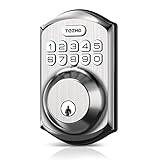
TEEHO TE001 Keypad Deadbolt
- 20 user codes plus one-time PIN
- Auto-lock timer 10-99 seconds
- 4 AA batteries up to 365 days
- Anti-peeking user code

Schlage Camelot Keypad…
- Grade 2 / AAA security rating
- Up to 19 user codes
- Single 9V battery up to 2 years
- Limited lifetime mechanical warranty

Amazon Basics Keypad Deadbolt
- 6 user codes plus one-time codes
- Auto-lock configurable 10-99 seconds
- KW1 cylinder re-keyable to house keys
- About 15 minute install
As an Amazon Associate we earn from qualifying purchases. CERTAIN CONTENT THAT APPEARS ON THIS SITE COMES FROM AMAZON. THIS CONTENT IS PROVIDED 'AS IS' AND IS SUBJECT TO CHANGE OR REMOVAL AT ANY TIME.
Keypad Door Locks for Kids Compared in 2026
Every lock below is battery-powered and takes a code, and all but one comes with a mechanical key that opens the cylinder. We sorted them by the job they do, not by brand, and each row carries the specs that actually decide whether a child can use it.
| Product | Key Features | |
|---|---|---|
|
TEEHO TE001 Keypad Deadbolt
|
|
Check Latest Price |
 MiLocks TKK-02SN Keypad Door Knob MiLocks TKK-02SN Keypad Door Knob
|
|
Check Latest Price |
 Signstek YL-99 Keypad Door Knob Signstek YL-99 Keypad Door Knob
|
|
Check Latest Price |
 Veise RZ-A Keypad Deadbolt Veise RZ-A Keypad Deadbolt
|
|
Check Latest Price |
 iulock IU-30 Keypad Knob and Key Lock iulock IU-30 Keypad Knob and Key Lock
|
|
Check Latest Price |
 Yamiry YR04 Keypad Lock with Lever Handle Yamiry YR04 Keypad Lock with Lever Handle
|
|
Check Latest Price |
 Veise KS01B Keypad Lock with Two Levers Veise KS01B Keypad Lock with Two Levers
|
|
Check Latest Price |
|
Schlage Camelot Keypad Deadbolt
|
|
Check Latest Price |
|
Amazon Basics Keypad Deadbolt
|
|
Check Latest Price |
 Kwikset Powerbolt 250 Keypad Deadbolt Kwikset Powerbolt 250 Keypad Deadbolt
|
|
Check Latest Price |
We earn from qualifying purchases. CERTAIN CONTENT THAT APPEARS ON THIS SITE COMES FROM AMAZON. THIS CONTENT IS PROVIDED 'AS IS' AND IS SUBJECT TO CHANGE OR REMOVAL AT ANY TIME.
What Is a Keypad Door Lock for Kids?
A keypad door lock for kids is a battery-powered electronic lock that replaces a keyed one, so a child enters by typing a PIN code instead of carrying a physical key. Depending on the model, a parent can program a separate code per child and change or revoke it in seconds, without calling a locksmith. That single feature is the whole reason parents buy into this category.
Enter the code, and the keypad sends it to the lock’s internal board. If the number matches a stored code, a small motor retracts the bolt and the door opens. The code lives on the lock itself. The codes on the picks below can be added and deleted from the keypad, and most include backup keys, which matters more than most buyers realise.
Three terms come up constantly, and confusing them is how people end up with the wrong lock:
Keep-out lock means the door protects a space from a child: the back door, a basement, a home office, a pantry, a media room. Strong throw, fast auto-lock, and no lever handle for a child to grab and twist.
Let-in lock means the door belongs to a child and they should be able to enter it themselves at will. Usually an interior knob or lever, quieter, often with a silent mode.
Anti-peek keypad means the lock accepts random digits pressed before or after the real code. The entered sequence still works, but an onlooker only sees noise. On a kid’s door this protects a code from friends standing too close, not only from strangers.
One more word worth defining: passage mode, also called constant unlock. The lock stays unlocked and behaves like an ordinary door until you tap the keypad and enter a code to lock it. It is the mode most parents end up using on a child’s bedroom door, because nobody has to guess whether the door is currently open or shut.
1. TEEHO TE001 Keypad Deadbolt – Best All-Rounder for Keeping Kids Out of a Room
TEEHO TE001 Keyless Entry Deadbolt with Keypad for Front Door, Satin Nickel
- 20 codes plus one-time PIN
- Auto-lock 10-99 seconds
- 4 AA batteries up to 365 days
- ANSI Grade 3, IP54
Pros
- 20 user codes plus a single-use guest code
- Auto-lock timer and one-touch lock genuinely solve the forgot-to-lock problem
- Four AA batteries swap from inside the door
- Works offline with no app or hub
- Screwdriver-only install in about 20-30 minutes
Cons
- Exterior housing feels light for a main entry door
- Auto-lock timer only adjusts in coarse steps
- Beeps loudly on every lock and unlock
- Auto-lock can miss if the door is not perfectly aligned
We earn a commission, at no additional cost to you. CERTAIN CONTENT THAT APPEARS ON THIS SITE COMES FROM AMAZON. THIS CONTENT IS PROVIDED 'AS IS' AND IS SUBJECT TO CHANGE OR REMOVAL AT ANY TIME.
We put this one on a bedroom door first, then moved it to the back door after a few months. It carried both jobs without a fuss. With 20 individual user codes plus a single-use temporary code, each child in a busy house gets a PIN that you delete from the keypad itself, and a sitter or a grandmother gets one that expires by itself.
The auto-lock timer is settable between 10 and 99 seconds, and holding any keypad button for two seconds locks it immediately from outside. That second feature is the one parents notice most, because a child heading out with a full backpack can secure the door without finding a code, a key, or a handle.
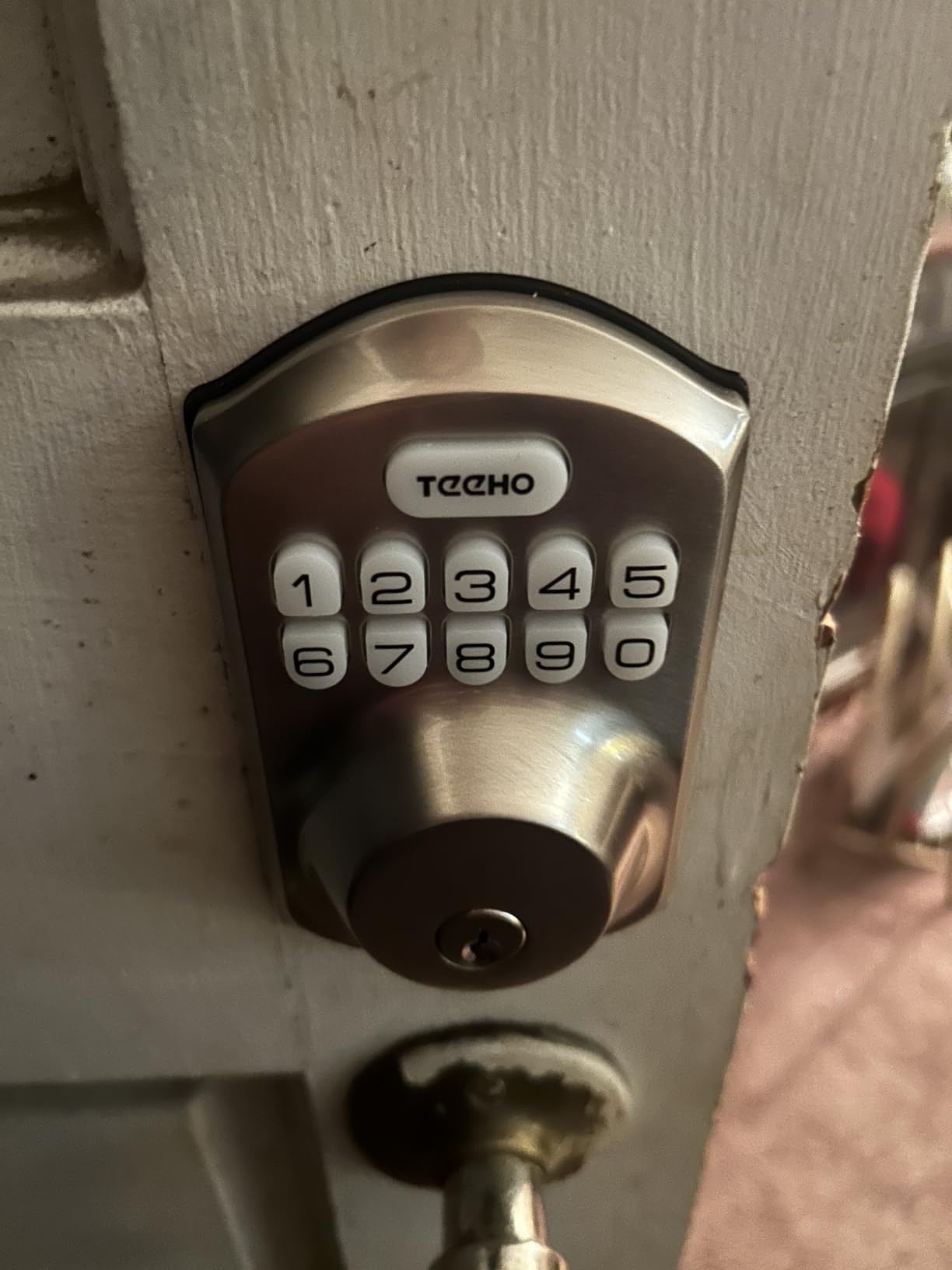
At 4.5 stars across more than ten thousand ratings, this is among the most documented locks in the roundup, and its review history is unusually consistent about what works and what does not. Owners talk about buying it a second time for another door, which is the strongest reliability signal you can get from a review section.
There is one compatibility trap. It fits a 2-1/8 inch (54mm) door hole only, and it will not work in a 38mm hole. Measure the bore before you order, because the fit is the single thing that sends this otherwise dependable lock back in a box.
What you should check before buying it
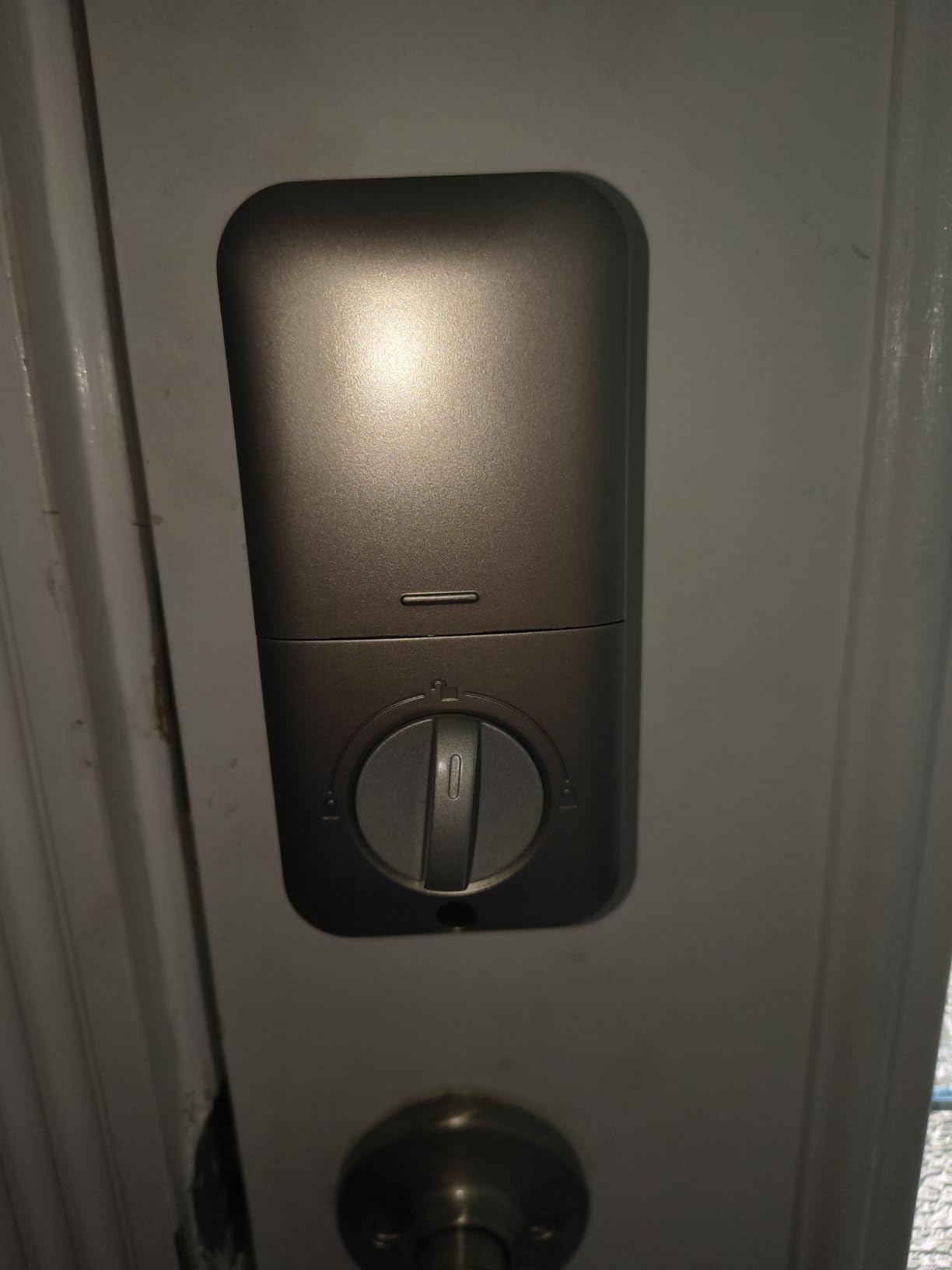
Check the bore diameter on your door, then check the alignment. Several owners report the auto-lock failing to engage when the door is slightly out of square, which is a fit problem rather than a lock problem. Tighten the strike screws only until they are snug; overtightening pulls the door out of alignment and produces the same symptom.
Also decide now whether the beeping bothers you. The tones are loud and there is no silent mode on this model, so on a bedroom door at night it announces every entry. For a back door, a hallway, or a basement, most families never notice it.
Who it suits and who it does not
This suits anyone who wants one lock to handle a lot of people: three kids, a pet sitter, a grandparent with their own code, a door that gets used constantly. Twenty codes covers that household with room to spare, and offline operation means it keeps working when the internet does not.
It is a poor choice for a very young child’s bedroom door if noise is a factor, and a poor choice as the sole lock on an exposed exterior door in a harsh climate because the exterior housing feels light. For a main entry in a mild climate it is fine; for a coastal or high-wind exterior, look at the Veise RZ-A or the Veise KS01B instead.
We earn a commission, at no additional cost to you. CERTAIN CONTENT THAT APPEARS ON THIS SITE COMES FROM AMAZON. THIS CONTENT IS PROVIDED 'AS IS' AND IS SUBJECT TO CHANGE OR REMOVAL AT ANY TIME.
2. MiLocks TKK-02SN Keypad Door Knob – Best Solid Brass Knob for a Bedroom Door
MiLocks TKK-02SN Digital Door Knob with Keypad – Keyless Entry Knob Lock with Code – Interior Door Keypad Lock for Bedrooms & Storage Rooms, Adjustable Latch, Auto-Locking Audible Alert, Satin Nickel
- Up to 6 codes
- Physical backlit buttons
- Fits 1-1/4 to 1-7/8 inch doors
- 4 AA batteries
Pros
- Solid brass body feels more substantial than plastic competitors
- Physical buttons register reliably where touchscreens misread
- Quick install on existing interior door holes
- Audible tones tell a parent the door was opened
- Adjustable latch covers both common backsets
Cons
- Lock and beeps are loud enough to wake a sleeping child
- Some motors develop intermittent failures after months
- Auto-lock delay of 5-10 seconds is slow for slipping out quietly
- Glow-in-the-dark claim is inconsistent
We earn a commission, at no additional cost to you. CERTAIN CONTENT THAT APPEARS ON THIS SITE COMES FROM AMAZON. THIS CONTENT IS PROVIDED 'AS IS' AND IS SUBJECT TO CHANGE OR REMOVAL AT ANY TIME.
This is the pick we recommend first for a child’s own bedroom, and the reason is physical buttons rather than a touchscreen. A touch keypad needs a clean, deliberate press; a raised rubber button registers even when a child smears it, taps it twice, or tries with one hand while holding a book.
It fits left- or right-handed interior doors from 1-1/4 to 1-7/8 inches thick using the existing hardware holes, and the adjustable latch covers both the 2-3/8 and 2-3/4 inch backsets. The result is a 15-minute swap on almost every standard bedroom door in the country, with no contractor and no new bore.
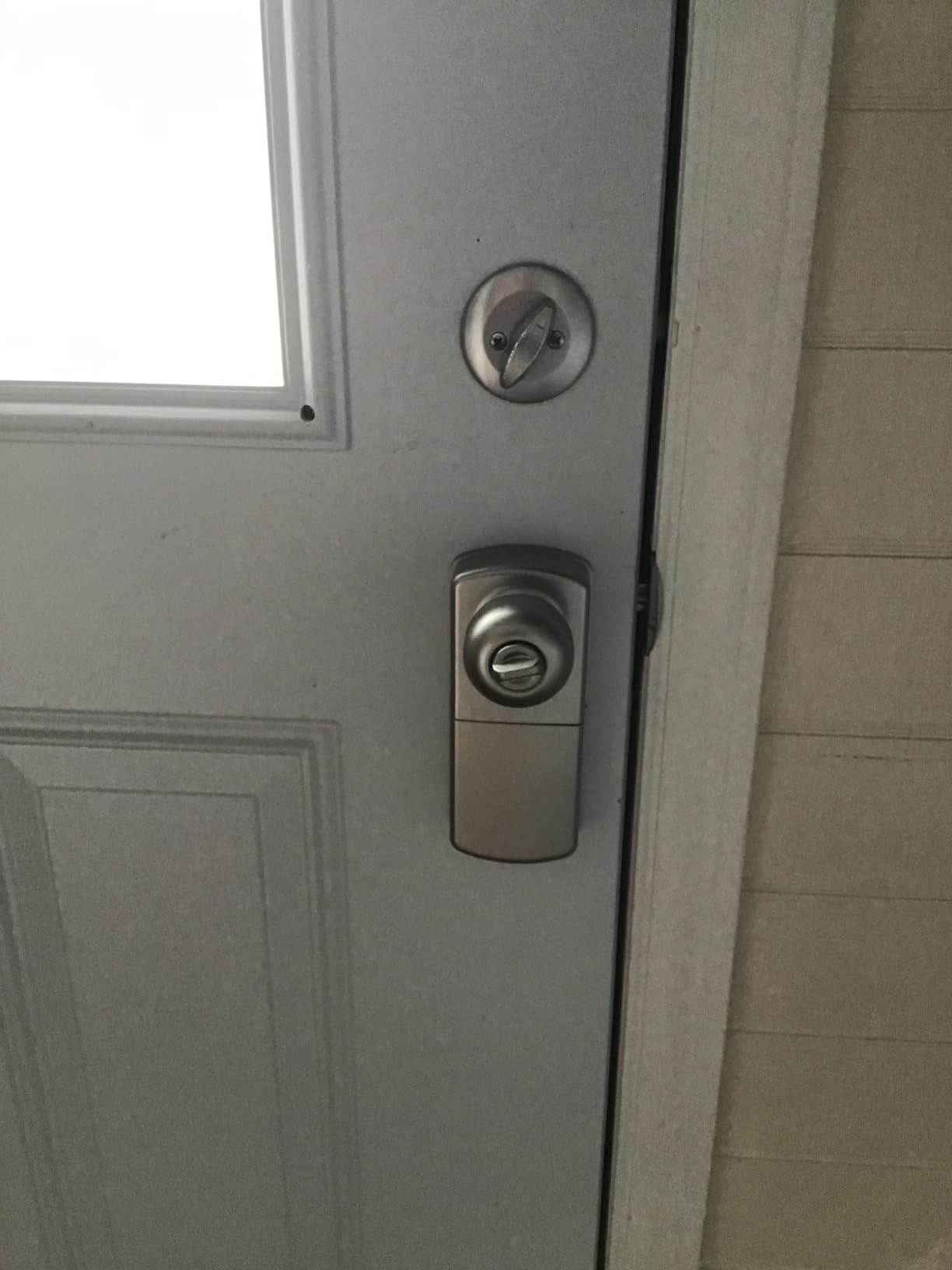
Code capacity is six, which is the first thing that makes people hesitate and the second thing that stops worrying them. One code each for two children and two parents, plus two spares for a sitter or an emergency caregiver, is exactly enough. If you need more than six, the iulock further down carries fifty.
The brass body is the second reason to pick this. It has real weight and it feels like a piece of hardware rather than a gadget, which matters on a door that will be operated every single night for years.
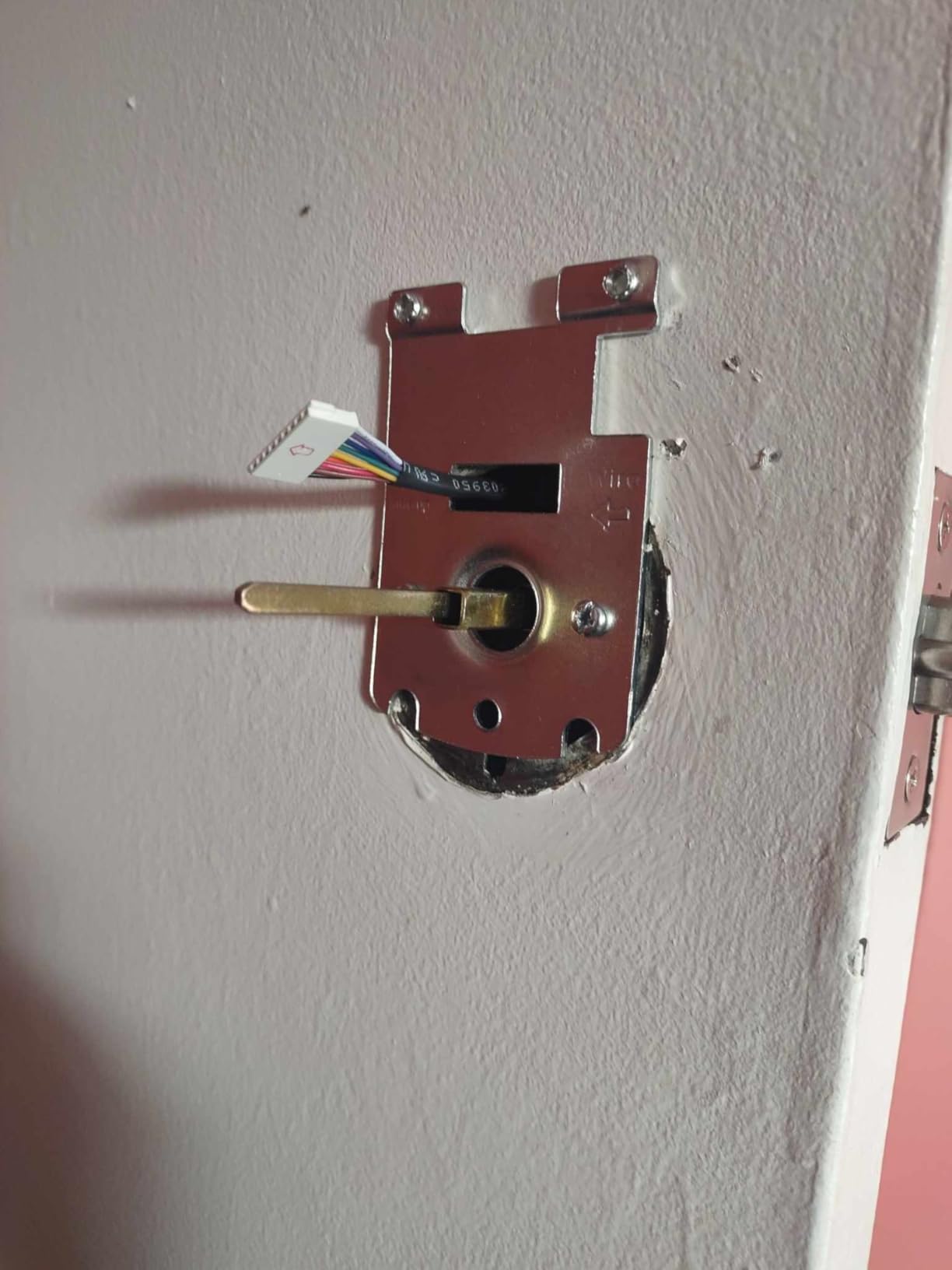
What you should check before buying it
Check how loud you can live with. Both the tones and the motor are loud enough to wake a sleeping child, and noise is the most repeated theme in this lock’s reviews. If someone is sleeping behind that door, test this knob at night before you commit.
Also know what you are buying. Fifteen percent of this lock’s ratings are one-star, and the recurring complaint is a motor that stops driving the bolt after a few months. That failure does not lock anyone out permanently, because the interior knob still turns freely, but it does stop the code from working.
Who it suits and who it does not
This suits a family with one or two children in a shared bedroom, or a child who needs privacy at night and will actually use the buttons. The adjustable latch and either-hand fitting make it the least likely to fail at install.
It does not suit a house where you need twenty or more separate codes, and it does not suit an exterior door. There is no weather rating here, because this is an interior lock and should be treated as one.
We earn a commission, at no additional cost to you. CERTAIN CONTENT THAT APPEARS ON THIS SITE COMES FROM AMAZON. THIS CONTENT IS PROVIDED 'AS IS' AND IS SUBJECT TO CHANGE OR REMOVAL AT ANY TIME.
3. Signstek YL-99 Keypad Door Knob – Best for Quiet Entry at Night
Keyless Entry Door Lock, Door Knob with Keypad, Smart Code Door Lock, Mute Mode, Passage Function, Easy to Install, Satin Nickel
- 10 codes with master and passage
- Mute and encryption modes
- Emergency USB power port
- 4 batteries
Pros
- Mute mode removes the beep that would give away a bedroom visit
- Encryption mode scrambles decoy digits around the real code
- Passage function gives a clean push-and-go mode
- Emergency USB port rescues a dead battery
- Reported five-plus year service life on interior doors
Cons
- Programming window is short so codes must be typed quickly
- Keypad sometimes needs a firm press
- Old doors with a round bore hole may need chiselling
- No working key override if batteries die
We earn a commission, at no additional cost to you. CERTAIN CONTENT THAT APPEARS ON THIS SITE COMES FROM AMAZON. THIS CONTENT IS PROVIDED 'AS IS' AND IS SUBJECT TO CHANGE OR REMOVAL AT ANY TIME.
The reason this lock is on the list is one setting: mute mode. It removes the keypad beep entirely, so a child entering their own room at one in the morning cannot be heard in the hallway. For parents whose kids are light sleepers or whose bedrooms share a wall, that single feature decides the purchase.
Encryption mode is the sibling feature and it solves a different problem. You can press any junk digits before or after the real code and the lock still opens, so a child can enter it while a friend watches without the friend learning anything.
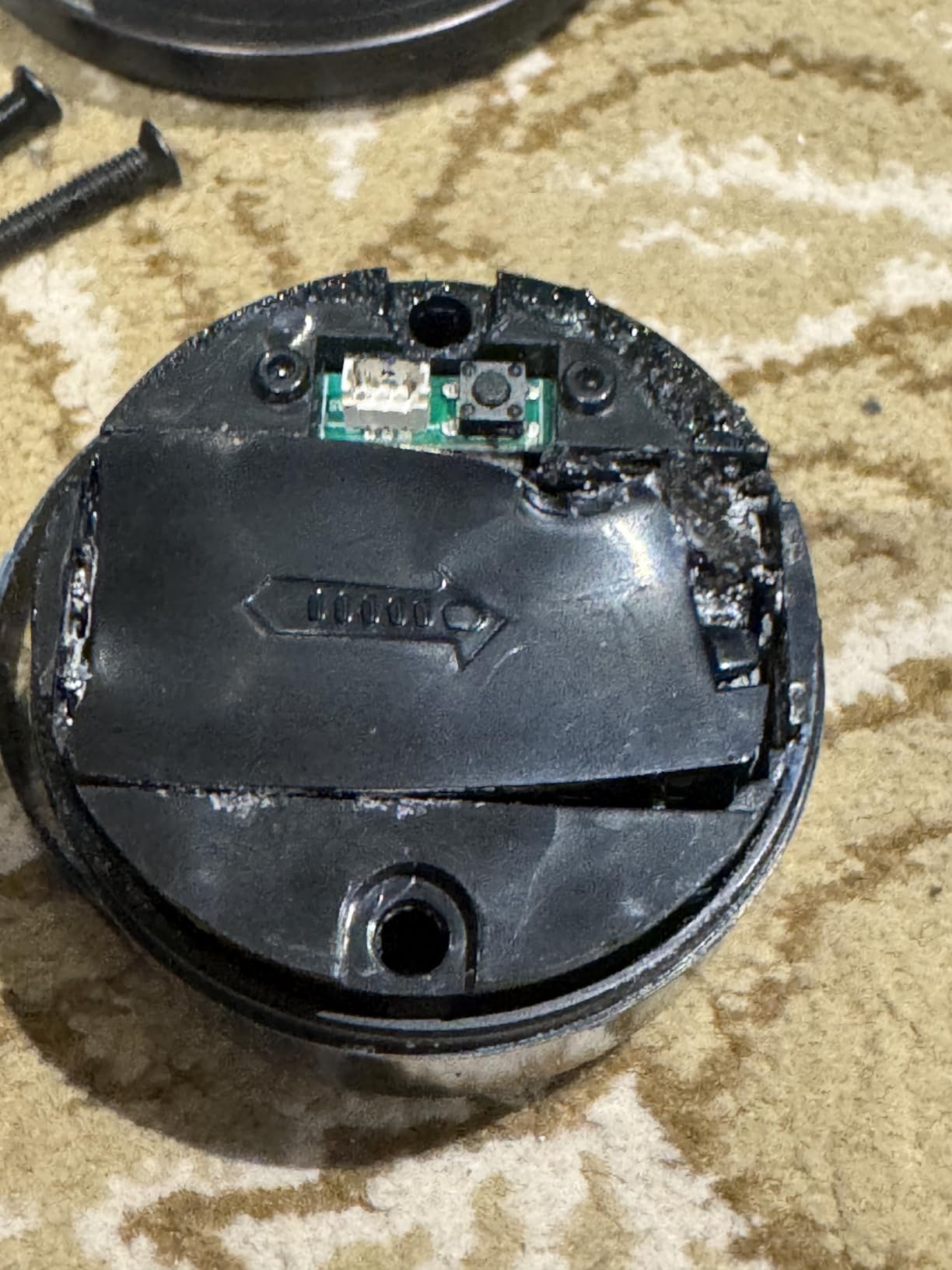
Code structure is worth learning before you start. Zero is the master programming code, digits 1 to 8 are eight user codes, and 9 is the passage code. Once you know that layout, programming is quick and you stop worrying about it.
The passage function is where this lock earns its second badge. Enter the passage code followed by the star and pound keys and the knob becomes push-and-go, no code needed. That is the mode to set permanently on a child’s room, so nobody has to wake up fully to leave it.
What you should check before buying it
Check whether your door has a square or a round bore. On older doors with a round bore hole, the latch may not seat until you chisel the opening flat, which turns a 15-minute job into an afternoon with a wood chisel.
Check that you can reach the emergency USB port on the underside of the exterior unit before you need it. It is the only backup here, because this lock has no working key override on the inside mechanism. Several owners report lockouts after a battery change even with fresh cells, so treat the USB port as essential, not optional.
Who it suits and who it does not
This suits a tween or teen who wants privacy, or a younger child who is genuinely light-footed and does not want the house to hear them. Silence is the feature you are buying, and nothing else in this roundup does it as cleanly.
It does not suit a room where a caregiver must be able to force entry without power, and it does not suit an exterior door. If free egress and a mechanical override both matter to you, choose the MiLocks or the Yamiry instead.
We earn a commission, at no additional cost to you. CERTAIN CONTENT THAT APPEARS ON THIS SITE COMES FROM AMAZON. THIS CONTENT IS PROVIDED 'AS IS' AND IS SUBJECT TO CHANGE OR REMOVAL AT ANY TIME.
4. Veise RZ-A Keypad Deadbolt – Best for Stopping a Child from Guessing Codes
Veise RZ-A Electronic Keypad Deadbolt Door Lock, Matte Black
- 20 codes plus one-time password
- 10 failures trigger 3 min lockout
- Vacation Mode
- IP54 weather rated
Pros
- Ten failed attempts trigger a three minute keypad lockout
- Anti-peeping password accepts random digits around the real code
- One-touch lock by holding any key 2 seconds
- Two backup keys included
- Illuminated keypad shows colour-coded status
Cons
- Motor can lack the force to fully throw the bolt on a misaligned door
- Bore hole can be slightly larger than a standard deadbolt opening
- Programming reference in the manual is not intuitive
- Bezel can sit crooked if you do not enlarge the hole
We earn a commission, at no additional cost to you. CERTAIN CONTENT THAT APPEARS ON THIS SITE COMES FROM AMAZON. THIS CONTENT IS PROVIDED 'AS IS' AND IS SUBJECT TO CHANGE OR REMOVAL AT ANY TIME.
The gap-and-lockout behaviour is what separates this from the other budget deadbolts. Ten wrong entries and the keypad stops accepting anything for three minutes. A child trying every code in sequence to see what happens gets a keypad that simply refuses to play, and an older sibling working through combinations runs into the same wall.
Vacation Mode is the other half of that thinking. It disables every code except the master, so when the kids go to a grandmother’s for a week you suspend their access with one action rather than deleting and re-adding four PINs.
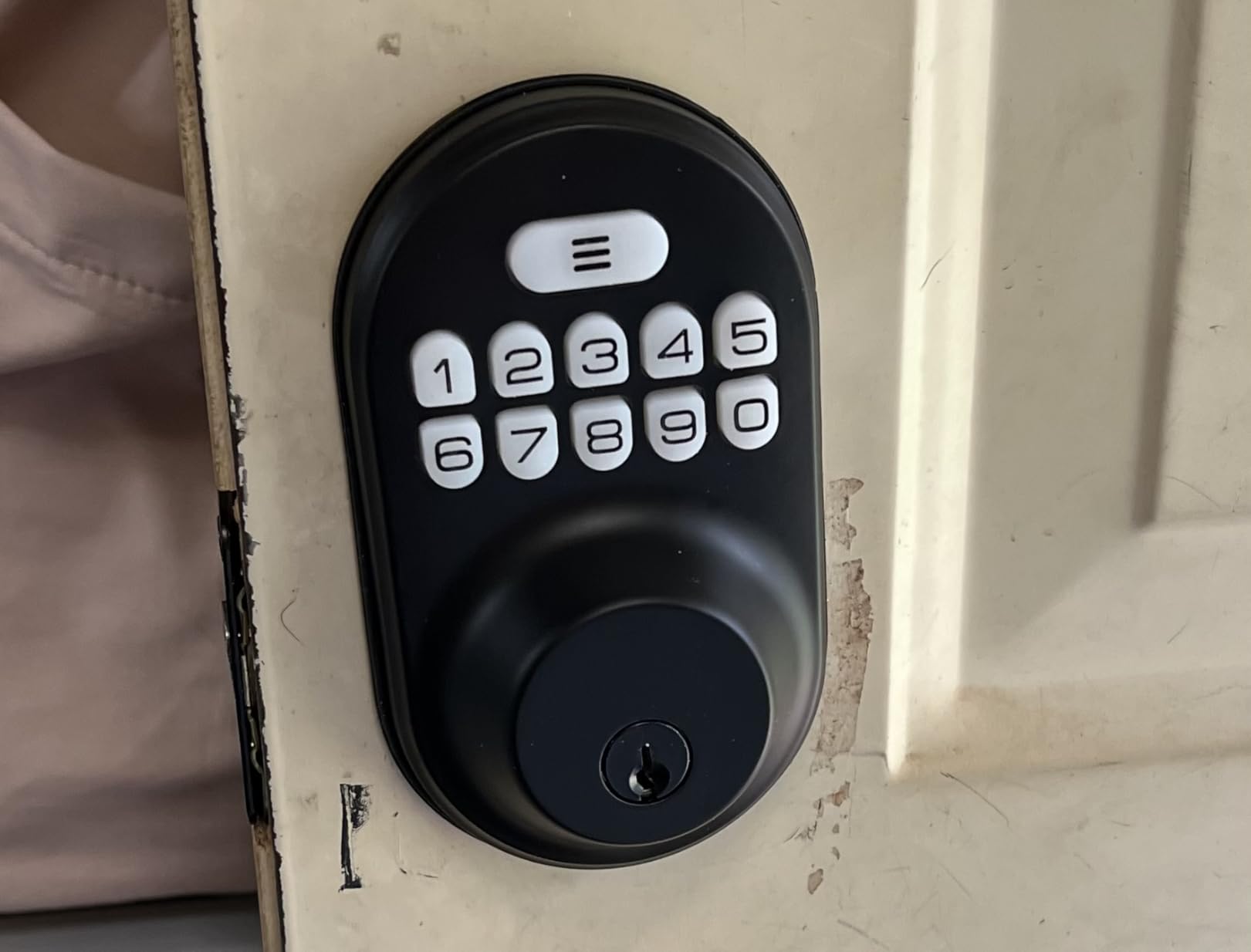
The thumb-turn alarm covers the opposite direction. If the inside thumbturn is turned from inside the room, the lock signals it on the exterior side, which tells you the door was opened from within rather than forced from outside.
This deadbolt is rated for the temperature range most families actually experience, from minus 35F to 160F, with IP54 water and dust resistance. That is a reasonable spec for a covered back door, a garage entry, or an exterior door under shelter.
What you should check before buying it
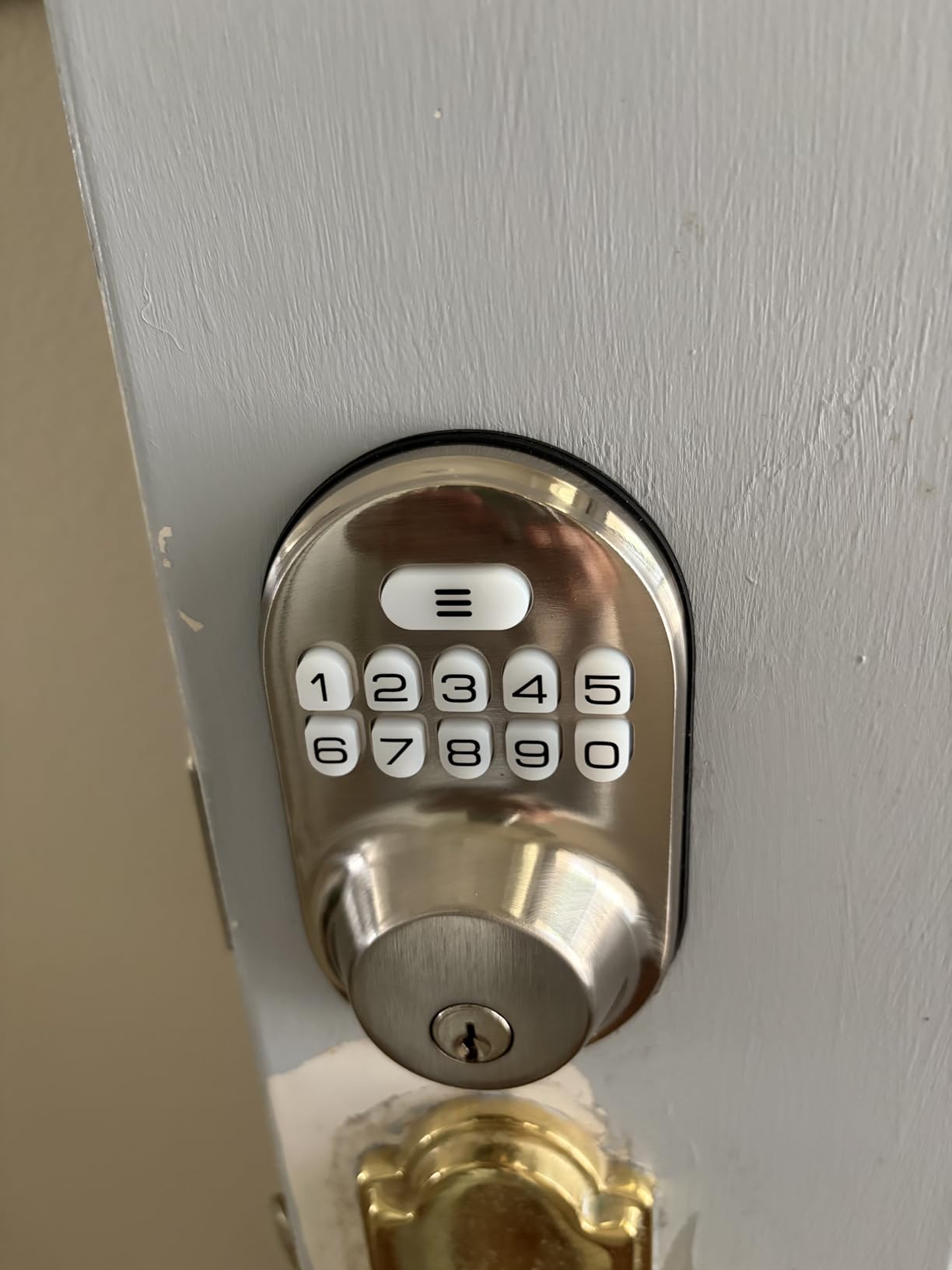
Check your strike and latch alignment harder than you would on any other lock. The most common mechanical complaint is a motor that cannot fully throw the bolt when the door is not perfectly set, or when the strike screws were tightened too hard. Loosen those screws a quarter turn before you blame the lock.
Expect to enlarge the bore by a few millimetres. The hole can come out slightly larger than a standard deadbolt opening, and if you skip that step the bezel sits visibly crooked. A drill and a step bit fix it in five minutes.
Who it suits and who it does not
This suits a household where the same room has three or more children of different ages, or any door where code guessing is the realistic threat. It also suits an older kid who has already worked out how to defeat the child-safety latches sold at hardware stores.
It does not suit a very young child’s own bedroom, because a bare deadbolt with no handle gives a small person nothing to grip when leaving. For that door, choose a lever set.
We earn a commission, at no additional cost to you. CERTAIN CONTENT THAT APPEARS ON THIS SITE COMES FROM AMAZON. THIS CONTENT IS PROVIDED 'AS IS' AND IS SUBJECT TO CHANGE OR REMOVAL AT ANY TIME.
5. iulock IU-30 Keypad and Key Lock – Best for the Most Codes and Shared Spaces
iulock Keypad & Key Smart Door Lock, 50 User Codes, Waterproof, Auto Lock – Matte Black
- Up to 50 codes of 1-15 digits
- IP65 rated
- 4 AAA up to 18 months
- Silicone grip
Pros
- Fifty codes is by far the largest capacity in this roundup
- Each code is independently revocable so one child losing theirs does not affect the others
- Unlocked-duration adjustable up to 12 hours for outdoor chores
- Silicone grip is easy to turn with wet or sweaty hands and insulates a knob in direct sun
- Includes a key cylinder with two backup keys
Cons
- Batteries and written instructions are not included and the master code is printed in tiny type
- Thin internal connector cable snags when threading through the spindle
- Silicone grips cannot be replaced once worn out
- All functions including changing to pass-through mode can only be done from outside
We earn a commission, at no additional cost to you. CERTAIN CONTENT THAT APPEARS ON THIS SITE COMES FROM AMAZON. THIS CONTENT IS PROVIDED 'AS IS' AND IS SUBJECT TO CHANGE OR REMOVAL AT ANY TIME.
Fifty codes changes how you think about the whole category. One owner uses these indoors specifically to keep out teenagers who can already defeat ordinary child-safety door latches, and that works because every person has their own revocable number rather than sharing one family code.
The same capacity makes it the right pick for a shared holiday house, a three-generation home, or a family with several sitters. Nobody needs to know anybody else’s code, and revoking one number takes seconds.
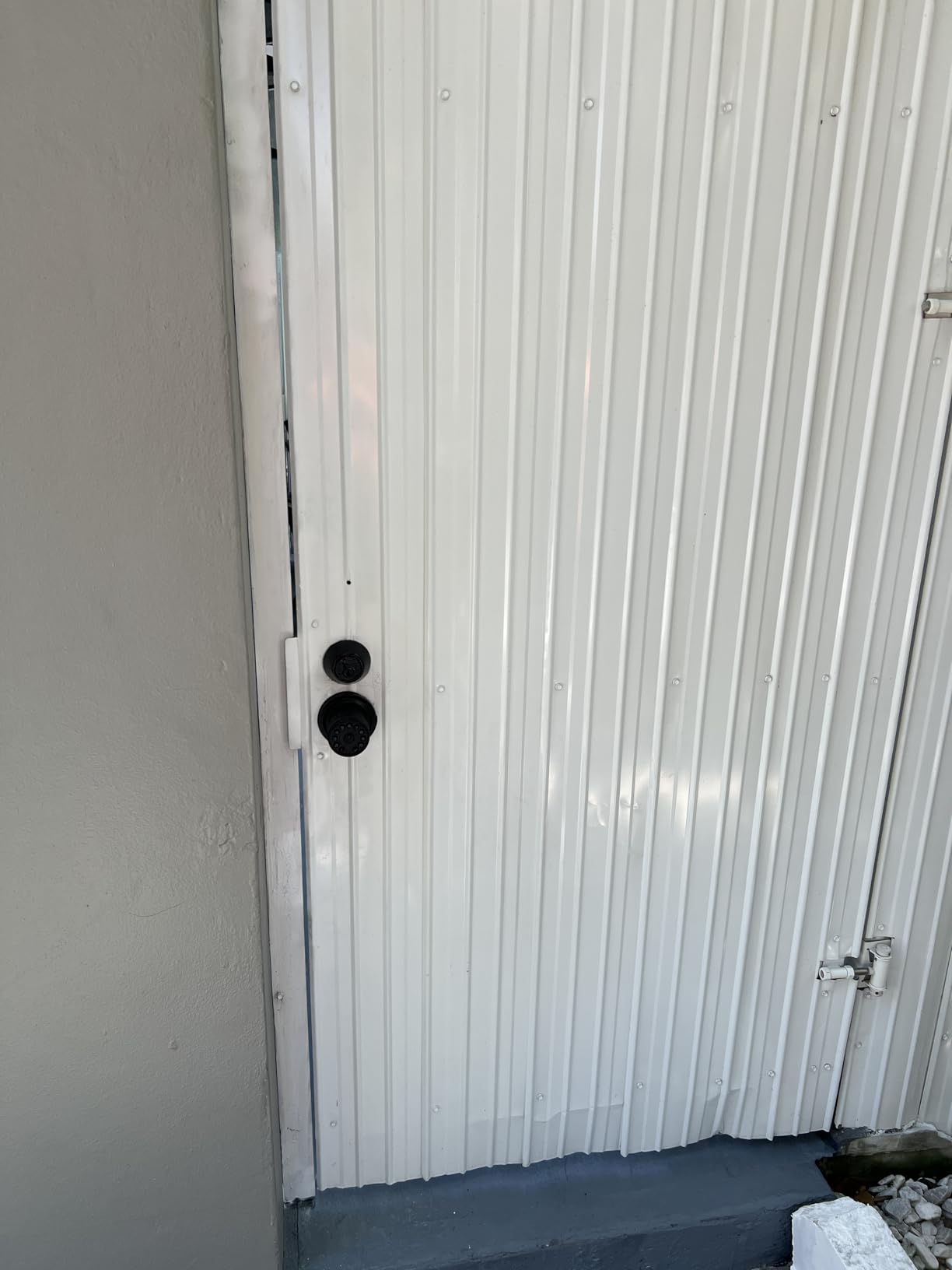
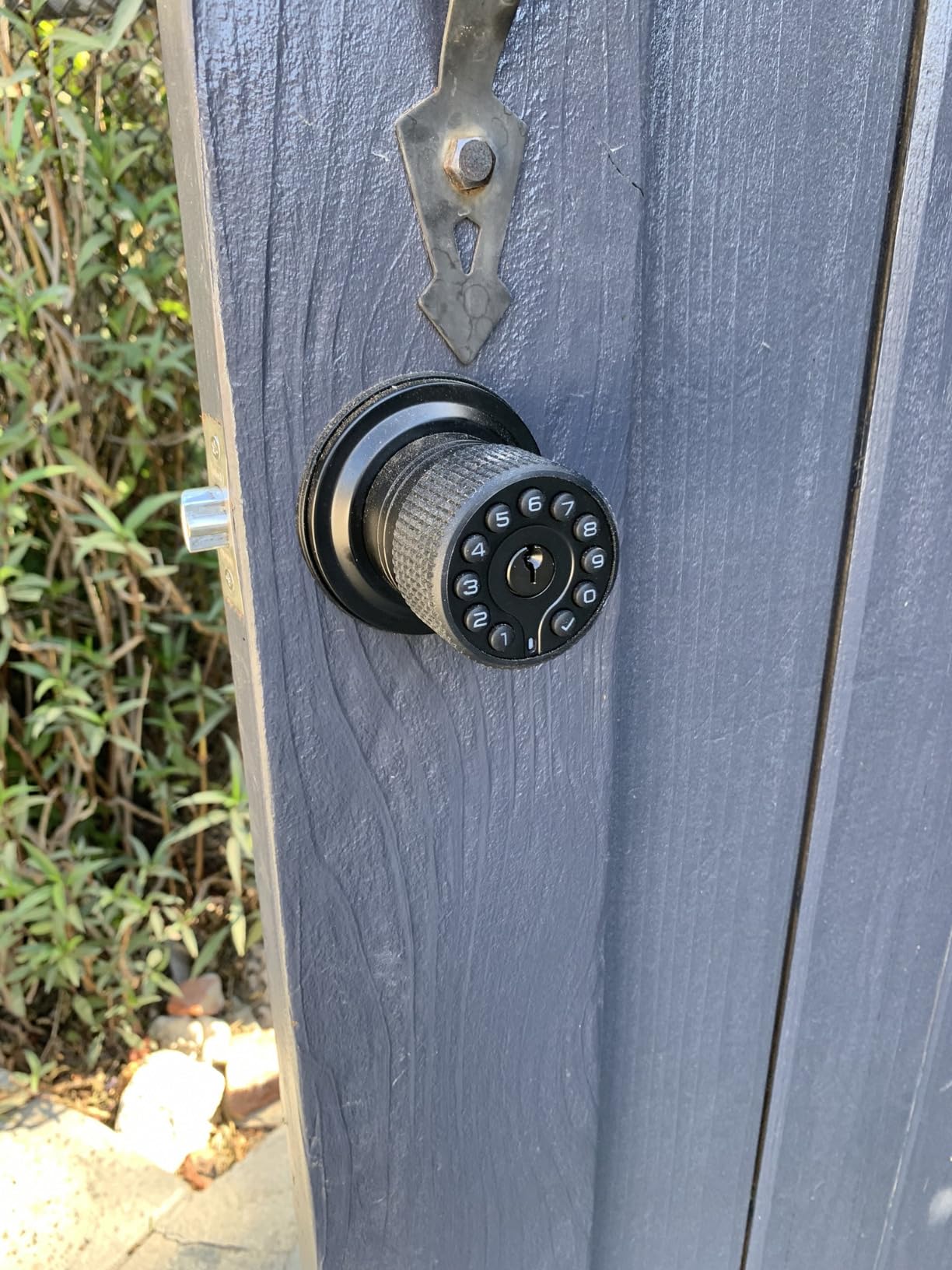
The detachable silicone grip is a small idea that solves a real problem. A knob that sits in direct sun gets uncomfortably hot, and a child with damp hands after the garden cannot get a bare knob. The grip insulates and it gives smaller hands something to hold.
Battery life is among the strongest figures in the roundup at up to 18 months on four AAA cells, with a low-battery alarm and USB-C backup power underneath. An IP65 rating and a minus 22F to 176F range make this the most weather-capable lock on the list.
What you should check before buying it
Read this before you order: the batteries are not included and neither is a proper written installation guide. The master code is printed in tiny type on the inside flap of the box, so photograph it the moment it arrives. If you lose it, you are re-keying the cylinder.
Plan the install around the internal connector cable. It is thin, it has to be threaded through the spindle before the knob goes on, and it snags easily. Budget fifteen minutes more than you would for a knob with a screw-on battery door, and seat the rubber gaskets flat because an uneven seal shows around the rose.
Who it suits and who it does not
This suits a busy household where code count matters more than finish, and it suits an exterior or utility door that gets wet and hot. The rubber grip and the weather rating handle both.
It does not suit a patient first-time installer, because the missing instructions and the fiddly cable are real friction. It also does not suit anyone who needs to reconfigure the lock from inside the room, because every function change has to be made from the outside.
We earn a commission, at no additional cost to you. CERTAIN CONTENT THAT APPEARS ON THIS SITE COMES FROM AMAZON. THIS CONTENT IS PROVIDED 'AS IS' AND IS SUBJECT TO CHANGE OR REMOVAL AT ANY TIME.
6. Yamiry YR04 Keypad Lock with Lever Handle – Best for Small Hands
Keypad Smart Door Knob Lock, Yamiry Keyless Entry Digital Lock with Handle
- Keypad and lever in one unit
- 20 codes plus guest code
- Auto-lock 5-99 sec or off
- IP54 alloy body
Pros
- A working lever handle gives a child something substantial to grip
- Key override included so a battery failure is never a lockout
- Auto-lock adjustable from 5 to 99 seconds and can be disabled entirely
- Under 15 minute screwdriver installation with all hardware included
- Backlit keypad with a low-battery indicator
Cons
- Only 20 codes
- far fewer than the fifty-code alternative
- No app or Wi-Fi features despite the connectivity claims
- One-year warranty is among the shortest here
We earn a commission, at no additional cost to you. CERTAIN CONTENT THAT APPEARS ON THIS SITE COMES FROM AMAZON. THIS CONTENT IS PROVIDED 'AS IS' AND IS SUBJECT TO CHANGE OR REMOVAL AT ANY TIME.
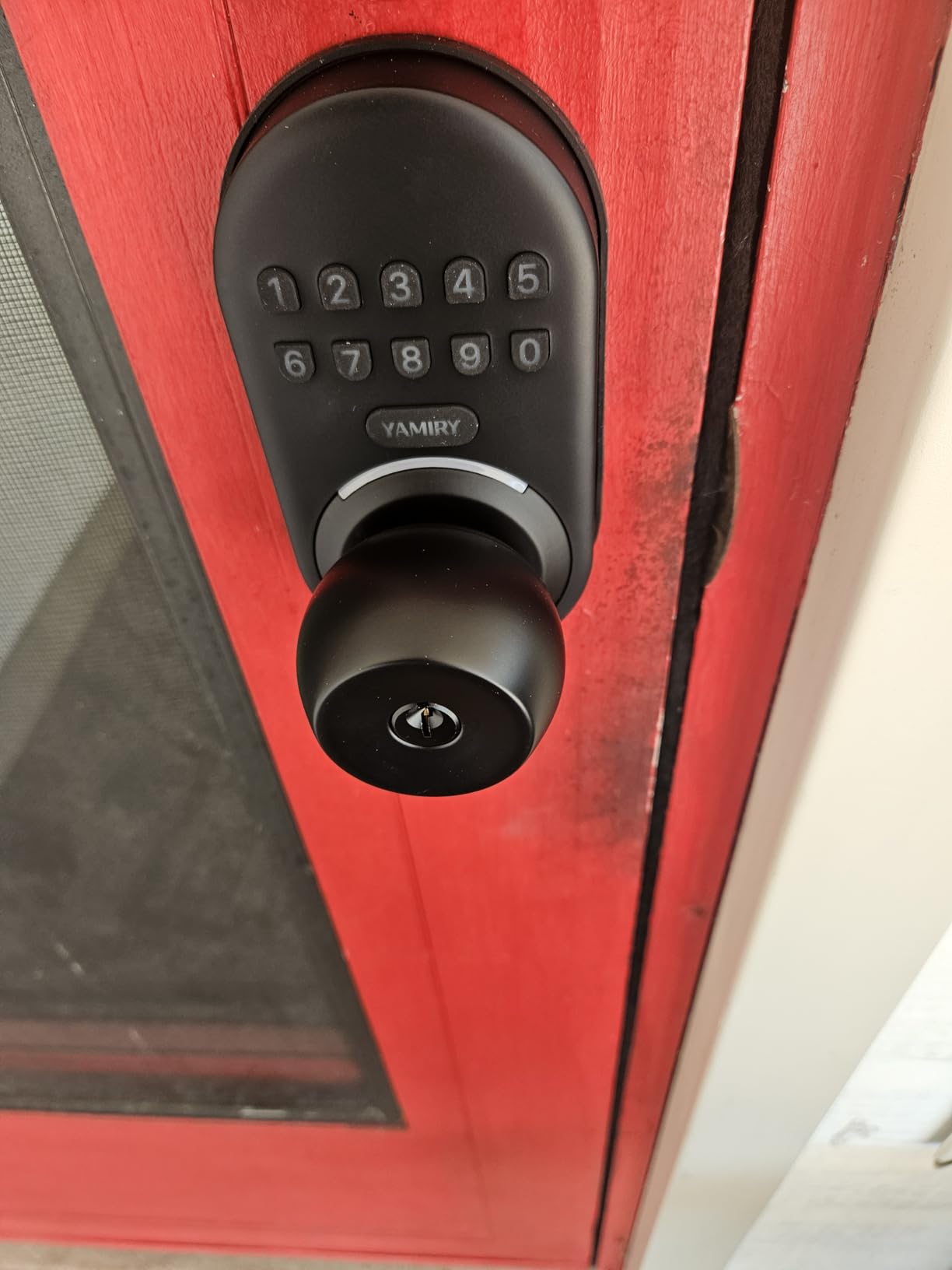
This lock answers a problem every other deadbolt on this page creates. A deadbolt gives a child a thumbturn and nothing else, and a five-year-old often cannot work it from the inside. Pairing the keypad with a lever handle gives a small hand something to push down, which is why this shape keeps showing up on doors to kids’ rooms.
The lever is genuinely child-operable, not decorative. The knob turns and the door opens with a normal pushing motion rather than a twisting one, so a child who cannot yet coordinate a deadbolt can still get out of the room without help.
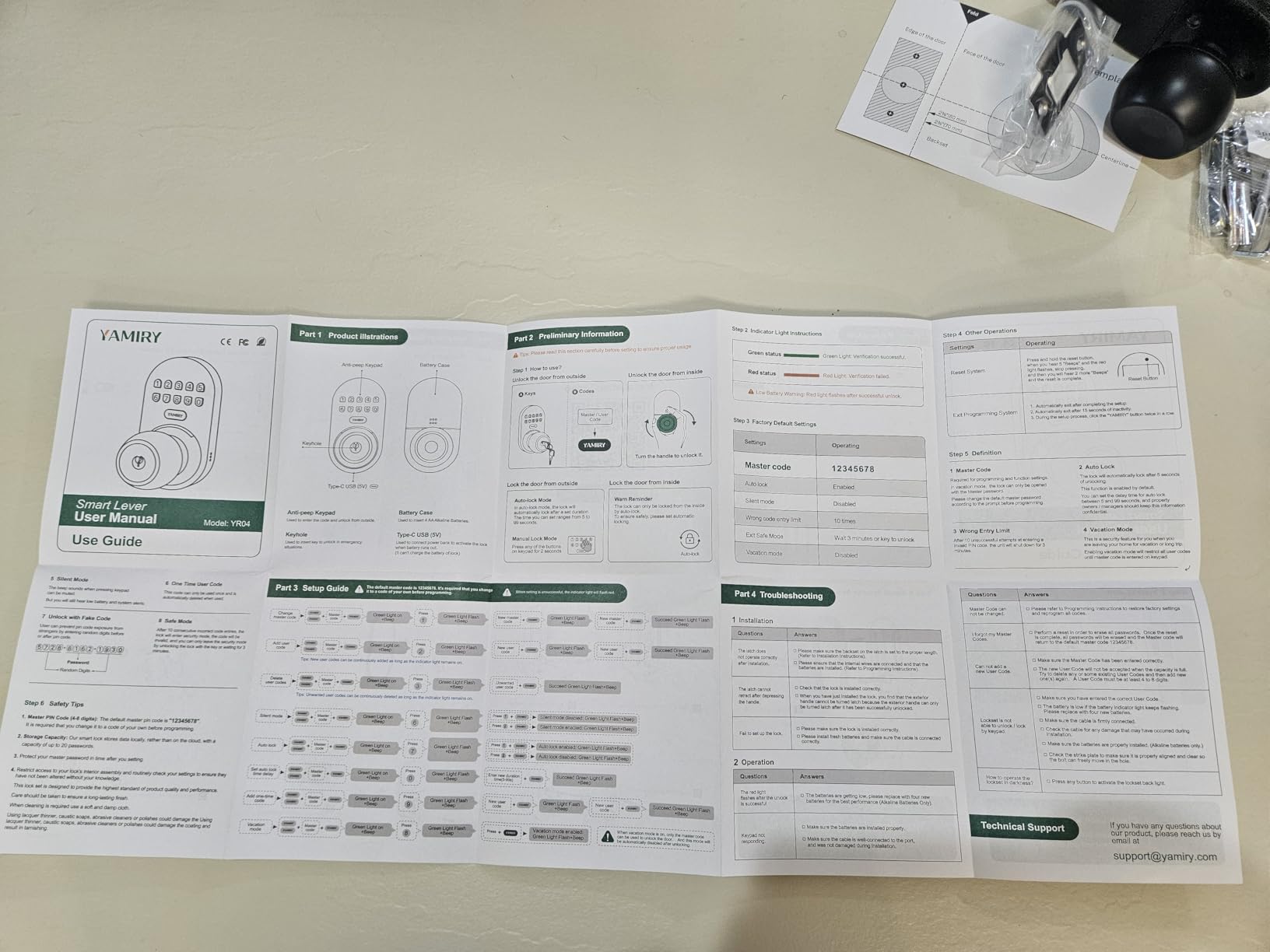
Codes run from four to eight digits with up to 20 family codes plus a one-time guest code, and two physical keys come with a key override. That override is what stops this being a lockout risk: if the batteries die, the door still opens with a key from either side.
Auto-lock is adjustable anywhere from 5 to 99 seconds, or switched off entirely, which is the setting you want on a child’s door. Disable it and the lock simply acts as a keyed entry you control by code.
What you should check before buying it
Check the code count against your household before you fall for the lever. Twenty is plenty for a family and short for a house with a live-in relative, several sitters and a weekly cleaner all needing independent access.
Then check what you expect. There is no app and no Wi-Fi despite the smart-sounding product listing. This is a keypad and a key, and it works exactly that way, which for many parents is a feature rather than a shortfall.
Who it suits and who it does not
This suits a young child on their own door, and it suits a household that wants lever ergonomics on an entry door without dropping to a keypad-only deadbolt. The included keys make it the lowest-risk choice in the roundup for lockout anxiety.
It does not suit anyone who wants an app, access logs, or temporary codes that expire on a schedule. If you need remote control, none of these offline locks can give it to you, and no product in this roundup can.
We earn a commission, at no additional cost to you. CERTAIN CONTENT THAT APPEARS ON THIS SITE COMES FROM AMAZON. THIS CONTENT IS PROVIDED 'AS IS' AND IS SUBJECT TO CHANGE OR REMOVAL AT ANY TIME.
7. Veise KS01B Keypad Lock with Two Lever Handles – Best Full-Featured Lever Set
Veise KS01B Keypad Door Lock with 2 Lever Handles Set, Oil Rubbed Bronze
- Matching lever handles
- 20 codes plus one-time codes
- ANSI Grade 3
- Over one year of AA life
Pros
- Best-rated lock in the roundup with 79 percent five-star reviews
- Two ergonomic lever handles are the easiest hardware for small hands
- Full feature set including anti-peeping code
- vacation mode and thumb-turn alarm
- Zinc alloy cylinder tested past 200000 cycles
- Weighs 2.9 pounds and feels substantial
Cons
- Heaviest unit here at 2.9 pounds so it swings harder on a lightweight interior door
- Only three finishes available
- Manufacturer advises keeping liquids and direct sun off the keyhole
- Two-year warranty is short for a main entry lock
We earn a commission, at no additional cost to you. CERTAIN CONTENT THAT APPEARS ON THIS SITE COMES FROM AMAZON. THIS CONTENT IS PROVIDED 'AS IS' AND IS SUBJECT TO CHANGE OR REMOVAL AT ANY TIME.
At 4.6 stars with 79 percent five-star ratings, this is the highest-rated lock we evaluated, and its one-star share is one of the smallest in the roundup. The reservations in the reviews are about weight and finish choices, not about whether it works.
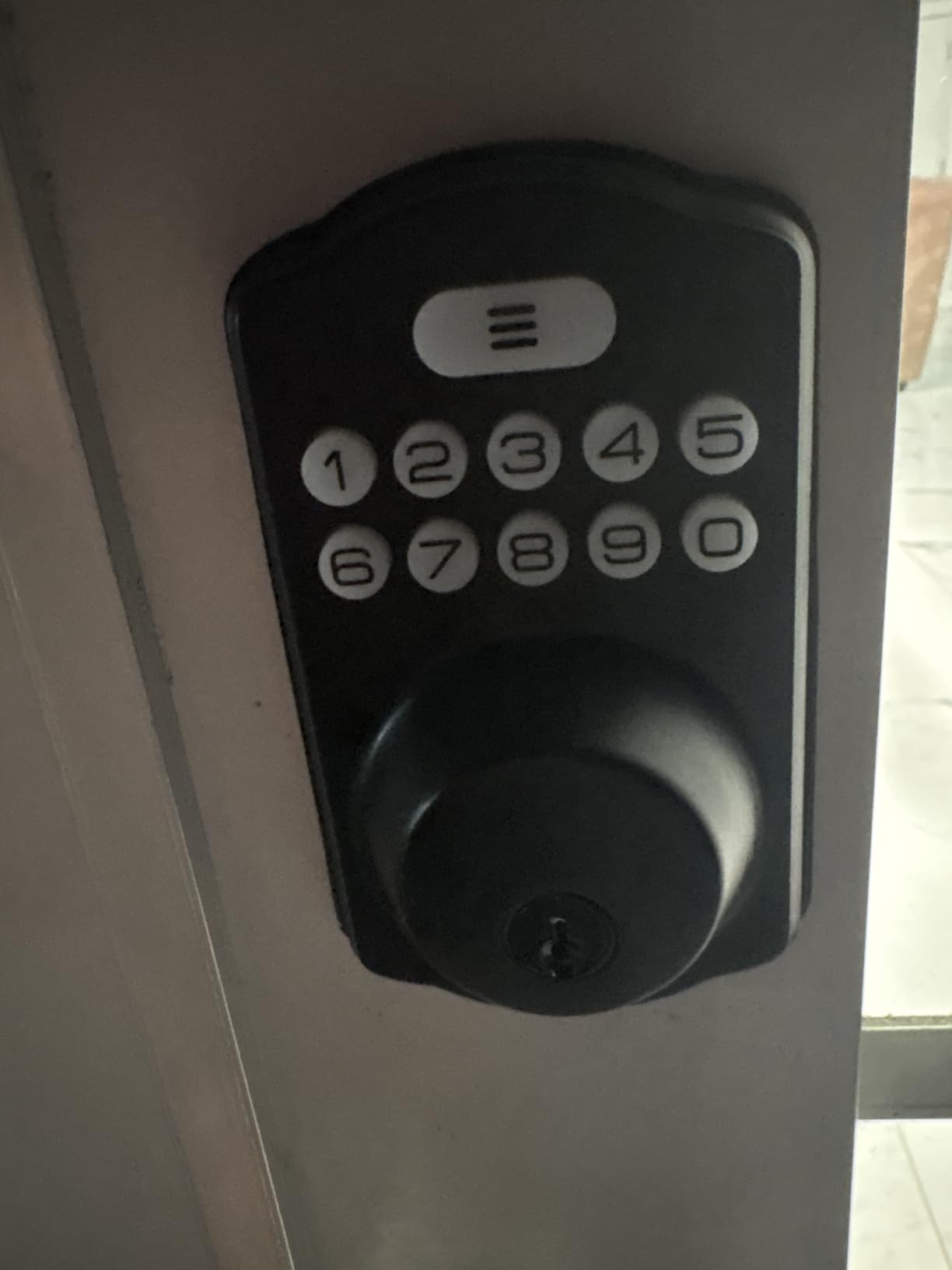
Like the Yamiry, it gives you a lever on both sides of the door. The difference is everything around it: one-time guest passwords that expire after use, an anti-peeping dummy password, Vacation Mode, Silent Mode, and a thumb-turn intrusion alarm on the same hardware.
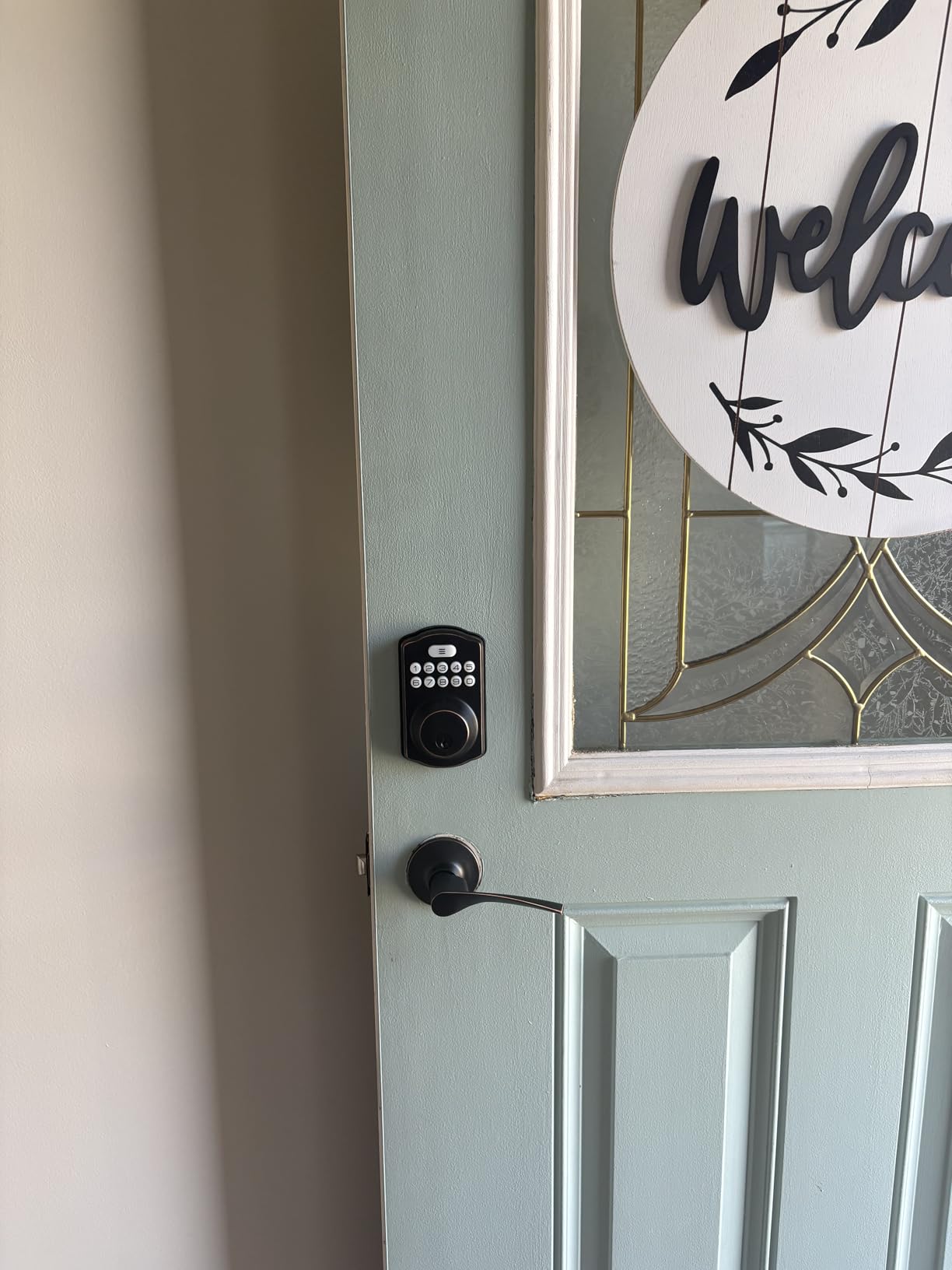
It is also the only lever set here with a real security rating. The zinc alloy cylinder is ANSI Grade 3 and BHMA tested past 200,000 cycles, which makes it a legitimate choice for an entry door rather than only an interior one.
Auto-lock runs from 10 to 99 seconds, and pressing any key for two seconds outside locks it immediately. That one-touch exit-lock is what stops a kid leaving with both hands full.
What you should check before buying it
Check the weight before you put it on a hollow-core interior door. At 2.9 pounds this is the heaviest lock in the roundup, and on a lightweight door the closing swing is enough to shake a frame over time. On a solid bedroom door, on a back door, or on any main entry, it is a non-issue.
Check the finish against your hardware as well. Oil rubbed bronze is one of only three options, and if your existing doors are brushed nickel you will be mixing metal finishes whether you like it or not.
Who it suits and who it does not
This suits a family that wants one lock for a child’s door that is also good enough for the back door. Full features, real lever ergonomics, and a hardware rating rather than a marketing claim.
It does not suit a very light hollow-core door, and it does not suit someone shopping on warranty length. The two-year cover is short next to the Schlage on the next entry.
We earn a commission, at no additional cost to you. CERTAIN CONTENT THAT APPEARS ON THIS SITE COMES FROM AMAZON. THIS CONTENT IS PROVIDED 'AS IS' AND IS SUBJECT TO CHANGE OR REMOVAL AT ANY TIME.
8. Schlage Camelot Keypad Deadbolt – Best Brand Track Record for a Main Entry
Schlage Electronic Keypad Deadbolt Lock, Camelot Trim, Satin Nickel
- Grade 2 / AAA rating
- Up to 19 user codes
- Single 9V battery
- Lifetime mechanical warranty
Pros
- Recognisable brand with a Grade 2 and AAA security rating
- Limited lifetime mechanical warranty and 3-year electronics cover
- Silicone-coated numbers illuminate on press for dark entries
- Nineteen user codes plus one-time codes
- Single 9V battery is one easy swap rather than four AAs buried in a housing
Cons
- Most expensive option in the roundup
- Single 9V battery means fewer spares on hand than an AA-powered lock
- Inside escutcheon rated only to 50C so not suited to an unshaded exterior door in very hot climates
- No lever handle so there is nothing for a child to grip
- No auto-lock timer on this model
We earn a commission, at no additional cost to you. CERTAIN CONTENT THAT APPEARS ON THIS SITE COMES FROM AMAZON. THIS CONTENT IS PROVIDED 'AS IS' AND IS SUBJECT TO CHANGE OR REMOVAL AT ANY TIME.
This is the pick for parents who want a brand with a track record on the front door rather than the bedroom door. Schlage is one of three names that come up repeatedly in locksmith forums when people ask which keypad locks to trust, alongside Yale and Kwikset, and the community view is that the unbranded marketplace locks are where the trouble starts.
The Grade 2 and AAA security rating is the part you cannot fake. It is an independent durability and security classification, and combined with the limited lifetime mechanical warranty it means the mechanism itself is not the cheap part of this lock.
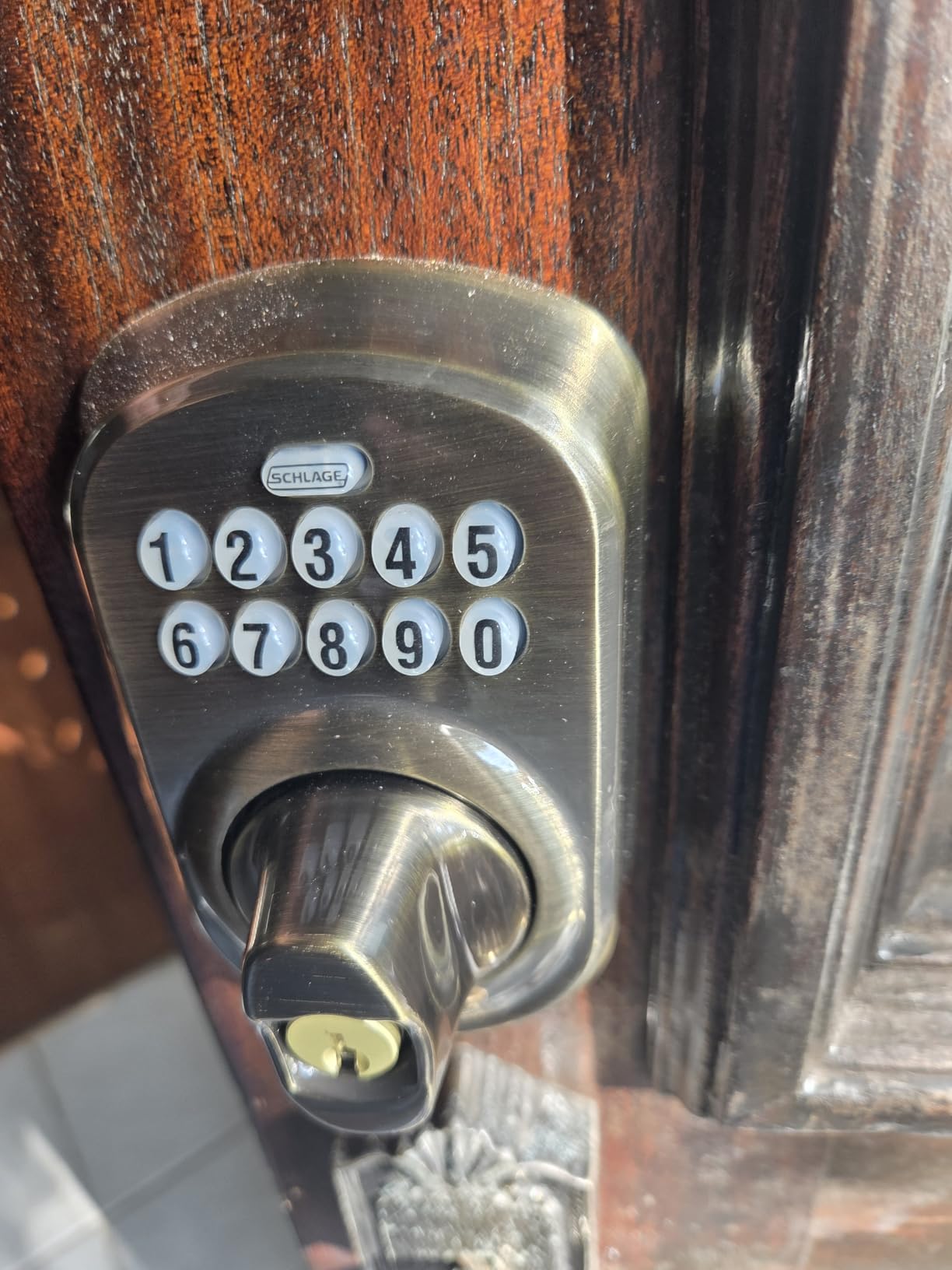
The silicone-coated numbers light up on press rather than backlighting the whole pad, which is a small and useful detail: a child can find the digit they need in a dark hallway without the keypad glowing in a bedroom. Two codes are programmed out of the box and up to 19 user codes can be added.
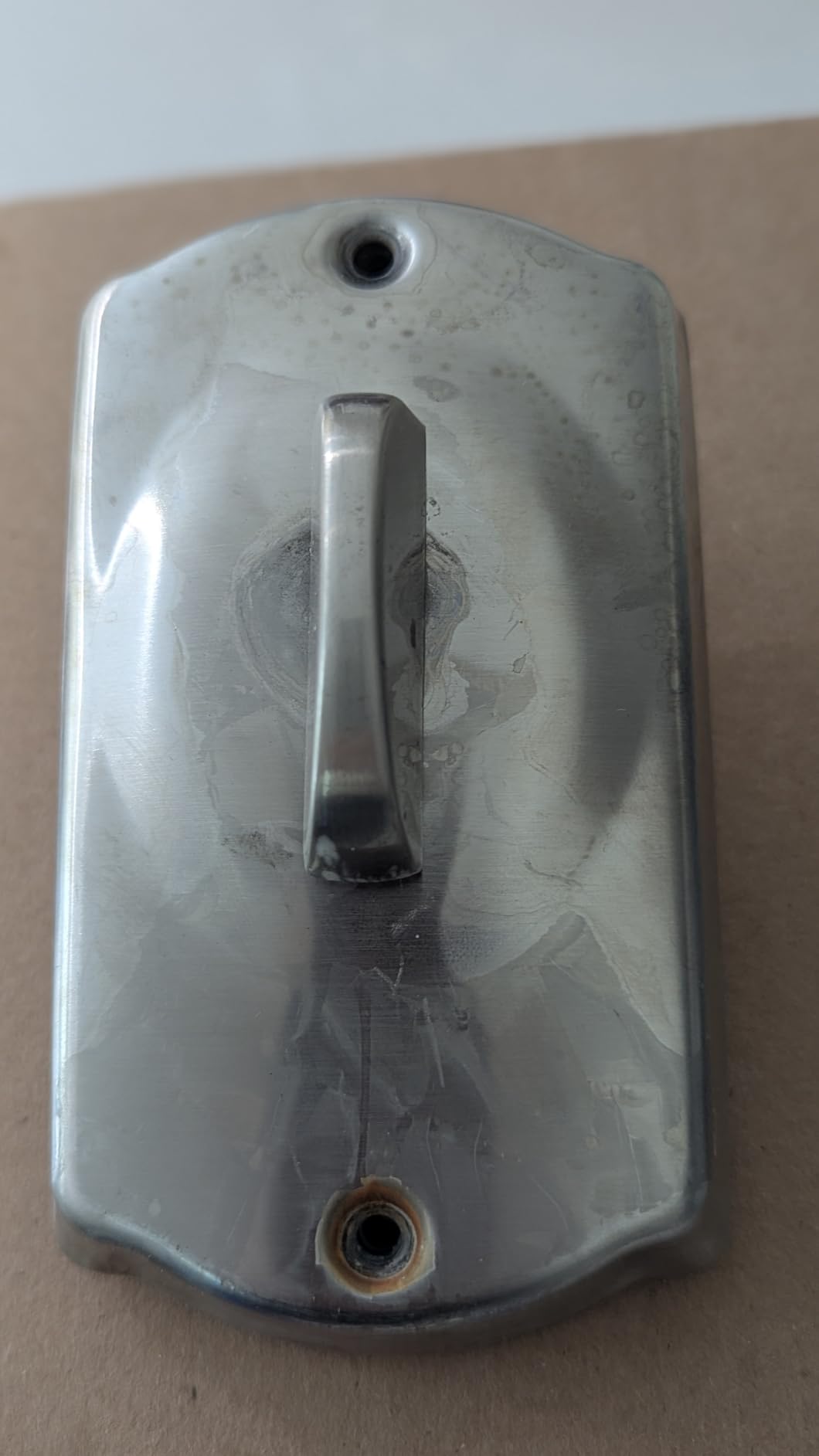
One included 9V battery is good for up to two years of typical use, and it is a single cell sitting in the inside escutcheon rather than four AAs in a compartment. That is one battery to keep spare instead of four.
What you should check before buying it
Check the heat rating if the door faces direct sun in a hot climate. The outside escutcheon is rated to 66C but the inside unit is only rated to 50C, and the manufacturer is explicit that the two halves have different limits.
Then check whether a thumbturn-only inside is right for the household. There is no lever to grip, so a small child leaving the room needs to learn the thumbturn, and there is no auto-lock timer, so the door must be locked deliberately every time.
Who it suits and who it does not
This suits a front or back entry where security rating and warranty matter more than lever ergonomics, and it suits a household that wants to fit one reputable brand across the whole house.
It does not suit a young child’s bedroom door, where the lack of a handle is the deciding factor. For that door, choose a lever set, and accept the shorter mechanical warranty as the trade.
We earn a commission, at no additional cost to you. CERTAIN CONTENT THAT APPEARS ON THIS SITE COMES FROM AMAZON. THIS CONTENT IS PROVIDED 'AS IS' AND IS SUBJECT TO CHANGE OR REMOVAL AT ANY TIME.
9. Amazon Basics Keypad Deadbolt – Best Documented Long-Term Reliability
Amazon Basics Electronic Keypad Deadbolt Door Lock with Auto Lock, Customizable User Codes, One-time Codes, Touch-Control Keyless Entry, Traditional, Satin Nickel, 1-Pack
- 6 user codes plus one-time codes
- Auto-lock 10-99 sec
- KW1 re-keyable
- Fits 1-3/8 to 1-3/4 inch doors
Pros
- Largest review base of any pick here so long-term reliability is well documented
- KW1 key cylinder can be re-keyed to match the rest of the house
- One-time codes let a child get home after school without a physical key
- About 15 minute install that often drops straight into an existing deadbolt hole
- Operates more quietly than the keyed deadbolt it replaced
Cons
- Programming is contorted and codes must be typed quickly or the lock resets mid-sequence
- Printed instructions omit the step for deleting the factory default code
- Inside escutcheon is bulky because it holds four AA batteries and the motor
- Will not throw if the door handle is being pulled as it closes
- Some units have failed entirely within the return window
We earn a commission, at no additional cost to you. CERTAIN CONTENT THAT APPEARS ON THIS SITE COMES FROM AMAZON. THIS CONTENT IS PROVIDED 'AS IS' AND IS SUBJECT TO CHANGE OR REMOVAL AT ANY TIME.
With more than eleven thousand ratings, this is the lock where long-term behaviour is easiest to observe. One owner reports seven years of trouble-free daily use, which is exactly the evidence you cannot get from a listing with a few hundred reviews.
The practical feature for children is the one-time code. You generate a temporary PIN before school, it works once, and then it stops working. A child can get in on their own with nothing to lose, which removes the entire lost-key problem.
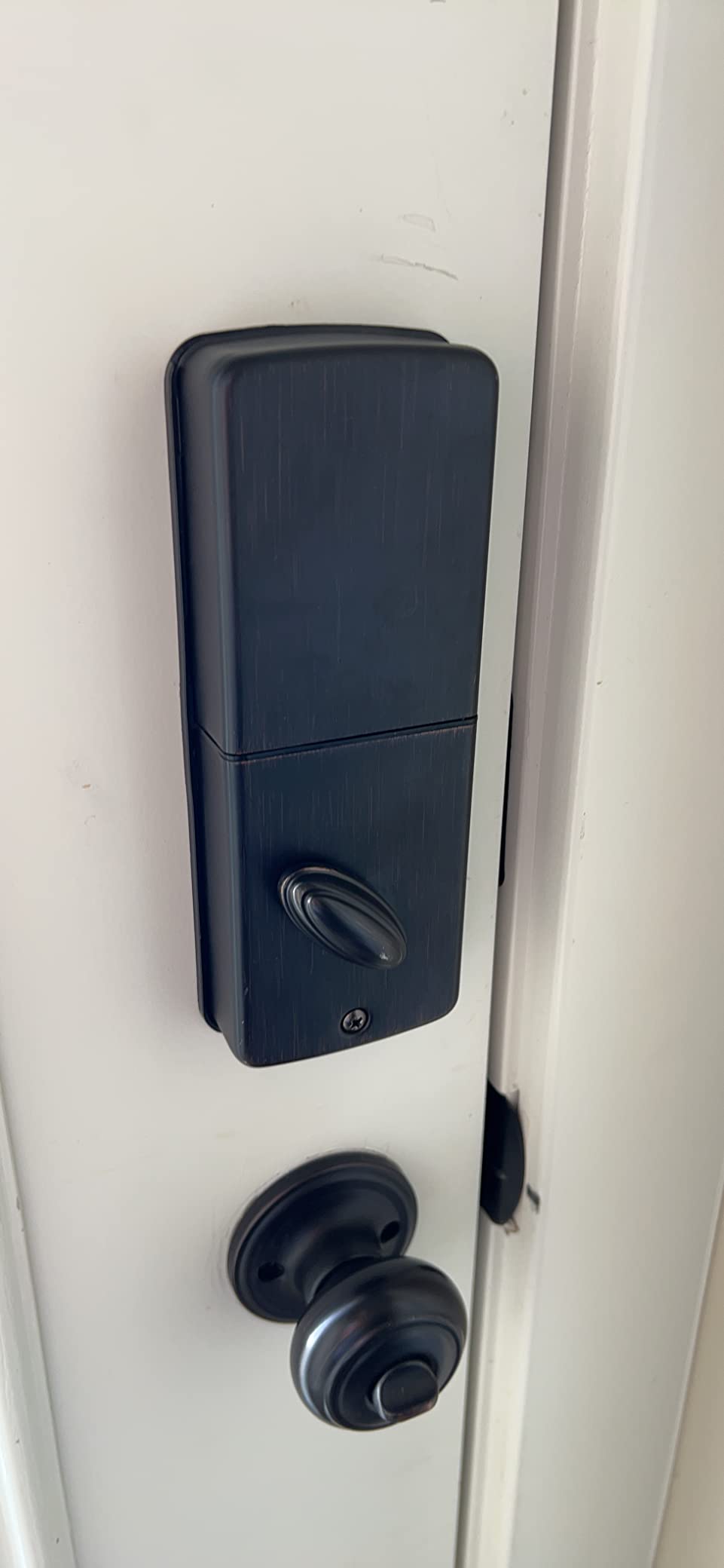
The KW1 cylinder is the quiet hero. Because it uses the same key cylinder as Kwikset hardware, a locksmith can re-key it to the key your family already uses, so a child does not need a key at all and a caregiver still has one key that opens every door.
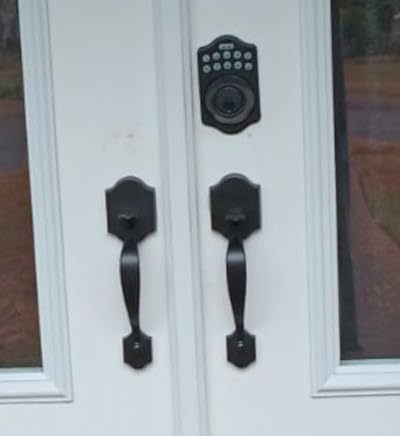
Auto-lock is configurable from 10 to 99 seconds after entry, and installation is roughly 15 minutes with a screwdriver. On a standard door the new lock often drops straight into the existing deadbolt hole with the screw holes already aligned.
What you should check before buying it
Read the programming sequence before you start, not during. The manual omits the step for deleting the factory default user code, and the single most-upvoted review in the entire product history exists purely to correct that omission. Read it first and the setup takes five minutes.
Check the inside clearance. Four AA batteries and a motor make the inside escutcheon noticeably bulky, and on a narrow door frame it can foul the edge of the door. Also expect tight tolerance on closing: the lock will not throw if the handle is being pulled as the door shuts, so let go of the handle before you pull it closed.
Who it suits and who it does not
This suits a front or side door where a school-age child comes home alone, and it suits a household that wants one key for every door. It is the most direct route to keyless entry with a re-keyable cylinder.
It does not suit a family with more than about six regular users, and it does not suit someone who will not spend five minutes reading the programming guide. Both mistakes are the source of almost every bad review here.
We earn a commission, at no additional cost to you. CERTAIN CONTENT THAT APPEARS ON THIS SITE COMES FROM AMAZON. THIS CONTENT IS PROVIDED 'AS IS' AND IS SUBJECT TO CHANGE OR REMOVAL AT ANY TIME.
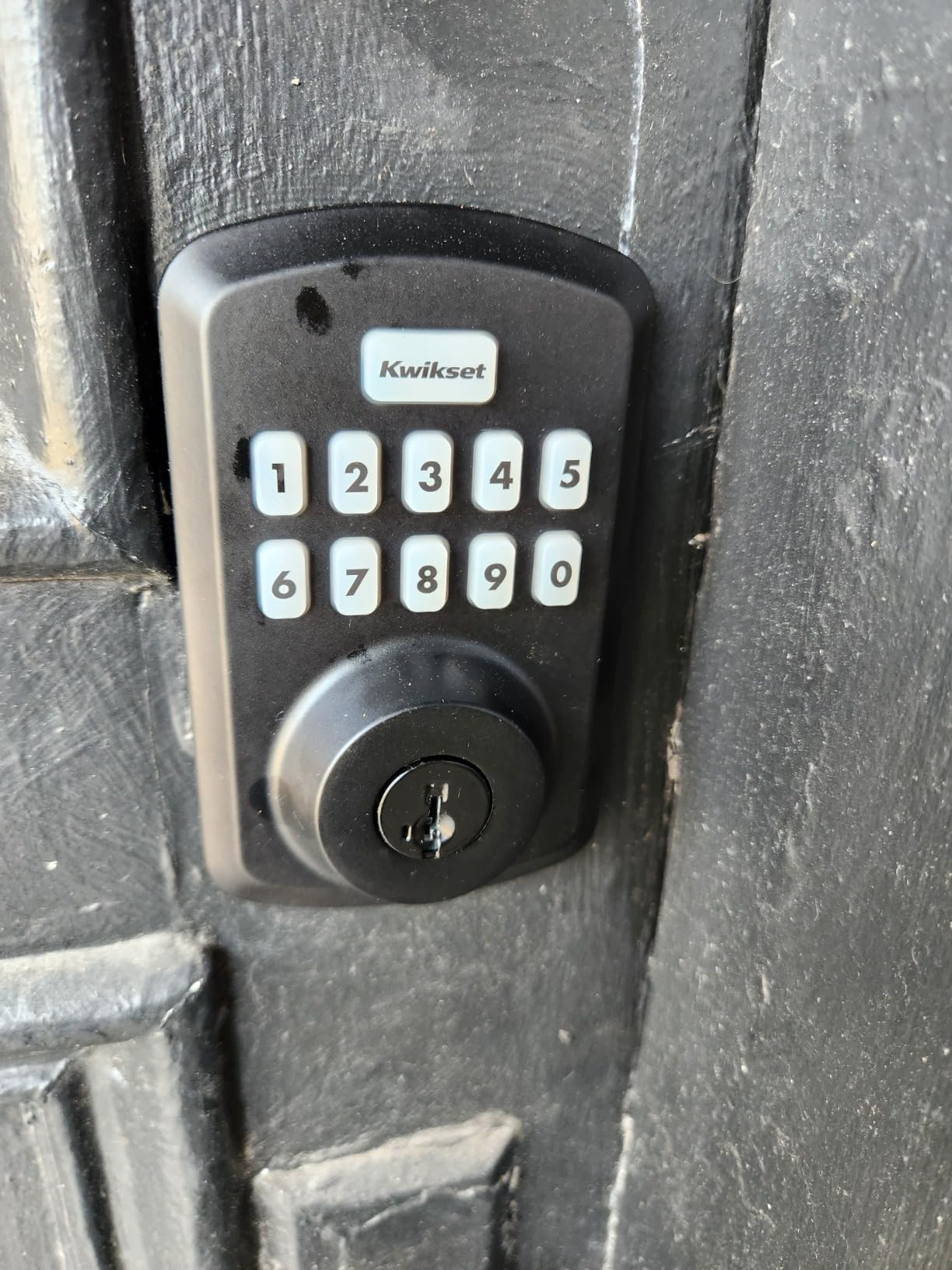
10. Kwikset Powerbolt 250 Keypad Deadbolt – Best Auto-Lock Range for a Door That Stays Open
Kwikset Powerbolt 250 10-Button Keypad Matte Black Transitional Electronic Deadbolt Door Lock, Featuring Convenient Keyless Entry, Customizable User Codes and Auto-Locking
- 25 codes plus 5 one-time codes
- Auto-lock 30 sec to 10 min
- Intrusion Alert lockout
- SmartKey re-keying
Pros
- Twenty-five user codes plus five one-time codes so each child holds their own PIN
- Auto-lock up to a 10 minute delay suits a child stepping out to play
- Intrusion Alert locks the keypad for a full minute after three wrong entries
- SmartKey lets you re-key it yourself to match existing house keys in seconds
- Large easy-to-press buttons and a noticeably fast motor
- One owner has run matching locks on four outside doors for a decade
Cons
- Highest 1-star share of any pick here at 16 percent
- Auto-lock is disabled by default and does nothing until you configure it
- Programming is poorly covered in the printed instructions
- Flat rectangular strike plate leaves the trim edge exposed
- Requires fresh alkaline batteries as rechargeables cut runtime dramatically
We earn a commission, at no additional cost to you. CERTAIN CONTENT THAT APPEARS ON THIS SITE COMES FROM AMAZON. THIS CONTENT IS PROVIDED 'AS IS' AND IS SUBJECT TO CHANGE OR REMOVAL AT ANY TIME.
The ten-minute maximum auto-lock delay is the feature no other lock on this page offers, and it solves a specific problem. A child going out to the garden or the street needs more than 30 seconds, and a lock that snaps shut in 10 seconds every time is worse than no lock at all. This one lets you set the delay to match the actual behaviour of your household.
Twenty-five user codes plus five one-time codes covers a large family with room to spare, and the Intrusion Alert gives you a full minute of dead keypad after three wrong entries. That is long enough to end an attempt at guessing and short enough not to interrupt a genuine family member.
SmartKey lets you re-key the cylinder yourself to any KW1 key without changing tumblers, so it can be set to the same key as your Schlage or Amazon Basics deadbolts. That turns the whole house onto one key in a few minutes per door.
The buttons are large and well spaced, which matters for a child entering a code in the dark or in a hurry, and the motor is quick enough that the lock feels responsive rather than sluggish.
What you should check before buying it
Configure the auto-lock before you walk away from the install. It arrives switched off, which means a brand new unit does nothing automatically until you go through the programming sequence and enable it. That single fact accounts for a large share of disappointed buyers.
Use fresh alkaline batteries, not rechargeables. Owners who fitted rechargeable cells report runtime collapsing from the expected figure of roughly a year to roughly two months, and support blaming the battery brand is a common follow-up to failed units. The same warning applies to every lock on this page that takes AA cells.
Who it suits and who it does not
This suits a household with a door that is genuinely left standing open during the day, a family of six or more who each need their own code, and anyone building a one-key house.
It does not suit an impatient buyer or anyone who expects plug-and-play behaviour out of the box. Sixteen percent one-star ratings is the highest share in this roundup, and most of those complaints trace back to programming or battery choice rather than to the lock failing.
We earn a commission, at no additional cost to you. CERTAIN CONTENT THAT APPEARS ON THIS SITE COMES FROM AMAZON. THIS CONTENT IS PROVIDED 'AS IS' AND IS SUBJECT TO CHANGE OR REMOVAL AT ANY TIME.
How to Choose a Keypad Lock for a Child’s Room
Six questions settle it. Answer them in order and the shortlist writes itself, because most of the disappointment people report comes from deciding on the keypad before deciding on the door.
What kind of door is it? An interior bedroom door needs a knob or lever. A back door, basement, or pantry needs a deadbolt. This one decision eliminates half the products on this page before anything else.
Are you keeping a child out or letting one in? Keep-out means a solid throw, an auto-lock timer, and no handle to grab. Let-in means quiet operation, a passage mode, and a lever a small hand can push.
Does it have an anti-peek keypad? Random digits before or after the real code stop a friend watching over a child’s shoulder. On a child’s door that is a social problem, not just a security one.
Is there a mechanical key override, and does the child get out from inside without a code? Two separate questions. Every lock here comes with backup keys, though on one model the key does not override the deadbolt, and only the ones with a free-turning interior handle give a small child true free egress.
How many codes do you need, and can you delete them easily? Six covers one family. Twenty covers a house with sitters. Fifty covers a three-generation home. Check that deletion does not require an app.
Can you fit it yourself in under half an hour? If the lock drops into an existing bore, it is a 15-minute job. If it needs a new hole, chiselling or a locksmith, price that in before you order.
Deadbolt, knob, or lever: which hardware a child’s door needs
A deadbolt throws a solid steel bolt into the strike. It is the most resistant to force, which is what makes it right for an entry or a basement, and the least forgiving to a small child, because there is nothing to grip on the inside.
A knob is the interior default. It is small, quiet, and fits into an existing interior door hole with an adjustable latch, which is why two of the picks here are knobs rather than deadbolts.
A lever handle is the answer to the deadbolt’s biggest flaw for children. A child pushes rather than twists, and can operate it without fine motor control. It is the shape we recommend for any door belonging to a child under about eight.
The battery chemistry warning nobody prints on the box
Use fresh alkaline batteries, never rechargeable ones. Ordinary rechargeable cells run at a lower and falling voltage, and most locks in this category read that dip as a low-battery warning, shorten the interval dramatically, or behave erratically. One owner of the Kwikset reports runtime falling from about a year to about two months after switching to rechargeables.
Replace all the batteries in a lock at once, never mixing old and new cells, and replace them from the inside where you can reach the compartment without removing the lock from the door.
Measuring Your Door Before You Buy
Most returns on keypad locks are measurement failures, and every one of them takes under three minutes to avoid. Bring a tape measure and check four things.
Bore diameter. Measure the hole in the door, not the hole in the frame. Most interior doors take a 54mm bore. The TEEHO fits 2-1/8 inch only and will not work in a 38mm hole.
Backset. Measure from the edge of the door to the centre of the hole. Standard is either 2-3/8 or 2-3/4 inches. Every adjustable-latch lock here covers both; a fixed-latch model does not.
Door thickness. Interior doors run roughly 1-3/8 to 1-3/4 inches. Exterior doors run 1-3/8 to 2-1/4. The TEEHO needs a 2-1/8 inch hole, and the iulock accepts the widest range on this list at 1-3/8 to 2-1/2 inches.
Interior clearance. Stand the door open and check the gap between the inside escutcheon and the door frame or the furniture. The bulky inside units holding four AA batteries are the ones that foul a narrow frame first.
Finally, check the shape of the bore hole on an older door. If the opening is round rather than square, some latches will not seat until you flatten the edges with a chisel. That is a ten-minute job if you know it is coming and a frustrating hour if you do not.
Locking a Child’s Door Responsibly
Yes, you can put a lock on a child’s door. In the family home, for privacy, a keypad lock is a normal and legal choice, and plenty of families install one specifically to give a child control over who comes in. The conditions are about safety and access rather than permission.
The child must always be able to open the door from the inside without a code, without a key, and without adult help. This is the non-negotiable condition.
Caregivers must retain reliable access from outside, through either a working key or a code you hold.
The door must not be a required emergency egress route or a fire escape, and a fire-rated door should keep its rated hardware.
Do not use a lock as the tool for managing a child who escalates against barriers. If a lock becomes the thing they are fighting, it is no longer solving anything.
Keep a backup key somewhere an adult can reach and a child cannot.
The first point is where most installations go wrong, and it is worth being blunt: a child’s bedroom door that requires a code or a key to leave from the inside is a hazard, not a boundary. A lever handle that turns freely, or passage mode set to push-and-go, costs nothing to set up and removes the risk entirely.
Framing matters too. Parents in one forum thread describe a child’s door lock as a tool for teaching healthy boundaries and for being left alone, not as containment. The child is the user of this lock. Every pick on this page is easier to live with when the child is the person turning the keypad.
Preventing the Lockout
The lockout is the failure everyone fears: a child on the wrong side of a door with no code, no key, and a dead battery. It is entirely preventable, and the checklist is short.
Test the inside egress the day you install it. Close the door from outside, then leave using only the inside handle or thumbturn. Do this with the batteries in, because that is how it will be used.
Confirm the mechanical override before you need it. Take the battery out, try the key, put the battery back. On the Signstek there is no working key override, so the emergency USB port is your only backup and you need to know where it is.
Keep spare batteries of the correct type and chemistry. Fresh alkaline only. Know which cell size your lock takes, because four AA, four AAA, and a single 9V are all in this roundup.
Store a backup key at an adult height. Not on a hook by the door, not in a school bag, not in the same room the child is locked out of.
Set passage mode permanently on a child’s bedroom door, so leaving the room never requires a code at all. Only locking in requires one.
Never rely on an app as the only way in. Locksmith advice repeats this constantly: if your phone is not on you, you need another way in.
On the resistance side, be realistic. No keypad lock on the market stops a determined child from body-slamming a hollow-core door forever, and the locksmith thread at the top of this page is a reminder that standard latches and even keyed deadbolts can be jammed repeatedly by a determined twelve-year-old. What a good deadbolt does buy you is time, and what an anti-peek keypad and a lockout-after-failures feature buy you is that a bored child cannot reverse-engineer the code by watching.
What We Did Not Pick and Why
A short list of things we ruled out, so you do not have to buy them and find out what we already know.
Commercial institutional keypad locks. Networked access control hardware built for schools and hospitals appears high in results for this query. It is the wrong category entirely: it needs wiring, a controller, and a permanent power feed, and it costs several times a residential lock.
Magnetic locks. Frequently suggested for keeping children in. They need continuous power, are a retrofit commercial fitting, and are unsuited to a standard bedroom or back door.
App-only smart locks. If the phone is the only way back in, a flat battery, a forgotten password, or a child without a phone becomes a lockout. Every pick here comes with a physical key.
Large-brand fingerprint locks. Fingerprint sensors are excellent and well rated, but they are a different use case, a different price tier, and they need re-enrolling as a child grows.
High-security lever sets aimed at commercial traffic. They meet Grade 1 requirements that a family bedroom door does not need, at a weight and price that make no sense indoors.
Frequently Asked Questions
Is there a smart door lock that comes with a child lock?
Yes, in two forms. Some locks have a child-lock setting that restricts the keypad or holds the lock in a fixed state, and separately, many keypad door knobs are sold explicitly as child-proof designs with raised buttons and grip knobs. On a child bedroom door we prefer a free-turning interior lever or passage mode over a child-lock flag, because it guarantees free egress even when the child forgets the code.
Are door locks with keypads safe?
Keypad locks are safe when four conditions are met: a recognized hardware grade such as ANSI Grade 2 or 3, an auto-lock so the door secures itself, a keyed mechanical override for dead batteries, and an anti-peek keypad so the code cannot be captured while it is typed. Every pick in this roundup comes with a key, and most have an auto-lock timer.
What is the best front door lock to keep kids inside?
The feature that matters most is the auto-lock timeout, because it secures the door after a child walks out and forgets. The Kwikset Powerbolt 250 allows the longest delay at up to 10 minutes, which suits a child heading outside, while the TEEHO TE001 and Amazon Basics deadbolt cover the more common case with a 10 to 99 second timer.
Is it legal to put a lock on my child’s door?
Generally yes, for privacy in a family home. The conditions are that the child can always open the door from inside without a code or key, caregivers retain reliable outside access, the door is not a required fire escape or emergency egress route, and a fire-rated door keeps its rated hardware.
What is the best child lock for bedroom doors?
For most bedrooms the best choice is an interior keypad knob or lever, not a deadbolt. The MiLocks TKK-02SN offers physical buttons and a solid brass body, the Signtek YL-99 adds a mute mode for quiet night entry, and the Yamiry YR04 or Veise KS01B pair the keypad with a lever a small hand can push.
What are the downsides of keyless entry locks?
The main ones are battery failure lockout, which a keyed override reduces but never eliminates; programming difficulty on several models; a higher upfront cost than a mechanical lock; replacement rather than re-keying costs when codes are compromised; and on locks without a working override, dependence on batteries or a USB port. Rechargeable batteries also cause erratic behaviour and should be avoided.
What happens if a child locks themselves out?
Usually nothing serious, because a correctly installed lock still opens from the inside without a code. Verify this on installation day by closing the door from outside and leaving using only the inside handle. If a lockout does happen, use the mechanical key override, or the emergency USB power port on models that have one such as the Signstek YL-99.
Can you put a keypad lock on a bedroom door?
Yes, interior keypad knobs and levers are purpose-built for exactly this use and usually fit an existing standard door hole in about 15 minutes. Check the bore diameter, the backset of 2-3/8 or 2-3/4 inches, the door thickness, and the interior clearance before ordering, and leave the interior side free-turning so the child can always get out.
Which Keypad Lock Is Right for Your Family
If you want one recommendation, take the TEEHO TE001. Twenty codes, a 10 to 99 second auto-lock, a backup key on both sides and more than ten thousand ratings documenting how it behaves over years. It covers both jobs in this roundup, which is why it is our top pick for 2026.
For a child’s own bedroom door, go with a knob or a lever instead of a deadbolt. The MiLocks TKK-02SN is the dependable brass choice, the Signtek YL-99 is the quiet one for night-time entry, and the Yamiry YR04 or Veise KS01B are the picks when small hands are the deciding factor.
For a back door or a basement you want to close behind a wandering seven-year-old, choose a deadbolt with an auto-lock timer and a failure lockout. The Veise RZ-A and the Kwikset Powerbolt 250 both fit, and the Kwikset lets you re-key it to the same key as the rest of the house.
Whatever you choose, do one thing on installation day that almost everyone skips: close the door from the outside and open it from the inside using only the handle or thumbturn. Every other feature on this page is secondary to that one test.