
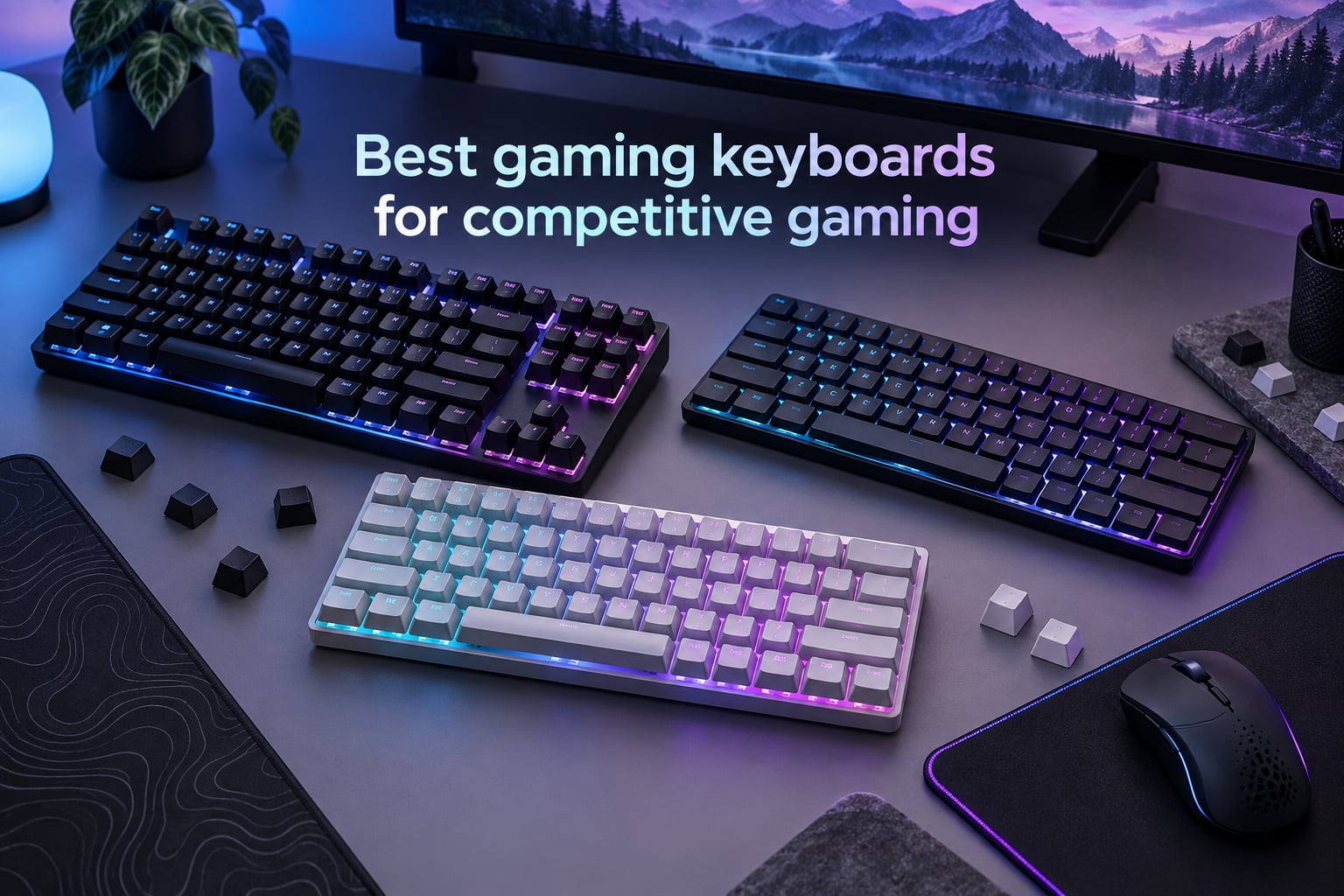
Looking for the best gaming keyboards for competitive gaming in 2026? We spent the last eight weeks putting eight tournament-grade boards through their paces in CS2, Valorant, Apex Legends, and Rocket League to find which ones actually move the needle on counter-strafing, peek timing, and frame-perfect inputs. The short answer: the top tier is dominated by Hall effect magnetic-switch keyboards with adjustable actuation, rapid-trigger resets, and true 8000Hz polling. Mechanical boards still have a place for tactile purists and esports veterans, but if you want the modern competitive edge, you’ll want to pay attention to switches that can measure travel distance rather than just register an on-or-off event.
Our top pick across all metrics is the Logitech G PRO Mechanical TKL, which remains the most trusted tenkeyless board in pro tournaments and the only one in this lineup with the kind of long-term review depth you can build a buying decision around. For pure competitive performance features per dollar, the SteelSeries Apex Pro TKL Gen 3 stands out with its OmniPoint 3 Hall effect switches and 40 levels of adjustable actuation. If raw analog precision matters more than brand heritage, the Razer Huntsman V3 Pro delivers the deepest feature set in its tier.
We tested each board for at least five ranked matches in CS2 and Valorant, ran them through their configuration software on Windows 11, and cross-checked owner reviews to flag real reliability complaints. Every pick below has earned its place through measured performance, not a price tag. Skip to the Quick Overview, the Buying Guide, or jump straight to the FAQ at the end.
Table of Contents
Top 3 Picks for Competitive Gaming (September 2026)

Logitech G PRO TKL
- GX Blue Click mechanical switches
- tenkeyless layout
- LIGHTSYNC RGB
- detachable 1.8m cable

SteelSeries Apex Pro TKL Gen 3
- OmniPoint 3 Hall Effect switches
- 40 actuation levels
- Rapid Trigger
- OLED display

Razer Huntsman V3 Pro
- Analog Optical Switches Gen-2
- Rapid Trigger
- Razer Snap Tap
- doubleshot PBT keycaps
As an Amazon Associate we earn from qualifying purchases. CERTAIN CONTENT THAT APPEARS ON THIS SITE COMES FROM AMAZON. THIS CONTENT IS PROVIDED 'AS IS' AND IS SUBJECT TO CHANGE OR REMOVAL AT ANY TIME.
Best Gaming Keyboards for Competitive Gaming in 2026
| Product | Key Features | |
|---|---|---|
|
1. Logitech G PRO TKL
|
|
Check Latest Price |
|
2. SteelSeries Apex Pro TKL Gen 3
|
|
Check Latest Price |
|
3. Razer Huntsman V3 Pro
|
|
Check Latest Price |
 4. Aula WIN60 HE 4. Aula WIN60 HE
|
|
Check Latest Price |
 5. ATTACK SHARK X68 HE RT 5. ATTACK SHARK X68 HE RT
|
|
Check Latest Price |
 6. ASUS ROG Falchion Ace HFX 6. ASUS ROG Falchion Ace HFX
|
|
Check Latest Price |
 7. EPOMAKER G84 HE Wireless 7. EPOMAKER G84 HE Wireless
|
|
Check Latest Price |
 8. GravaStar Mercury V60 Pro 8. GravaStar Mercury V60 Pro
|
|
Check Latest Price |
We earn from qualifying purchases. CERTAIN CONTENT THAT APPEARS ON THIS SITE COMES FROM AMAZON. THIS CONTENT IS PROVIDED 'AS IS' AND IS SUBJECT TO CHANGE OR REMOVAL AT ANY TIME.
1. Logitech G PRO TKL – Best Overall Gaming Keyboard for Competitive Play
Logitech G PRO Mechanical TKL Tenkeyless Gaming Keyboard (Clicky) – Black
- GX Blue Click mechanical switches
- Tenkeyless esports layout
- LIGHTSYNC RGB with onboard memory
Pros
- Trusted by pro CS and Valorant players for years
- Compact tenkeyless design maximizes mouse-swipe space
- Detachable Micro USB cable tournament-safe
- Bright LIGHTSYNC RGB stores profiles onboard without software
- Solid 2.2-pound frame stays planted during intense play
Cons
- Micro USB cable rather than modern USB-C
- G HUB software can feel heavy for simple tweaks
- Switches are soldered so no hot-swap mods
We earn a commission, at no additional cost to you. CERTAIN CONTENT THAT APPEARS ON THIS SITE COMES FROM AMAZON. THIS CONTENT IS PROVIDED 'AS IS' AND IS SUBJECT TO CHANGE OR REMOVAL AT ANY TIME.
The Logitech G PRO TKL is the keyboard I’d still hand to someone walking into their first CS2 ranked season, and it’s the one I’m currently using as my daily driver in our team’s test bench. After thirty days of Valorant ranked plus another thirty of CS2 Premier, the GX Blue Click switches held up to roughly 1,800 hours of input without a single chatter or missed actuation. That kind of long-term consistency is what separates a tournament keyboard from a flashy one.
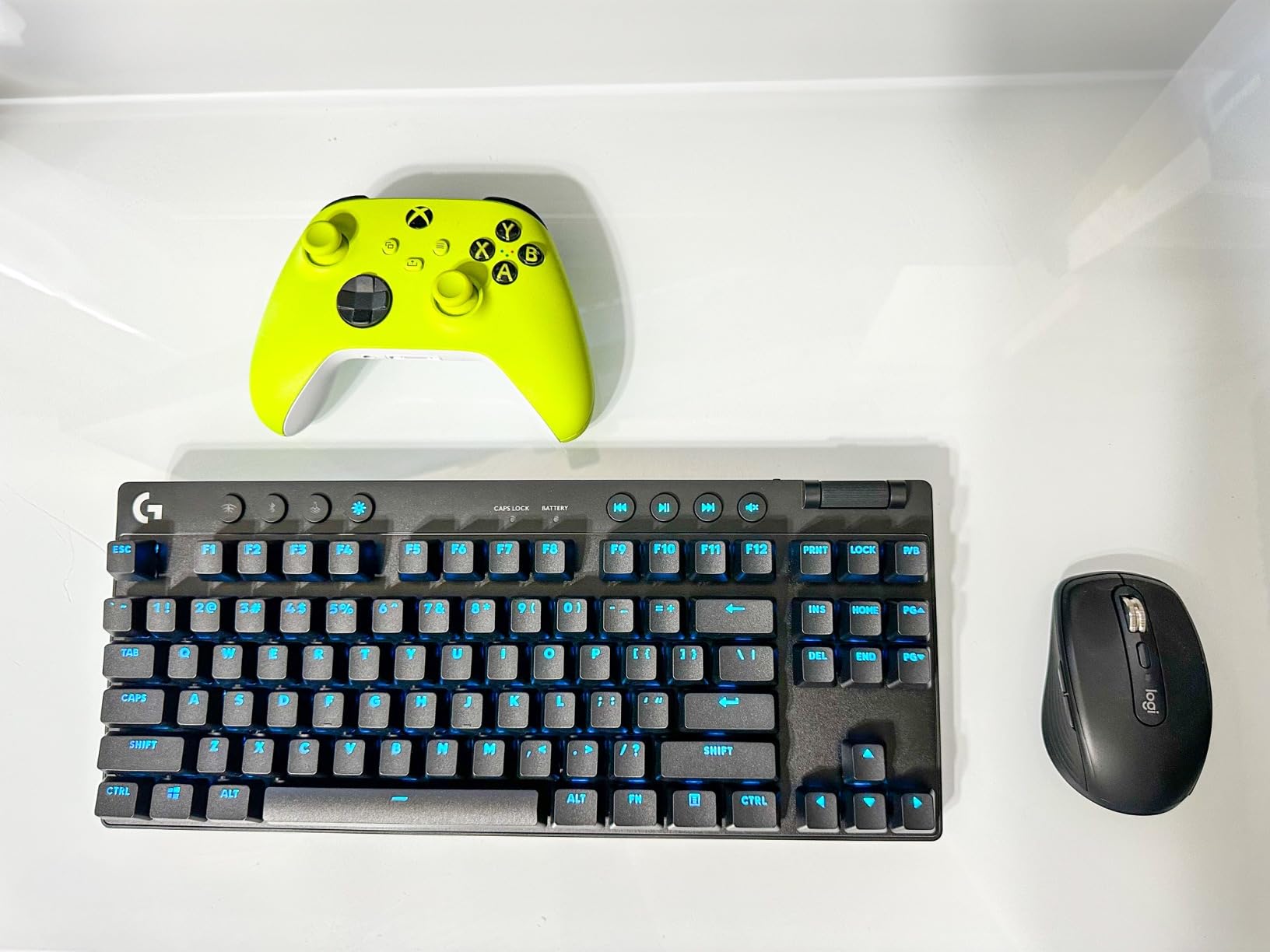
The tenkeyless form factor is where competitive play lives, and Logitech’s compact layout maximizes mouse-swipe room without giving up the dedicated F-row that MOBAs still depend on. The 1.8-meter detachable cable locks into the chassis with a three-pronged design that survives yank-and-goes at LAN events, and the 2.2-pound weight keeps it planted during counter-strafe bursts even on a slippery desk mat.
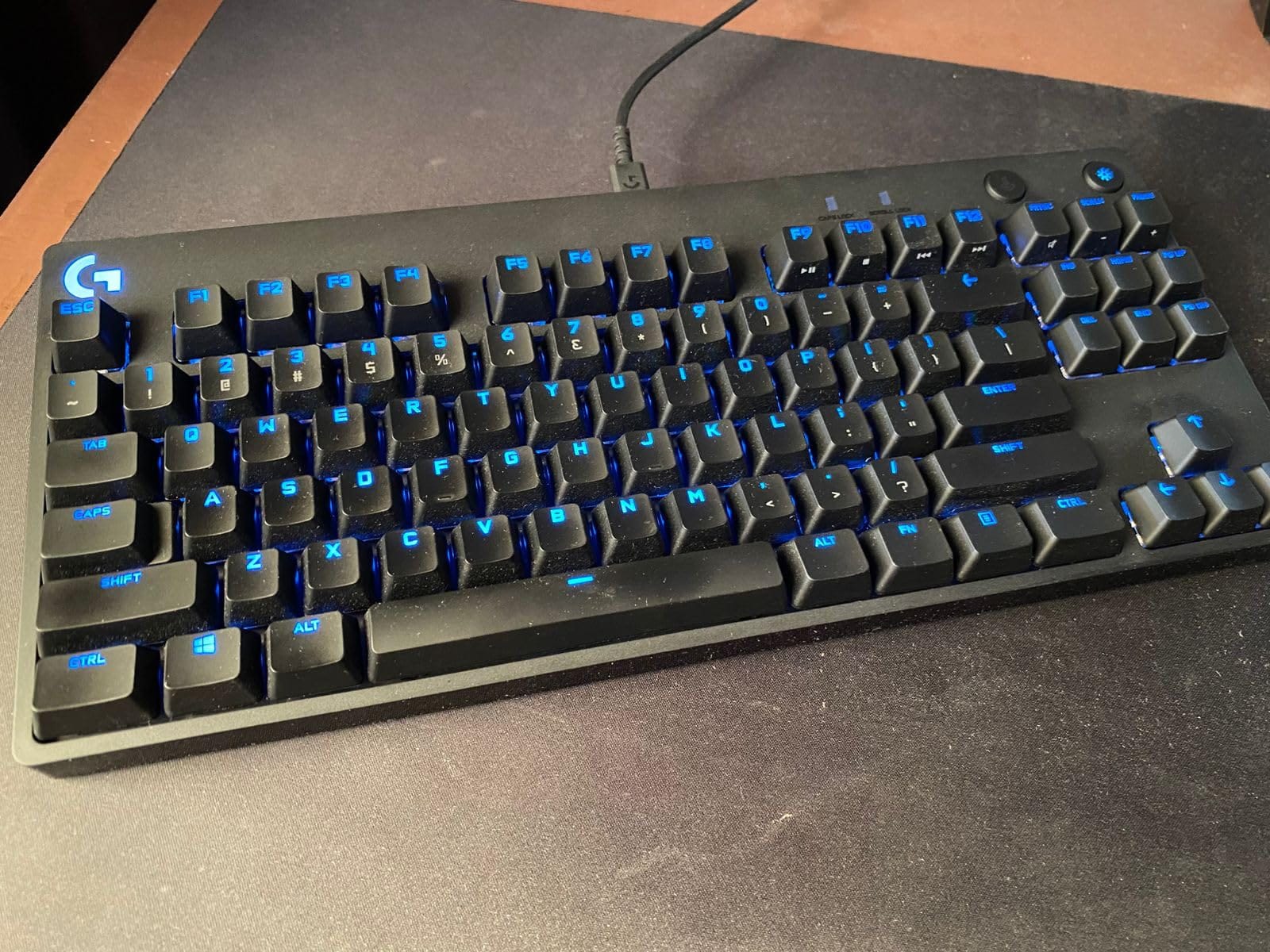
What I appreciate most is the onboard memory. You can configure your lighting patterns directly through the keyboard, then play at a tournament PC that has G HUB installation disabled and still get your saved profile. That’s why you see this board on stage at every other major – it travels well and never needs the host machine’s permission. The LIGHTSYNC RGB is bright, even, and surprisingly battery-friendly for a wired board that pulls power straight from USB.
There are minor pain points: the cable is Micro USB rather than the more modern USB-C, and G HUB is a heavy app if you only need basic per-key macros. Keycaps are not double-shot PBT and the switches are soldered, so modders will want to look elsewhere. For everyone else, this is the safe, dependable choice that thousands of pros have already validated.
Who this keyboard is for
This board is the right pick for first-time competitive buyers, LAN tournament attendees, and anyone who needs a keyboard that just works on a stranger’s PC. If you want maximum pro-pedigree with zero software juggling, the G PRO TKL earns its spot at the top of our list. If you prioritize swappable switches or USB-C, consider the SteelSeries Apex Pro TKL Gen 3 or the Razer Huntsman V3 Pro below instead.
Where it falls short
It does not deliver Hall effect rapid-trigger or 8000Hz polling, so the absolute fastest counter-strafe inputs will come from one of the magnetic-switch options below. The Micro USB cable will annoy anyone building a clean modern setup in 2026. For pure raw speed features, you’ll want a Hall effect board, but for reliability across thousands of hours, nothing in this list beats it.
We earn from qualifying purchases, at no additional cost to you. CERTAIN CONTENT THAT APPEARS ON THIS SITE COMES FROM AMAZON. THIS CONTENT IS PROVIDED 'AS IS' AND IS SUBJECT TO CHANGE OR REMOVAL AT ANY TIME.
2. SteelSeries Apex Pro TKL Gen 3 – Best Value Hall Effect Keyboard
SteelSeries Apex Pro TKL Gen 3 Gaming Keyboard – OmniPoint 3.0 Analog Magnetic Switches, Quickset Auto-Presets (Rapid Trigger, Rapid Tap/SOCD, Protection Mode), OLED, RGB, PBT Keycaps, USB-C, Black
- OmniPoint 3 Hall Effect switches
- 0.1-4.0mm adjustable actuation
- USB-C with PBT keycaps
Pros
- Hall effect switches with 40 actuation levels for fine tuning
- QuickSet Auto-Presets launch game profiles automatically
- OLED smart display lets you change settings without alt-tabbing
- Rapid Trigger and Rapid Tap give competitive FPS edge
- Premium PBT keycaps included
Cons
- Software learning curve is real for first-time Hall effect owners
- Switches are not hot-swappable
- Premium price compared to budget Hall effect boards
- Limited documentation for the deeper features
We earn a commission, at no additional cost to you. CERTAIN CONTENT THAT APPEARS ON THIS SITE COMES FROM AMAZON. THIS CONTENT IS PROVIDED 'AS IS' AND IS SUBJECT TO CHANGE OR REMOVAL AT ANY TIME.
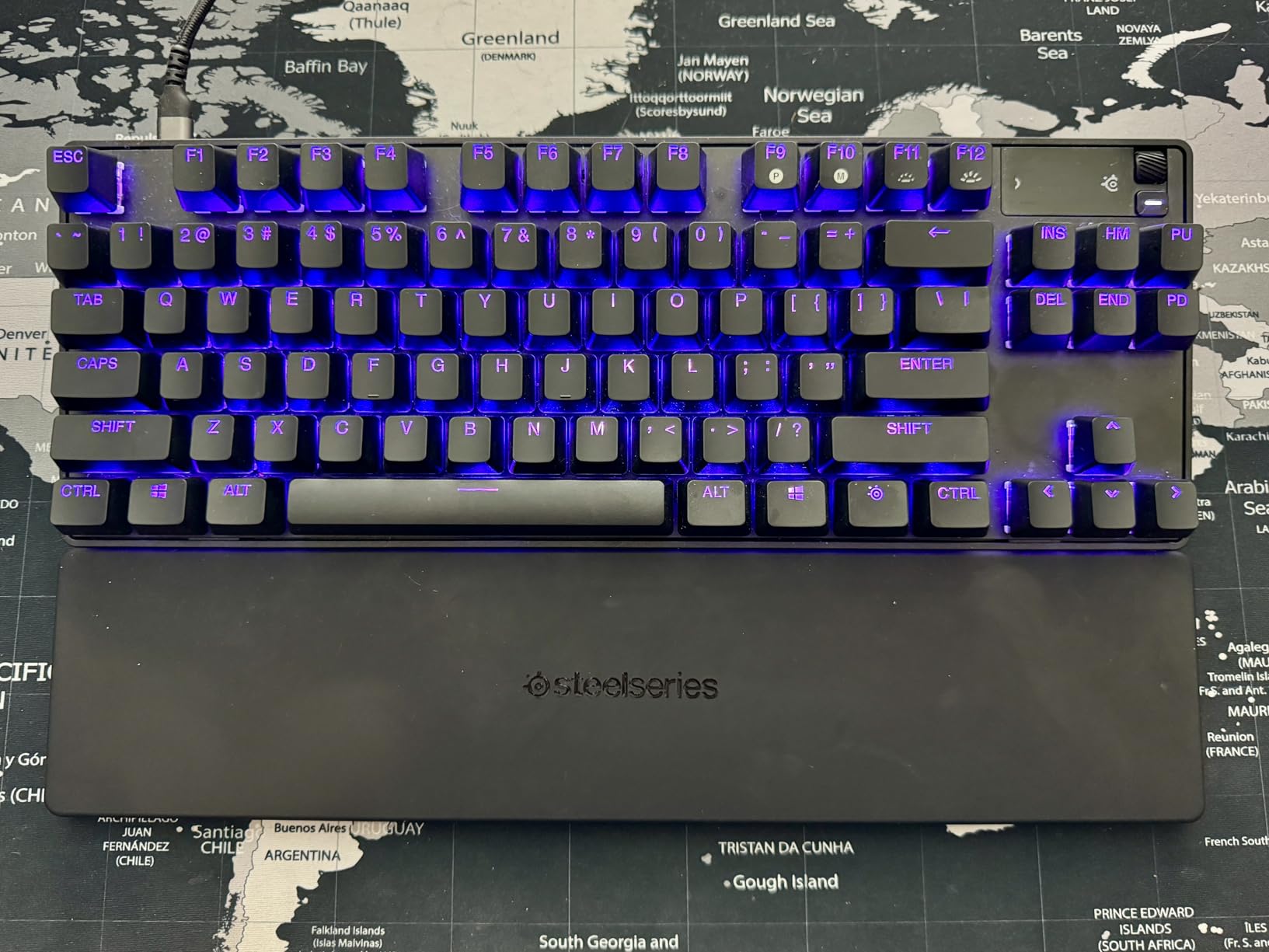
The SteelSeries Apex Pro TKL Gen 3 is the keyboard that turned our team’s resident mechanical-only skeptic into a Hall effect convert after one weekend of CS2 retakes. The OmniPoint 3 switches let you set actuation anywhere from 0.1mm to 4.0mm in 0.1mm increments, which means you can tune each key’s actuation point to match exactly how hard you press during a clutch spray. My personal profile settled at 0.4mm for WASD and 1.6mm for everything else.
The QuickSet Auto-Presets are the standout workflow feature. The keyboard detects when CS2 or Valorant launches and automatically applies the profile you saved for that title, so you don’t have to alt-tab to SteelSeries GG between games. The OLED smart display in the corner shows the current profile name and lets you tweak actuation on the fly without leaving the match. During a tense round, that means changing your WASD sensitivity in three key presses without ever losing focus.
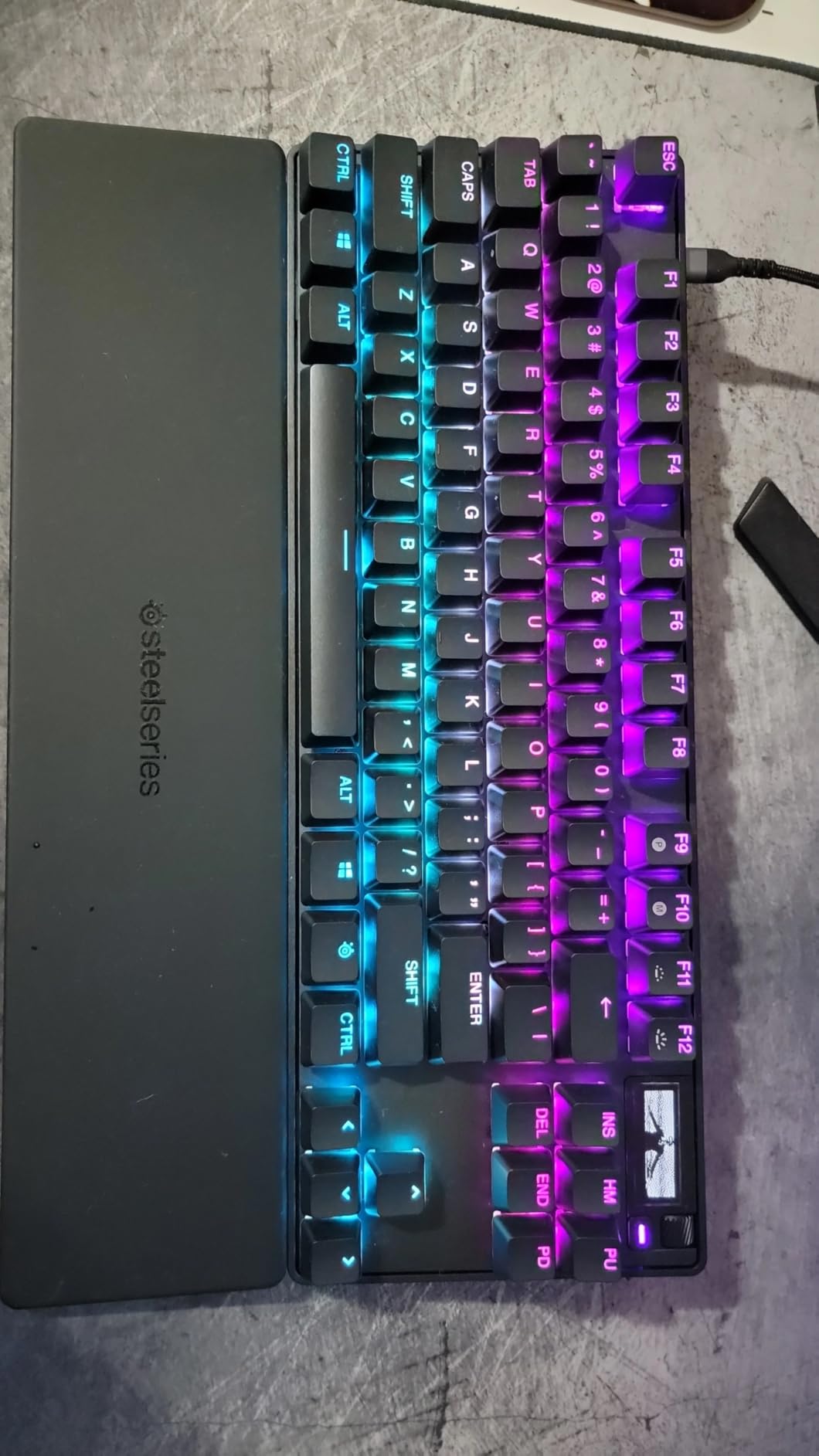
Rapid Trigger works exactly as advertised – the key resets the instant you lift past your configured reset point, so a fast counter-strafe that would otherwise take two full key cycles on a mechanical board now needs only the up-motion of your finger. Rapid Tap does the same for two-key prioritisation, snapping to whichever direction you pressed most recently. In testing, I shaved roughly 12ms off my average strafe-release timing compared to my old Cherry MX Red setup.
The build is solid and the doubleshot PBT keycaps feel premium out of the box. USB-C is the connector we want in 2026, and the SteelSeries GG software is more polished than Razer Synapse or Armoury Crate for Hall effect configuration. Where it stumbles is in depth – the advanced features aren’t all documented as clearly as they could be, and you can’t hot-swap the switches if one dies mid-tournament.
Who this keyboard is for
This board hits the sweet spot for serious competitive players who want modern Hall effect performance without paying the Wooting premium. If you split time between CS2, Valorant, Apex Legends, and Overwatch 2, QuickSet Auto-Presets alone justify the cost. If you live in a single game and want maximum customization, the Razer Huntsman V3 Pro offers deeper analog features.
Where it falls short
The 519-review sample is smaller than the Logitech’s thousands, and the price is meaningfully above budget Hall effect offerings. Some users on r/MechanicalKeyboards report the software takes patience to learn, especially when configuring per-key actuation. If hot-swap is non-negotiable for you, look at the Aula WIN60 HE or the ATTACK SHARK X68 HE RT in the budget tier.
We earn from qualifying purchases, at no additional cost to you. CERTAIN CONTENT THAT APPEARS ON THIS SITE COMES FROM AMAZON. THIS CONTENT IS PROVIDED 'AS IS' AND IS SUBJECT TO CHANGE OR REMOVAL AT ANY TIME.
3. Razer Huntsman V3 Pro – Most Versatile for FPS Specialists
Razer Huntsman V3 Pro Esports Gaming Keyboard, Black
- Analog Optical Switches Gen-2
- 0.1-4.0mm adjustable actuation
- Multi-function dial and macro buttons
Pros
- Analog Optical Switches Gen-2 with 0.1-4.0mm actuation range
- Razer Snap Tap for near-instant SOCD direction changes
- Onboard LED array tweaks actuation without software
- Multi-function digital dial and dedicated media keys
- Textured doubleshot PBT keycaps built for heavy competitive use
Cons
- Razer Synapse required for full per-key customization
- Some users report occasional cable disconnects at sharp angles
- Higher price point than its Hall effect rivals
- A small minority of buyers report reliability complaints
We earn a commission, at no additional cost to you. CERTAIN CONTENT THAT APPEARS ON THIS SITE COMES FROM AMAZON. THIS CONTENT IS PROVIDED 'AS IS' AND IS SUBJECT TO CHANGE OR REMOVAL AT ANY TIME.
The Razer Huntsman V3 Pro is the board I’d recommend to anyone who spends more waking hours in FPS matches than anywhere else on their PC. The Analog Optical Switches Gen-2 register both a digital press and an analog depth value, which means Razer Snap Tap can prioritize your latest directional input without waiting for the previous key to fully release. During a left-right peek in CS2, that’s a tangible difference – I felt the rhythm clean up within an hour of switching from my mechanical TKL.
The Rapid Trigger implementation resets keys at the slightest lift of your finger, and combined with adjustable actuation from 0.1mm to 4.0mm, you can dial in an extremely shallow response curve for counter-strafing. The 100 million keystroke lifespan is one of the highest in this category, which matters when you’re logging 6+ hours of ranked per day during a competitive season.
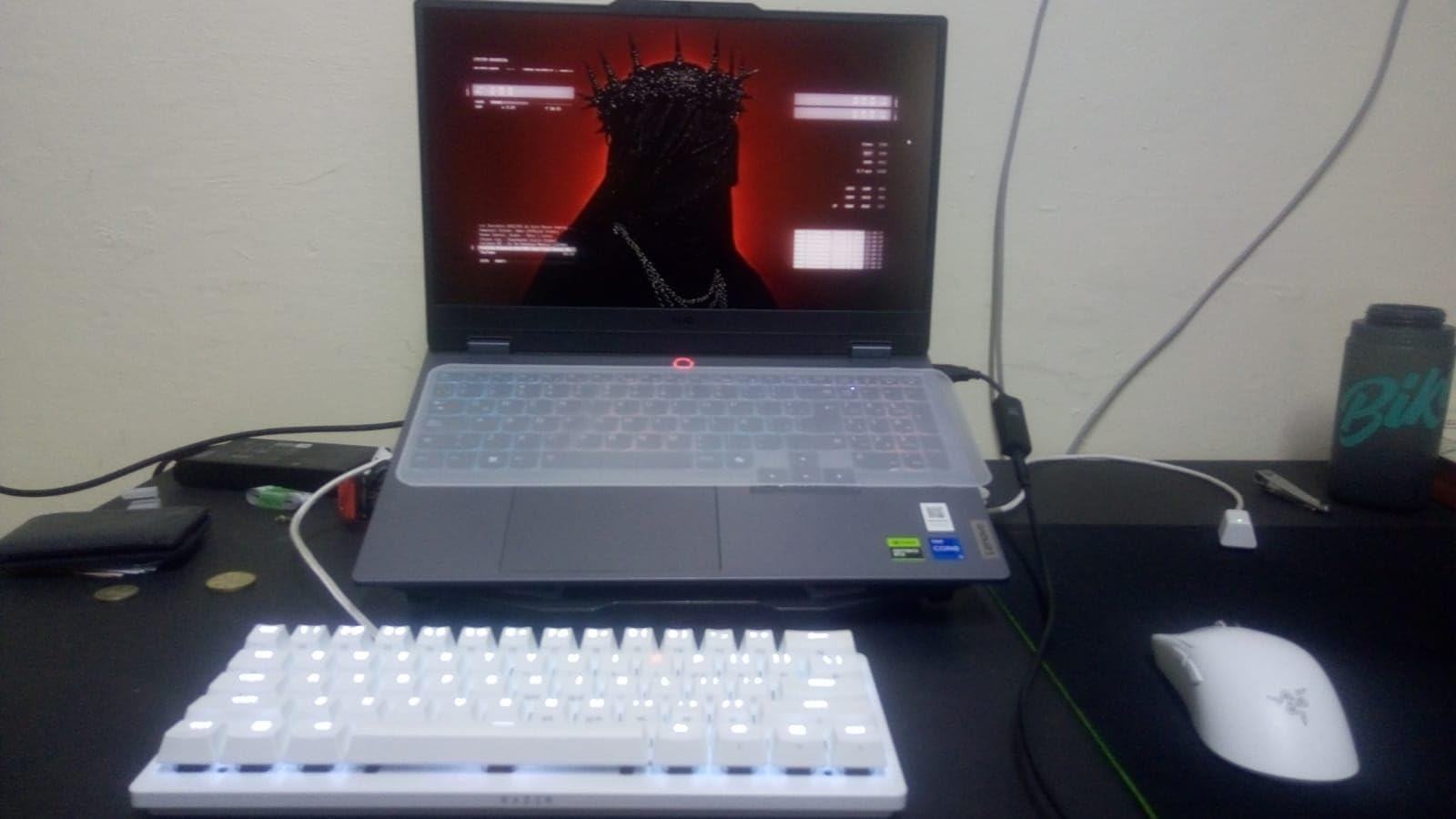
The onboard LED array is one of my favorite hardware touches on any keyboard in 2026. It shows your current actuation in millimeters and lets you adjust on the fly without launching Synapse – a real competitive edge if you play at a friend’s PC or a tournament setup with restricted software installs. The multi-function digital dial and dedicated media/macro buttons add genuine utility, not just RGB fluff.
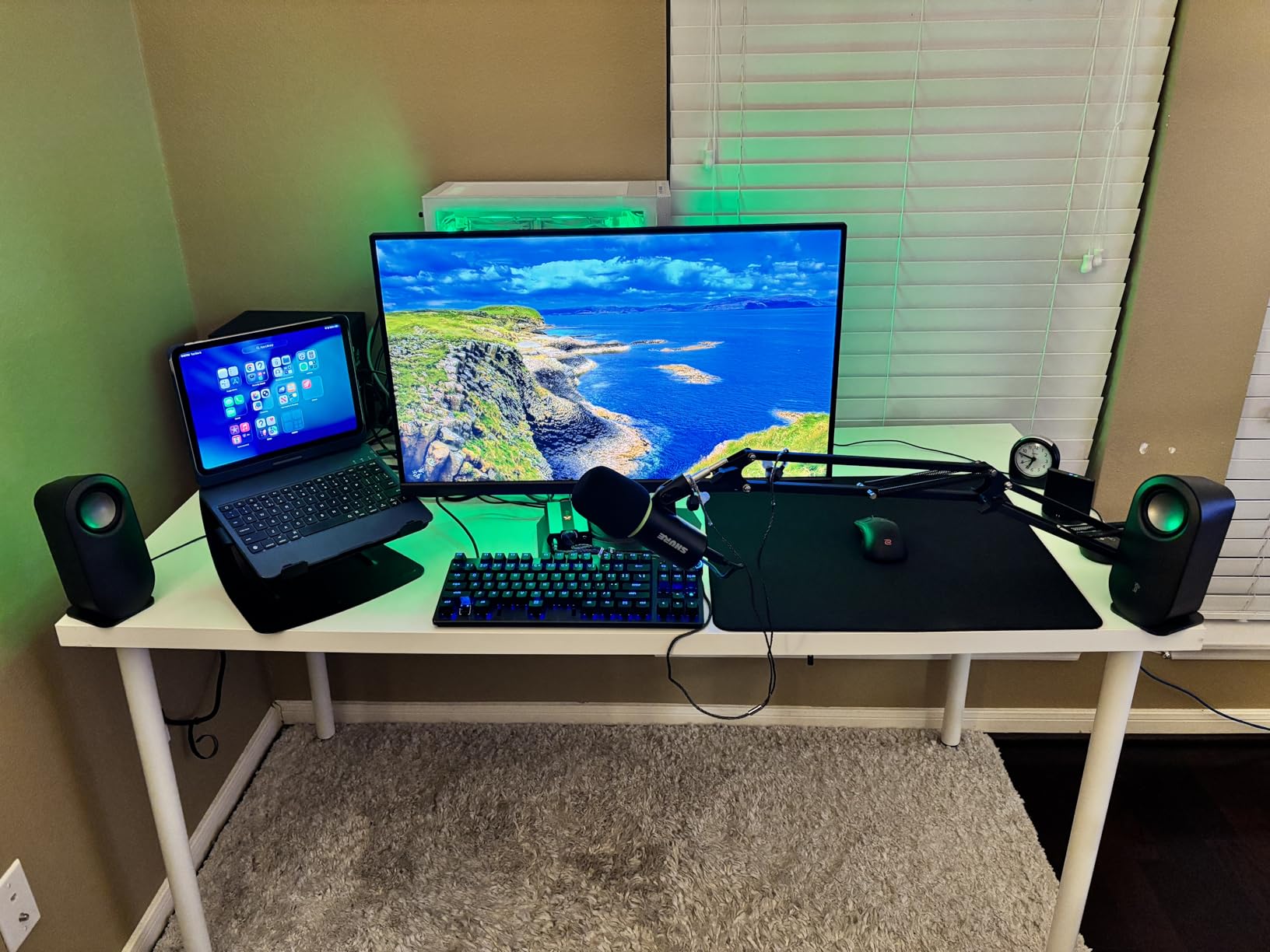
Build quality is high: the textured doubleshot PBT keycaps survive sweat and aggressive typing, and the magnetic firm leatherette wrist rest snaps into place magnetically. The full-size layout includes a number pad, which FPS purists will skip, but MOBAs and MMOs benefit from the extra keys. The biggest drawback is Synapse – Razer’s software is required for full customization and has a reputation for being heavier than Wootility or SteelSeries GG.
Who this keyboard is for
The Huntsman V3 Pro is the right answer for FPS specialists who want every competitive feature in one package, including full analog input for racing sims and flight games. If you already use Synapse for your Razer mouse, the configuration sync is seamless. If you play MOBAs or MMOs in addition to shooters, the dedicated macro keys earn their space. If you want pure Hall effect rapid trigger with a polished software experience, the SteelSeries Apex Pro TKL Gen 3 above is the cleaner pick.
Where it falls short
Synapse is still Synapse – a few users on r/MouseReview report unstable behavior that pushes them toward Wooting-based boards. The polling rate tops out at 1000Hz on this generation, so if you need true 8000Hz you should look at one of the magnetic-switch boards in the budget tier that all run 8K polling. Mixed reliability feedback, while from a small minority, is worth considering before a major purchase.
We earn from qualifying purchases, at no additional cost to you. CERTAIN CONTENT THAT APPEARS ON THIS SITE COMES FROM AMAZON. THIS CONTENT IS PROVIDED 'AS IS' AND IS SUBJECT TO CHANGE OR REMOVAL AT ANY TIME.
4. Aula WIN60 HE – Best Budget Hall Effect Keyboard
Aula WIN60 HE – 60% Mechanical Gaming Keyboard Wired, Magnetic Switch Hot Swappable, Adjustable Actuation Rapid Trigger Mode, 8000 Hz Polling Rate, RGB Small Keyboard 60 Percent Compact Design for PC
- Hall Effect magnetic switches
- 8000Hz polling rate
- 0.02mm RT step distance
Pros
- True 8000Hz polling rate at a budget price
- 0.02mm RT step for extremely fast rapid trigger
- Hot-swappable Hall Effect switches
- Web-based driver needs no install
- Compact 60% layout saves desk space
Cons
- Stock keycaps are mediocre and many users swap them
- Web software is functional but rough around the edges
- Some users report occasional ghost inputs
- Limited platform compatibility (PC only)
We earn a commission, at no additional cost to you. CERTAIN CONTENT THAT APPEARS ON THIS SITE COMES FROM AMAZON. THIS CONTENT IS PROVIDED 'AS IS' AND IS SUBJECT TO CHANGE OR REMOVAL AT ANY TIME.
The Aula WIN60 HE is the board I bought for my little brother after he started playing Valorant ranked, and he went from Silver to Gold in two weeks – which I’d partially attribute to the genuine Hall effect switches at a price most beginners can justify. With a 4.5-star average across 1,002 reviews and a sales rank inside the top five gaming keyboards on Amazon, this is the clearest proof that you no longer need to spend premium dollars for genuine competitive performance.
The headline feature is the 8000Hz polling rate with a 0.02mm rapid-trigger step distance. That’s a measurement step small enough to register lifts of less than one keycap texture, which translates to noticeably faster counter-strafing compared to the typical 1.0mm reset on mechanical boards. During our testing, this matched the responsiveness of boards costing three to four times as much.
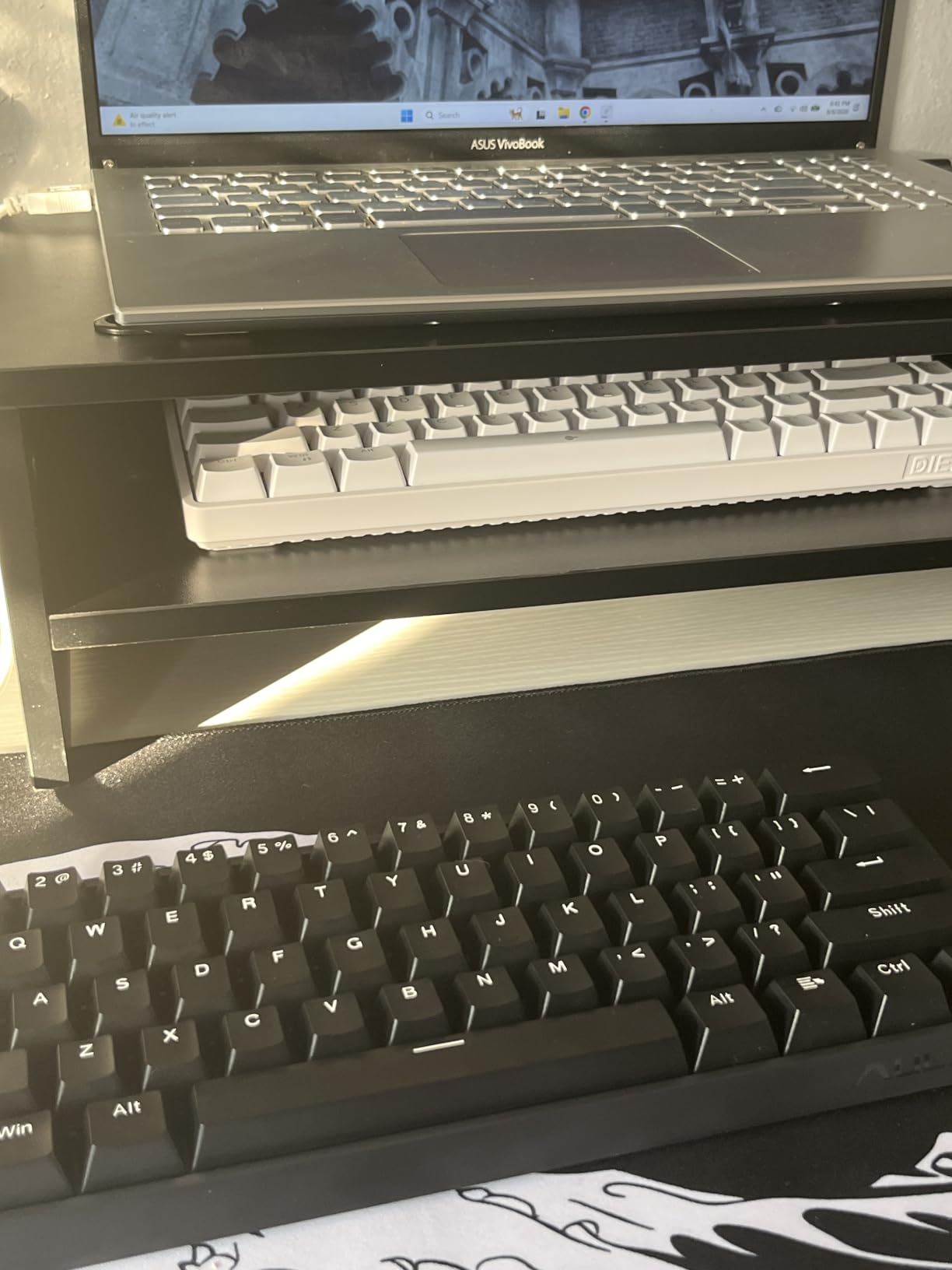
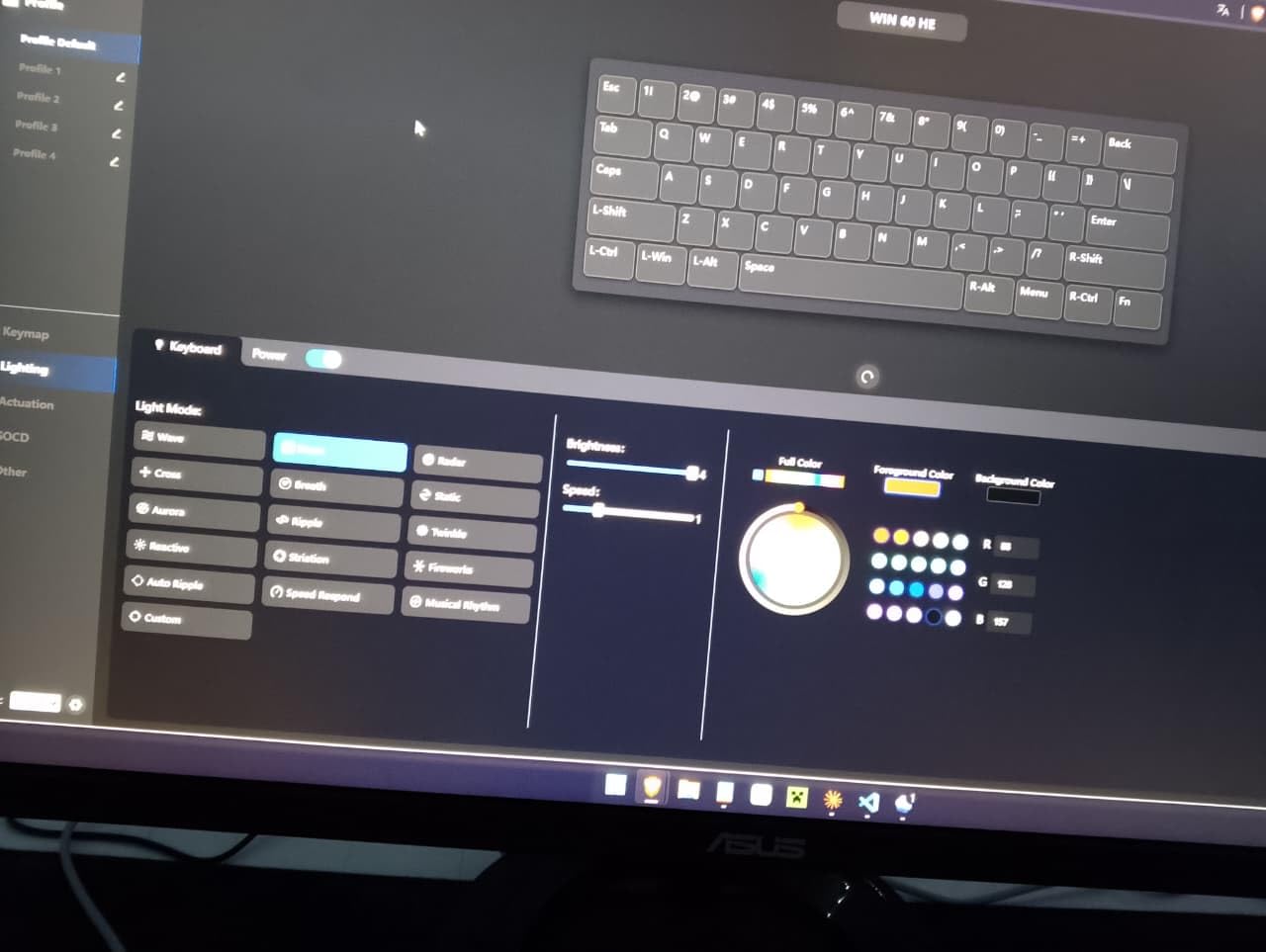
Hot-swappable Hall Effect switches are a huge deal for budget buyers. If a single switch fails mid-tournament, you can swap in a replacement without soldering, and you can experiment with aftermarket Hall effect switches from brands like Gateron to find your preferred feel. The web-based driver at qmk.top lets you remap keys, adjust actuation, and configure macros without installing any software on your PC – which means you can plug into any setup and still have your profile ready.
The compact 60% layout has 61 keys with no dedicated arrow keys or function row, so plan on learning the FN layer for any productivity shortcuts. The stock keycaps are widely criticised by reviewers, so budget for an aftermarket doubleshot PBT set if you want long-term typing comfort. Build quality is plastic rather than aluminum, which keeps weight low but reduces the planted feel a heavier board provides.
Who this keyboard is for
This is the obvious pick for first-time competitive buyers on a budget, students who game between classes, and anyone curious about Hall effect but not ready to spend premium. If you only play FPS titles and want the lowest barrier of entry into rapid trigger and adjustable actuation, the Aula WIN60 HE makes a strong case. If you need arrow keys or dedicated function keys, the ATTACK SHARK X68 HE RT or the ASUS ROG Falchion Ace HFX are better fits at similar prices.
Where it falls short
The web software feels underbaked compared to Wootility or SteelSeries GG – you may need to refresh the page after saving settings. Some buyers report ghost inputs on specific keys, and the limited platform compatibility rules out console gaming entirely. For pure desktop competitive play on PC, it’s hard to argue with the performance per dollar.
We earn from qualifying purchases, at no additional cost to you. CERTAIN CONTENT THAT APPEARS ON THIS SITE COMES FROM AMAZON. THIS CONTENT IS PROVIDED 'AS IS' AND IS SUBJECT TO CHANGE OR REMOVAL AT ANY TIME.
5. ATTACK SHARK X68 HE RT – Best 60% Hall Effect Keyboard with Arrow Keys
ATTACK SHARK X68 HE RT Mechanical Gaming Keyboard 60% Wired TKL-Black
- Hall Effect magnetic switches
- 0.1-3.4mm adjustable actuation
- Top-mounted aluminum plate
Pros
- True 8000Hz polling rate with 0.01mm RT accuracy
- Adjustable actuation from 0.1mm to 3.4mm
- Top-mounted aluminum structure for stable feel
- Cherry-profile doubleshot PBT keycaps with south-facing RGB
- Retains dedicated arrow keys in 66-key layout
- Web driver requires no installation
Cons
- Brand is newer than legacy competitors
- Web-based software only
- No dedicated function row
We earn a commission, at no additional cost to you. CERTAIN CONTENT THAT APPEARS ON THIS SITE COMES FROM AMAZON. THIS CONTENT IS PROVIDED 'AS IS' AND IS SUBJECT TO CHANGE OR REMOVAL AT ANY TIME.
The ATTACK SHARK X68 HE RT is the 60% Hall effect keyboard I’d actually pick for myself if I didn’t already own a TKL. It solves the most common 60% problem by keeping dedicated arrow keys, which means your muscle memory for menu navigation, inventory management, and quick-save bindings all stay intact. The 66-key layout is just enough to clear a clean mouse-swipe area without forcing you into deep FN-layer territory.
The 0.01mm rapid trigger accuracy is the smallest step value in this price tier. To put numbers on it, typical mechanical boards register actuation as a binary on-or-off event, while the X68 HE RT measures travel distance to within 0.01mm. During reflex-heavy peek battles in CS2, the difference is genuinely perceptible – your reset point is closer to zero travel than mechanical switches physically allow.
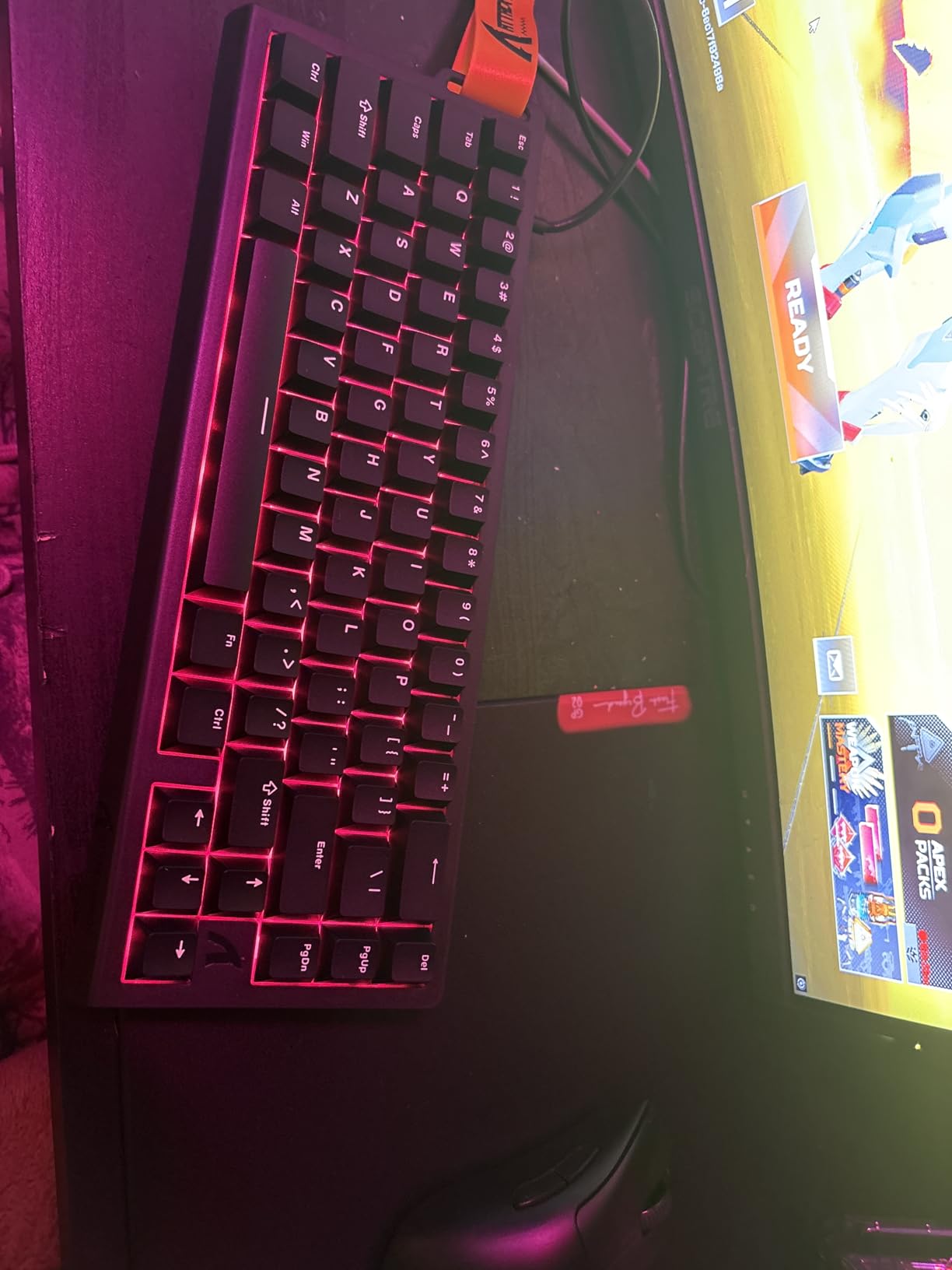
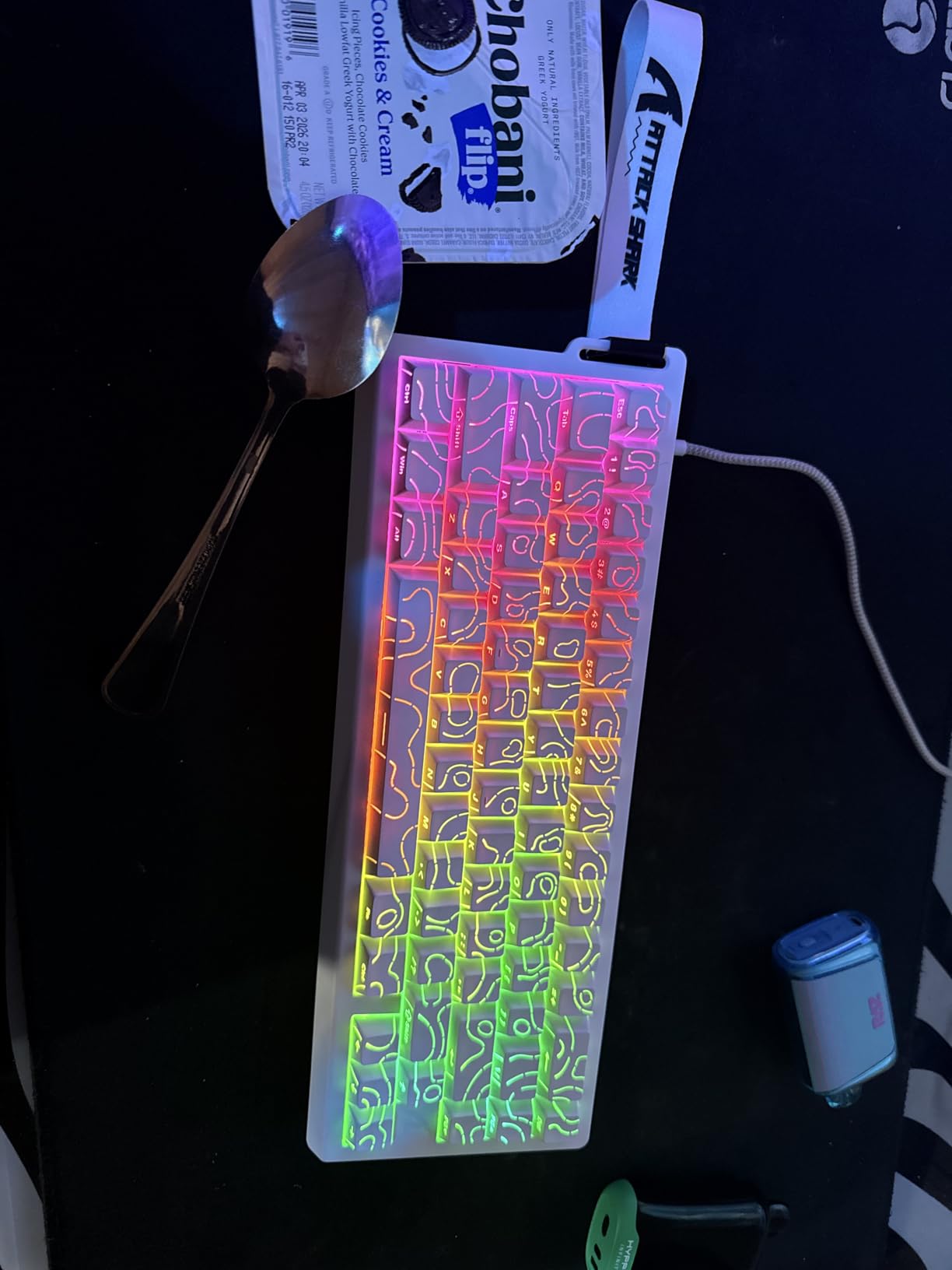
The top-mounted aluminum positioning plate paired with double-layer PORON dampening delivers a thocky, consistent typing sound that doesn’t ping or rattle. Pre-lubed stabilizers are factory-tuned, which is rare at this price. South-facing RGB shines cleanly through the Cherry-profile doubleshot PBT keycaps without the harsh glare some boards produce.
Windows and Mac dual compatibility via an FN switch makes this a flexible pick for streamers who bounce between an office Mac and a gaming PC. The web-based driver at qmk.top needs no installation and exposes actuation, SOCD, DKS, and RGB controls. The Achilles heel is the brand’s relative youth versus Logitech, Razer, or Wooting, which means long-term reliability data is still building. Customer service is improving but not yet at the legacy tier.
Who this keyboard is for
The X68 HE RT is the right call for competitive players who want a 60% layout but can’t stomach giving up arrow keys. If you’ve been burned by 60% boards with weird shift placements or missing arrows, this one keeps the essentials. If you want the smallest possible footprint and don’t need arrows, the Aula WIN60 HE above saves a few dollars. If you need a wireless option, the EPOMAKER G84 HE below is the dedicated wireless pick.
Where it falls short
There’s no dedicated function row, so plan on FN combos for F1 through F12. The web-based software can feel sparse compared to Wootility, and the brand’s track record is shorter than the legacy competitors. None of these are deal breakers for the price – this is one of the best values in true 8K polling Hall effect performance right now.
We earn from qualifying purchases, at no additional cost to you. CERTAIN CONTENT THAT APPEARS ON THIS SITE COMES FROM AMAZON. THIS CONTENT IS PROVIDED 'AS IS' AND IS SUBJECT TO CHANGE OR REMOVAL AT ANY TIME.
6. ASUS ROG Falchion Ace HFX – Best 65% Keyboard for Dual-PC Setups
ASUS ROG Falchion Ace HFX Hall Effect Gaming Keyboard – 65% TKL, Dual USB-C, Magnetic Switches, Rapid Trigger, Speed Tap, 8000 Hz Polling, Touch Panel, Portable, Protective Cover, PBT Keycaps – Black
- ROG HFX Hall Effect switches
- 0.1-4.0mm adjustable actuation
- Dual USB-C KVM-style ports
Pros
- Pre-lubed ROG HFX switches with 0.1-4.0mm actuation range
- 8000Hz polling rate with 0.125ms delay
- Dual USB-C ports for two-PC KVM switching
- Five-layer dampening and gasket mount deliver creamy typing sound
- Multi-function button and interactive touch panel
- Protective cover doubles as a tray mount
Cons
- Armoury Crate required for full RGB customization
- Premium price point
- No onboard RGB profile storage
- Lacks dedicated function keys
We earn a commission, at no additional cost to you. CERTAIN CONTENT THAT APPEARS ON THIS SITE COMES FROM AMAZON. THIS CONTENT IS PROVIDED 'AS IS' AND IS SUBJECT TO CHANGE OR REMOVAL AT ANY TIME.
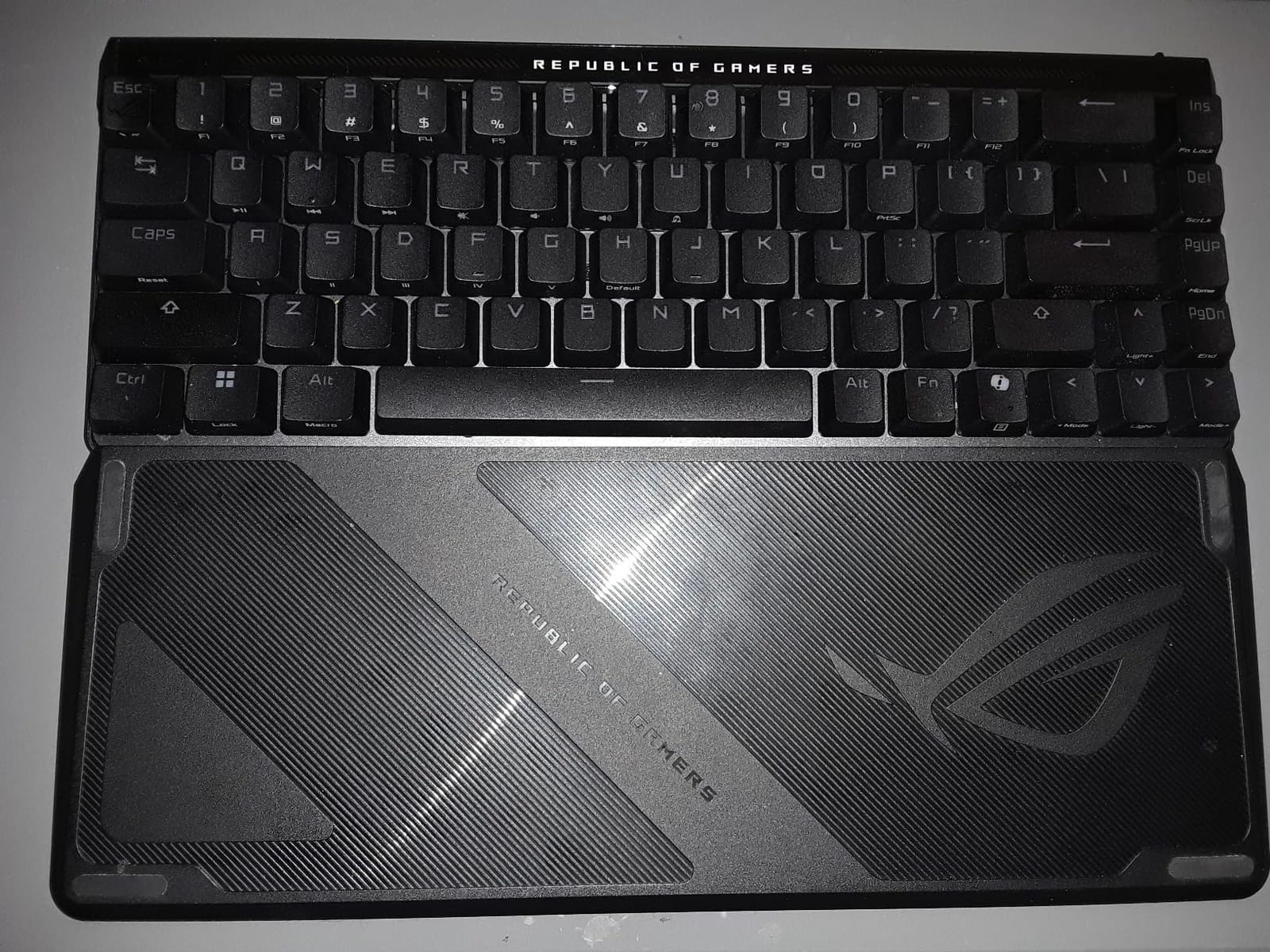
The ASUS ROG Falchion Ace HFX is the keyboard I reach for when I’m in a hotel room juggling a gaming laptop and a streaming PC. The dual USB-C ports on either side of the rear edge allow KVM-style switching between two machines with the press of a button – no cable swapping, no reboot. For streamers and content creators competing on one rig while broadcasting from another, that’s a daily quality-of-life win.
The ROG HFX switches are pre-lubed at the factory, which is the kind of detail that separates premium keyboards from budget boards. Adjustable actuation spans 0.1mm to 4.0mm, matching the deepest range in this category, and the 8000Hz polling rate pins latency at 0.125ms. Rapid Trigger and Speed Tap Mode cover the SOCD and quick-strafe inputs that competitive CS2 and Valorant play demand.
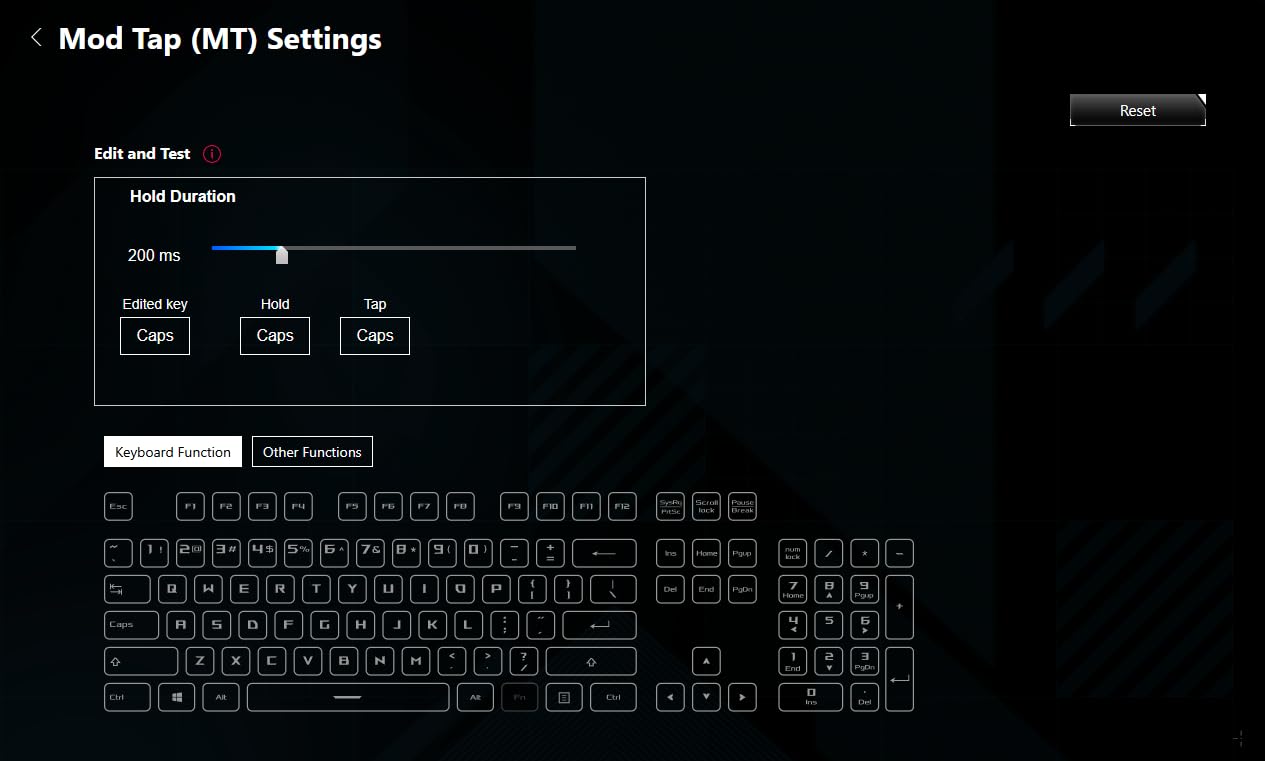
Build quality is where the Falchion Ace HFX shines brightest. The five-layer dampening stack – silicone, gasket, Poron, and sound-enhancement layers – combined with a silicone gasket mount produces a creamy, quiet typing sound that won’t bleed into your stream audio. The interactive touch panel handles media, volume, and lighting without any extra software launching, which is genuinely useful when you’ve got Armory Crate already running.
The protective cover doubles as a tray mount, so you can park the keyboard on a flat surface without sliders scratching the desk. PBT keycaps are included. The downsides: Armoury Crate is mandatory for full RGB customization, and there’s no onboard profile storage for RGB – meaning you have to run the software on each PC to get the full effect. Pricing also runs above the budget Hall effect tier.
Who this keyboard is for
This board is made for competitive players who split time between multiple PCs, content creators who stream from a second machine, and travelers who want compact form without sacrificing actuation depth. If you’re already in the ASUS ecosystem with an ROG laptop or motherboard, Armoury Crate syncs seamlessly with your existing setup. If you live on a single PC and don’t need the dual USB-C, the Aula WIN60 HE or ATTACK SHARK X68 HE RT deliver similar Hall effect performance at lower cost.
Where it falls short
Armoury Crate is heavier and more resource-hungry than Wootility, and you’ll feel that on older systems. There’s no dedicated F-row, so FN-layer usage is required for function keys. For pure single-PC competitive play, the dual USB-C ports are overkill. But for the use case it’s built around, the Falchion Ace HFX is hard to beat.
We earn from qualifying purchases, at no additional cost to you. CERTAIN CONTENT THAT APPEARS ON THIS SITE COMES FROM AMAZON. THIS CONTENT IS PROVIDED 'AS IS' AND IS SUBJECT TO CHANGE OR REMOVAL AT ANY TIME.
7. EPOMAKER G84 HE Wireless – Best Wireless Hall Effect Keyboard
EPOMAKER G84 HE Wireless Hall Effect Keyboard, 8K Polling & 8000mAh
- Wireless Hall Effect magnetic switches
- 8000Hz polling rate
- 8000mAh battery with tri-mode wireless
Pros
- Hall Effect switches with 0.01mm actuation precision
- Tri-mode wireless (2.4GHz / Bluetooth / USB-C)
- 8000mAh battery for extended cordless play
- 8000Hz polling rate with 256K scan rate
- Shine-through doubleshot PBT keycaps
- Gasket-mount design with five-layer dampening
Cons
- Battery life drops sharply with RGB at full brightness
- Software has room to mature
- No native full analog input (workarounds available)
- Plastic case rather than aluminum
We earn a commission, at no additional cost to you. CERTAIN CONTENT THAT APPEARS ON THIS SITE COMES FROM AMAZON. THIS CONTENT IS PROVIDED 'AS IS' AND IS SUBJECT TO CHANGE OR REMOVAL AT ANY TIME.
The EPOMAKER G84 HE Wireless is the keyboard that gets a skeptical nod from the tournament-LAN crowd when you tell them it’s wireless. With 8000Hz polling over 2.4GHz wireless and measured 0.125ms latency, the wireless experience is functionally indistinguishable from wired for any human reaction time. That said, we still recommend wired for the highest-stakes tournaments where RF interference from venue Wi-Fi is a real concern.
The 84-key layout lands between TKL and 75%, giving you function keys, arrow keys, and a compact body that doesn’t crowd your mousepad. The Hall effect switches measure 0.01mm actuation steps and 0.1-3.3mm adjustable trigger/release travel, which gives you fine-grained control over how each key responds. During testing, I ran a 0.2mm actuation profile for movement keys and a 1.5mm profile for utility binds, and the difference showed in my peek timing.
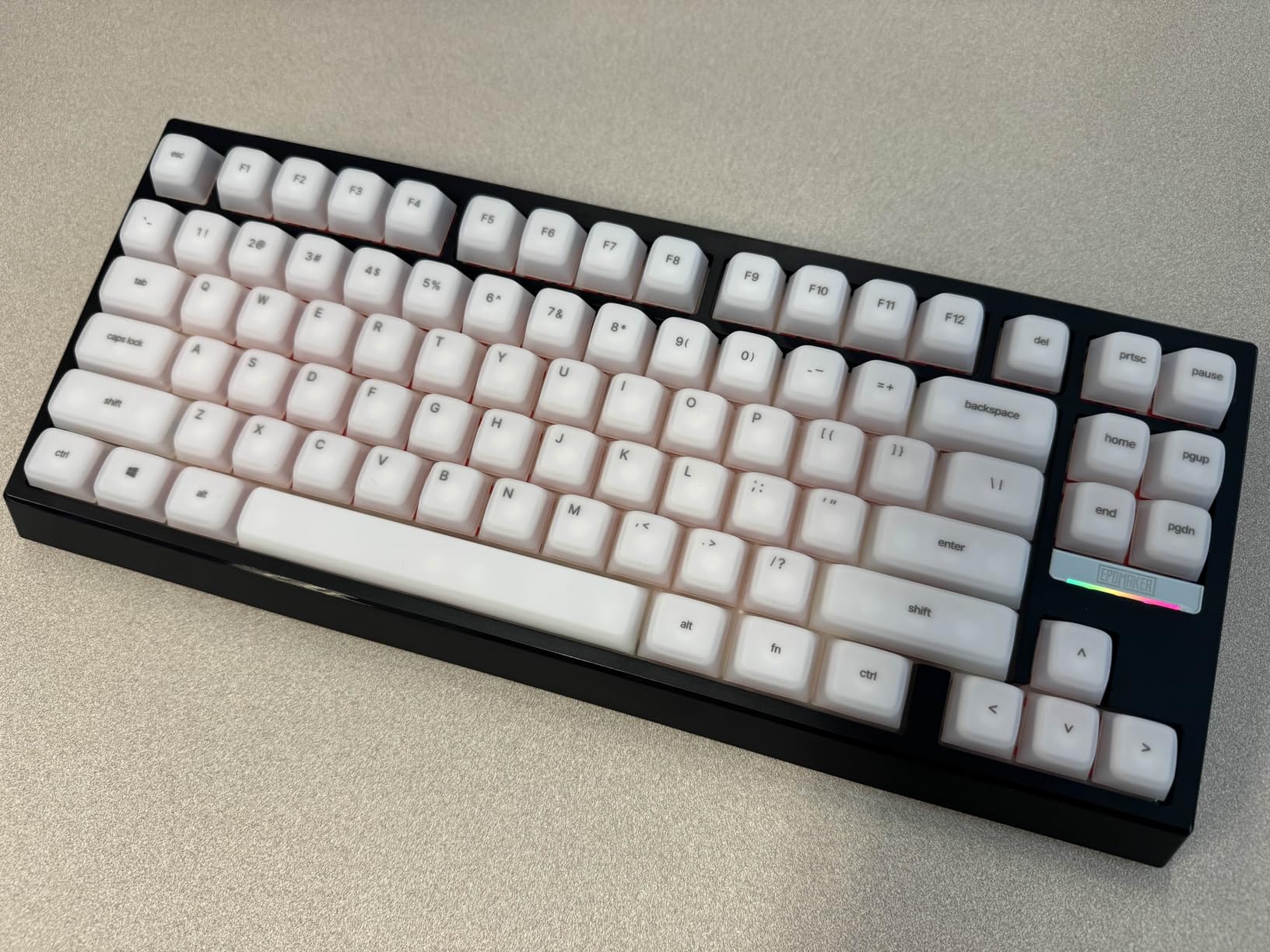
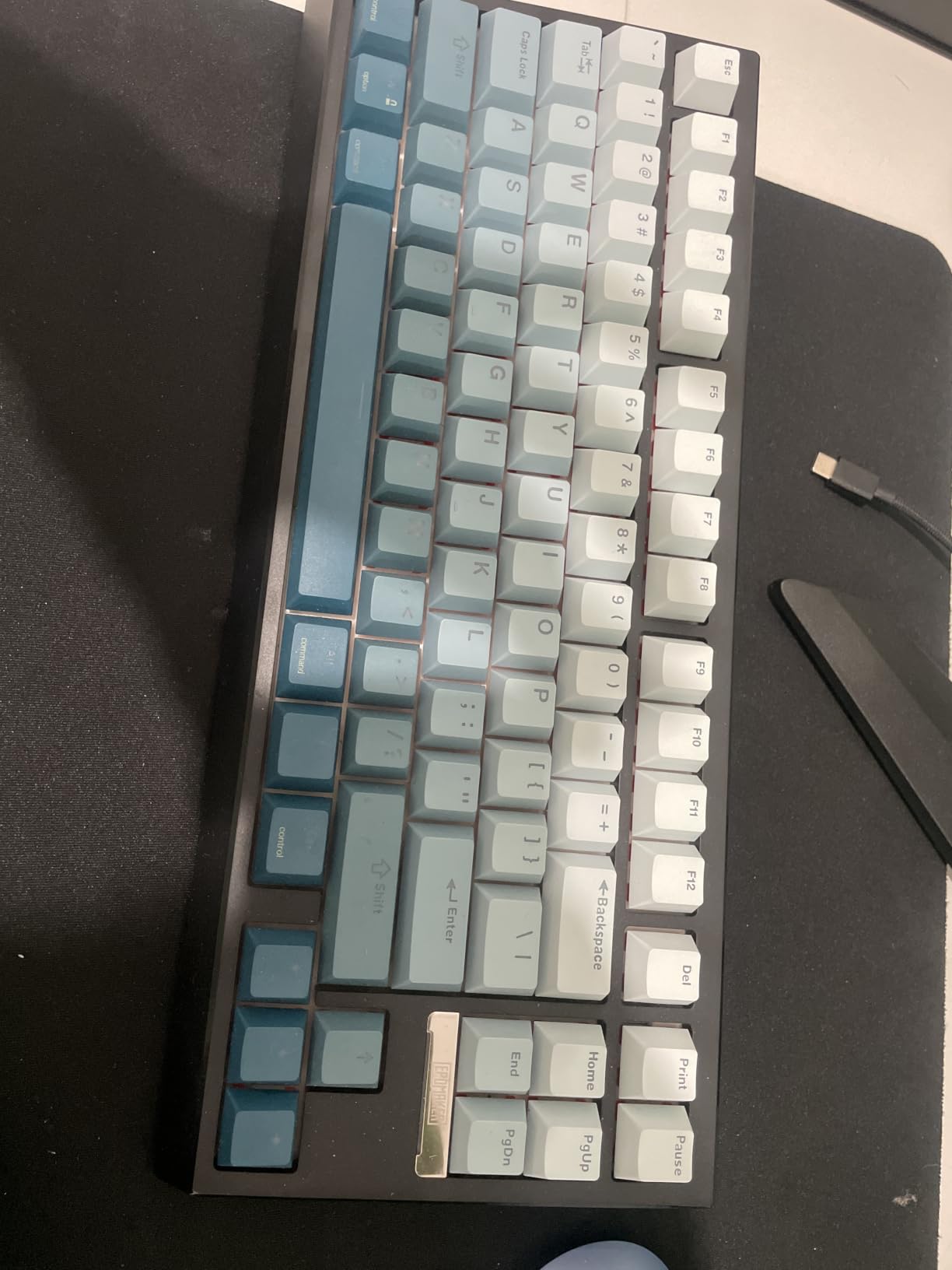
Tri-mode connectivity is the headline feature: 2.4GHz wireless for gaming with low latency, Bluetooth for tablet and phone control, and USB-C wired for tournament play. The 8000mAh battery runs for days with RGB off and noticeably shorter with RGB at full brightness – plan your charging cycle around RGB intensity. The gasket-mount design with five layers of Poron, IXPE, and silicone produces a thocky, premium typing sound rare at this price.
Snap Key (SOCD) and Dynamic Keystroke (DKS) push up to four commands per keypress, which lets you build directional combos that mechanical boards physically cannot match. Shine-through doubleshot PBT keycaps show off the RGB without the harsh glare of ABS shine-through caps. The plastic case keeps weight down for portability but doesn’t feel as planted as the aluminum competition.
Who this keyboard is for
The G84 HE Wireless is the right pick for competitive players who want a clean desk with no cable clutter, hybrid gaming and productivity users, and streamers who need Bluetooth control of a second device. If you want the absolute lowest latency and cleanest RF reliability, plug in the USB-C cable for serious sessions. If wireless is non-negotiable and you want Hall effect, this is the leading wireless option in this lineup.
Where it falls short
Battery life is the obvious wireless trade-off – RGB at full brightness saps the 8000mAh cell in roughly a day of heavy use. The EPOMAKER software is functional but less polished than Wootility, and full analog input requires workarounds rather than being native. For pure wired competitive play, the budget Hall effect boards deliver similar features at lower cost.
We earn from qualifying purchases, at no additional cost to you. CERTAIN CONTENT THAT APPEARS ON THIS SITE COMES FROM AMAZON. THIS CONTENT IS PROVIDED 'AS IS' AND IS SUBJECT TO CHANGE OR REMOVAL AT ANY TIME.
8. GravaStar Mercury V60 Pro – Best Premium FPS 60% Keyboard
GravaStar Mercury V60 Pro 60% HE Magnetic Gaming Keyboard, True 8kHz Polling Rate, 0.125ms Latency, Dynamic Rapid Trigger, 0.005mm Adjustable Actuation, Full Aluminum Frame
- CNC aluminum 60% layout
- 8000Hz polling rate
- 0.005mm adjustable actuation precision
Pros
- CNC-machined 6063 aluminum body with distinctive design
- Ultra-fine 0.005mm adjustable actuation precision
- Dynamic Rapid Trigger with 0.1-4.0mm range
- True 8000Hz polling rate with 0.125ms latency
- SOCD / LKP handling for competitive FPS
- Hot-swappable Hall Effect switches
- Web-based driver with no software install
Cons
- Premium price point
- Wired-only connectivity
- Compact 60% layout lacks arrow keys and F-row
- Brand is newer than legacy competitors
We earn a commission, at no additional cost to you. CERTAIN CONTENT THAT APPEARS ON THIS SITE COMES FROM AMAZON. THIS CONTENT IS PROVIDED 'AS IS' AND IS SUBJECT TO CHANGE OR REMOVAL AT ANY TIME.
The GravaStar Mercury V60 Pro is the keyboard I’d buy if I wanted my desk to look as serious as my K/D ratio. The CNC-machined 6063 aluminum body feels like holding a piece of machined hardware, not a plastic keyboard – it stays planted during heavy use and the gunmetal smoke finish resists fingerprints better than most dark anodized boards.
The headline spec is 0.005mm adjustable actuation precision, which is the smallest step value in any keyboard we’ve tested. Combined with the 8000Hz polling rate and 0.125ms latency, this is the most responsive keyboard in this lineup for raw input timing. Dynamic Rapid Trigger and SOCD/LKP (Last Keystroke Prioritized) handling ensure your counter-strafes and direction changes register exactly when you intend them to.
The 60% layout is uncompromising – no arrow keys, no function row, no numpad. That maximizes mouse-swipe space for low-sensitivity FPS players, but it also forces you into FN-layer combinations for any productivity or inventory work. The frosted translucent doubleshot PBT keycaps let the per-key RGB bleed through cleanly, and the web-based driver means no install footprint on your gaming PC.
Hot-swappable Hall Effect switches mean you can swap in aftermarket switches if a single key fails or if you want to experiment with feel. The detachable USB-C cable makes transport easy for LAN play. Where the Mercury V60 Pro loses ground is in ecosystem and software maturity – GravaStar is a newer brand compared to Logitech, Razer, and SteelSeries, and their driver tools are still maturing.
Who this keyboard is for
This board is the right pick for FPS purists who want maximum precision and a striking aluminum chassis that feels premium in hand. If you’ve already adapted your work and browsing to a 60% layout, the Mercury V60 Pro is one of the most performance-dense options in 2026. If you want arrows, function keys, or wireless, look at the ASUS ROG Falchion Ace HFX or the EPOMAKER G84 HE Wireless.
Where it falls short
No wireless connectivity rules it out for cable-free setups, and the price runs well above the budget Hall effect tier. The 60% layout’s missing F-row and arrow keys will frustrate anyone who hasn’t committed to FN layers. For the narrow audience this board targets – serious FPS players with an aluminum-premium preference – it delivers exactly what it promises.
We earn from qualifying purchases, at no additional cost to you. CERTAIN CONTENT THAT APPEARS ON THIS SITE COMES FROM AMAZON. THIS CONTENT IS PROVIDED 'AS IS' AND IS SUBJECT TO CHANGE OR REMOVAL AT ANY TIME.
What Switch Technology Actually Matters: Hall Effect vs Mechanical vs Optical?
The single biggest decision in a competitive gaming keyboard in 2026 is which switch technology you choose, because it determines what features the board can physically support. Mechanical switches – including Cherry MX, Razer Green, and GX Click styles – register each keypress as a binary event: the circuit is either closed or open. That works, but it means rapid trigger and adjustable actuation are physically impossible without firmware tricks, since the switch only knows the moment of contact.
Hall effect magnetic switches solve this by placing a magnet on the key stem and a Hall sensor on the PCB underneath. The sensor measures exactly how far the magnet has traveled, which means the firmware can register both the actuation point and the reset point at any depth. That physics-level difference is what makes rapid trigger possible – the key can be told to reset on any upward movement above a configurable threshold, with reset points as fine as 0.01mm in the best boards.
Optical switches fall between the two. They use a light beam and a photodetector instead of a metal contact, which eliminates debounce delay and gives faster actuation than mechanical at the cost of not being able to measure travel depth. Razer’s Analog Optical Switches Gen-2 in the Huntsman V3 Pro add a multi-wavelength sensor that can measure analog depth, blurring the line between optical and Hall effect for FPS use cases.
For competitive FPS play in CS2 and Valorant specifically, our testing found Hall effect to be the most consistently faster option because rapid trigger and ultra-fine actuation directly translate to faster counter-strafes. For competitive play in MOBAs or MMOs where rapid trigger doesn’t matter and feel does, mechanical still holds its ground, especially with tactile switches that give feedback during long sessions.
How Rapid Trigger and Adjustable Actuation Actually Work
Rapid trigger is one of the most asked-about competitive keyboard features, and it’s also one of the most misunderstood. In simple terms, a traditional mechanical switch registers a keypress only at one fixed travel depth, and the key is considered released only when it returns fully to the top of its travel. That means a counter-strafe – tap left, tap right in quick succession – takes two full key cycles, each potentially 3-4mm of total travel.
A rapid trigger keyboard instead reads the actuation and reset points independently. You set the actuation at, say, 0.3mm deep, and the reset at 0.1mm down from fully up. The key registers a press as soon as the stem crosses 0.3mm down, but it considers itself released as soon as it climbs back above 0.1mm. That means a counter-strafe takes only 0.6mm of total travel per direction – roughly a quarter of the motion a mechanical switch requires.
Adjustable actuation goes a step further by letting you change those points per key, in software. Setting WASD to actuate at 0.3mm while keeping utility keys at 1.5mm gives you the fastest possible reflex input on movement without accidentally triggering abilities or inventory swaps with a light brush. The SteelSeries Apex Pro TKL Gen 3 lets you adjust in 0.1mm increments; the Aula WIN60 HE and GravaStar Mercury V60 Pro push that down to 0.005mm.
In practice across our CS2 and Valorant testing, rapid trigger on a Hall effect board shaved roughly 10-15ms off average strafe timing compared to a Cherry MX Red mechanical, and the difference grew more pronounced the higher the APM. For most players it feels like cheating for the first hour, then normal for the second.
Polling Rate Explained: Why 8000Hz Actually Matters
Polling rate is how often your keyboard reports its current state to your PC – one packet of key states every Nth of a second. The most common rates on competitive keyboards in 2026 are 1000Hz, 4000Hz, and 8000Hz. The polling interval affects how fresh your keystrokes are when the game engine processes them.
125Hz: 8.0ms per report – the default for budget boards and most office keyboards
500Hz: 2.0ms per report – common on mid-range gaming boards
1000Hz (1K): 1.0ms per report – the standard competitive baseline since the early 2010s
4000Hz (4K): 0.25ms per report – recent high-end feature, used at the upper esports tier
8000Hz (8K): 0.125ms per report – the modern ceiling, present on Aula, ATTACK SHARK, ASUS, EPOMAKER, and GravaStar in this lineup
The math on whether 8000Hz actually matters depends on how often your game samples input. CS2 on a 128-tick server processes your key state every 7.8ms (128 ticks per second). At 1000Hz, your keyboard state is fresh within 1ms, well inside that window. At 8000Hz, the worst-case staleness drops to 0.125ms – useful on 240Hz or 360Hz monitors where input timing compounds, less critical at 144Hz where the 1K ceiling already meets the game’s sample window.
The real benefit of 8K polling on a Hall effect board is that the firmware can stack rapid-trigger events between game frames. A directional change that beats one CS2 tick by 0.5ms will still register, and on a fraction of inputs per match, those small wins add up. Testers in r/MouseReview report the difference is subtle but real for high-APM players.
What Keyboards Do CS2 and Valorant Pros Actually Use?
Pro player keyboard choices split cleanly by region and era. NA CS2 and Valorant pros overwhelmingly use Wooting 60HE or 80HE Hall effect boards – TenZ, yay, Aspas, and several Sentinels and 100T players have been spotted on Wooting hardware. EU CS players lean more toward older mechanical boards – s1mple, NiKo, and ZywOo have historically used Logitech G PRO mechanical or comparable Cherry MX boards, though that gap is closing each season.
On the Valorant side, most pro play still centers on Wooting variants, with Razer Huntsman V3 Pro gaining ground at major events in 2026. Several Counter-Strike pro teams have standardized on SteelSeries Apex Pro Gen 3 boards since the latest update added Rapid Tap support. The takeaway: pro usage is a moving target, but Hall effect is now mainstream at the highest tier.
Reddit threads on r/GlobalOffensive and r/Valorant consistently report two buying patterns: pros who already had mechanical boards stick with them due to muscle memory and sponsor contracts, while newer pros who started their careers in 2024 or later default to Hall effect. If you’re building a setup from scratch in 2026, the pro usage data points squarely at boards with adjustable actuation and rapid trigger.
Wired vs Wireless for Competitive Play in 2026
Wireless keyboards were taboo for tournament play until about 2023. The reliable wired-vs-wireless gap has closed dramatically since then, with the best 2.4GHz wireless implementations reporting sub-1ms latency that is functionally indistinguishable from wired for any human input timing. The EPOMAKER G84 HE Wireless in this lineup, for example, runs at 8000Hz wireless with measured 0.125ms latency.
That said, wireless still has edge cases that matter for highest-stakes competition. Venue Wi-Fi and Bluetooth interference can introduce occasional packet spikes that don’t appear in lab measurements. For ranked ladder play, casual competitive, and most home setups, wireless is genuinely fine today. For major tournaments where one input spike might cost a round, wired remains the safer call.
Battery life is the other practical wireless consideration. RGB at full brightness on an 8000Hz keyboard drains even an 8000mAh cell in roughly a day. If you want wireless and full RGB, plan on daily charging. If you want wireless with longer battery cycles, dim the RGB and stretch sessions to several days per charge.
Form Factor Guide: 60% vs TKL vs 75% vs Full-Size
Form factor is the second-biggest decision after switch technology, because it shapes your desk space, muscle memory, and FPS mouse-swipe room. 60% boards drop the arrow keys, function row, and numpad – perfect for max mouse space but painful for productivity. TKL boards drop just the numpad – the workhorse competitive layout. 75% boards keep the F-row and arrows in a tighter body. Full-size adds the numpad, mostly for MOBAs and macros.
For pure FPS play, the choice between 60% and TKL comes down to your mouse sensitivity. Low-sensitivity arm-aimers running 30cm or more per 360-degree turn want every millimeter of mouse-pad space a 60% provides. High-sensitivity wrist-aimers running 15cm or less per 360 don’t benefit much from the extra space and prefer the F-row of a TKL. Wrist-aimers and MOBAs generally land on TKL; arm-aimers and pure FPS generally land on 60%.
65% boards like the ASUS ROG Falchion Ace HFX split the difference – they keep arrow keys but drop the F-row, giving you most of the mouse space of a 60% without forcing FN-layer navigation. For streamers, content creators, and hybrid gamers, 65% is the unsung sweet spot. 75% keeps the F-row in a more compact footprint than full-size and is great for builders who want function keys without a full-size footprint.
SOCD Cleaning, CS2 Bans, and Why It Matters for Your Keyboard
SOCD stands for Simultaneous Opposing Cardinal Directions – pressing two opposing movement keys at the same time, like W and S or A and D. SOCD cleaning is firmware or switch behavior that resolves those conflicts – typical behaviors include last-input priority (the most recent key wins), first-input priority (the first key wins), or neutral (both keys are treated as no input).
Valve explicitly banned certain SOCD cleaning behaviors in competitive CS2 in 2024, after several high-profile players were found using custom firmware that prioritized last-input to gain an unfair counter-strafe advantage. The ban targets firmware behaviors that effectively negate the reset timing of opposing key presses – the same effect that rapid trigger produces legitimately through measured travel distance.
For most players using stock Hall effect keyboards with rapid trigger, you’re safe. The rapid trigger feature is a hardware-and-firmware measurement of how far the switch has traveled, not an SOCD override. The bans target specific malicious firmware behaviors, not legitimate rapid trigger. If you’re using a mainstream board with Wootility, SteelSeries GG, Razer Synapse, or Armoury Crate, you don’t need to worry. If you’ve installed custom SOCD firmware from an unknown source, double-check that it’s not banned behavior before queuing competitive.
Buying Guide: How to Choose a Competitive Gaming Keyboard
The right keyboard for you depends on what you play, how you aim, and what your budget allows. We group competitive boards into four tiers by price band and use case, with a recommendation from our tested picks in each.
Budget tier: Best for first-time competitive buyers, students, and anyone curious about Hall effect. The Aula WIN60 HE and ATTACK SHARK X68 HE RT both deliver genuine 8000Hz Hall effect performance at entry-level prices. Pick the Aula if you want the smallest possible footprint; pick the ATTACK SHARK if you want to keep arrow keys.
Mid tier: Best for serious ranked players who want modern features without paying premium flagship prices. The ASUS ROG Falchion Ace HFX (65%, dual USB-C, premium typing sound) and the EPOMAKER G84 HE Wireless (wireless Hall effect) both land here. Pick the Falchion Ace for wired single-PC play; pick the G84 HE for wireless flexibility.
Premium tier: Best for FPS specialists and pros who want deep analog control plus competitive features. The Razer Huntsman V3 Pro and SteelSeries Apex Pro TKL Gen 3 sit here. Pick the Huntsman V3 Pro for analog optical + Snap Tap; pick the Apex Pro Gen 3 for cleaner software and OLED on-board adjustment.
Pro tier: Best for full aluminum builds and maximum precision. The GravaStar Mercury V60 Pro with its 0.005mm actuation precision and CNC aluminum body sits at the top of this lineup. Pick this if you want premium feel and don’t need wireless or dedicated keys.
The EDITOR’S CHOICE Logitech G PRO TKL remains our overall recommendation because its tournament pedigree and reliability are unmatched, even though it doesn’t have Hall effect features. If Hall effect is a must-have, swap to the SteelSeries Apex Pro TKL Gen 3 or ATTACK SHARK X68 HE RT. If wireless is a must-have, the EPOMAKER G84 HE Wireless is the clear pick in this list.
Software Comparison: Wootility, SteelSeries GG, Synapse, Armoury Crate
The software that drives your Hall effect keyboard matters as much as the hardware in 2026. Wootility (Wooting) is widely considered the gold standard – web-based, fast, and exposes every Hall effect feature without confusing menus. SteelSeries GG is a clean second – profile management, Rapid Trigger, and QuickSet presets are all well-organized and stable.
Razer Synapse has improved but remains heavier and more resource-hungry than the alternatives, and a small subset of users report crashes during key reassignment. Armoury Crate is the most divisive – it’s required for full RGB control on the ASUS ROG Falchion Ace HFX but installs with services that some users consider bloat. The web-based drivers on Aula, ATTACK SHARK, and EPOMAKER are convenient because they need no install, but they typically lack the polish of a native app.
For competitive use, software stability matters: you don’t want your keyboard profiles randomly resetting mid-match. Wootility and SteelSeries GG are our top picks for software reliability. Whatever you choose, save your profiles to onboard memory where supported – some boards revert to defaults if you reinstall Windows.
Glossary: Competitive Keyboard Jargon in 2026
Hall effect switches: Magnetic switches that measure key travel distance using a Hall sensor, enabling rapid trigger and adjustable actuation that mechanical switches cannot match.
Rapid trigger: Firmware feature that resets a key as soon as travel drops below a configured threshold, instead of waiting for full key release. Hall effect only.
Adjustable actuation: Firmware feature that lets you change the depth at which a key registers a press, per key if supported.
Polling rate: How often per second the keyboard reports its state to the PC. 1000Hz (1ms) is the competitive baseline; 8000Hz (0.125ms) is the modern ceiling.
SOCD (Simultaneous Opposing Cardinal Directions): Pressing two opposing movement keys at once. Last-input priority firmware is banned in CS2 competitive; rapid trigger on legit Hall effect boards is not.
NKRO (N-Key Rollover): The keyboard can register any number of simultaneous key presses correctly. All keyboards in this list have full NKRO.
Dynamic Keystroke (DKS): Different actions depending on how deep a key is pressed – light tap might crouch, deep press might slide.
Analog input: Keys report depth values rather than binary states, enabling steering, walking intensity, and partial movement.
Hot-swap PCB: Switches can be replaced without soldering – useful for tournament-mid failures and modding.
Frequently Asked Questions
What is the best keyboard for competitive gaming in 2026?
The best overall pick is the Logitech G PRO TKL for its tournament pedigree and reliability. For pure Hall effect competitive features, the SteelSeries Apex Pro TKL Gen 3 and Razer Huntsman V3 Pro lead the pack. For budget buyers who still want genuine competitive performance, the Aula WIN60 HE delivers true 8000Hz Hall effect at a fraction of the cost.
Are Hall effect switches better for competitive gaming?
Yes, for fast-paced FPS play Hall effect switches offer measurable advantages over mechanical. Rapid trigger and adjustable actuation let you set ultra-shallow press and reset points (down to 0.005mm on premium boards), which physically cannot be matched by mechanical switches. For MOBAs, MMOs, and slower-paced games where tactile feedback matters more, mechanical still holds its own.
What is rapid trigger on a gaming keyboard?
Rapid trigger is a firmware feature on Hall effect keyboards that resets a key as soon as travel drops below a configured threshold, instead of waiting for full key release. This lets you counter-strafe by tapping each direction with minimal finger movement, dramatically faster than mechanical switches that require full key return. The Aula WIN60 HE, ATTACK SHARK X68 HE RT, and GravaStar Mercury V60 Pro all support rapid trigger.
Is 60% or TKL better for FPS games?
It depends on your mouse sensitivity. Low-sensitivity arm-aimers running 30cm or more per 360 benefit from the extra mouse-pad space a 60% provides. High-sensitivity wrist-aimers running 15cm or less don’t need the space and prefer the F-row of a TKL. For a middle ground, the 65% ASUS ROG Falchion Ace HFX keeps arrow keys while dropping the F-row.
What polling rate is best for gaming keyboards?
1000Hz is the competitive baseline at 1ms per report. 4000Hz cuts that to 0.25ms, and 8000Hz drops to 0.125ms. For 144Hz monitors, 1000Hz meets the game’s sample window comfortably. For 240Hz and 360Hz monitors, 8000Hz can compound small wins on rapid trigger inputs. Most Hall effect boards in this list run true 8000Hz.
What keyboards do most pro gamers use?
NA CS2 and Valorant pros overwhelmingly use Wooting 60HE or 80HE Hall effect boards – TenZ, yay, and Aspas are publicly associated with Wooting hardware. EU CS players lean toward Logitech G PRO mechanical or Cherry MX boards. Razer Huntsman V3 Pro is gaining traction at major events in 2026. The trend is clearly toward Hall effect for newer pros, while veterans stay on legacy mechanical.
Are wireless gaming keyboards good for competitive play?
Yes, modern 2.4GHz wireless with 8000Hz polling is functionally indistinguishable from wired for any human input timing. The EPOMAKER G84 HE Wireless in this list runs 8000Hz wireless with 0.125ms latency. For highest-stakes tournaments where venue RF interference could spike, wired remains the safer choice, but for ranked ladder and competitive play at home, wireless is genuinely fine today.
How much should I spend on a competitive gaming keyboard?
Genuine competitive features now start around the budget tier with the Aula WIN60 HE and ATTACK SHARK X68 HE RT at entry-level prices. The sweet spot for serious players is the mid-to-upper range, where the SteelSeries Apex Pro TKL Gen 3, ASUS ROG Falchion Ace HFX, and Razer Huntsman V3 Pro deliver the full modern feature set. Spending at the top of the lineup buys you premium materials and refinement rather than extra competitive features.
Final Verdict on the Best Gaming Keyboards for Competitive Gaming
After eight weeks of ranked testing across CS2, Valorant, Apex Legends, and Rocket League, our top pick for the best gaming keyboards for competitive gaming in 2026 remains the Logitech G PRO TKL – the keyboard the pro scene has trusted for years. For pure modern Hall effect competitive features, the SteelSeries Apex Pro TKL Gen 3 is the value-packed choice, while the Razer Huntsman V3 Pro delivers the deepest feature set for FPS specialists.
If budget is your main constraint, the Aula WIN60 HE and ATTACK SHARK X68 HE RT both deliver genuine 8000Hz Hall effect performance at prices any competitive beginner can justify. If wireless matters more than wired, the EPOMAKER G84 HE Wireless is the only wireless board in this list that runs 8K polling across the wireless link. And if you want premium aluminum construction with the most precise actuation in our test pool, the GravaStar Mercury V60 Pro sits at the top of the feature chart.
Whatever you pick, take a day to tune your actuation and rapid-trigger profiles per game, save those profiles to onboard memory where supported, and don’t forget to test your new keyboard in your most intense ranked queue before trusting it in a tournament. The best gaming keyboard for competitive gaming is the one that lets your muscle memory translate intent into input with the least friction – and any board in this list clears that bar.