
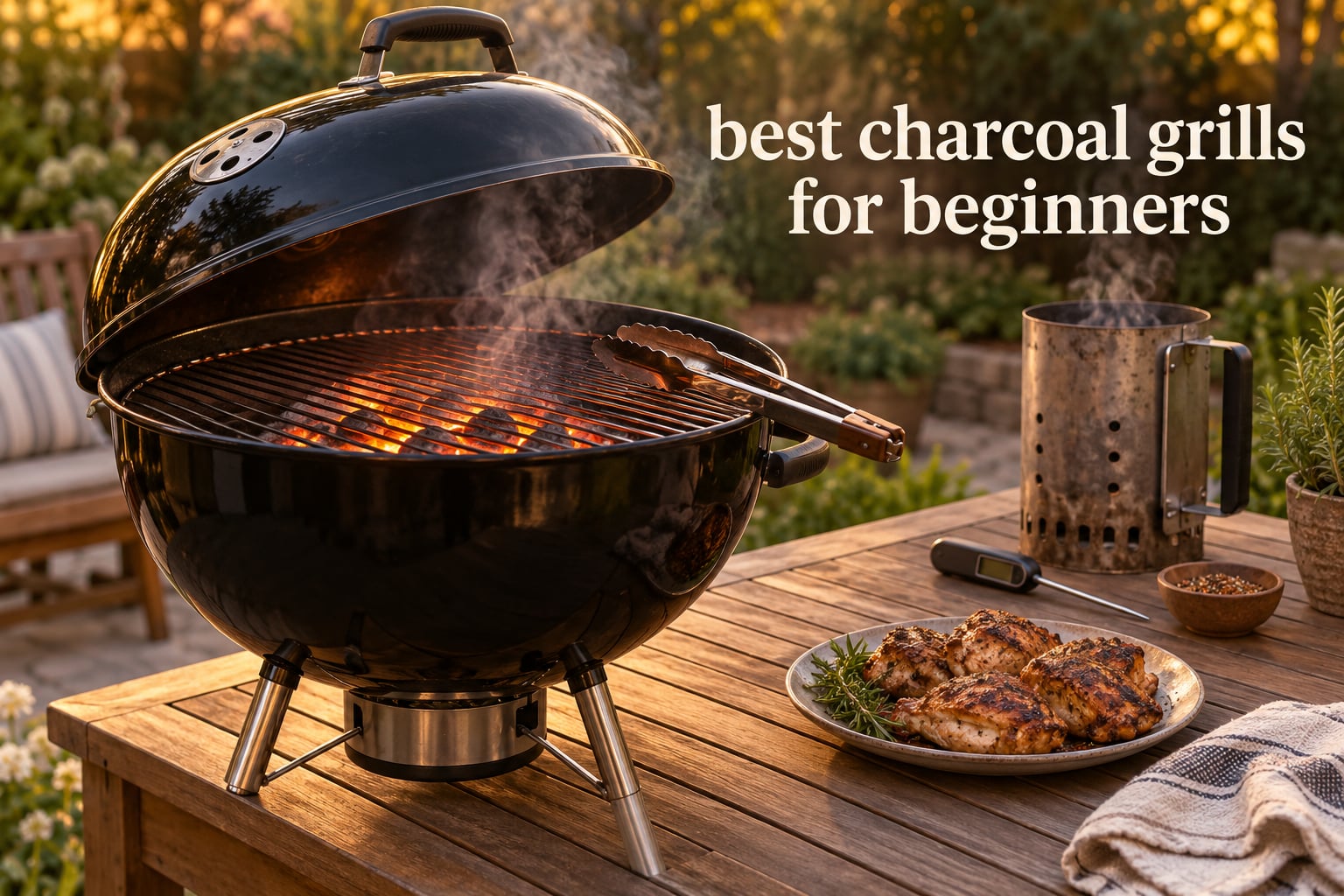
The best charcoal grills for beginners are the ones that forgive an ordinary mistake. For most first-time cooks that means a 22-inch kettle with a hinged grate, an ash catcher you can actually empty and a lid thermometer, and the Weber Original Kettle Premium is the model we keep coming back to. Below are eight grills we would consider, from a 150 sq in portable to a 626 sq in barrel.
I have been cooking on charcoal long enough to know that the grill matters less than the fire management. Still, a first grill sets the tone: a model that is too small, has vague vents or no ash pan turns an ordinary over-firing mistake into a ruined meal, and beginners lose confidence fast.
That is the filter we used here. We scored every grill on six beginner-specific things: how easy it is to light, whether it supports a proper two-zone fire, how well the vents control temperature, how the ash comes out, how much space and how much weight you are dealing with, and what the warranty says about how long the thing will last. We read the full review sets, weighed the spec sheets against them, and cross-checked owner complaints on cooking forums, because the loudest regret among new charcoal owners is not a bad sear, it is a cheap grill that dents and rusts after one season.
What follows is the full list, the reasoning behind each pick, a buying guide that explains the specs that actually matter, and a first-cook walkthrough so you are not staring at a cold kettle on your first weekend with it.
Table of Contents
Top 3 Picks for the Best Charcoal Grills for Beginners (October 2026)
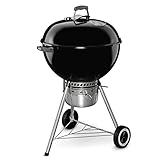
Weber Original Kettle Premium 22-Inch
- 22.5 inch porcelain-enameled bowl
- Hinged grate
- One-Touch ash catcher
- Lid thermometer

Weber Jumbo Joe 18-Inch
- 240 sq in cooking area
- Weighs 18 lbs
- Tuck-N-Carry lid lock
- 10-year warranty
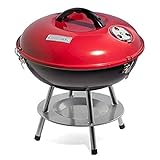
Cuisinart 14-Inch Tabletop Grill
- 196 sq in grate
- Weighs about 4 lbs
- Adjustable dual vents
- Three lid locks
As an Amazon Associate we earn from qualifying purchases. CERTAIN CONTENT THAT APPEARS ON THIS SITE COMES FROM AMAZON. THIS CONTENT IS PROVIDED 'AS IS' AND IS SUBJECT TO CHANGE OR REMOVAL AT ANY TIME.
All 8 Charcoal Grills at a Glance (October 2026)
| Product | Key Features | |
|---|---|---|
|
Weber Original Kettle Premium 22-Inch
|
|
Check Latest Price |
|
Weber Jumbo Joe 18-Inch
|
|
Check Latest Price |
|
Cuisinart 14-Inch Tabletop
|
|
Check Latest Price |
 Oklahoma Joe’s Rambler Tabletop Oklahoma Joe’s Rambler Tabletop
|
|
Check Latest Price |
 Royal Gourmet CC1830 28-Inch Barrel Royal Gourmet CC1830 28-Inch Barrel
|
|
Check Latest Price |
 Weber Smokey Joe 14-Inch Weber Smokey Joe 14-Inch
|
|
Check Latest Price |
 Royal Gourmet CD1519 303 Sq In Royal Gourmet CD1519 303 Sq In
|
|
Check Latest Price |
 Gas One 14-Inch Portable Gas One 14-Inch Portable
|
|
Check Latest Price |
We earn from qualifying purchases. CERTAIN CONTENT THAT APPEARS ON THIS SITE COMES FROM AMAZON. THIS CONTENT IS PROVIDED 'AS IS' AND IS SUBJECT TO CHANGE OR REMOVAL AT ANY TIME.
How We Judged Beginner Friendliness
Almost any grill can produce a good meal. The differences that matter on week one are narrower, and they are all about recovery: how the grill behaves when the coals are not where you put them, when the temperature climbs faster than expected, or when you need to clean up at the end of the night. We scored each grill on six criteria in plain language.
First, lighting ease. A grill with a wide bottom vent and a chimney-friendly bowl ignites fast and evenly. Second, two-zone setup, which means there is enough grate to bank coals to one side and still have a usable indirect zone. Third, vent control, meaning vents you can feel moving through rather than a sliding plate with no travel. Fourth, ash cleanup, since a removable pan beats scraping a bowl. Fifth, footprint and weight, because a grill you cannot move or store is a grill you will stop using. Sixth, warranty and construction, which is the honest signal of how long the steel will last.
Two things carried the most weight in our scoring. The first is grate design, specifically whether a hinged section lets you add fuel without pulling the whole cooking surface out. The second is build gauge, because thin sheet metal warps, dents and rusts, and that is precisely the failure new owners complain about most on grilling forums.
1. Weber Original Kettle Premium 22-Inch: Best Overall Charcoal Grill for Beginners
Weber® Original Kettle Premium Charcoal Grill, 22-Inch, Black
- 22.5 in bowl
- 32.3 lbs
- Hinged plated steel grate
- One-Touch ash catcher
- 10-year limited warranty
Pros
- Hinged grate lets you add charcoal mid-cook
- One-Touch ash catcher empties without scraping
- Porcelain-enameled bowl resists rust and peeling
- Lid thermometer plus durable-plated steel grate
- Handles up to 13 burgers with a press
Cons
- Picture-only assembly instructions with fiddly leg pins
- No side table or electric ignition
- Built-in thermometer reads hotter than an external probe
We earn a commission, at no additional cost to you. CERTAIN CONTENT THAT APPEARS ON THIS SITE COMES FROM AMAZON. THIS CONTENT IS PROVIDED 'AS IS' AND IS SUBJECT TO CHANGE OR REMOVAL AT ANY TIME.
This is the grill I would put in the hands of a friend who has never touched charcoal. The 22.5-inch bowl gives you a grate wide enough to bank coals on one side and still have room for food on the other, which is the whole beginner technique in a single design decision.
We picked the Premium version specifically because of the hinged grate. On a grill with a coil-through grate you lift the entire cooking surface out, add charcoal, and put it back, and that is a step beginners skip under time pressure, which is how they end up cooking over a full bed of coals. With a hinged section you lift one side, dump in a handful of coals and carry on. The One-Touch ash catcher is the other reason: the grate sweeps clean and the pan slides straight out, so cleanup is a two-minute job instead of a reason to avoid the grill.
Owners report the bowl and lid holding heat well and describe first-cook success as routine when a chimney starter is used. The common thread in negative feedback is not performance but assembly, since the instructions are picture-only and the leg push-pins are genuinely annoying to seat. Budget thirty minutes, a pair of pliers and a second person the first time.
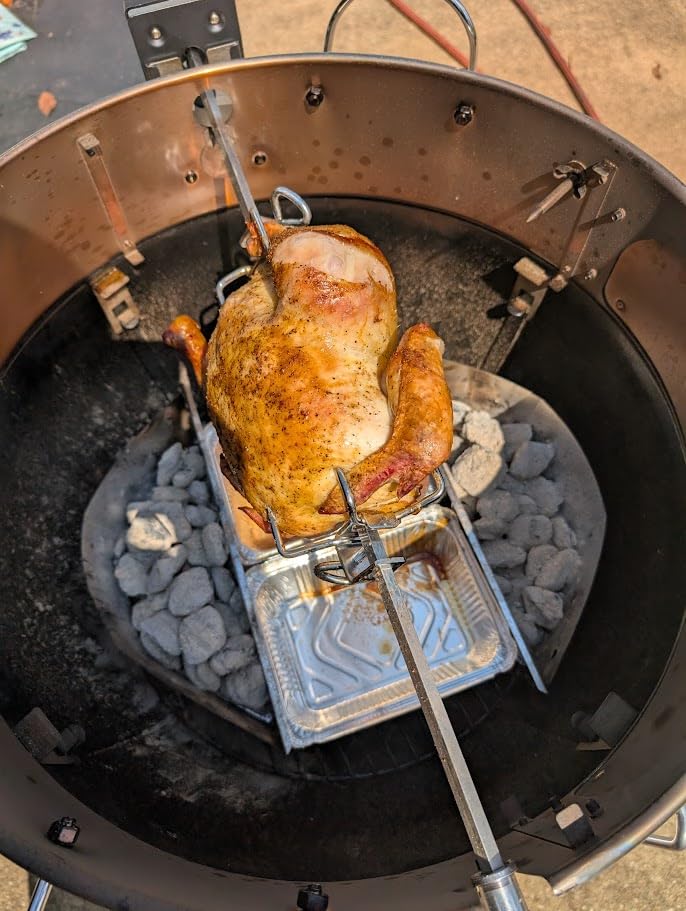
On the temperature side, the built-in lid thermometer is a useful sanity check but nothing more. Owners note it runs a little hotter than an external probe, which is normal since it reads the temperature right above the coals rather than at the grate. Buy a cheap instant-read thermometer with your first cook and use both, the lid dial for trends and the probe for decisions.
The 10-year limited warranty is the other durable detail here. Accessories, grates and replacement parts for this bowl have been available for decades, which means a lost grate or a cracked handle does not end the grill’s life. That long parts runway is the single most cited reason experienced owners recommend a Weber as a first purchase rather than a disposable practice grill.
Why this grill suits a first cook
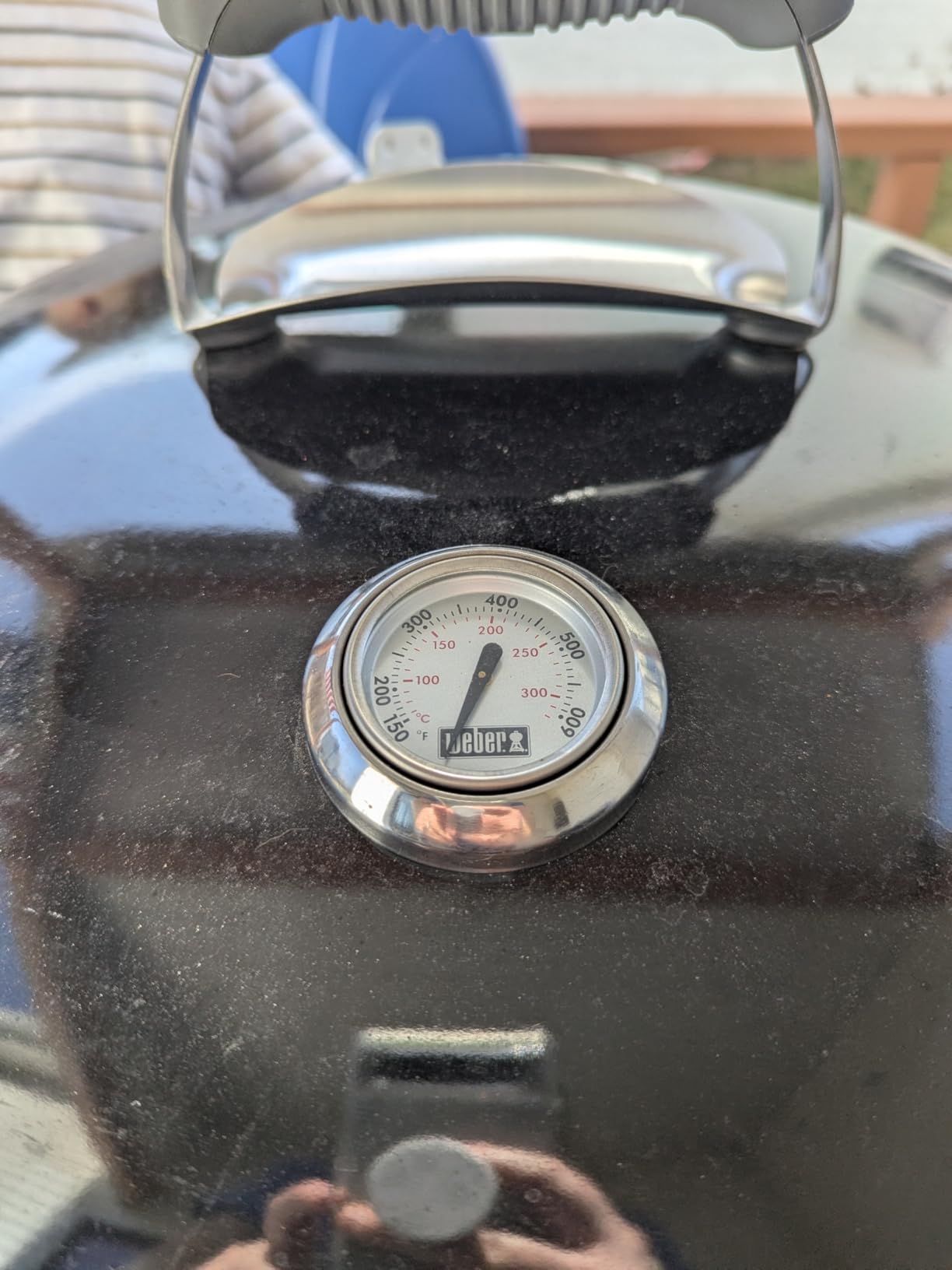
Because the two hardest beginner habits, banking coals for indirect heat and adding charcoal mid-cook, are both built into the design rather than left to improvisation. The grate is wide enough to make a genuine hot side and cool side, and the ash system means you are not scraping a hot bowl in the dark after dinner.
It also has real family capacity without becoming a chore to move. The all-weather wheels handle a patio, and at 32.3 pounds it is heavy enough to feel solid and light enough that one adult can roll it aside to get underneath.
Where it falls short
There is no side table, so prep space comes from a separate table, and there is no electric ignition, which means you are lighting with a chimney or a blow torch every single cook. If you want a grill that starts with a button and doubles as a work surface, this is not it.
It is also a full-size grill, so it needs real clearance from walls and fences and it is not the choice if your cooking is one person cooking two burgers. For weeknight cooking for a family of four it is right sized, and the wide grate means you are not stacking food to make it fit.
We earn a commission, at no additional cost to you. CERTAIN CONTENT THAT APPEARS ON THIS SITE COMES FROM AMAZON. THIS CONTENT IS PROVIDED 'AS IS' AND IS SUBJECT TO CHANGE OR REMOVAL AT ANY TIME.
2. Weber Jumbo Joe 18-Inch: Best Kettle for Small Patios and Apartments
Weber® Jumbo Joe Charcoal Grill, 18‑Inch, Black
- 240 sq in
- 18.5 in plated steel grate
- 18 lbs
- Porcelain-enameled bowl and lid
- Lid lock holder
Pros
- Cuts enough for a family of four to six
- Weighs 18 lbs so one person can move it
- Assembles in about 15 minutes
- Lid lock doubles as a lid holder while cooking
- 10-year warranty
Cons
- Grate spacing is tight for a full rack of ribs
- No built-in thermometer
- Some units arrive with a dented base lip
We earn a commission, at no additional cost to you. CERTAIN CONTENT THAT APPEARS ON THIS SITE COMES FROM AMAZON. THIS CONTENT IS PROVIDED 'AS IS' AND IS SUBJECT TO CHANGE OR REMOVAL AT ANY TIME.
The Jumbo Joe is the same basic idea as its big brother, shrunk until it stops being intimidating. At 18 pounds and 19.75 inches across, it is small enough to carry with one hand and cheap enough psychologically that a beginner will actually use it instead of saving it for a special occasion.
The 240 sq in of cooking area is the honest reason to consider it. That is a genuinely usable surface for chicken thighs, a few steaks, or a family batch of burgers, and it is still large enough to bank coals to one side. Reviewers consistently describe it as the middle ground between a tiny tabletop grill and a full kettle, which is exactly the gap most first-time buyers are shopping in.
The absence of a lid thermometer is the one real compromise. You will be opening the lid to check temperature, which costs heat, or you will be cooking blind until you buy a probe. Budget for an instant-read thermometer as part of the purchase, not as an afterthought.
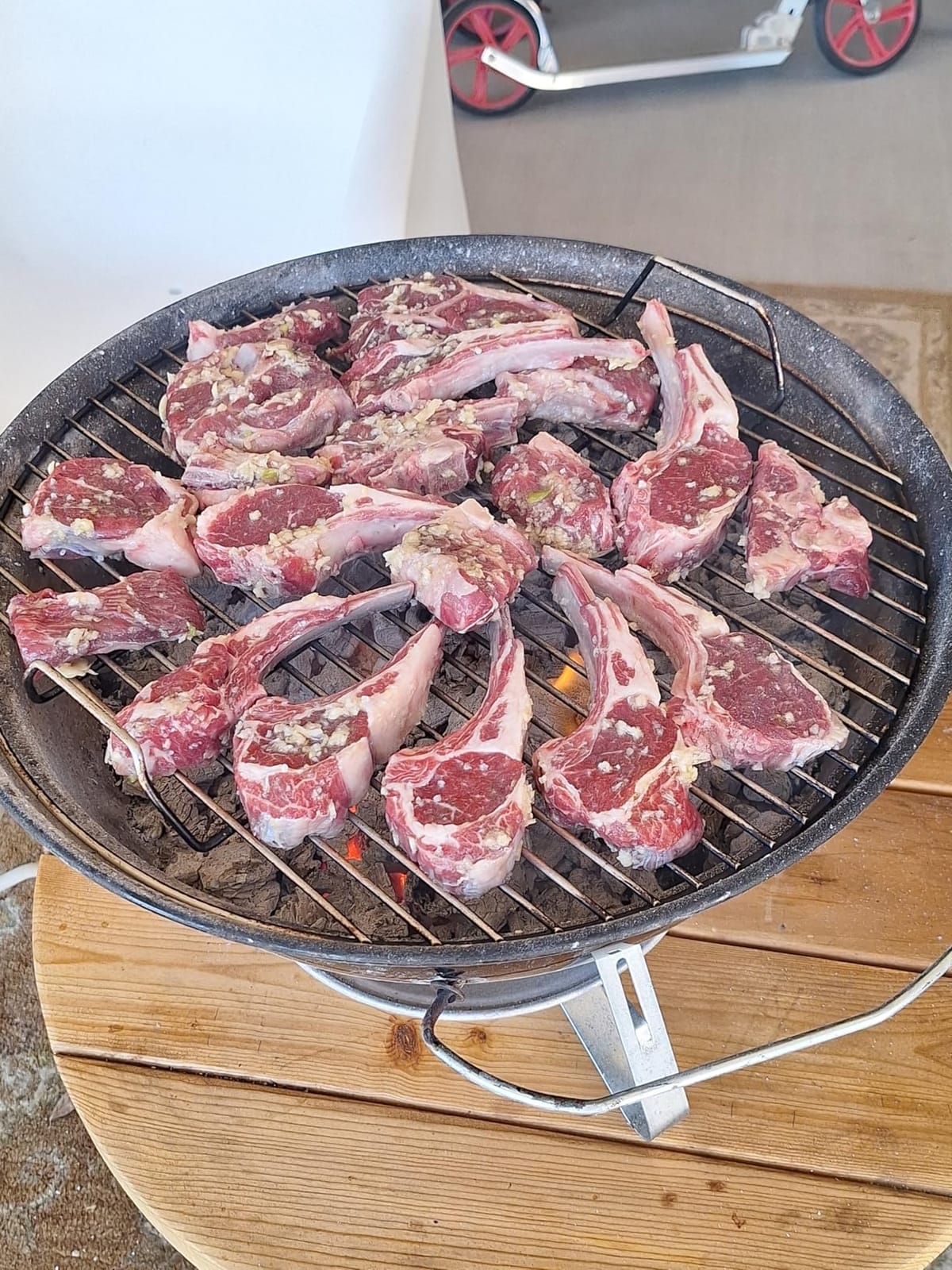
Grate spacing deserves a mention because it shows up constantly in reviews. The bars are set close enough that a full rack of ribs will not sit flat without bending. For burgers, chicken, sausages and vegetables it is a non-issue, and for a first cook those are exactly what you should be making.
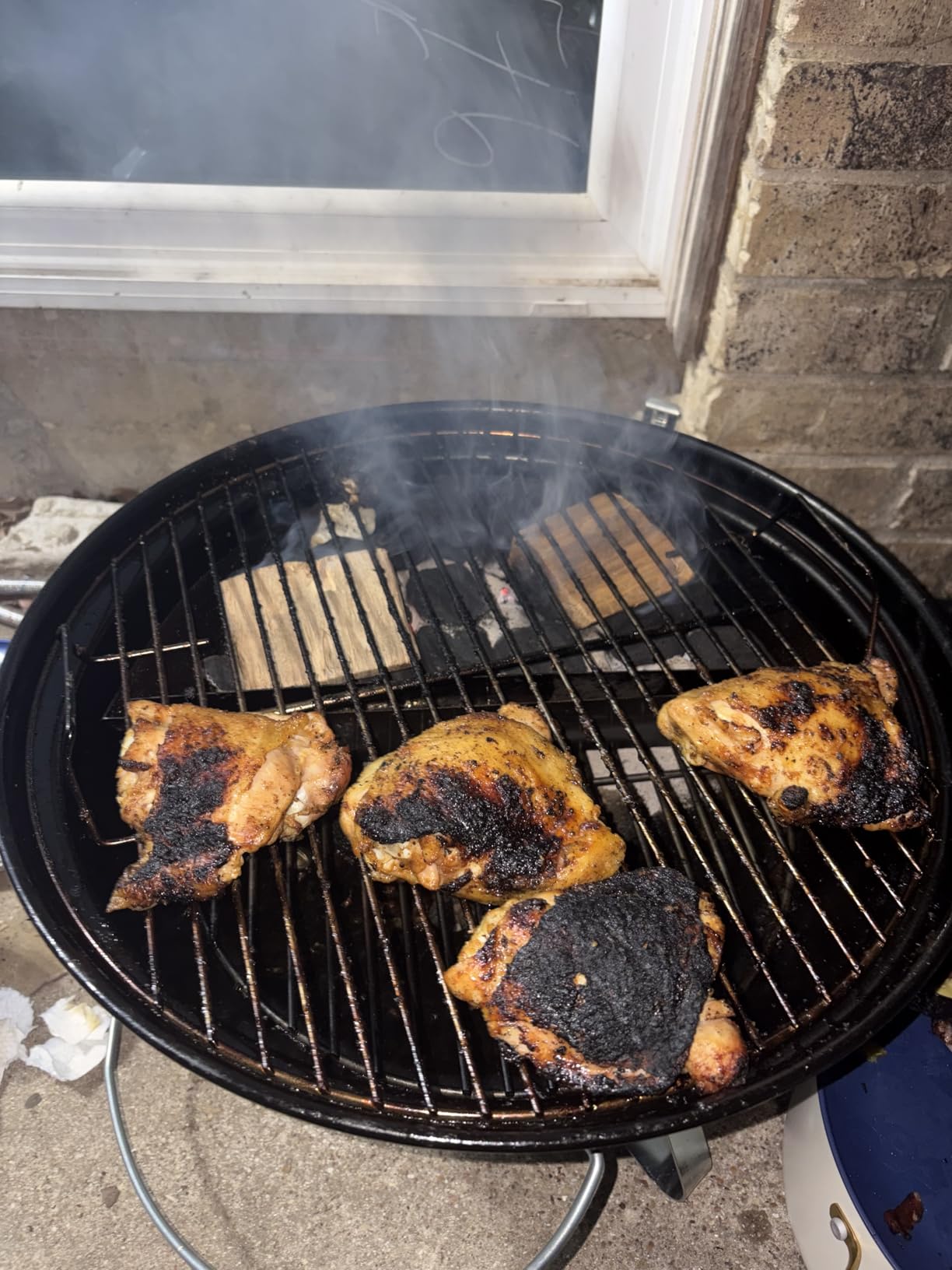
One more thing worth knowing: a small number of buyers report a dented base lip on arrival, which stops the lid seating completely and costs you heat. It is a manufacturing variance rather than a design flaw, and it is worth checking the moment the box opens.
Why this grill suits a first cook
Because it removes the intimidation without removing the technique. You still get a real bowl, real vents and a real ash catcher, so what you learn here transfers directly to a larger kettle later. Many beginners start on an 18-inch and move up once the fire management stops being mysterious.
It is also the grill to buy if your outdoor space is genuinely tight or if you are renting and need something you can carry down a stairwell. At 18 pounds it goes into a trunk without a fight.
Where it falls short
It will not handle a large rack of ribs or a whole turkey, and the tight grate spacing means large flat cuts sit awkwardly. If you plan to cook for six or more people regularly, the 240 sq in surface becomes the bottleneck before the food does.
There is no side shelf, so it is a grill and nothing else. Everything from trimming vegetables to resting meat happens on a separate surface, which on a small patio means more trips and more clutter.
We earn a commission, at no additional cost to you. CERTAIN CONTENT THAT APPEARS ON THIS SITE COMES FROM AMAZON. THIS CONTENT IS PROVIDED 'AS IS' AND IS SUBJECT TO CHANGE OR REMOVAL AT ANY TIME.
3. Cuisinart 14-Inch Tabletop Grill: Best Value Starter Grill
Cuisinart Charcoal Grill, Portable Tabletop Design, Locking Lid, 14″
- 196 sq in grate
- About 4 lbs
- Adjustable dual vents
- Three lid locks
- 90-day warranty
Pros
- Genuinely portable at about 4 lbs
- Assembles in 10 to 30 minutes
- Chrome-plated grate wipes clean and resists rust
- Three lid locks keep coals contained in transit
- Adjustable dual vents give real temperature control
Cons
- Top grate is undersized and can tip into the coals
- Holds a small amount of charcoal and loses heat fast
- 90-day warranty is the shortest here
- Not a substitute for a backyard grill
We earn a commission, at no additional cost to you. CERTAIN CONTENT THAT APPEARS ON THIS SITE COMES FROM AMAZON. THIS CONTENT IS PROVIDED 'AS IS' AND IS SUBJECT TO CHANGE OR REMOVAL AT ANY TIME.
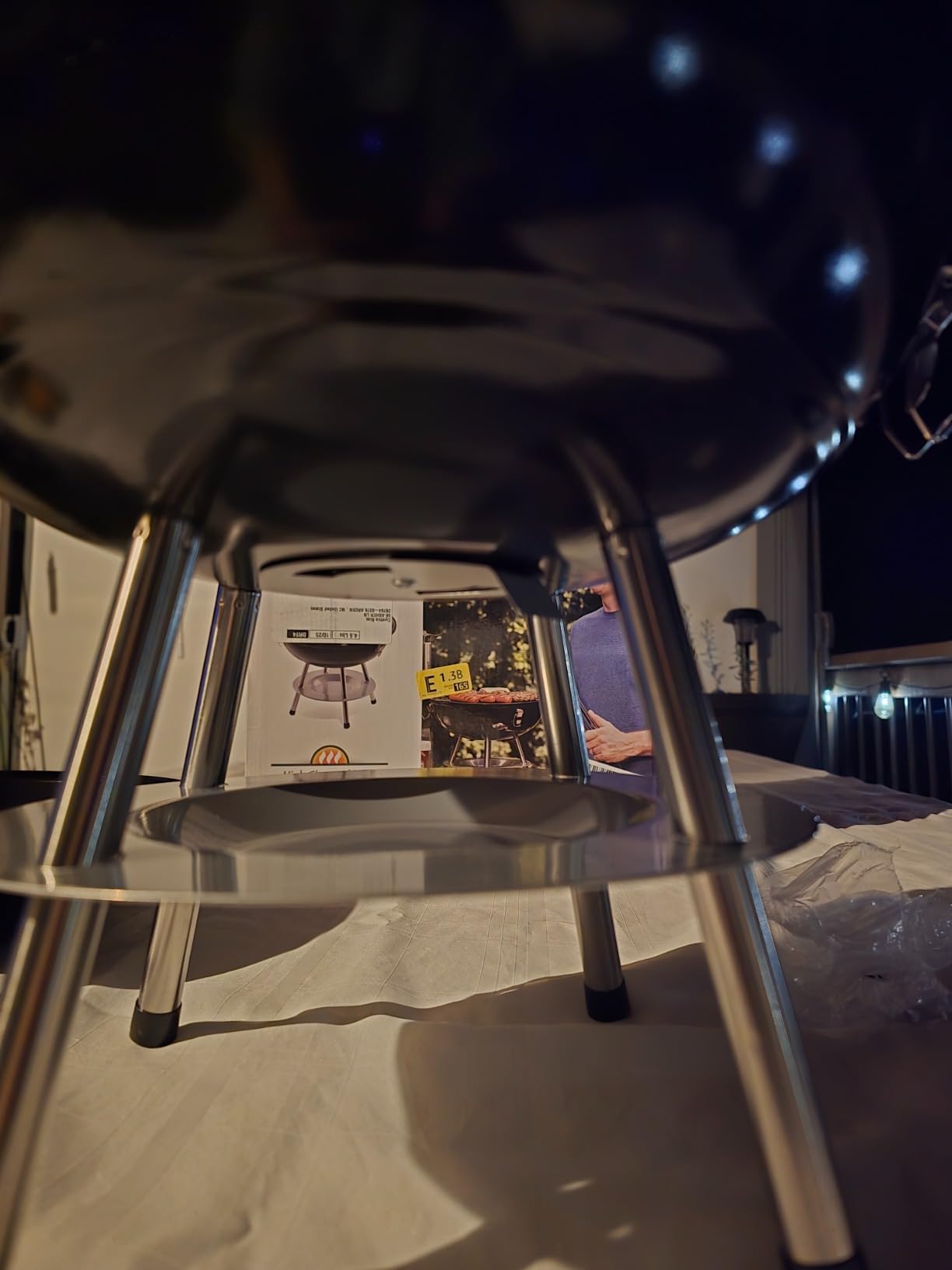
This is the grill to buy if the whole point is to find out whether you enjoy charcoal before you commit real money. At 196 sq in and roughly four pounds, it is a cooking appliance rather than a patio fixture, and it will fit in a closet between seasons.
It is also, by a wide margin, the most-reviewed grill on this list, with more than 21,000 ratings. That matters for a beginner because you can read exactly how it behaves in ordinary hands. The pattern in those reviews is consistent: it works well for one to three people, it assembles in a quarter of an hour with clear illustrated instructions, and cleanup is trivial because there is very little to clean.
Owners also praise the dual vents. On a grill this small you would expect temperature control to be nonexistent, but adjustable upper and lower vents give you enough throttle to back the fire off once the coals are ashed over.
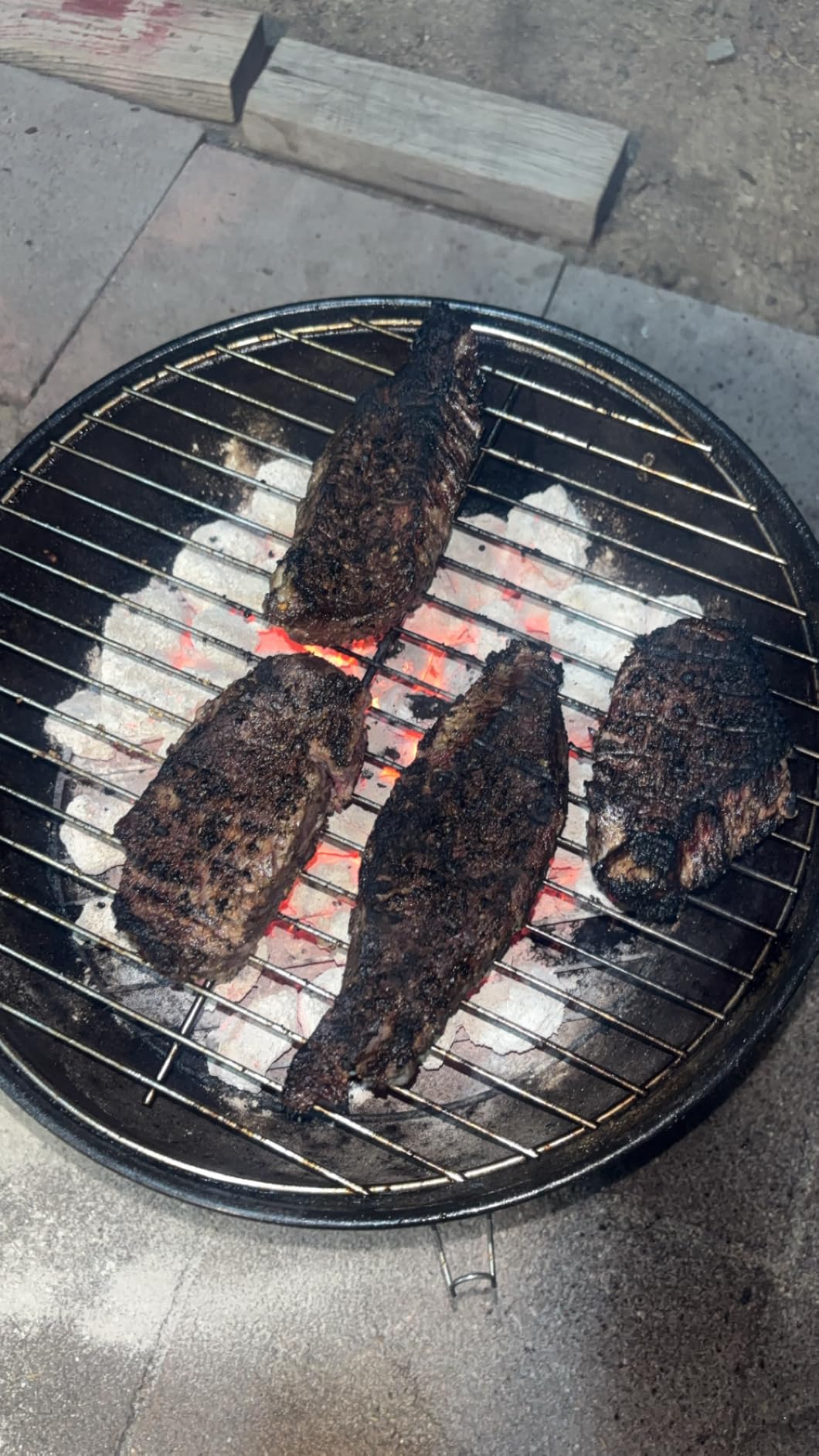
The flaw everyone mentions is the top grate. It is smaller than the firebox opening and can tip when you slide food off, which drops dinner into the coals. Several owners shim it with screws or bolts, and that two-minute fix is the difference between a grill you trust and one you flinch using.
Heat retention is the other ceiling. Reviews describe needing roughly 30 to 36 briquettes to hold a cook, and note that the grill cools quickly once the lid goes down. That is physics, not a defect, and it simply means charcoal-grilled cooking here is a 30-minute affair rather than an all-afternoon project.
Finally, the 90-day limited warranty is the shortest in this roundup. It is a trial grill, not a keeper, and it should be framed that way when you buy it.
Why this grill suits a first cook
Because the downside is capped. If charcoal turns out not to be for you, you have lost a small amount of money and a closet, not a season of grilling. It also doubles as a backup and a travel grill once you own something larger, which is why plenty of owners keep one permanently.
For a beginner on a balcony, a boat or a camping trip, or for cooking for one to three people, the 196 sq in grate is genuinely enough. The chrome plating also wipes clean without the seasoning routine cast iron demands.
Where it falls short
It is not a family dinner grill. The fuel capacity means a modest meal at best, and the quick heat loss means you cannot cook a whole chicken or a rack of ribs on it. If you are regularly feeding four or more, step up a size.
The tipping grate is the thing that will decide whether you keep using it. Check it early, shim it if it moves, and if it still feels unstable, move on rather than fighting it every cook.
We earn a commission, at no additional cost to you. CERTAIN CONTENT THAT APPEARS ON THIS SITE COMES FROM AMAZON. THIS CONTENT IS PROVIDED 'AS IS' AND IS SUBJECT TO CHANGE OR REMOVAL AT ANY TIME.
4. Oklahoma Joe’s Rambler Tabletop Grill: Best Cast Iron Build for Serious Learning
Oklahoma Joe’s Rambler Portable Tabletop Charcoal Grill, 218 Sq. In. Cooking Space, Heavy-Duty Steel Construction, Cast Iron Grates, Built-In Temperature Gauge
- 218 sq in cooking space
- Cast iron grates
- Adjustable charcoal tray
- 48.5 lbs
- Two-year warranty
Pros
- Heavy-duty steel body and cast iron grates
- Height-adjustable coal tray gives clear heat control
- Lid gauge with glow-in-the-dark accents
- Full-size removable ash pan
- Two-year warranty on grates lid and parts
Cons
- Weighs 48.5 lbs for a portable grill
- Small cooking area next to full-size barrels
We earn a commission, at no additional cost to you. CERTAIN CONTENT THAT APPEARS ON THIS SITE COMES FROM AMAZON. THIS CONTENT IS PROVIDED 'AS IS' AND IS SUBJECT TO CHANGE OR REMOVAL AT ANY TIME.
The Rambler is the odd one out in this roundup: a small grill built like a piece of equipment rather than a piece of patio furniture. The frame is heavy-duty steel, the grates are thick cast iron, and at 48.5 pounds it does not move without a decision.
That weight is the point. Cast iron stores heat, so it delivers a harder sear and recovers temperature faster when you drop cold food on it, and reviewers single out the grates as the reason this grill feels professional. The height-adjustable charcoal tray is the other feature worth paying attention to, because raising or lowering the fuel is a completely different lever from a vent, and having both means you have a way out when your fire gets away from you.
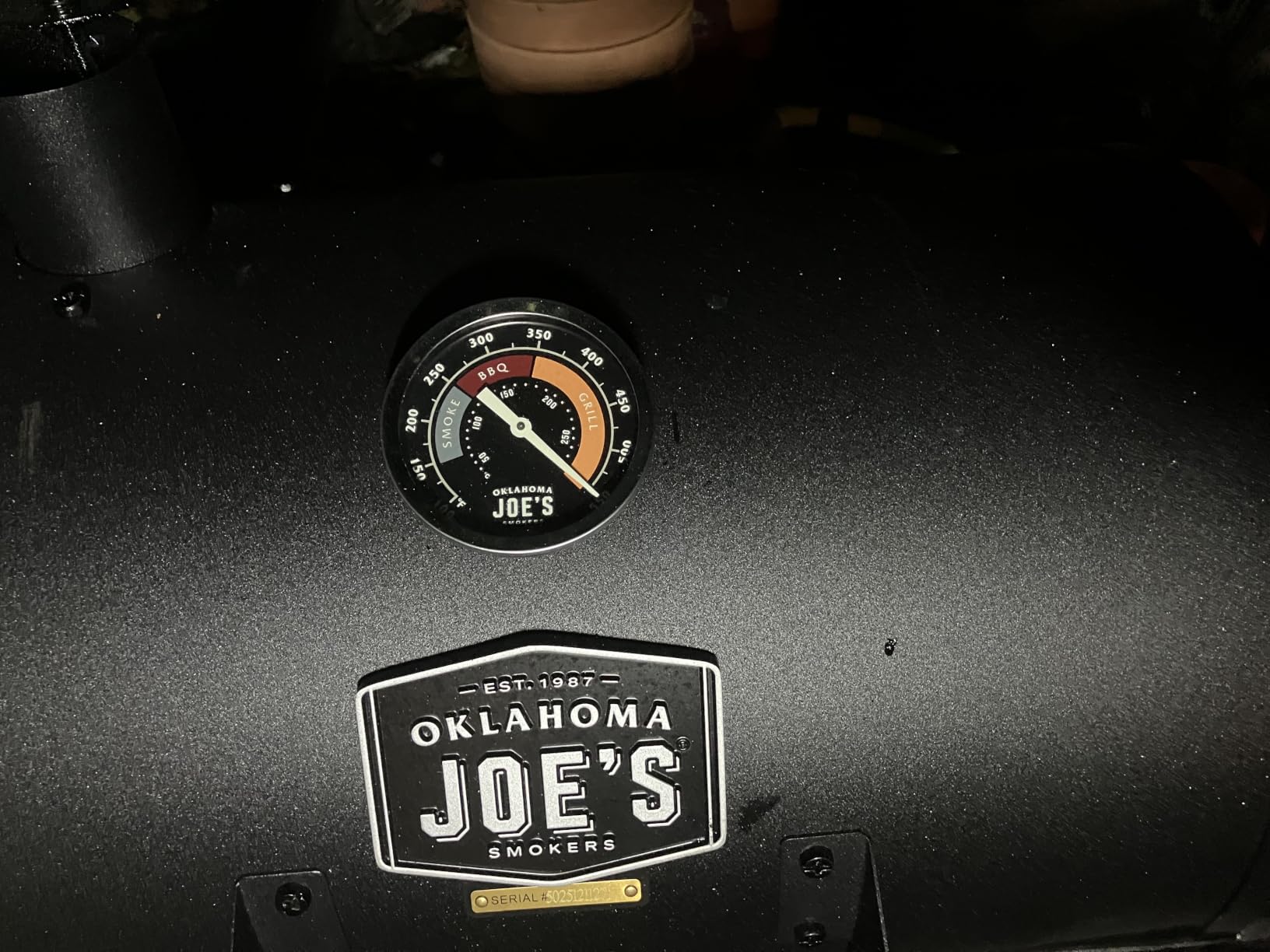
The lid-mounted temperature gauge with glow-in-the-dark accents is described as accurate in reviews, which puts it ahead of the basic dial most grills in this class ship with. You can glance at it in the dark without pulling your head over an open bowl.
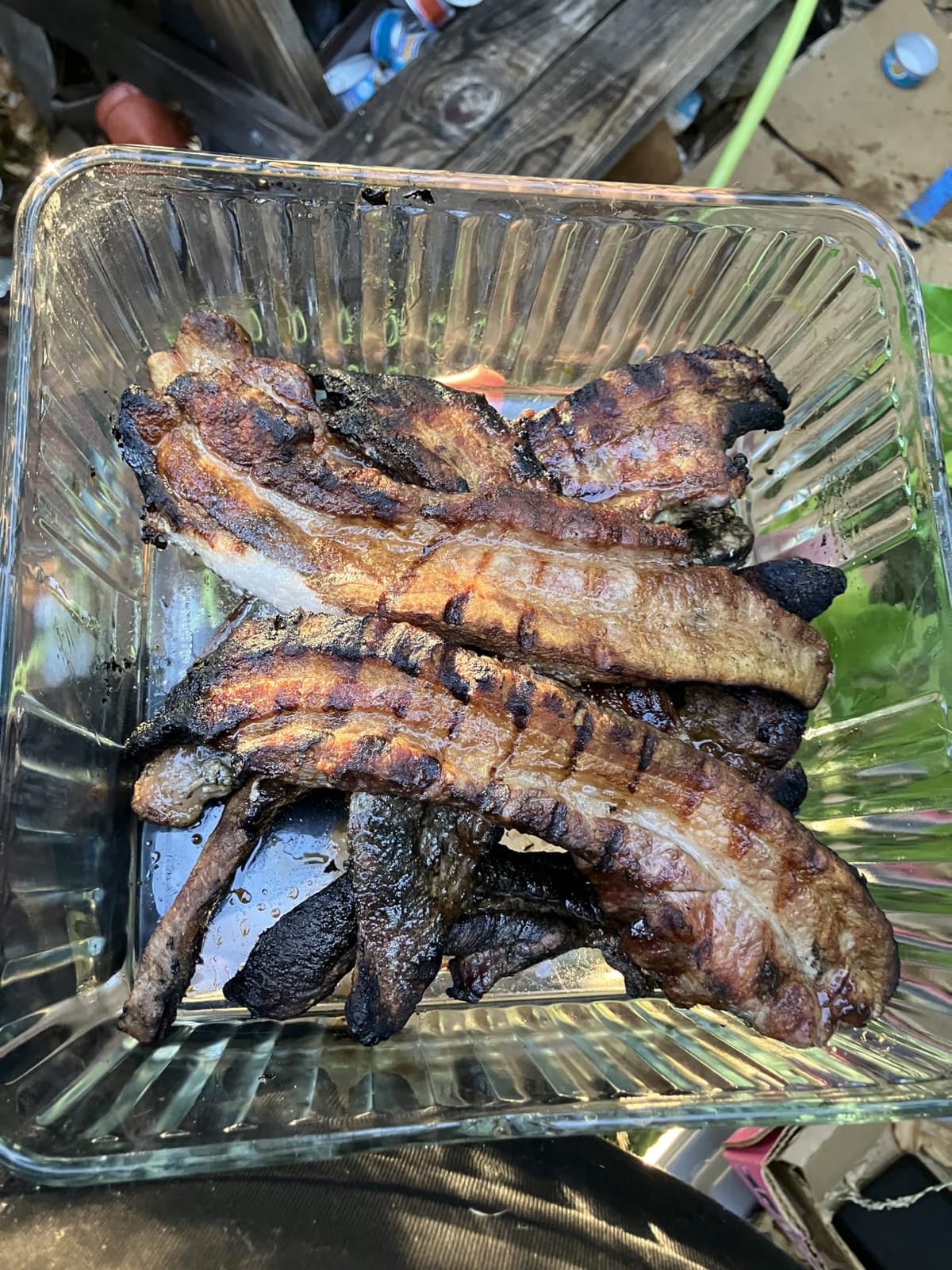
It is listed as a multi-zone grill, and the rated capacity is 6 burgers, 6 steaks or 12 bratwursts. That is a real family cookout, not a novelty, even though the raw number of square inches looks modest next to a barrel.
The ash pan is a genuine full-size removable tray, not a catch tray under a small firebox, so end-of-night cleanup is a pull and a dump. The warranty runs two years on grates, lid and other parts, which is a shorter term than Weber’s decade but a considerably longer commitment than most of the small grills here.
Why this grill suits a first cook
Because it rewards correct technique instead of tolerating everything. If you are the kind of beginner who wants to learn where coals go and how a grate should feel under a steak, the cast iron and the adjustable tray teach faster than a simple bowl with one vent.
It is also a good first grill for someone with a small yard who does not want to haul a full-size kettle around. The trade is that you accept the weight and accept a compact cooking area.
Where it falls short
Forty-eight and a half pounds is genuinely heavy for something sold as portable. Two people can lift it onto a table, and it is not going up stairs alone. If moving the grill is part of how you want to use it, this is the wrong choice.
The 218 sq in surface is also modest. It will not let you spread out for a group of eight, and there is no warming rack to relieve pressure on the main grate during a big cook.
We earn a commission, at no additional cost to you. CERTAIN CONTENT THAT APPEARS ON THIS SITE COMES FROM AMAZON. THIS CONTENT IS PROVIDED 'AS IS' AND IS SUBJECT TO CHANGE OR REMOVAL AT ANY TIME.
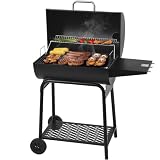
5. Royal Gourmet CC1830 28-Inch Barrel Grill: Best for Groups of Six or More
Royal Gourmet CC1830 28 Inch Barrel Charcoal Grill, Side Table
- 626 sq in total
- 475 sq in grates plus 151 sq in warming rack
- Adjustable charcoal pan
- Side shelf
Pros
- 626 sq in handles a full family cookout in one batch
- Warming rack keeps food hot while grates work
- Height-adjustable charcoal pan and adjustable smoke stack
- Side shelf with tool hooks
- Lid thermometer and two heavy-duty wheels
Cons
- Thin sheet metal some buyers expect to last a few seasons
- Assembly is a two-person job especially fitting the lid
- Does not conserve charcoal particularly well
- One-year manufacturer warranty
We earn a commission, at no additional cost to you. CERTAIN CONTENT THAT APPEARS ON THIS SITE COMES FROM AMAZON. THIS CONTENT IS PROVIDED 'AS IS' AND IS SUBJECT TO CHANGE OR REMOVAL AT ANY TIME.
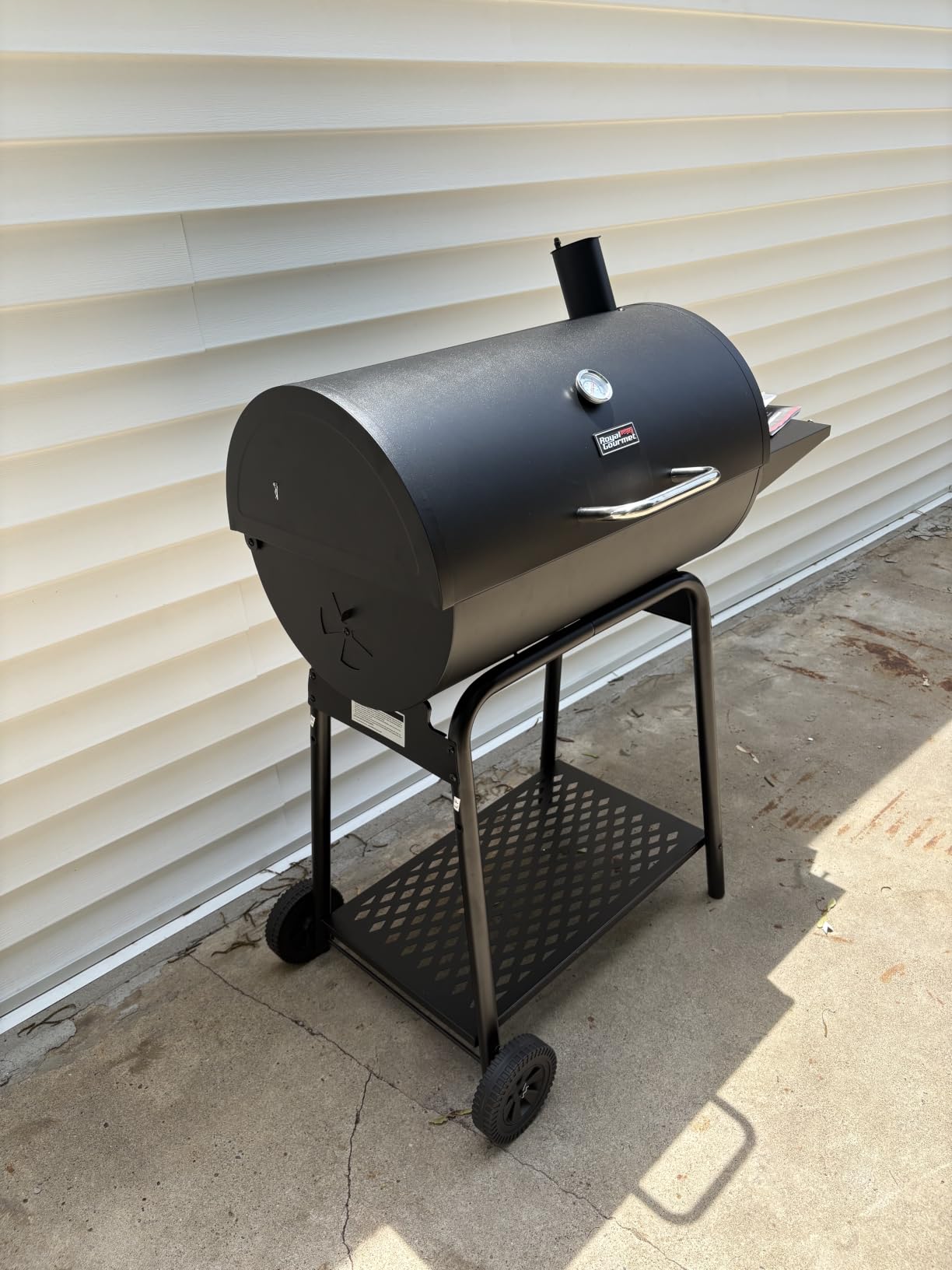
This is the grill for the other end of the beginner problem. If your family cookouts involve six people or more and a single batch matters, 475 sq in of main grate plus a 151 sq in warming rack changes the evening entirely. Nothing waits, nothing crowds, and the food that finishes early waits on the rack instead of overcooking on the grate.
At 22.6 by 40.87 by 47.36 inches it is a genuinely large object, and the two heavy-duty wheels plus side shelf make it workable on a patio. The two-level adjustable charcoal pan is the feature that separates this from a basic barrel: you can raise the fuel for a sear and drop it for slower cooking.
Reviewers consistently treat this as good value for the amount of cooking space, and mention the built-in thermometer and the side shelf with integrated tool hooks as the details that get used daily. There is also a track record of good customer service replacing a bent grate, which matters more than it sounds when you have just spent an hour assembling sheet metal.
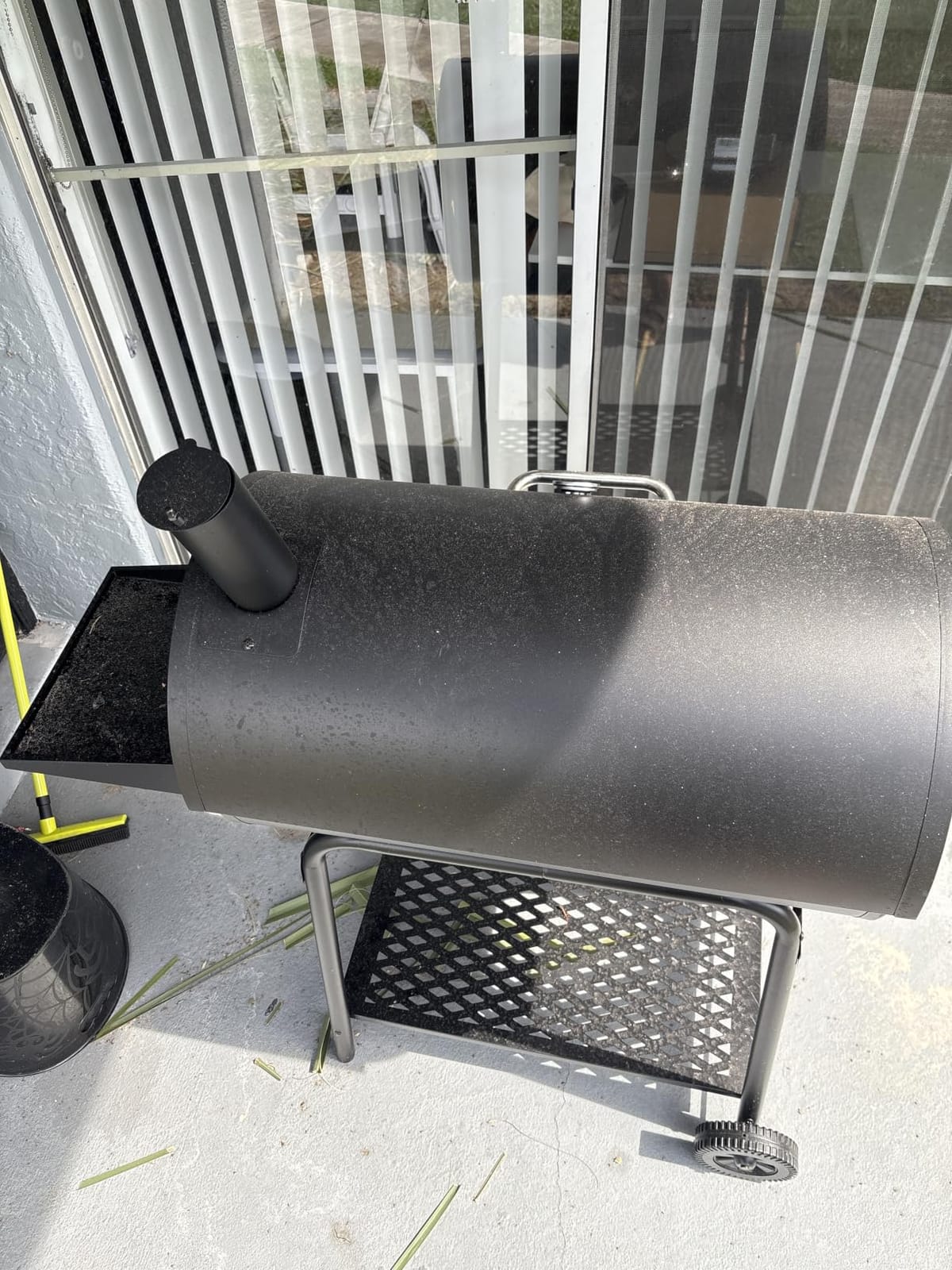
The honest concern is material. Buyers who compare it against premium grills flag the light-gauge metal, and some expect a few seasons rather than a decade. That is a fair expectation to set: this is a big grill with big surfaces built at a price that reflects thinner steel, so check it annually for surface rust and store it under a cover.
Assembly is the other real hurdle. Fitting the lid on a barrel of this size is a two-person job, and doing it alone is how people end up with a lid that never quite seals. Line up a helper before the box arrives, and have the packaging for the return in case a panel arrives bent.
Fuel consumption is the quiet cost. Reviewers note it does not conserve charcoal particularly well, which on a large barrel with a lot of airflow means more bags per cook. Budget for that, especially if you planned on long low-and-slow weekends.
Why this grill suits a first cook
Because the feature that matters most for a group, a warming rack, is standard here and almost never included on small grills. You can cook a full batch at once and hold the finished food without overcooking it, which turns a stressful multi-batch dinner into a relaxed one.
The side shelf also means this is a working station rather than just a heat source, and that matters on a beginner’s first cook when you need somewhere to rest chicken and put raw food down.
Where it falls short
It is oversized for one or two people and the coal consumption punishes you for cooking small. If your realistic use is weeknight dinners for two, this is a lot of grill to keep warm and a lot of steel to cover.
The one-year warranty and thin-gauge construction mean you should treat it as a mid-term purchase rather than a lifetime one, and plan on a cover and a season-end touch-up.
We earn a commission, at no additional cost to you. CERTAIN CONTENT THAT APPEARS ON THIS SITE COMES FROM AMAZON. THIS CONTENT IS PROVIDED 'AS IS' AND IS SUBJECT TO CHANGE OR REMOVAL AT ANY TIME.
6. Weber Smokey Joe 14-Inch: Best Charcoal Grill for Travel
Weber® Smokey Joe 14-Inch Portable Charcoal Grill, Black
- 8.4 lbs total
- 14-inch bowl
- Porcelain-enamel finish
- Ash catcher
- 10 year limited warranty
Pros
- Lightest Weber build at 8.4 lbs
- Porcelain-enamel resists scratching and rusting
- Ash catcher makes cleanup simple
- Tuck-N-Carry lock secures the lid and holds it open
- Fits 6 burgers with a Weber burger press
Cons
- Small grate limits it to burgers dogs and vegetables
- Small charcoal capacity means short cook times
We earn a commission, at no additional cost to you. CERTAIN CONTENT THAT APPEARS ON THIS SITE COMES FROM AMAZON. THIS CONTENT IS PROVIDED 'AS IS' AND IS SUBJECT TO CHANGE OR REMOVAL AT ANY TIME.
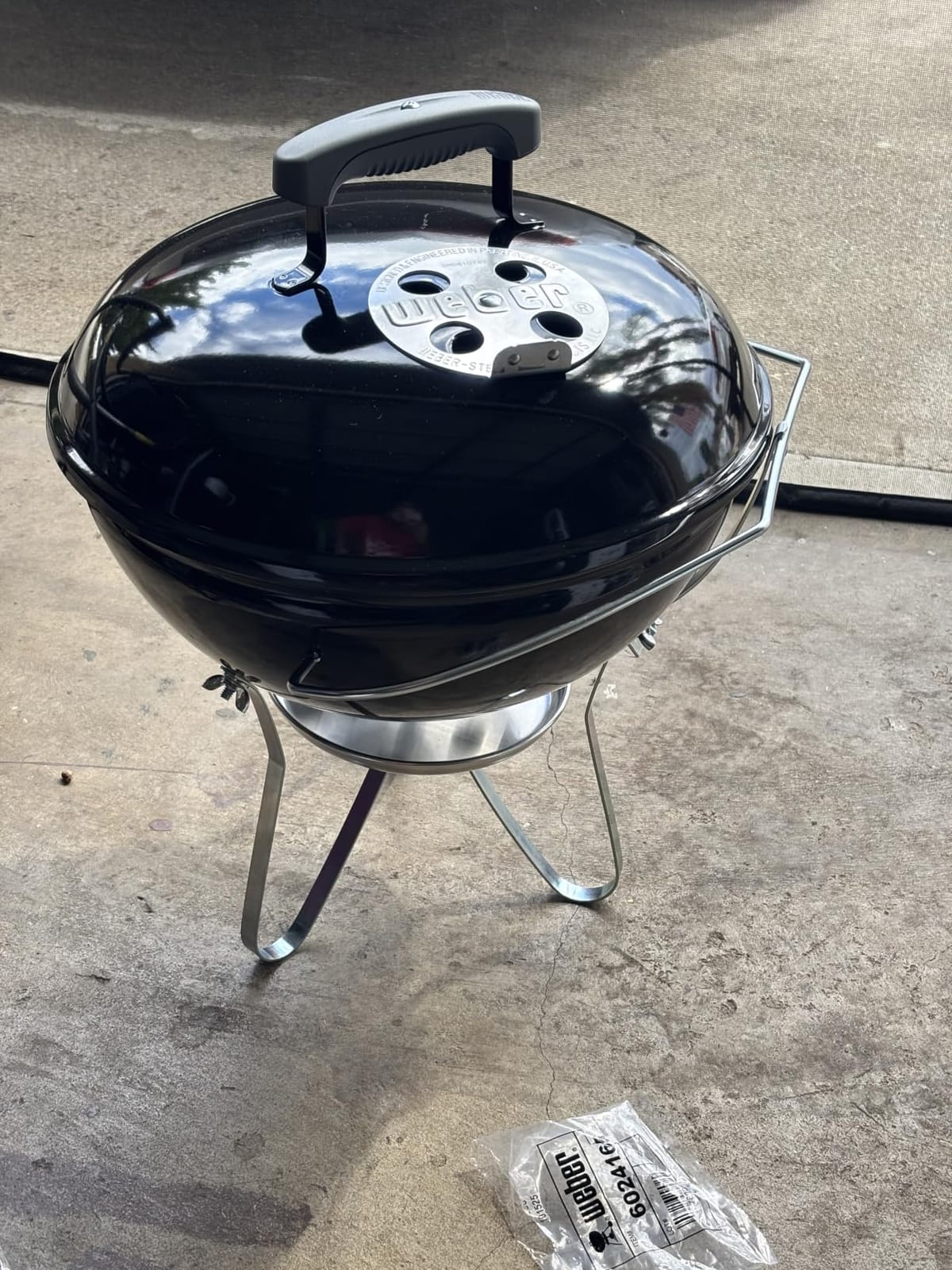
The Smokey Joe is the grill to buy if you want charcoal flavor on a boat, at a campsite or on a tiny balcony where nothing else fits. At 8.4 pounds and 16.5 by 14.2 by 17 inches it is a genuine carryable grill, and the enamel finish means it tolerates being scuffed and stacked without rusting.
The Tuck-N-Carry lid lock does double duty as a lid holder, which sounds trivial until you realise most portable grills need something improvised to keep the lid from sliding. Owners consistently praise the secure transport and the simple ash catcher, and the grill holds steady coals for a short cook without much fuss.
Rated capacity is six burgers made with a Weber burger press, which is a real and useful number rather than marketing. Think of it as a grill for a person or two rather than a family dinner.
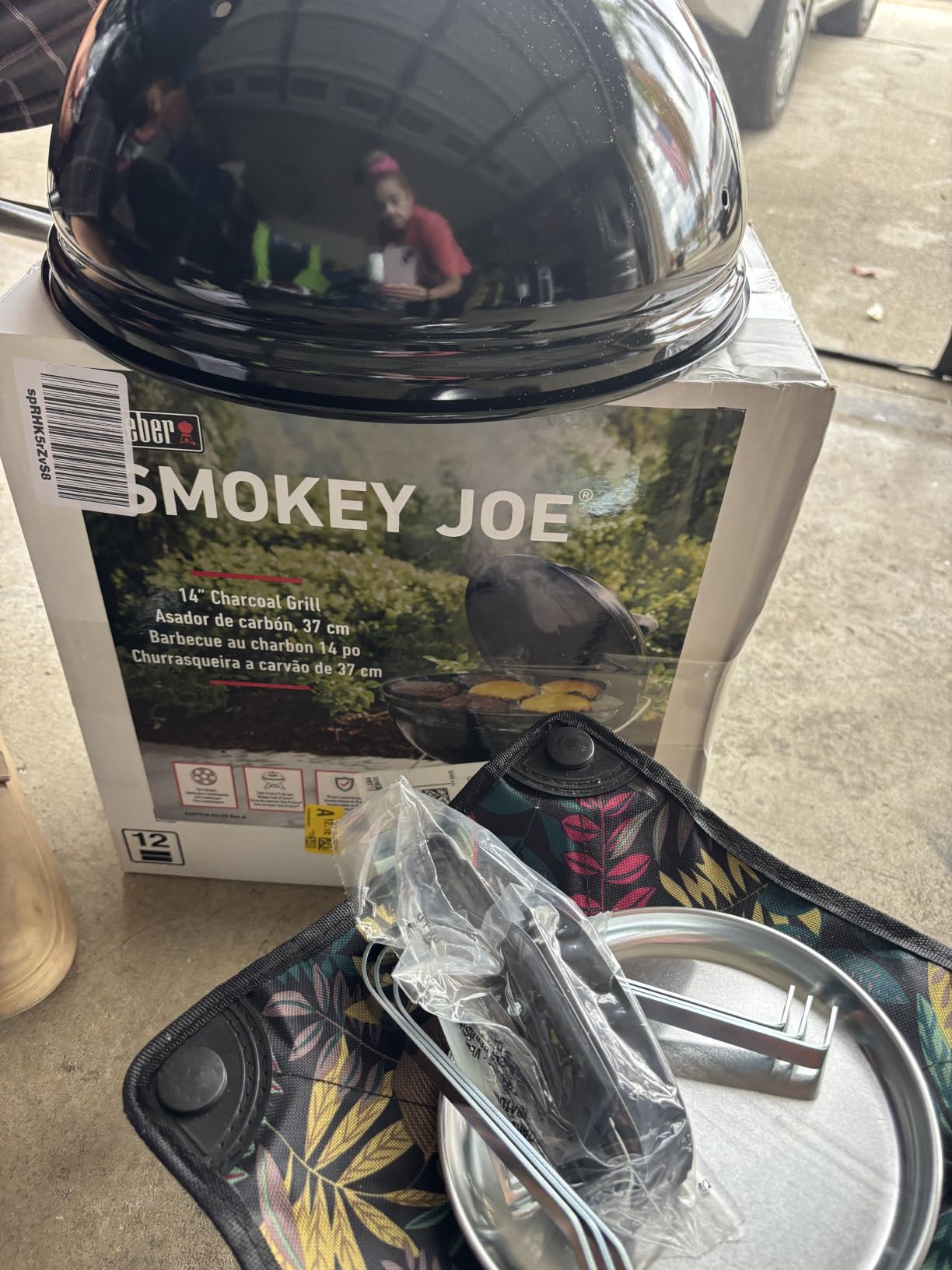
Be aware that this is a newer listing with a much smaller review base than the rest of this roundup, and treat the rating accordingly. The design is long-established and the specs line up with owners’ descriptions, but you are relying on fewer data points here than with the kettle grills.
What owners do report is consistent: the finish resists scratching, the lid lock works, and the limits are entirely about size. The grate is not built for larger cuts, and a small fuel capacity means short cook times, so this is a weeknight grill and not a smoker.
Why this grill suits a first cook
Because it removes the two biggest objections to owning charcoal at all. You do not need a yard, and you do not need to commit to a full-size grill you will be tempted to buy later. If you cook two or three times a year, this is enough grill.
The 10-year limited warranty and the enamel finish also mean it can survive a garage or a car boot far better than a painted steel portable, which matters for a grill that lives outside in a bag.
Where it falls short
It cannot cook for a family. There is no room to lay out a meal, and the fuel capacity means you are starting a new fire more often than you would like. If you are feeding four or more regularly, buy a size up.
At 8.4 pounds it is portable but not backpack-portable, so you are carrying it by hand from a car rather than hiking with it.
We earn a commission, at no additional cost to you. CERTAIN CONTENT THAT APPEARS ON THIS SITE COMES FROM AMAZON. THIS CONTENT IS PROVIDED 'AS IS' AND IS SUBJECT TO CHANGE OR REMOVAL AT ANY TIME.
7. Royal Gourmet CD1519 303 Sq In: Best Tabletop Grill for Low and Slow Cooking
Royal Gourmet CD1519 Portable Charcoal Grill with Warming Rack, 303 Sq. In.
- 303 sq in cooking area
- Porcelain-enameled wire grates
- 3-level fire grates
- Front wood door
Pros
- Adjustable coal height plus two dampers handle searing and slow cooking
- Front wood door adds fuel without losing heat
- Porcelain-enameled grates plus warming rack
- Removable ash tray
- Side handles and built-in bottle opener
Cons
- Arrives fully disassembled so assembly takes about an hour
- Heavy at 25.4 lbs for a portable unit
- Charcoal takes a while to come to temperature
We earn a commission, at no additional cost to you. CERTAIN CONTENT THAT APPEARS ON THIS SITE COMES FROM AMAZON. THIS CONTENT IS PROVIDED 'AS IS' AND IS SUBJECT TO CHANGE OR REMOVAL AT ANY TIME.
This is the grill to buy if the plan is to graduate from searing burgers to smoking something for a few hours. Three-level adjustable fire grates plus a body damper and a lid damper give you a real range of control, and owners report using the same grill for a fast sear and a long cook by moving the coal height and closing the vents.
The front charcoal access door is the detail that separates it from a simple tabletop grill. You can add wood during a long cook without lifting the lid and dropping the temperature, which is the single biggest reason beginners abandon a low-and-slow attempt halfway through. Reviewers who replaced a cheaper suitcase grill with this one single it out.
At 303 sq in it comfortably feeds a family of four, with a chrome-plated warming rack above the main grates for finishing and holding.
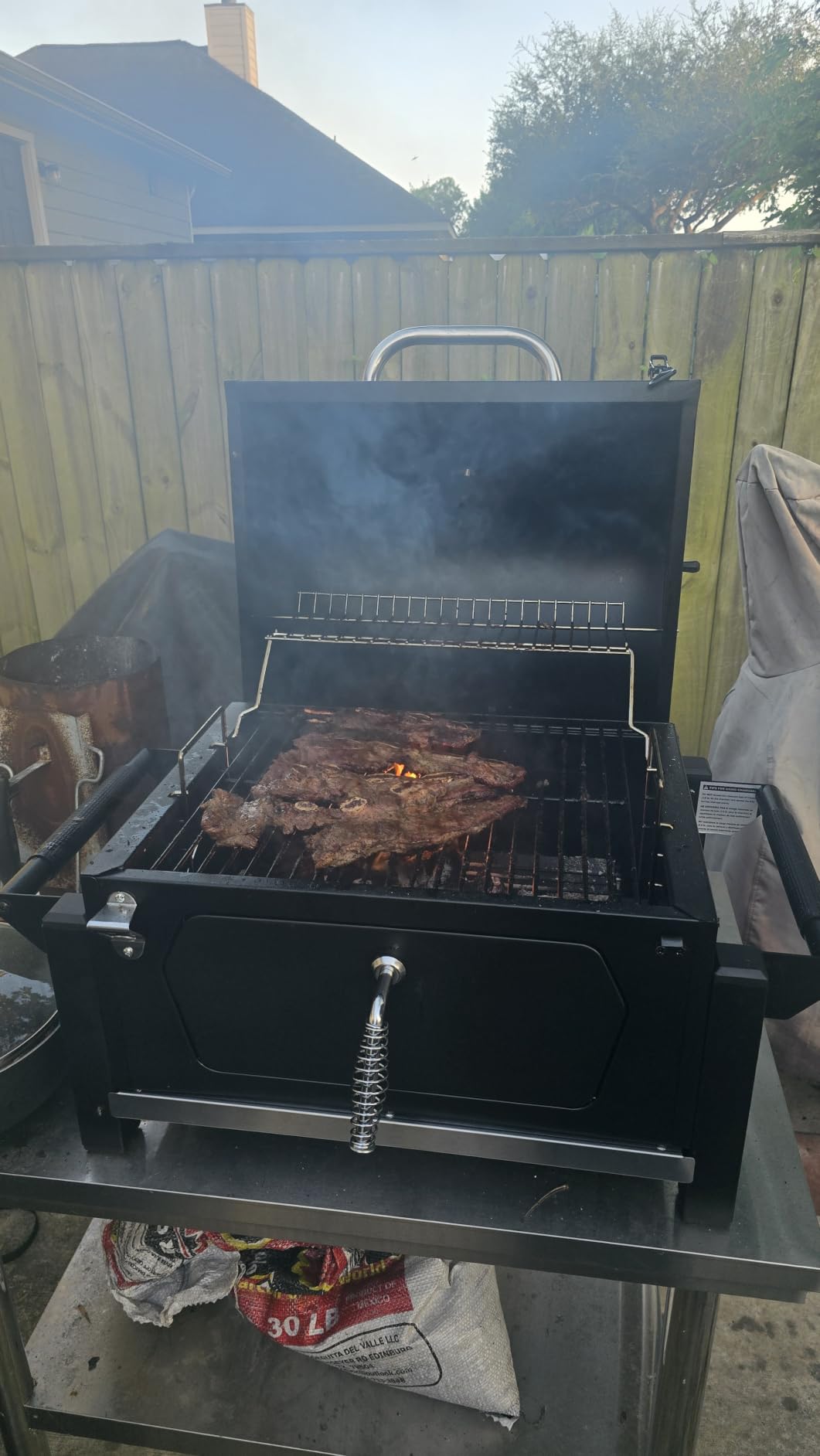
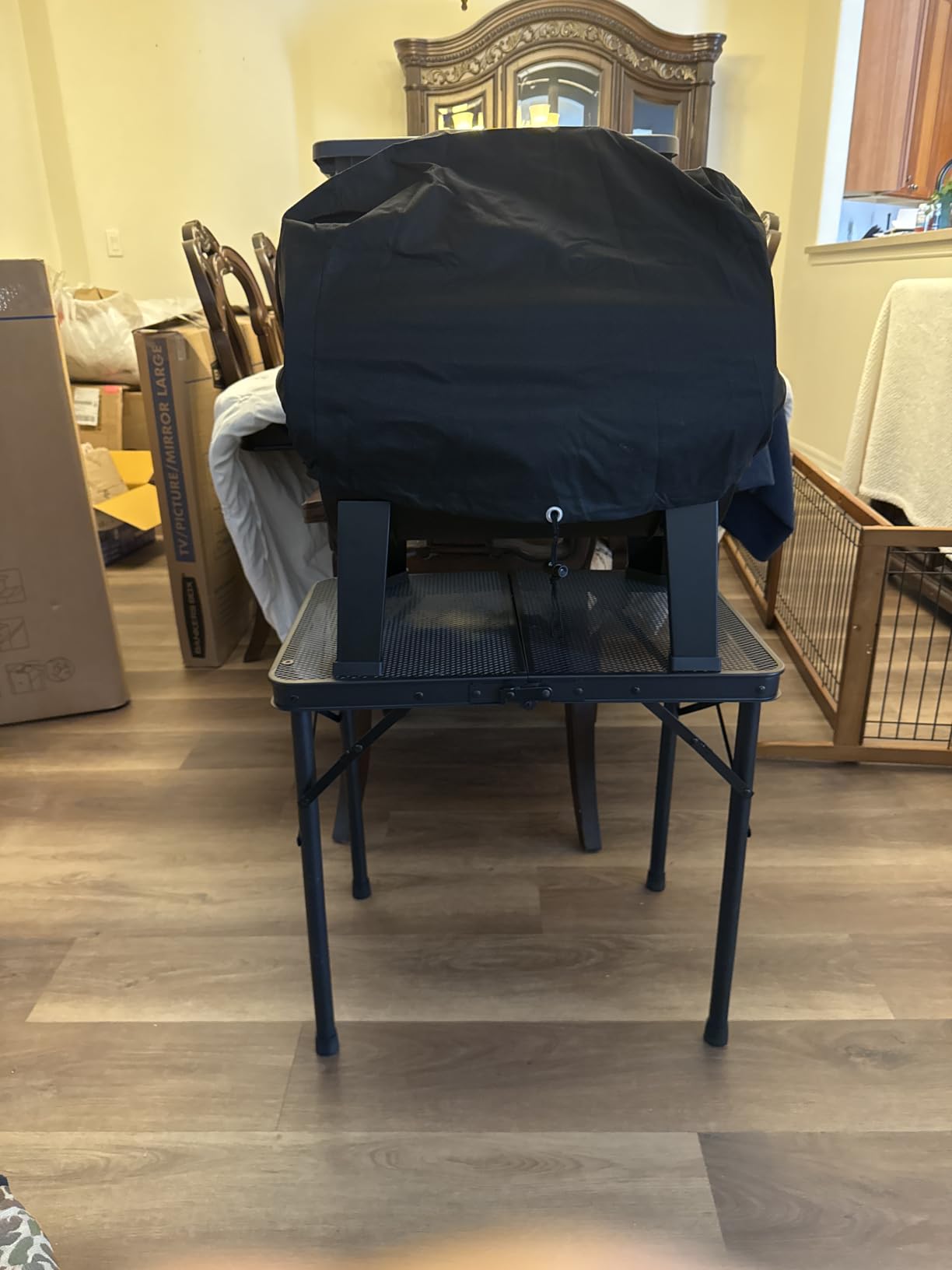
The 25.4-pound weight is the main drawback for a grill sold as portable, and the roughly 40-inch overall width means it needs a proper table rather than a folding picnic table. The side carry handles help, but plan the lift for two people.
Assembly is reported at close to an hour from the fully disassembled state, and the build quality gets positive marks for holding up through a full season and winter without rusting. One reviewer received a unit missing the lid thermometer, so check the contents against the parts list before you start.
Charcoal heat-up time is the other honest limitation. It is slower than a small kettle, so start it earlier than you think you need to and use a chimney rather than a light.
Why this grill suits a first cook
Because the control range is the skill, and this grill gives you the most levers to practise with without leaving tabletop size. Learning to drop the fire grate and close a damper is a lesson that carries straight into a kamado or a barrel.
It is also the one grill here that makes a beginner’s first long cook realistic, thanks to the access door and the removable ash tray that keeps a low fire from becoming an ash problem.
Where it falls short
The hour-long assembly is a real barrier on day one, and the weight means it is not the grill you take to a park. If your goal is genuine portability, choose a lighter design and accept less control.
The one-year warranty is short for the amount of steel involved, so treat it as a mid-term grill and cover it when the season ends.
We earn a commission, at no additional cost to you. CERTAIN CONTENT THAT APPEARS ON THIS SITE COMES FROM AMAZON. THIS CONTENT IS PROVIDED 'AS IS' AND IS SUBJECT TO CHANGE OR REMOVAL AT ANY TIME.
8. Gas One 14-Inch Portable Grill: Lightest Thing to Learn On
Gas One – 14-inch Portable Barbecue Grill with 3-Point Locking Lid for Heat Preservation – Dual Venting System – Small Charcoal Grill for Backyard, Camping, Boat
- 150 sq in cooking surface
- About 4 lbs
- 3-point locking lid
- Dual vents
- Ash catcher
Pros
- One of the lightest grills here at about 4 lbs
- 3-point lid holds heat and secures coals in transit
- Dual vents keep the fire burning steadily
- Ash catcher reduces mess
- Includes a warming rack
Cons
- Light-gauge metal bends and feels flimsy over time
- Small grate and limited charcoal capacity
- Limited heat retention compared with larger grills
- One-year warranty
We earn a commission, at no additional cost to you. CERTAIN CONTENT THAT APPEARS ON THIS SITE COMES FROM AMAZON. THIS CONTENT IS PROVIDED 'AS IS' AND IS SUBJECT TO CHANGE OR REMOVAL AT ANY TIME.
This is the cheapest way to find out whether you like the ritual. At 150 sq in and about four pounds it is the smallest cooking surface on this list, and it is a legitimate grill for one or two people rather than a toy.
Two things make it more usable than the price suggests. The 3-point locking lid traps heat and keeps coals secure when you carry it, which is the part that usually goes wrong with tiny portable grills. The dual venting system gives you enough airflow control to back a fire off once the coals are ashed over instead of choking it.
With more than 4,300 ratings it is one of the most-reviewed grills here, and the owner consensus is clear: people buy it for camping, a boat, a porch or a first taste of charcoal, and they are satisfied on those terms.
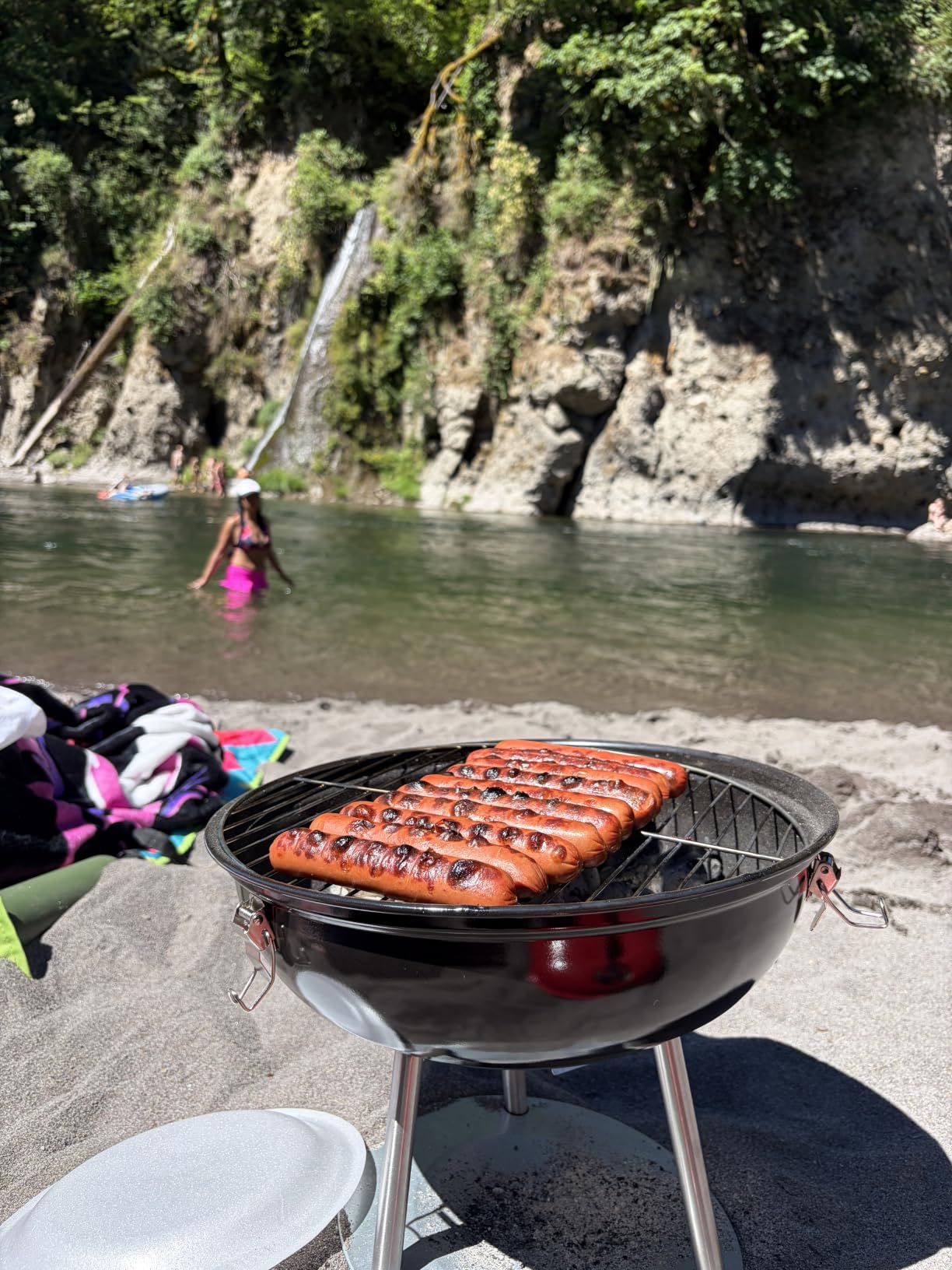
The recurring complaint is metal gauge. Reviewers describe light-gauge steel that dents or warps over time, and that is exactly the failure mode new charcoal owners regret most. It is not a safety problem, but it does mean you should treat this grill as a seasonal tool rather than something to hand down.
Heat retention is the other limit. A small firebox with a lid on will not hold temperature the way a thicker bowl does, so cooking is fast food only: steaks, sausages, vegetables and hot dogs, cooked in one session rather than managed over hours.
At 150 sq in the grate fits a few steaks or a tray of vegetables and nothing more. If you are regularly feeding a family, this is a grill to learn on, not a grill to cook on.
Why this grill suits a first cook
Because the commitment is minimal and the lesson is real. You still learn chimney starting, coal banking, vent control and ash disposal on a grill small enough to store between seasons, and if you decide charcoal is not for you, you are barely out of pocket.
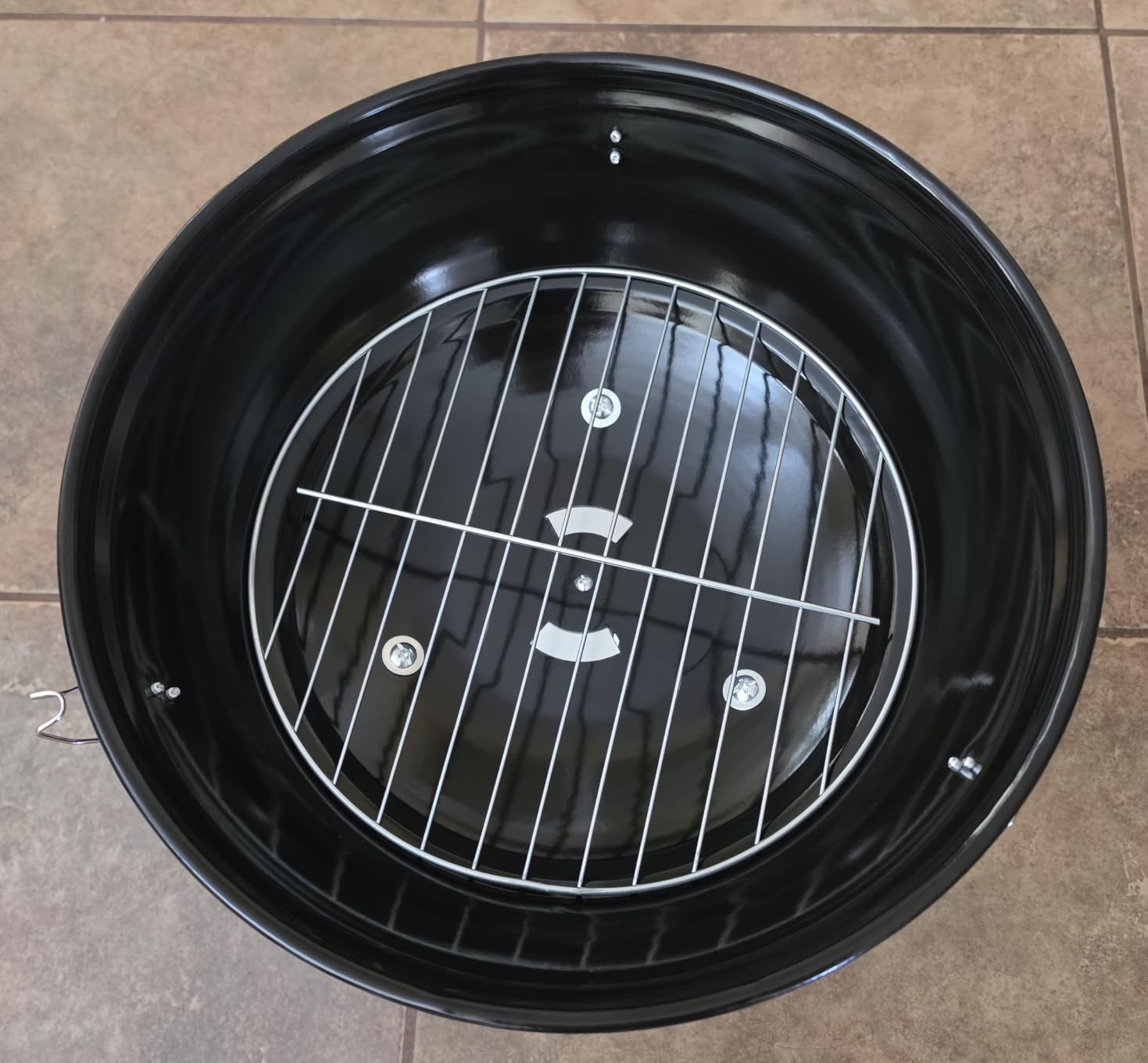
The included warming rack and the ash catcher below the firebox mean it is more thoughtfully laid out than the price suggests, and at 14.5 inches square it fits a small balcony or a boat deck.
Where it falls short
The thin-gauge metal is the deal-breaker for anyone who wants a long-term grill, and the 150 sq in grate rules out cooking for more than two people. If you expect to be out there every weekend for years, this is a stepping stone.
The one-year warranty and limited fuel capacity also mean you are buying a grill that will need replacing sooner than the kettles on this list. Buy it to learn, not to keep.
We earn a commission, at no additional cost to you. CERTAIN CONTENT THAT APPEARS ON THIS SITE COMES FROM AMAZON. THIS CONTENT IS PROVIDED 'AS IS' AND IS SUBJECT TO CHANGE OR REMOVAL AT ANY TIME.
Kettle vs Kamado vs Barrel vs Portable: Which Type to Start With
If you take one thing from this roundup, take the grill type question seriously. The reason people stall in the store is not a shortage of options, it is that kettle, kamado, barrel, portable and hibachi all look like grills and behave very differently. Settle the type first and the model choice becomes obvious.
Kettle. A round bowl with a lid and a grate over the coals. Shaped like a round bowl rather than a box, it is the easiest type to learn on, because the geometry makes two-zone fire trivial: push the lit coals to one side of a circle and you have a hot side and a cool side without any accessory. Vents are simple, ash falls straight down into a catcher, and the whole thing is one bowl you can move. Three of the eight grills here are kettles, and that is not a coincidence.
Kamado. A thick ceramic egg with heavy metal banding and precise dampers. The upside is incredible heat retention and near-perfect temperature control, which is why kamados are legendary for low and slow cooking. The downsides for a beginner are weight, cost, and a learning curve that rewards patience. A kamado is a second or third grill, not a first one.
Barrel. A horizontal cylinder on wheels with a stack on top. You get large grate area, a warming rack and real cooking height, which makes it the right shape for feeding a group. The trade is footprint, fuel consumption and assembly weight, since the lid goes on last and needs two people.
Portable and tabletop. Small bowls and boxes under 20 inches. The advantages are obvious, they are cheap, light and storable, and they are the only realistic option for a balcony, a boat or a rental. The limitation is heat mass: a small bowl cools fast, so you are cooking short food in one session, not managing a long cook.
The decision rule we would give a friend is simple. If you are cooking for two on a weeknight in a small space, buy portable. If you are cooking for a family of four on a patio, buy a kettle. If you are regularly feeding six or more, buy a barrel. If you already have a kettle and want low and slow, upgrade to a kamado.
Buying Guide: Size, Specs That Matter and What to Skip
Cooking area is the number that decides fit, and it is measured in square inches of usable grate. Use these as a guide: 150 to 240 sq in suits one or two people and short cooks. Around 300 sq in is the beginner sweet spot, which is why an 18-inch kettle at 240 sq in and a 303 sq in tabletop grill both land near that band. Above 500 sq in is for groups of six or more and rewards a warming rack.
Grate design is the second spec worth paying attention to, and the question is simple: can you add charcoal without removing the whole cooking surface? A hinged grate or a grate with a hinged section answers yes. A coil-through grate that has to be lifted out entirely means most beginners will skip refuelling mid-cook, and then they wonder why their fire died.
Vents matter more than marketing suggests. A bottom vent with real travel plus a lid vent is what lets you control temperature, and grills with a single sliding damper or a vague push-button system leave you with one lever. Cast iron grates hold heat and sear harder; porcelain-enameled or plated steel grates clean faster and do not need seasoning. For a first grill, low maintenance wins.
Ash cleanup is the spec nobody demos in the store. A removable ash catcher or ash pan, ideally with a grate that sweeps the floor, saves you from scraping a hot bowl at the end of a long evening. The Weber One-Touch system is the cleanest implementation on this list, and the plain firebox on the smallest portables is the worst.
On fuel, start with charcoal briquettes. They burn at a predictable rate, they are available everywhere, and they are forgiving of a beginner who loads too much or banks them badly. Lump charcoal burns hotter and cleaner and is worth moving to once you are controlling temperature confidently, and it is the right fuel for high-heat searing.
Charcoal versus gas is worth settling too. Gas wins on convenience and wins on low flare-ups with lean cuts. Charcoal wins on flavor, on high-heat searing, and on the fact that many people who already own a pellet or electric grill still buy one specifically to cook over flame. If you are undecided, a small portable charcoal grill costs little and answers the question.
What to skip: thin sheet metal, grills without an ash catcher, vague vents, grates too small to bank coals on, and anything that has to be assembled by one person with a lid that only fits from above. Durable and rust resistance are also worth checking, because the most common long-term regret among new owners is a grill that dents and corrodes after a few seasons of being left outside uncovered.
Your First Cook: Chimney Starter, Two-Zone Fire and Chicken Thighs
A cook that is hard to ruin still helps, and chicken thighs are ideal: forgiving of timing, better than breast on a grill, and they teach you indirect heat because you start them away from the fire and move them over at the end.
Step one is the chimney. Fill it to the brim with briquettes, light a fire starter cube in the middle, set the chimney on the lower grate with the lid off, and wait 15 to 25 minutes until the coals are ashed over with a grey coating. Starting on a full grate of charcoal and then trying to burn off lighter fluid is the single most common first-cook mistake, and it is entirely avoidable.
Step two is the two-zone fire. Pour the lit coals onto one side of the bowl only, leaving the other side empty. That empty side is your indirect zone and it is where the thighs go first. Most first-cook disasters come from a full bed of coals under everything, which is why beginners scorch food they meant to roast.
Step three is to leave the lid on. The lid traps heat and lets the lower vent pull air through the bowl; with the lid off you are just holding a barbecue. Use the lid thermometer for trends and an instant-read probe for decisions.
Step four is to give it time. Let the grill preheat for ten minutes after the coals are ashed over so the bowl and grate are hot, then place the thighs skin-side down on the indirect side, away from the coals. Cook for 25 minutes, then move them over the direct zone for the last five minutes to crisp the skin, and pull them when they read 175F in the thickest part.
Step five is to rest and to clean up. Rest the thighs five minutes while you do nothing, then empty the ash catcher into a metal container with a tight-fitting lid, put the container on a non-combustible surface away from the house, and only dispose of it once everything is cold. Do not tip hot ash straight into a bin.
Essential Accessories: Buy Now vs Buy Later
Buy these on day one: a chimney starter, a pair of long tongs, a wire grill brush, a small instant-read thermometer and a grill cover. The chimney and the thermometer are the two that change your results immediately, and everything else is basic handling. A chimney makes lighting repeatable without lighter fluid, and an external thermometer is the only way to stop guessing.
Buy these later, once you know what you need: a charcoal basket or a coal divider for cleaner two-zone fires, a heavy-duty garden hose for preheating and shutdown, a heat-resistant glove, a smoker box if you want to add wood, and a second set of grates if your grill supports a cast iron upgrade.
On a total first-year cost, a beginner should budget for the grill plus these four basics rather than the aspirational extras. The gap between a functional setup and a well-equipped one is far smaller than the gap between a cheap grill and a good one, so put the money into the grill and a thermometer first.
Maintenance, Ash Disposal and Fire Safety
Ash disposal is the part beginners genuinely do not plan for, and it is a real safety concern. Embers can stay hot enough to start a fire for more than 24 hours, so a pan of ash is not trash until it is cold. Empty it into a metal container with a tight lid, set it on concrete or bare ground away from anything combustible, and wait until it is completely cold before disposal.
Shut down properly, too. Some cooks close every vent at the end of a session because the coals look dead. They are not. Crack the lid vent and keep the bottom vent fully open so airflow finishes the burn, then confirm the coals are cold before you put the grill away or cover it.
For the body of the grill, the routine is short. Brush the grates after every cook while they are warm, wipe the bowl interior to stop ash build-up, and empty the catcher. Once a season, check the vents move freely and the damper hardware is not seized.
On thin-steel budget grills, rust is the thing to watch. Wipe the bowl dry after wet-weather cooks, keep a cover on it between seasons, and touch any surface rust early with a wire brush and a high-heat paint or enamel coating. Untreated, surface rust becomes pitting, and pitting is what ends a grill’s life.
Frequently Asked Questions
What is the best charcoal for beginners?
Charcoal briquettes are the right starting fuel for most beginners. They burn at a predictable rate, light easily with a chimney starter and are available at any grocery or hardware store, so a misjudged load of coals is far less costly than it would be with lump. Lump charcoal burns hotter and cleaner and is worth switching to once you can hold temperature confidently, especially for high-heat searing.
What type of grill is the easiest for a beginner to use?
A 22-inch kettle grill is the easiest type for a beginner. The round bowl makes a two-zone fire effortless, because you push the lit coals to one side of a circle and the empty side becomes a natural indirect zone. Vents are simple to adjust, ash falls straight down into a catcher, and the whole grill is one piece you can move. Kamados are harder to learn and barrels are harder to move.
What is the best charcoal grill starter?
The Weber Original Kettle Premium 22-Inch is the most dependable starter grill. It has a hinged grate so you can add charcoal mid-cook, a One-Touch ash catcher that empties in seconds, a porcelain-enameled bowl that resists rust, and a 10-year limited warranty with replacement parts available for decades. If your space or budget is tight, the Weber Jumbo Joe 18-Inch teaches the same technique on a smaller bowl.
What to know before buying a charcoal grill?
Check six things before you buy. One, cooking area in square inches, which decides how many people you can feed. Two, whether a hinged grate lets you add coals without removing the whole cooking surface. Three, vent quality, since a bottom vent with real travel plus a lid vent gives you temperature control. Four, ash cleanup, so look for a removable catcher or pan. Five, weight and footprint, because a grill you cannot move or store is one you will stop using. Six, warranty length and steel gauge, which are your best signals of how long it will last.
Does putting a lid on a charcoal grill make it hotter?
Yes. The lid traps heat and, more importantly, lets the lower vent pull air through the coals and up past the food, which is how a charcoal grill reaches cooking temperature. With the lid off you are mostly just holding a barbecue, and heat escapes every time you open it. Beginners should cook with the lid closed as much as possible and use the lid thermometer and an external probe to check progress instead of lifting the lid.
Should I leave the vents on my charcoal grill open or closed?
Both, and that is the throttle. Leave the bottom vent fully open to build the fire, then use the lid vent to manage temperature: partly open for direct-heat searing and closed for indirect cooking and smoking. At the end of a session, crack the lid vent and leave the bottom vent open so the coals finish burning out, because sealing a grill with live embers is a fire risk rather than a tidy shutdown.
Is it healthier to grill with charcoal or gas?
Both produce compounds you want to limit. Charcoal and gas both create heterocyclic amines and PAHs when fat drips onto flame, and both benefit from preheating the grill and keeping flare-ups under control. The practical difference is that charcoal’s open flame makes flare-ups and charring lean meat more likely, so a well-vented gas grill has an edge on low-fat cuts. Neither grill makes heavy charring good for you, whatever the fuel.
What is the 3-3-3 rule for grilling steak?
It is a timing shortcut rather than a rule. Cook the steak about three minutes per side for a medium-rare result, rest it three minutes so the juices redistribute, then slice and eat within three minutes. It works well for a thick steak at high heat on a kettle grill. Thinner cuts need less time, and the only dependable check for doneness is a probe thermometer in the thickest part.
Conclusion
The best charcoal grills for beginners are the ones that make the right thing easy rather than the impressive thing possible. The Weber Original Kettle Premium 22-Inch is the pick we would buy first, because a hinged grate, an ash catcher and a decade of available parts cover the three things that trip up new owners. The Weber Jumbo Joe 18-Inch is the same idea in a lighter, smaller bowl, and the Royal Gourmet CC1830 is the answer if you are cooking for six or more.
Start with a 22-inch kettle or an 18-inch if space is tight, add a chimney starter and a probe thermometer on day one, and learn one technique properly: bank the coals to one side and cook away from the fire first. The grill is the easy part. Everything after that is practice.