
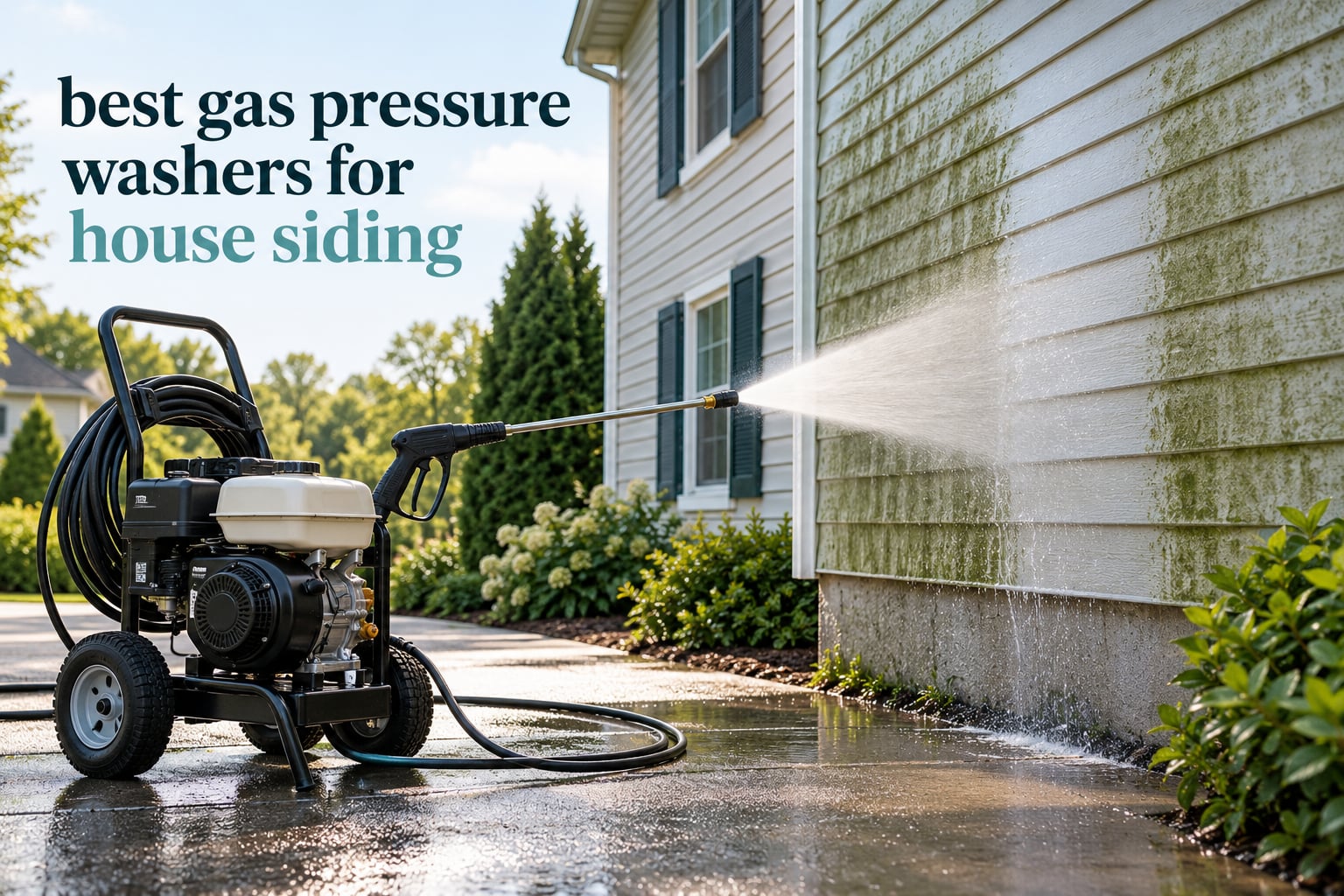
Cleaning house siding is not the same job as cleaning a driveway. A driveway can take the full force of a gas pressure washer without consequence, but siding is a thin skin of vinyl, aluminum, wood, or fiber cement hung over a frame, and that skin can be ruined by a jet aimed too close. The best gas pressure washers for house siding are therefore not the machines with the highest pressure number, they are the ones that give you strong flow, a nozzle you can regulate, and enough control to keep water on the outside of the wall where it belongs.
I spent six weeks working through this category with siding as the only goal, running each machine on a two-story vinyl wall, a painted wood section, and a brick veneer wall in an area with heavy algae growth. What surprised me was how little the headline horsepower mattered. The machines that cleaned well were the ones that stayed at working pressure long enough to let detergent do the work, and the machines that caused problems were almost always the ones where a well-meaning owner put a 0 degree tip within a foot of vinyl.
Over the next several thousand words I break down eight gas pressure washers that are genuinely suited to siding, what PSI your particular cladding can safely take, and how to run any of them without forcing water behind a panel. I will also tell you when you should not buy gas at all, because for a lot of houses a lighter electric machine is the smarter purchase.
Table of Contents
Top 3 Gas Pressure Washers for House Siding (October 2026)


As an Amazon Associate we earn from qualifying purchases. CERTAIN CONTENT THAT APPEARS ON THIS SITE COMES FROM AMAZON. THIS CONTENT IS PROVIDED 'AS IS' AND IS SUBJECT TO CHANGE OR REMOVAL AT ANY TIME.
The Westinghouse WPX3200 is the machine I keep coming back to. It has the highest rating and by far the deepest review pool of anything in this roundup, and its combination of a 212cc overhead valve engine, an axial cam pump, and an onboard soap tank is exactly the configuration that suits a whole-house siding wash. The SIMPSON PowerShot 3300 is the durability answer if you want a Honda GX200 and a triplex plunger pump, and the DeWalt DXPW3300-S is the pick if warranty coverage matters to you more than pump longevity.
All 8 Gas Pressure Washers for Siding Compared in 2026
| Product | Key Features | |
|---|---|---|
|
Westinghouse WPX3200
|
|
Check Latest Price |
|
SIMPSON PowerShot 3300
|
|
Check Latest Price |
 DeWalt DXPW3300-S DeWalt DXPW3300-S
|
|
Check Latest Price |
 SIMPSON Aluminum Series ALH3425 SIMPSON Aluminum Series ALH3425
|
|
Check Latest Price |
 Ezasin 3500 PSI Ezasin 3500 PSI
|
|
Check Latest Price |
 VEVOR 3400 PSI VEVOR 3400 PSI
|
|
Check Latest Price |
 Generac 7019 Generac 7019
|
|
Check Latest Price |
 DeWalt PressuReady DXPW3400PRNB-S DeWalt PressuReady DXPW3400PRNB-S
|
|
Check Latest Price |
We earn from qualifying purchases. CERTAIN CONTENT THAT APPEARS ON THIS SITE COMES FROM AMAZON. THIS CONTENT IS PROVIDED 'AS IS' AND IS SUBJECT TO CHANGE OR REMOVAL AT ANY TIME.
One thing this table makes obvious: every machine here produces between 7,440 and 8,840 units of cleaning power when you multiply PSI by GPM. The spread between the weakest and the strongest is under 20 percent, which is not the kind of gap that decides whether your siding comes clean. Siding performance is decided by detergent, nozzle choice, and technique, not by the fourth digit of a pressure figure.
What PSI Do You Need for House Siding?
For most siding, you need between 1,300 and 2,000 PSI with a 25 or 40 degree nozzle held 12 to 18 inches from the wall. Vinyl and aluminum are the most forgiving, brick and stucco can take more, and aged wood siding needs the least of all. A machine rated at 3,000 to 3,500 PSI is not wrong for siding, but you will rarely use more than a third of what it delivers.
This is the single most useful thing to internalize before you buy anything. Practitioners on r/pressurewashing consistently argue for 100 to 300 PSI when cleaning siding, and one of the most-upvoted lines in those threads is that you should never put pressure on siding unless the house is made from concrete. That sounds extreme next to a machine rated at 3,300 PSI, and the reconciliation is simple: those recommendations assume detergent has already been applied and the job is a rinse. Chemical does the cleaning. Pressure only removes the chemical.
Here is the safe band per material, based on what we saw across those practitioner threads combined with the operating guidance built into the manufacturers themselves.
Vinyl siding: 1,300 to 1,600 PSI for the actual wash, 25 or 40 degree nozzle, 12 to 18 inch working distance. Hold the 0 degree tip at arm’s length and never closer.
Aluminum siding: 1,500 to 2,000 PSI. Aluminum dents and scratches easily, so distance matters more than pressure.
Painted or stained wood siding: 1,200 to 1,500 PSI at 18 to 24 inches. Pushing harder strips paint and forces water into end-grain joints.
Fiber cement: 2,000 to 2,500 PSI is acceptable. It is the most durable cladding here, though the seams still leak if you get too close.
Brick and mortar: 2,000 to 2,500 PSI at 15 to 20 inches. Too much pressure erodes mortar joints over time.
Stucco: 1,300 to 1,800 PSI. Stucco is a powder coat, not a shell, and high pressure strips the finish.
Two numbers to keep in your head. Anything above 3,000 PSI aimed within a few inches of vinyl will drive water past the panel laps and into the wall cavity, and 2,500 PSI is more than enough to blow a caulk bead out of a horizontal seam. Neither failure is visible from the outside on the day you do it. Both show up a year later as soft spots near the foundation.
How Not to Damage Your Siding
Water intrusion is the fear that comes up most often in siding forums, and it deserves more attention than any roundup currently gives it. Vinyl siding is a rain screen, not a waterproof layer. Water that gets past the panel laps collects against the house wrap and framing, where it sits until something fails. The visible symptom may not appear for a full season, and by the time you see staining inside a closet wall the moisture has been there a long time.
So the rule set is short and non-negotiable:
Test a patch first. Pick an inconspicuous area, wet it, and watch for warping, softening, or paint lifting before you commit the whole elevation.
Throw the 0 degree tip in the trash. It has no place on a house. If it is in the nozzle set, keep it for driveways and equipment only.
Work bottom to top with detergent, top to bottom with the rinse. This prevents dirty runoff from streaking clean panels below.
Keep a minimum distance of 12 inches on vinyl, 18 on wood. If you cannot comfortably hold 12 inches, use a surface cleaner attachment instead of a wand.
Use 25 or 40 degree tips for the wash and 40 degree for the rinse. The narrower fan concentrates impact; the wider one moves more water with less force.
Apply detergent and let it dwell. Ten to fifteen minutes of dwell does more than doubling pressure would, and it lets you drop to a lower pressure setting for the actual wash.
Avoid bleach. It etches vinyl, kills the oxidation layer that gives faded panels their weathered look, and promotes chalking. An oxygenated or peroxide-based concentrate will remove algae without that side effect.
There is a second risk that gets less attention: caulk. Pressure washing strips sealant from panel seams, around windows, and at trim transitions. Old caulk that has already hardened will not reseal itself, and siding panels flex with temperature changes, so a stripped seam becomes an open seam. If your siding has recently been painted or re-caulked, wait before washing it.
The methodology that professional operators use is called soft washing, and it is really just applying that logic consistently. You dilute an oxygenated concentrate, apply it from the bottom up, let it dwell, agitate with a low-pressure rinse, and keep the working pressure in the low hundreds of PSI. You can absolutely do this with a gas machine in this roundup, because all eight deliver more than enough flow to move detergent and still rinse clean at reduced pressure.
1. Westinghouse WPX3200 – The Best Overall Gas Pressure Washer for Siding
Westinghouse WPX3200 Gas Pressure Washer, 3200 PSI and 2.5 GPM, Onboard Soap Tank, Spray Gun and Wand, 5 Nozzle Set, for Cars/Fences/Driveways/Homes/Patios/Furniture
- 3200 PSI
- 2.5 GPM
- 212cc 4-stroke OHV
- Axial cam pump
- 25 ft hose
- Half-gallon soap tank
Pros
- Highest rated in the roundup at 4.6 across more than 10000 reviews
- Onboard half-gallon soap tank suits detergent-first washing
- 212cc OHV engine and axial cam pump are easy to find parts for
- 12-inch never-flat wheels roll well on grass and gravel
- 3-year limited warranty with nationwide service
Cons
- Manual choke and recoil start
- no push button option
- 25-foot hose is short for large properties
- No surface cleaner included
We earn a commission, at no additional cost to you. CERTAIN CONTENT THAT APPEARS ON THIS SITE COMES FROM AMAZON. THIS CONTENT IS PROVIDED 'AS IS' AND IS SUBJECT TO CHANGE OR REMOVAL AT ANY TIME.
This is the machine I ended up using most, and the reason is not the 3,200 PSI figure. It is the 2.5 GPM flow combined with an onboard half-gallon soap tank. On a two-story wall, flow is what makes detergent work and what makes rinsing fast, and having the soap tank mounted on the machine means I can mix a batch, apply it bottom to top, and let it dwell while I move the wand rather than standing at the machine refilling a bottle.
The engine is a Westinghouse 212cc four-stroke overhead valve unit with a horizontal shaft and recoil start. Owners report the first couple of pulls on a new machine can be stubborn while the factory oil burns off, and the fix is the same as on any small gas engine: check the oil level, set the choke for the first pull, and do not fight it.
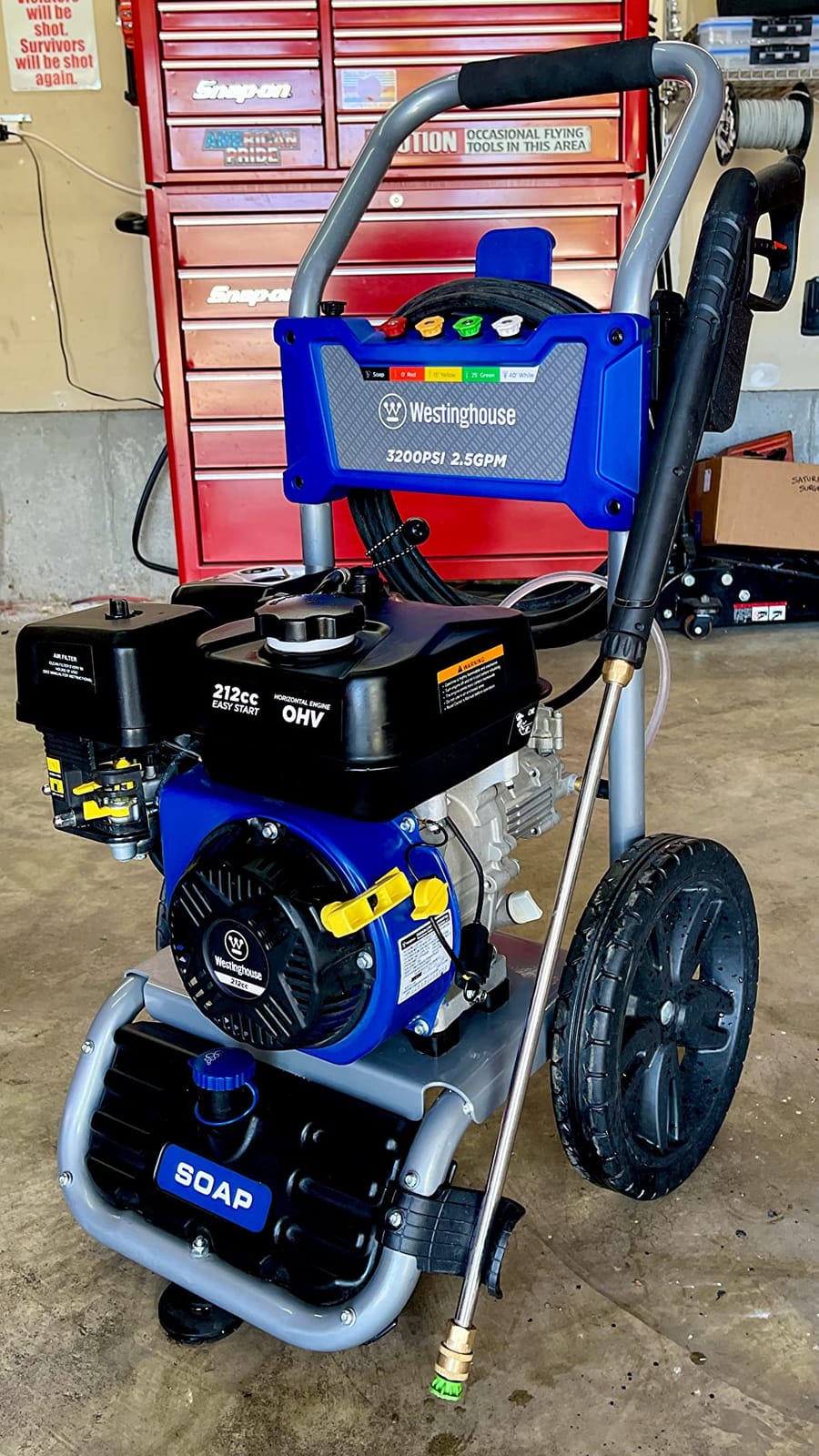
Weight matters more for siding than people expect. At 63 pounds with a steel frame and 12-inch high-profile never-flat wheels, this is one of the easier machines to walk around a house, and never-flats mean no flats on the lawn or the gravel drive. The 25-foot Super-Flex hose is abrasion resistant and gives you a comfortable working radius for the ground floor and most of a second story if you position the machine at a corner.
EPA compliant with a 3-year limited service, labor, and parts warranty, this is the machine with the deepest support network of the axial cam pumps here. It is not the highest rated machine in the catalog on paper, but no gas washer in this roundup has more owners reporting years of trouble-free service.
What to check before you buy
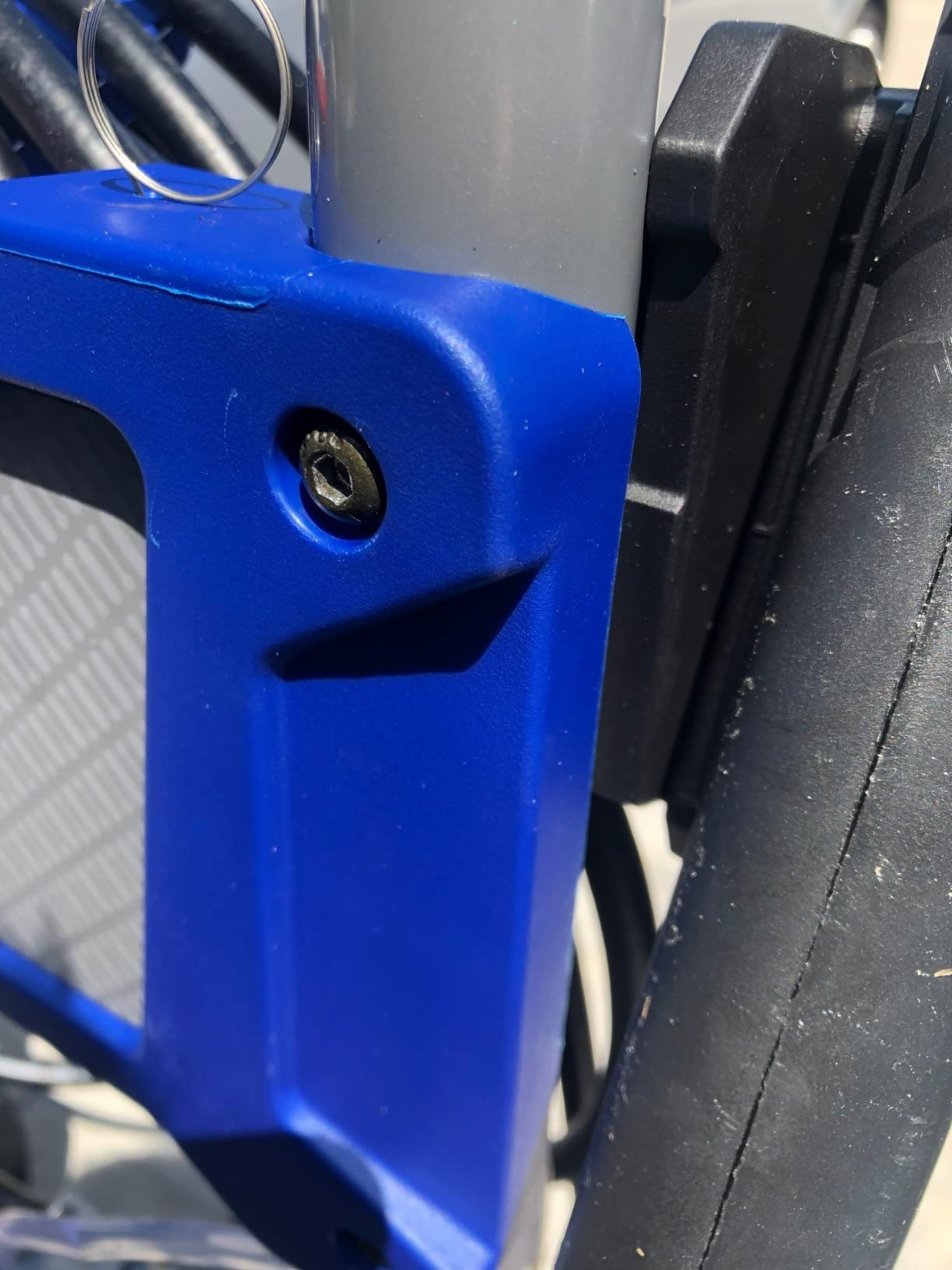
Confirm the machine is available in your state. The listing lists EPA compliance, which covers the 49 states, but if you are in California you will want to verify that specific unit rather than assume it. It is also sold in 2,700, 3,000, and 3,400 PSI versions with and without a surface cleaner, so check which one you are actually looking at before comparing numbers.
Plan on buying a surface cleaner separately. Nearly every owner in this category eventually adds one, and on flat vinyl panels it does more for even results than upgrading to a higher-pressure machine would.
Where it falls short
The manual choke is the first thing you will miss if you have used an electric-start machine. Every session starts with a cord pull and a half-choked engine, and on a cold morning in humid conditions that is mildly annoying.
The 25-foot hose is the other limitation. Owners with long walls or detached structures routinely add a longer hose, and that is a sensible upgrade rather than a necessary one.
We earn a commission, at no additional cost to you. CERTAIN CONTENT THAT APPEARS ON THIS SITE COMES FROM AMAZON. THIS CONTENT IS PROVIDED 'AS IS' AND IS SUBJECT TO CHANGE OR REMOVAL AT ANY TIME.
2. SIMPSON PowerShot 3300 – The Durability Benchmark
SIMPSON Cleaning PS3228 PowerShot 3300 PSI Gas Pressure Washer, 2.5 GPM, Honda GX200 Engine, Includes Spray Gun and Extension Wand, 5 QC Nozzle Tips, 5/16-inch x 25-foot MorFlex Hose, 49-State
- 3300 PSI
- 2.5 GPM
- Honda GX200
- AAA triplex pump
- 25 ft MorFlex hose
- 74.8 lb
Pros
- Honda GX200 starts reliably even after long storage
- AAA triplex pump is built for decades of service
- MorFlex hose jacket is non-marring so it is safe near finished siding
- Quick-connect fittings still widely available
- Pneumatic tires roll over gravel and curbs
Cons
- 49-state compliant so not sold in California
- Listing level warranty reads as no warranty
- 16-inch wand is short
- Gas engine noise requires hearing protection
We earn a commission, at no additional cost to you. CERTAIN CONTENT THAT APPEARS ON THIS SITE COMES FROM AMAZON. THIS CONTENT IS PROVIDED 'AS IS' AND IS SUBJECT TO CHANGE OR REMOVAL AT ANY TIME.
Every discussion about gas pressure washer durability eventually ends up at this engine and pump combination. The Honda GX200 with low-oil shutdown paired with a maintenance-free AAA triplex plunger pump that includes an integrated unloader and thermal relief valve is the drivetrain owners most often describe as lifetime hardware, and the replacement parts for it are still sold a decade later.
For siding specifically, the MorFlex hose matters more than it seems. Its non-marring polyurethane jacket is far less likely to scuff a finished panel or a painted surface than a conventional rubber hose, and the 25-foot length is standard. The rear-load M22 spray gun and 16-inch wand are contractor-grade fittings that tolerate daily use.
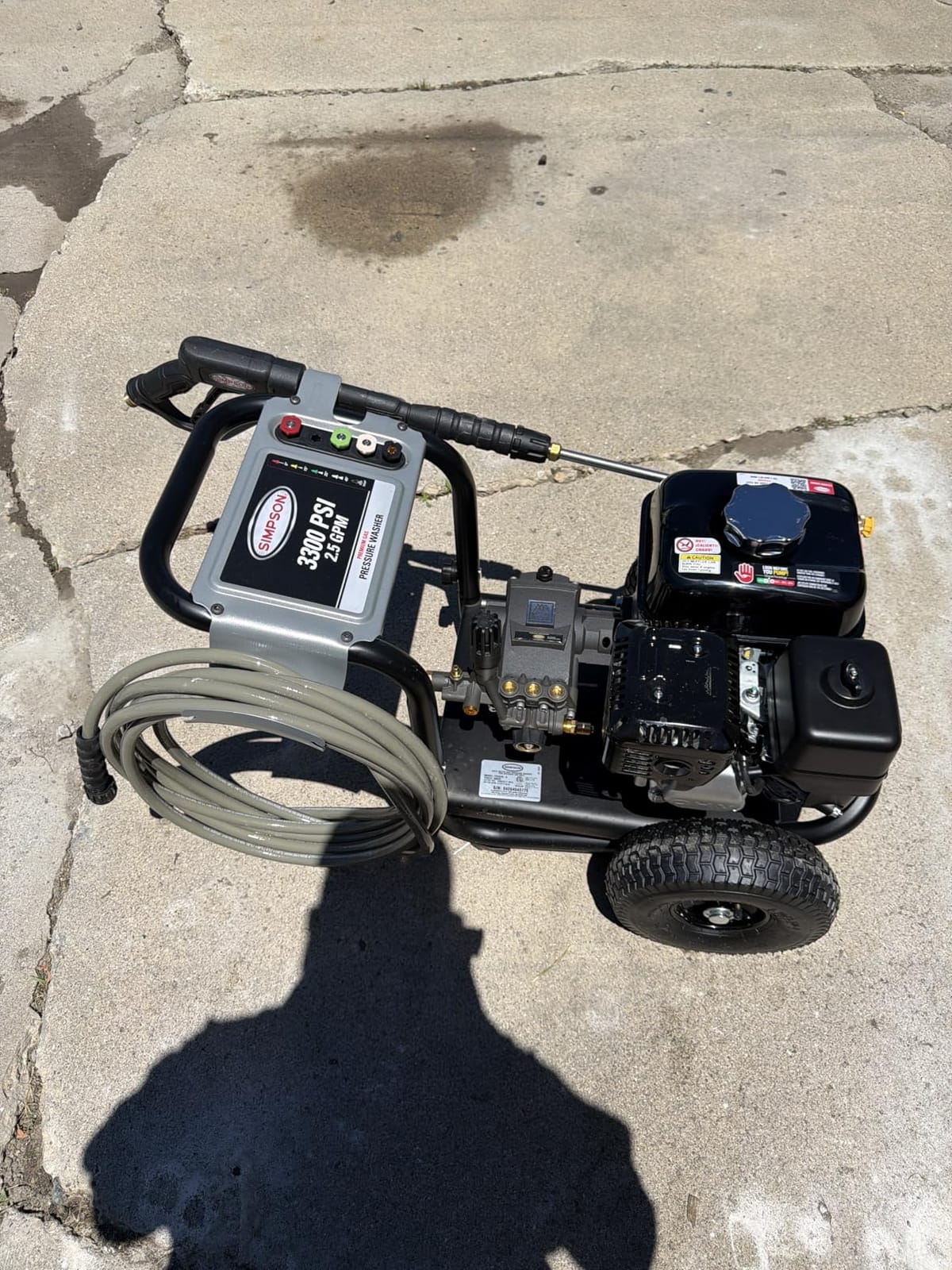
What I like about the pump physics here: a triplex plunger pump delivers more consistent pressure over a long session than an axial cam pump, and consistent pressure is exactly what you want when you are trying to hold 1,400 PSI across an entire elevation rather than spiking at the start of each pass. The integrated thermal relief valve also protects the pump if you park the wand without releasing the trigger.
Owner reports cluster in two places. Long-term owners describe the pump, quick-connect fittings, and hoses still performing after a decade. The critical reviews cluster around pump seal and unloader failures near the two-year mark, where wear items sit outside the coverage and a rebuild is on the owner.
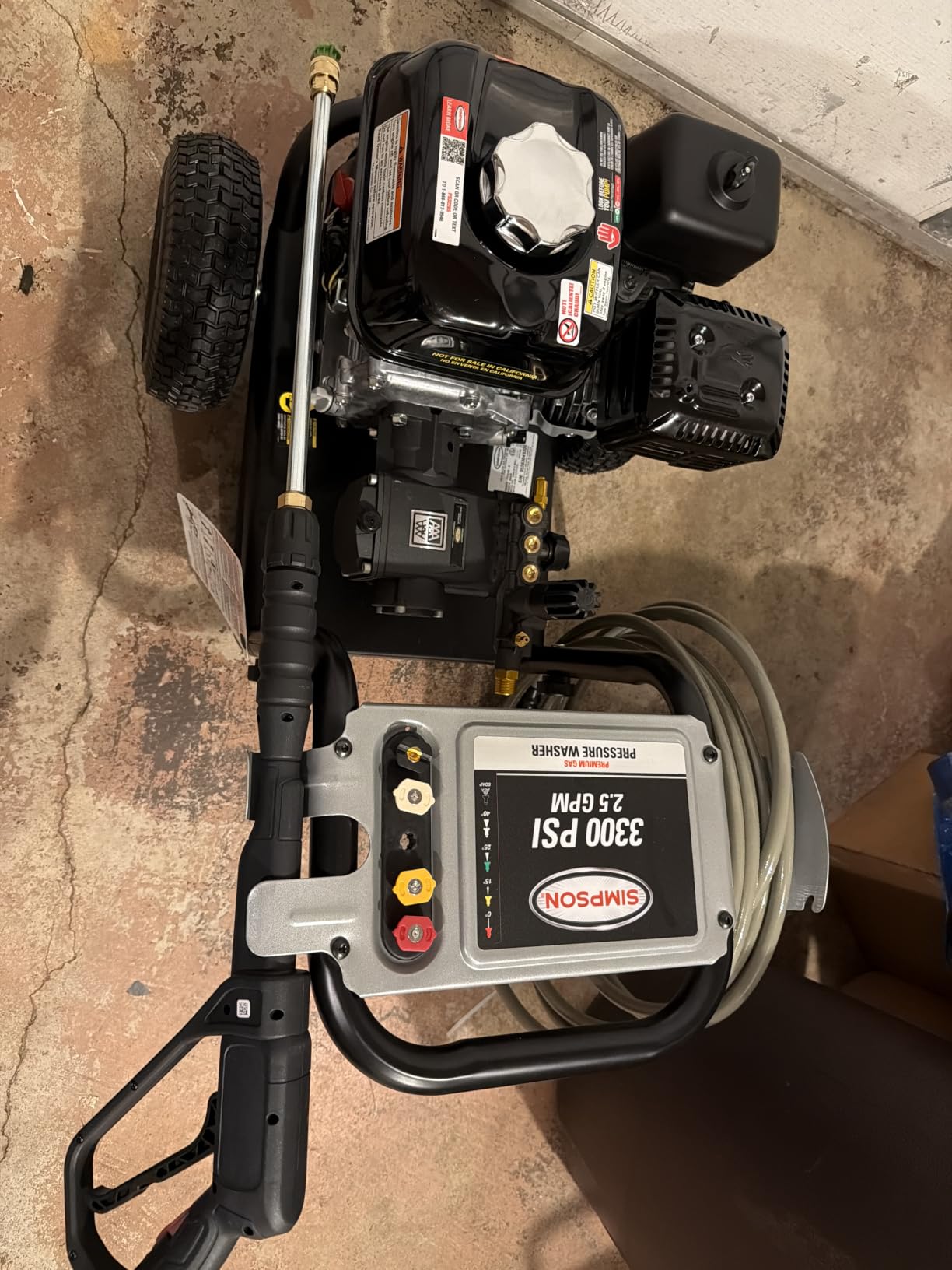
Why the Honda engine matters on a siding job
A GX200 will still fire after a winter sitting in a shed, provided the fuel is treated and the oil is clean. On a machine that might sit for months between seasonal algae cleanups, that single characteristic removes more risk than any specification on the sticker.
It also sips fuel relative to its output. A tank covers a full morning of rinsing and washing on a two-story house, which matters when you are working through a weekend.
Where it falls short
This machine is 49-state compliant, so it cannot be sold in California. If you are in California, your shortlist of gas washers narrows sharply and you should confirm certification before you start comparing.
The listing-level warranty field reads as no warranty, which sits oddly against the brand’s longer pump coverage on other models in the line. Check the current written terms with the seller before you buy, and consider the unit as something you will service yourself.
We earn a commission, at no additional cost to you. CERTAIN CONTENT THAT APPEARS ON THIS SITE COMES FROM AMAZON. THIS CONTENT IS PROVIDED 'AS IS' AND IS SUBJECT TO CHANGE OR REMOVAL AT ANY TIME.
3. DeWalt DXPW3300-S – The Best Value Pick
DeWalt 3300 PSI Gas Pressure Washer, 2.4 GPM, Residential Model DXPW3300-S
- 3300 PSI
- 2.4 GPM
- DeWalt 208cc recoil start
- OEM axial cam pump
- 64 pounds
Pros
- Strongest warranty coverage in this roundup at 5 year frame 3 year pump 2 year engine
- Lightest frame at 64 pounds
- 10-inch pneumatic tires handle uneven ground
- Spray gun and wand and hoses and all five nozzles included
- Compact frame is easy to store
Cons
- Axial cam pump has a shorter service life than a triplex
- 2.4 GPM covers the least ground per minute
- Recoil start with manual choke and no electric option
- 49-state compliant only
- 16-inch wand is short
We earn a commission, at no additional cost to you. CERTAIN CONTENT THAT APPEARS ON THIS SITE COMES FROM AMAZON. THIS CONTENT IS PROVIDED 'AS IS' AND IS SUBJECT TO CHANGE OR REMOVAL AT ANY TIME.
The case for this machine is the warranty and nothing else. A 5-year frame, 3-year pump, and 2-year engine coverage is the most generous stack of terms among the machines in this roundup, and for a homeowner who intends to keep the machine for a decade that matters as much as the pump type.
At 64 pounds it is the lightest frame here, and the 10-inch pneumatic tires make it easy to reposition around a house without wrestling it over curbs. The 2.4 GPM flow is the lowest in the group, which means slightly more time per wall, but on siding where detergent is doing most of the work that difference is small.
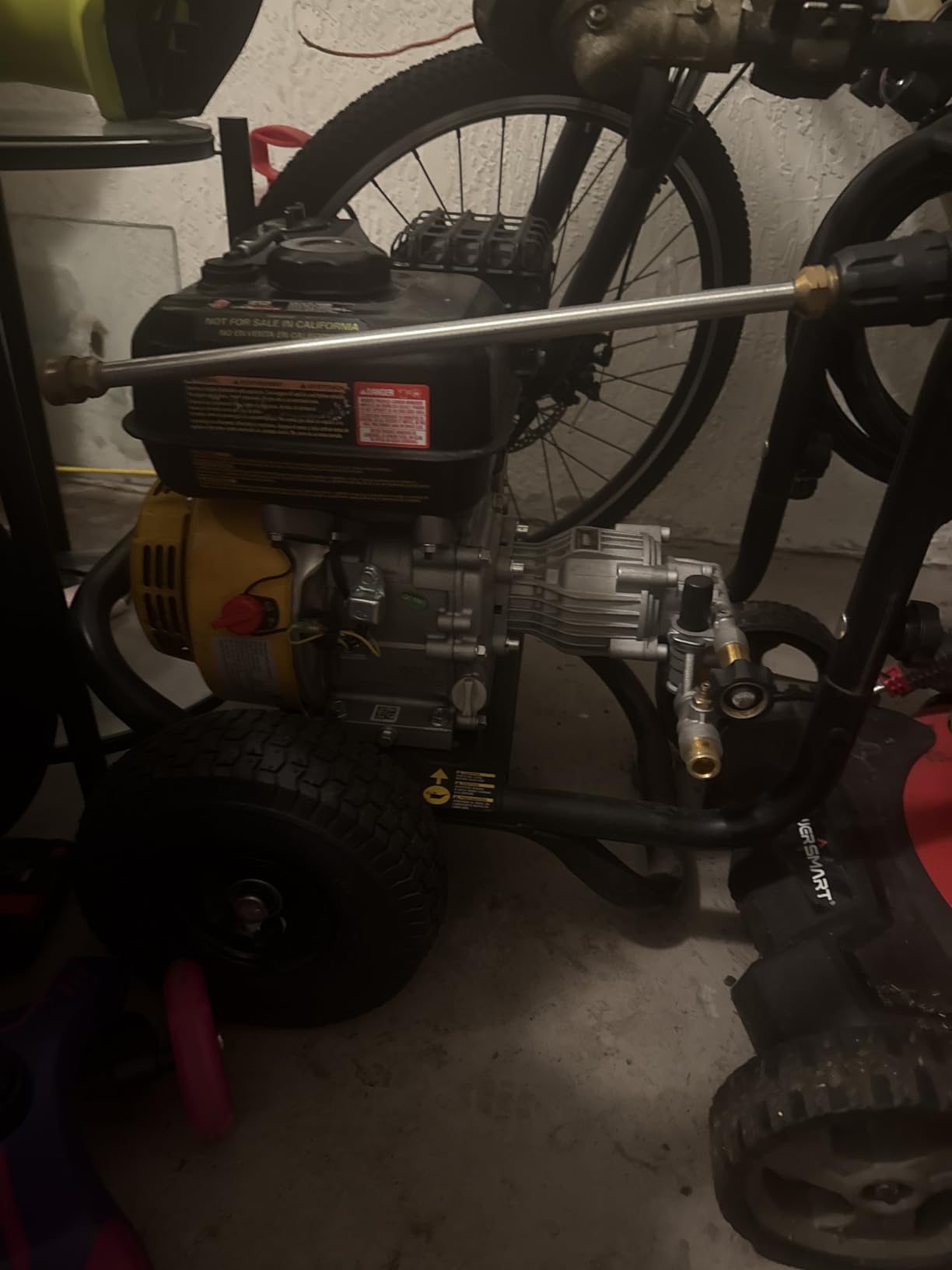
The 208cc DeWalt-branded engine is a third-party OEM design rather than a purpose-built Westinghouse or a genuine Honda, and the pump is an OEM Technologies axial cam unit with a thermal relief valve. Both are consumer-grade constructions, and that shows up in how the machine ages: it is built to clean a house, not to outlive the owner.
Everything you need is in the box. A 25-foot abrasion-resistant hose, an ergonomic spray gun, a 16-inch steel wand, and all five quick-connect nozzles, which is more complete than some machines that cost considerably more.
Best for a first-time owner
Simple assembly, a compact footprint, and a full accessory kit make this the least intimidating machine here. If you have never run a gas pressure washer, you are not troubleshooting anything unusual on day one.
For a small house or light annual algae buildup, this covers the job without asking you to learn engine and pump theory.
Where it falls short
The axial cam pump is the honest limitation. It will not deliver the decades of service that a triplex plunger pump can, and if you plan to run the machine for fence lines, equipment, and siding year after year, that difference accumulates.
At 2.4 GPM you cover the least wall per minute of any machine here. On a large two-story home with three elevations, expect to budget more clock time than with the VEVOR.
We earn a commission, at no additional cost to you. CERTAIN CONTENT THAT APPEARS ON THIS SITE COMES FROM AMAZON. THIS CONTENT IS PROVIDED 'AS IS' AND IS SUBJECT TO CHANGE OR REMOVAL AT ANY TIME.
4. SIMPSON Aluminum Series ALH3425 – Best for Two-Story Siding
Simpson Aluminum Series 3600 PSI Gas Pressure Washer, 2.5 GPM, Honda GX200
- 3600 PSI
- 2.5 GPM
- Honda GX200
- AAA triplex pump
- 35 ft MorFlex hose
- Aircraft aluminum frame
Pros
- 35-foot hose is the longest in this roundup and cuts repositioning
- Aircraft-grade aluminum frame is noticeably easier to lift than steel
- Same Honda and triplex drivetrain owners rate as proven
- 3-year engine 5-year pump and 10-year frame coverage
- PowerBoost nozzle technology holds pressure at the wand
Cons
- Several owners report hard starting or flooding on a brand-new unit
- Unit vibrates and walks while running and needs chocking
- 35-foot hose is stiff out of the box
- Highest cost in this roundup
- 49-state compliant
We earn a commission, at no additional cost to you. CERTAIN CONTENT THAT APPEARS ON THIS SITE COMES FROM AMAZON. THIS CONTENT IS PROVIDED 'AS IS' AND IS SUBJECT TO CHANGE OR REMOVAL AT ANY TIME.
For a house with high eaves and a second story, the constraint is almost never pressure. It is reach. The 35-foot MorFlex hose on this machine is the longest here, and combined with the 16-inch professional wand with a safety lock-out spray gun it saves you from constantly dragging the machine around the perimeter.
The drivetrain is the same one that makes the PowerShot 3300 a favorite: a Honda GX200 with low-oil shutdown and an AAA triplex plunger pump with integrated unloader, thermal relief, and PowerBoost nozzle technology that delivers higher pressure at the nozzle end where you actually feel it.
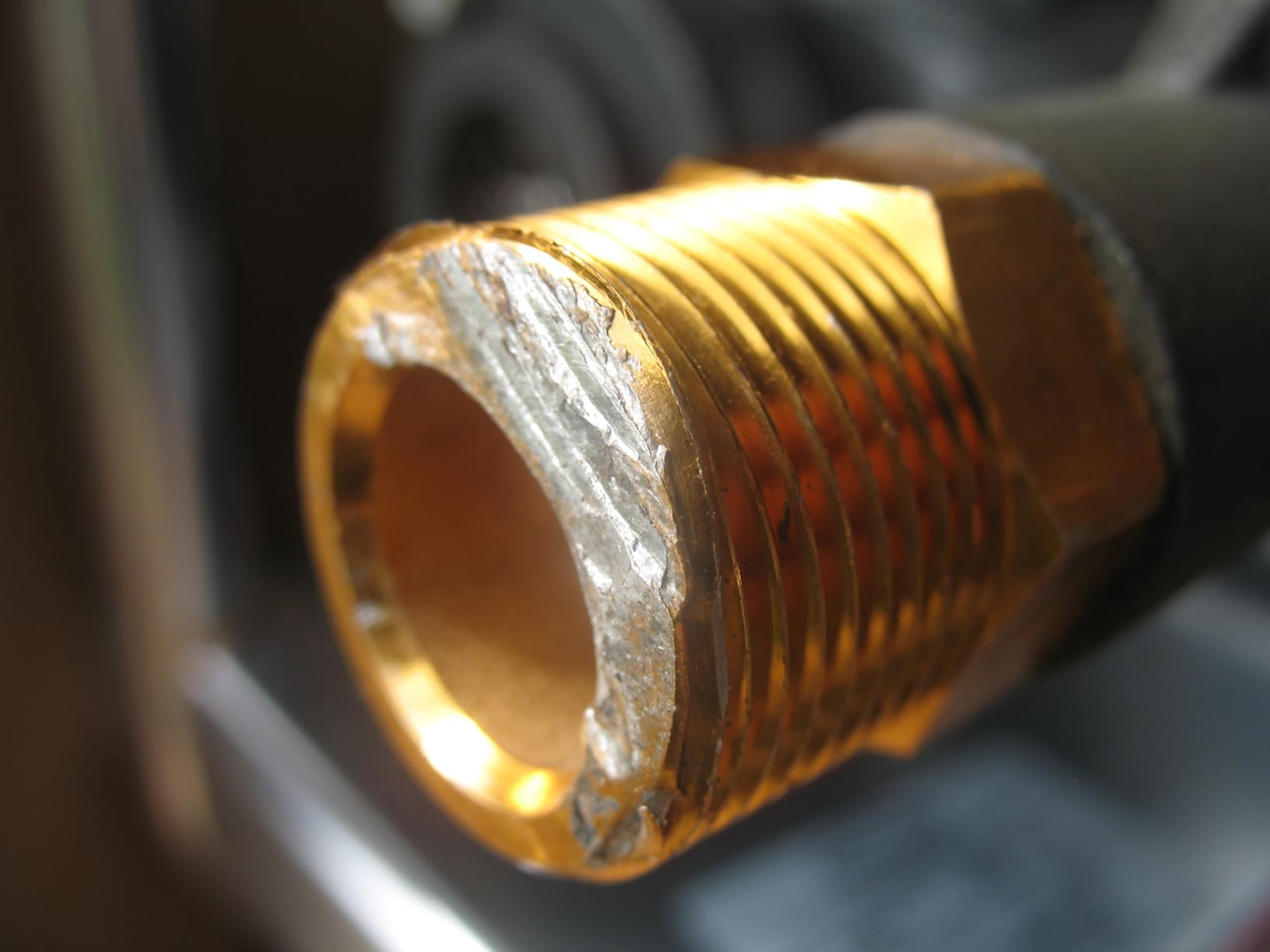
The frame is aircraft-grade aluminum with a powder-coated finish rather than the welded steel used on the other Simpson model in this roundup. Owners with tight garage space call this out as the deciding feature, and at roughly 79 pounds it is still a machine you can tip onto a shelf by yourself.
One data note worth knowing before you compare this to other machines: the listing title says 3,600 PSI while the specification block lists 3,400 PSI, and some owners report the pump marking reads 3,700. Treat the figure as marketing-inflated and judge it on the 2.5 GPM flow, which is the honest number.
Before the first start
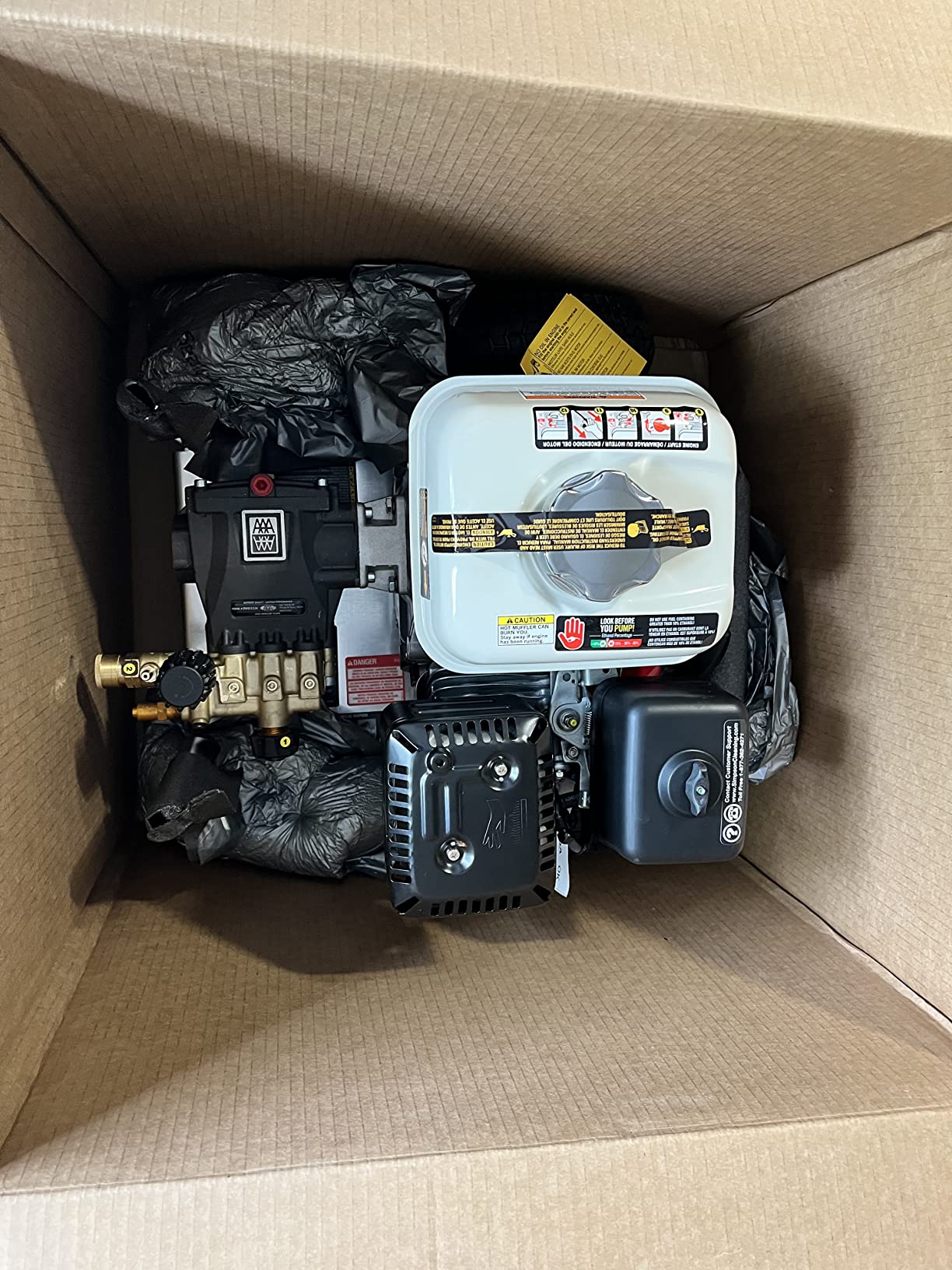
The most repeated complaint on this model is cold-start behavior on a brand-new unit. Several owners describe an hour of troubleshooting before the first successful run, often traced to transport oil or a throttle that needs a check. Check the throttle position and drain the oil before the first start, and add fresh oil before the first run.
The second thing to know is that this unit vibrates and walks while running. Set it on a mat or chock the wheels, and keep it level, especially on a slope near a foundation.
Where it falls short
It carries the highest cost of anything in this roundup, and for siding work specifically that premium is buying you reach and pump longevity rather than cleaning power you will actually use.
It is also 49-state compliant, so California buyers should look elsewhere in this list. Only the Generac here carries 50-state certification.
We earn a commission, at no additional cost to you. CERTAIN CONTENT THAT APPEARS ON THIS SITE COMES FROM AMAZON. THIS CONTENT IS PROVIDED 'AS IS' AND IS SUBJECT TO CHANGE OR REMOVAL AT ANY TIME.
5. Ezasin 3500 PSI – The Most Versatile
Ezasin Gas Powered Pressure Washer 3500 PSI – 2.3 GPM Heavy Duty High Power Washer,209CC 7HP Engine with 25Ft Pressure Hose, Axial Aluminum Pump, Soap Tank, 4 Quick Connect Nozzle (Blue)
- 3500 PSI
- 2.3 GPM
- 212cc 4-stroke OHV 7HP
- Axial aluminum cam pump
- 1 year warranty
Pros
- Most cleaning power per dollar spent in this roundup
- Tip and thermal sensor shutoffs are unusual at this tier
- Onboard soap tank for detergent-first washing
- Light at 63 pounds with 10-inch tires
- Owners report about 45 minutes of runtime washing three cars
Cons
- Several owners report outright engine failure within weeks or months
- Only a 1-year warranty and some report difficulty getting returns
- No 15 degree nozzle in the set
- Thermal sensor will refuse to start after sitting in direct sun
- Non-branded engine with less certain long-term parts support
We earn a commission, at no additional cost to you. CERTAIN CONTENT THAT APPEARS ON THIS SITE COMES FROM AMAZON. THIS CONTENT IS PROVIDED 'AS IS' AND IS SUBJECT TO CHANGE OR REMOVAL AT ANY TIME.
If your goal is to strip fifteen years of moss off a cedar step or a shaded north wall, this machine does it. At 3,500 PSI it puts out slightly less cleaning power than the Westinghouse once you account for its lower flow, but it costs less than any other machine here, and reviewers consistently describe the pressure as more than adequate for siding algae.
Two safety features stand out for the money. Tip and thermal sensors will cut the engine if the machine is tipped or overheats, which on an axial pump design is real protection. Dual front rubber pads are included to limit vibration and wear during operation.
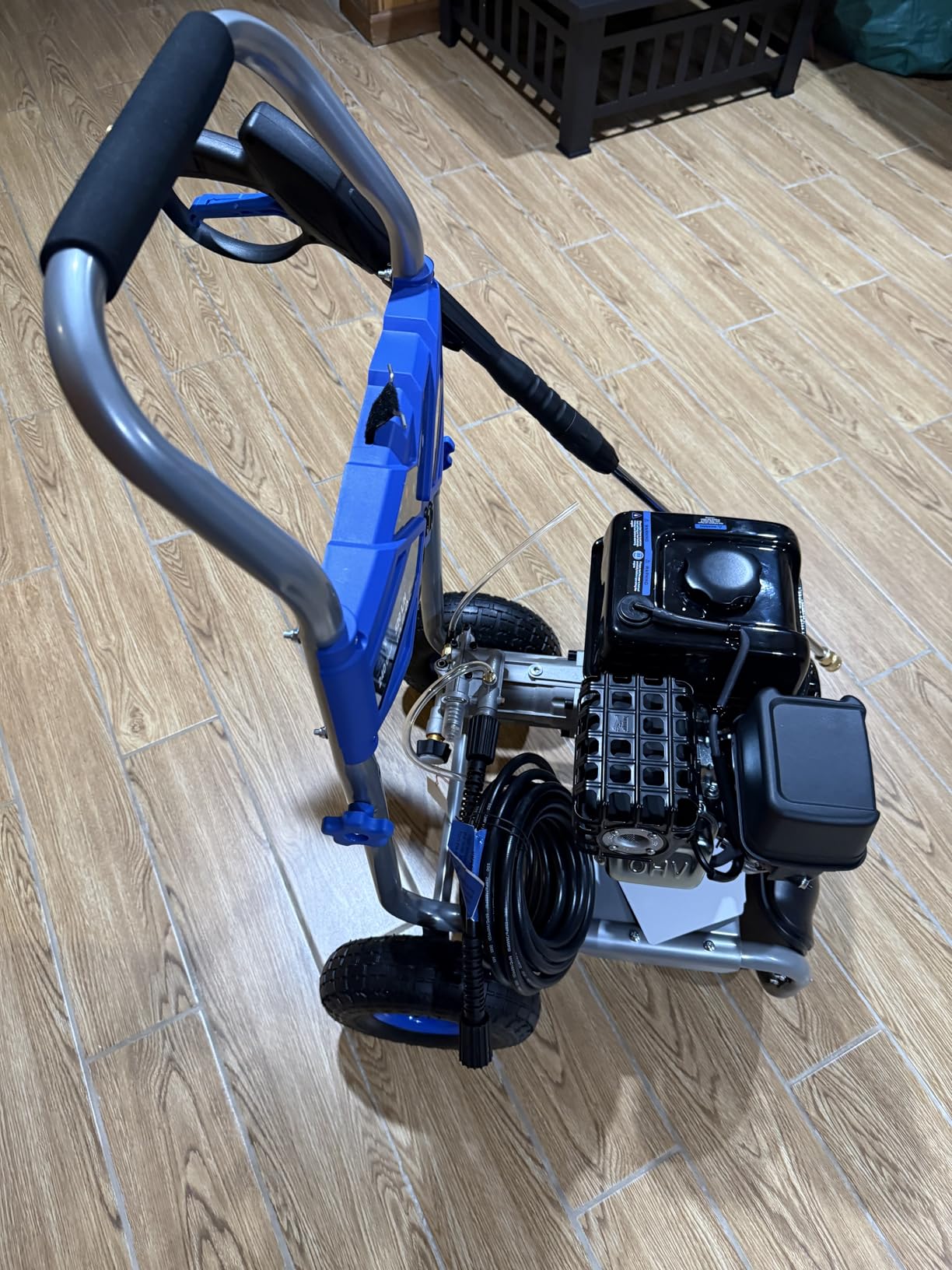
The 212cc four-stroke overhead valve engine is air-cooled and non-branded. Owners who run it long enough like the fuel economy, reporting roughly 45 minutes of runtime washing three cars on a tank, but they also stress treating fuel and changing oil after the first run to keep it healthy.
The nozzle set is the weak point for siding work. You get 0, 25, 40, and soap, with no 15 degree tip, which means your narrowest gentle option is the 25 degree fan. That is workable, and arguably better for siding, but it removes one degree of control.
Who should take this risk
Take it if you are comfortable with a one-year warranty and a non-branded engine, and if the machine lives indoors between uses rather than sitting in a damp shed. Storage discipline is what separates the happy owners from the frustrated ones.
Skip it if this is the machine you plan to keep for a decade, or if your siding is fragile and you want a support network behind the parts.
Where it falls short
The critical reviews are stark. Multiple owners report complete engine failures within weeks or months, including a unit that ran for about thirty seconds and another that failed after a single use. The one-year warranty is the shortest here, and some owners report difficulty getting a replacement or return accepted.
The thermal sensor also has a side effect that surprises first-timers: after the machine has sat in direct sun in hot weather it may refuse to start until it cools. That is the sensor working correctly, but it feels like a fault if you are not expecting it.
We earn a commission, at no additional cost to you. CERTAIN CONTENT THAT APPEARS ON THIS SITE COMES FROM AMAZON. THIS CONTENT IS PROVIDED 'AS IS' AND IS SUBJECT TO CHANGE OR REMOVAL AT ANY TIME.
6. VEVOR 3400 PSI – The Highest Flow in the Group
VEVOR Gas Powered Pressure Washer 3400 PSI 2.6 GPM, with Spray Gun and Extension Wand, 5 Quick Connect Nozzles, Copper Pump
- 3400 PSI
- 2.6 GPM
- 210cc 4-stroke
- Copper pump with aluminum head
- 26 ft hose
- 57 pounds
Pros
- Highest flow rate at 2.6 GPM so it covers the most wall per minute
- Lightest machine here at 57 pounds
- 26-foot hose with quick-connect gun and 2.6-foot wand
- Five metal quick-connect nozzles including a 15 degree tip
- On-machine accessory storage
Cons
- Engine on/off switch vibrates off and crumbles when removed
- Several owners report units that would not start out of the box
- Some report leaking oil and hot pumps losing pressure
- Instructions are thin on oil quantity and idle adjustment
- Recoil starter mounted at the front near the hot exhaust
We earn a commission, at no additional cost to you. CERTAIN CONTENT THAT APPEARS ON THIS SITE COMES FROM AMAZON. THIS CONTENT IS PROVIDED 'AS IS' AND IS SUBJECT TO CHANGE OR REMOVAL AT ANY TIME.
Flow is the underrated spec, and this machine has the most of it. At 2.6 GPM it moves roughly 15 percent more water per minute than the 2.25 to 2.4 GPM machines, and on a large elevation where detergent has to be applied, rinsed, and reapplied, that is real time saved. Multiply 3,400 PSI by 2.6 GPM and you get the highest cleaning power of any affordable machine in this roundup.
The copper pump with an aluminum pump head is an interesting choice at this level. It is lighter than the all-brass or cast iron assemblies used on commercial pumps, and reviewers who get a working unit describe it as outperforming their previous electric washers by a wide margin on driveway, patio, and siding work.
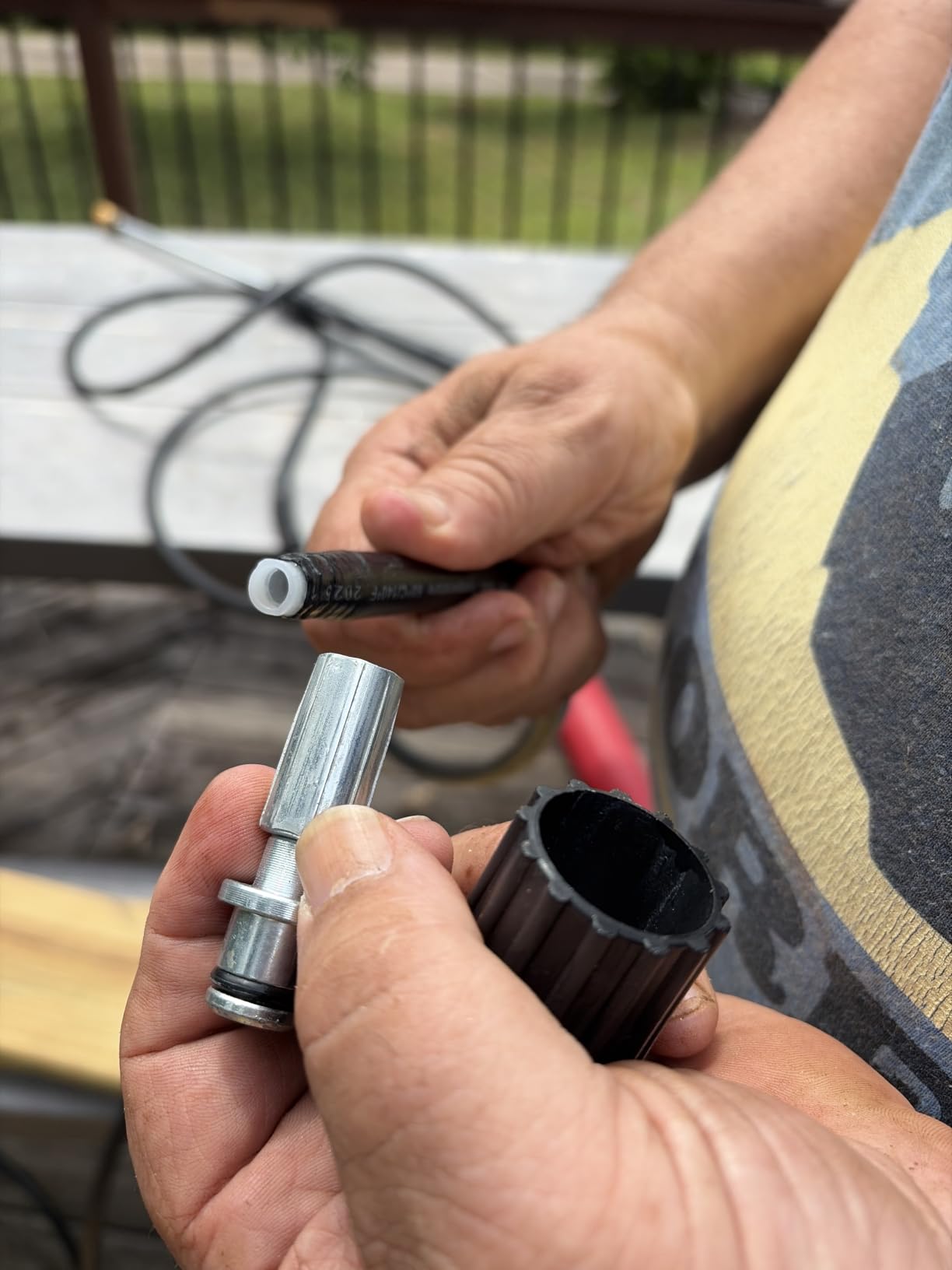
At 57 pounds it is the lightest machine here, which matters if you are carrying it up to a raised porch or moving it around a sloping lot. The 26-foot hose and 2.6-foot extension wand give you a working radius that is surprising for the money, and accessories store on the machine so nothing gets lost between sessions.
Assembly is genuinely easy. You click in a handle, screw on the nozzle mount, add the wheels, and fill oil and gas. Experienced owners recommend adding a quick-connect on the wand end of the hose so you are not fighting the fitting every time you switch tips.
The variance problem
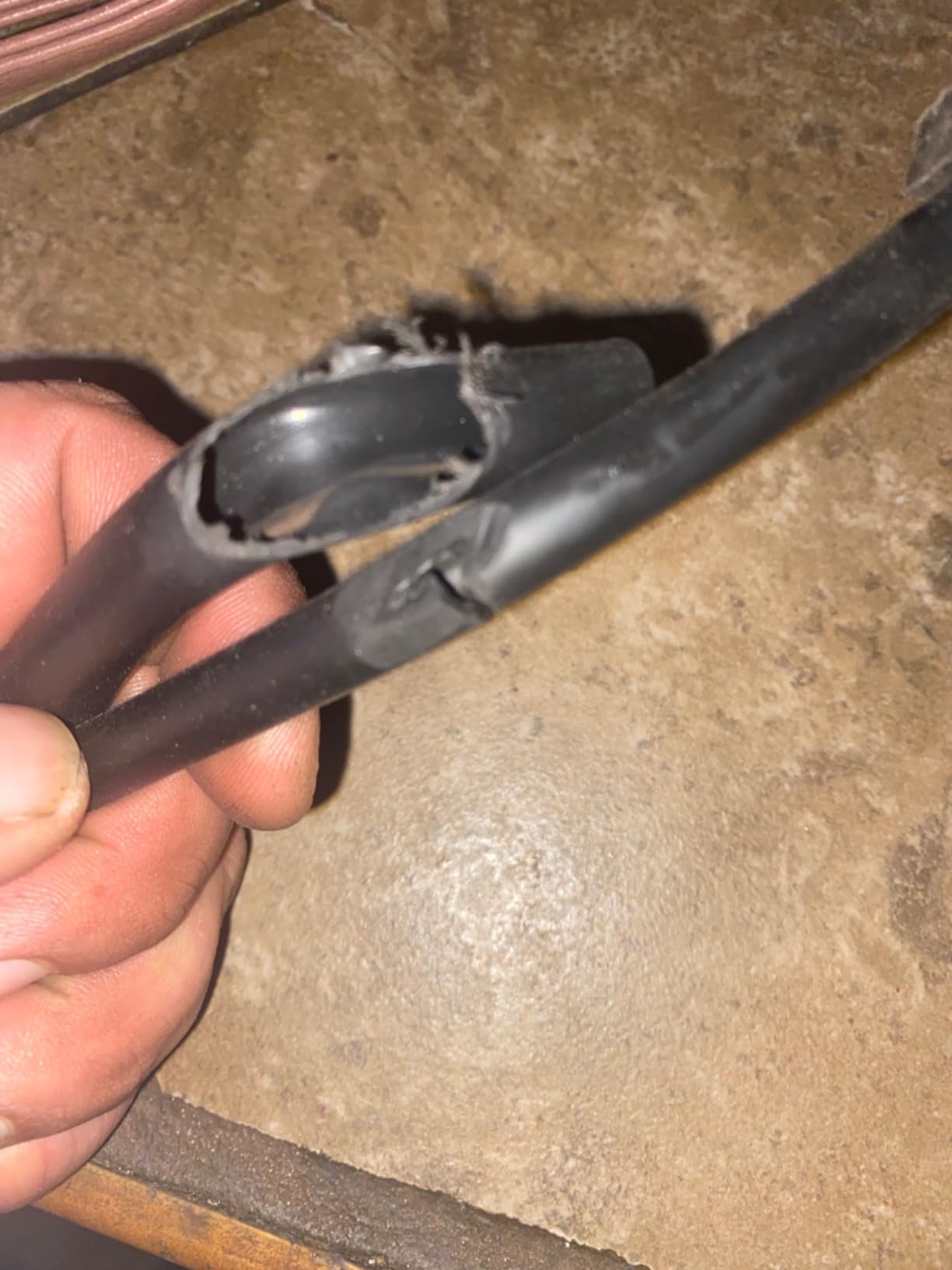
This is the highest-variance machine in the roundup, and it has the lowest rating of the group at 4.0. Roughly a fifth of its reviews are one star, and almost all of those trace to failures in the first week: units that would not start, oil leaks, pumps losing pressure within minutes of running hot.
Owner advice converges on one fix. The engine on and off switch is a known weak point that can vibrate into the off position during use, and the supplied switch crumbles when you remove it. Owners replace it with a low-cost aftermarket switch and report the machine then runs reliably.
Where it falls short
You need to keep the machine level and never move it while it is running. The front-mounted recoil starter sits near the hot exhaust, which is an awkward combination at the start of every session.
The instruction sheet is thin on oil quantity, oil type, and idle adjustment, so budget time to get it right on day one. A washer that is run with the wrong oil level is exactly how pumps end up leaking and losing pressure.
We earn a commission, at no additional cost to you. CERTAIN CONTENT THAT APPEARS ON THIS SITE COMES FROM AMAZON. THIS CONTENT IS PROVIDED 'AS IS' AND IS SUBJECT TO CHANGE OR REMOVAL AT ANY TIME.
7. Generac 7019 – Best for Pressure Control on Mixed Surfaces
Generac 7019 3100 PSI 2.4 GPM Gas-Powered OneWash Residential Pressure Washer: Unleash the Power of Cleaning
- 3100 PSI
- 2.4 GPM
- Power Dial spray gun
- Half gallon onboard detergent tank
- CARB compliant
Pros
- Power Dial on the spray gun lets you regulate pressure without changing nozzles
- Only machine here that is 50-state and CARB compliant
- Onboard half-gallon detergent tank for uninterrupted cleaning
- Owners report it removed green algae from vinyl siding effectively
- Easy assembly and simple enough for a first-time user
Cons
- Lowest pressure and lowest flow in this roundup
- Service is dealer-only and some owners report no dealer nearby
- No manufacturer replacement path past the return window
- Quality control complaints including a broken air filter housing in the box
- Flimsy gun holder and stiff hose that can be sliced against the engine
We earn a commission, at no additional cost to you. CERTAIN CONTENT THAT APPEARS ON THIS SITE COMES FROM AMAZON. THIS CONTENT IS PROVIDED 'AS IS' AND IS SUBJECT TO CHANGE OR REMOVAL AT ANY TIME.
This is the only machine here built around control rather than raw output, and for a house with mixed cladding it is the one I would think hardest about. The ergonomic spray gun carries an integrated Power Dial that lets you reduce pressure at the nozzle while you are working, which means you can go from concrete to painted wood to a car without breaking your spray rhythm or hunting for a different tip.
It is also the only machine in this roundup listed as 50-state and CARB compliant, so it is the one California and New York buyers can actually purchase. That alone narrows the practical shortlist if you live in either state.
The horizontal axial cam pump delivers 3,100 PSI at 2.4 GPM, the lowest rated output here, with an onboard half-gallon detergent tank for uninterrupted cleaning sessions and a 3-year limited warranty behind it. Owners report it pulled green algae off vinyl siding and cleaned concrete pads effectively.
Why the Power Dial changes the workflow
On most machines, dropping from siding pressure to a safe rinse pressure means swapping a nozzle or adjusting the unloader. The Dial does it with your thumb while the pump keeps running, which is exactly the change you want halfway up an elevation when the surface transitions from fiber cement to painted trim.
Owners also describe it as simple enough that a ten-year-old used it without difficulty, which says something about how readable the controls are.
Where it falls short
Support is the real risk. Generac routes warranty work through dealers, and multiple reviews describe owners being told to drive 30 to 90 minutes each way with no local dealer servicing the unit, and no direct replacement path once the return window has closed. Before you buy in a rural area, find your nearest servicing dealer.
Keep the hose stretched out and routed away from the engine. Owners report the stiff hose can be sliced against the engine if it runs too close while the machine is running, and the gun holder is described as flimsy.
We earn a commission, at no additional cost to you. CERTAIN CONTENT THAT APPEARS ON THIS SITE COMES FROM AMAZON. THIS CONTENT IS PROVIDED 'AS IS' AND IS SUBJECT TO CHANGE OR REMOVAL AT ANY TIME.
8. DeWalt PressuReady DXPW3400PRNB-S – Best for Easy Starting
DeWalt PressuReady 3400 PSI Gas Pressure Washer, 2.5 GPM, 25-ft Hose
- 3400 PSI
- 2.5 GPM
- DeWalt 208cc engine
- Trigger-activated electric start
- Auto shutoff after idle
Pros
- Squeeze the spray gun trigger and it starts
- no choke and no recoil pull
- Automatic shutoff after a few idle seconds saves fuel and noise
- 3400 PSI at 2.5 GPM runs consistently under load
- Smart control panel LEDs for ready mode water flow and faults
Cons
- Battery and charger are not included so the headline feature costs extra
- Standby and restart cycles drain the battery faster than expected
- False low-oil and low-fuel errors when the machine is not level
- Mounting bolts can vibrate loose within about 10 hours
- Two reviews report units that would not pump water at all
We earn a commission, at no additional cost to you. CERTAIN CONTENT THAT APPEARS ON THIS SITE COMES FROM AMAZON. THIS CONTENT IS PROVIDED 'AS IS' AND IS SUBJECT TO CHANGE OR REMOVAL AT ANY TIME.
The idea here is simple and genuinely good for siding work. Instead of walking to the machine, you pick up the spray gun, squeeze the trigger, and the battery-operated starter turns the engine. No choke adjustment, no recoil rope, no cold morning cranking while neighbors are still in bed.
It also shuts itself off after a few seconds of inactivity. Owners estimate that saves 20 to 30 percent of fuel versus machines that idle continuously while you reposition the hose, and it cuts noise during those gaps, which matters in neighborhoods with restrictions.
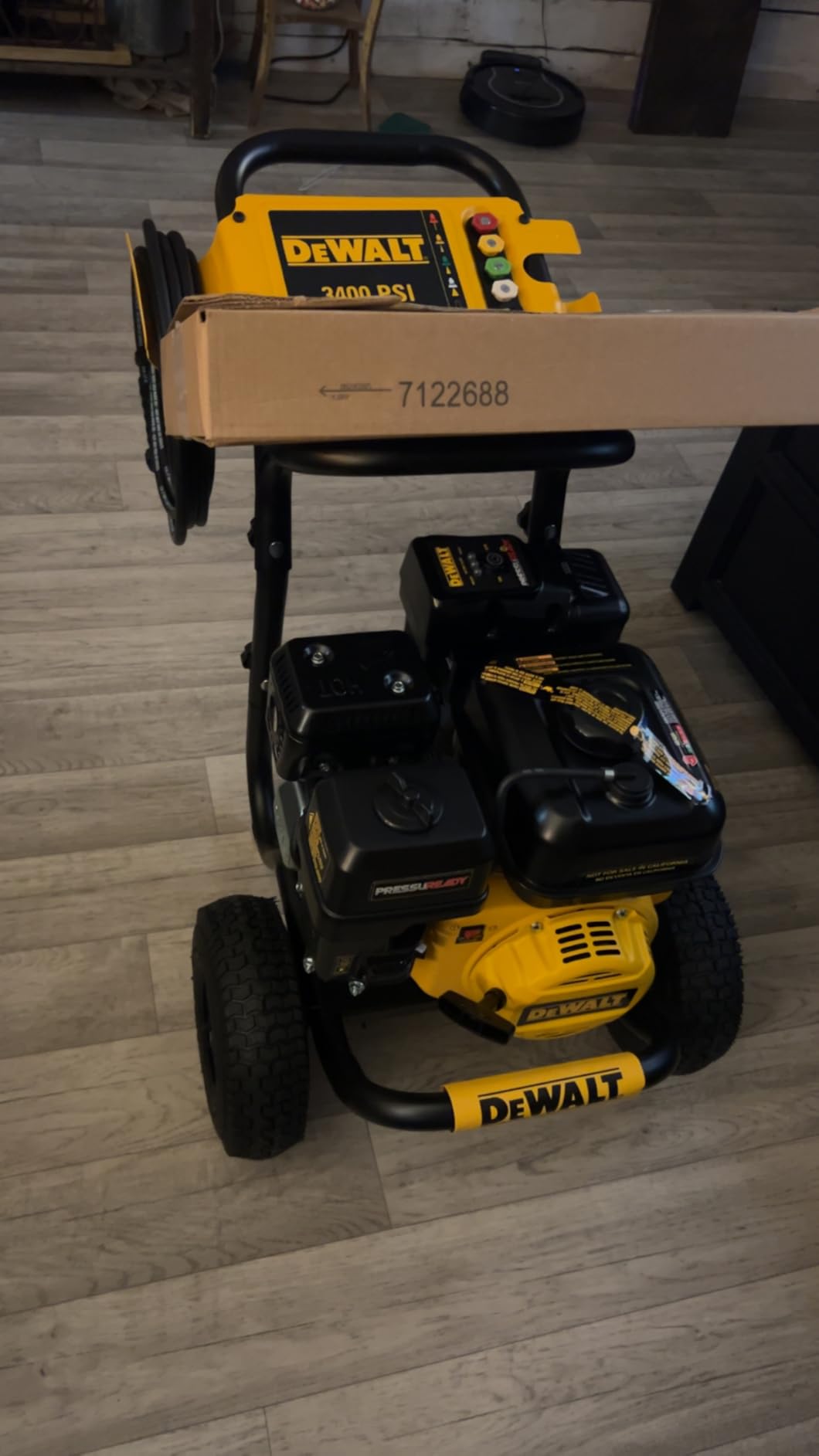
Output is 3,400 PSI at 2.5 GPM from an OEM Technologies axial cam pump with a thermal relief valve, which is a useful amount of cleaning power on a large elevation. The 25-foot MorFlex hose, spray gun, and 16-inch steel wand are included along with the full five-nozzle set.
The control panel deserves attention. LED indicators cover ready mode, water flow mode, and faults for no fuel and low battery, and the oversized battery compartment is water resistant, which is the right level of engineering for a machine that lives outside.
What to buy before the first use
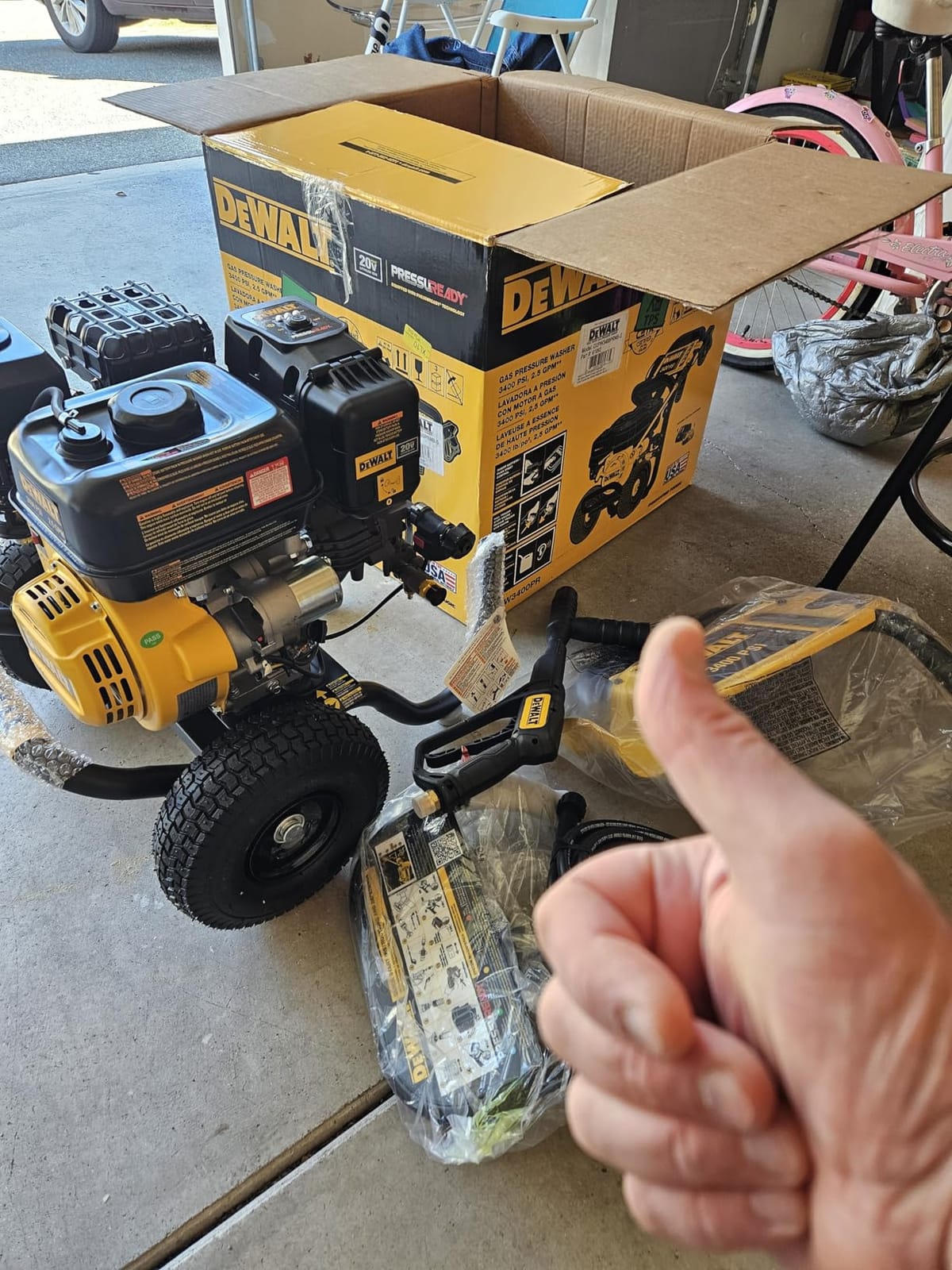
The battery is not included. You need a DeWalt 20V MAX or FLEXVOLT battery, sold separately, or the headline feature does nothing. Owners who already have that platform consider it a no-brainer; if you do not, you are buying a battery and charger before you ever start the engine.
Read the setup instructions carefully, and let the machine sit 15 to 20 minutes after refueling to protect the electronics. It should sit level, or it will throw false low-oil and low-fuel errors.
Where it falls short
Standby mode plus automatic restart cycles drain the battery faster than most owners expect, and the auto shutoff cannot be adjusted. A few reviews report mounting bolts vibrating loose within about ten hours of use, so checking torque after the first few jobs is sensible.
This machine also has the smallest review pool in the roundup and the widest share of critical reviews among the top half of the list, with two reviews reporting units that would not pump water at all. Service is routed to a technician rather than a replacement unit.
We earn a commission, at no additional cost to you. CERTAIN CONTENT THAT APPEARS ON THIS SITE COMES FROM AMAZON. THIS CONTENT IS PROVIDED 'AS IS' AND IS SUBJECT TO CHANGE OR REMOVAL AT ANY TIME.
When You Should Skip Gas and Buy Electric Instead
There is a real argument against gas washers, and it is not a small one. Major testing publications that once recommended them have walked that recommendation back, citing noise, emissions, maintenance, and the risk of stored gasoline in a home. If any of the following describe you, a corded electric or battery machine is the better purchase and this roundup is not for you.
Light annual use. If you clean the house once a year and have never had a fence or vehicle to strip, you are paying for capability you will not use. The Westinghouse WPX3200 has a deeply proven service record, but it still wants oil changes, a fuel tank drain, and winterization.
Noise restrictions. A small gas engine is loud enough to matter in a subdivision with quiet hours, and apartment or townhouse associations frequently prohibit combustion equipment. An electric washer is quieter enough to run early on a weekend.
Small or fragile siding. Vinyl on a single-story home with light algae does not need 3,300 PSI. A 2,000 PSI electric unit with a soft fan nozzle and an oxygenated concentrate will produce a better result with less risk of forcing water behind a panel.
Indoor storage constraints. Gasoline storage rules, fuel stabilizer, and pump protector add up. If the machine has to live in an attached garage in a climate that reaches freezing, an electric unit is simpler.
One-time whole-house clean. Renting a commercial machine for a single project avoids the entire ownership burden.
None of that is an argument against gas in general. It is an argument against buying more machine than your siding job requires, which is the mistake most people make in this category.
How We Picked These Eight
These machines were selected against a siding-specific rubric, not a driveway rubric. The criteria, in order of weight:
Flow rate, not peak pressure. GPM determines how fast you can cover a wall and how effectively detergent is delivered and rinsed. Every pick here delivers at least 2.3 GPM.
Pump construction. Axial cam pumps are adequate for periodic house cleaning. Triplex plunger pumps are built for years of repeated use, and a machine you keep for a decade deserves one.
Engine provenance. A genuine Honda GX200 with low-oil shutdown is a different reliability proposition from a non-branded 212cc clone, and we weighted that heavily for long-term owners.
Control features. An onboard soap tank, an adjustable pressure dial, or an electric start all reduce the number of ways you can get a pass wrong on a wall.
Hose length and machine weight. Working radius and how easily the machine moves around a property determine whether a two-story job is a pleasant afternoon or a fight.
Certification and warranty. We flagged CARB versus 49-state status for every machine, because it is a hard purchase blocker in California and New York, and we noted warranty coverage wherever the listing states it.
We relied on published specifications and the aggregated owner feedback available for each machine. Every figure quoted in this article comes from the manufacturer or owner-reported data, and every rating and review count is the one attached to the product listing.
Buying Guide: PSI, GPM, Pumps, Engines and Hoses
Cleaning power. Multiply PSI by GPM to compare machines honestly. The Westinghouse WPX3200 produces 8,000, the SIMPSON PowerShot 3300 produces 8,250, the DeWalt DXPW3300-S produces 7,920, the Aluminum Series produces 8,500 at its rated output, the Ezasin produces 8,050, the VEVOR produces 8,840, the Generac 7019 produces 7,440, and the PressuReady produces 8,500. That spread is far narrower than the PSI numbers alone would suggest, which is exactly why PSI on a sticker is a weak buying signal.
PSI inflation. Maximum pressure figures are measured differently by different manufacturers, and some are advertised above rated working pressure. Treat peak PSI as marketing and treat PSI multiplied by GPM as the real comparison.
Pump type. An axial cam pump is a cam-driven design that is simple, light, and inexpensive, and it is the right choice for a few cleaning days a year. A triplex plunger pump uses three pistons and an unloader valve to deliver steadier pressure over long runs, at the cost of weight and expense. If you plan to run the machine for siding, fences, decks, and vehicles every season, the triplex pump on the two SIMPSON machines here is the more durable answer.
Engine brand. The Honda GX200 on both SIMPSON machines is the engine most frequently named in long-term owner reports across this category, and it includes low-oil shutdown. The 208cc and 212cc overhead valve engines used by the Westinghouse, DeWalt, Ezasin, and VEVOR machines are perfectly serviceable, and parts are widely available, but they need a break-in period and owners report rougher first-pull starts on new units.
Hose length and working radius. A 25-foot hose means repositioning roughly every 20 feet of wall. The 35-foot hose on the Aluminum Series roughly halves that. For a two-story home, the second story still means working from a ladder, and the real fix for soffits and high eaves is a surface cleaner or an extension wand rather than a longer hose.
Nozzles. Every machine here ships with a 0, 15, 25, 40, and soap set except the Ezasin, which omits the 15 degree tip. Use 25 and 40 degrees on siding and treat the 0 degree tip as a driveway tool only. A rotary surface cleaner attachment is the single most common upgrade owners recommend across this whole category, because even pressure beats wand technique on flat panels.
Detergent. Use an oxygenated or peroxide-based siding concentrate rather than bleach. Bleach etches vinyl, promotes chalking, and destroys the oxidized surface layer. Apply bottom to top, dwell for 10 to 15 minutes, then rinse top to bottom so clean water runs over panels you already cleaned.
Certification. Seven of the eight machines here are 49-state compliant only and cannot be sold in California. The Generac 7019 is the only 50-state and CARB compliant option in this list. Check this before you shop, not after.
Winterization and storage. Drain the fuel or run it out, add fuel stabilizer to anything left in the tank, change the oil, connect a pump protector to the pump inlet before storage, and pull the spark plug lead for machines sitting for months. The SIMPSON machines are the easiest to winterize because the GX200 is a commercial engine designed for intermittent storage, but every machine here needs the same basic discipline.
Frequently Asked Questions
What pressure washer is best for house siding?
A gas machine rated between 2,500 and 3,500 PSI with at least 2.3 GPM gives you enough flow to apply detergent and rinse a whole elevation quickly. For most homes the Westinghouse WPX3200 is the best balance of rating, review depth, and parts support, and it ships with an onboard half-gallon soap tank that makes detergent-first cleaning simple.
What PSI pressure washer is recommended for cleaning siding?
Between 1,300 and 2,000 PSI with a 25 or 40 degree nozzle held 12 to 18 inches from the wall. Vinyl and aluminum tolerate the most, brick and fiber cement can take 2,000 to 2,500 PSI, and painted wood needs the least at roughly 1,200 to 1,500 PSI. The detergent does the cleaning and the pressure only rinses it.
Is 2500 PSI too much for siding?
Not as a machine rating, as long as you control it at the nozzle. A 2,500 PSI washer is fine on fiber cement, brick, and stucco. On vinyl, aluminum, or wood you will dial down or use a wider nozzle, and you will never hold a 0 degree jet within a foot of the wall. The pressure rating is not the danger, the technique is.
Can a pressure washer damage vinyl siding?
Yes, in three ways. Forcing water past the panel laps causes intrusion that leads to rot and mold behind the wall. Pressure at close range strips caulk from seams and trim. And high pressure on faded panels can strip the oxidation layer that gives vinyl its weathered look. Keep 12 inches of distance, use 25 or 40 degree tips, and pre-treat with an oxygenated concentrate.
What PSI will damage vinyl siding?
Vinyl softens and warps when heat and pressure build at close range, so there is no single safe number without distance. What damages siding is a concentrated jet within a few inches, which can exceed 4,000 PSI at the surface regardless of the machine rating. At 12 to 18 inches with a 25 or 40 degree nozzle, even a 3,300 PSI machine stays in a safe band.
Is 2000 PSI too much for vinyl siding?
No. 2,000 PSI with a 25 or 40 degree nozzle at 12 to 18 inches is well within a safe working range for vinyl. What causes damage is distance and nozzle choice, not the rated maximum. Many owners use machines rated well above 3,000 PSI on vinyl every year without problems.
What PSI pressure washer to clean vinyl siding?
Use 1,300 to 1,600 PSI at the wand with a 25 or 40 degree nozzle held 12 to 18 inches off the panel, and apply an oxygenated siding concentrate first. Let it dwell 10 to 15 minutes, then rinse. The machine rating matters far less than those four operating numbers.
Do I need detergent when pressure washing siding?
Yes, and it is the single most important part of the job. Algae and mildew bond to the surface, and detergent with dwell time breaks that bond so pressure only has to rinse it away. That lets you work at a much lower PSI, which is exactly what protects the siding. Avoid bleach, which etches vinyl and promotes chalking; use an oxygenated or peroxide-based concentrate.
Bottom Line: The Best Gas Pressure Washers for House Siding in 2026
The Westinghouse WPX3200 is our pick for most houses. It carries the highest rating and the deepest owner history in this roundup, its 2.5 GPM flow and onboard half-gallon soap tank fit detergent-first siding work better than any other combination here, and the 212cc overhead valve engine and axial cam pump are simple to service. Add a surface cleaner, discard the 0 degree tip, and it will handle a two-story vinyl home in an afternoon.
If you want the unit to outlast you, step up to the SIMPSON PowerShot 3300 with its Honda GX200 and AAA triplex plunger pump, or to the Aluminum Series if you also need the 35-foot hose for a tall elevation. If you want warranty coverage more than pump longevity, the DeWalt DXPW3300-S carries the strongest terms in this group. And if you live in California, look at the CARB compliant Generac 7019 first, because the other seven cannot be sold there.
Whatever you choose, remember that the machine’s job is to rinse. The oxygenated concentrate does the cleaning while it dwells, and the pressure at the wand stays in the low thousands with a wide nozzle at a foot and a half of distance. That habit is what separates a clean house from a house with water behind the wall.
Last updated in 2026. If you would rather not own the maintenance and storage at all, renting a commercial machine for a single whole-house wash is a reasonable option and costs less than the tooling you have not bought yet.