
Last updated: October 2026. Every model below was checked against its current spec sheet and owner reviews as of October 2026. Use the buttons below to see current pricing for each model.
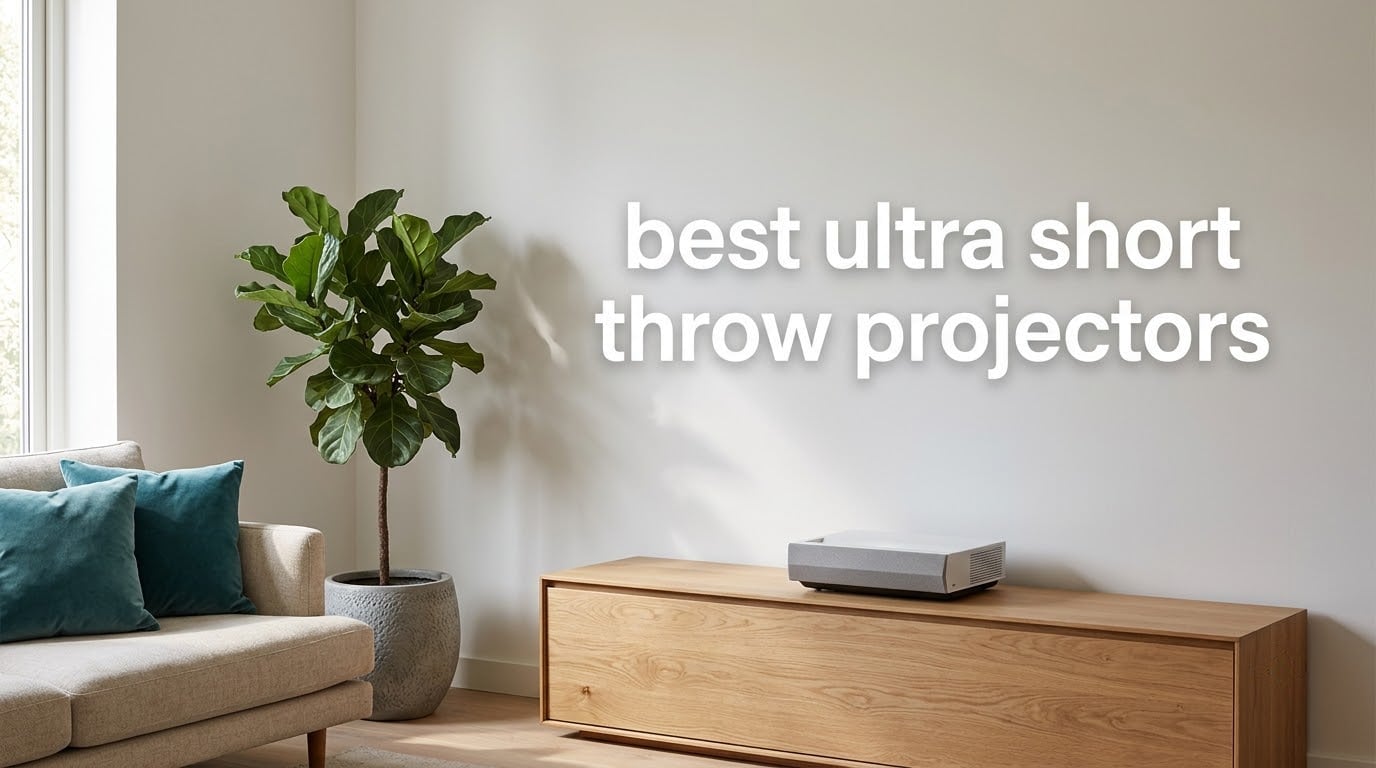
An ultra short throw (UST) projector throws a 100 to 150 inch image from less than about 0.4 times the image width from the wall. A throw ratio of 0.18, for example, puts a 100-inch image (roughly 87 inches wide) about 15.7 inches from the screen. That is short enough to sit on the same media console as the television it replaces, with no ceiling mount, no drilled holes and no long cable run.
That is the entire appeal. A UST is the only projector type that genuinely replaces a wall-mounted TV in an ordinary living room, because the light path and the wide-angle lens let the unit live on top of your cabinet rather than across the room from it.
We spent October 2026 reading spec sheets, cross-checking measured brightness claims and working through owner reviews for all ten models below, then normalised the numbers onto the same axes so you are not comparing 2400 lumens against 3000 ANSI lumens as if they were the same unit. Every pick carries a use-case slot, a throw ratio, a real light output figure and an honest drawback.
One framing note before the picks. Buyers in the projector community almost never treat this as a projector purchase. They treat it as a TV replacement decision, and the room, the wall and the furniture matter more than the optics. We wrote this roundup on that basis.
Table of Contents
Top 3 Ultra Short Throw Projectors (October 2026)

As an Amazon Associate we earn from qualifying purchases. CERTAIN CONTENT THAT APPEARS ON THIS SITE COMES FROM AMAZON. THIS CONTENT IS PROVIDED 'AS IS' AND IS SUBJECT TO CHANGE OR REMOVAL AT ANY TIME.
The AWOL VISION LTV-3000 Pro is our top pick because it pairs a triple-laser light source with a 0.25:1 fixed throw, the highest average owner rating in this group and a feature set that covers Dolby Vision, HDR10+ and active 3D in one box. The NexiGo Aurora Pro MKII takes the gaming and contrast crown with 4K at 120Hz and 4.2ms latency. The Epson EpiqVision LS800 wins on raw brightness at 4000 lumens of color and white brightness, which is far more than any other model here.
All 10 Ultra Short Throw Projectors Compared in 2026
| Product | Key Features | |
|---|---|---|
|
AWOL VISION LTV-3000 Pro 4K Triple Laser UST
|
|
Check Latest Price |
|
Epson EpiqVision LS800 4K PRO-UHD UST
|
|
Check Latest Price |
 Hisense PL2 4K UST Laser Projector Hisense PL2 4K UST Laser Projector
|
|
Check Latest Price |
 NexiGo Aurora Pro MKII 4K Tri-Color Laser UST NexiGo Aurora Pro MKII 4K Tri-Color Laser UST
|
|
Check Latest Price |
 NexiGo Aurora Pro 4K Tri-Color Laser UST NexiGo Aurora Pro 4K Tri-Color Laser UST
|
|
Check Latest Price |
 WEMAX Nova Pro 4K UST Projector WEMAX Nova Pro 4K UST Projector
|
|
Check Latest Price |
 XGIMI AURA 4K Laser UST Projector XGIMI AURA 4K Laser UST Projector
|
|
Check Latest Price |
 LG HU85LA 120 Inch Triple Laser CineBeam LG HU85LA 120 Inch Triple Laser CineBeam
|
|
Check Latest Price |
 Formovie Theater 4K UST Laser Projector Formovie Theater 4K UST Laser Projector
|
|
Check Latest Price |
 BenQ V7050i 4K Laser Smart TV Projector BenQ V7050i 4K Laser Smart TV Projector
|
|
Check Latest Price |
We earn from qualifying purchases. CERTAIN CONTENT THAT APPEARS ON THIS SITE COMES FROM AMAZON. THIS CONTENT IS PROVIDED 'AS IS' AND IS SUBJECT TO CHANGE OR REMOVAL AT ANY TIME.
1. AWOL VISION LTV-3000 Pro 4K Triple Laser UST Review
AWOL VISION LTV-3000 Pro 4K 3D Ultra Short Throw Triple Laser Projector, Dolby Vision & Atmos, HDR10+, 150″ UST Laser TV Home Theater Projector
- 3000 ANSI lumens
- 0.25:1 fixed throw
- 150 inch max image
- 2500:1 contrast
Pros
- Triple laser colour with no colour wheel
- Dolby Vision with HDR10+ and active 3D
- Built-in centre channel speaker for dialogue
- Short throw keeps the unit near the wall
- PJ Link IP control for home automation
Cons
- Needs an ALR screen to look its best
- Fixed throw requires sufficient cabinet depth
- Ambient light reduces colour and contrast
We earn a commission, at no additional cost to you. CERTAIN CONTENT THAT APPEARS ON THIS SITE COMES FROM AMAZON. THIS CONTENT IS PROVIDED 'AS IS' AND IS SUBJECT TO CHANGE OR REMOVAL AT ANY TIME.
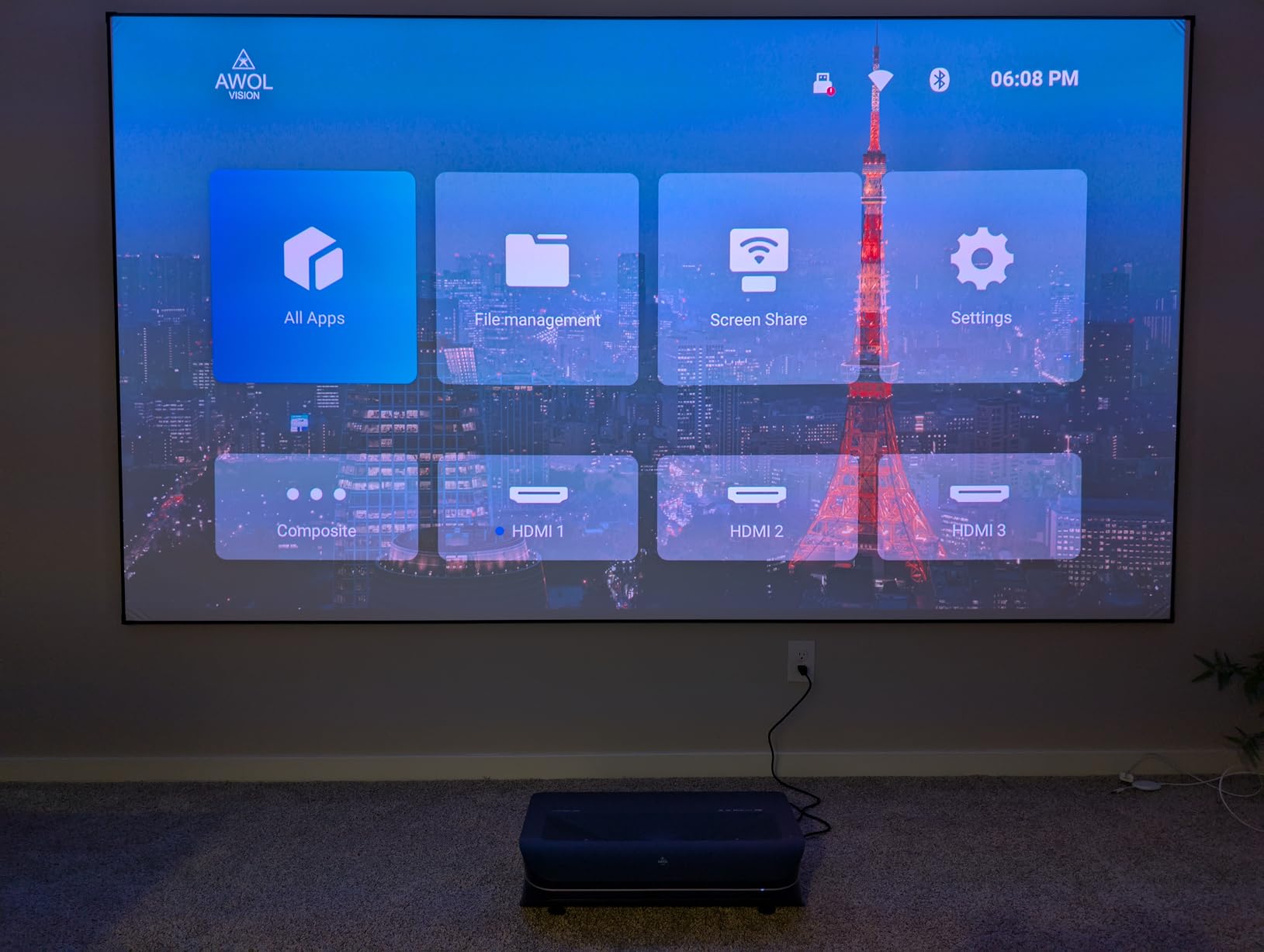
Best for: buyers who want one projector that handles movies, sports and daytime viewing without changing anything about the room. The LTV-3000 Pro is a triple-laser 4K unit rated at 3000 ANSI lumens with a 2500:1 contrast ratio, and it projects up to a 150 inch image. AWOL VISION states a fixed 0.25:1 throw ratio, which works out to roughly 8.5 inches back from the wall for a 100 inch image and about 12.8 inches for 150 inches.
Colour is where a triple-laser engine separates itself from single-laser and 3LCD rivals. This one is specified at 107 percent BT.2020 and 147 percent DCI-P3 coverage with more than a billion colours, and there is no colour wheel in the light path, so no sequential colour artefacts. Dolby Vision and HDR10+ are both supported, and active shutter 3D is on the spec sheet, which is rare at this size.
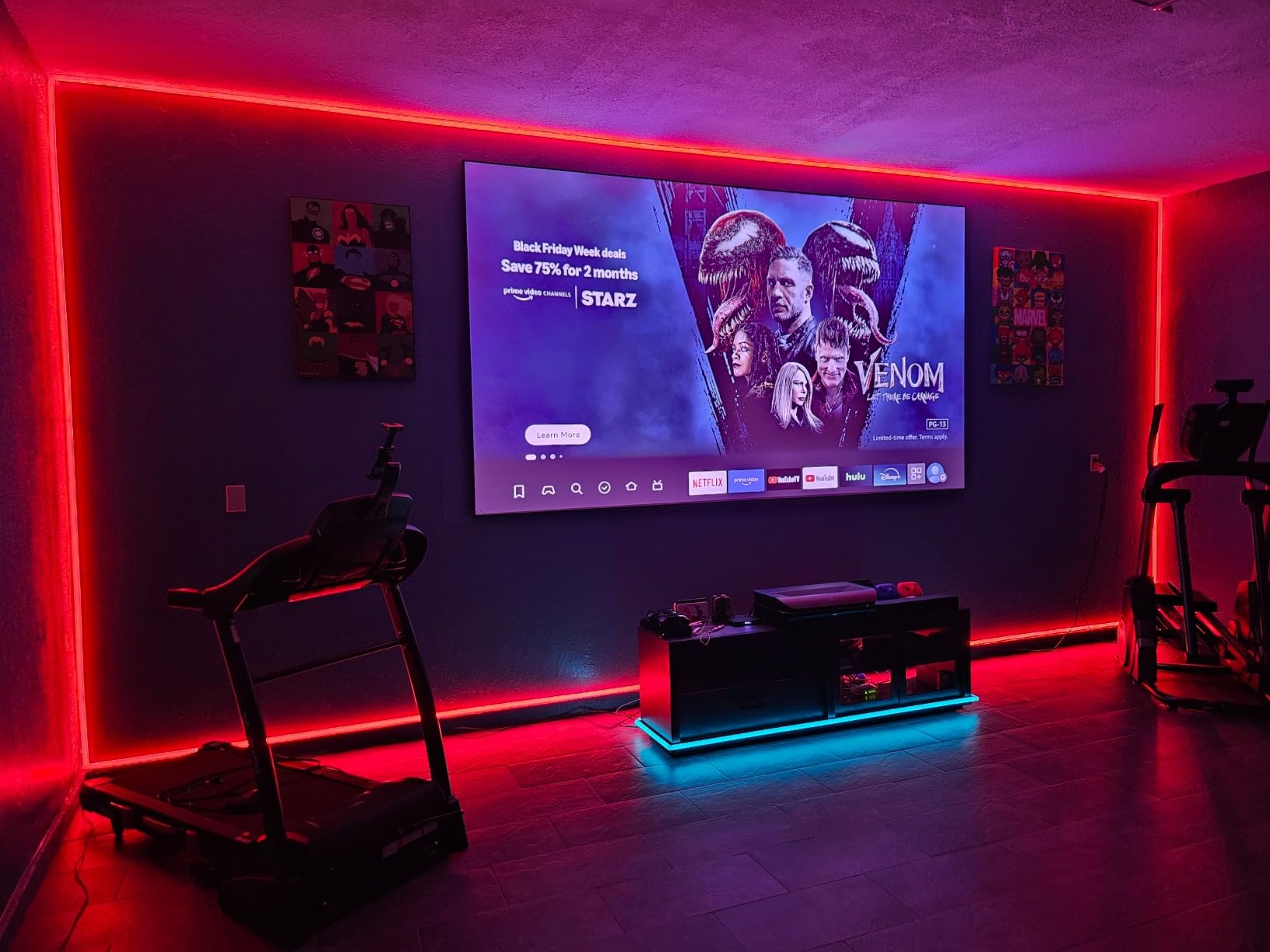
What surprised us reading owner reviews is how much the screen changes the result. The recurring message across 209 reviews is that the picture only really arrives on a proper ALR screen, and that in a bright room the colour and contrast fall away quickly without one. Buyers who paired it with a good ambient light rejecting screen describe it as the best-looking unit in their living room; buyers projecting onto a plain wall in daylight describe a flat, washed image.
There is a built-in centre channel speaker with speaker mapping for dialogue, which genuinely helps when you have no soundbar, and PJ Link IP control so it drops into a Control4 or Home Assistant setup. Dolby Atmos output is there too, and pairs with AWOL’s own ThunderBeat 4.2.2 surround system if you want to go further. The light source is rated at 25000 hours and the warranty runs two years.
Who the LTV-3000 Pro suits
It suits a family that watches in the evening with lights on and plays sports on weekends. The 3000 ANSI lumens figure is a genuine ANSI measurement, and combined with an ALR screen it stays watchable in a lit room, which is exactly where the lower-lumen models in this list give up.
It also suits anyone who wants 3D, because the active shutter implementation is something most rivals in this price bracket simply do not offer. Just budget a large room for it; owners note you want at least 10 feet of viewing distance to appreciate 3D properly.
Who should skip the LTV-3000 Pro
Skip it if your media cabinet is shallow. The 0.25:1 ratio is fixed, not adjustable, and at 28 pounds with a 23.6 inch depth it needs real furniture depth, or you are looking at a motorized slider as an extra cost.
Also skip it if you cannot budget for a screen. This is the model where the screen dependency shows up most clearly in the reviews. A handful of owners also report intermittent picture dropouts during playback, which is uncommon but worth knowing about.
We earn a commission, at no additional cost to you. CERTAIN CONTENT THAT APPEARS ON THIS SITE COMES FROM AMAZON. THIS CONTENT IS PROVIDED 'AS IS' AND IS SUBJECT TO CHANGE OR REMOVAL AT ANY TIME.
2. Epson EpiqVision LS800 4K PRO-UHD Review
Epson EpiqVision LS800 4K PRO-UHD Ultra Short Throw Laser Projector
- 4000 lumens color and white
- 3LCD with no rainbowing
- 150 inch max
- 20000 hour laser
Pros
- Brightest unit in the group at 4000 lumens
- 3LCD means no rainbow artifacts at all
- Usable with sunlight on an ALR screen
- Low input lag suits PS5 and Xbox Series X
- Two-year projector warranty
Cons
- Very large chassis at 27.4 inches and 27.6 pounds
- Slow and sensitive image geometry alignment
- No Netflix support in the built-in Android TV
We earn a commission, at no additional cost to you. CERTAIN CONTENT THAT APPEARS ON THIS SITE COMES FROM AMAZON. THIS CONTENT IS PROVIDED 'AS IS' AND IS SUBJECT TO CHANGE OR REMOVAL AT ANY TIME.
Best for: bright rooms, and for anyone who is sensitive to rainbow artifacts. The LS800 is the only model in this roundup built on three-chip 3LCD panels, and that is the one display technology that produces no rainbow effect at all, because three panels run simultaneously rather than cycling through colours. It is also the brightest projector here by a wide margin at 4000 lumens of color and white brightness.
That brightness figure is the one that matters if your wall gets direct or indirect daylight. On an ALR screen, owners report using it with sunlight still hitting the room, which is not something the 1800 to 2300 lumen units in this list can do. The 4K PRO-UHD engine pixel-shifts across three HD LCD panels to reach 3840 by 2160, and there is 10-bit HDR colour processing that accepts 100 percent of an HDR source signal.
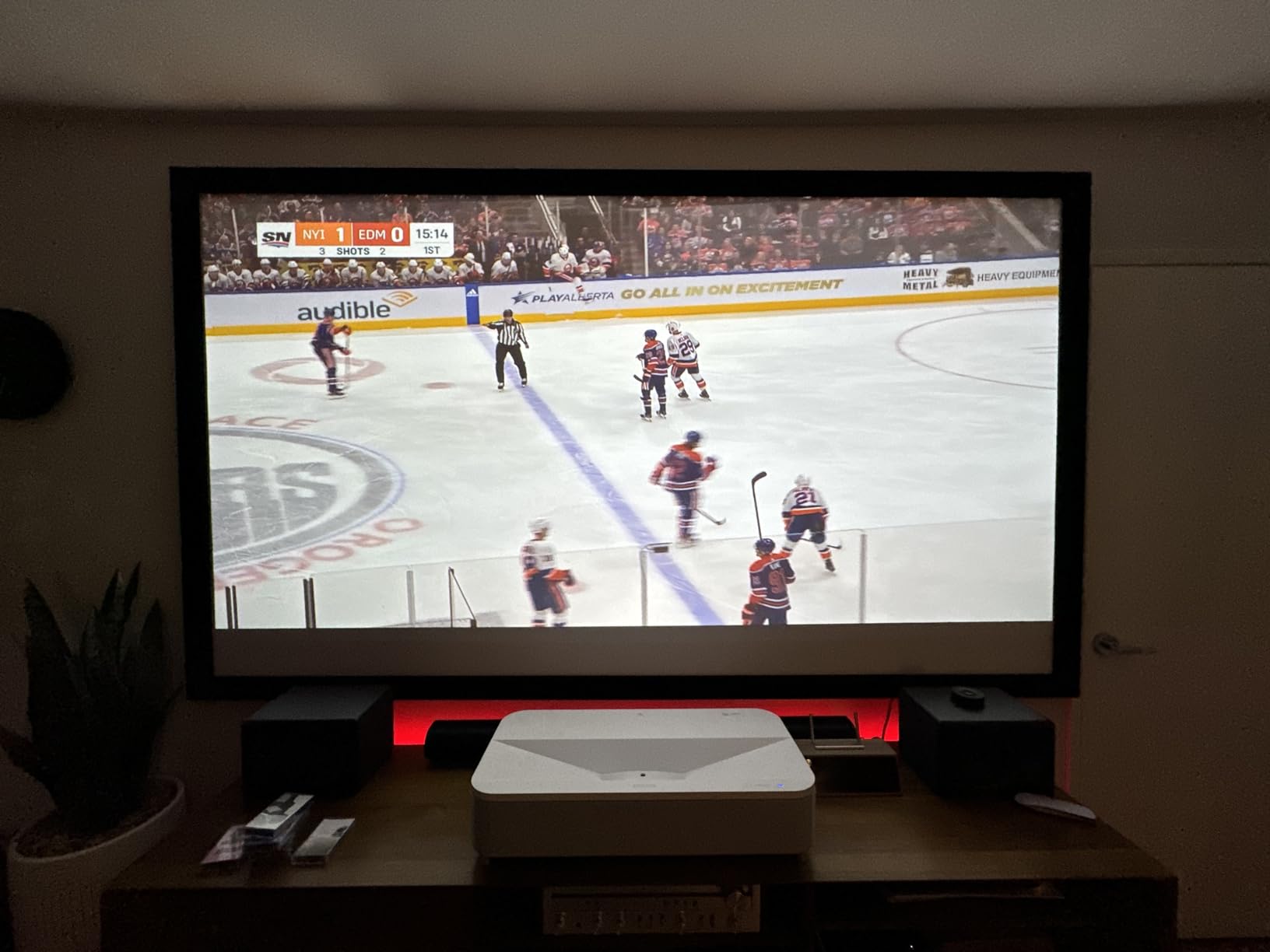
Picture quality is genuinely the strongest case here. Owners upgrading from other ultra short throw units describe the jump in sharpness and colour saturation as dramatic, and several call it the best picture they have seen in this category. Input lag is low enough for PS5 and Xbox Series X play, and the built-in Yamaha 2.1 channel speakers are clear and audible well below maximum volume.
What complicates the picture is everything around the image. The chassis is 27.4 inches long and weighs 27.6 pounds, which makes it genuinely hard to fit on most media cabinets, and image geometry is slow and unforgiving, with square alignment demanding patience. The built-in Android TV is judged to lower picture quality than an external streamer, there is no Netflix support in the built-in operating system, and eARC is reported to degrade or drop the Dolby Atmos signal from a soundbar.
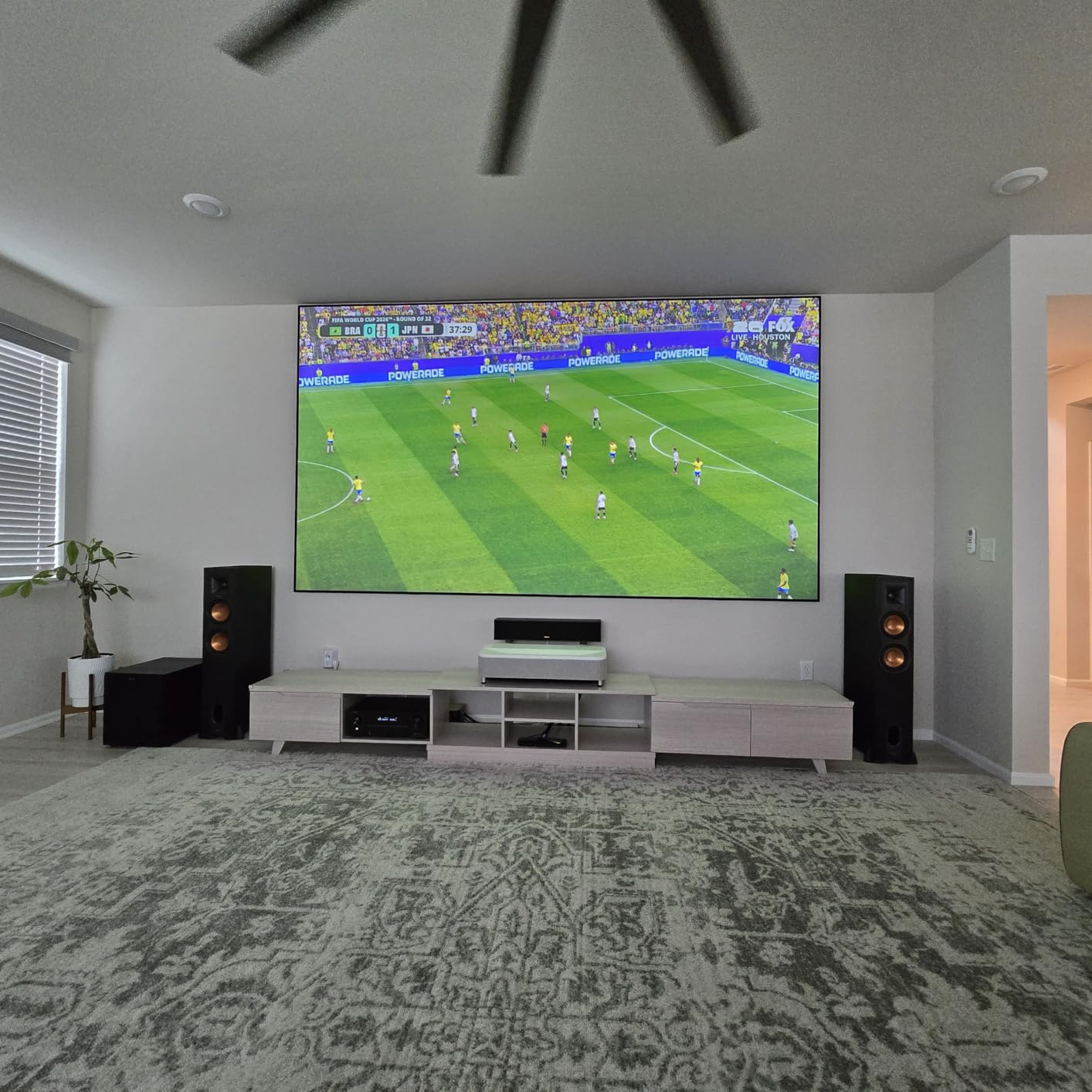
Who the LS800 suits
It suits a sunlit living room where no other model in this list holds up. If your viewing happens during the day rather than after dark, the brightness advantage alone changes the outcome, and there is no ceiling mount to drill for.
It also suits anyone whose spouse or family members notice colour fringing. The 3LCD panel design removes rainbow artifacts completely, and because colour brightness equals white brightness, the picture does not wash out the way colour-wheel DLP units can.
Who should skip the LS800
Skip it if cabinet depth is a problem. This is the largest unit here and the most likely to end up on the floor, which is exactly the clutter problem UST buyers complain about in forum threads about console placement.
Skip it if your sound system depends on Dolby Atmos passthrough through eARC, or if you refuse to add a streaming stick because there is no Netflix in the built-in OS. It is also the most polarising unit in the set by owner rating, so treat the picture praise and the setup frustration as equally real.
We earn a commission, at no additional cost to you. CERTAIN CONTENT THAT APPEARS ON THIS SITE COMES FROM AMAZON. THIS CONTENT IS PROVIDED 'AS IS' AND IS SUBJECT TO CHANGE OR REMOVAL AT ANY TIME.
3. Hisense PL2 4K UST Laser Projector Review
Hisense PL2, Ultra Short Throw Home Theater Laser Projector, 80” – 150”, 4K UHD, 2,700 Lumens, 3000:1 Contrast, Dolby Vision & Atmos, 3D, Google TV, WIFI 6E
- 2700 ANSI lumens
- 3000:1 contrast
- 80 to 150 inch image
- 25000 hour laser
Pros
- Good image even on a plain painted wall
- Quick setup with simple keystone and levelling
- Responsive Google TV with 5000 plus apps
- Compact and light at 18.7 pounds
- Two-year manufacturer warranty
Cons
- Visible rainbow effect on single-chip DLP
- Automatic keystone upload routine is clunky
- Image geometry sensitive to drywall imperfections
We earn a commission, at no additional cost to you. CERTAIN CONTENT THAT APPEARS ON THIS SITE COMES FROM AMAZON. THIS CONTENT IS PROVIDED 'AS IS' AND IS SUBJECT TO CHANGE OR REMOVAL AT ANY TIME.
Best for: buyers who want a big image and a smart platform without spending top-of-range money. The PL2 covers 80 to 150 inches at 2700 ANSI lumens with a 3000:1 contrast ratio, using a DLP chip with 2.07 million controllable micro-mirrors and a 2700 ANSI lumens X-Fusion laser light source rated past 25000 hours.
It is one of only two models here with Dolby Vision plus Dolby Atmos alongside 3D support, and it carries built-in Google TV over Wi-Fi 6E with thousands of apps, plus a 4K AI upscaler for sharpening lower-resolution sources and a digital lens focus. At 18.7 pounds it is also one of the lighter units, and 20.9 by 13.2 by 4.7 inches is a manageable footprint.

Setup is the strong part. Owners describe it as quick and straightforward, with simple keystone and levelling adjustment, and the Google TV interface as responsive. Brightness is good enough to look respectable even on a plain painted wall, which is more than most rivals in this group can say, and the built-in speakers are better than projector speakers usually are.
The consistent complaint is rainbow effect. This is a single-chip DLP design, and colour fringing on light-coloured content is the reason at least one owner returned a unit. The automatic keystone routine is also widely criticised, because it requires photographing your screen and uploading the image to a device-hosted website, and keystone and several options sit under the menu button rather than in settings where you would expect them.
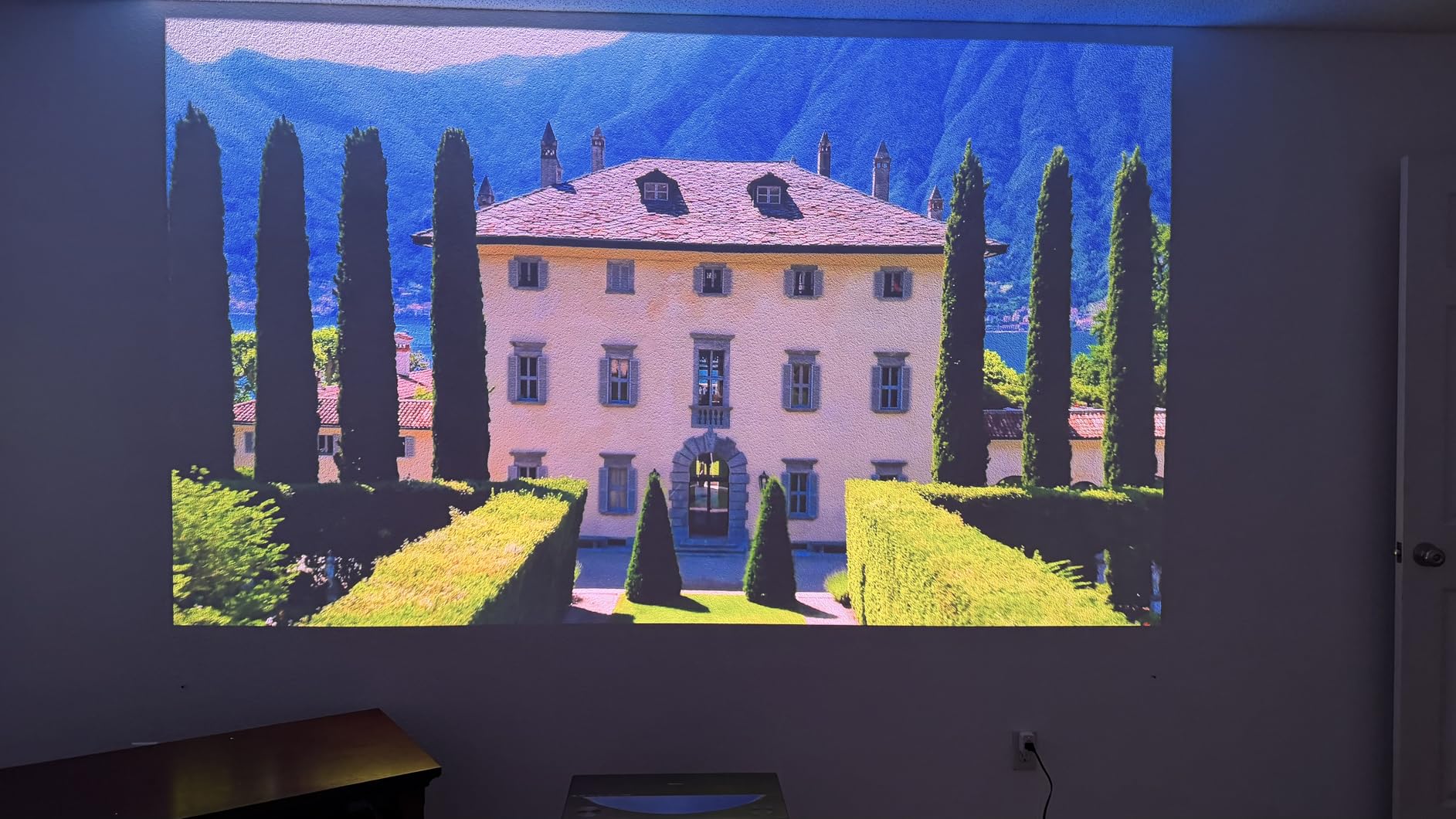
Who the PL2 suits
It suits a first-time UST buyer who wants a complete box: streaming platform, speakers, voice control, HDR and a large image, without assembling a separate system. Two-year manufacturer warranty is solid for the category.
It also suits a renter. No ceiling mount means no landlord conversation and no holes in the wall, which is a genuine advantage if you might move before the projector is paid off.
Who should skip the PL2
Skip it if you are sensitive to rainbow artifacts. There is no setting that fully removes them on single-chip DLP, and if that bothers you, a 3LCD model solves the problem outright.
Skip it if your wall is not flat, because image geometry is sensitive to drywall imperfections and a proper ALR screen measurably improves the result. The depth also makes it awkward inside standard AV furniture, so plan where it will actually sit before you commit.
We earn a commission, at no additional cost to you. CERTAIN CONTENT THAT APPEARS ON THIS SITE COMES FROM AMAZON. THIS CONTENT IS PROVIDED 'AS IS' AND IS SUBJECT TO CHANGE OR REMOVAL AT ANY TIME.
4. NexiGo Aurora Pro MKII 4K Tri-Color Laser UST Review
NexiGo Aurora Pro MKII, 4K Tri-Color Laser UST Projector, 30000:1 Contrast Ratio, Dynamic Iris & Laser Dimming, 0.21:1 Throw Ratio, Dolby Vision & Atmos, HDR10+, 3D, 4.2ms ~ 8ms Low Latency
- 30000:1 contrast
- 0.21:1 throw ratio
- 4K 120Hz at 4.2ms
- 30000 hour laser
Pros
- Highest native contrast ratio in the group
- 4K at 120Hz with 4.2ms to 8ms latency
- ALPD 5.0 removes soft corners
- Excellent out-of-box colour accuracy
- Longest rated laser life at 30000 hours
Cons
- Needs a dark room or an ALR screen in daytime
- Scene Adapt Engine is not enabled by default
- Dolby Vision bright mode is described as too bright
We earn a commission, at no additional cost to you. CERTAIN CONTENT THAT APPEARS ON THIS SITE COMES FROM AMAZON. THIS CONTENT IS PROVIDED 'AS IS' AND IS SUBJECT TO CHANGE OR REMOVAL AT ANY TIME.
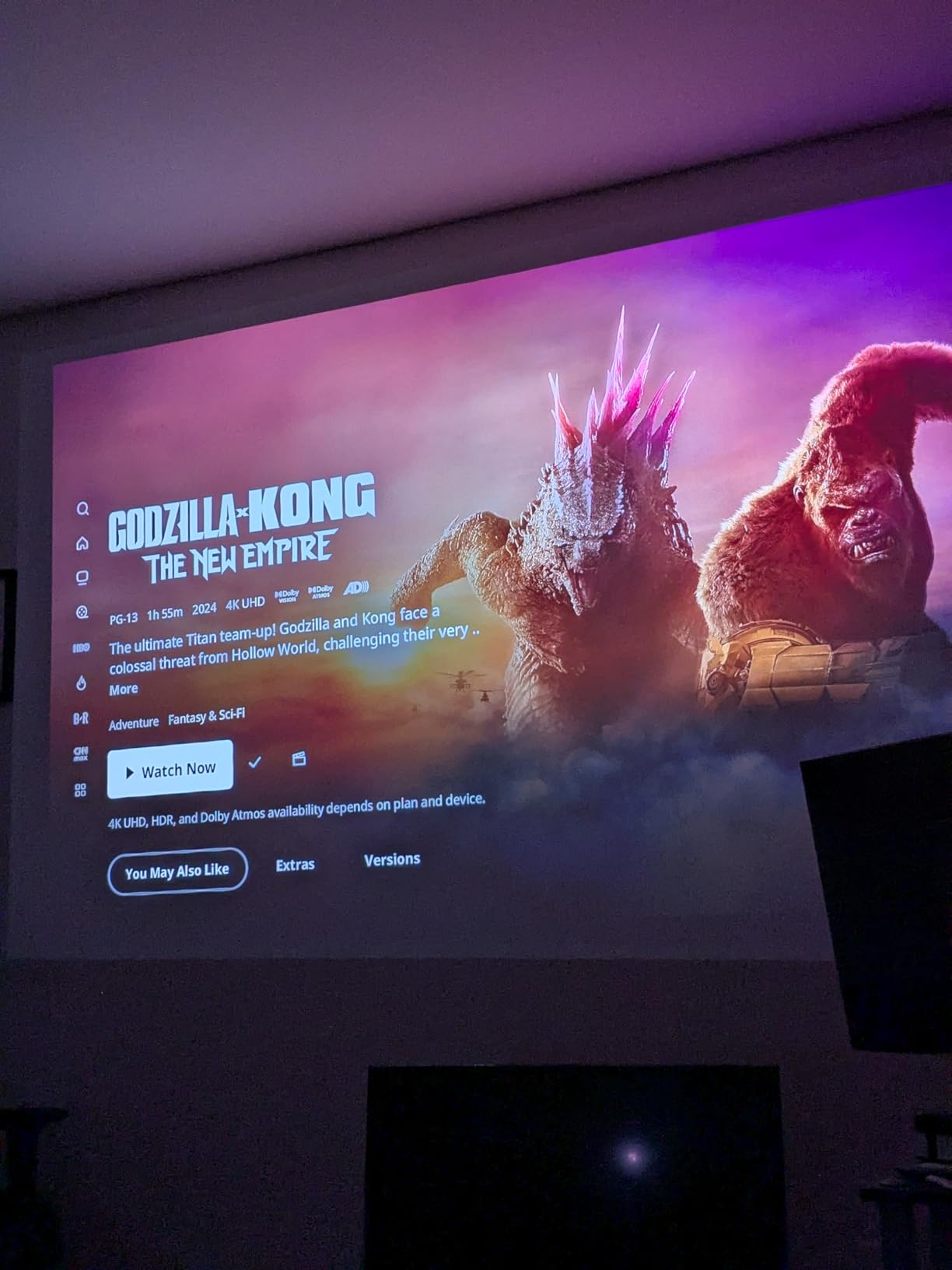
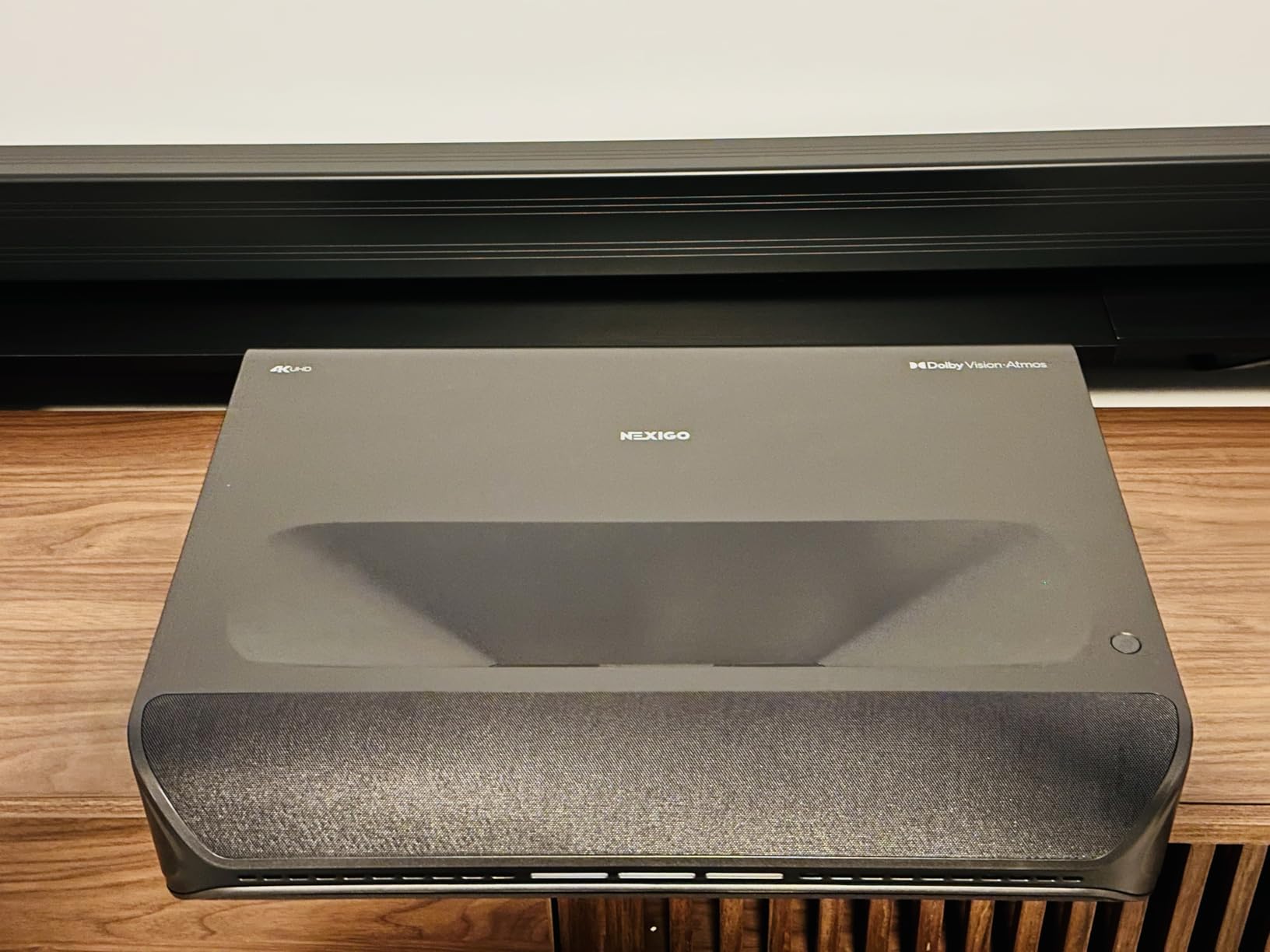
Best for: gamers who want low latency and deep blacks in the same projector. The Aurora Pro MKII runs the newest ALPD engine in this roundup at 2400 lumens with 107 percent BT.2020 coverage and a colour accuracy delta of about 1, and it projects up to 150 inches on a 0.21:1 throw ratio that needs less wall distance than most rivals.
The headline is contrast. A Scene Adapt Engine driving a Dynamic Iris and Dynamic Laser Dimming produces a stated 30000:1, and owners compare the resulting blacks favourably against a 77-inch LG OLED. That is a real difference from the grey blacks that make projectors lose to Mini-LED panels in a lit room, and it is the reason this unit tops our gaming shortlist.
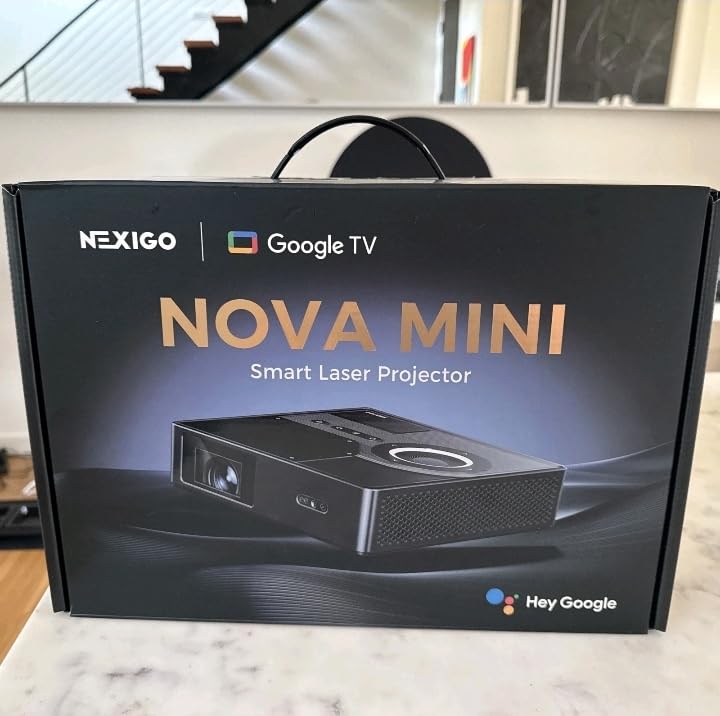
Gaming is the other headline. It accepts 4K at 120Hz and runs at 4.2ms to 8ms in Gaming Mode, which makes it the most responsive unit here by a clear margin, alongside Dolby Vision, HDR10+, Dolby Atmos and 3D. Built-in 60W speakers and HDMI eARC cover the case where you have no sound system yet, and the laser is rated at 30000 hours or about 18 years of average use.
Two honest caveats. Dolby Vision bright mode is described by owners as too bright, with Dolby Vision dark recommended instead, and the Scene Adapt Engine is not switched on by default, so you have to enable the very feature you are paying for. Daytime viewing needs a dark room or an ALR screen; buyers report a washed-out daytime image otherwise. Some also note slow boot time and a fan that cycles between speeds rather than running steadily.
Who the Aurora Pro MKII suits
It suits a PS5 or Xbox Series X household that plays competitively and watches films in the same room. There is no other model in this list that combines 4K 120Hz input with sub-10ms latency and genuinely dark blacks.
It suits a long-term buyer. A 30000 hour rated light source is the longest figure on this list, and ALPD 5.0 specifically improved focus to remove the soft corners that plagued earlier generations of this engine.
Who should skip the Aurora Pro MKII
Skip it if your main viewing is during daylight. At 2400 lumens with no high-gain screen, it is a dark-room projector, and its contrast advantage only pays off in controlled lighting.
Skip it if you are bothered by marketing-adjacent settings. The best picture mode on this unit needs a two-minute setup after every firmware update, and if you want a projector that is correct out of the box, the AWOL or the Epson are easier.
We earn a commission, at no additional cost to you. CERTAIN CONTENT THAT APPEARS ON THIS SITE COMES FROM AMAZON. THIS CONTENT IS PROVIDED 'AS IS' AND IS SUBJECT TO CHANGE OR REMOVAL AT ANY TIME.
5. NexiGo Aurora Pro 4K Tri-Color Laser UST Review
NexiGo Aurora Pro, Ultra Short Throw 4K Tri-Color Laser Projector, 2400 Lumens, Screen Adoption, Dynamic Laser Dimming, Dolby Vision & Atmos, HDR10+, HLG, Active 3D, 60W Speakers, UST TV
- 2400 lumens
- 3000:1 native contrast
- 75 to 150 inch image
- 8ms tested input lag
Pros
- Tested 8ms input lag with 120Hz MEMC
- 60W built-in stereo speakers with eARC
- Dolby Vision with HDR10+ and active 3D
- Dynamic laser dimming drops black level over 60 percent
- Firmware updates improved motion handling and colour
Cons
- Focus must be readjusted at every startup
- Not a smart TV so a streaming device is needed
- Some owners report dead pixels after a year or two
We earn a commission, at no additional cost to you. CERTAIN CONTENT THAT APPEARS ON THIS SITE COMES FROM AMAZON. THIS CONTENT IS PROVIDED 'AS IS' AND IS SUBJECT TO CHANGE OR REMOVAL AT ANY TIME.
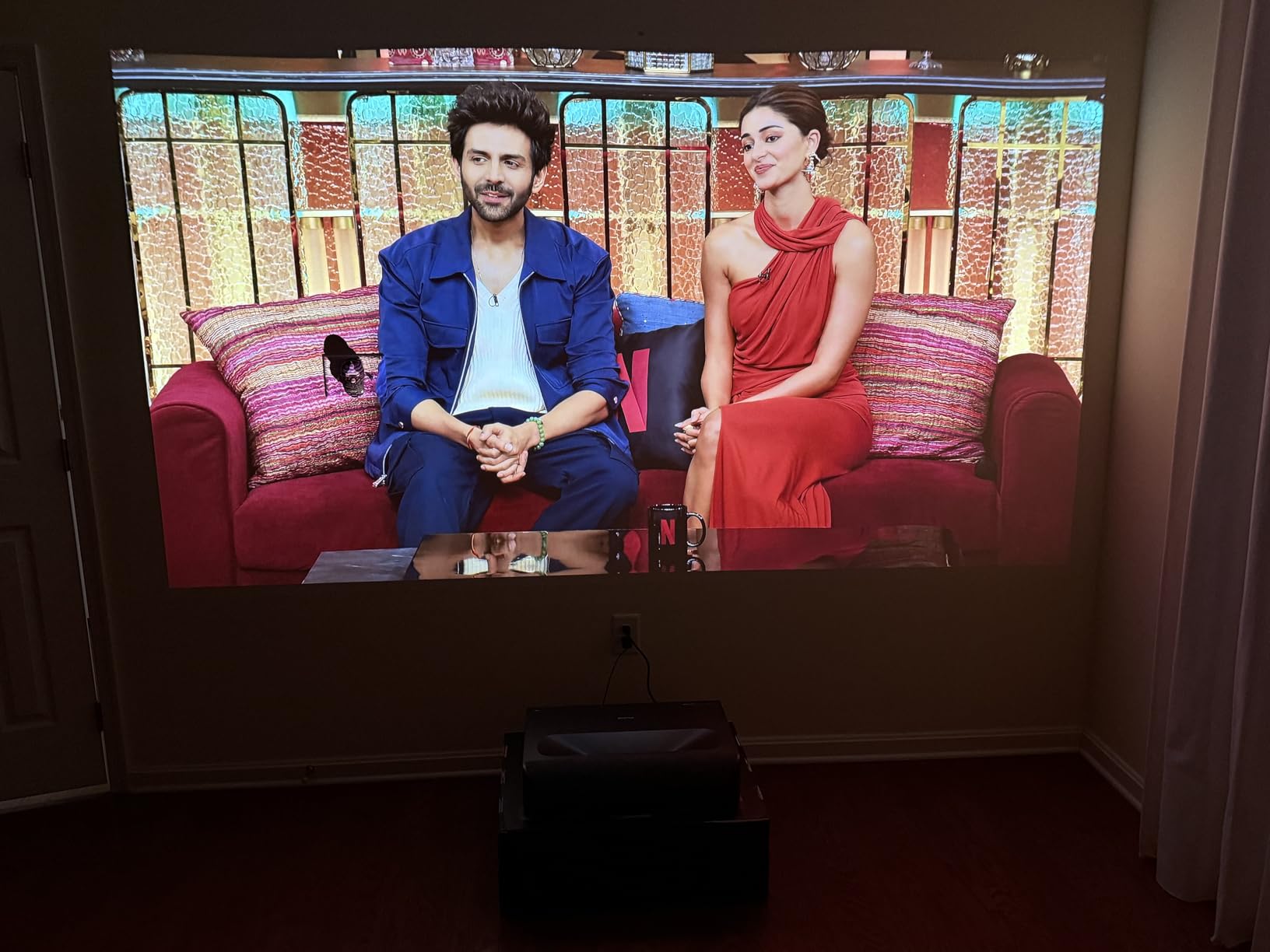
Best for: gamers on a budget who want 4K 120Hz handling and real built-in speakers. This first-generation Aurora Pro uses ALPD 4.0 RGB+ tri-color laser technology, puts out 2400 lumens, covers 107 percent Rec.2020, and does 75 to 150 inches with a minimum throw distance of 0.33 feet. The native contrast ratio is at least 3000:1 with dynamic laser dimming.
Dynamic laser dimming is the interesting part. It drops the black level by more than 60 percent and saves over 30 percent energy, and in practice owners report deep contrast out of the box alongside good colour accuracy and minimal rainbow effect for a DLP unit. Dolby Vision, HDR10+, HLG and Dolby Atmos with eARC are all present, plus active 3D.
For gaming, it accepts 4K at 120Hz input and handles motion through 120Hz MEMC with a tested input lag of 8ms. That is fast enough that the difference against the MKII is small in practice. The 60W stereo speaker array, two 15W woofers and two 15W tweeters, is genuinely the loudest built-in system among the units we looked at closely, and firmware updates have measurably improved motion handling, colour controls and a low-latency mode since launch.
The catch is the interface. This is not a full smart TV, so apps and physical media need a streaming stick or player. Focus has to be adjusted at each startup and the setting is not saved, the built-in audio lacks real stereo separation and has weak bass, and the user interface is slow. Several owners also report dead or white pixels appearing after a year or two of heavy daily use, and criticism of long-term support and DMD replacement costs.
Who the Aurora Pro suits
It suits a gamer who wants console-class latency and 120Hz motion handling without a separate soundbar. The 8ms measured lag and the 60W speaker set are a combination nothing else at this tier matches.
It suits someone in a mixed-use room, because screen adoption with auto keystone and focus means the unit handles a slightly off-angle surface better than models that demand perfection.
Who should skip the Aurora Pro
Skip it if you want the unit to run your streaming apps itself. Plan on adding a device, which is a real cost and another box on a shelf the projector already occupies.
Skip it if you hate touching controls before every viewing. Refocusing at each startup is the single most repeated negative across 271 reviews, and it is the kind of friction that erodes a TV-replacement experience fast.
We earn a commission, at no additional cost to you. CERTAIN CONTENT THAT APPEARS ON THIS SITE COMES FROM AMAZON. THIS CONTENT IS PROVIDED 'AS IS' AND IS SUBJECT TO CHANGE OR REMOVAL AT ANY TIME.
6. WEMAX Nova Pro 4K Ultra Short Throw Projector Review
WEMAX Nova Pro 4K Ultra Short Throw Projector, Google TV, 2100 ISO Lumens
- 2100 ISO lumens
- 0.23:1 throw ratio
- 150 inch from 19 inches
- 3000:1 contrast
Pros
- Compact 18 inch deep cabinet
- US-based support with a free repair service
- Google TV with native Netflix included
- Quiet fan in all but a silent room
- HDMI 2.1 with optical audio and Wi-Fi 6
Cons
- Slow and glitchy software with app load failures
- Remote lacks a source button and input resets
- Listed warranty is only 6 months
We earn a commission, at no additional cost to you. CERTAIN CONTENT THAT APPEARS ON THIS SITE COMES FROM AMAZON. THIS CONTENT IS PROVIDED 'AS IS' AND IS SUBJECT TO CHANGE OR REMOVAL AT ANY TIME.
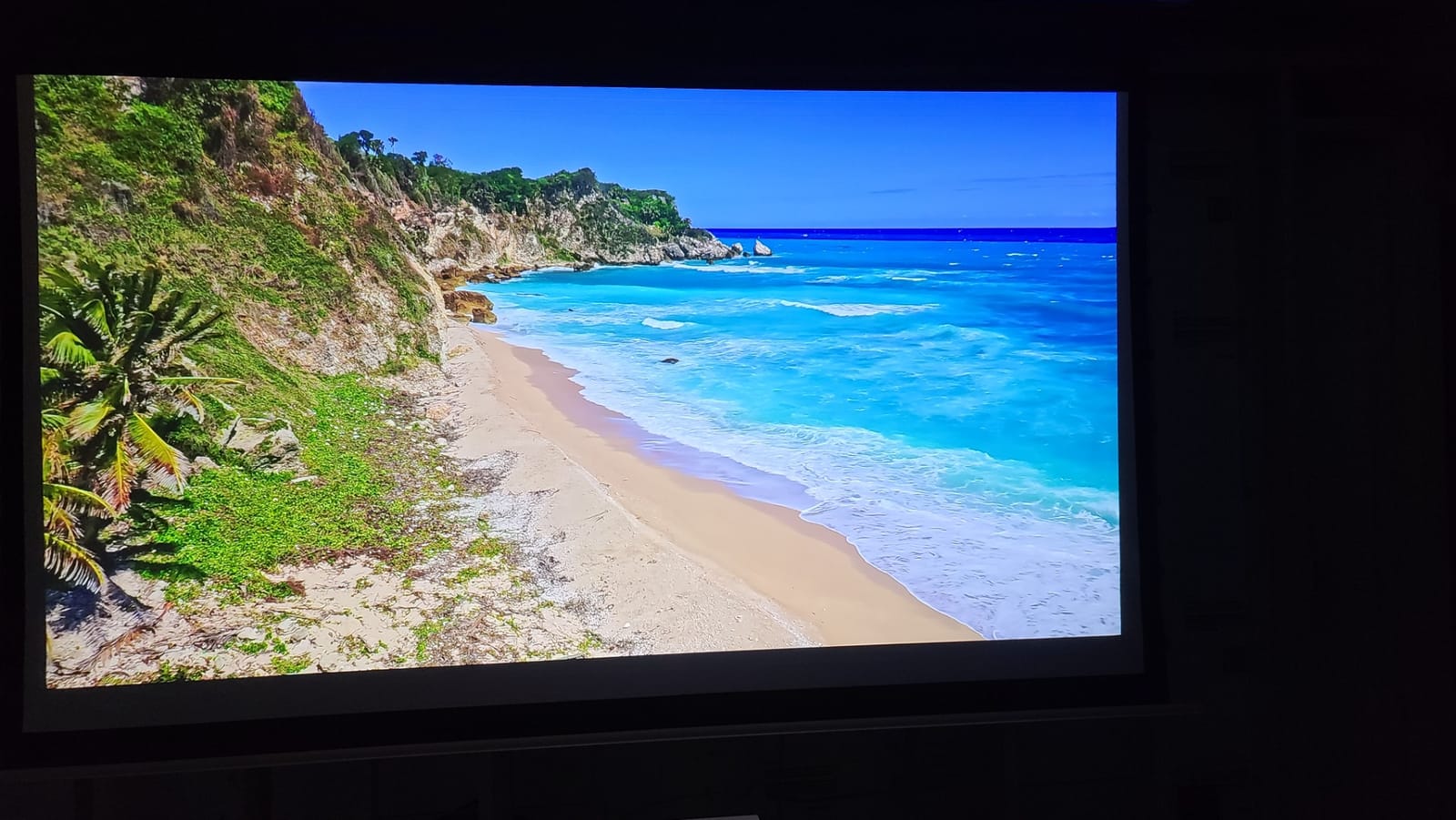
Best for: buyers who want Google TV in a compact cabinet and value support over peak specifications. The Nova Pro uses an ALPD laser light source with a 0.47 inch DMD 4K DLP panel, delivers 2100 ISO lumens at 3000:1 contrast, and projects 80 to 150 inches on a 0.23:1 throw ratio that reaches 150 inches from 49cm, or about 19 inches, away.
Colour is specified at 110 percent Rec.709 with 1.07 billion colours, with HDR10 and HLG support, active 3D and MEMC motion compensation. The 12.13 by 3.58 by 18 inch cabinet is one of the smallest footprints here and it looks like furniture rather than a projector, and there is a built-in Google TV with native Netflix, Google Assistant and more than 10000 apps.
Two details stand out. Connectivity is unusually complete for a UST, with HDMI 2.1, USB, optical audio out, LAN, Wi-Fi 6 and Bluetooth alongside dual 15W speakers with Dolby Audio and DTS-HD decoding. Support is also a genuine strength: owners across the largest review pool in this roundup, 395 reviews, repeatedly praise fast, knowledgeable US-based support and a free repair service.
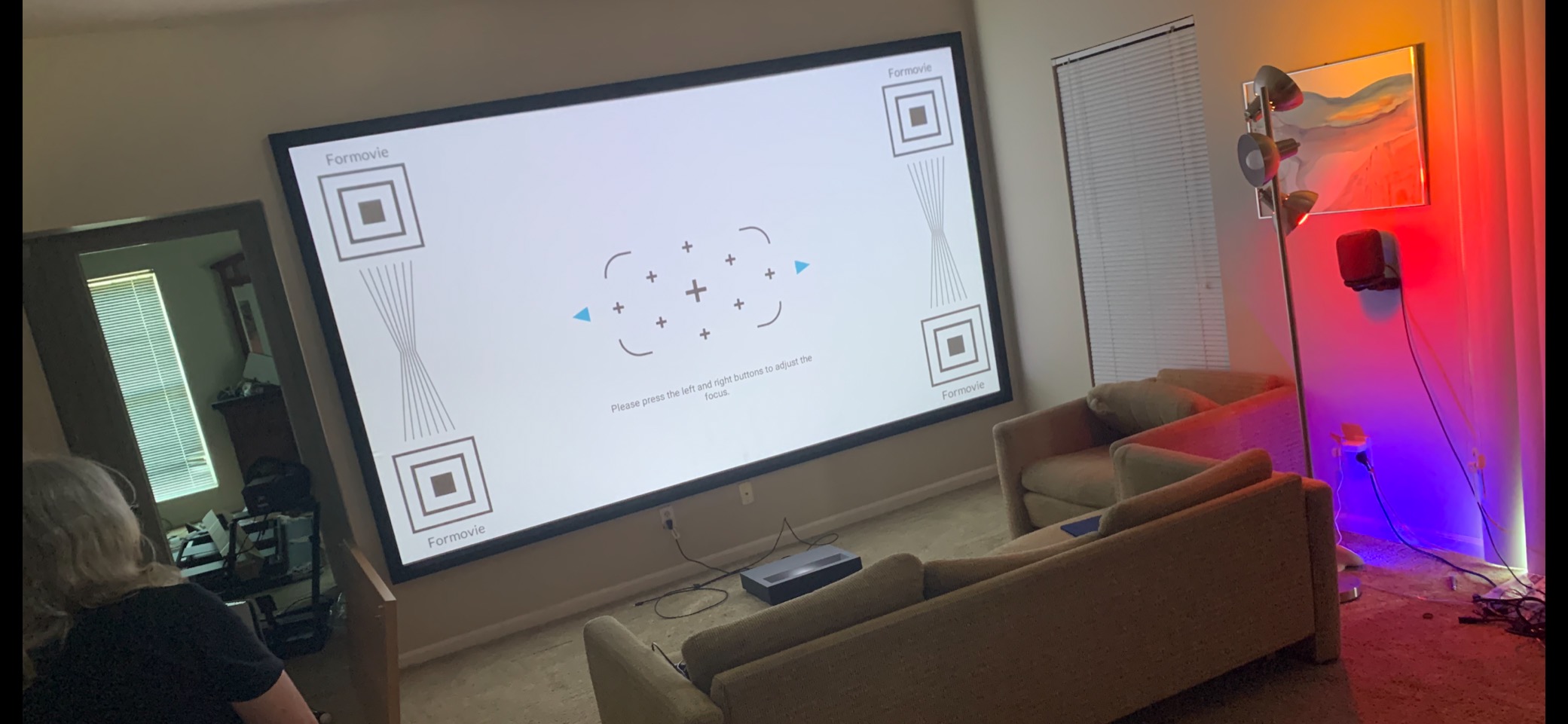
Software is the weakness, and it is not minor. Owners report slow, glitchy Google TV behaviour, app load failures, casting problems, a remote that does not consistently power the unit on, and input selection that resets after power off so you reselect the source each time. There is no dedicated source button on the remote, the on-screen keyboard is tedious for typing, and rainbow effect shows to sensitive viewers. The listed warranty is also only 6 months.
Who the Nova Pro suits
It suits a renter or a small apartment where cabinet depth is tight. At 18 inches deep and 7 kg, it disappears onto a modest console in a way the Epson and the LG simply cannot.
It suits anyone who values a company that answers the phone. On a category where long-term support and DMD chip replacement are real concerns, a free repair service is worth more than it first appears.
Who should skip the Nova Pro
Skip it if you hate fiddling with remotes. Reselecting the input every single time, with no source button, is the kind of small annoyance that makes a TV replacement feel worse than the TV it replaced.
Skip it if you want long warranty cover or top-tier brightness. Six months of stated cover is the shortest here, and 2100 ISO lumens is mid-pack, so it wants a dark room or a good screen to shine.
We earn a commission, at no additional cost to you. CERTAIN CONTENT THAT APPEARS ON THIS SITE COMES FROM AMAZON. THIS CONTENT IS PROVIDED 'AS IS' AND IS SUBJECT TO CHANGE OR REMOVAL AT ANY TIME.
7. XGIMI AURA 4K Laser UST Projector Review
XGIMI AURA Ultra Short Throw 4K Laser Projector, 2300 ISO lumens, Google TV
- 0.177:1 throw ratio
- 2300 ISO lumens
- 150 inch max image
- 20ms gaming latency
Pros
- Tightest throw ratio among the compact models
- Auto focus with auto keystone and wall flatness correction
- Harman Kardon speakers plus Art Mode
- Three HDMI ports including one with eARC
- Motorized dust cover and eye-protection shutoff
Cons
- eARC fails with some AV receivers
- Will not always power on from the remote
- Only a one year warranty
We earn a commission, at no additional cost to you. CERTAIN CONTENT THAT APPEARS ON THIS SITE COMES FROM AMAZON. THIS CONTENT IS PROVIDED 'AS IS' AND IS SUBJECT TO CHANGE OR REMOVAL AT ANY TIME.
Best for: small rooms and anyone who wants the projector to set itself up. The AURA 2 has the tightest specified throw ratio of the compact models here at 0.177:1, projects up to 150 inches, and uses XGIMI’s Dual Light 2.0 light source with a stated 1000000:1 dynamic contrast. Output is 2300 ISO lumens at native 3840 by 2160.
Picture formats are the strength. It supports Dolby Vision, is IMAX Enhanced certified and handles Dolby Atmos, with Harman Kardon built-in speakers and Google TV with licensed Netflix. It also has three HDMI ports including one with eARC, three USB, optical audio and Ethernet, so port count is a strength on a projector that usually has two or three.
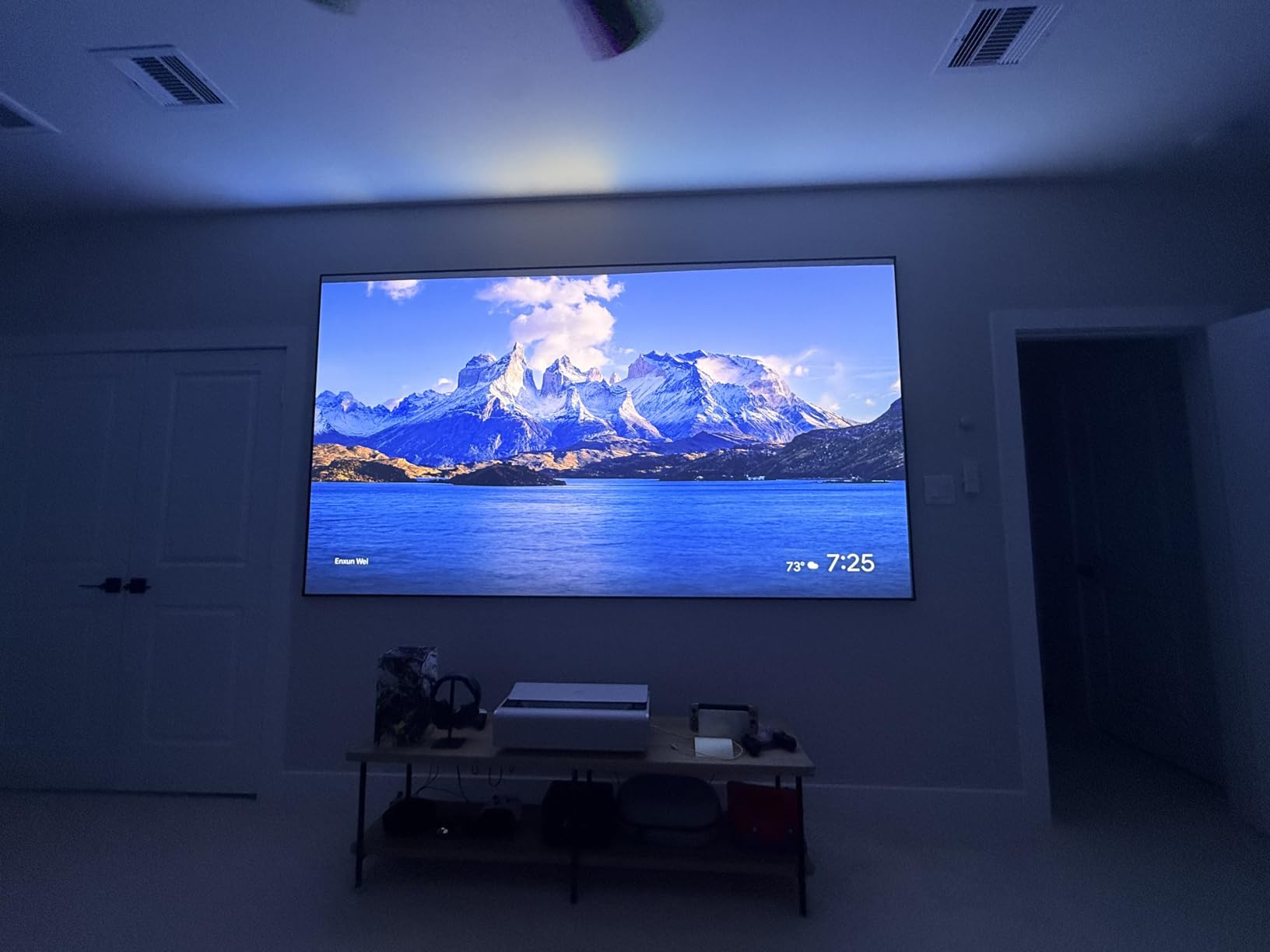
Intelligent Screen Adaptation 5.0 is the feature that changes the experience. Auto focus, auto keystone and wall flatness correction mean the projector measures the surface and fixes the geometry itself, which removes the hours of manual alignment that plague other models in this roundup. Art Mode lets it blend into the room when it is off, and a motorized dust cover plus laser eye-protection shutoff are thoughtful touches. Measured gaming latency is 20ms with MEMC enabled.
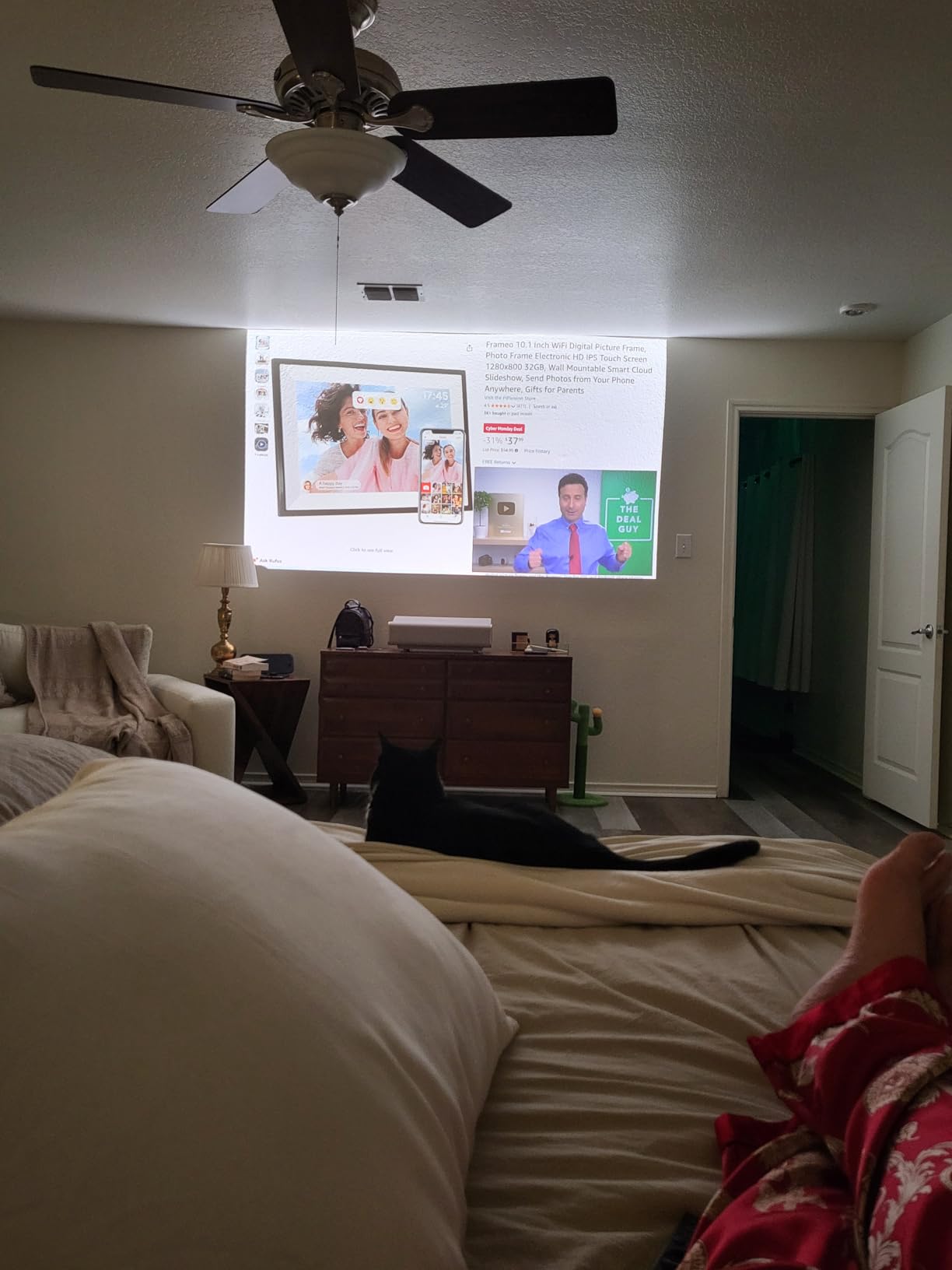
The negatives cluster around reliability and software. Owners report eARC failing to carry picture or sound to some AV receivers, occasional blackouts while audio continues, units that will not turn on from the remote without a power cycle, and brightness that resets randomly. A few units shipped with distorted or crackling speakers and needed exchange. The warranty is one year, and the 57-review pool is the second smallest here.
Who the AURA 2 suits
It suits anyone in a small apartment who cannot align a projector by hand. The auto keystone, auto focus and wall flatness correction do in seconds what other models need an afternoon for, and renter-friendly no-drill setup is a real benefit.
It suits buyers who connect a lot of sources. Three HDMI ports plus three USB, optical out, Ethernet and licensed Netflix cover almost every setup without a hub.
Who should skip the AURA 2
Skip it if you run an older AV receiver. eARC compatibility is inconsistent across receivers, and a unit that will not wake reliably from the remote is a daily irritation, not a one-time annoyance.
Skip it if you game competitively. Twenty milliseconds is fine for console play but it is not competitive-tier, and the lower-latency units in this list are meaningfully faster.
We earn a commission, at no additional cost to you. CERTAIN CONTENT THAT APPEARS ON THIS SITE COMES FROM AMAZON. THIS CONTENT IS PROVIDED 'AS IS' AND IS SUBJECT TO CHANGE OR REMOVAL AT ANY TIME.
8. LG HU85LA 120 Inch Triple Laser CineBeam Review
LG HU85LA 120” 4K UHD Resolution (3840 x 2160) Laser Smart Home Theater CineBeam Ultra Short Throw Projector, 2700 ANSI Lumen, Smart TV enabled, Alexa Built-in, HDR10, with Magic Remote – White
- 120 inch from 7.2 inches
- 2700 ANSI lumens
- triple laser source
- built-in ATSC tuner
Pros
- Tightest wall clearance of the ten models
- Built-in ATSC tuner needs no external box
- Excellent triple-laser colour in daylight
- Magic Remote controls the whole system
- Two year parts and labor warranty
Cons
- Weak black level with grey shadow detail
- No eARC and no HLG plus missing native apps
- Alignment takes hours and needs a flat wall
We earn a commission, at no additional cost to you. CERTAIN CONTENT THAT APPEARS ON THIS SITE COMES FROM AMAZON. THIS CONTENT IS PROVIDED 'AS IS' AND IS SUBJECT TO CHANGE OR REMOVAL AT ANY TIME.
Best for: people who want one device to do everything a television did, tuner included. The HU85LA puts a 120 inch image on screen from 7.2 inches from the projector surface, a wall clearance tighter than any other model in this roundup, and it carries a built-in ATSC digital tuner so broadcast TV needs no external box at all.
Light comes from a triple-laser source using red, blue, and blue with static phosphor for green, producing 2700 ANSI lumens across a 4K UHD 3840 by 2160 panel. It runs LG webOS Lite with the Magic Remote, has Alexa built in with LG ThinQ AI, and is HDR10 compatible with HDCP 2.2, with noise reduction modes at 26, 28 and 30 dB(A).
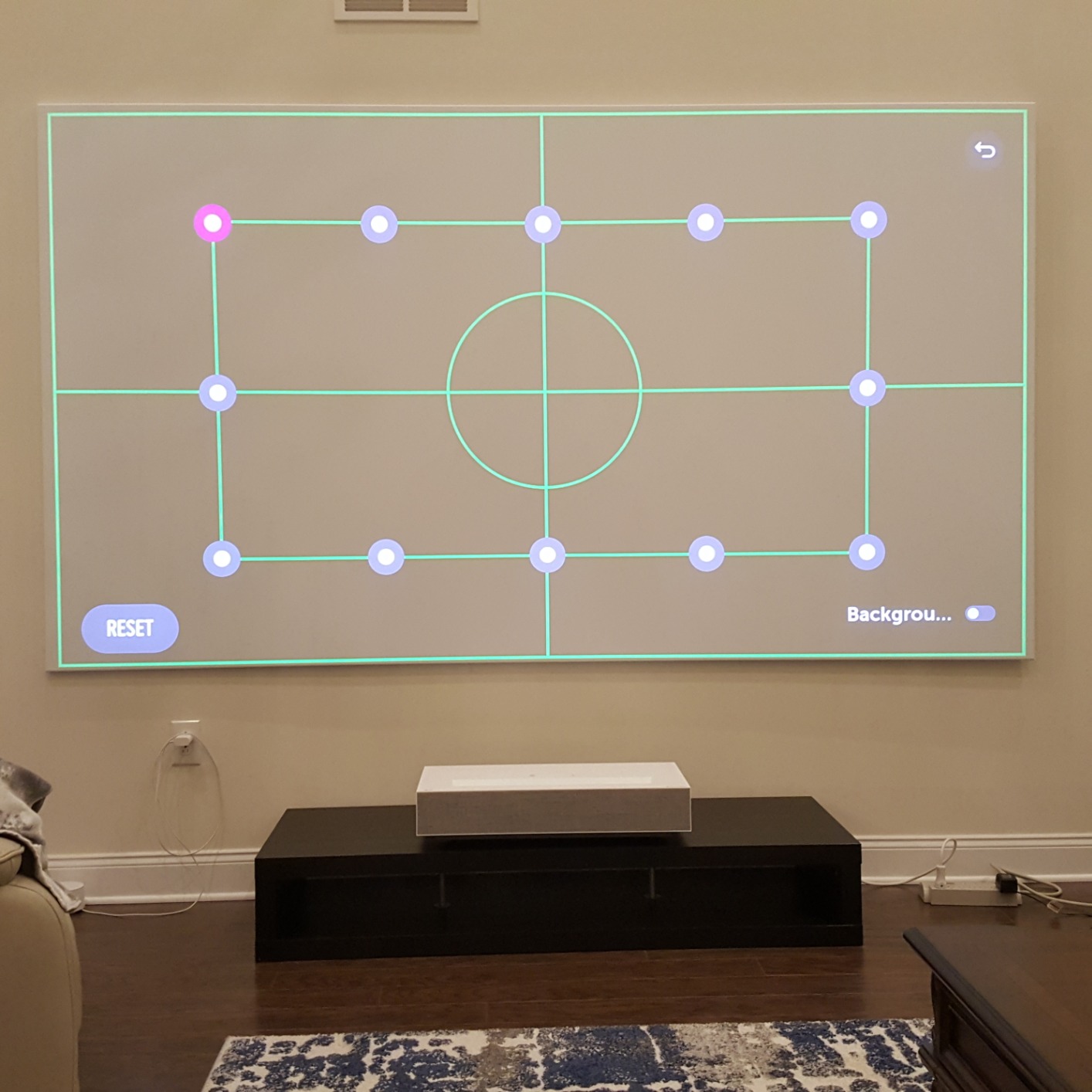
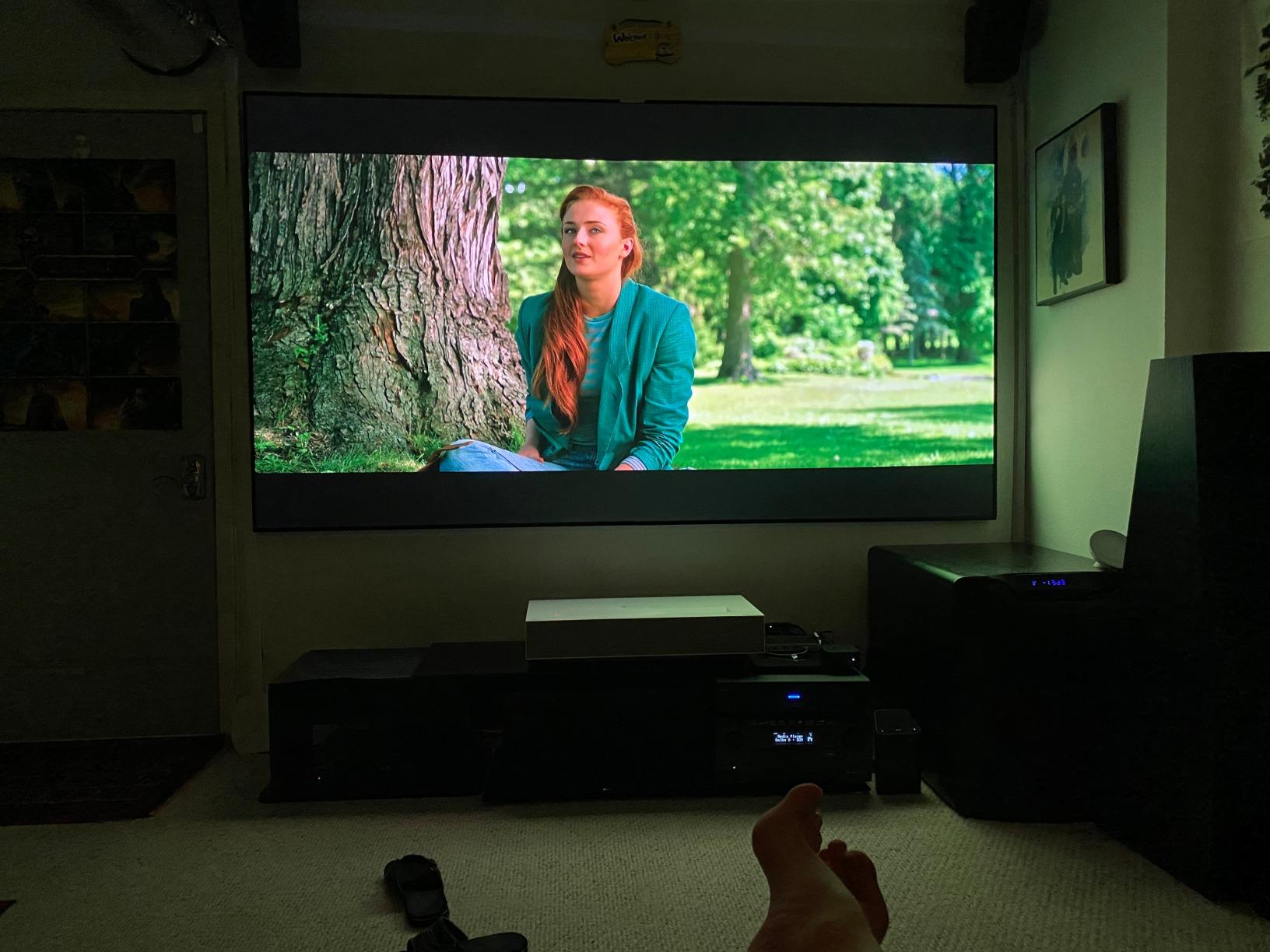
Owners with OLED backgrounds generally conclude the image is worth the trade. The triple-laser colour is excellent, the picture is bright enough to watch with lights on or in daylight, and the compact white cabinet looks like a TV cabinet when it is off. The Magic Remote is widely praised and can run the whole system, which few projector remotes manage as cleanly.
Black level is the recurring weakness, with shadow detail reading grey next to an OLED, and Dynamic Tone Mapping makes dark scenes worse, so owners recommend turning it off. Setup is punishing, taking many hours, and extremely sensitive to screen flatness. Focus degrades toward the edges at the full 120 inch image, meaning it looks sharper at 110 inches. There is also no HLG, no eARC and no native Apple TV, Disney+ or HomeKit apps.
Who the HU85LA suits
It suits someone replacing a TV who wants the tuner and the remote to keep working. A built-in ATSC tuner and a Magic Remote that runs the whole system is a combination none of the newer models replicate.
It suits a bright room with limited depth. At 7.2 inches off the wall it is the shallowest unit here, and at 2700 ANSI lumens it holds up with daylight.
Who should skip the HU85LA
Skip it if you care about black level in a dark room. Grey shadows are the consistent complaint, and against a Mini-LED panel this is where the projector case gets hard to argue.
Skip it if you need modern streaming apps or audio return. The first-generation smart platform has aged, with no eARC, no HLG and missing native apps, and a minority of owners report white pixels, HDMI port failure and shutdown faults after around two years.
We earn a commission, at no additional cost to you. CERTAIN CONTENT THAT APPEARS ON THIS SITE COMES FROM AMAZON. THIS CONTENT IS PROVIDED 'AS IS' AND IS SUBJECT TO CHANGE OR REMOVAL AT ANY TIME.
9. Formovie Theater 4K UST Laser Projector Review
Formovie Theater Ultra Short Throw 4K Laser Projector | UST Projector with Dolby Vision & Built-In Speakers | The Top UST Projector at ProjectorCentral’s 2022 & 2023 Laser TV Showdown
- 1800 ISO lumens
- ALPD 4.0 RGB+ triple laser
- 80 to 150 inch image
- 3000:1 FOFO contrast
Pros
- Won ProjectorCentral's Laser TV Showdown in 2022 and 2023
- 107 percent Rec.2020 from the RGB+ engine
- Certified Android TV 11.0 with Chromecast
- Bowers and Wilkins tuned 15W speakers
- Cosmos Grey cabinet suits AV furniture
Cons
- Lowest light output in the group at 1800 ISO lumens
- Only a one year warranty
- Dual 15W speakers cannot create spatial audio
We earn a commission, at no additional cost to you. CERTAIN CONTENT THAT APPEARS ON THIS SITE COMES FROM AMAZON. THIS CONTENT IS PROVIDED 'AS IS' AND IS SUBJECT TO CHANGE OR REMOVAL AT ANY TIME.
Best for: dedicated dark home theaters and buyers who trust independent testing over owner star ratings. The Formovie Theater won first place and the judges’ pick at ProjectorCentral’s 2022 and 2023 Laser TV Showdowns, and that gap between expert testing and Amazon owner ratings is the single most interesting story in this roundup.
On paper it is strong. ALPD 4.0 RGB+ triple laser, 30 percent more powerful than ALPD 3.0, 107 percent Rec.2020 and over 1.07 billion colours, Dolby Vision with HDR10+ and HDR10 and HLG decoding, Dolby Atmos from dual 15W full-range drivers with speakers designed by Bowers and Wilkins, and certified Android TV 11.0 with Google Play and Chromecast.
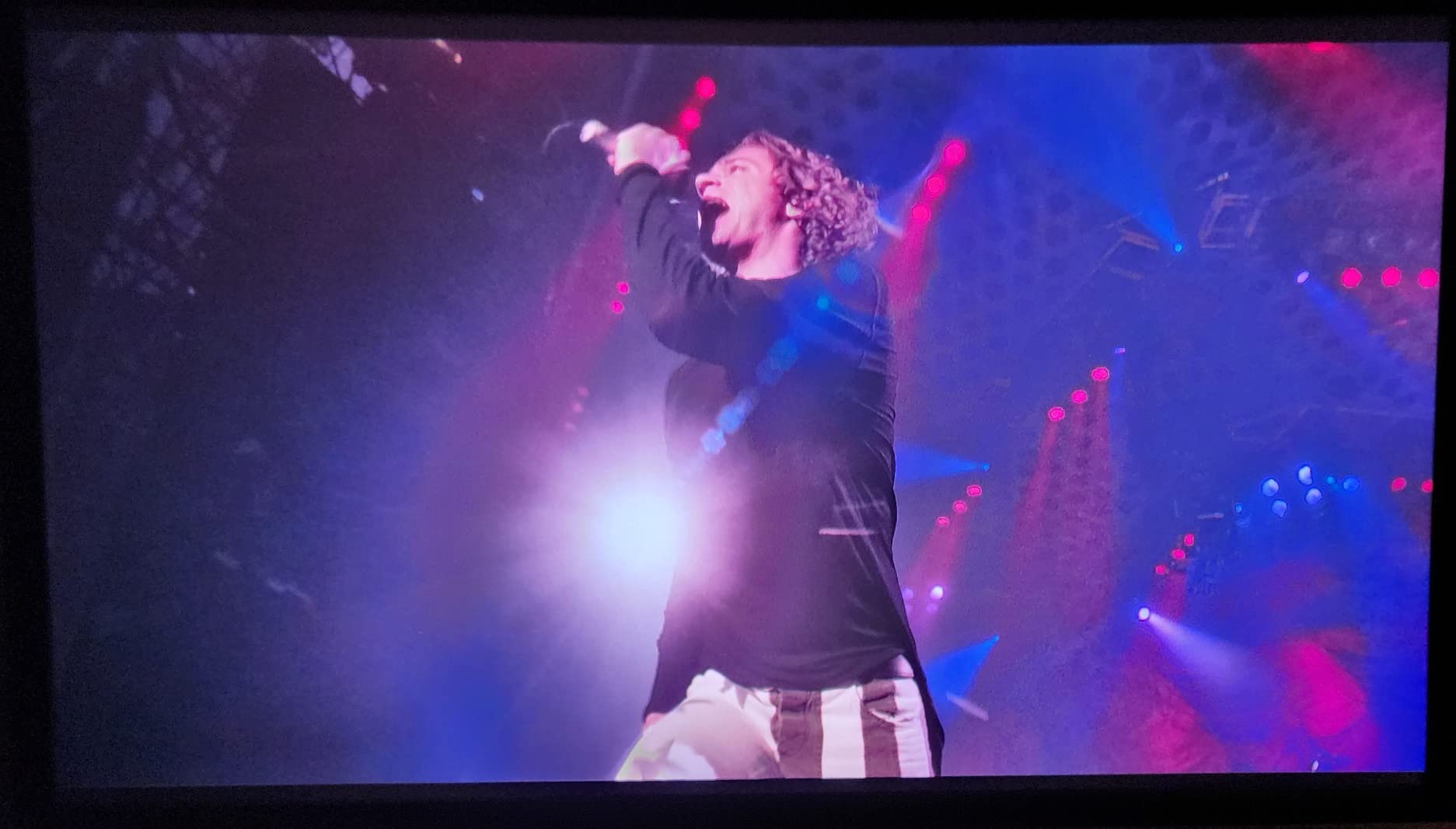
It covers 80 to 150 inches with a stated 1800 ISO lumens, or 1500 ANSI lumens max white, and 3000:1 FOFO contrast. That brightness is the lowest of the ten units in this list, and it is the reason buyers want a dark room or a good ALR screen before using it in daylight. The Cosmos Grey cabinet is elegant and blends into AV furniture, and at 7.5 kg the unit is easy to reposition.
Owner ratings tell a harsher story than the awards do. Across 102 reviews the average is the second lowest here, with 16 percent one-star ratings, and the recurring complaints are brightness in a lit room, the one-year warranty, and dual 15W speakers that cannot create real spatial audio despite the Atmos label. It is also audible in quiet passages, and setup needs care on non-flat walls.
Who the Formovie Theater suits
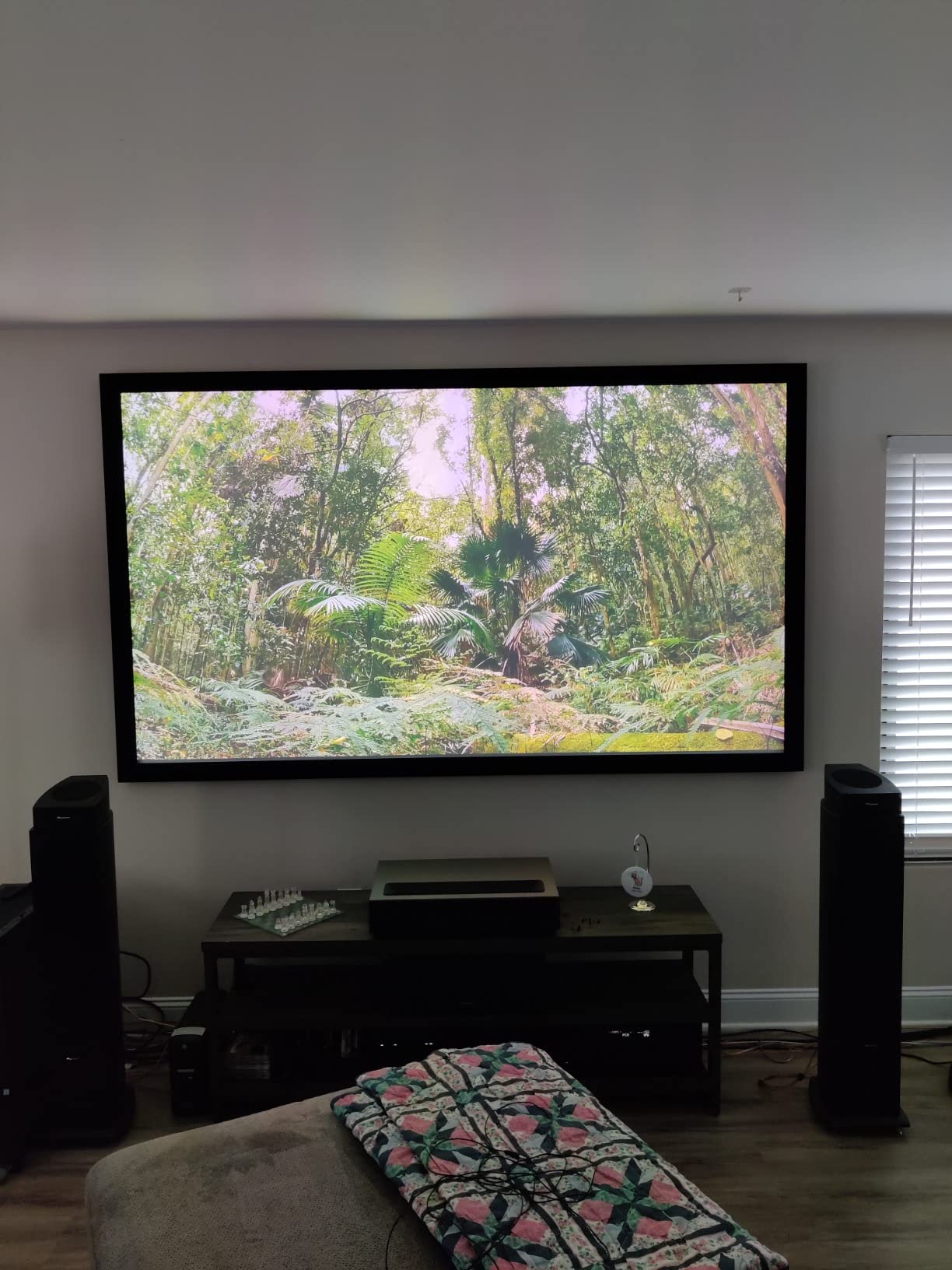
It suits someone with a proper dark media room or basement. That is the environment this projector was tuned for, and in controlled lighting its colour and HDR handling earn the independent awards.
It suits a buyer who cares about the audio and the software. Bowers and Wilkins tuned speakers and a full certified Android TV 11.0 with Chromecast are both genuinely good, even if they are not a substitute for a soundbar.
Who should skip the Formovie Theater
Skip it for a bright living room. At 1800 ISO lumens this is the dimmest unit here, and it needs a high-gain screen to compete in daylight, which pushes your total cost up rather than down.
Skip it if quiet matters during film dialogue or if you want long warranty cover. One year of cover is the shortest of the multi-year options, and the fan is audible in quiet passages.
We earn a commission, at no additional cost to you. CERTAIN CONTENT THAT APPEARS ON THIS SITE COMES FROM AMAZON. THIS CONTENT IS PROVIDED 'AS IS' AND IS SUBJECT TO CHANGE OR REMOVAL AT ANY TIME.
10. BenQ V7050i 4K Laser Smart TV Projector Review
BenQ V7050i 4K Laser Smart TV Projector l Ultra Short Throw l 2500 ANSI Lumens Bright and Beautiful l HDR-PRO l HDR10 & HLG l Android TV l Wireless Casting l HDMIx2 & SPDIF I ARC I 3 Year Warranty
- 2500 ANSI lumens
- 100 inch at 8.7 inches
- up to 123 inch image
- 3 year warranty
Pros
- 98 percent DCI-P3 with HDR-PRO tone mapping
- Filmmaker Mode for accurate colour
- Longest warranty in the group at three years
- Built-in speakers rival some soundbars
- Auto lens cover protects the optics
Cons
- Not recommended for gaming due to input lag
- Only two HDMI ports and no Atmos passthrough
- White spot defects reported after one to two years
We earn a commission, at no additional cost to you. CERTAIN CONTENT THAT APPEARS ON THIS SITE COMES FROM AMAZON. THIS CONTENT IS PROVIDED 'AS IS' AND IS SUBJECT TO CHANGE OR REMOVAL AT ANY TIME.
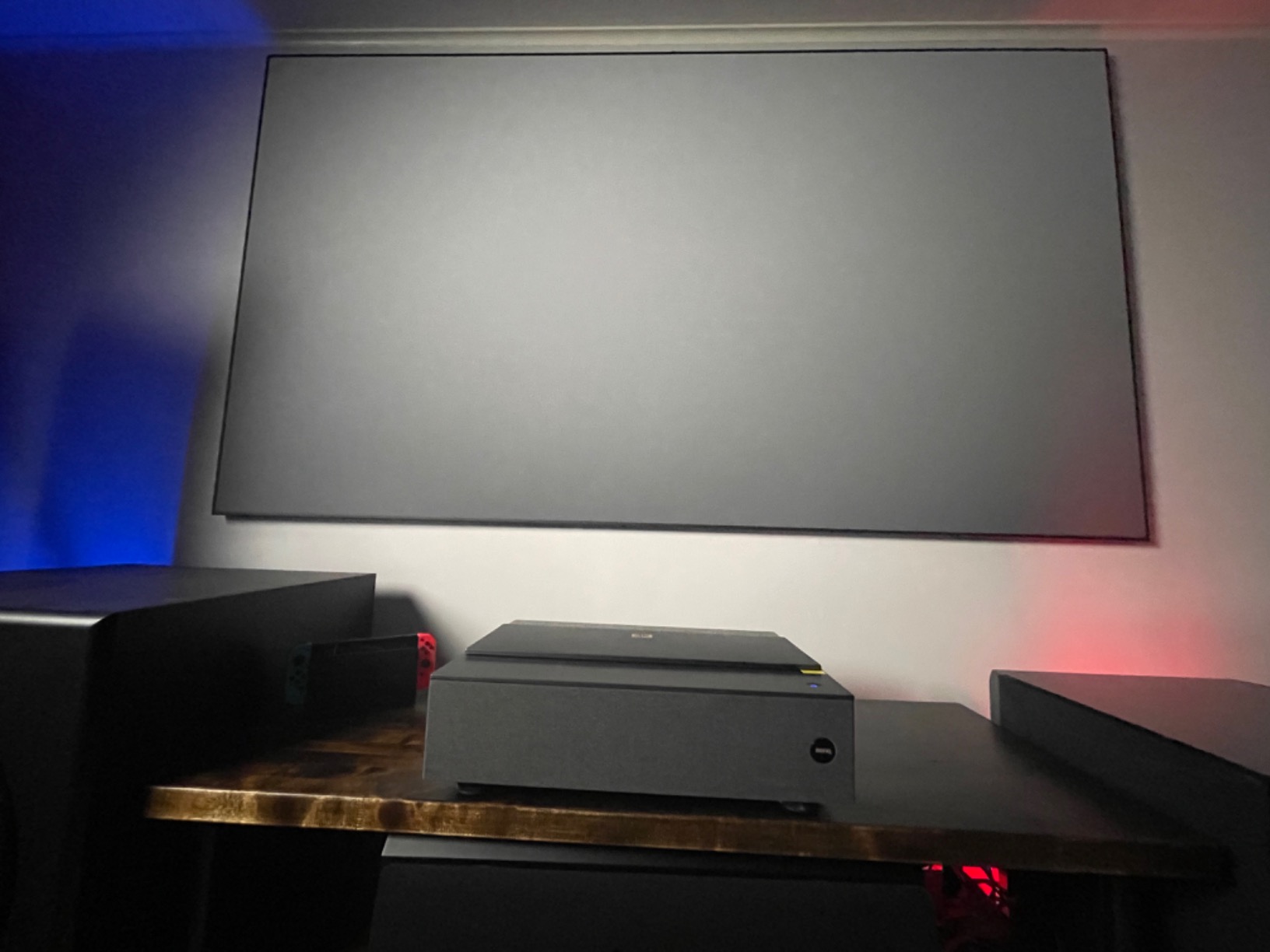
Best for: movie nights and 3D, backed by the longest warranty in the category. The V7050i uses a DLP engine with true 3840 by 2160 and 8.3 million pixels, 2500 ANSI lumens, and 98 percent DCI-P3 super wide colour with HDR-PRO tone mapping plus a Filmmaker Mode picture setting. It is a ProjectorCentral Editors Choice and won an EISA Best Product Award for 2021-2022.
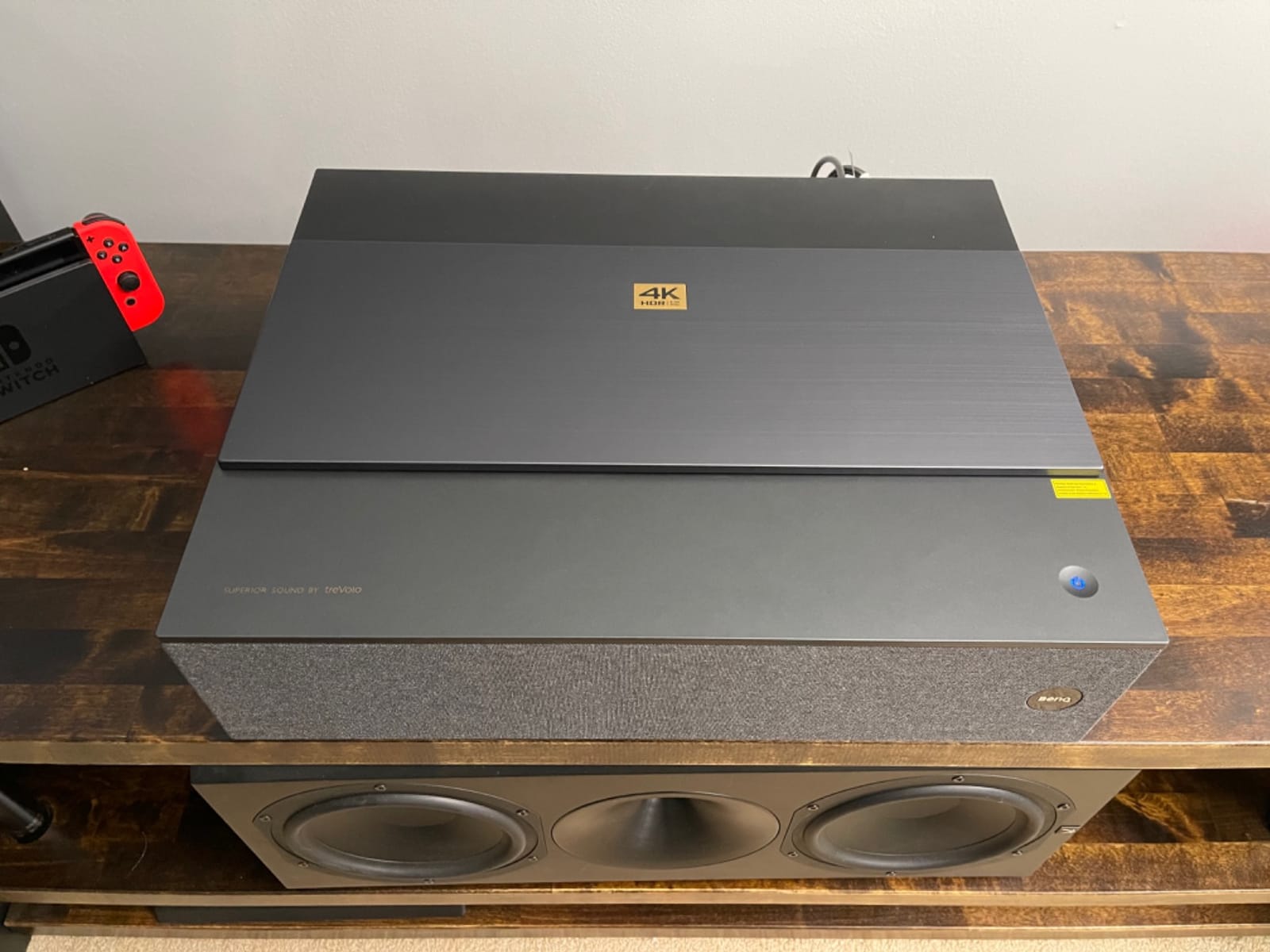
The throw geometry is the tightest of the traditional throw models here: a 100 inch image at 8.7 inches of projection distance, up to 123 inches. It runs Google-certified Android TV with wireless casting, and the built-in speakers outperform typical TV speakers and some soundbars. A three-year manufacturer warranty is the longest of any model in this roundup.
Movie-focused owners are enthusiastic, describing excellent colour depth and clarity, dramatic improvement over lower-tier projectors, and 3D performance as stunning. Owners also praise the auto lens cover that closes on power down, the built-in measurement rulers and visual installation guide, and low heat output with a quiet fan positioned away from seating. Image is reported as sharp and bright on an ALR screen even with blinds fully open.
The problems are serious enough to read carefully. At 43 reviews this is the smallest pool in the set, and the average rating is the lowest, with 27 percent one-star ratings driven by reliability: white spot defects appearing after one to two years and repeat repair cycles. It cannot pass Dolby Atmos to a soundbar or AVR, has only two HDMI ports with a Wi-Fi only streaming dongle in the box, shows slightly grey blacks during the day, and is not recommended for gaming because of input lag.
Who the V7050i suits
It suits a cinema-first household. Filmmaker Mode, HDR-PRO tone mapping and 98 percent DCI-P3 make this the most deliberately colour-accurate unit in the group, and 3D is described as a genuine strength rather than a checkbox.
It suits anyone who wants warranty cover as a selling point. Three years from the manufacturer is longer than the one to two years offered by several rivals here, which changes the risk calculation on a first-generation panel.
Who should skip the V7050i
Skip it if you game. Input lag is the most cited reason buyers avoid it, and there are faster models at similar sizes elsewhere in this list.
Skip it if your room is bright or your audio system is Atmos-based. Reflected light spills onto the ceiling without an ALR or CLR screen, black levels read grey during the day, and there is no Atmos passthrough to a soundbar or receiver.
We earn a commission, at no additional cost to you. CERTAIN CONTENT THAT APPEARS ON THIS SITE COMES FROM AMAZON. THIS CONTENT IS PROVIDED 'AS IS' AND IS SUBJECT TO CHANGE OR REMOVAL AT ANY TIME.
How to Choose an Ultra Short Throw Projector in 2026
Ten specs matter more than the other thirty combined: throw ratio, measured brightness, light source type, image size range, gaming latency, smart platform, warranty length and whether you need a screen. Work through them in that order and most of the decision makes itself.
Throw ratio and how close the projector sits
Throw ratio is distance divided by image width, and ultra short throw means under roughly 0.4:1. Practically, that means a unit sits about 7 to 20 inches from the wall depending on the model, which lets it live on your media console. Measure your cabinet depth before choosing, because a fixed ratio like the AWOL’s 0.25:1 cannot be adjusted, and a unit that overhangs your furniture will end up on the floor.
Brightness and the room brightness ladder
Match lumens to your room, not to the spec sheet. A dedicated dark theater is happy with 1500 to 2000 lumens. A family room with lamps on after dark wants 2300 to 2700. A living room with daylight or a window opposite the screen needs 3000 or more, and among these ten that means the AWOL LTV-3000 Pro or the Epson LS800. Note that ANSI and ISO lumens are measured differently, so do not compare a figure without its unit to one with it.
Triple laser, ALPD laser phosphor or 3LCD
Triple laser, used in the AWOL LTV-3000 Pro, the LG HU85LA and both NexiGo models, uses separate red, green and blue lasers with no colour wheel, giving a wide gamut and no sequential colour artefacts. ALPD laser phosphor, in the Formovie Theater, the WEMAX Nova Pro and the XGIMI AURA, is generally gentler on speckle. 3LCD, only the Epson LS800 here, shows no rainbow effect at all and keeps colour brightness equal to white brightness, at the cost of the highest contrast and the largest chassis.
Laser speckle, the flaw you cannot shop for
Laser speckle is an interference pattern produced by coherent laser light, and it is the flaw projector buyers mention most often without any spec to compare. It grows more visible as the image gets larger, because you see the same pattern across a wider field, and it is more noticeable on shorter-throw units where the light angle is shallower. Forum buyers regularly separate ALPD and hybrid engines from tri-laser units on exactly this basis, and the practical advice is to view one in person before committing, because whether it bothers you is personal rather than measurable.
Screen type: wall, ALR or black grid
A plain white wall genuinely works, and the Epson and Hisense owners here confirm it. A grey ALR screen rejects ambient light and lets the lower-brightness units compete in a lit room. A black-grid or high-gain screen squeezes out more contrast in a dark room at the cost of a visible grid, narrower viewing angles and a very short throw. Textureless screens avoid the grid look for a higher price. The rule that emerges from owner experience: the lower your projector’s lumens and the brighter your room, the more the screen is doing the work, and the more the total cost climbs. Buyers routinely underestimate this, which is the single biggest budget surprise in the category.
Gaming readiness for PS5 and Xbox Series X
Check three things rather than trusting the HDMI 2.1 label. Does it accept 4K at 120Hz, does it support VRR, and what is the measured input lag. The NexiGo Aurora Pro MKII leads on latency at 4.2ms to 8ms with 4K 120Hz, the original Aurora Pro follows at a tested 8ms, and the Epson is low enough for console play. The XGIMI AURA 2 runs 20ms, and the BenQ V7050i is not recommended for gaming. Port count matters too: the BenQ has two HDMI ports and the XGIMI has three.
Total cost including the screen
Budget the projector and the screen as one purchase. Owners in projector forums consistently set aside the projector first and discover the screen afterwards, which is the wrong order. Add a soundbar if the unit has no Atmos passthrough, and add a streaming stick if the smart platform is weak or missing Netflix. Warranty length is worth weighting too: this roundup ranges from six months on the WEMAX to three years on the BenQ.
Frequently Asked Questions
Are ultra short throw projectors any good?
Yes, for one specific job: replacing a large television in a living room. They sit about 7 to 20 inches from the wall, project 100 to 150 inches, and need no ceiling mount or wiring. Their real limits are black depth in bright rooms, laser speckle on some triple-laser models, and image geometry that demands a flat surface. In a dark dedicated theater a cheaper long-throw projector still wins.
How far does an ultra short throw projector need to be from the wall?
Under about 0.4 times the image width. A 0.18 throw ratio puts a 100-inch image, roughly 87 inches wide, about 15.7 inches from the wall. In practice the models here need anywhere from 7.2 inches for the LG HU85LA at 120 inches to around 19 inches for the WEMAX Nova Pro at 150 inches. Measure your cabinet depth first, since several ratios are fixed.
What type of screen is best for ultra short throw projectors?
It depends on your room and your projector’s lumens. A plain white wall works in a dark room. A grey ALR screen is the right call for a lit living room and for projectors under 2500 lumens. A black-grid or high-gain screen maximises contrast in a dedicated dark theater but shows a visible grid and narrows viewing angles. Textureless versions remove the grid look at a higher cost.
Are ALR projector screens worth it?
For a bright living room, yes. An ALR screen rejects ambient light and lets a lower-lumen projector stay watchable with curtains open, which is where the Epson LS800 and the AWOL LTV-3000 Pro gain the most. In a dark room on a white wall, the money is better spent elsewhere. Remember the screen is a separate cost from the projector, and it is where most owners are surprised.
Is there a 120 inch ultra short throw projector available?
Yes, and it is the most common size in this category. Eight of the ten models here run to 150 inches, so 120 inches sits comfortably inside their range. The LG HU85LA is built specifically around it, throwing a 120 inch image from 7.2 inches away, and the BenQ V7050i tops out at 123 inches. Remember that brightness falls as the image grows, so a 150 inch setup needs more lumens than a 100 inch one.
Are short throw projectors better than TVs?
For screen size, yes. A UST gives you 100 to 150 inches where a comparable television would cost far more per inch, and a 100-inch Mini-LED panel still beats any projector on black depth in a bright room. So the rule is simple: buy the projector for size and for rooms where drilling is not allowed, and buy the television for black level, smart platform polish and zero maintenance.
How long do laser projectors last?
The light sources in this roundup are rated from 20000 to 30000 hours, with the NexiGo Aurora Pro MKII quoted at 30000 hours or about 18 years of average use, and the AWOL LTV-3000 Pro, Hisense PL2 and other models at 25000 hours. That figure is the light source, not the whole projector, and DLP or LCD panels can develop dead or white pixels earlier, which several owners report after one to two years.
The Verdict on Ultra Short Throw Projectors in 2026
The best ultra short throw projector in 2026 is the AWOL VISION LTV-3000 Pro, and it wins on the combination that actually matters: the highest owner rating in this group, a triple-laser engine with Dolby Vision and HDR10+, a 0.25:1 fixed throw that keeps it near the wall, and enough brightness to work in a lit room once it is on an ALR screen. Budget for that screen, because it is where the picture comes from.
Buy the Epson EpiqVision LS800 if daylight is part of your routine or anyone in the house is sensitive to rainbow artifacts. Buy the NexiGo Aurora Pro MKII if you game and want 4K 120Hz with 4.2ms latency and the deepest blacks here. Buy the Hisense PL2 if you want a complete smart box at a sensible outlay, and the XGIMI AURA 2 if you want the projector to set itself up in a small apartment.
And check whether a 100-inch Mini-LED television already serves your room, because on black level in a bright space it still wins. If your reason for going larger is screen size, or you cannot drill for a ceiling mount, these ten are the shortlist. Check current pricing on any of them before you commit.