
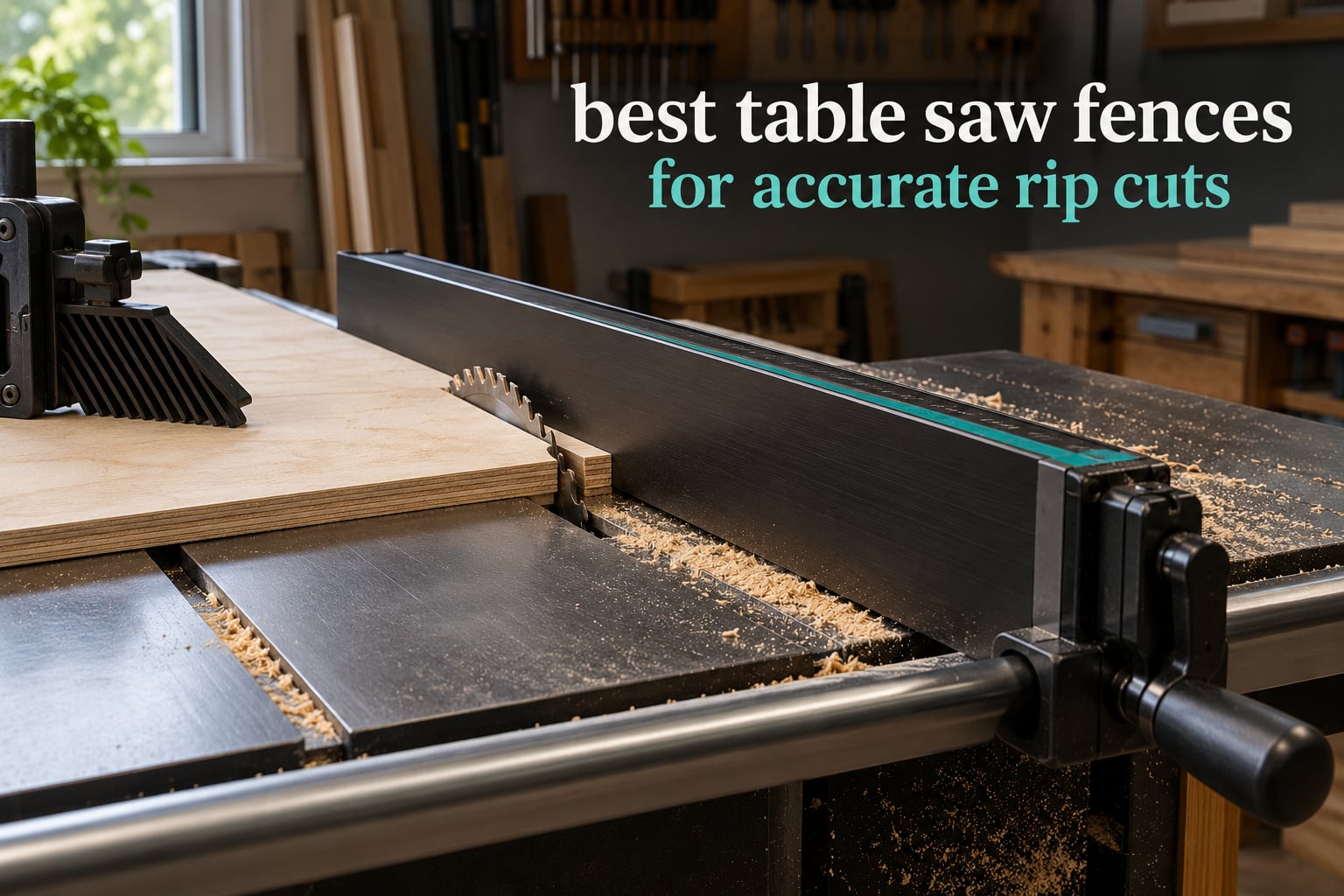
Most bad rip cuts are not blade problems. They are fence problems. A fence that creeps under the sideways shove of a board, that bows when you clamp it, or that can only be measured with a tape will hand you a different width every time even on a saw with a perfectly flat cast iron top. Upgrading the fence is the least expensive accuracy gain available on an otherwise decent table saw, and it is the upgrade most shops skip.
This roundup covers the best table saw fences for accurate rip cuts that you can actually bolt to a saw and use every day. We focused on complete fence-and-rail systems and on bolt-on fence faces that solve a specific problem, and we left out the miter gauges, thin-rip jigs and crosscut sleds that clutter the same search results.
Every fence here was judged on the same four things: whether it holds parallel once set, whether it locks without creeping, whether it measures from the table rather than from a tape, and how much work it takes to install. Three of the six ship with their own rails and scale. Two are add-on fence bodies for saws you may already own, and one is a T-square style unit restricted to a short list of older Delta models.
If your cuts are inconsistent and you are not sure what is drifting, start with the accuracy check further down this page before you buy anything. It takes ten minutes and it tells you whether the fence is the problem at all.
Table of Contents
Top 3 Picks for Accurate Rip Cuts (October 2026)
Delta T3 Fence System
- Three-point locking system
- Rail and fence system included
- 30 inch rip capacity

As an Amazon Affiliate we earn from qualifying purchases. CERTAIN CONTENT THAT APPEARS ON THIS SITE COMES FROM AMAZON. THIS CONTENT IS PROVIDED 'AS IS' AND IS SUBJECT TO CHANGE OR REMOVAL AT ANY TIME.
Best Table Saw Fences for Accurate Rip Cuts in 2026
All six products below appear in full further down, with the installation reality and the compromises each owner reports. Listings and pricing move around, so use the buttons to check the current version of each fence before you buy.
| Product | Key Features | |
|---|---|---|
|
Delta T3 Fence System 30 in
|
|
Check Latest Price |
 BOW XT XTENDER 46 in BOW XT XTENDER 46 in
|
|
Check Latest Price |
|
Shop Fox W1410 Fence
|
|
Check Latest Price |
 Shop Fox W1716 Aluma-Classic 57 in Shop Fox W1716 Aluma-Classic 57 in
|
|
Check Latest Price |
 Peachtree Uni Style Fence Peachtree Uni Style Fence
|
|
Check Latest Price |
 Delta 78-919BT2 Biesemeyer Delta 78-919BT2 Biesemeyer
|
|
Check Latest Price |
We earn from qualifying purchases. CERTAIN CONTENT THAT APPEARS ON THIS SITE COMES FROM AMAZON. THIS CONTENT IS PROVIDED 'AS IS' AND IS SUBJECT TO CHANGE OR REMOVAL AT ANY TIME.
1. Delta T3 Fence System – the complete upgrade for Delta tables
Delta, 36-T30T3, 30 in. DELTA® T3 Fence System
- Three-point locking system
- 57-1/2 in rail with 37 in fence
- 38 lb complete set
Pros
- Locks tight and does not creep under lateral pressure
- Often square enough to adjust to parallel straight from the box
- Heavy rails and front plus rear supports span table extensions
- Included gauge simplifies alignment and scale calibration
- Two-year manufacturer warranty
Cons
- Instructions do not clearly label which rail is front and which is rear
- Scale is a metallic decal rather than etched markings
- Some units arrive with missing hardware
We earn a commission, at no additional cost to you. CERTAIN CONTENT THAT APPEARS ON THIS SITE COMES FROM AMAZON. THIS CONTENT IS PROVIDED 'AS IS' AND IS SUBJECT TO CHANGE OR REMOVAL AT ANY TIME.
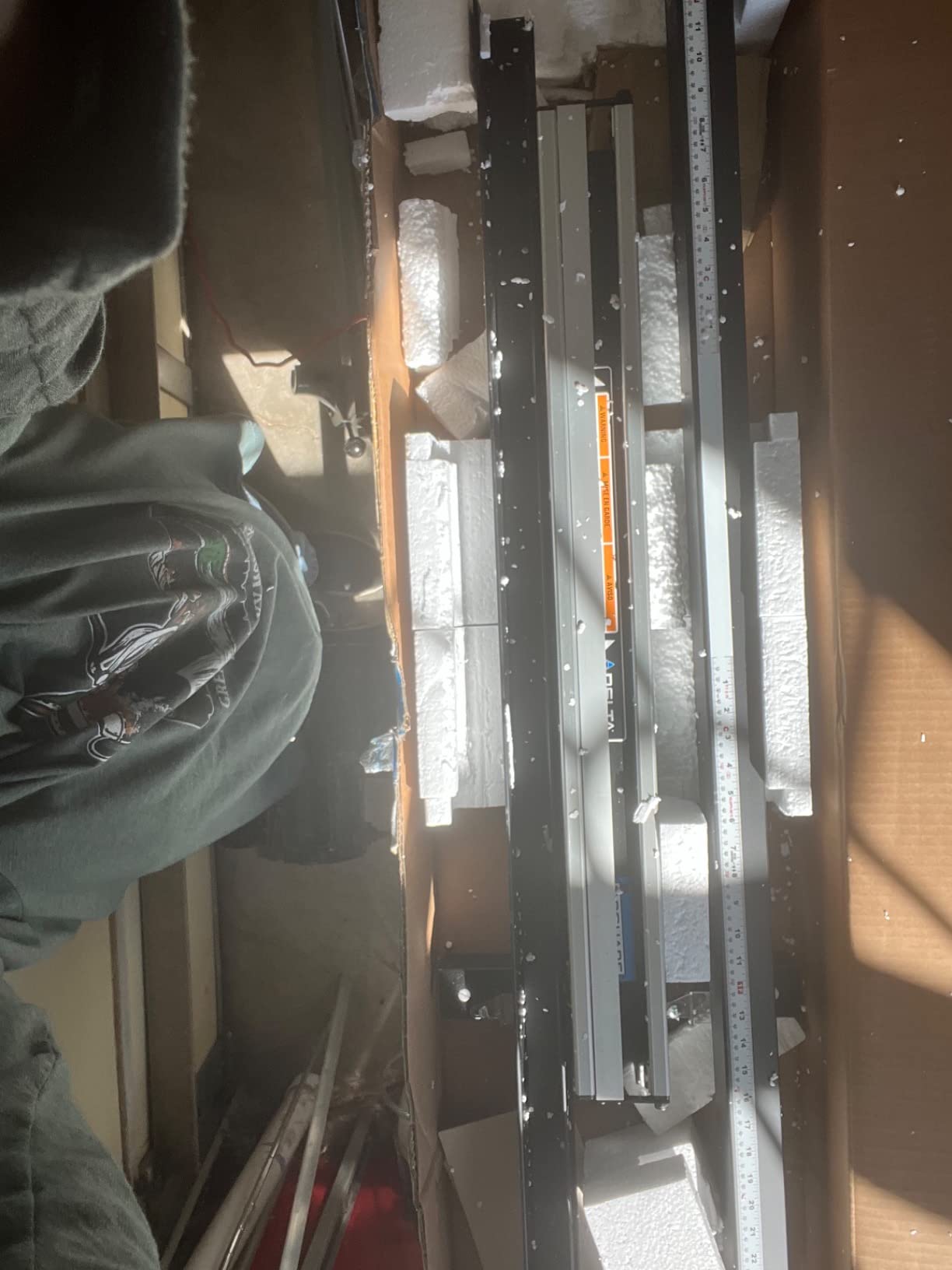
The T3 is a complete system rather than an add-on. You get the fence body, a steel guide tube with the scale printed on it, a front support rail, a rear support rail and the mounting hardware, which means nothing has to be improvised at install time. Maximum rip is 30 inch, with another 13-1/2 inch available on the far side of the blade, and the whole thing weighs 38 pounds.
What convinced me this is the one to beat is the locking behavior. Owners repeatedly describe it clamping down and staying put when a board is pushed against it, which is exactly the failure mode that ruins repeatability on a contractor saw. Reviewers also note it frequently arrives close enough to square that the adjustment is a short job rather than an afternoon.
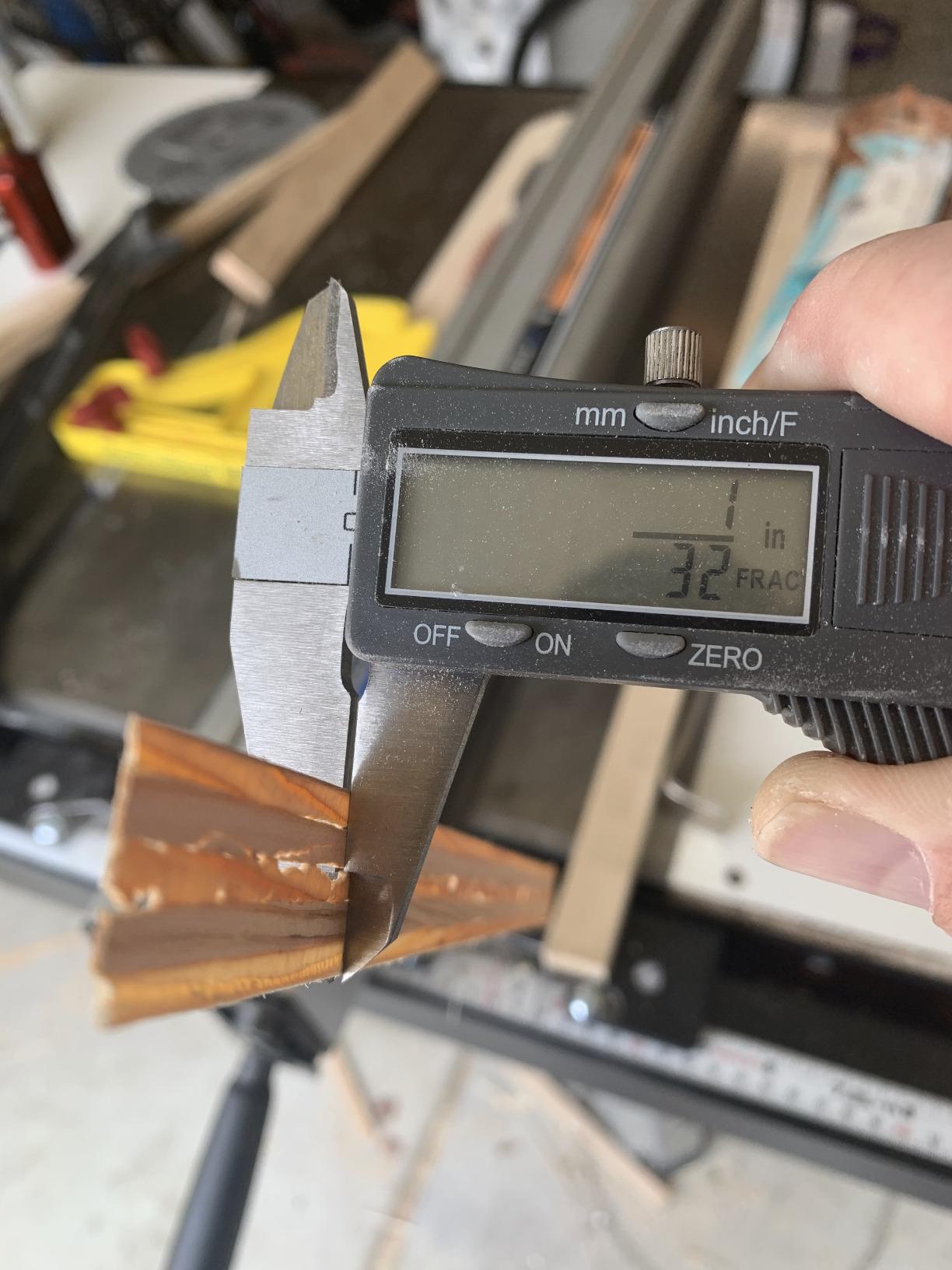
Delta rates the three-point lock with twin hairline pointers as accurate to within 1/64 inch. That figure is the alignment of the pointers rather than a promise of finished part dimensions, but it is a reasonable expectation for a fence body that is clamped at the front tube and hooked over the rear rail.
Who the T3 suits
This is the pick for anyone with a Delta table whose original Unifence has gone slack or lost its scale. The front and rear rails span the table and any extension you own, which solves the alignment problem that plagues fences hung between two points only.
It is also the safest recommendation in this list for a Delta saw because the mounting design is built around those tables rather than adapted to them.
Where owners report trouble
The most repeated complaint is documentation. The bracket identification is confusing, and people routinely install a front rail where a rear rail belongs and then wonder why parallelism will not hold.
The metallic decal scale is the second theme. Owners on long-term saws report the markings wearing, and a few mention fence faces arriving from the factory slightly overtightened into a shallow concave bow. Budget an afternoon and a phone photo of the manual for this install.
We earn a commission, at no additional cost to you. CERTAIN CONTENT THAT APPEARS ON THIS SITE COMES FROM AMAZON. THIS CONTENT IS PROVIDED 'AS IS' AND IS SUBJECT TO CHANGE OR REMOVAL AT ANY TIME.
2. BOW Products XT XTENDER – an affordable route to a real T-track face
BOW Products XT XTENDER T-Track Table Saw Fence System, 46″ (Fence Only)
- 46 inch clamp-on fence
- 5 inch tall extruded aluminum face
- Three T-slots for T-bolts
Pros
- Tall face steadies tall stock and improves feed control
- Clamp-on design upgrades an existing fence instead of replacing it
- T-slots on face and back accept 1/4 and 5/16 inch T-bolts
- Extruded aluminum glides smoothly and holds alignment
- Milled rear slots allow quick repositioning
Cons
- Fence body only
- needs an existing fence and clamps to work
- Anodized finish scratches over years of shop use
We earn a commission, at no additional cost to you. CERTAIN CONTENT THAT APPEARS ON THIS SITE COMES FROM AMAZON. THIS CONTENT IS PROVIDED 'AS IS' AND IS SUBJECT TO CHANGE OR REMOVAL AT ANY TIME.
This is not a fence system and it does not pretend to be one. It is a 46 inch extruded aluminum fence body that clamps onto the fence you already own using T-track clamps, and its job is to give you height, rigidity and accessory mounting where you had a short flat face.
The five inch tall face is the reason to care. A tall face keeps tall stock from twisting away from the reference surface mid-cut, which is a common cause of a rip that wanders as the board travels past the blade. The rigid one inch width behind the face does the same job in the other axis.
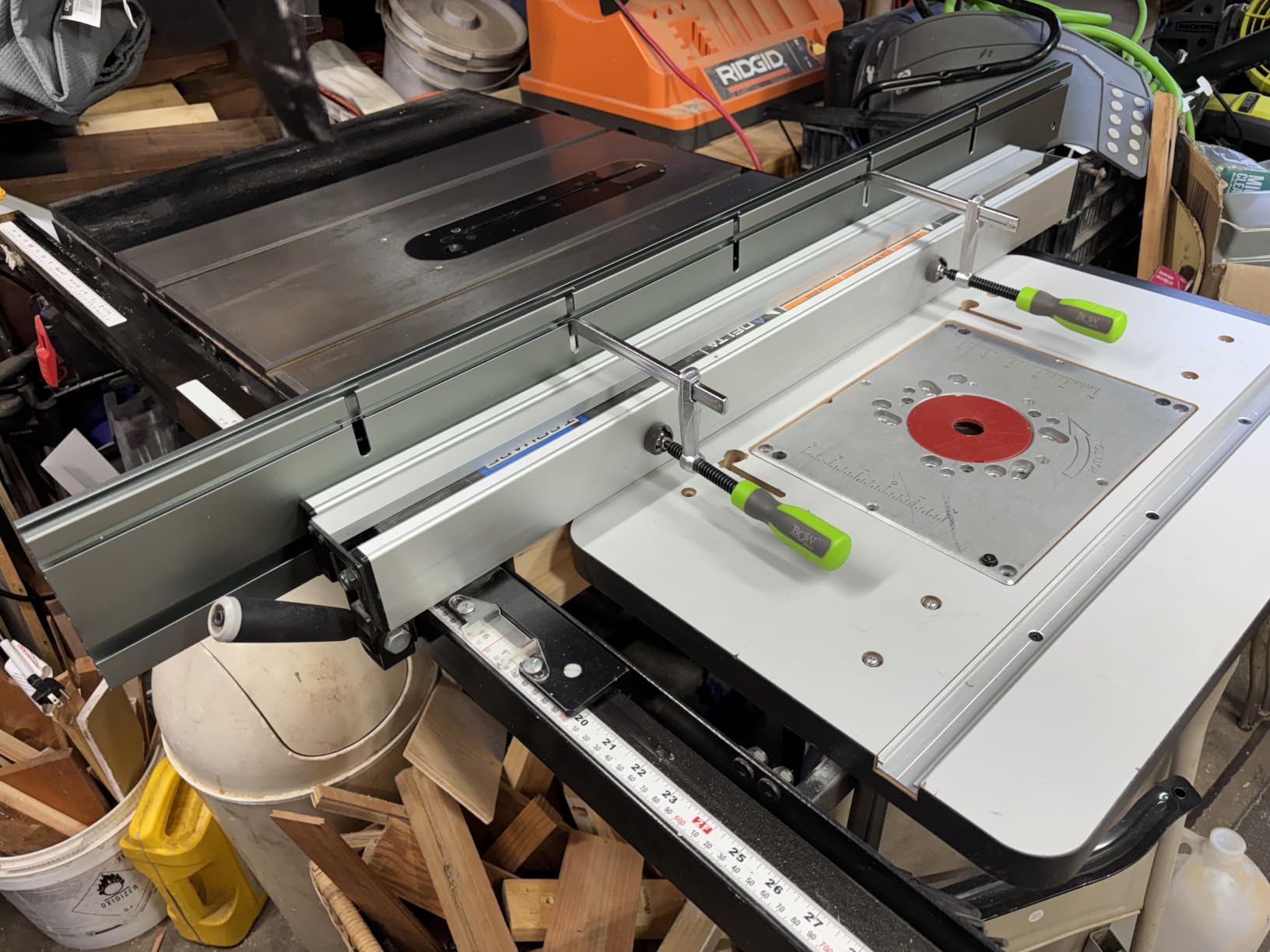
The three T-slots on the face, top and back are the second reason. They take 1/4 inch and 5/16 inch T-bolts, which means featherboards, stops and store-bought jigs bolt straight on, and milled rear slots let you slide the body to an infeed, center or outfeed position without tools.
At 4.7 stars across 340 reviews, the sample is large and unusually clean, with 88 percent five-star and 92 percent at four stars or better. Owners describe the glide of the extrusion as smooth and the T-slot access as generous.
Who the XT XTENDER suits
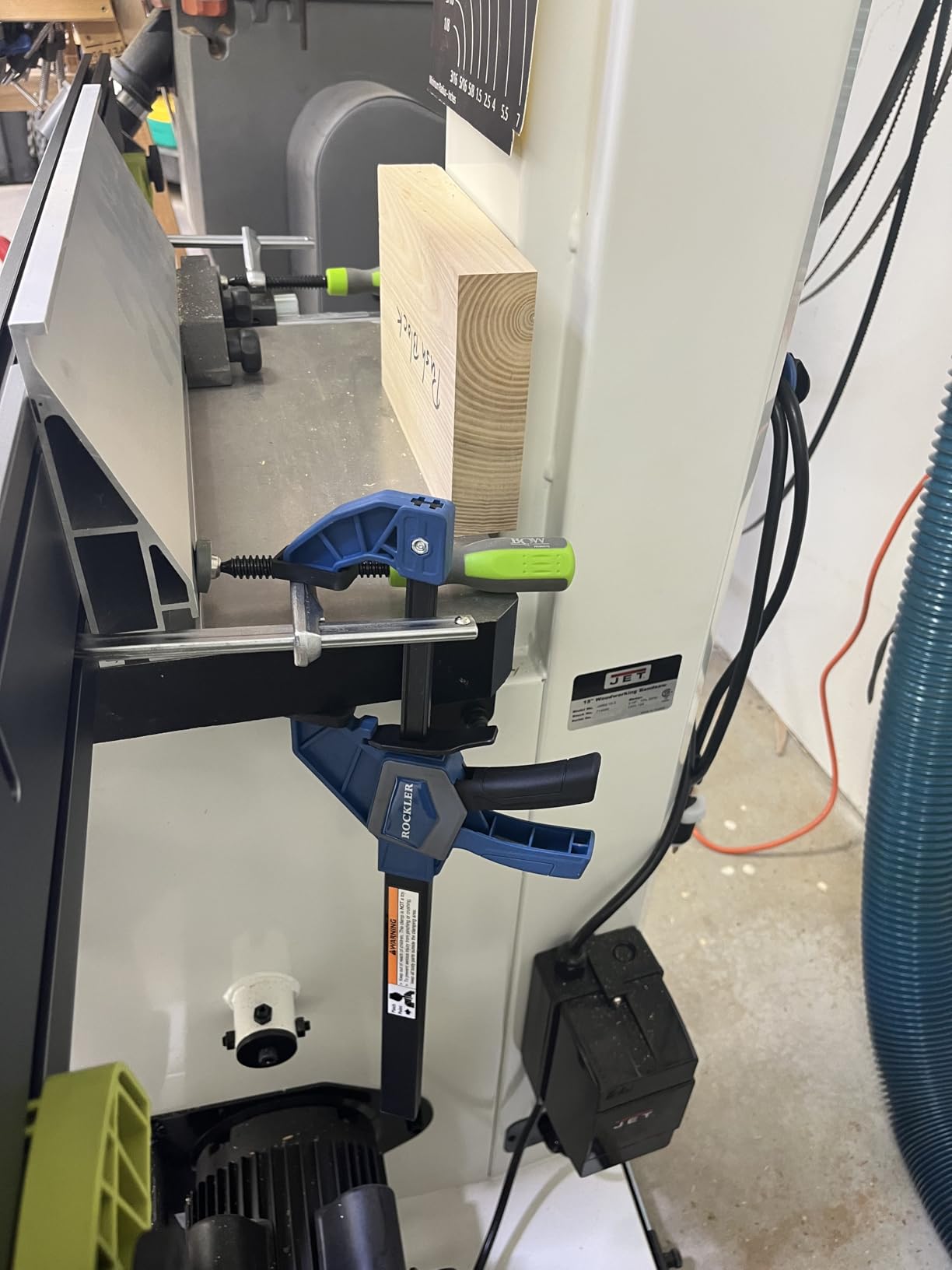
If your saw came with a thin flat face and you want featherboard mounting, this is the most direct way to get there. It fits portable saws, cabinet saws, UniSaw-style setups and bandsaws, because it clamps rather than bolts to fixed points.
It is also a sensible second step for someone who has already fitted a mid-tier rail system and wants accessory mounting without buying another set of rails.
Where owners report trouble
The limitation everyone accepts is scope. There is no rail, no scale and no locking mechanism here, so the accuracy still depends entirely on the fence underneath it.
Long-term owners also mention the anodized finish picking up scratches in a working shop. Cosmetic, but worth knowing if you care about appearance.
We earn a commission, at no additional cost to you. CERTAIN CONTENT THAT APPEARS ON THIS SITE COMES FROM AMAZON. THIS CONTENT IS PROVIDED 'AS IS' AND IS SUBJECT TO CHANGE OR REMOVAL AT ANY TIME.
3. Shop Fox W1410 – the solid choice for 27-inch tables
Shop Fox W1410 Fence with Standard Rails
- Fits 27 inch tables
- Ball bearing travel guide
- 37.6 lb fence and rail set
Pros
- Clamps tight and true with no drift once locked
- One-handed travel once the rails are cleaned and deburred
- Straightforward parallel adjustment procedure
- Angle-iron rails tolerate rail misalignment
- Good value against premium fence systems
Cons
- Vague instructions on cast iron tables
- Mounting holes rarely match existing holes so drilling and tapping is needed
- Included drill bit and tap are of poor quality
We earn a commission, at no additional cost to you. CERTAIN CONTENT THAT APPEARS ON THIS SITE COMES FROM AMAZON. THIS CONTENT IS PROVIDED 'AS IS' AND IS SUBJECT TO CHANGE OR REMOVAL AT ANY TIME.
The W1410 targets the very common 27-inch contractor table, and the fit is specific: it is designed for tables up to 27-1/16 inch deep from front to back. On anything smaller it will not span the table properly, so check your table depth before anything else.
Once installed, the fence earns its keep. Reviewers describe clamping tight with no drift, and travel that becomes smooth and one-handed after the rails are cleaned. Fine positioning knobs sit on both sides, so left-hand ripping setups are not a special order.
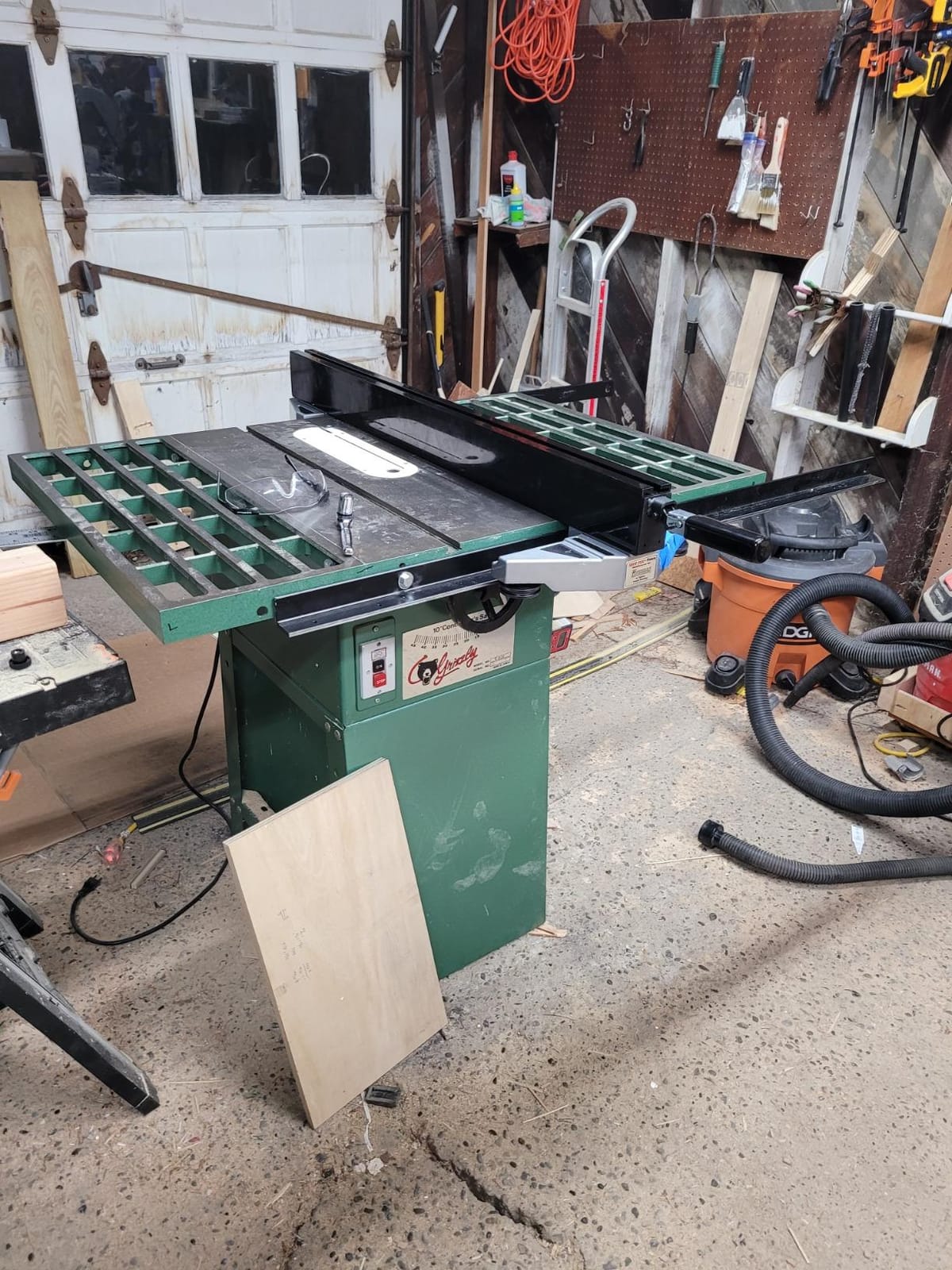
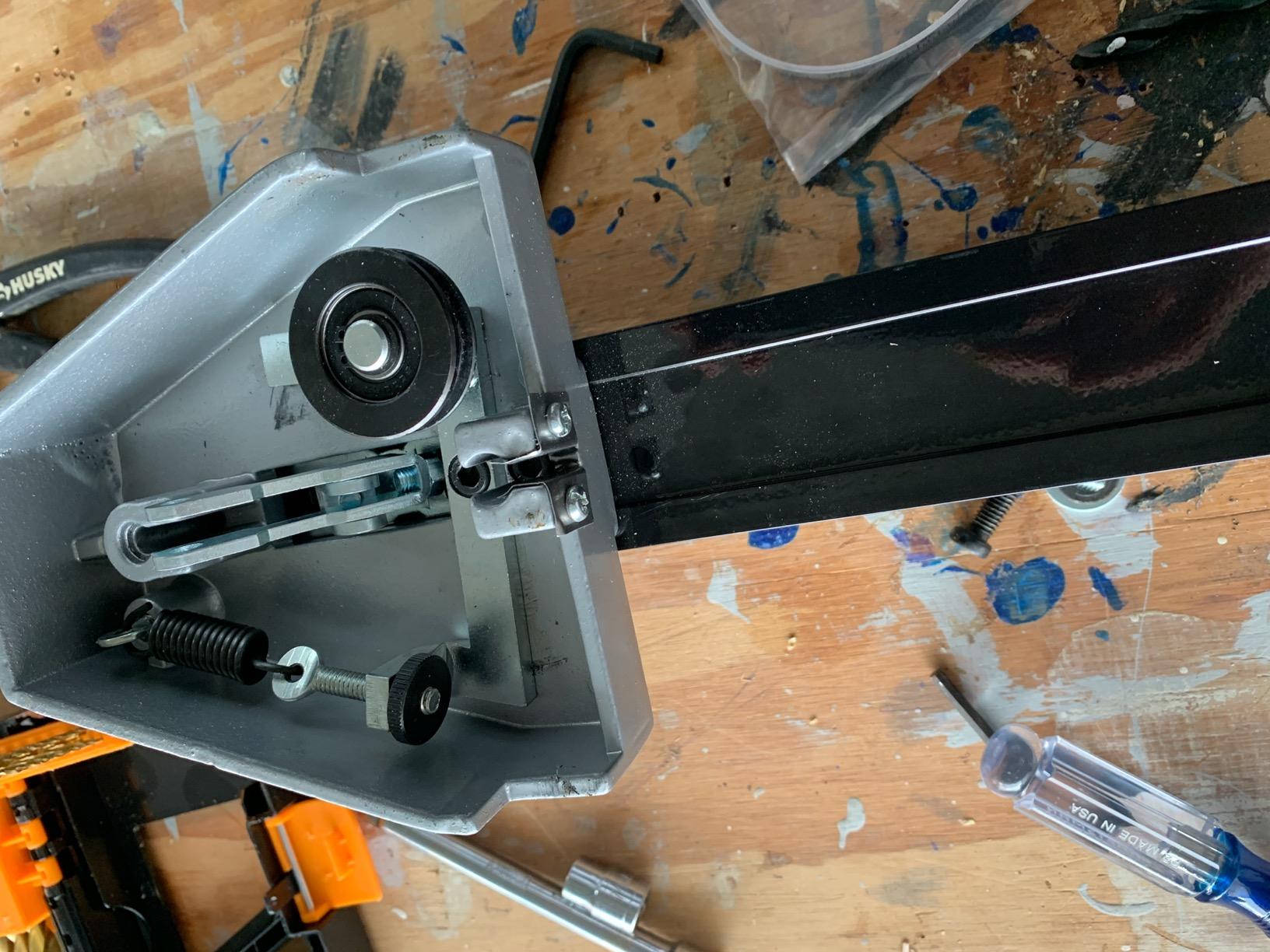
The design detail that separates this fence from between-the-rails designs is that it clamps to the angle-iron rail rather than riding between two rails. Owners on r/woodworking note that this tolerance of rail misalignment is exactly what defeats fences that try to sit between two straight rails.
Reviewers on LumberJocks describe it as the affordable answer to the drifting rip fence problem, and they repeatedly flag the same weakness: installation time. Getting the rails aligned and the table drilled properly is the whole job.
Who the W1410 suits
This is the fence for a jobsite or contractor saw with a 27 inch table that drifts or has a face too short to reference tall stock. It is also the most common upgrade recommended to owners of well-used mid-range saws who want repeatability without moving to a cabinet-saw fence.
Expect to drill and tap the cast iron top. That is normal for this class of product and is the main reason it is not the default pick here.
Where owners report trouble
Installation is the recurring theme in the reviews. Mounting holes rarely line up with what is already drilled, and on cast iron tables you need new holes plus taps.
The included drill bit and tap get called out as poor quality, sometimes with the wrong bit size, so bring your own. Angle-iron rails can also carry mill scale and burrs that make tracking rough out of the box. Deburr them before you judge the travel.
We earn a commission, at no additional cost to you. CERTAIN CONTENT THAT APPEARS ON THIS SITE COMES FROM AMAZON. THIS CONTENT IS PROVIDED 'AS IS' AND IS SUBJECT TO CHANGE OR REMOVAL AT ANY TIME.
4. Shop Fox W1716 Aluma-Classic – more rip capacity on a bigger table
Shop Fox W1716 – Aluma-Classic Fence-Standard, 57-Inch
- 57 inch rails, 30 inch rip
- Wide right-angle fence face
- 53.3 lb steel and aluminum
Pros
- Wide right-angle face gives strong workpiece support
- Single cam lever is simple and holds the fence square
- Steel and aluminum body balances strength against weight
- Fits most table saws without extensive modification
Cons
- A genuinely heavy fence at over 53 pounds
- Costs more than a 27 inch fence for similar accuracy
- Steel rails add weight without much extra precision
We earn a commission, at no additional cost to you. CERTAIN CONTENT THAT APPEARS ON THIS SITE COMES FROM AMAZON. THIS CONTENT IS PROVIDED 'AS IS' AND IS SUBJECT TO CHANGE OR REMOVAL AT ANY TIME.
The W1716 is the step up from the W1410 rather than a different idea. You get the same single cam lever and a wide right-angle fence face, on standard 57 inch rails that give a 30 inch maximum rip to the right of the blade.
That wider face is the reason to choose it. A right-angle profile supports the workpiece along more of its height and depth than a flat bar, and owners consistently credit it with straight cuts on thicker stock. The cam lever is a single action and holds square, with nothing to hunt for mid-cut.
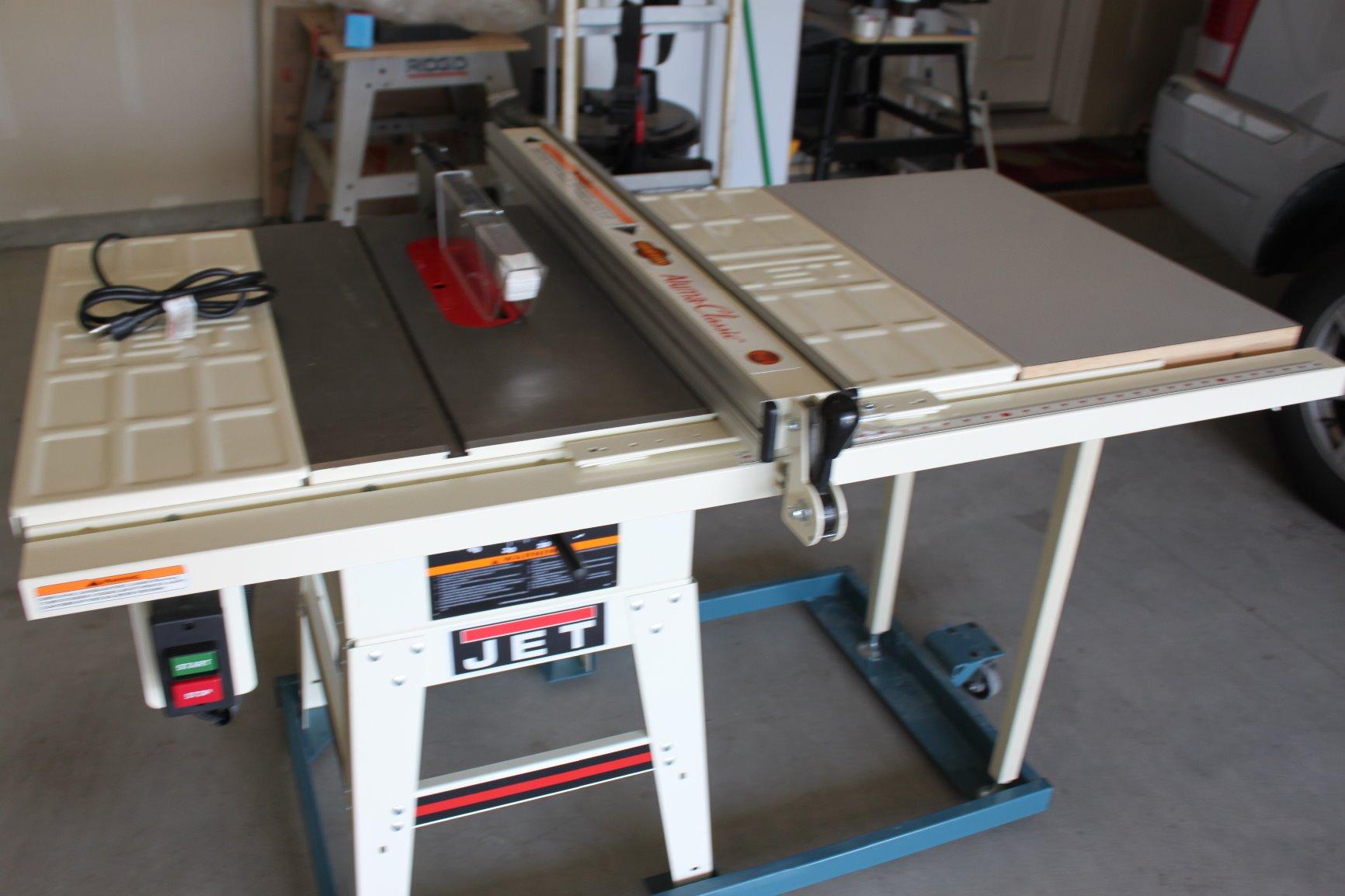
The body mixes steel and aluminum, which reviewers describe as a sensible compromise between durability and weight. The fence fits most table saws without extensive modification, though as with any rail system, expect to drill the table.
Ratings land mid-range at 4.3 across 118 reviews, with 62 percent five-star and 21 percent four-star. That profile suggests people are happy with the fence and less excited about moving it around.
Who the W1716 suits
Pick this one if your table is large enough that 27 inch rails would leave you ripping boards with the fence uncomfortably close to the blade, and you regularly break down sheet goods or wide solid stock.
It suits people who prioritize a rigid, simple lock over weight and compact storage. Two Shop Fox fences in the same shop is a common setup, one per saw, rather than moving a single fence between machines.
Where owners report trouble
Weight is the dominant complaint. At 53.3 pounds it is a genuinely heavy fence, and reviewers describe repositioning it as awkward, which matters most if you change fence position often or work alone.
Several owners also point out that the steel rail components add weight without adding meaningful precision compared with aluminum rails. The extra cost over an entry fence buys you the wider face and the longer rails more than it buys you accuracy.
We earn a commission, at no additional cost to you. CERTAIN CONTENT THAT APPEARS ON THIS SITE COMES FROM AMAZON. THIS CONTENT IS PROVIDED 'AS IS' AND IS SUBJECT TO CHANGE OR REMOVAL AT ANY TIME.
5. Peachtree Uni Style – the fence face for featherboards and rabbets
Peachtree Woodworking Supply Uni Style Table Saw Fence with Sacrificial
- 43 in extruded aluminum body
- Recessed face for a 1/2 in UHMW strip
- Mini tracks along the length
Pros
- Exceptionally clean rating record with no low ratings reported
- Single-piece extrusion is rigid and holds alignment
- Recessed face lets you cut clean rabbets into the UHMW strip
- Mini tracks take 1/4-20 bolts for jigs and featherboards
- Bolts straight onto an existing Delta UniFence base
Cons
- Works only with the Delta UniFence section
- base system not included
- Narrower scope than a full fence and rail system
We earn a commission, at no additional cost to you. CERTAIN CONTENT THAT APPEARS ON THIS SITE COMES FROM AMAZON. THIS CONTENT IS PROVIDED 'AS IS' AND IS SUBJECT TO CHANGE OR REMOVAL AT ANY TIME.
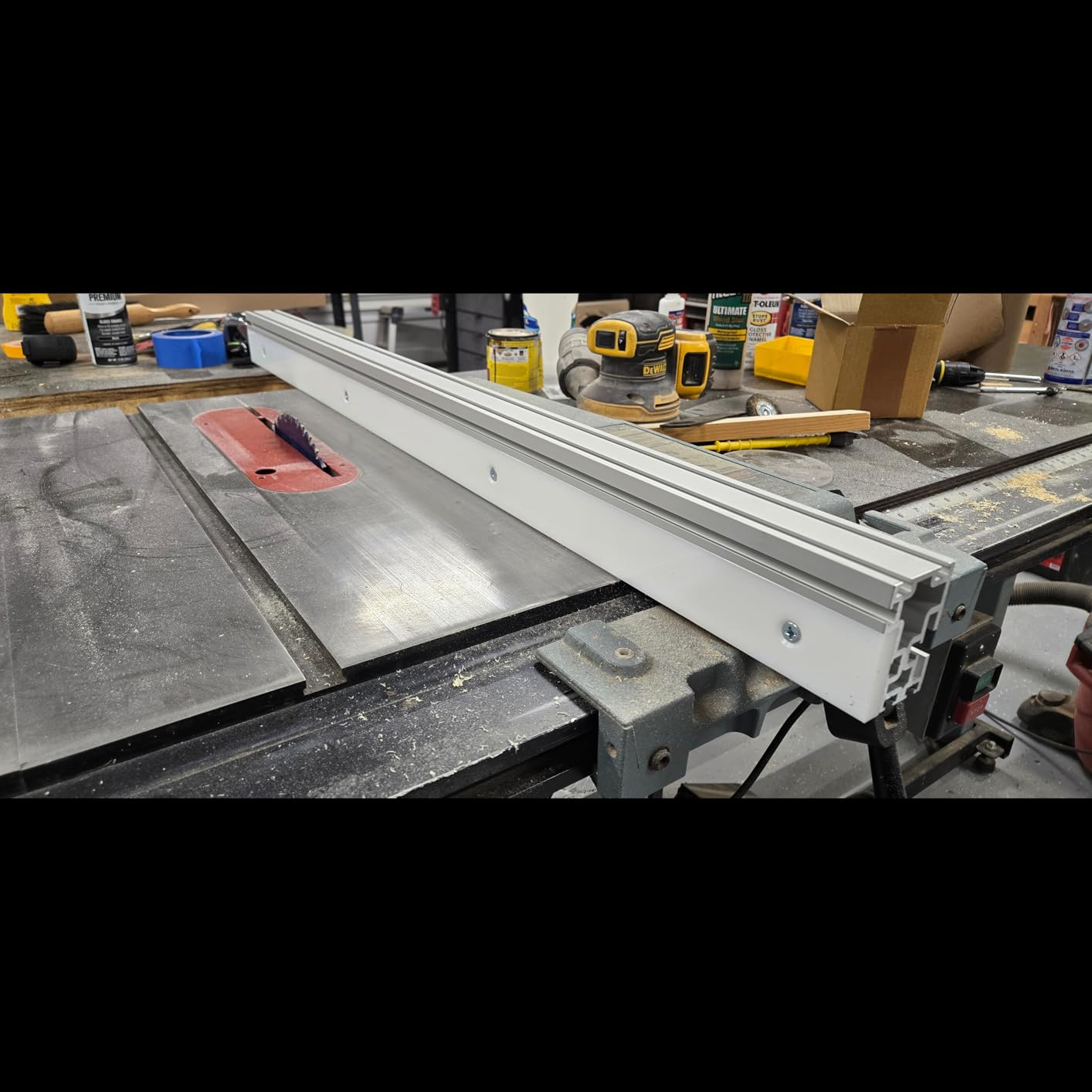
This one solves a specific problem well. If you own a Delta UniFence base system and want to stop marking your fence face, add featherboards, or cut rabbets cleanly, this extruded aluminum section is a bolt-on upgrade rather than a replacement.
The recessed front face is the detail worth paying attention to. It accepts a 1/2 inch thick UHMW sacrificial strip, and because the face is recessed you can cut into the plastic without scoring the aluminum behind it. Any 1/2 inch material can serve as the sacrificial face when the UHMW wears down.
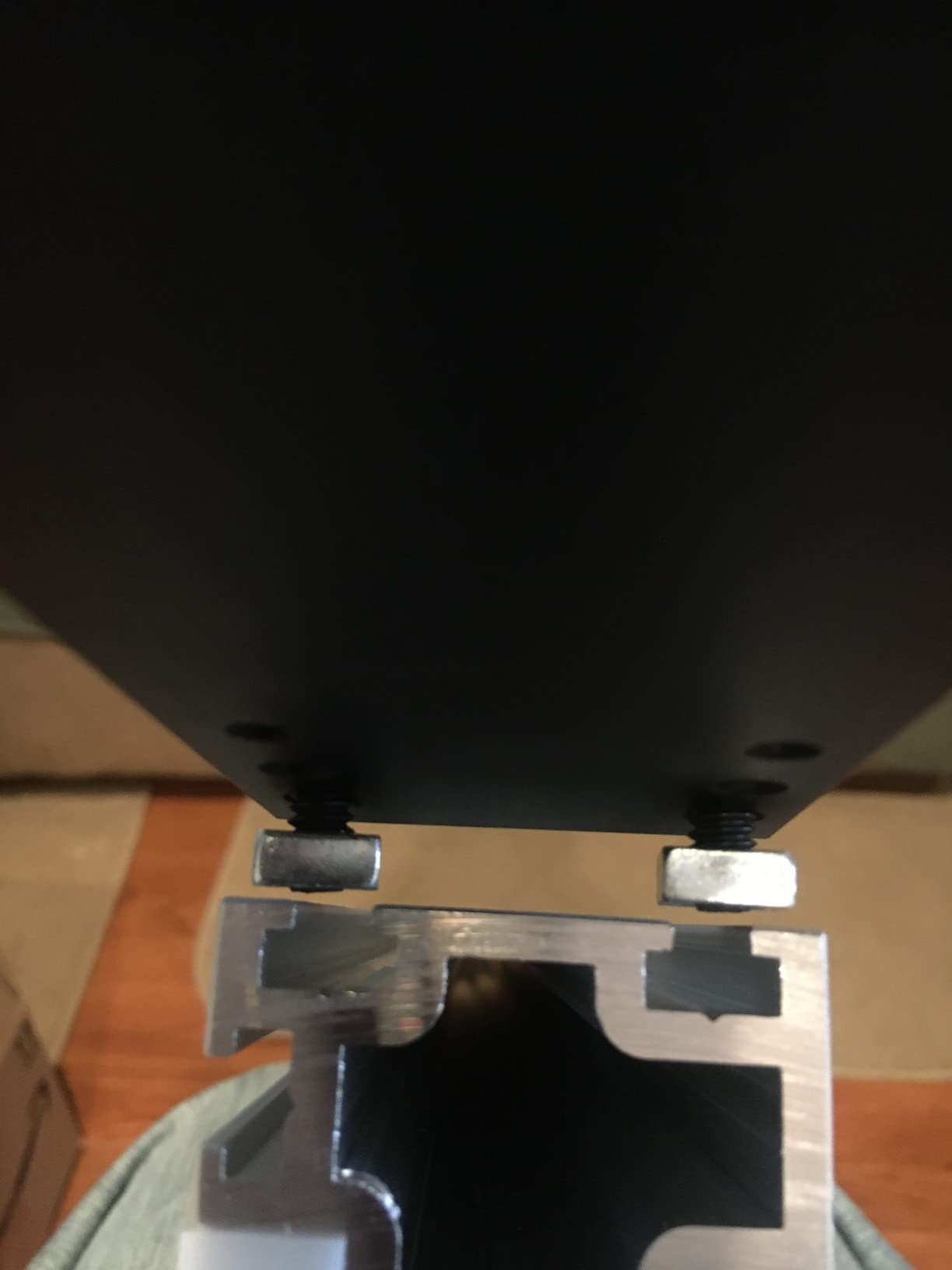
The mini tracks running the length of the body take 1/4 by 20 hex head bolts, which is the right size for most store-bought woodworking jigs. Featherboards, hold-downs and stop blocks bolt on directly with no adapter hardware.
The review sample is small at 52, but it is unusually clean. Nobody reports ratings below four stars, and 83 percent are five-star. Treat that as a promising signal rather than proof, because a narrow product attracts a narrow audience.
Who the Uni Style suits
It is built for existing Delta UniFence owners who want accessory mounting and a sacrificial face without buying a whole new rail system. The body is made in the USA from a single piece of extruded aluminum.
It also makes sense for anyone whose fence is rigid and square but simply cannot accept a featherboard today. Rigid aluminum with a replaceable plastic face solves both marking and holding problems at once.
Where owners report trouble
The constraint is absolute: it only fits the Delta UniFence section, and the original base is not included. If you are starting from scratch with a saw that never had one, this is not your product.
It also needs compatible Delta UniSaw rail hardware to function, which narrows the audience further than the brand name suggests. Check your base before ordering.
We earn a commission, at no additional cost to you. CERTAIN CONTENT THAT APPEARS ON THIS SITE COMES FROM AMAZON. THIS CONTENT IS PROVIDED 'AS IS' AND IS SUBJECT TO CHANGE OR REMOVAL AT ANY TIME.
6. Delta 78-919BT2 Biesemeyer – T-square geometry, narrow fit list
Delta Power Tools 78-919BT2 Biesemeyer Fence, Black
- T-square style fence
- Three-point locking system
- 30.9 lb, 44.75 in long
Pros
- T-square geometry holds parallelism once set
- Three-point locking system is simple and dependable
- Entire fence is adjustable for repeated accurate cuts
- Direct fit for listed Delta Unisaw models
Cons
- Fits only three older Delta Unisaw models
- Weakest average rating in this group
- Setup and calibration take care to get the T-square geometry right
We earn a commission, at no additional cost to you. CERTAIN CONTENT THAT APPEARS ON THIS SITE COMES FROM AMAZON. THIS CONTENT IS PROVIDED 'AS IS' AND IS SUBJECT TO CHANGE OR REMOVAL AT ANY TIME.
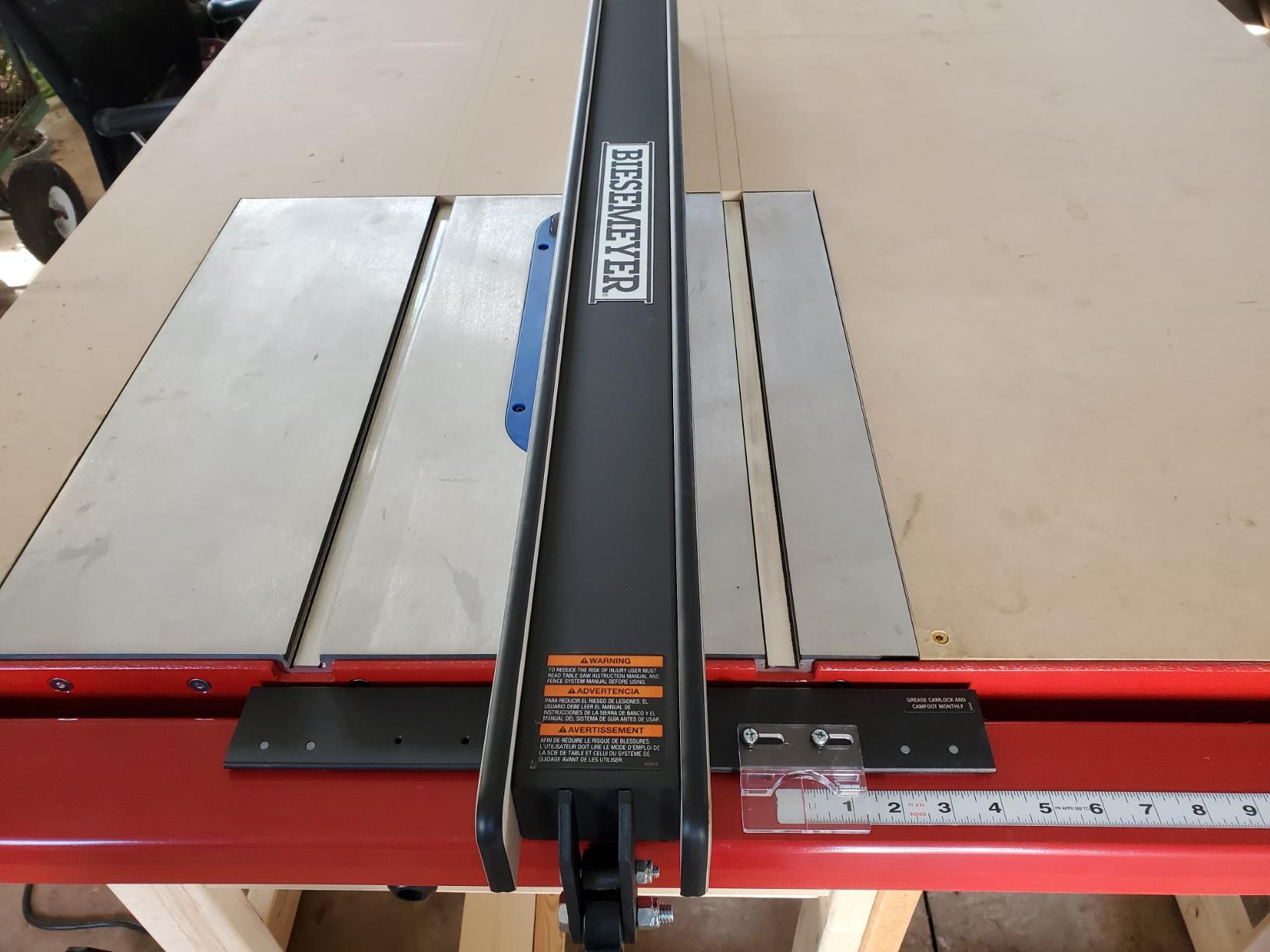
The Biesemeyer name carries real weight in fence circles because the T-square design has only two moving parts and a very long record of holding its setting. This particular unit brings that geometry to a short list of Delta Unisaw models.
Fitment is the whole story. It is specified for models 36-L352, 36-L552 and 36-L552LVC Type 2 Unisaws. If your saw is not one of those three, this is not a candidate no matter how well the fence itself performs.
On saws that do fit, owners report that the T-square geometry holds parallelism once set and that the three-point lock is straightforward to use. The whole fence is adjustable, which is what lets you dial in a repeatable setting and keep it.
Long-term owners on woodworking forums describe Biesemeyer systems as among the simplest they have owned, and one reported needing only a single readjustment across roughly a decade. That kind of report is worth more than any spec sheet.
Who the 78-919BT2 suits
This is a fit-first purchase. If you own one of those three Unisaw models and your fence has drifted, this is a straightforward T-square replacement that will not need periodic re-alignment the way a friction or tooth lock does.
It also suits buyers who prefer fewer adjustment points over a fence with more features. Two moving parts is about as simple as a fence gets.
Where owners report trouble
The ratings are the weakest in our group at 3.8 across 48 reviews, and the distribution shows real dissatisfaction: 17 percent three-star, 10 percent two-star and 12 percent one-star. Most of that traces back to fitment rather than to build quality.
Getting the T-square geometry square and calibrated takes care during installation, and owners who rush it report frustration. Confirm your model number before buying.
We earn a commission, at no additional cost to you. CERTAIN CONTENT THAT APPEARS ON THIS SITE COMES FROM AMAZON. THIS CONTENT IS PROVIDED 'AS IS' AND IS SUBJECT TO CHANGE OR REMOVAL AT ANY TIME.
How to check your fence accuracy in ten minutes
Before you spend money, find out whether the fence is actually your problem. This test takes about ten minutes and needs a tape measure, a straightedge and a sacrificial piece of medium-density board.
First, set your fence to a nominal width and rip a test strip. Do not trust the fence scale for this step. Measure the actual piece three times along its length. If the three measurements differ, the fence is drifting or the board is cupping, and the fix is a new fence rather than a new blade.
Second, check parallelism across the range. Slide the fence through three positions and check the gap between the fence face and the blade at the front and at the rear. WoodCentral’s archive of owner measurements puts real-world parallelism differences between good aftermarket systems at a few thousandths of an inch, so a gap you can see with a feeler gauge at one end and not the other means work to do.
Third, and this is the part most guides get wrong, a perfect fence is not the goal. Expert advice in woodworking forums is consistent that the fence should sit very slightly off-parallel at the rear of the blade. That deliberate offset keeps the board pressed against the fence as it passes, which improves both safety and the cut. A fence dead parallel to a blade that runs slightly toward its own side can pinch the workpiece and cause kickback.
Fourth, if the fence creeps, load it the way you load it in real work. Push a wide board against the face with steady lateral pressure and see whether the reading changes. A fence that moves under pressure will move under the saw.
Fifth, only after those four checks is it worth looking at a replacement. And if your saw is a cabinet saw with a factory T-square fence that still tracks true, you may not need one at all.
How to choose a table saw fence
Decide between a full system and an add-on fence body first. A full fence-and-rail system brings its own scale, lock and rails, and you will drill your table. An add-on fence body bolts or clamps to something you already have and solves a narrower problem: a short face, no accessory mounting, or a face that marks your work. All six products here fit into one of those two buckets, and two of them are add-ons.
Measure your table before you fall for a rail length. The Shop Fox W1410 is built for tables up to 27-1/16 inch deep and will not span anything smaller. The Delta T3 runs a 57-1/2 inch rail and will overhang a short table. Measure front to back before you order, and measure again if you plan to add a table extension later, because rail span and extension compatibility are a matched pair.
Treat drilling as a real cost, not a detail. On most of these systems the mounting holes will not line up with what is already in a cast iron top, so you are drilling and tapping. On the Shop Fox fences specifically, owners advise bringing your own bit and tap rather than trusting the included ones. If you cannot drill your table, that alone rules out most rail systems.
Prioritise lock rigidity over features. Three-point locking is the standard worth paying for, because it clamps the fence at more than one point and resists the sideways load of a wide board. A single lever lock on a wide fence face, like the one on the W1716, works well when the face is rigid. What does not work is a friction or tooth lock on a thin face, which is what most original contractor saw fences ship with.
Decide how much fine adjustment you need. A micro-adjust is a fine positioning knob or wheel that lets you nudge the fence by thousandths without loosening the main lock. It is genuinely useful on fine furniture work and largely unnecessary on rough framing. Some of the fences here use fine positioning knobs on both sides instead, which also makes left-hand ripping setups straightforward.
Think about rip capacity, and what it costs. More capacity comes from longer rails, and longer rails bring real consequences. Fences over about 30 inch need support legs or a second support point to stop deflection, and on a mobile base the extra length changes how the saw sits. Forum reports going back years are blunt that table legs can prevent a saw from tipping at longer fence lengths, so treat the rail span as a structural decision rather than a spec.
Look for accessory mounting if you rip sheet goods. Featherboards matter more than almost any other accessory on wide rip cuts, because a full sheet pushes the workpiece away from the fence. T-slots or mini tracks that take standard T-bolts or 1/4-20 hex bolts are what let you bolt a featherboard on. Two of the products here, the BOW XT XTENDER and the Peachtree Uni Style, are essentially built around that need.
Check the fence face material. Aluminum is common, and a sacrificial face in plastic or laminate protects it. A recessed face matters more than the material, because it means you can cut into the sacrificial strip without touching the aluminum behind it.
Know when not to upgrade. If your saw is a cabinet saw with a factory fence that still tracks true, the honest answer from experienced owners is that you do not need an aftermarket system. Fences on premium cabinet saws are frequently reported dead accurate out of the box. Save your effort for the saw that actually drifts.
Pair the fence with the right blade. A fence upgrade will not rescue a dull or wrong blade. Fine rip blades leave a cleaner edge, but they also run hotter, and a burning edge is usually a fence or alignment problem rather than a blade problem. Fix the fence first, then judge the blade.
And whatever you install, use a push stick for every rip cut and never rip freehand. A better fence makes the cut accurate; it does not make the operation safe.
Frequently Asked Questions
Which table saw fence is the most accurate?
The Delta T3 is the most accurate pick in our group, rated to align within 1/64 inch with a three-point locking system, a guide tube scale and front and rear support rails. The Shop Fox W1716 is close behind for wide right-angle support on larger tables. Accuracy is really about how well a fence holds parallel once set, not a printed number, so test your own fence with a sacrificial rip cut before buying anything.
What is the best aftermarket table saw fence system?
The Delta T3 is our best overall aftermarket fence system because it ships as a complete fence-and-rail package with a three-point lock and spans table extensions. For a 27-inch contractor table, the Shop Fox W1410 is the standard answer. If you already own a rigid fence and only need a taller face with featherboard mounting, the BOW XT XTENDER is the quickest route there.
Is the INCRA fence worth it?
We did not include an INCRA system in this roundup, because the aftermarket systems available to us were single-digit in review volume and did not clear the bar of well-documented owner feedback. Owners on woodworking forums generally praise INCRA systems for repeatability and calibration ease, while noting that they flex if the front and rear supports are not fully tightened and are cumbersome to remove for crosscutting. Check the system requirements before buying.
What is a good replacement rip fence for a table saw?
Match the replacement to the job rather than the brand badge. A drifting Delta contractor saw with front and rear rails available is best served by a complete fence-and-rail system. A saw with a rigid but short fence needs an add-on face with T-slots for featherboards. A Delta UniFence owner wanting marking-free rabbet cuts wants a fence with a recessed sacrificial face. A Delta Unisaw owner on the listed models wants the T-square Biesemeyer.
Which table saw has the best rip capacity?
Rip capacity is set by rail span, not by saw brand. Among the fences we tested, the Shop Fox W1716 on standard 57-inch rails provides a 30 inch maximum rip to the right of the blade, and the Delta T3 matches that with a 30 inch rip plus 13-1/2 inch on the far side. Longer rails need support legs to avoid deflection, and on a mobile base they change how the saw sits, so capacity and stability trade against each other.
Do aftermarket table saw fences fit any saw?
Rarely without work. A rail system bolts to fixed points, and on a cast iron table the mounting holes rarely match what is already drilled, so drilling and tapping is usually required. The Shop Fox W1410 is restricted to tables up to 27-1/16 inch deep. The Delta Biesemeyer is specified for three Unisaw models only. Clamp-on fence bodies such as the BOW XT XTENDER are the exception, since they attach to your existing fence rather than to the saw.
Conclusion
The best table saw fences for accurate rip cuts share one trait: they clamp at more than one point and they do not creep. The Delta T3 is our first choice, with the strongest combination of owner feedback, a documented three-point lock and rails that span table extensions. For a 27-inch table, the Shop Fox W1410 does the job once you accept the drilling.
If your fence is rigid but short, or you want featherboard mounting without a full system, the BOW XT XTENDER is the quickest real improvement available. Test your current fence with a sacrificial rip cut first, and remember that a fence should sit very slightly off-parallel at the rear of the blade by design.