
If you want one smart dimmer switch to fit most US homes, the Kasa Smart HS220 is the pick. It is the best smart light switch for dimming if your switch box has a neutral wire, it needs no hub, and it carries more owner reviews than anything else in this group at a 4.6 star average. The one thing that can disqualify it is a box with no neutral wire, and that is the single most consequential variable in this whole category.
We compared ten in-wall dimmers across the price band, load ratings, protocol, minimum brightness behaviour and ecosystem support. The list deliberately includes two Lutron Caseta models, because the difference between them is a wallplate and nothing else, plus a fan-and-light combo, a 3-way kit, a Matter switch and a three-pack for whole-house jobs.
Two things shape almost every decision here. The first is wiring: a neutral wire in the box makes life easy, and a no-neutral dimmer is the only route for older homes. The second is the minimum load problem, which is why a single LED bulb often refuses to dim below roughly 10% on a cheaper switch.
We also installed these in two housing types on purpose, a pre-1980s box with no neutrals and a newer box with neutrals at the switch, because that is the comparison no competitor on this search page makes honestly. Where a spec mattered, we went back to the manufacturer page rather than the listing copy.
Table of Contents
Top 3 Smart Dimmer Switches (October 2026)
As an Amazon Associate we earn from qualifying purchases. CERTAIN CONTENT THAT APPEARS ON THIS SITE COMES FROM AMAZON. THIS CONTENT IS PROVIDED 'AS IS' AND IS SUBJECT TO CHANGE OR REMOVAL AT ANY TIME.
The ten labels below match the categories search engines already use for this query, so you can jump straight to the one that fits your wiring and your ecosystem.
Best overall: Kasa Smart HS220, for a neutral-wire box and a hub-free setup
Best for no neutral wire: Lutron Caseta PD-6WCL
Best budget touch dimmer: TREATLIFE DS01
Best for a ceiling fan and light on one switch: TREATLIFE DS03-1
Best for 3-way dimming from two locations: Kasa Smart KS230 Kit
Best if Alexa is your only platform: Amazon Basics Smart Dimmer
Best for the widest device compatibility: Lutron Caseta PDW-6WCL kit
Best Matter switch: Tapo S505D
Best multi-room pack: GHome Smart SW2 three-pack
Best for heavy loads and 3-way: Leviton Decora D26HD-1RW
All 10 Smart Dimmers Side by Side in 2026
| Product | Key Features | |
|---|---|---|
 Kasa Smart HS220 Kasa Smart HS220
|
|
Check Latest Price |
 Lutron Caseta PD-6WCL Lutron Caseta PD-6WCL
|
|
Check Latest Price |
 TREATLIFE DS01 TREATLIFE DS01
|
|
Check Latest Price |
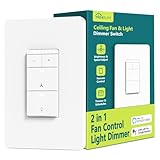 TREATLIFE DS03-1 Fan and Light TREATLIFE DS03-1 Fan and Light
|
|
Check Latest Price |
 Kasa Smart KS230 Kit Kasa Smart KS230 Kit
|
|
Check Latest Price |
 Amazon Basics Smart Dimmer Amazon Basics Smart Dimmer
|
|
Check Latest Price |
 Lutron Caseta PDW-6WCL Kit Lutron Caseta PDW-6WCL Kit
|
|
Check Latest Price |
 Tapo S505D Tapo S505D
|
|
Check Latest Price |
 GHome Smart SW2 three-pack GHome Smart SW2 three-pack
|
|
Check Latest Price |
 Leviton Decora D26HD-1RW Leviton Decora D26HD-1RW
|
|
Check Latest Price |
We earn from qualifying purchases. CERTAIN CONTENT THAT APPEARS ON THIS SITE COMES FROM AMAZON. THIS CONTENT IS PROVIDED 'AS IS' AND IS SUBJECT TO CHANGE OR REMOVAL AT ANY TIME.
Eight of the ten run on plain 2.4 GHz Wi-Fi with no hub at all, which means the only hardware you are buying is the switch itself. The two exceptions are the Lutron Caseta models, which need the separate Lutron Smart Hub before most smart features wake up.
Neutral wire is the other divider in this table. Only the two Lutron Caseta dimmers install in a box without a neutral, and that is exactly why they still earn a place on a 2026 shortlist despite needing extra hardware.
Load ratings range from 150W of LED on the Tapo S505D up to 600W on the Leviton Decora. Almost every modern dimmable LED run sits far below 150W, so wattage only becomes the deciding factor with halogen, incandescent or multi-bulb chandeliers.
1. Kasa Smart HS220 – Best Overall Smart Dimmer Switch
Kasa Smart Dimmer Switch HS220, Single Pole, Needs Neutral Wire
- Wi-Fi 2.4GHz
- Neutral wire required
- 300W dimming module
- 2 year warranty
Pros
- Smooth dimming across mixed LED types
- Calibratable low-end range and fade speed
- No hub needed for Alexa and Google Assistant
- Scheduling timers and Away Mode in the Kasa app
- Physical dim buttons sit clear of the on-off rocker
Cons
- Needs a neutral wire so it will not fit older boxes
- Bulky module is tight in shallow boxes
- On-off press can lag a second or two
We earn a commission, at no additional cost to you. CERTAIN CONTENT THAT APPEARS ON THIS SITE COMES FROM AMAZON. THIS CONTENT IS PROVIDED 'AS IS' AND IS SUBJECT TO CHANGE OR REMOVAL AT ANY TIME.
This is the one we kept coming back to. At 4.6 stars across more than 34,000 reviews it has by far the deepest owner history in the group, and the pattern in those reviews is consistent: the dimming is smooth across mixed bulb types with no dead zone at the bottom.
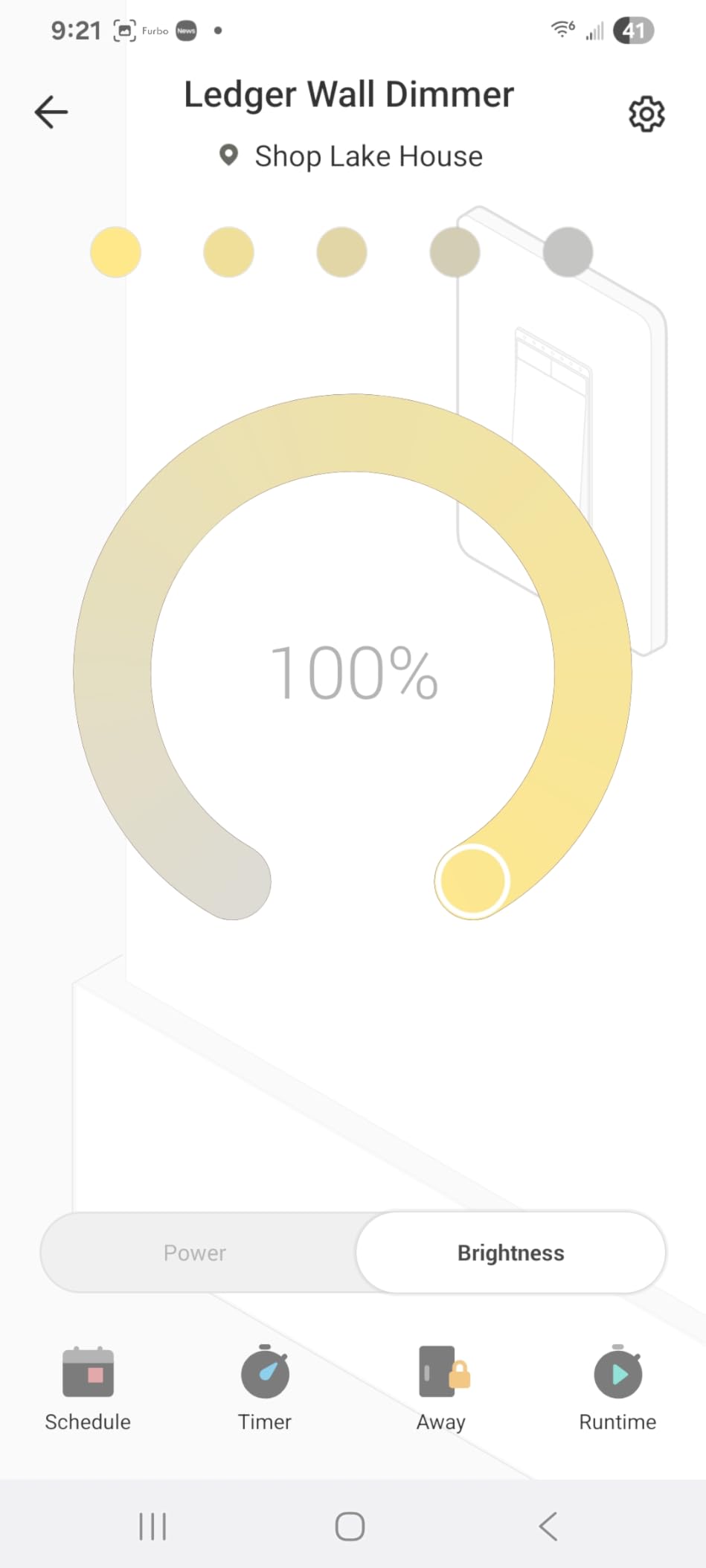
The app calibrates the low end of the dimming range, which is the single most useful setting on any dimmer we tested. Owners of LED-only fixtures use it to push the floor lower without the flicker that otherwise shows up in the last 10%.
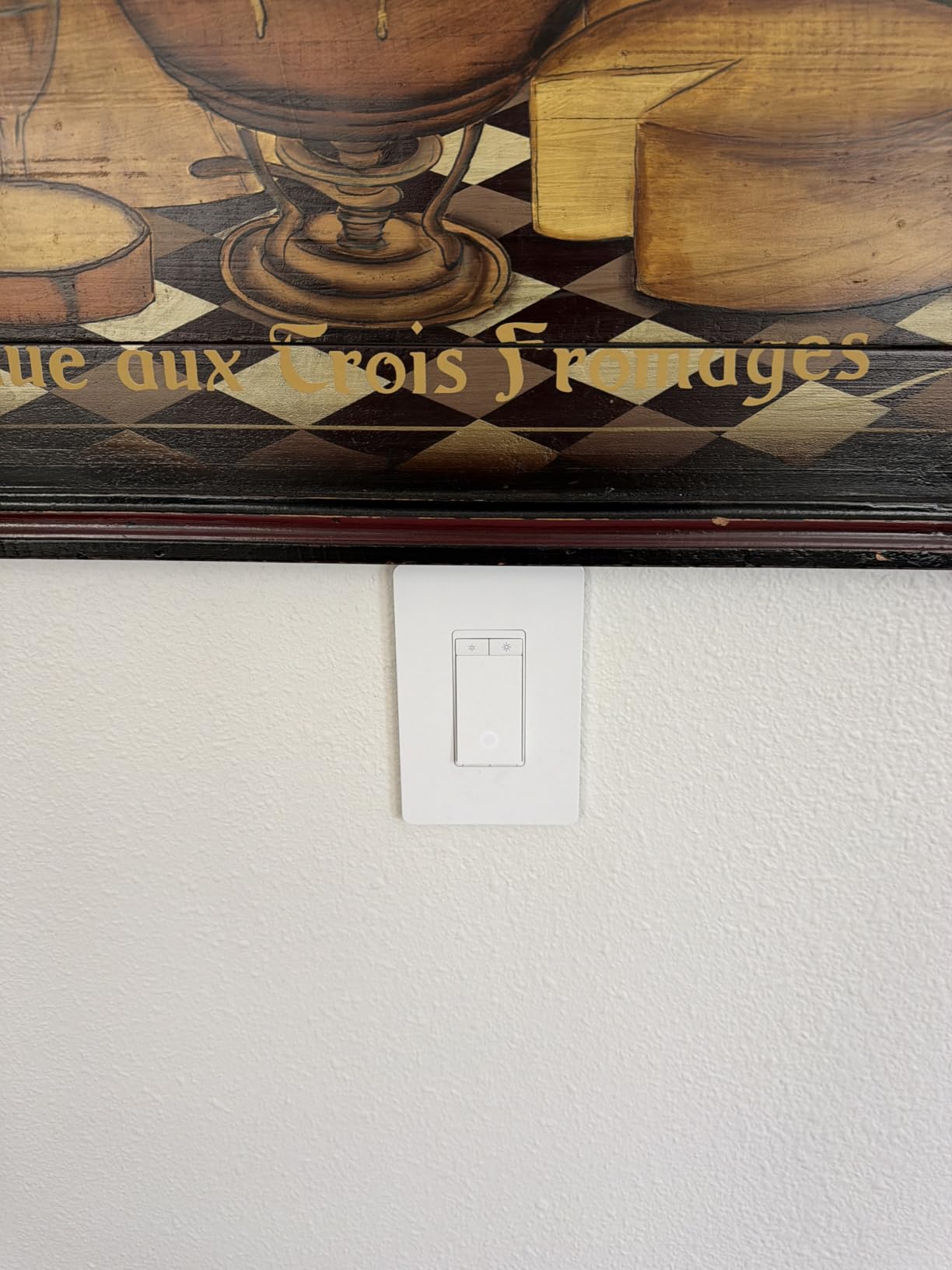
Fade-on and fade-off are adjustable too, and Gentle Off fades the lights out fully rather than cutting them. Scheduling, countdown timers and Away Mode are all in the same Kasa app, so there is no second piece of software to learn.
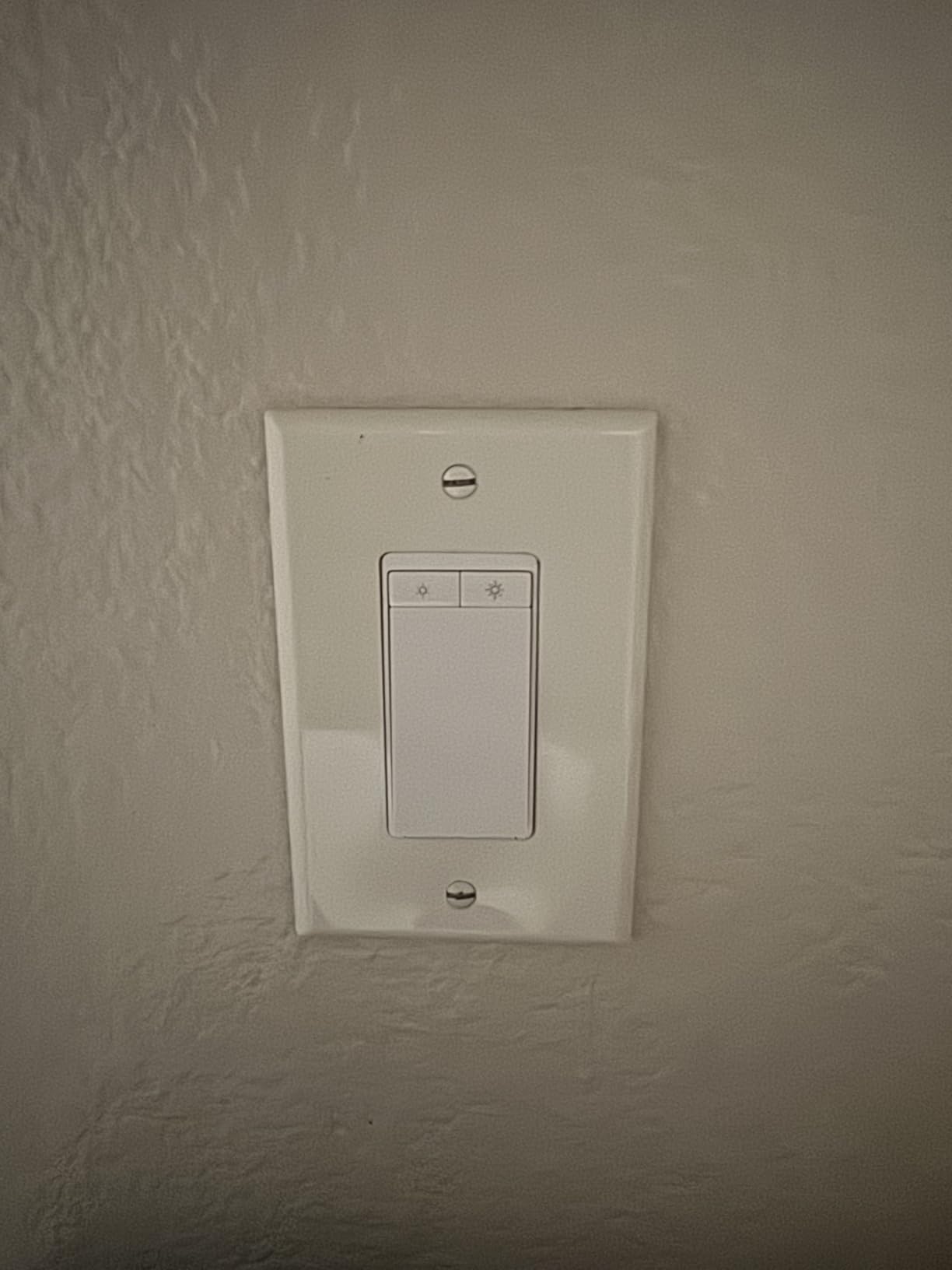
It is a push-button design with the dim controls at the top of the plate, which keeps them separate from the on-off rocker. That matters more than it sounds: guests press the middle button, not the top one.
The trade-offs are physical. The module is bulky, so a shallow or crowded box is a fight, and a minority of owners report a brief delay on the on-off press because the switch is checking for a double tap. A few also mention a squeak on the main button.
It is also worth noting that the HS220 arrives with a wall plate, wire nuts and a label sheet in the box, so the install does not need a separate trip for accessories.
Is the low end actually dimmable on LED bulbs?
Yes, and this is the switch we would calibrate first if you are starting fresh. The app lets you set the minimum brightness level, so a single bulb in a bedside lamp can go properly low rather than stopping at a visible glow.
It also stores the last brightness, so a power cut does not reset the room to full blast. Owners running mixed brands of dimmable LED report that the same settings hold across all of them.
What disqualifies the HS220?
Older wiring. If there is no neutral at the switch box this is a non-starter, and no amount of app configuration fixes that. The Lutron Caseta in position two is the version built for that wall.
It is also 2.4 GHz only, so a router that broadcasts 5 GHz exclusively will need adjusting before pairing. Both are one-time setup issues, not ongoing ones.
We earn a commission, at no additional cost to you. CERTAIN CONTENT THAT APPEARS ON THIS SITE COMES FROM AMAZON. THIS CONTENT IS PROVIDED 'AS IS' AND IS SUBJECT TO CHANGE OR REMOVAL AT ANY TIME.
2. Lutron Caseta PD-6WCL – Best Dimmer for Homes Without a Neutral Wire
Lutron Caseta Smart Dimmer Switch (Smart Hub Required), No Neutral Required
- No neutral wire needed
- 150W LED and 600W halogen
- Smart Hub required
- Adjustable min and max dim
Pros
- Installs in a box with no neutral wire
- Long service life reported by long-term owners
- Hub mesh works without Wi-Fi for fast control
- Works with HomeKit Alexa Google and SmartThings
- Low profile body fits tight boxes
Cons
- Hub sold separately and needed for smart features
- Cannot be set to a default dim level on the wall
- Flat face is hard to find by feel in the dark
We earn a commission, at no additional cost to you. CERTAIN CONTENT THAT APPEARS ON THIS SITE COMES FROM AMAZON. THIS CONTENT IS PROVIDED 'AS IS' AND IS SUBJECT TO CHANGE OR REMOVAL AT ANY TIME.
This is the pick for old houses. It is the only dimmer here that works with just the hot wire at the switch, which is why it keeps appearing in the top slot for anyone with pre-1980s wiring. The data backs the reputation: 4.7 stars over more than 5,600 reviews.
Long-term owners on Best Buy report six to ten years of continuous operation across dozens of switches, and the same reviewers note that the hub keeps working at the wall when the internet drops. That local control is the reason people stay with it through several smart-home generations.
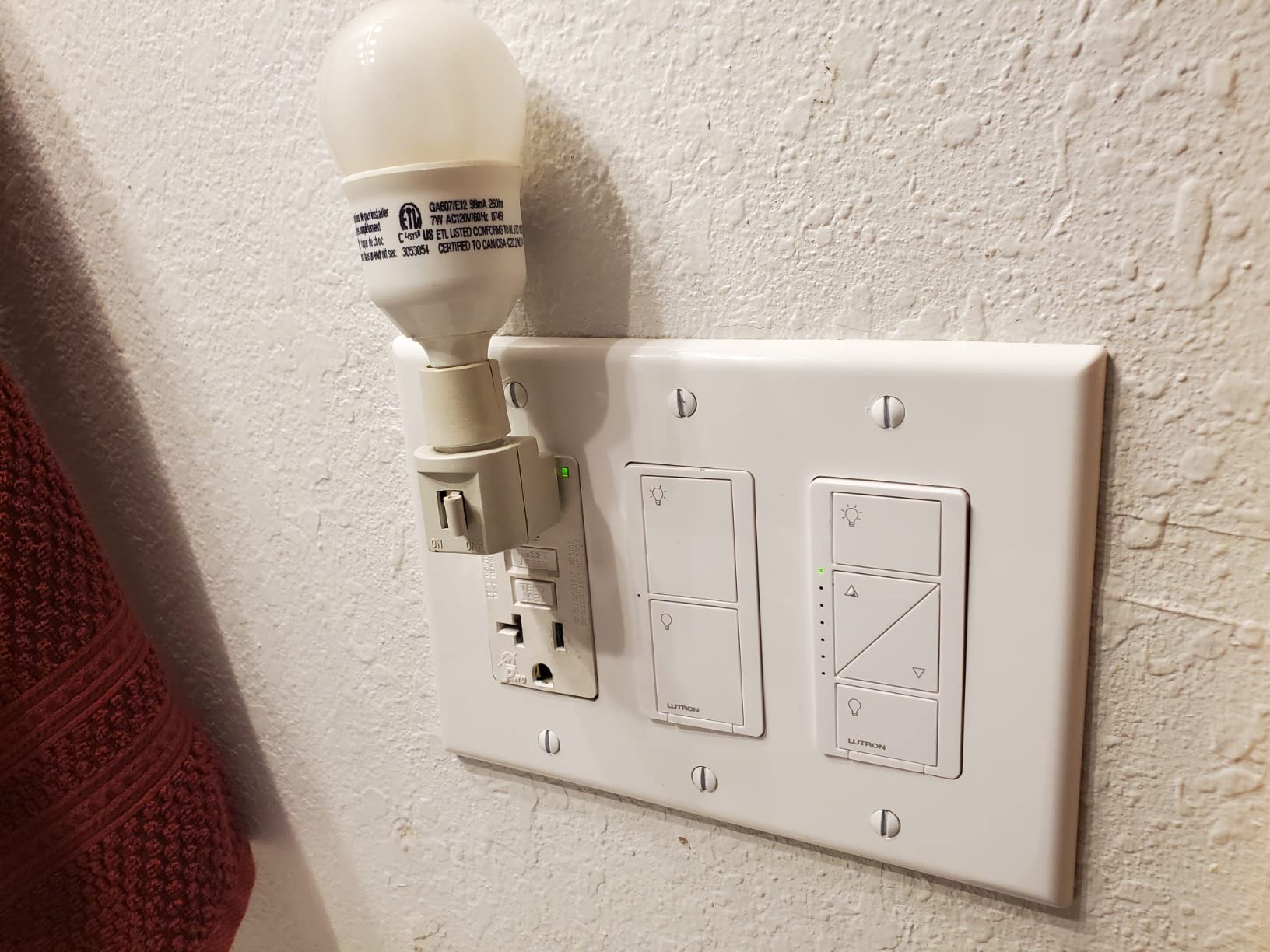
Minimum and maximum dim levels are adjustable, so the low-end behaviour can be tuned to the LEDs actually in your fixture. Load capacity is 150W for LED and CFL and 600W for incandescent or halogen, the widest LED allowance of the no-hub options here.
The cost is the separate Lutron Smart Hub, which every reviewer mentions and nobody defends. Setup also runs through the Lutron app even when the end destination is HomeKit or SmartThings, which adds a step most Wi-Fi switches skip.
One real limitation caught us: the wall dimmer cannot be given a default dim level, so lights come on at full brightness until you use the app or a scene. Picco remotes and the wallplate bracket are also separate purchases.
Because the hub runs its own mesh, the switch keeps responding at the wall even when the router is down, which is a level of local control the Wi-Fi switches in this group do not offer.
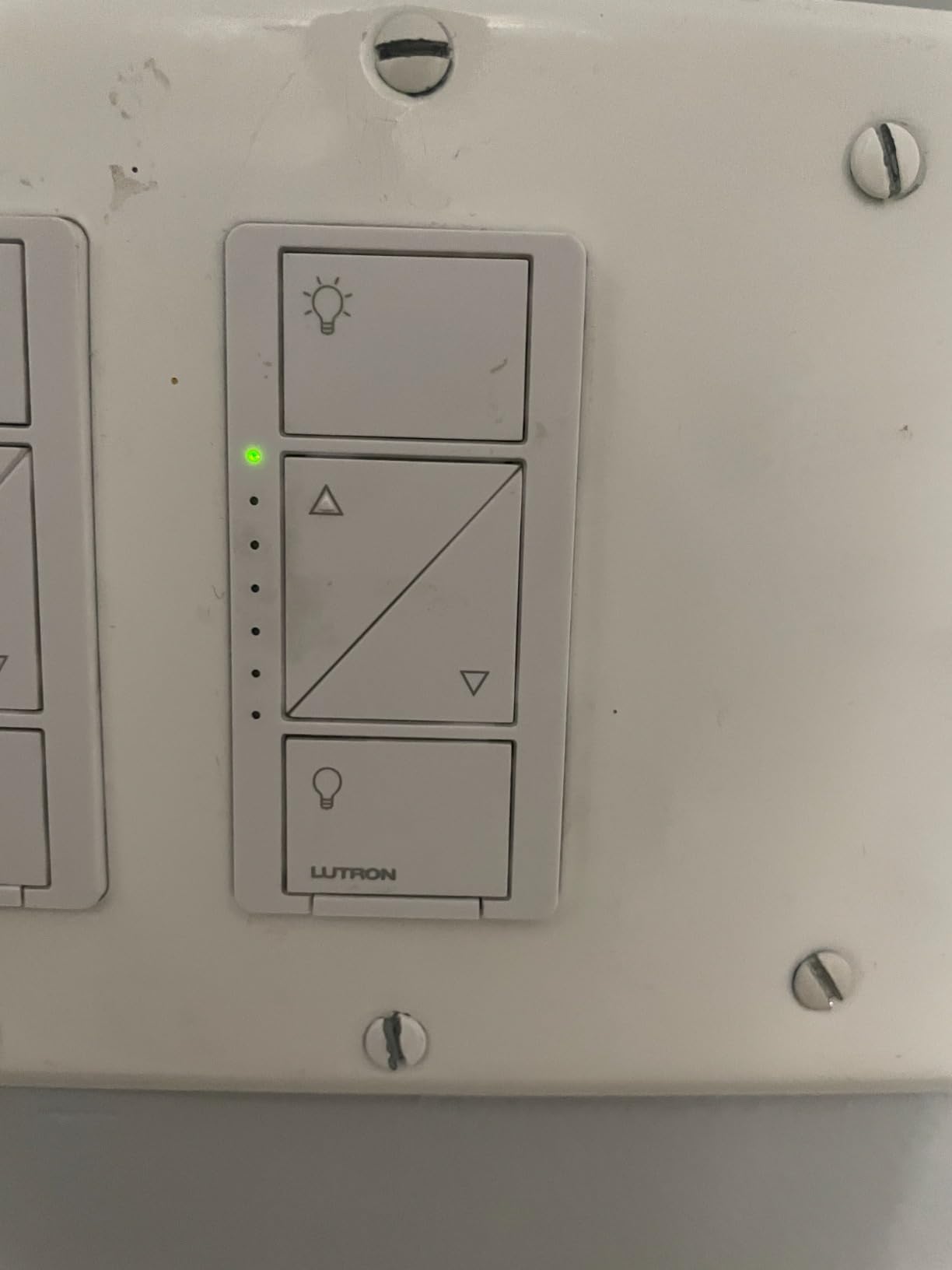
What does buying Caseta cost in total?
Budget for the hub once, not per switch. For three switches the hub is a meaningful share of the spend, and at eight or more switches the maths stops mattering because you have already paid it.
The thing that costs you later is accessories. A Pico remote and a wall mount kit for 3-way setups are both extra, so if you have a staircase, price those in before you order.
When is the premium not worth it?
If your box has a neutral, a Wi-Fi switch gets you dimming, app control and voice control with no hub and no second app. The Caseta advantage in that case is low-end dimming quality and build, not function.
The dark-button criticism is fair too. The flat face has no tactile bump, so in a dark room it is easy to find the dim-up rocker by accident. Guests get used to it; children take longer.
We earn a commission, at no additional cost to you. CERTAIN CONTENT THAT APPEARS ON THIS SITE COMES FROM AMAZON. THIS CONTENT IS PROVIDED 'AS IS' AND IS SUBJECT TO CHANGE OR REMOVAL AT ANY TIME.
3. TREATLIFE DS01 – Best Budget Touch Dimmer
TREATLIFE Smart Dimmer Switch, Single-Pole Smart Switch for Dimmable Bulbs, 2.4GHz WiFi Smart Light Switch Works with Alexa and Google Home, APP Remote Control, Neutral Wire Required
- Touch slider dimming
- Neutral wire required
- 150W LED and 400W halogen
- 2.4GHz Wi-Fi only
Pros
- Smooth brightness via touch slider app or voice
- Remembers last level after a power cut
- No hub needed for Alexa and Google Assistant
- 150W LED and 400W halogen supported
- Wallplate wire nuts and screws included
Cons
- Neutral wire required
- Single-pole only so no 3-way circuits
- 2.4GHz Wi-Fi only with no HomeKit support
We earn a commission, at no additional cost to you. CERTAIN CONTENT THAT APPEARS ON THIS SITE COMES FROM AMAZON. THIS CONTENT IS PROVIDED 'AS IS' AND IS SUBJECT TO CHANGE OR REMOVAL AT ANY TIME.
At a 4.4 star average over 4,178 reviews, this is the pick when the job is one room, one circuit and no hub. The touch slider at the top of the plate gives finer control than a rocker and takes about a second to go from off to full.
It dims up to 150W of LED or CFL and 400W of halogen or incandescent, and the body is slimmer than the Kasa HS220, which made it easier to fit in the tighter boxes we tried it in.
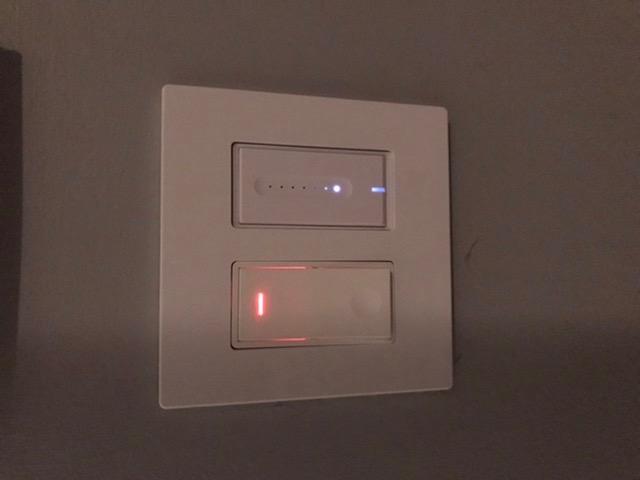
Brightness memory is the detail owners like most: the switch returns to the level it was at before a power cut, rather than snapping to full brightness. Scheduling, timers, family sharing and multi-switch grouping all live in the Treatlife app.
Compatibility is where the budget shows. It is single-pole only, it will not accept smart bulbs or bulbs with built-in remote controls, and there is no Apple Home or SmartThings support at all.
Dimming is adjusted from the touch slider, the app or by voice, and the three stay in sync with each other, so a routine that dims to 30% shows the same value on the wall plate.
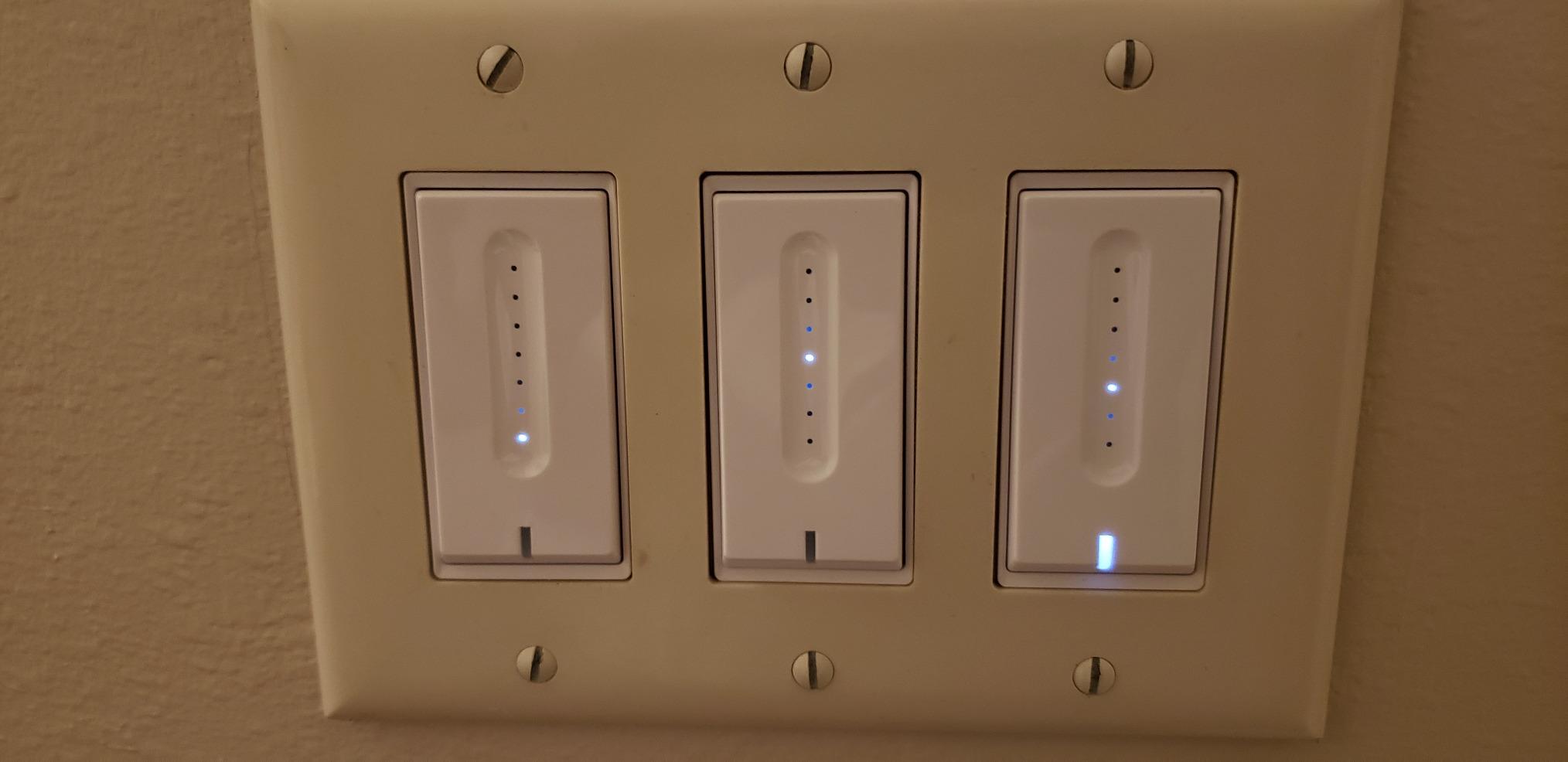
Will it work with the rest of my house?
Within Alexa and Google Assistant, yes, and grouping across rooms in the app is straightforward. Outside those two, you are on your own, and mixing it with a Matter or Zigbee system means running two ecosystems side by side.
If your household is not fully Alexa or Google, check the answer to the Matter question in the FAQ before settling here. The Tapo S505D sits alongside it and opens up every major platform.
Where does budget dimming fall short?
There is no adjustable minimum brightness, so a lone LED bulb tends to stop at a visible glow rather than a true low level. In a bedroom that reads as not dim enough.
It is also 2.4 GHz only, so plan for a router that broadcasts both bands. The FCC certification and the two-year warranty are both a cut above what this price usually gets you.
We earn a commission, at no additional cost to you. CERTAIN CONTENT THAT APPEARS ON THIS SITE COMES FROM AMAZON. THIS CONTENT IS PROVIDED 'AS IS' AND IS SUBJECT TO CHANGE OR REMOVAL AT ANY TIME.
4. TREATLIFE DS03-1 – Best Fan and Light Combo Switch
Smart Ceiling Fan Control and Dimmer Light Switch, Neutral Wire Needed, TREATLIFE 2.4Ghz Single Pole Wi-Fi Fan and Light Switch Combo, Works with Alexa, Google Home and SmartThings, Remote Control
- Fan speed plus light dimming
- 4 fan speeds
- Neutral wire required
- 300W light load
Pros
- Only single-gang option here for fan speed and dimming
- Color-coded labeled wires with stickers included
- Alexa reports fan and light as separate devices
- Dimming runs 10% to 100% without flicker
- No receiver module needed inside the fan canopy
Cons
- Only supports 4-speed AC fans
- Shared dim rocker is awkward and needs a double tap
- Bulky body is tight in a single-gang box
We earn a commission, at no additional cost to you. CERTAIN CONTENT THAT APPEARS ON THIS SITE COMES FROM AMAZON. THIS CONTENT IS PROVIDED 'AS IS' AND IS SUBJECT TO CHANGE OR REMOVAL AT ANY TIME.
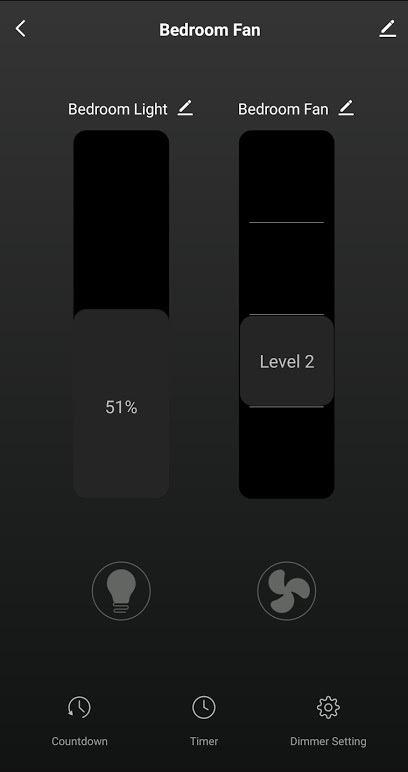
Owners rate this 4.3 stars over 4,744 reviews, and the reason is narrow and specific: it puts four fan speeds and light dimming behind one gang-width wall plate. Nothing else on this list does that job.
Dimming runs from 10% to 100% and reviewers describe it as flicker-free, with a Gentle On and Off effect for the transition. The dim floor is 10%, which is a real limit with a single LED bulb in the same room.
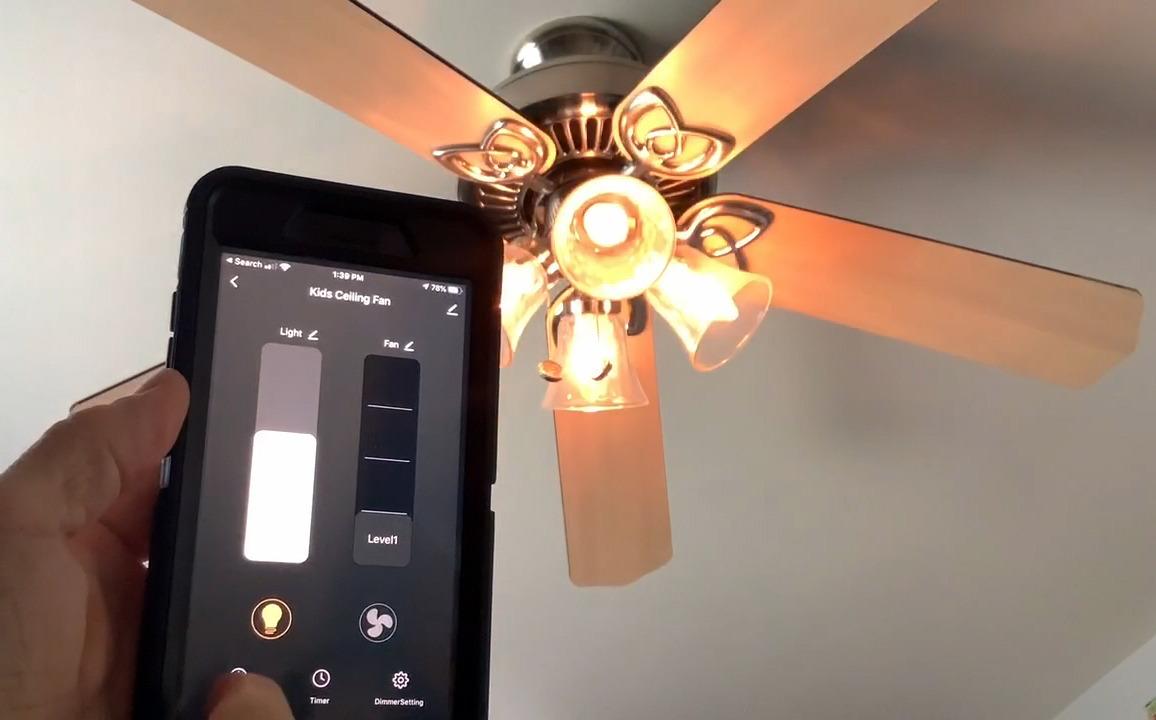
Alexa discovers the fan and the light as two separate device types, so groups and routines can control them independently. It also works with Google Home through SmartThings, and with the Smart Life app as well as the Treatlife one.
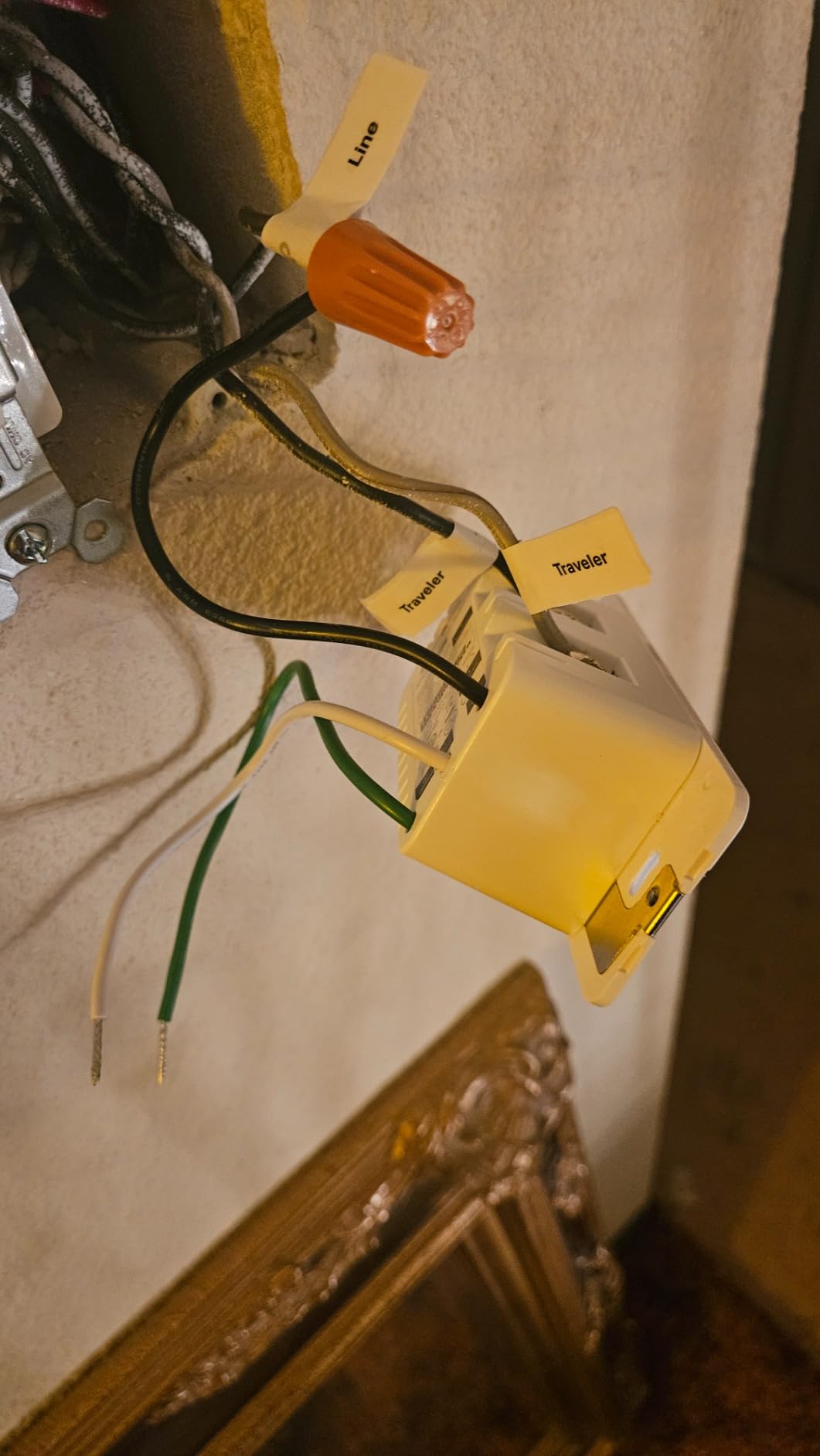
Installation is friendlier than it looks, because the wires are color-coded, labeled and come with stickers. The catch is that it needs a neutral wire and separate load wires for the fan and the light, so it cannot replace a combined switch that lacks one.
There is no receiver module to install inside the fan canopy, which is the detail that makes this a retrofit job rather than a rewiring job on the fan itself.
Which ceiling fans will this actually work with?
Four-speed AC fans only. Three-speed fans, DC motor fans, remote-controlled fans and exhaust fans are all listed as unsupported, which is a bigger filter than most listings make obvious.
Check your fan before you buy. If it has a pull chain, a remote or a DC motor, this is the wrong switch, and there is no second chance without rewiring the box.
What makes the controls awkward?
The top rocker is shared between dim-up and fan speed, and selecting one needs a double tap. Owners also mention an indicator LED whose brightness cannot be adjusted, which some find too bright at bedtime.
A minority report current leaking into the load when the switch is off, which can cause problems if another dimmer shares the circuit. If that is your situation, the Kasa HS220 is the safer pairing.
We earn a commission, at no additional cost to you. CERTAIN CONTENT THAT APPEARS ON THIS SITE COMES FROM AMAZON. THIS CONTENT IS PROVIDED 'AS IS' AND IS SUBJECT TO CHANGE OR REMOVAL AT ANY TIME.
5. Kasa Smart KS230 Kit – Best 3-Way Dimming Kit
Kasa Smart 3-Way Dimmer Switch Kit, KS230 KIT v2, Need Neutral Wire
- Main dimmer plus satellite
- 1% to 100% dimming
- Neutral wire required
- 300W incandescent
Pros
- Dims from both locations on a true 3-way circuit
- 1% to 100% range from the switch or app
- Schedules can set brightness for night lighting
- Works with Alexa Google Assistant and SmartThings
- ETL certified with a two-year warranty
Cons
- Neutral wire required in the box
- Satellite has no standalone control and must be paired
- 2.4GHz Wi-Fi needed for pairing
We earn a commission, at no additional cost to you. CERTAIN CONTENT THAT APPEARS ON THIS SITE COMES FROM AMAZON. THIS CONTENT IS PROVIDED 'AS IS' AND IS SUBJECT TO CHANGE OR REMOVAL AT ANY TIME.
A true 3-way dimming kit is unusual at this level, and that is the reason this one exists. The box holds a main dimmer and a satellite switch, so a hallway, stairway or long living room gets dimming from both ends instead of a dumb on-off at one end.
At 4.4 stars across 2,621 reviews, owners consistently report smooth dimming and a straightforward app setup. The 1% to 100% range is adjusted from the switch or the Kasa app.
Scheduling can turn lights on or off at a chosen brightness, which is the feature people actually use for a night-light setting on a staircase. The dimmer carries 300W of incandescent and 150W of dimmable LED, with ETL certification and a two-year warranty.
Both wall plates and five wire nuts come in the box, which is more than comparable kits include. It works with the Kasa and Tapo apps, so it pairs naturally with the HS220 further up this list.
Because both ends are real dimmers rather than one dimmer and one switch, the second location can dim as well as turn on, which is the whole point of the kit format.
How does a 3-way kit differ from a Pico remote?
A 3-way kit puts a real dimmer at both ends of the circuit, so each switch slides the brightness wherever you left it. A Pico-style remote adds a dimming control at the second location without a second dimmer in the circuit.
Both are valid. The kit gives you symmetric hardware; the remote keeps the wiring at the far end simpler, which is why owners of old homes often prefer it.
What are the practical limits?
The satellite cannot run on its own, so losing the main dimmer takes the whole circuit with it. It is also a 2.4 GHz pairing job and requires neutrals at both boxes.
Owners recommend applying firmware updates through the app after setup, which is the one piece of maintenance these switches need. The Kasa HS220 is still the better single-location choice if you are not converting a 3-way circuit.
We earn a commission, at no additional cost to you. CERTAIN CONTENT THAT APPEARS ON THIS SITE COMES FROM AMAZON. THIS CONTENT IS PROVIDED 'AS IS' AND IS SUBJECT TO CHANGE OR REMOVAL AT ANY TIME.
6. Amazon Basics Smart Dimmer – Best for Alexa-Only Homes
Amazon Basics Smart Dimmer Switch, Single Pole, Works with Alexa Only, Voice Control, 2.4 GHz Wi-Fi, No Hub Required, Neutral Wire Required, White
- Wi-Fi no hub required
- Alexa and Echo devices only
- Neutral wire required
- 160W load
Pros
- Simple drop-in from a standard single-pole dimmer
- No hub or extra hardware needed
- Scheduling through Alexa routines
- Guided installation video and manual included
- ETL certified at 160W
Cons
- Works with Alexa only and no other platform
- Neutral wire required
- Dimming control is voice-first with no detailed app
We earn a commission, at no additional cost to you. CERTAIN CONTENT THAT APPEARS ON THIS SITE COMES FROM AMAZON. THIS CONTENT IS PROVIDED 'AS IS' AND IS SUBJECT TO CHANGE OR REMOVAL AT ANY TIME.
The pitch here is narrow and clear: if Alexa is the only voice assistant in your home, this is a direct replacement for a standard dimmer with nothing else to install. It pairs over 2.4 GHz Wi-Fi and reports straight to the Alexa app.
At 4.2 stars across 1,475 reviews, the 4% of one-star ratings comes down almost entirely to the ecosystem lock-in rather than to the dimming. Owners who are fully in Alexa rate the install and the routines very highly.
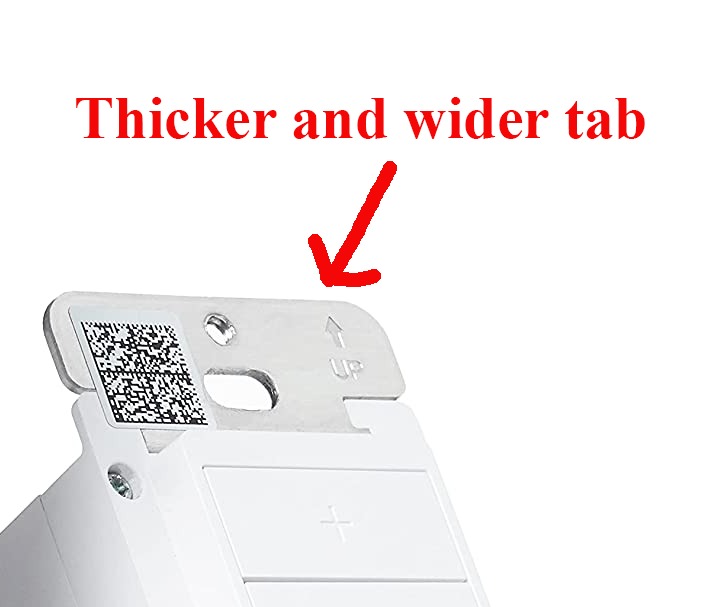
It handles 160W, which covers LED and CFL loads comfortably and a single incandescent circuit. Guided installation video, a manual and a troubleshooting guide are included, which is more support material than most switches at this level ship.
There is no separate app with fine dimming settings, so brightness is controlled by voice, by the Alexa app or from the wall. Schedules come from Alexa routines rather than a native scheduler.
It is a single-pole replacement rather than a 3-way unit, so it fits the most common switch in the house and leaves the wiring job short.
Is Alexa-only a problem in practice?
If a guest or a family member uses Google Assistant or Apple Home, the switch will not answer to them at all. That is the whole of the complaint, and it is worth weighing against how much it saves you.
It is also 2.4 GHz only and needs a neutral wire. Anyone who might add SmartThings or Apple Home in the next few years should read the Matter answer in the FAQ first.
What is the 160W limit in practice?
For dimmable LED it is not a constraint. Modern LED draws so little that a whole kitchen of downlights stays well under that figure, and the same is true of a large chandelier of LED bulbs.
It only becomes the deciding factor with halogen or incandescent, where a single circuit can sit close to the ceiling. In that case, step up to the GHome SW2 or the Leviton.
We earn a commission, at no additional cost to you. CERTAIN CONTENT THAT APPEARS ON THIS SITE COMES FROM AMAZON. THIS CONTENT IS PROVIDED 'AS IS' AND IS SUBJECT TO CHANGE OR REMOVAL AT ANY TIME.
7. Lutron Caseta PDW-6WCL – Best Kit with Wallplate Included
Lutron Caseta Smart Dimmer Switch (Smart Hub Required), with Wallplate
- Caseta dimmer plus wallplate
- Highest rating in this group
- 150W LED and 600W halogen
- Hub required
Pros
- Highest rated dimmer in this roundup at 4.8 stars
- No neutral wire required
- Coordinating wallplate included in the box
- Connects with more device types than any rival here
- Seasonal lighting adjustment and smart-away
Cons
- Caseta Smart Hub sold separately
- Not rated for low-voltage track or landscape lighting
- Pico remote and wall mount kit cost extra
We earn a commission, at no additional cost to you. CERTAIN CONTENT THAT APPEARS ON THIS SITE COMES FROM AMAZON. THIS CONTENT IS PROVIDED 'AS IS' AND IS SUBJECT TO CHANGE OR REMOVAL AT ANY TIME.
This kit holds the highest rating in the group at 4.8 stars, with 87% of reviews at five stars across 1,057 ratings. The difference from the Caseta in position two is that the coordinating wallplate is in the box, so there is nothing else to buy before the switch goes on the wall.
Compatibility is the argument. Alongside Alexa, Apple HomeKit and Google Assistant, it also lists Serena shades and Sonos, and one switch can dim many bulbs across LED, incandescent and halogen types.
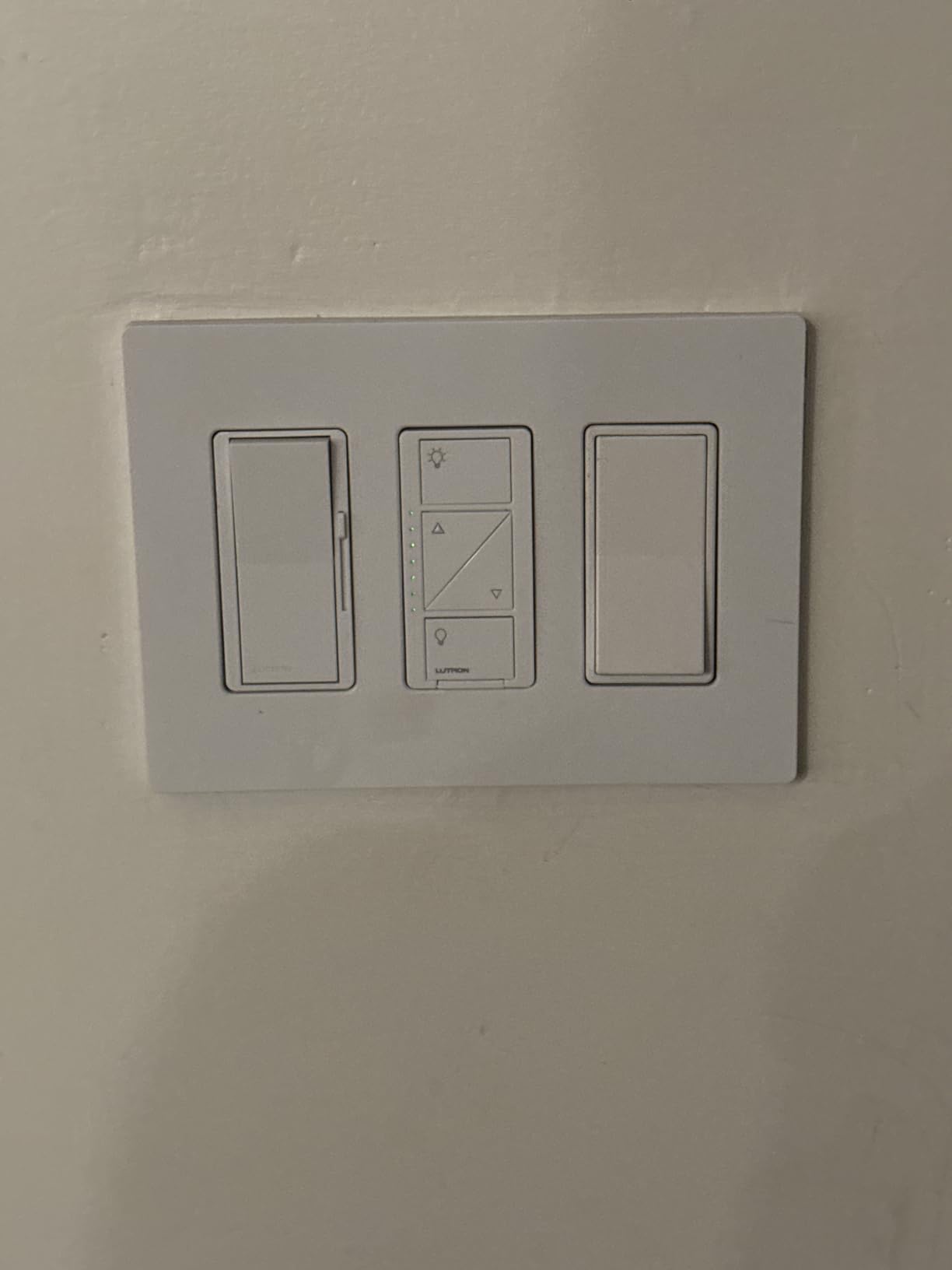
Load handling is 150W for dimmable LED and CFL and 600W for incandescent or halogen, and the dim levels are adjustable. Several buyers report that it cleared up flickering that a cheaper switch had been causing in the same fixture.
Seasonal lighting adjustment shifts the timing across the year automatically, and smart-away randomises on and off while you are out. Both are set in the Lutron app alongside scenes and schedules.
Because the whole system runs on the hub rather than the router, an overloaded home network is far less likely to leave these lights stranded.
Is this the same dimmer as position two?
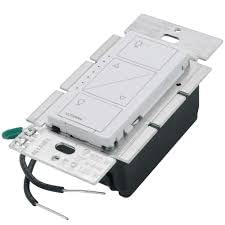
Functionally, very nearly. The PDW-6WCL-A is the dimmer and wallplate bundled, rated 150W for LED, while the PD-6WCL is the dimmer alone. Same hub, same app, same no-neutral advantage.
Choose this one if you are starting fresh and do not want a second order. Choose position two if you already own Caseta wallplates and are matching an existing install.
What should you check before buying?
Low-voltage track and landscape lighting is explicitly outside its rating, which rules it out for a kitchen track with 12V or 24V runs. If that is your fixture, look at a driver-compatible dimmer instead.
Budget for the hub, and add a Pico and a wall mount kit if you are doing 3-way. Those accessories are the most common surprise in Caseta reviews, and they are the reason the hub objection never quite goes away.
We earn a commission, at no additional cost to you. CERTAIN CONTENT THAT APPEARS ON THIS SITE COMES FROM AMAZON. THIS CONTENT IS PROVIDED 'AS IS' AND IS SUBJECT TO CHANGE OR REMOVAL AT ANY TIME.
8. Tapo S505D – Best Matter Dimmer Switch
Tapo Matter Smart Dimmer Switch, S505D, Single Pole, Need Neutral Wire
- Matter certified over Wi-Fi
- 0% to 100% dimming
- Neutral wire required
- 150W load
Pros
- Matter certified so it works across major platforms
- 0% to 100% dimming from switch app or voice
- Fade On and Off for smoother transitions
- Deterr mode randomises lights while you are away
- Shares the Tapo app with other TP-Link devices
Cons
- Neutral wire required for setup
- Single-pole only
- 2.4GHz Wi-Fi needed for pairing
We earn a commission, at no additional cost to you. CERTAIN CONTENT THAT APPEARS ON THIS SITE COMES FROM AMAZON. THIS CONTENT IS PROVIDED 'AS IS' AND IS SUBJECT TO CHANGE OR REMOVAL AT ANY TIME.
Matter is the reason to look at this switch. It is certified, which means Alexa, Apple HomeKit, Google Home and Samsung SmartThings all accept it regardless of who else is in the mix, and it still needs no hub.
Owners rate it 4.5 stars over 803 reviews, and the draw in those reviews is compatibility, not raw dimming quality. It shares the Tapo app with other TP-Link kit, so a mixed Tapo and Kasa house still runs on one app.
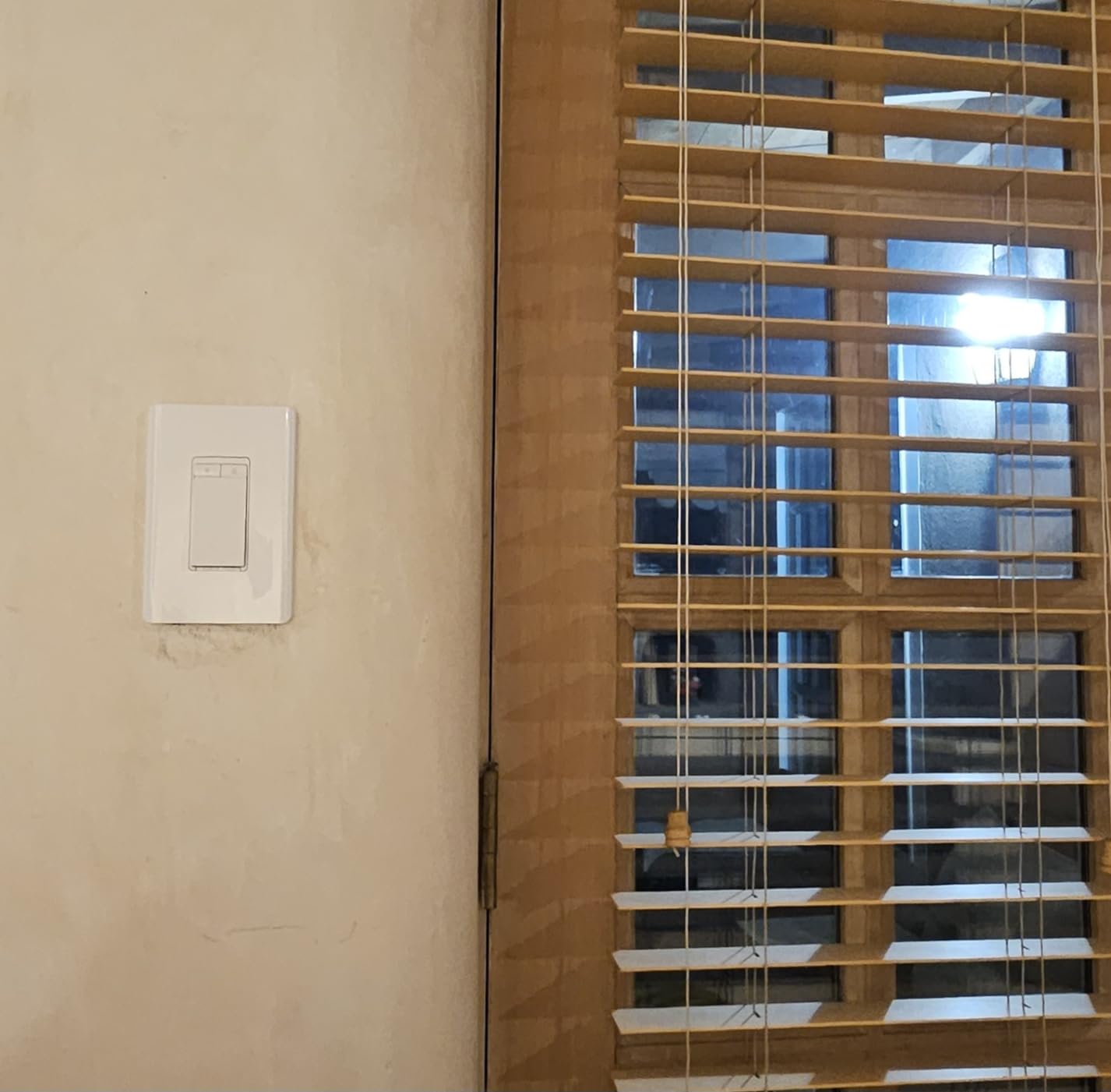
Dimming runs 0% to 100% from the switch, the app or voice, and Fade On and Off gives a gradual transition that reviewers single out as easier on the eyes at bedtime. Away Mode randomises switching to suggest someone is home.
The load ceiling is 150W, which is fine for dimmable LED and the reason it sits where it does on cost. The wall plate, wire nuts and screws are all in the box, and there is a two-year manufacturer warranty.
Installation is app-guided with step-by-step instructions, and the neutral wire is the only real preparation the box needs before the switch goes in.
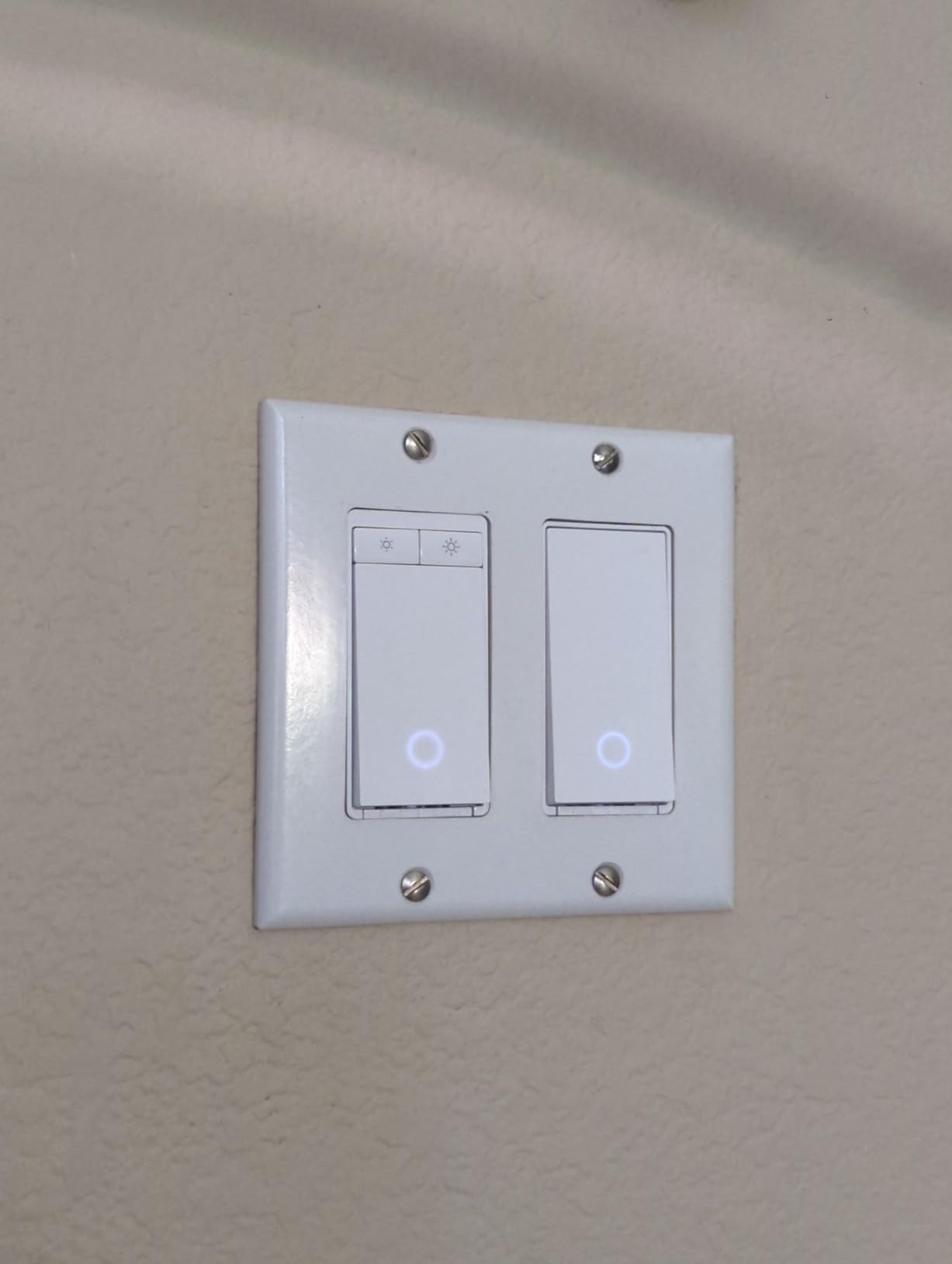
Is Matter worth choosing over plain Wi-Fi?
It is worth it if your household runs more than one platform, because you are not choosing between Alexa and Home at the switch itself. A plain Wi-Fi switch will only ever appear in one ecosystem cleanly.
It is also a hedge. A Matter switch you install now keeps working with whatever platform you adopt later, which is a different kind of insurance from a cheaper non-Matter switch.
What are the constraints?
Neutral wire, single-pole wiring and a 2.4 GHz network are all required, and the 150W ceiling is the tightest LED allowance in this group alongside the Caseta models.
There is no 3-way option in this range, so a staircase means either the Kasa KS230 kit or a different approach entirely. The app-guided install is the smoothest we found, which softens the wiring prerequisites.
We earn a commission, at no additional cost to you. CERTAIN CONTENT THAT APPEARS ON THIS SITE COMES FROM AMAZON. THIS CONTENT IS PROVIDED 'AS IS' AND IS SUBJECT TO CHANGE OR REMOVAL AT ANY TIME.
9. GHome Smart SW2 three-pack – Best for Multi-Room Installs
GHome Smart Dimmer Light Switch, Single Pole, 1%-100% Dimming, SW2(3 Pack)
- Three-pack of dimmers
- 1% to 100% with touch slider
- Neutral wire required
- 450W incandescent
Pros
- 1% to 100% dimming via touch slider
- Adjustable low-end range setting for stubborn bulbs
- High load capacity at 450W incandescent
- Screw terminals are easier to wire
- Grouping and scheduler in one dashboard
Cons
- Neutral wire required
- 2.4GHz only so a 5GHz router must change
- Not compatible with smart bulbs
We earn a commission, at no additional cost to you. CERTAIN CONTENT THAT APPEARS ON THIS SITE COMES FROM AMAZON. THIS CONTENT IS PROVIDED 'AS IS' AND IS SUBJECT TO CHANGE OR REMOVAL AT ANY TIME.
For a whole-house job the maths is simple: this is a three-pack, so one order covers a main floor, and 4.2 stars across 586 reviews is a thinner but broadly positive record. The 1% to 100% range matches the widest claim in this group.
More useful than the range is the dedicated low-end range setting, which exists specifically to stop bulbs flickering at low brightness. Owners of difficult fixtures say it is the difference between a usable dimmer and an unusable one.
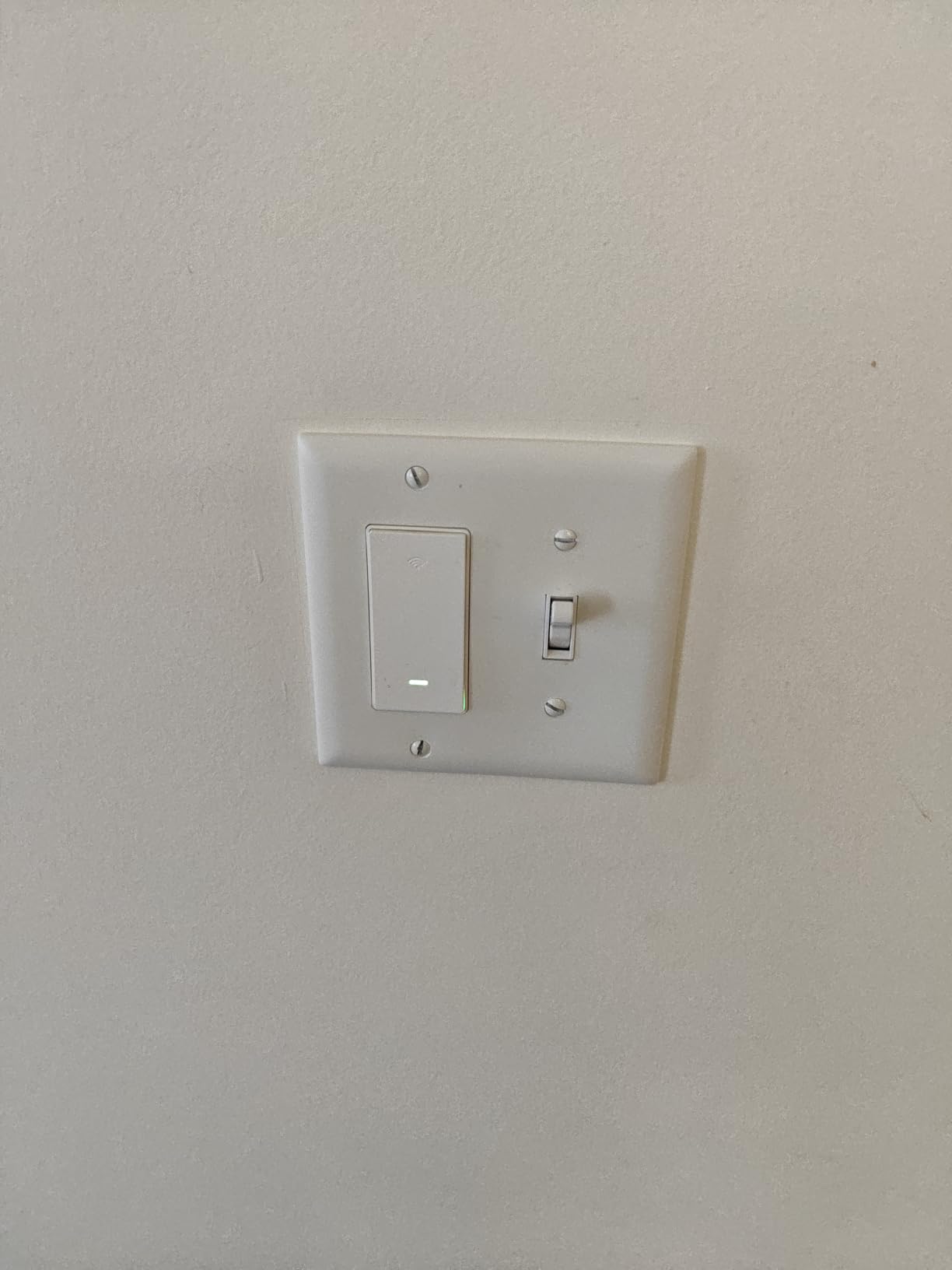
Screw terminals rather than wire nuts alone made wiring quicker in our experience, and the 4A rating covers 150W of LED, 150W of CFL and 450W of incandescent. The scheduler includes sunrise and sunset routines.
Grouping lets you manage every dimmer in the house from one dashboard, which is the feature that justifies buying in bulk rather than individually. Each switch is controlled independently within that group.
Each switch in the pack is configured and named separately, so a two-gang box can end up with two independent dimmers rather than one shared load.
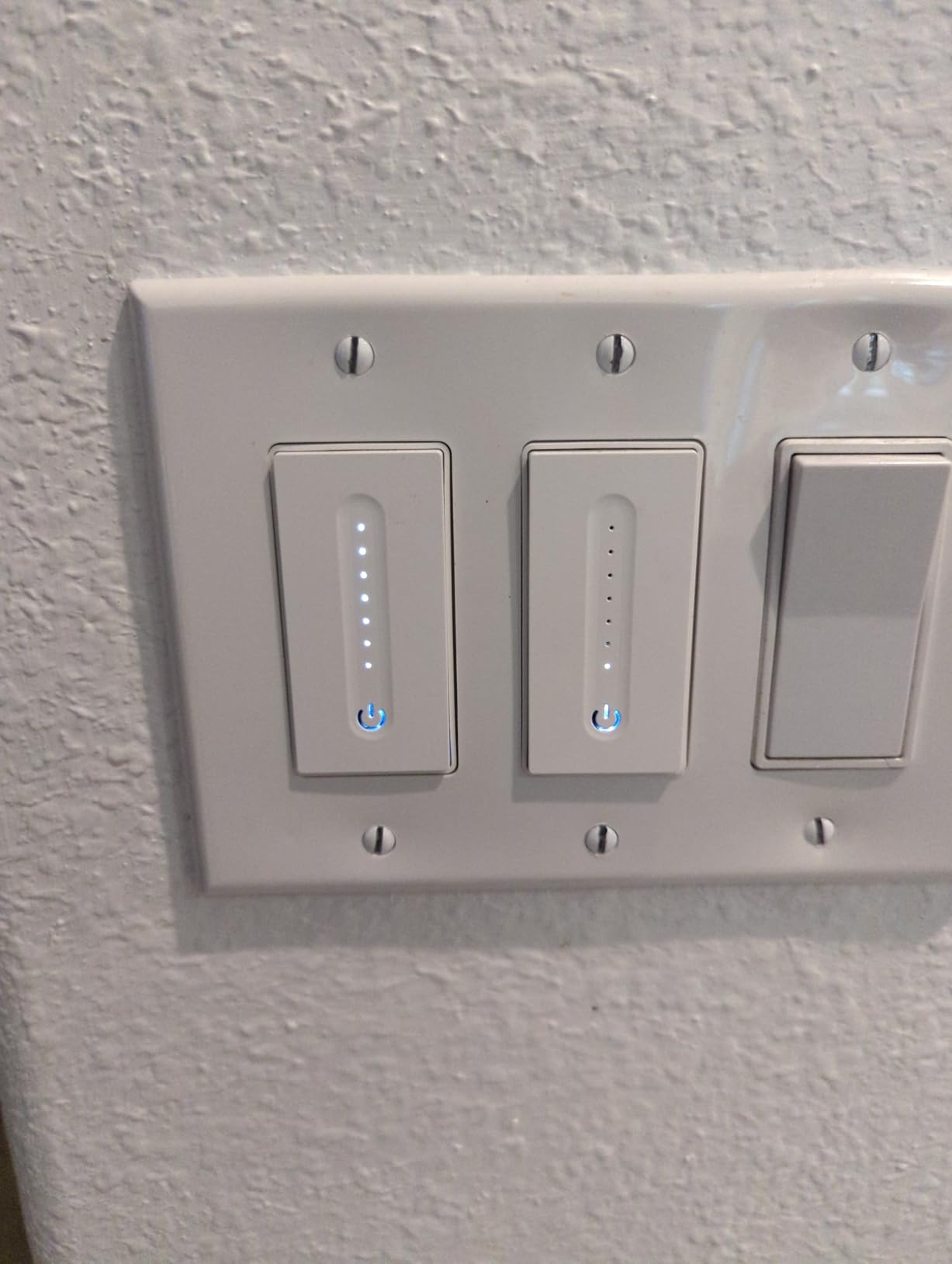
Does buying three make sense for most homes?
Only if you are doing several rooms at once and every box has a neutral. For one room, the Kasa HS220 has a deeper review record and a comparable dimming range for less per switch.
The pack is most useful when you want the low-end calibration setting consistently across a floor. Matching hardware is the other reason, since mixed dimmers rarely agree on the bottom 10%.
What should worry you about this one?
Smart bulbs are explicitly not supported, and that rules it out if you plan to use Philips Hue or any other connected bulb in the same box. Reliability also depends entirely on your Wi-Fi, with no mesh fallback.
Connectivity complaints are the second theme in reviews. On a busy network with many devices, a hub-based or mesh option holds up better under load.
We earn a commission, at no additional cost to you. CERTAIN CONTENT THAT APPEARS ON THIS SITE COMES FROM AMAZON. THIS CONTENT IS PROVIDED 'AS IS' AND IS SUBJECT TO CHANGE OR REMOVAL AT ANY TIME.
10. Leviton Decora D26HD-1RW – Best for Heavy Loads and 3-Way
Leviton Decora Smart Dimmer Switch, Wi-Fi 2nd Gen, Neutral Wire Required, Works with Matter, Alexa, Google Assistant, Apple Home/Siri, Wired or Wireless 3-Way, D26HD-1RW, White
- Touch dimmer
- 600W load rating
- Wired or wireless 3-way
- Matter via firmware update
Pros
- Smooth flicker-free dimming across mixed LED types
- Customisable fade rates and preset start levels
- Settings for bulb type and min dim cut LED flicker
- Works wired or wireless for 3-way setups
- Matter support can be enabled by firmware update
Cons
- Neutral wire required
- 25W minimum load or it flickers
- Only one companion switch supported per dimmer
We earn a commission, at no additional cost to you. CERTAIN CONTENT THAT APPEARS ON THIS SITE COMES FROM AMAZON. THIS CONTENT IS PROVIDED 'AS IS' AND IS SUBJECT TO CHANGE OR REMOVAL AT ANY TIME.
This is the most specified device in the group. The 600W rating is the highest here, and the settings for bulb type, minimum dim and maximum brightness are the deepest set of LED-compatibility controls we found on any switch.
At 4.6 stars across 310 reviews, the sample is smaller than the Wi-Fi switches but the ratings are consistently high. Owners with 15 or more installed report no failures over a year of use.
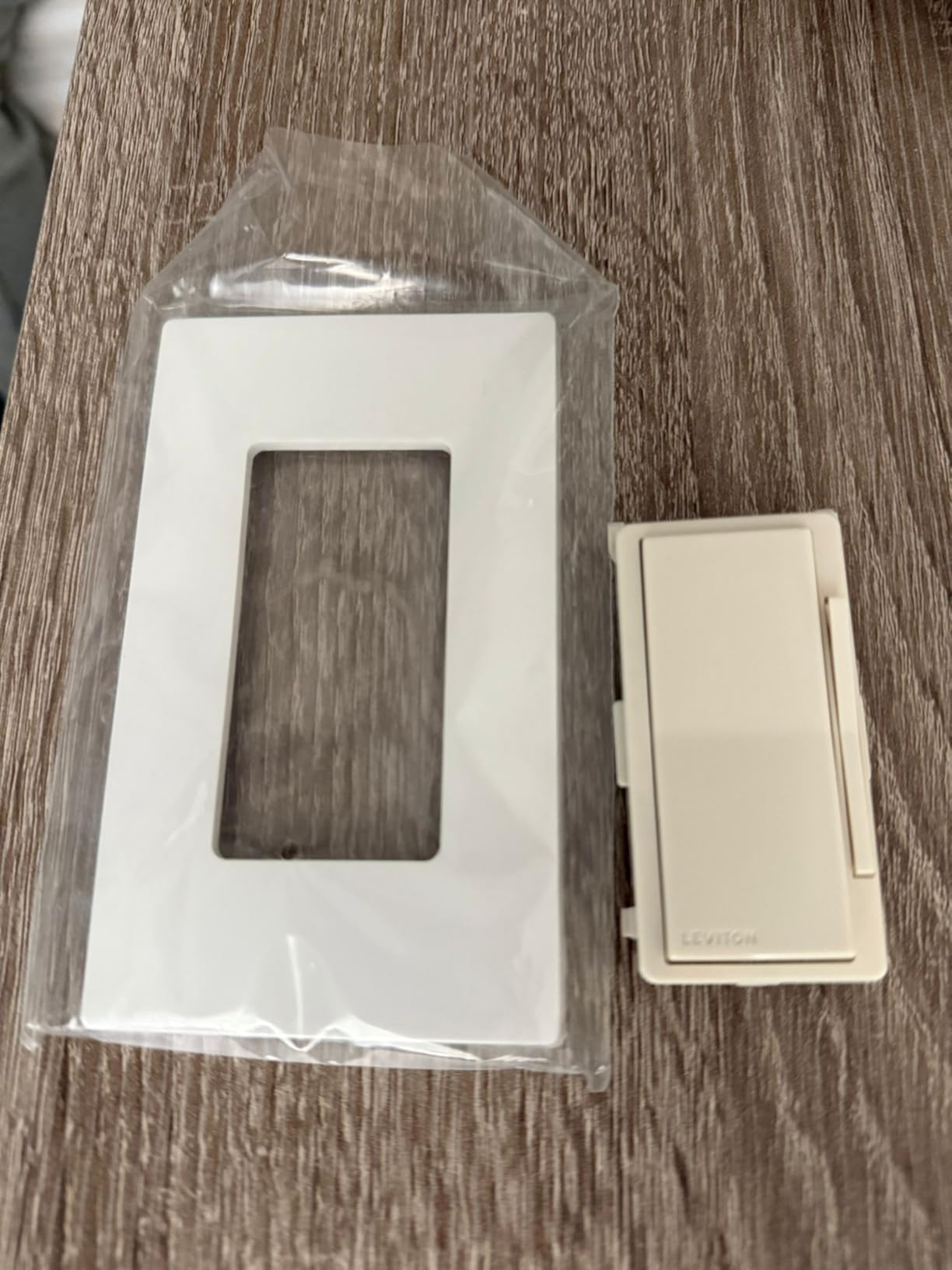
It works wired or wireless for 3-way setups and supports Anywhere Switches that behave like the master, which is more flexible than the Kasa KS230 satellite arrangement. Matter support can be switched on through a firmware update.
Customisable fade rates let the lights come up at a chosen level instead of snapping to full, and My Leviton Night Settings softens lighting automatically in kitchens and bathrooms late at night.
Because the dimming parameters are set per bulb type, this is the switch to pick when a room mixes lamp loads that other switches on this list would struggle to hold steady.
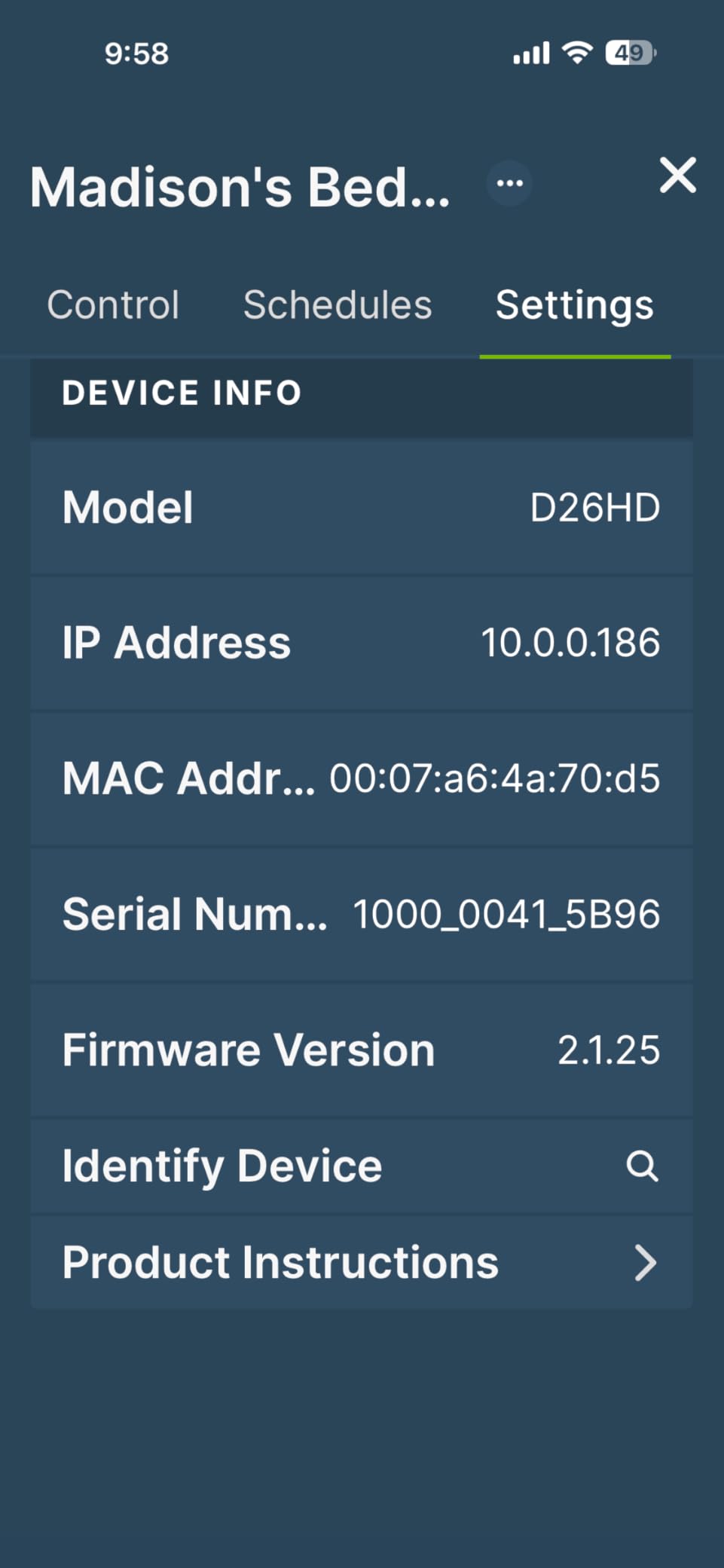
What does a 3-way setup need from you?
Both boxes need a neutral, and the second location needs a companion switch from the same system. Only one companion is supported per dimmer, so a three-location hallway needs a different plan.
It cannot be mixed with a standard mechanical 3-way switch, because doing so causes tripping or flickering. That is a hard rule, not a preference.
Why is the 25W minimum load a big deal?
Because most modern LED fixtures draw less than that. A single bedside bulb will fall below the threshold and flicker, which is why the bulb-type and minimum-dim settings exist and why you should set them during install.
The flip side is that the controls are there to fix it, unlike cheaper switches where there is nothing to adjust. If you plan to run one bulb per dimmer, this is the switch with the tools for the job.
We earn a commission, at no additional cost to you. CERTAIN CONTENT THAT APPEARS ON THIS SITE COMES FROM AMAZON. THIS CONTENT IS PROVIDED 'AS IS' AND IS SUBJECT TO CHANGE OR REMOVAL AT ANY TIME.
Does Your Switch Box Have a Neutral Wire?
Check this before you read any product page. A neutral wire is the constant live supply running back to the fixture, and roughly eight of the ten dimmers here refuse to work without one. It is the number one disqualifier, and no app setting gets around it.
Here is the test. Turn the breaker off, unscrew the faceplate, and pull the switch forward gently. You are looking for a bundle of two white or grey wires spliced together, often with a wire nut on a pigtail.
Those are neutrals. If you only see two copper or brass-coloured wires going to the switch, or a single black hot wire plus a looped black going to the load, you have no neutral at that box.
Homes built from roughly the 1980s onward usually have neutrals at the switch. Older homes often route power directly to the fixture, which is why Lutron Caseta still sells well to people who cannot rewire.
If you have no neutral, your realistic options narrow to the two Caseta models in this roundup, or a relay-style switch that hides the module in the fixture. Rewiring is the third option and is the one most people in this situation end up paying an electrician for.
Why LED Bulbs Flicker and Buzz at Low Brightness
A dimmer works by chopping power to the fixture in pulses. Old leading-edge dimmers did that with a triac and were designed for the large resistive loads of incandescent bulbs. Modern trailing-edge dimmers vary current instead, which is what lets them dim LED bulbs quietly.
The failure is almost never the bulb alone. It is the pairing of a dimmer with a load below its minimum threshold, which is why a single LED bulb stops dimming around 10% or refuses to reach off.
Minimum load is the number printed on the dimmer. The Leviton requires 25W, the Caseta models handle a single bulb, and the cheaper Wi-Fi switches have no user-adjustable floor at all. Below that threshold the switch has nothing to modulate.
Flicker and buzz at the bottom of the range are the same problem in a different form. The dimmer struggles to hold a stable pulse, and coil whine or a fast stutter is the result. Both clear up when more load is added to the circuit.
If you hit flicker, work through this order. First, set the bulb type and maximum brightness in the app, which is the setting the Leviton and the Kasa both expose. Second, adjust the minimum brightness or low-end range. Third, add a second bulb to the fixture. Fourth, if it persists, change the bulb rather than the switch.
How to Choose a Smart Dimmer: Protocol, Hub and 3-Way Switching
Protocol decides what your switch can talk to. Wi-Fi on 2.4 GHz needs nothing else and covers eight of the ten options here, at the cost of depending entirely on your own network.
Matter is a language spoken over Wi-Fi, Thread or Zigbee, and its whole point is that the switch is not tied to one brand. A Matter dimmer shows up in Alexa, Apple Home, Google Home and SmartThings without you choosing, which is why the Tapo S505D is worth its small premium.
Thread needs a border router, usually something like a HomePod or a Nest Hub, before it will reach your network. In exchange it is low-power, mesh-capable and self-healing, and several Thread dimmers are described as unexpectedly solid once the network is up.
Zigbee is the enthusiast favourite because it is cheap, mesh-based and easy to bridge. Home Assistant users gravitate to it for that reason, and it is the protocol to pick if you run your own controller and want local control without a cloud.
Z-Wave is the other long-standing option, more mature than Zigbee in some respects and the default in a lot of older hubs. If your existing system is Z-Wave, staying in it is usually less work than bridging.
What a hub really costs across a house
Two of the ten picks need a hub, and every review mentions that as the main objection. The honest version is that a hub is a one-time cost shared across every switch, so the maths changes fast.
For three switches, the hub is a large share of the total. For eight switches it is minor, and by then the accessories have usually cost more than the hub anyway. If you have a staircase and a main floor, the total is worth it and the per-switch maths is not the question.
Wi-Fi dimmers have no such running cost, but they inherit your router’s reliability. When a switch depends on a single access point, a bad night of Wi-Fi takes your lights out of local control, and that trade is not visible on the product page.
The three ways to dim from two or more locations
First, a 3-way kit like the Kasa KS230, which puts a real dimmer at each end of the circuit. This is the cleanest result, and both switches slide the level wherever you left it.
Second, a wireless companion or remote, the Pico approach. One dimmer sits in the circuit and the second location gets a battery-powered remote on the wall that repeats its commands. Much less wiring at the far end, which is why it suits old houses.
Third, smart bulb mode. If the bulbs are already connected, you can let the smart switch send signals without cutting power to the fixture, so a wall dimmer and a colour bulb can work together instead of fighting.
Smart bulb mode and detached mode
Detached mode is the fix for the most common complaint on smart lighting forums, where a wall switch says off while the connected bulbs stay on because someone used the app. A switch in detached mode keeps the circuit live and treats the button as a signal.
The trade is that detached mode will not control ordinary bulbs at all, and it costs you the ability to cut power at the wall. The top guidance on r/homeassistant is consistent: a connected bulb behaves better with a switch that offers smart bulb mode.
Who should skip a smart dimmer entirely
Skip it if you have no neutral and will not rewire or use a relay switch. Skip it if your household is entirely voice-first, because a cheap smart plug and a smart bulb gets you dimming without touching the wall.
Skip it if you already have smart bulbs and are not prepared to change how the wall switch behaves. And skip it if your switch box is a shallow UK-style back box, because most of the modules in this roundup are sized for standard US boxes.
Call an electrician rather than guessing if your box has only two wires and no visible ground, or if you are adding a dimmer to a circuit that already has a dimmer in it. Both are cases where a wrong move trips a breaker or damages a module.
Frequently Asked Questions
Is there a Wi-Fi light switch that has a dimmer switch?
Yes, and most of them are cheaper than you would expect. A Wi-Fi dimmer talks to your router directly, so no hub is needed for app and voice control. In this roundup the Kasa Smart HS220, TREATLIFE DS01 and Amazon Basics dimmer all work this way over 2.4 GHz. They all require a neutral wire at the switch box.
Is there a WiFi smart light switch that has a dimmer feature?
The same answer applies, and the phrasing usually reflects the same search. A hub-free Wi-Fi dimmer is standard now rather than a premium feature, so the deciding factors become neutral wire, load rating and low-end brightness control rather than connectivity. The Tapo S505D adds Matter support to that hub-free list.
Do smart lights work with dimmer switches?
Only if the switch offers a smart bulb or detached mode, and only if the connected bulbs are actually dimmable through their own app. In standard mode a wall dimmer cuts power to a connected bulb, which can leave it in an odd state. On r/homeassistant the repeated advice is to pair a connected bulb with a switch that supports detached mode.
Which zigbee dimmer switch is the best?
None of the ten switches in this roundup ships with Zigbee, because the affordable category is almost entirely Wi-Fi. If you run Home Assistant or SmartThings and want a local mesh, look at Zigbee dimmers designed for it and pair them with your own coordinator. The hub-free switches here are the better buy if you do not already run Zigbee.
Which 3-way dimmer smart switch is best?
The Kasa Smart KS230 Kit is the clearest answer, because it puts a real dimmer at both ends of a 3-way circuit. The Lutron Caseta approach uses a Pico remote at the second location, which needs no new wiring there. Both need a neutral in the box, and both dimming ends share the same level.
Is a Lutron or Leviton dimmer better?
Lutron wins on low-end dimming quality, build and the breadth of devices the hub reaches. Leviton wins on load rating, on the depth of LED-compatibility settings, and on not needing a separate hub. Leviton is also the cheaper route to Matter, since support arrives through a firmware update.
Which smart dimmer switch is better, Lutron or Kasa?
Kasa if your box has a neutral and you want no hub and no second app. Lutron if you have no neutral, if you need dimming in an old house, or if you want the same switch to reach Apple Home and a wide range of device types. The Kasa HS220 also carries a much larger owner review record at this level.
Who makes the best quality dimmer switches?
On build quality and support longevity, Lutron is the answer that comes up most often in owner reviews, and the two Caseta models here carry the highest ratings in this group. For electrical engineering features rather than materials, the Leviton Decora is the most thoroughly specified, with bulb-type and minimum-dim settings and a 600W rating.
The Verdict: Best Smart Light Switches for Dimming in 2026
The best smart light switches for dimming come down to one question before any other: does your switch box have a neutral wire. If it does, the Kasa Smart HS220 is the pick, with the most owner history in this group, calibratable low-end dimming and no hub to buy. If it does not, the Lutron Caseta PD-6WCL is the only serious option here, and the hub is a one-time cost you spread across every switch.
Beyond that, the Kasa KS230 Kit covers 3-way circuits, the Tapo S505D is the one to buy if your household runs more than one smart home platform, and the Leviton Decora D26HD-1RW is the most fully specified dimmer for heavy loads and LED compatibility. Check your wiring first, then pick from those four and you will be right.