
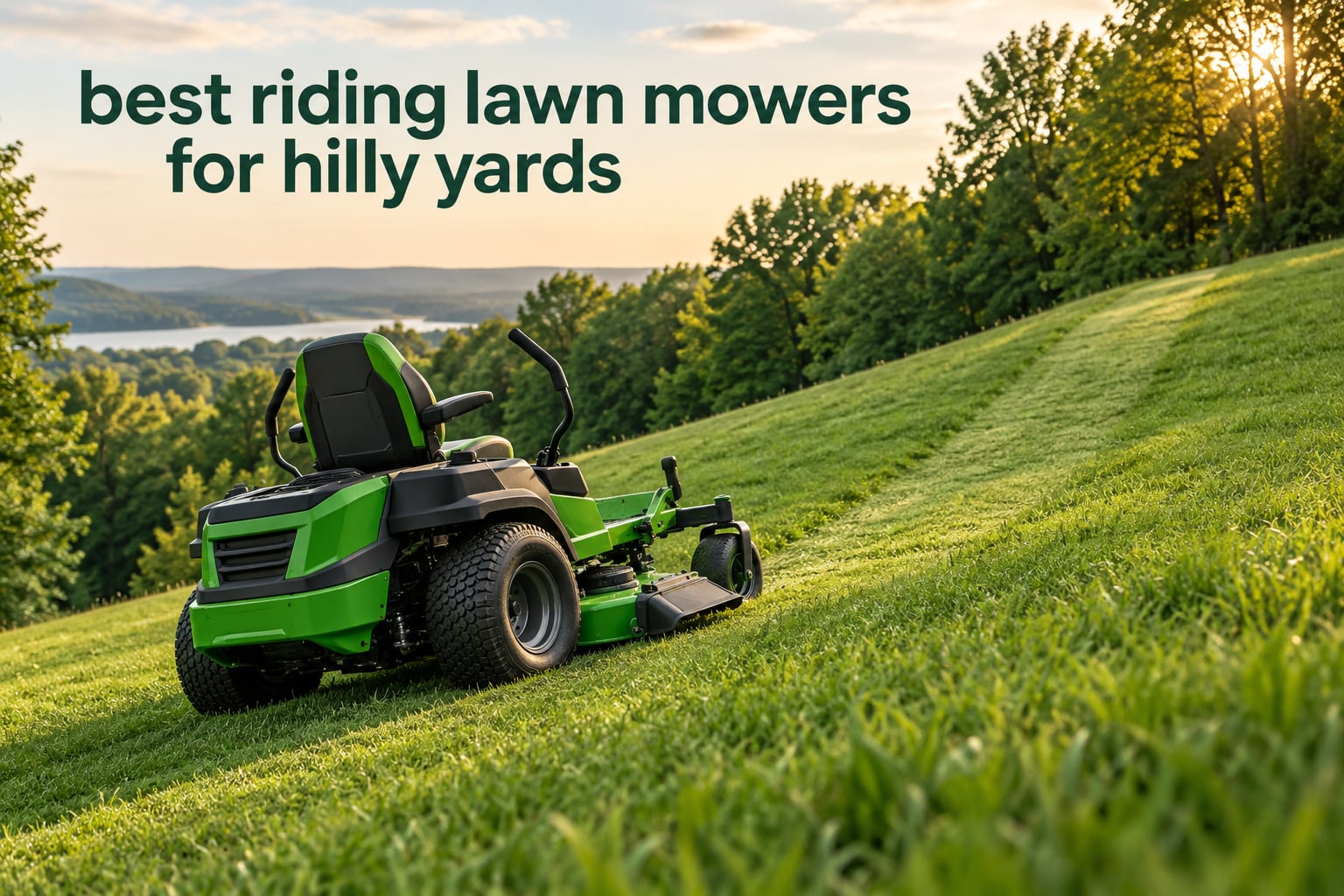
The best riding lawn mowers for hilly yards are the ones that stay planted when the grade changes: a machine with a hydrostatic transmission, wide rear tires, a low center of gravity and enough torque to climb without spinning. On most properties that means a lawn tractor rather than a zero-turn. Zero-turns are faster and cut tighter on flat ground, but their rear-heavy layout and high center of gravity make them a worse bet the steeper the lawn gets.
I spent several weeks reading owner reviews and spec sheets on every machine in this roundup, then sorted them by how each one behaves on a slope. Seven made the cut. Two are the same brand’s zero-turn platforms at different deck widths, one is a 42 inch electric tractor, one is a gas tractor with a manual gearbox, one is a 60 inch Kawasaki zero-turn built for acreage, and two are newer battery platforms with thin review histories.
One honest note before you read further: not one of these seven machines publishes a locking rear differential, and only one publishes a slope rating at all. Those two facts shaped the picks more than any horsepower number. If your property has a grade above 15 degrees, read the measurement section below before you spend anything.
Table of Contents
Top 3 Picks for Hilly Yards (October 2026)

As an Amazon Associate we earn from qualifying purchases. CERTAIN CONTENT THAT APPEARS ON THIS SITE COMES FROM AMAZON. THIS CONTENT IS PROVIDED 'AS IS' AND IS SUBJECT TO CHANGE OR REMOVAL AT ANY TIME.
Best Riding Lawn Mowers for Hilly Yards in 2026: Quick Overview
The table below lists all seven machines in this roundup with the specs that actually change behavior on a grade: deck width, machine weight, drive type and speed. Prices shift constantly, so use the buttons to check the current listing rather than any number you might find cached in a search result.
| Product | Key Features | |
|---|---|---|
|
EGO ZT4204L 42 inch Electric Zero Turn
|
|
Check Latest Price |
 EGO TR4204 42 inch Electric Lawn Tractor EGO TR4204 42 inch Electric Lawn Tractor
|
|
Check Latest Price |
|
Craftsman 42 inch 17.5 HP Gas Tractor
|
|
Check Latest Price |
 EGO ZT5207L 52 inch Electric Zero Turn EGO ZT5207L 52 inch Electric Zero Turn
|
|
Check Latest Price |
 Ariens Zenith 60 inch 23.5 HP Zero Turn Ariens Zenith 60 inch 23.5 HP Zero Turn
|
|
Check Latest Price |
 Greenworks CRT4262 42 inch Electric Tractor Greenworks CRT4262 42 inch Electric Tractor
|
|
Check Latest Price |
 GIYI GCJ-42 42 inch Cordless Tractor GIYI GCJ-42 42 inch Cordless Tractor
|
|
Check Latest Price |
We earn from qualifying purchases. CERTAIN CONTENT THAT APPEARS ON THIS SITE COMES FROM AMAZON. THIS CONTENT IS PROVIDED 'AS IS' AND IS SUBJECT TO CHANGE OR REMOVAL AT ANY TIME.
Match the machine class to your measured slope
Here is the shortcut I use first. Measure your steepest grade, then find its band below.
0 to 10 degrees, gentle rolling terrain: almost anything works. A 42 inch tractor or a crossover zero-turn will finish the job, and battery platforms shine here because runtime is not the constraint.
10 to 15 degrees, moderate hills: a lawn tractor with a hydrostatic transmission is the safe answer. This is where speed control matters more than raw power, because you need to creep up the grade without lifting a wheel.
15 to 20 degrees, steep grades: you want weight, wide rear tires and the ability to run straight up and down the face. Manufacturer guidance for most riding mowers stops near 20 degrees.
Over 20 degrees, extreme: no residential machine in this roundup is rated for it. That is garden tractor, four wheel drive or tracked zero-turn territory, and we cover that further down.
How We Picked These Seven Machines
I evaluated every rider on the same five axes, in this order.
1. Drive architecture. Hydrostat or belt-drive hydrostat first, because slope control lives in the transmission. A manual gearbox gets considered next, and a plain variable-speed belt drive with no pedal control sits last.
2. Machine weight and where it sits. Heavier is more stable on a grade until the ground gets soft, then weight becomes the thing that sinks. Rear-heavy layouts push the center of gravity uphill.
3. Rear tire width and type. Wider rear tires put more rubber down, which is what traction is made of.
4. Published rating. Does the manufacturer state a slope limit, and does the warranty language tie to it? A stated number beats a marketing adjective.
5. Owner data volume. A four-star average built on two reviews tells you almost nothing. I weighted review count heavily for that reason, and two of the machines here have single-digit review totals. I flagged them rather than dropping them, because their specs still matter.
Our affiliate disclosure: if you buy through a link on this page we may earn a commission. It does not change the order of these picks.
1. EGO ZT4204L 42 inch Electric Zero Turn – Our Top Pick for Hilly Yards
EGO Power+ Electric Riding Lawn Mower, 42″ Deck with Zero Turn Radius, Includes (4) 56V 10.0Ah Batteries and Charger – ZT4204L
- 42 inch stamped steel deck
- 22 HP equivalent
- 620 pounds
- Up to 2 acres per charge
- 8 MPH
Pros
- Gas-equivalent torque with smooth zero-turn steering
- Cuts up to 2 acres on one charge and recharges in about two hours
- Quiet with no oil spark plug or starter cord
- Three drive modes plus 10 cut-height positions
- Batteries cross-compatible with the EGO 56V ARC tool platform
Cons
- Deck height indicator numbers are hard to read from the seat
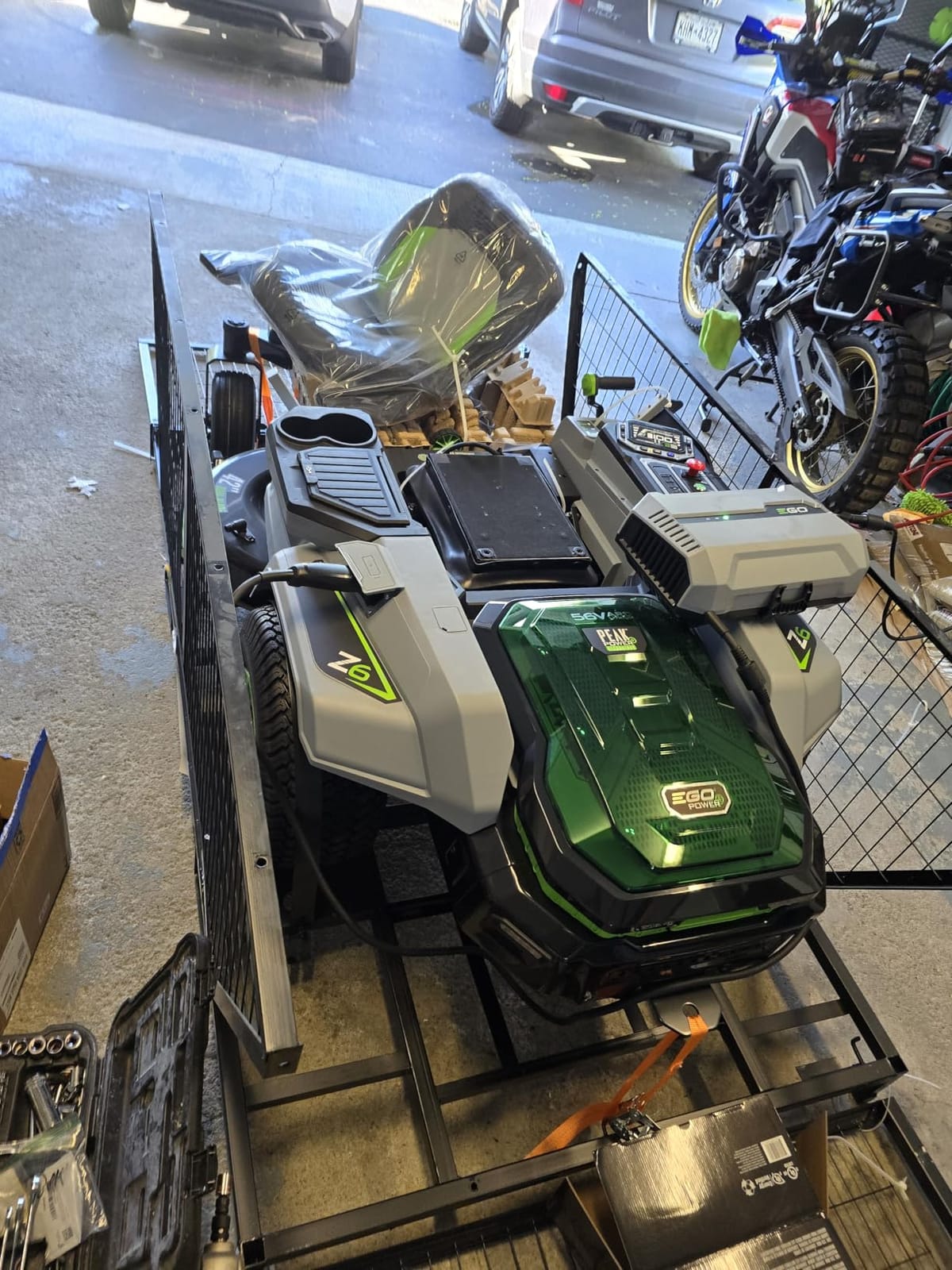
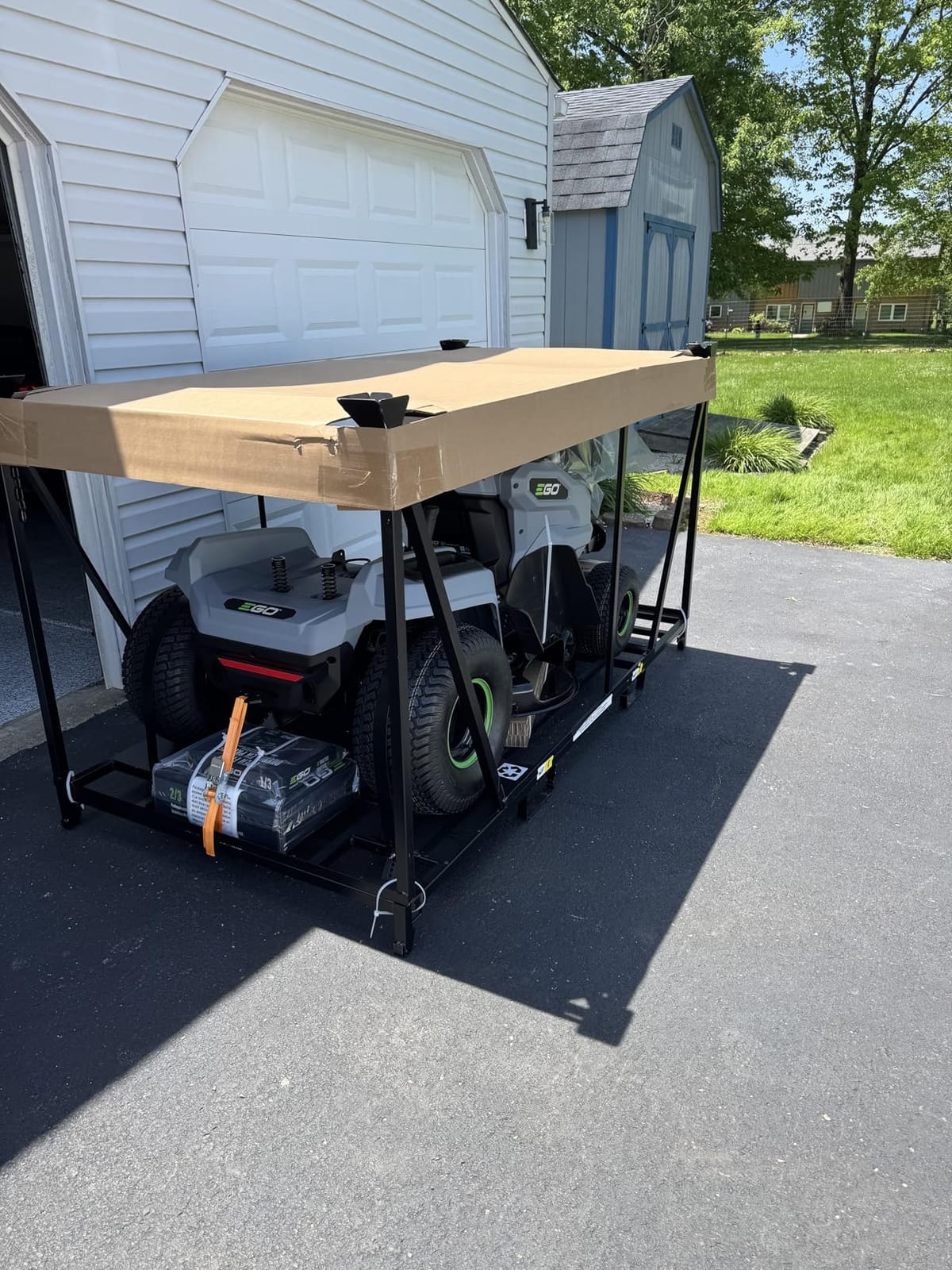
- Delivered in a heavy steel roll-off crate that takes hours to break down
- High upfront cost against entry-level gas tractors
We earn a commission, at no additional cost to you. CERTAIN CONTENT THAT APPEARS ON THIS SITE COMES FROM AMAZON. THIS CONTENT IS PROVIDED 'AS IS' AND IS SUBJECT TO CHANGE OR REMOVAL AT ANY TIME.
This is the machine I keep coming back to for a mixed-terrain property. It weighs 620 pounds, which puts real mass over the rear axle, and the 42 inch stamped steel deck keeps that mass low and centered. On a grade it feels planted rather than nervous, which is the whole point.
Owners consistently mention how little training it takes to get moving. The three drive modes are the feature hill mowers should have more of: Standard for cruising, Control for gentle grades, and Sport for flat open runs at up to 8 MPH.
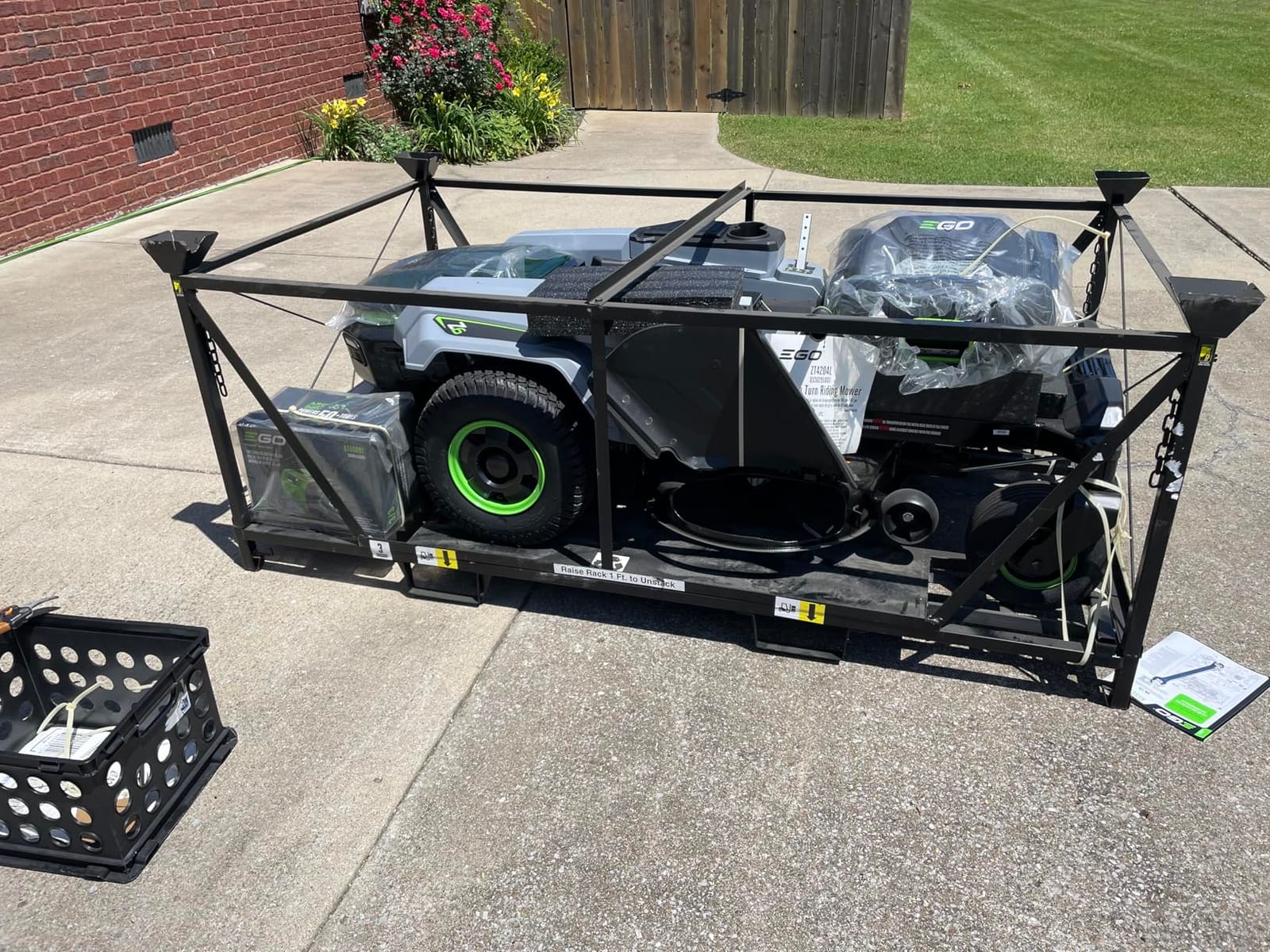
Four 56V 10.0Ah batteries come with it and recharge in about two hours on the included wall charger. Owners say that runtime lands near two acres per charge on their lawns, and adding more batteries extends coverage without buying a second machine.
The cut height runs from 1.5 to 4.5 inches across 10 positions, with mulching, bagging and side discharge all handled from the same deck. On slopes you will use the higher positions more often, since grass stands taller where water runs off.
Is the electric drivetrain strong enough to climb a real hill?
Yes, for the 10 to 15 degree band that most residential properties fall into. The published figure is 22 horsepower equivalent and up to 8 MPH, which is well above what the traction limit on a damp slope allows. Electric motors deliver their full torque at low speed, which is exactly the range where climbing happens.
Where it gets interesting is weight distribution. A battery pack is dense, and on this chassis the mass sits low and toward the rear. That is a stability win on a grade. Reviewers also note it holds speed well when the deck is loaded with tall grass on a rise.
What should worry you before buying
There is no published slope rating on this listing, which means you are relying on the general 15 degree guidance that applies to most zero-turn platforms. If your steepest grade measures past that, this is not the machine, no matter how capable it feels on paper.
Service is the other consideration. One owner reported a firmware update that required a battery management system replacement, and others describe slow warranty turnaround with no transportation coverage. A machine this size is not a cheap thing to be without for a season.
We earn a commission, at no additional cost to you. CERTAIN CONTENT THAT APPEARS ON THIS SITE COMES FROM AMAZON. THIS CONTENT IS PROVIDED 'AS IS' AND IS SUBJECT TO CHANGE OR REMOVAL AT ANY TIME.
2. EGO TR4204 42 inch Electric Lawn Tractor – Best for Slope Control
EGO Power+ Electric Riding Lawn Mower, 42″ Deck Lawn Tractor – TR4204
- 42 inch stamped steel deck
- 20000W peak power
- 640 pounds
- 12 height positions
- 6 MPH
Pros
- Peak Power Technology bundles up to six 56V ARC batteries
- Dual brushless cutting motors mean no deck belts to replace
- Digital LCD with three blade settings and three drive speeds
- Rear tow hitch LED lights USB port and Bluetooth
- 5 year tool warranty
Cons
- Six batteries are needed to reach the stated runtime per charge
- 42 inch deck is narrower than larger options in the range
- Tractor steering is less agile on obstacle-filled ground
We earn a commission, at no additional cost to you. CERTAIN CONTENT THAT APPEARS ON THIS SITE COMES FROM AMAZON. THIS CONTENT IS PROVIDED 'AS IS' AND IS SUBJECT TO CHANGE OR REMOVAL AT ANY TIME.
If your instinct on hills is that a tractor-shaped machine is safer than a zero-turn, this is the one to look at. The TR4204 weighs 640 pounds, has a tractor steering wheel, and sits low. It is the least aggressive-looking machine in the roundup and the least likely to surprise you on a descent.
Peak Power Technology combines the output of up to six 56V ARC Lithium batteries for up to 20000 watts, roughly a 21 horsepower gas equivalent. Owners on rolling ground report it pulls a grade without the hesitation you get from a single battery pack.
The digital display gives you three blade settings, three drive speeds and cruise control. That is a meaningful set on uneven terrain because you can slow the drive without slowing the blade, which keeps cut quality consistent as the grade changes.
Dual brushless cutting motors remove the deck belts entirely, so there is nothing to stretch and snap on a slope. The deck is 42 inch stamped steel with 12 height positions from 1.5 to 4.5 inches.
Does tractor steering actually help on a slope?
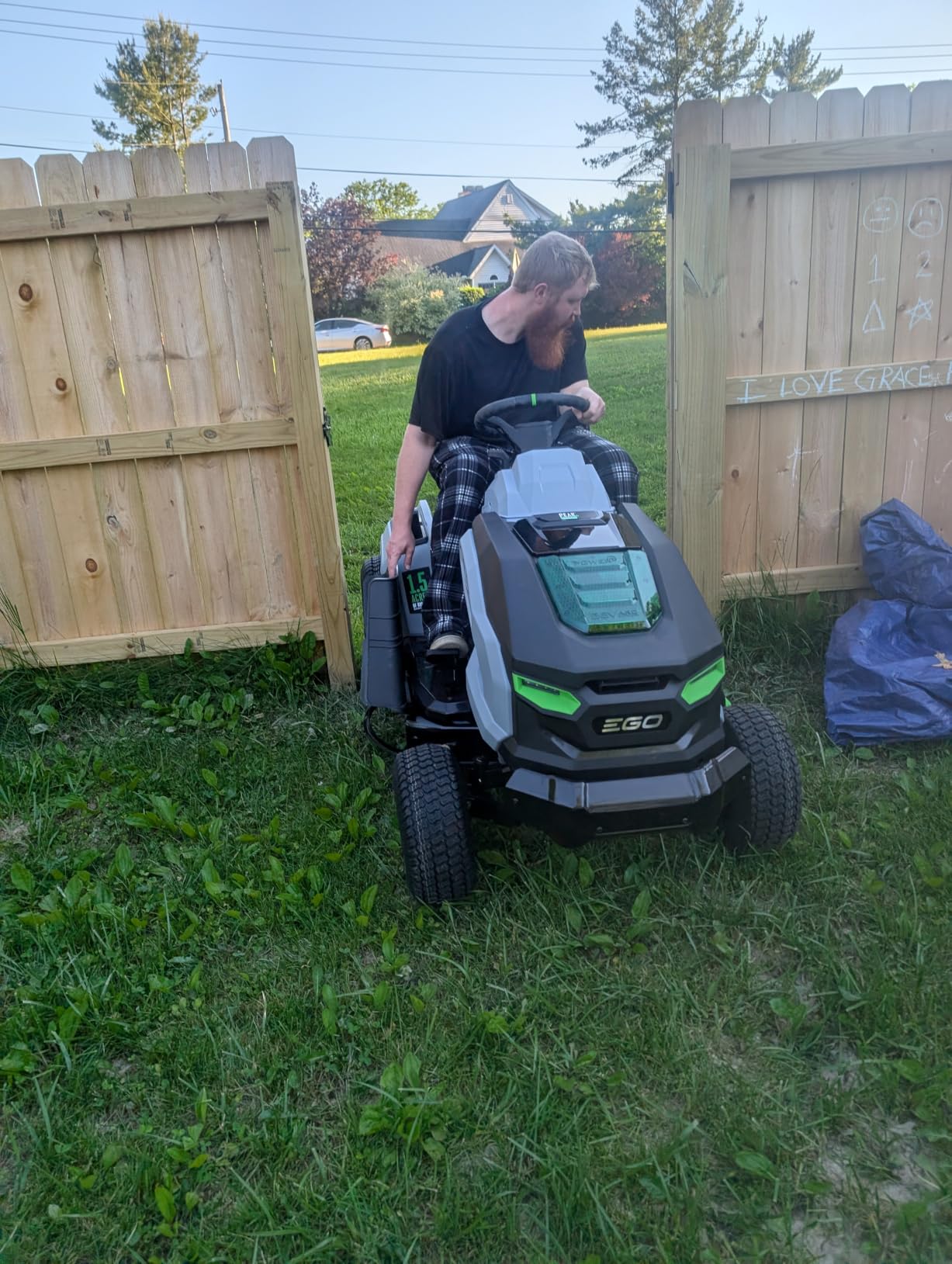
It helps in one specific way. A steering wheel gives you a self-centering feel and a clear readout of where the front wheels are pointing, and forum owners repeatedly stress the technique of keeping those front wheels angled uphill on a steep face. That is much easier to do with a wheel than with lap bars.
The trade is turning radius. On tight, obstacle-filled ground a tractor makes you maneuver, and that maneuvering is exactly what you want to avoid mid-slope. Plan your route so the wide turns happen at the top and the bottom of the hill.
Where the limitations show up
The battery count is the practical issue. Six 6.0Ah batteries are required to hit the stated 1.5 acres per charge, so charging downtime is substantial. Hills eat runtime faster than flat ground because the drive motor works continuously against gravity.
Top speed is 6 MPH, slower than the zero-turn platforms in this roundup, and the deck measures 42 inches. For a steep lot under two acres that is a fair trade. For five acres of hill it is not.
We earn a commission, at no additional cost to you. CERTAIN CONTENT THAT APPEARS ON THIS SITE COMES FROM AMAZON. THIS CONTENT IS PROVIDED 'AS IS' AND IS SUBJECT TO CHANGE OR REMOVAL AT ANY TIME.
3. Craftsman 42 inch 17.5 HP Gas Tractor – Best Gas Option for Hills
CRAFTSMAN 42″ Gas Riding Lawn Mower with 17.5 HP* Briggs and Stratton Single-Cylinder Engine, Gas Lawn Tractor with 7-Speed Transmission, Red/Black (13AN77XSA93)
- 42 inch deck
- 17.5 HP single cylinder
- 410 pounds
- 7 speed manual
- 15x6 and 20x8 tires
Pros
- 17.5 HP single cylinder engine delivers strong low-end torque
- 7 speed manual lets you pick a controlled speed for each slope
- 18 inch turning radius helps around obstacles
- Contoured low-back seat suits taller operators
- Heavy duty 15x6 front and 20x8 rear tires
Cons
- Cannot shift into reverse while the blades are engaged
- No parking brake for holding position on a slope
- Fuel tank is held by a single tie wrap and can wobble
We earn a commission, at no additional cost to you. CERTAIN CONTENT THAT APPEARS ON THIS SITE COMES FROM AMAZON. THIS CONTENT IS PROVIDED 'AS IS' AND IS SUBJECT TO CHANGE OR REMOVAL AT ANY TIME.
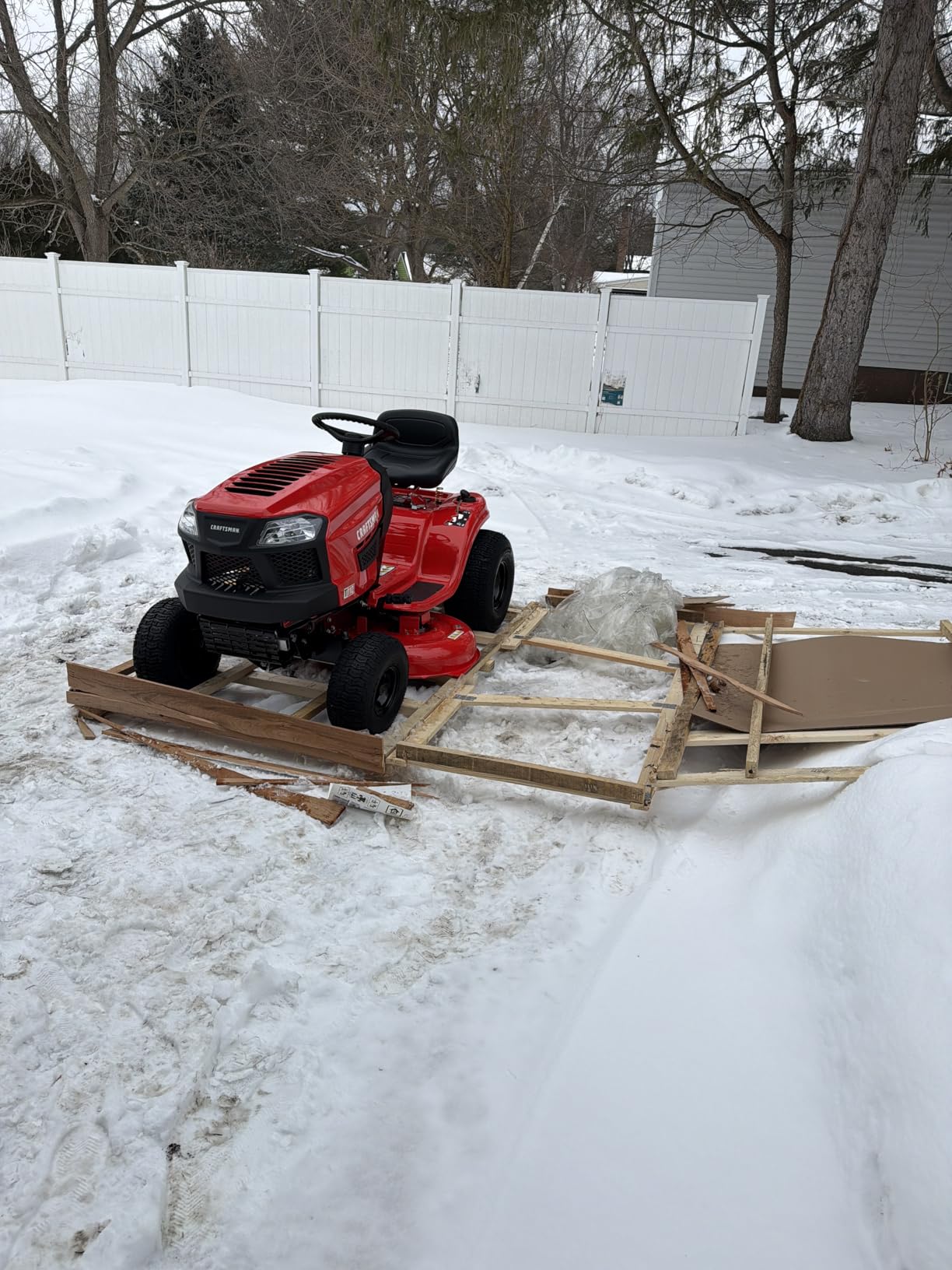
This is the only gas machine in the roundup and it earns the slot. A single-cylinder Briggs and Stratton of this displacement has the low-end grunt that hill climbing needs, and owners repeatedly single out torque on uneven ground as the reason they keep it.
The manual 7-speed gearbox is unusual at this size and unusual on a slope, which is exactly why it helps. You can drop into a low gear and hold a steady crawl up a grade instead of pushing a lever through a series of steps.
Rear tires measure 20×8, which is a genuinely wide rear footprint for a tractor in this class, and fronts are 15×6. That combination is where the traction on a hill comes from, and owners navigating rough ground report the tires do not break loose the way narrower setups do.
At 410 pounds it is the lightest machine here, which cuts two ways. It is easy to load and easy to change direction, but it has less mass resisting a tip on a steep face than the battery platforms.
Is a manual gearbox a liability or an advantage on hills?
An advantage on the climb. Hills slow everything down, and a discrete gear lets you pick one ratio and stay in it, which means constant torque delivery to the drive wheels. On the descent the same gearbox demands more attention, because you have to shift down before speed builds.
The gearbox is not the reason to skip this machine though. Owners report it as capable but not exceptional, and the design limits listed below are the more practical barriers.
What we do not like
There is no parking brake. On a slope that is a real gap, because a tractor without one relies on the brake pedal and on holding the transmission in place. It also cannot shift into reverse while the blades are engaged, so you disengage before backing down anything tight.
A few owners describe needing carburetor and variable-pulley service after only a handful of mowings, and the fuel tank is secured by a single tie wrap that lets it wobble in use. If you are comfortable with gas maintenance, neither is disqualifying.
We earn a commission, at no additional cost to you. CERTAIN CONTENT THAT APPEARS ON THIS SITE COMES FROM AMAZON. THIS CONTENT IS PROVIDED 'AS IS' AND IS SUBJECT TO CHANGE OR REMOVAL AT ANY TIME.
4. EGO ZT5207L 52 inch Electric Zero Turn – Best for Large Hillside Lots
EGO Power+ Electric Riding Lawn Mower, 52″ Deck with Zero Turn Radius, Includes (6) 56V 12.0Ah Batteries and Charger – ZT5207L
- 52 inch stamped steel deck
- 25 HP equivalent
- 527.4 pounds
- Up to 4 acres
- 4 to 8 MPH
Pros
- Six 12.0Ah batteries give the largest charge coverage here
- Handles overgrown dense and tall vegetation without stalling
- Smooth lap-bar steering with three drive modes up to 8 MPH
- Deck wash port plus Bluetooth app control
- Adjustable seat suits tall operators
Cons
- Deck overhangs the front axle and can catch on obstacles
- Blades clog in thick fast-growing spring grass
- Metal shipping crate takes an hour or more to break down
We earn a commission, at no additional cost to you. CERTAIN CONTENT THAT APPEARS ON THIS SITE COMES FROM AMAZON. THIS CONTENT IS PROVIDED 'AS IS' AND IS SUBJECT TO CHANGE OR REMOVAL AT ANY TIME.
For acreage rather than slope, this is the machine that finishes before dark. It covers up to 4 acres on a single charge, which is more than any other platform in this roundup, and the published output figure is 25 horsepower equivalent.
Owners on weedy and sloped properties say it pushes through dense growth that stalls lighter platforms. That matters on hills because tall grass on a slope is the condition where most machines bog.
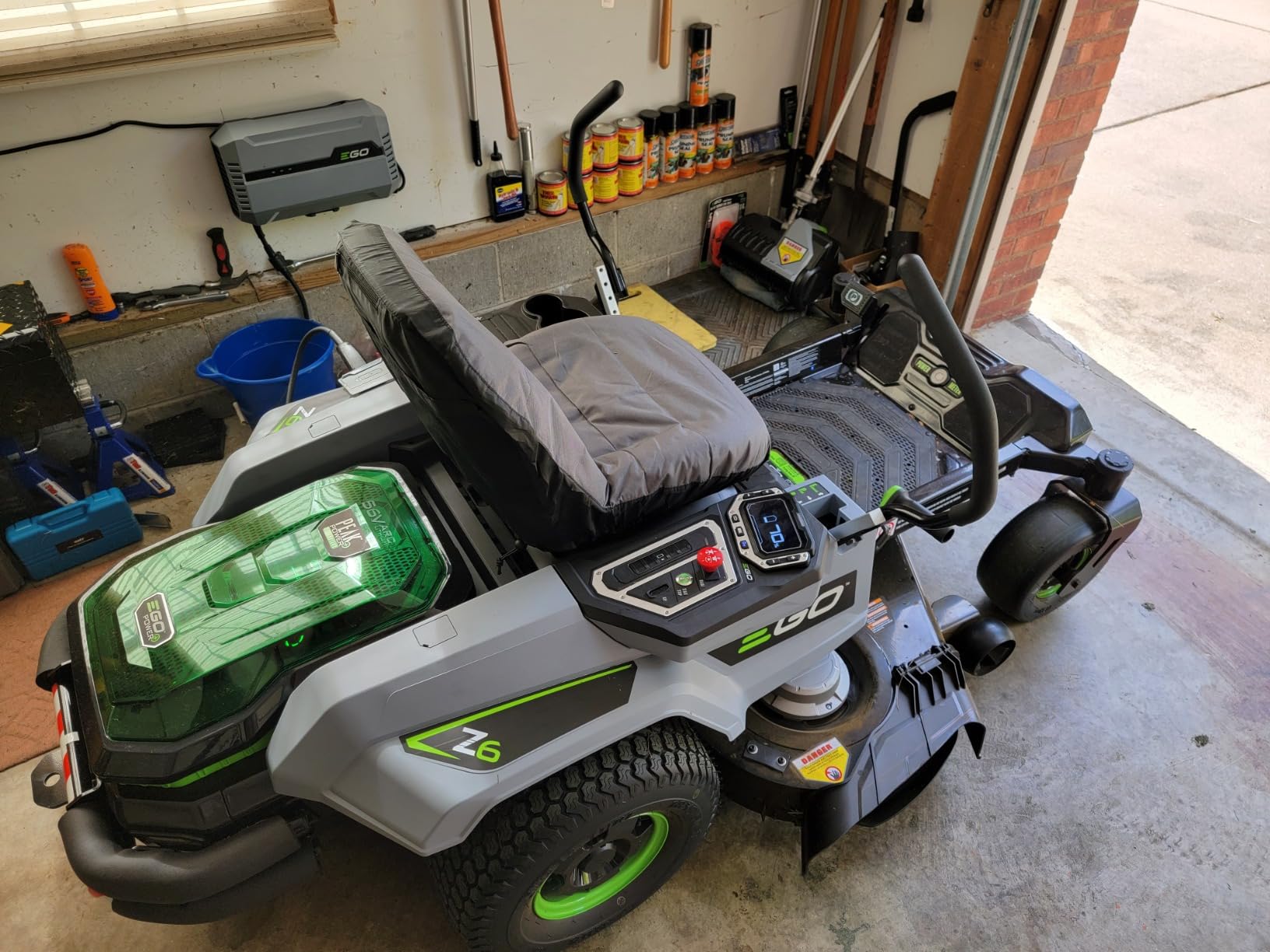
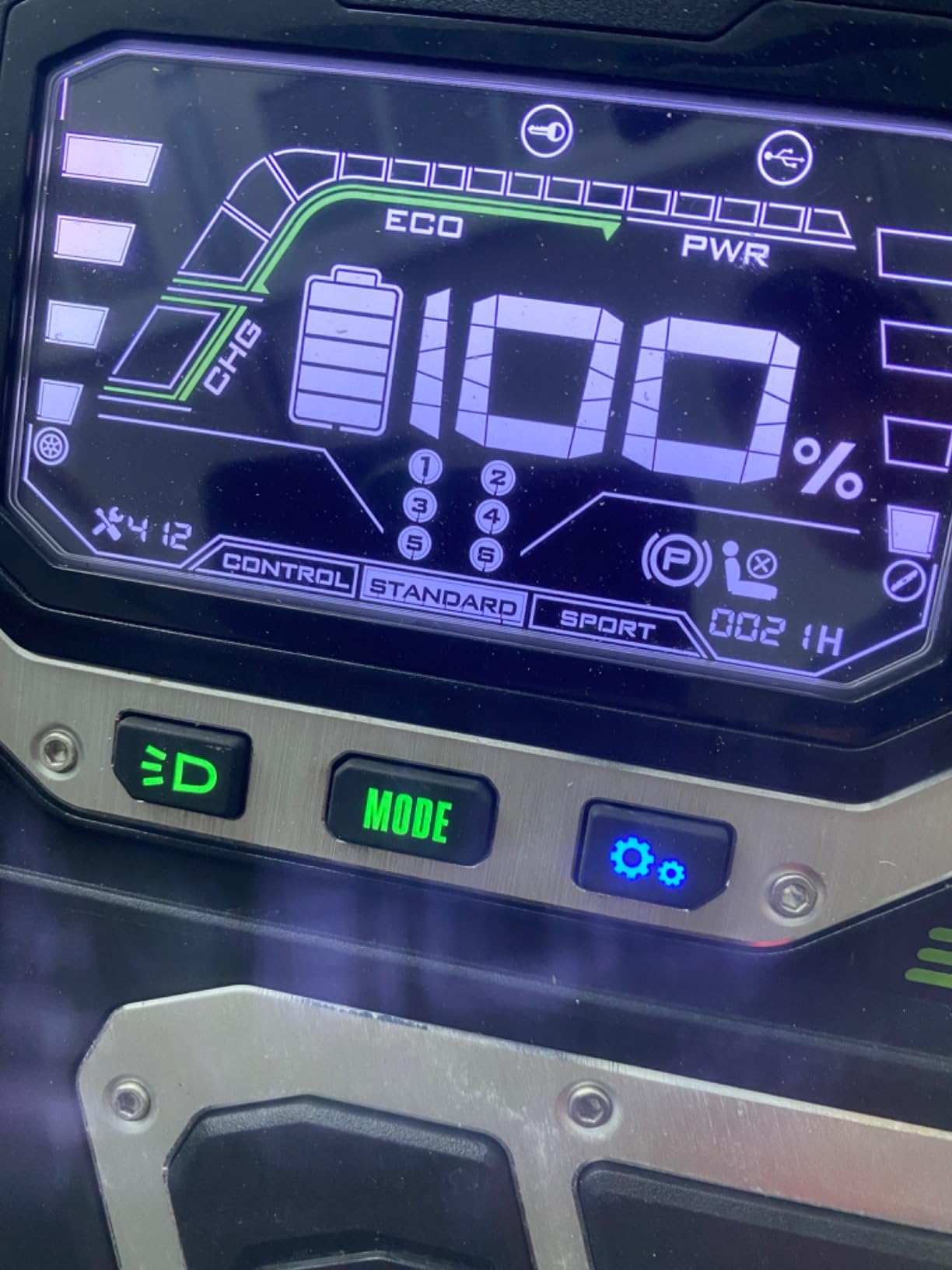
The speed range runs 4 to 8 MPH across three drive modes, which is a wide enough spread to crawl on a steep face and still move well on the flat runs between them. The lap-bar steering is smooth and the adjustable seat fits taller operators.
Bluetooth app control handles speed, blade speed and height, and there is a deck wash port so cleaning the underside does not mean dragging clippings across a driveway.
Is more battery capacity the same as better on a hill?
No, and it is worth being clear about that. Battery capacity determines how long you can work, not how hard you can pull. What gets you up a grade is the 25 horsepower equivalent figure and the drive mode you select, and this machine has both.
What the larger pack does buy you is fewer charging stops partway up a long slope, which means fewer cold stops on a face where restarting is awkward. On a 3 acre hillside that difference is real.
The overhang problem to know about
The 52 inch deck sits on a chassis sized for a 42 inch deck, so it overhangs the front axle. Owners report it catching on obstacles that a 42 inch machine clears. On a wooded hillside property that is not a rare edge case.
Blade clogging in thick spring growth is the other recurring complaint, and it cuts your effective acreage well short of the rated figure. Set the blade speed low on a slope and it handles heavy grass better.
We earn a commission, at no additional cost to you. CERTAIN CONTENT THAT APPEARS ON THIS SITE COMES FROM AMAZON. THIS CONTENT IS PROVIDED 'AS IS' AND IS SUBJECT TO CHANGE OR REMOVAL AT ANY TIME.
5. Ariens Zenith 60 inch 23.5 HP Zero Turn – Best Raw Power for Steep Grades
Ariens Zenith 60 (60″) 23.5HP Kawasaki Zero Turn Lawn Mower
- 60 inch cutting deck
- 23.5 HP Kawasaki V twin
- 726cc
- 930 pounds
- Zero turn platform
Pros
- Kawasaki FX730 V twin is a high-output engine for a residential deck
- 726cc V twin supplies the low-end torque grades need
- 60 inch deck covers large acreage in fewer passes
- Zero turn steering handles tight turns on uneven ground
Cons
- Only two customer reviews so owner experience data is thin
- 930 pounds makes it the heaviest and least agile machine here
- Gasoline engine needs fuel oil and spark plug upkeep
- Very little published specification beyond engine and deck width
We earn a commission, at no additional cost to you. CERTAIN CONTENT THAT APPEARS ON THIS SITE COMES FROM AMAZON. THIS CONTENT IS PROVIDED 'AS IS' AND IS SUBJECT TO CHANGE OR REMOVAL AT ANY TIME.
On paper this is the strongest machine here for a genuinely steep property, and I want to be careful about how I say that. A 726cc Kawasaki FX730 V twin is the highest-output engine listed in this roundup, and at 930 pounds it carries the most mass over the drive tires.
That combination is what hill climbing is made of. Weight resists the tip, torque moves the mass, and a 60 inch deck means fewer passes across the exposed face of a slope, which means less time working at the angle where traction is worst.
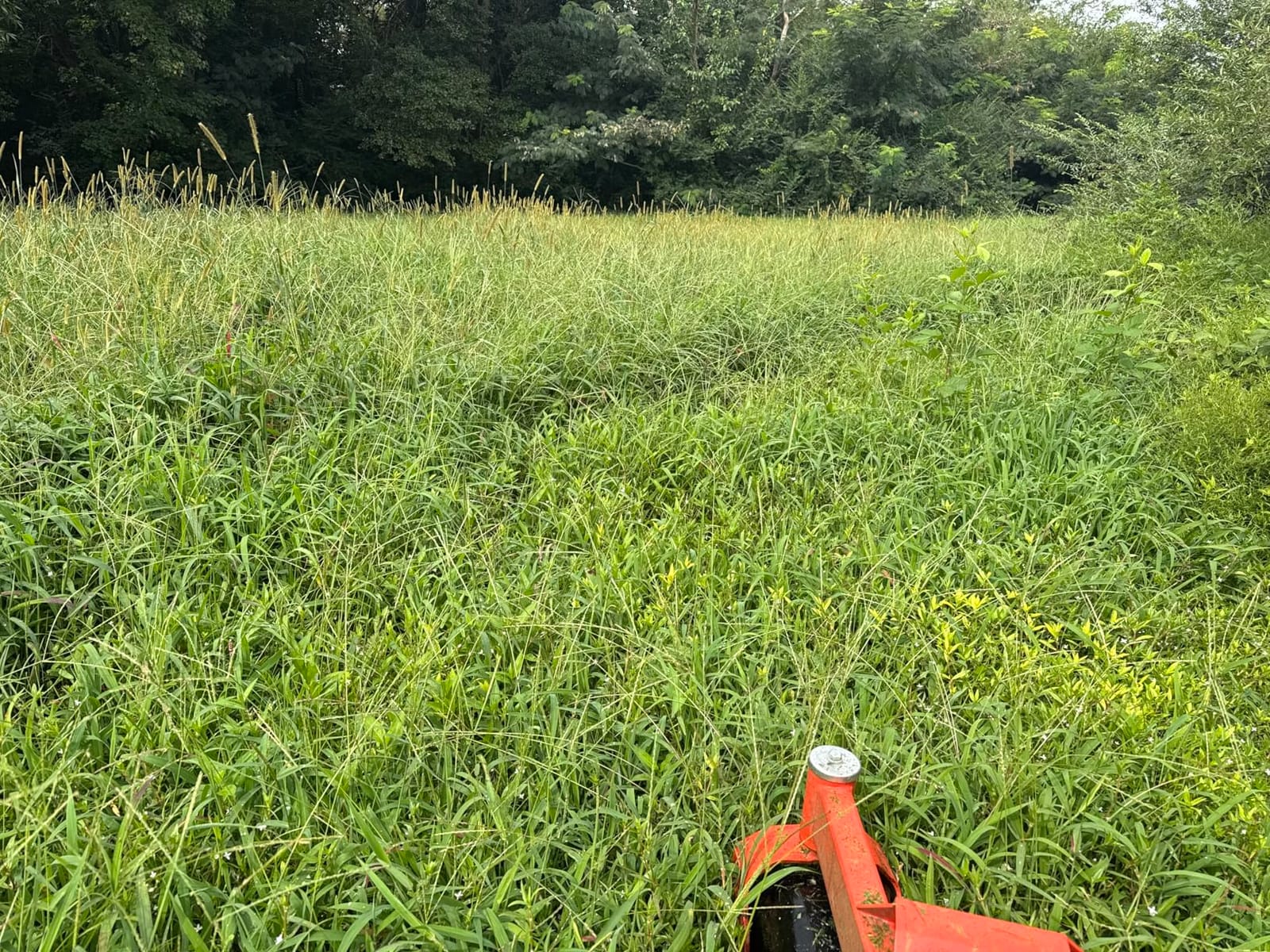
Owners of heavy 60 inch zero-turns who work this way for a living consistently say the technique is simple: attack the face directly, straight up and straight down, and never try to traverse it.
Zero-turn steering helps on uneven ground because the front casters pivot independently, so the machine can follow a broken contour without fighting the wheel. That is genuinely useful on a rough hillside.
Why the review count matters here
This machine has two customer reviews on Amazon, so its five-star average reflects an absence of complaints rather than a track record. I ranked it on the engine and the weight, which are documented, not on owner satisfaction, which is not.
The 930 pound shipping weight is the practical problem. It is the heaviest machine here and the least maneuverable, and getting it into a shed or over a threshold takes planning.
When it is the wrong choice anyway
Zero-turn platforms carry a lower general slope guidance than tractors, typically around 15 degrees, and this listing publishes no rating of its own. If you own property that steep, budget time on flat ground to learn the controls before you point it at a face.
Gas upkeep applies here too: fuel, oil changes, spark plug and air filter. Over several seasons that is real time and money compared with a battery platform.
We earn a commission, at no additional cost to you. CERTAIN CONTENT THAT APPEARS ON THIS SITE COMES FROM AMAZON. THIS CONTENT IS PROVIDED 'AS IS' AND IS SUBJECT TO CHANGE OR REMOVAL AT ANY TIME.
6. Greenworks CRT4262 42 inch Cordless Tractor – Quiet Work on a Hillside
Greenworks 60V 54″ MaximusZ Zero Turn Mower, (2)20Ah+(4)8Ah Batts + Fast Chgr
- 42 inch stamped steel deck
- 60V brushless motor
- 621 pounds
- Four 8.0Ah batteries
- 1.5 acres per charge
Pros
- Brushless motor delivers instant low-speed torque with no engine upkeep
- Four 8.0Ah batteries cover up to 1.5 acres per charge
- SmartCut Technology adapts motor power to grass conditions
- 4 in 1 deck handles bag mulch and side discharge
- High-back seat LED headlights and a 4 year warranty
Cons
- Only two customer reviews so reliability data is thin
- Bagger is sold separately
- 621 pound listed weight is among the heavier machines here
We earn a commission, at no additional cost to you. CERTAIN CONTENT THAT APPEARS ON THIS SITE COMES FROM AMAZON. THIS CONTENT IS PROVIDED 'AS IS' AND IS SUBJECT TO CHANGE OR REMOVAL AT ANY TIME.
A 60V high-torque brushless motor delivers its full output at low speed, which is the useful part on a grade. There is no throttle lag between you pressing the control and the drive wheels receiving torque.
At 621 pounds this is a solidly weighted tractor with a high-back seat, LED headlights for working near trees where the light goes early, and a cup holder. Those are comfort details, but comfort matters on a machine you are steering carefully down a face.
What SmartCut actually does for a hill
SmartCut adapts motor power to grass conditions. On a slope, grass is typically thicker at the bottom where water collects and thinner at the crown, so the mower is changing output several times during one pass instead of running at a fixed setting.
That is a reasonable feature for uneven ground. What it does not do is overcome traction, and no software fixes a rear tire spinning on damp grass.
Read the review count before you rely on this
Two customer reviews produce a five-star average that means almost nothing. There is no long-term ownership data here at all, so treat the specification sheet as the only evidence.
Coverage of about 1.5 acres per charge is among the shorter runtimes here, alongside the 42 inch electric tractor. On a hill where the drive motor works continuously against gravity, expect less than that.
We earn a commission, at no additional cost to you. CERTAIN CONTENT THAT APPEARS ON THIS SITE COMES FROM AMAZON. THIS CONTENT IS PROVIDED 'AS IS' AND IS SUBJECT TO CHANGE OR REMOVAL AT ANY TIME.
7. GIYI GCJ-42 42 inch Cordless Tractor – the Only Machine Here With a Published Slope Rating
GIYI Electric Riding Lawn Mower, Includes (6) 40V 6.0Ah Batteries and Charger, Riding Lawn Tractor with 42″ Deck Cordless Tractor
- 42 inch stamped steel deck
- Rated to 15 degrees
- 451 pounds
- Six 40V 6.0Ah packs
- 1.2 acres per charge
Pros
- One of the few machines here with a manufacturer slope rating
- Belt-free brushless motor needs no deck belt service
- Lightest-feeling platform at 451 pounds with a low-back ergonomic seat
- Nine cutting-height settings from 1.5 to 4.5 inches
- Single owner review confirms a comfortable ride and adequate runtime
Cons
- Only one customer review so reliability data is essentially absent
- Battery packs give only 60 to 80 minutes per charge
- Still needs a ramp or trailer to unload despite the lighter weight
- No published bag hitch or lighting detail
We earn a commission, at no additional cost to you. CERTAIN CONTENT THAT APPEARS ON THIS SITE COMES FROM AMAZON. THIS CONTENT IS PROVIDED 'AS IS' AND IS SUBJECT TO CHANGE OR REMOVAL AT ANY TIME.
The number that sets this one apart is 15 degrees. The manufacturer states that the platform handles slopes up to that figure, which makes this the only machine in the roundup where you can compare your measured slope against a published number.
That matters more than it sounds. Everything else here has no rating, so a buyer is guessing against general guidance. Here you can rule the machine in or out with a tape measure and a phone.
What does the 15 degree rating actually mean?
It is a manufacturer claim, not an owner test result, and it comes with the usual conditions attached: dry grass, low speed, and mowing up and down the face rather than across it. Manufacturers rate the machine, not the operator’s technique.
It also sits right at the boundary where most general guidance starts advising caution, so treat it as a ceiling rather than a comfortable working limit. Above 15 degrees, this machine leaves the conversation.
Where the trade-offs sit
At 451 pounds this is a light, compact tractor. That is an advantage for loading it onto a trailer and a disadvantage once you are on the slope, because 451 pounds puts less mass over the drive tires than any other machine in this group.
Runtime is the weakest figure here: six 40V 6.0Ah packs give 60 to 80 minutes and up to about 1.2 acres at up to 6 MPH. A single owner review reports a comfortable ride and enough charge to finish the lawn, but one review is not a reliability record. The bagger is also sold separately.
We earn a commission, at no additional cost to you. CERTAIN CONTENT THAT APPEARS ON THIS SITE COMES FROM AMAZON. THIS CONTENT IS PROVIDED 'AS IS' AND IS SUBJECT TO CHANGE OR REMOVAL AT ANY TIME.
Which Mower Type Handles Hills Best
Lawn tractors win on slopes. Zero-turns win on flat ground. That is the plainest version of the answer and it is the one most often stated backwards.
Lawn tractor. Deck mounted between the front axle and the rear wheels, low and centered, with the operator sitting above and behind the drive axle. Wide rear tires, a wheel for steering, and typically a footprint between 500 and 650 pounds. Best slope band: 10 to 15 degrees, and into the high teens on heavy models.
Rear-engine mower. The engine sits behind the rear axle, so almost all the weight is over the drive wheels. Very stable, but usually a smaller deck and less ground clearance, which makes it awkward on broken ground with roots and ruts.
Zero-turn. Rear-heavy with a front-mounted deck and the operator sitting high and forward. Fastest and the tightest turning radius on flat lawn, and the least forgiving on a grade, where the mass and the height work against you. General guidance puts these around 15 degrees.
Garden tractor. The category that actually exists for steep ground. Heavier frames, four wheel drive on many models, and published slope ratings above 20 degrees on some. Forum consensus going back years names Steiner and Venntrac as the reference points here.
The practical implication: if you have hills and you are choosing between a tractor and a zero-turn for the same yard, buy the tractor. If your yard is mostly flat with a slope or two off to one side, the zero-turn earns its faster cut rate.
How to Measure Your Slope Before You Buy
Nobody measures this, and that is why people buy wrong. Three methods, roughly in order of precision.
1. The 8 foot 2×4 method. Lay an 8 foot straight board on the ground along the fall line and measure the height difference between its two ends with a tape. A rise of 2.8 feet over 8 feet is about 19 degrees. A rise of 1.5 feet over 8 feet is about 11 degrees. Repeat at several points, because the steepest one is the number that matters.
2. The phone inclinometer. Any inclinometer app gives you a degree reading instantly. Open it, lay the phone flat on the grass at the top of the slope, and walk it downhill reading the angle along the way. Note the maximum. This takes five minutes and beats estimating every time.
3. The walk test. A rough sanity check. Stand at the bottom of the slope facing up and look. If you cannot see the crest of the hill over the mower’s steering wheel height, the grade is steeper than the machine is tall by a meaningful margin, and you should measure it properly.
Whichever method you use, record the steepest reading and compare it against the machine’s published rating before anything else. If the machine has no published rating, treat 15 degrees as the ceiling for a zero-turn and 20 degrees for a tractor.
Transmission Choices on Hills
Hydrostatic is the transmission to look for. That is the near-universal view across owner forums, and the reason is simple: it gives smooth, continuously variable speed control rather than discrete steps.
On a climb you need to hold a slow, steady pace while the grass gets thicker. A gear or belt drive with steps makes you pick a speed that is either too fast in the thick patch or too slow on the open stretch. A hydrostat lets you feather it.
Why hills stress a transmission at all. A rider’s engine has to overcome rolling resistance, the weight of the machine, and gravity. On a 15 degree grade that gravity component is roughly a quarter of the machine’s weight, and it is continuous for as long as you are on the face. The transmission absorbs that load continuously instead of shifting it.
Belt-drive with a pedal is the budget option. It works on moderate slopes but the speed control is coarser.
Dual hydrostatic is the zero-turn standard, one pump per wheel, which is what gives a zero-turn its independent wheel speed control and its weak downhill braking.
Manual gearboxes appear on a few tractors and, as the Craftsman here shows, are perfectly usable on a climb when you pick one low ratio and stay in it.
Tires, Tread and Traction
Traction is what actually stops a mower sliding sideways on a hill, and it comes almost entirely from the rear tires. Four features decide it.
Width. Wider rear tires put more rubber on the ground. The Craftsman in this roundup runs 20×8 rears, which is a wide footprint for a tractor, and owners single that out as a reason it holds on rough ground.
Tread type. Lug tires bite into soft ground and handle mud but tear turf and leave ruts on slopes, which then makes every later pass worse. Turf tires are the opposite: gentle on grass, weaker in soft soil. Smooth tires have no business on a hill.
Ballast. Extra weight in the rear wheels over the same tire improves traction in loose ground and hurts it everywhere else.
Rear-wheel drive. Every rider in this roundup drives the rear wheels. The distinction worth knowing is rear-wheel drive against front-wheel drive on smaller walk-behinds and rear-engine mowers, where front caster wheels provide no drive force at all. On a slope, driven wheels are what climb.
One detail that is cheap and often skipped: keep the tire pressure at the manufacturer’s specification rather than maxing it out for load. Overinflated tires present a smaller contact patch and lose grip on a grade.
Gas vs Electric on Hills
Electric has caught up on power and won on several hill-specific variables. Here is the honest comparison.
Torque. Electric motors deliver full torque at zero speed and hold it through the low range, which is exactly the band a climb uses. Gas engines make most of their torque at higher rpm, which is why gas hill mowers are designed around a low gear.
Weight. Battery packs are dense and sit low. Most of the electric machines here weigh between 520 and 640 pounds, in the same range as a gas tractor, with the mass concentrated low.
Runtime on a grade. Gas wins on time without interruption. A full tank means you climb until it is empty. Batteries deliver 1.2 to 4 acres per charge here, and a grade draws power faster than flat ground, so plan a charge stop at the top of the hill rather than halfway down a face.
Maintenance. Electric removes oil changes, spark plugs, air filters and fuel storage. On a machine you will keep for a decade on rough ground, that is a meaningful running cost difference.
Noise. If you mow early or have neighbors close, electric changes the experience entirely.
The gap is charging infrastructure. None of these machines charges while you mow, so a battery platform suits a property you can mow in one or two passes rather than a large acreage job.
How to Mow a Hill Safely
Six steps, in order. This is the procedure that keeps a mower on four wheels.
1. Mow up and down the face. Never across it. Traversing puts the machine’s weight sideways against gravity, which is exactly the loading a mower is least able to resist.
2. Never turn on the slope. Complete every turn at the top or the bottom, on flat ground. A turn on a face combines lateral load with a raised inside wheel.
3. Keep the front wheels pointed uphill. This is the most widely repeated technique among experienced owners, and it matters most on a zero-turn. Pointing the casters up the grade lets them track rather than fight.
4. Mow dry grass only. Wet grass is the most commonly reported traction failure on a slope. Postpone rather than test it.
5. Keep speed low and steady. On a descent, a zero-turn needs both levers returned to neutral to stop. Practice that on flat ground before you need it on a face.
6. Raise the deck as you go uphill. Grass stands taller where water runs off, and you will scalp the low spots at a fixed setting.
When Your Slope Is Too Steep for a Riding Mower
If your measurement comes back above 20 degrees, none of these seven machines is the answer, and no consumer riding mower is.
That is not a limitation of this roundup. It is the boundary of the residential category. Most manufacturers cap guidance near 20 degrees for tractors and 15 for zero-turns, and going past a published rating is how warranty coverage gets complicated.
Beyond that line the options are a garden tractor, a four wheel drive riding mower, or a tracked zero-turn. Owners mowing steep dams and embankments report doing it with a four wheel drive diesel hydrostat tractor and with a tracked platform, on inclines around 22 degrees. Track and four wheel drive solve traction rather than balance, which is why they extend the range at all.
For the parts of a hilly yard no rider should touch, use the right tool for the job. A walk-behind or stand-on machine handles ditch banks and swale edges. A string trimmer reaches the corners under trees and along fence lines. Ground cover on the steepest face stops the erosion problem instead of starting it.
On the used market, look for a tractor with a manual or hydrostatic transmission and a documented history of slope work, and inspect the rear differential and transaxle for leaks. Forum buyers consistently report that hillside mowing is hard on hydrostatics, so a machine with service records matters more than a low hour reading.
Frequently Asked Questions
How steep is too steep for a riding mower?
Most manufacturers cap riding mower guidance at about 20 degrees of slope, and zero-turn platforms closer to 15 degrees. Measure your steepest grade with a phone inclinometer or an 8 foot board and a tape before buying. If it exceeds 20 degrees, a residential rider is the wrong machine and you need a garden tractor, a four wheel drive mower or a tracked zero-turn.
Are zero turn mowers safe on hills?
Zero-turns can be used on moderate slopes but they are less forgiving than lawn tractors. Their rear-heavy layout, high center of gravity and front-mounted deck raise rollover risk on a grade, and lap-bar steering makes downhill speed control dependent on returning both levers to neutral. Keep the front wheels pointed uphill and never turn on the face.
Which ride-on mower is best for mowing hilly terrain?
A lawn tractor with a hydrostatic transmission, wide rear tires and a low center of gravity is the best choice for most hilly yards. Weight over the drive tires resists tipping and a hydrostat lets you creep up a grade at a steady pace without gear hunting. Zero-turns are faster on flat ground but give up ground on anything steeper.
Do I need a locking differential for hills?
A locking rear differential is the single most decisive hill feature because it forces both drive wheels to turn at the same speed instead of one spinning on soft or uneven ground. Experienced owners treat it as a must-have above roughly 15 degrees. Note that none of the seven machines in this roundup publishes one, so on steep ground you are choosing between lesser compromises.
Will an electric riding mower have enough torque to climb a hill?
For slopes up to about 15 degrees, yes. Electric motors deliver full torque at low speed, which is the range a climb depends on, and the platforms here publish 21 to 25 horsepower equivalent figures. The practical limits are battery capacity and charging downtime rather than power, since a grade draws current faster than flat ground.
How do you mow a steep hill with a riding lawn mower?
Mow straight up and down the face and never across it. Do all your turning on flat ground at the top or bottom of the slope, keep the front wheels pointed uphill, mow only dry grass, and hold a slow steady speed. On the descent return both lap bars to neutral on a zero-turn to stop, and raise the deck height as you climb.
Conclusion
Our top pick for most hilly yards is the EGO ZT4204L, the 42 inch electric zero-turn: 620 pounds of mass sitting low over the drive axle, three drive modes that let you control the pace as the grade changes, and a battery platform with no engine to service. If your property is steep enough that you would rather have a tractor’s low, stable geometry than a zero-turn’s speed, the EGO TR4204 is the value pick, and the Craftsman 42 inch gas tractor is the sensible choice if you would rather maintain an engine.
Measure first. If your steepest grade measures past 15 degrees, your shortlist narrows to the tractor platforms and you should stop reading product pages and start talking to a dealer about the 20-degree-plus segment.
Updated for 2026. We may earn a commission on purchases made through links on this page.