
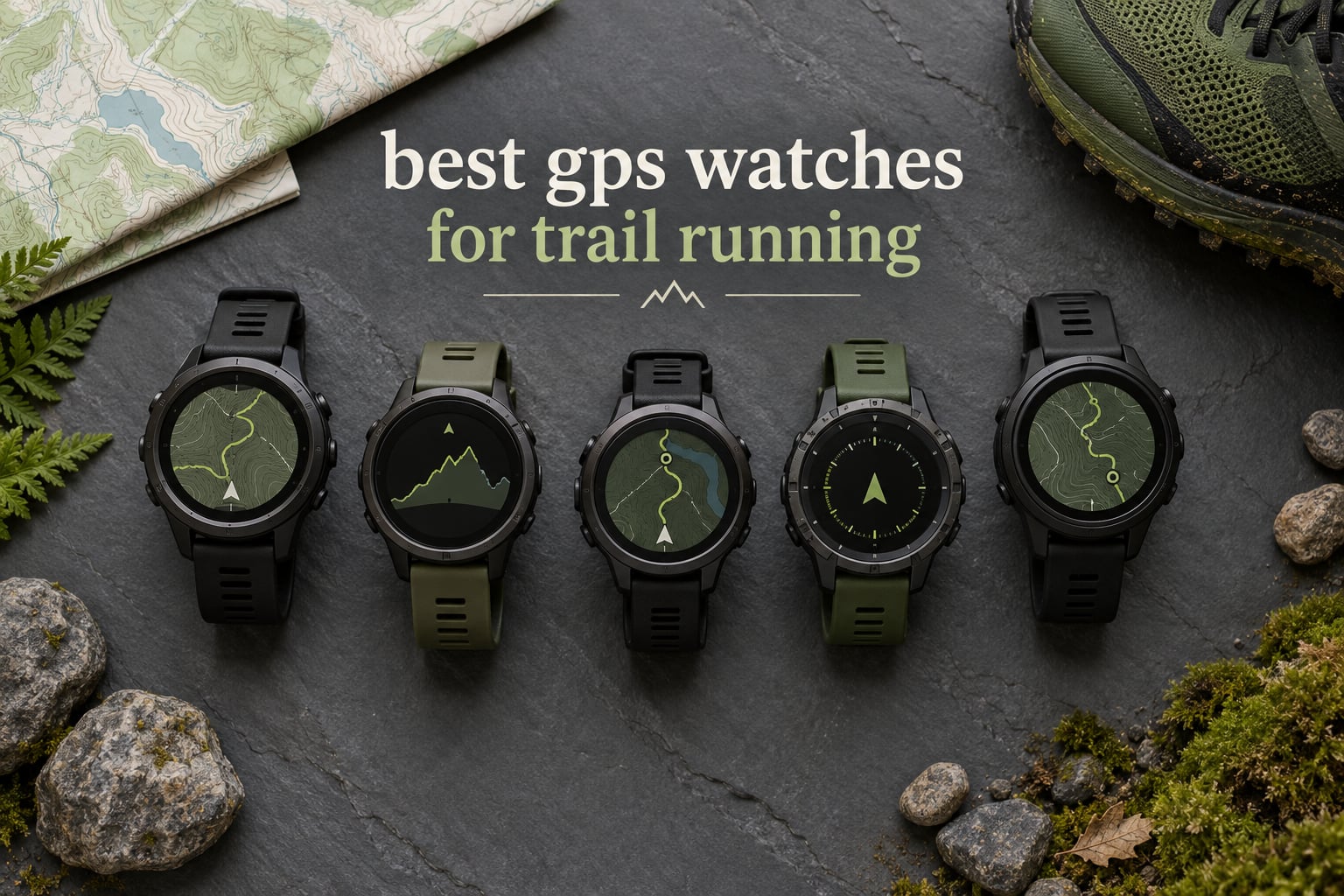
If you want the short answer, the Garmin fenix 8 47mm is the best GPS watch for trail running right now, because it is the only watch in this group that pairs multi-band GPS with full topographic mapping, a 47-hour GPS battery and a case that still fits most wrists. The Garmin Enduro 3 takes the battery crown if your longest day is measured in days rather than hours, and the COROS PACE Pro is the pick if you want Garmin-class positioning without flagship money.
That is the shortlist. This guide goes deeper, because the gap between a good trail watch and a great one is not the spec sheet. It is how the watch behaves under tree canopy, in a canyon, on an exposed ridgeline at midday, and on hour fourteen of a 100-miler.
We compared ten watches across Garmin, COROS, Suunto and Polar, reading the published specifications for each and cross-checking them against owner review patterns. Battery figures below are quoted by their measurement mode, because a 20-hour number in power-save mode and a 20-hour number with multi-band GPS running are not the same promise. Where a manufacturer publishes several figures, we tell you which mode each one belongs to.
Three brands dominate this category and one, Polar, is the credible outsider. Garmin owns the safe default position with the largest owner community and the most training depth. COROS keeps winning on value, battery and app simplicity. Suunto retains a genuine following built on navigation heritage, and its forum community is much smaller than Garmin’s, which is a real information-access consideration if you are buying without a local trail club to ask.
One warning before the list: watch generations turn over almost annually, and buyers regularly weigh a current model against the next one. If you are torn between two models, read the battery and navigation sections for each, not just the launch marketing, because the numbers move generation to generation.
Table of Contents
Top 3 GPS Watches for Trail Running (October 2026)
These three cover the widest range of trail use, from a first upgrade to a multi-week expedition. Each earns its place for a different reason, and none of them is a bad watch in the others’ hands.

Garmin fenix 8 47mm
- Multi-band GPS with SatIQ
- 47 h GPS battery
- Full topo maps and round-trip routing
- LED flashlight
- 100 m water resistance

COROS PACE Pro
- Dual-frequency GPS
- 38 h outdoor and 31 h dual-frequency
- 1500-nit AMOLED
- Offline topo maps with turn-by-turn

Suunto Run
- 36 g lightweight body
- Dual-frequency GPS with breadcrumbs
- 20 h high-precision GPS
- 4 GB with offline music
As an Amazon Associate we earn from qualifying purchases. CERTAIN CONTENT THAT APPEARS ON THIS SITE COMES FROM AMAZON. THIS CONTENT IS PROVIDED 'AS IS' AND IS SUBJECT TO CHANGE OR REMOVAL AT ANY TIME.
All 10 Watches at a Glance in 2026
Every watch in this guide, with the numbers that decide a purchase most often. GPS battery figures are separated by mode wherever the manufacturer publishes more than one.
| Product | Key Features | |
|---|---|---|
|
Garmin fenix 8 47mm
|
|
Check Latest Price |
 Garmin Forerunner 970 47mm Garmin Forerunner 970 47mm
|
|
Check Latest Price |
 Garmin Enduro 3 51mm Solar Garmin Enduro 3 51mm Solar
|
|
Check Latest Price |
|
COROS PACE Pro
|
|
Check Latest Price |
 COROS PACE 4 COROS PACE 4
|
|
Check Latest Price |
 COROS APEX 4 42mm COROS APEX 4 42mm
|
|
Check Latest Price |
 Suunto Race S Suunto Race S
|
|
Check Latest Price |
 Polar Grit X2 Pro Polar Grit X2 Pro
|
|
Check Latest Price |
 Suunto 9 Peak Pro Suunto 9 Peak Pro
|
|
Check Latest Price |
|
Suunto Run
|
|
Check Latest Price |
We earn from qualifying purchases. CERTAIN CONTENT THAT APPEARS ON THIS SITE COMES FROM AMAZON. THIS CONTENT IS PROVIDED 'AS IS' AND IS SUBJECT TO CHANGE OR REMOVAL AT ANY TIME.
How We Picked the Best GPS Watches for Trail Running
Every watch here was assessed on the same six criteria, and each criterion came from something trail runners actually complain about in forums rather than from a marketing page. First, GPS tier: does the chip track on two frequencies, and does the manufacturer publish what that costs in battery hours. Second, battery by mode, never a single headline number.
Third, navigation: full-colour topographic maps, breadcrumb trails, turn-by-turn, or nothing useful. Fourth, case size against wrist fit, because a watch you tolerate is a watch you will stop wearing. Fifth, sensor honesty, particularly wrist heart rate on technical ground where arm swing and pole use destroy the optical signal. Sixth, the app ecosystem, since a watch with a neglected app still logs your run but slowly shapes your training decisions.
We also weighted owner review volume, because a 4.6 rating across a thousand reviews says more than a 4.6 across a hundred. No watch here earned an award on specification alone.
1. Garmin fenix 8 47mm – the most complete trail watch
Garmin fēnix® 8, 47mm, Black
- 1.4-inch AMOLED at 1000 nits
- Multi-band GPS with SatIQ
- 47 h GPS and 16 days smart
- 100 m water, 40 m dive rated
Pros
- Multi-band GPS with SatIQ plus compass
- gyro and barometric altimeter
- 47 h GPS battery covers most ultra-day finishers
- Built-in LED flashlight for after-dark sections
- 1000-nit AMOLED readable on exposed ridgelines
- Dynamic round-trip routing with full topographic maps
Cons
- 47 mm case sits large on smaller wrists
- Wrist heart rate is weaker than a chest strap for intervals
We earn a commission, at no additional cost to you. CERTAIN CONTENT THAT APPEARS ON THIS SITE COMES FROM AMAZON. THIS CONTENT IS PROVIDED 'AS IS' AND IS SUBJECT TO CHANGE OR REMOVAL AT ANY TIME.
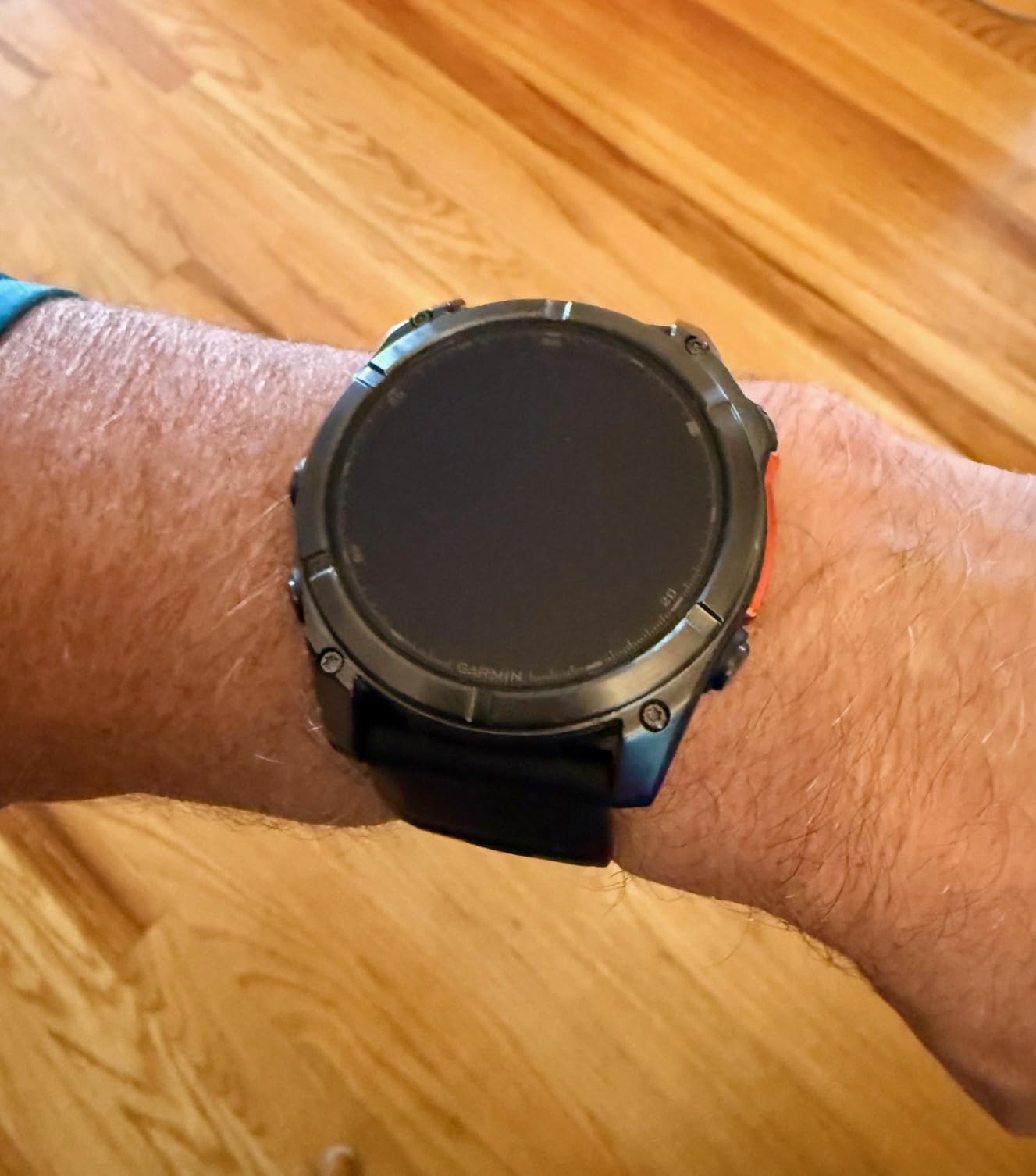
The fenix 8 is the watch we end up recommending when a runner describes terrain rather than goals. Someone running wooded singletrack with heavy canopy, someone running exposed ridgeline in bright sun, someone carrying a 25-litre pack for two days. Multi-band GPS with SatIQ, a three-axis compass, gyroscope and barometric altimeter gives it the sensor set that actually supports navigation rather than just recording a line.
Owner reviews are consistent about the endurance. With 1183 reviews averaging 4.6 stars and 85% five-star ratings, battery life is the most repeated strength, and the 16-day smartwatch figure plus 47 hours of GPS covers a long day out with headroom rather than anxiety. The built-in flashlight is a smaller feature that matters more on trail than most reviewers expected it to.
On the training side you get a readiness score built from sleep quality, recovery, training load and HRV, plus real-time stamina tracking and strength plans. That is a deeper analytics stack than anything else at this size, and for someone who wants one watch to cover trail, strength work and a hiking day, the breadth is the point.
Water handling is unusually good for an outdoor watch: 100 metre resistance and a 40 metre dive rating with leakproof metal buttons, which covers creek crossings and swimming without a second thought. Connectivity runs Bluetooth, USB and Wi-Fi, and the speaker and microphone handle wrist calls, which is more useful than it sounds when your partner is at home and you are out of phone range.
What the fenix 8 handles better than the alternatives
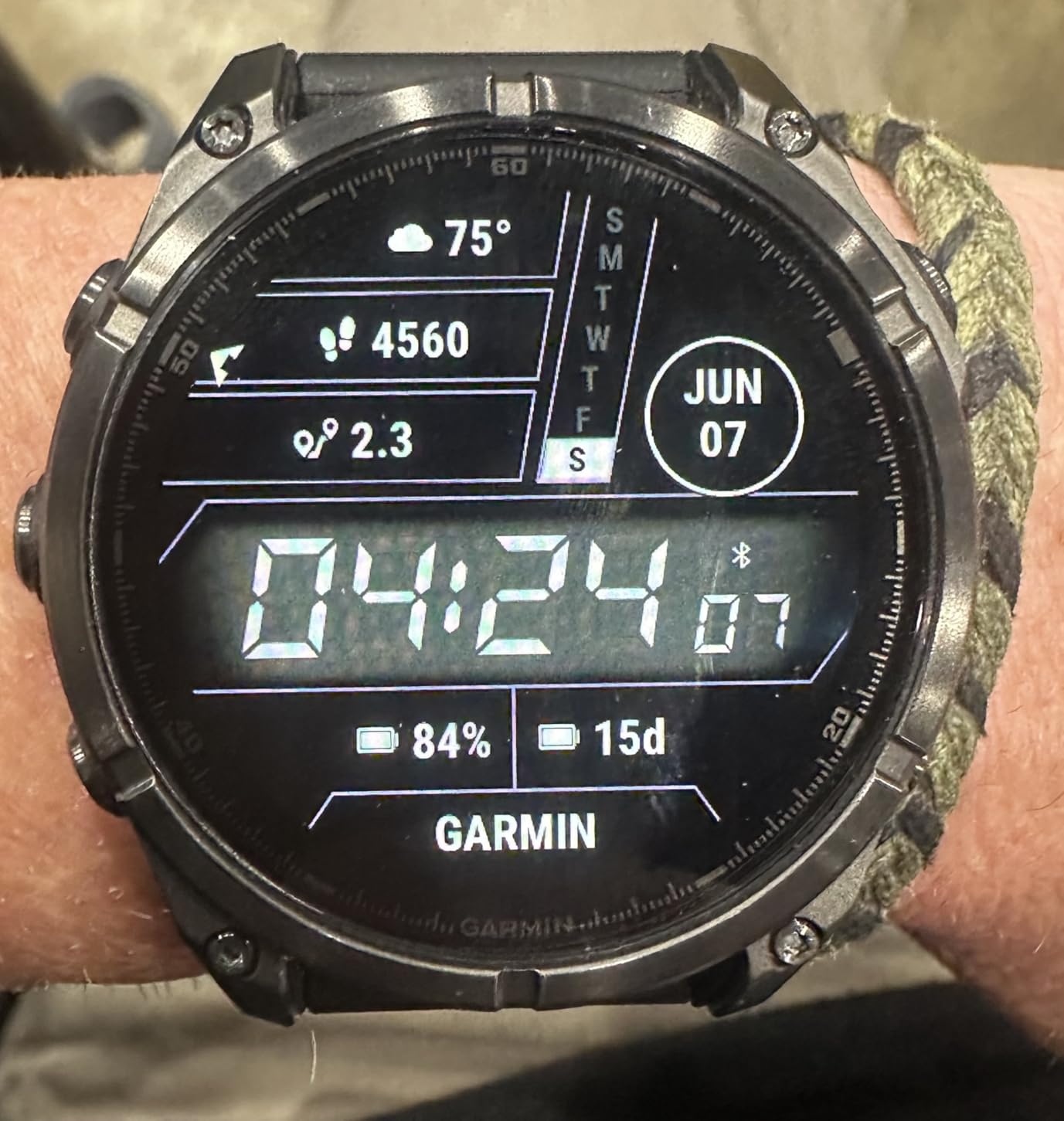
Where the cheaper COROS models fall short is exactly where the fenix 8 pulls ahead: sensor completeness and recovery detail. The fenix carries a compass, a barometric altimeter and a gyro as standard, which is what makes round-trip routing and course navigation trustworthy rather than approximate.
It also holds 16 GB of internal storage against 4 GB on the entry-level COROS PACE 4, and the 1000-nit AMOLED panel stays readable in the direct sun you get on an open mountainside, which is the condition where MIP displays hold their own and cheaper AMOLEDs do not.
Where it will frustrate you
The 47 mm case is the honest limitation. It wears well on a medium or large wrist and genuinely overhangs a small one, and the band width of 22 mm means you are limited to standard Garmin quick-release straps rather than slim fashion bands.
Wrist heart rate is the other watch-out, and reviewers mention it directly. On technical ground with poles or high arm swing, the optical reading wanders, so if you run intervals on rough trail, pair it with a chest strap.
We earn a commission, at no additional cost to you. CERTAIN CONTENT THAT APPEARS ON THIS SITE COMES FROM AMAZON. THIS CONTENT IS PROVIDED 'AS IS' AND IS SUBJECT TO CHANGE OR REMOVAL AT ANY TIME.
2. Garmin Forerunner 970 47mm – titanium, maps and the deepest running metrics
Garmin Forerunner® 970, 47mm, Titanium, Whitestone/Amp Yellow
- 1.4-inch AMOLED touchscreen
- Titanium bezel with sapphire lens
- 26 h GPS and 15-day smart battery
- Full-colour maps, multi-band GPS
Pros
- Full-colour onboard maps with multi-band GPS
- Titanium bezel and sapphire lens for rough use
- Running economy and running tolerance metrics
- Wrist-based running dynamics and running power
- Built-in LED flashlight
- Garmin Coach plans for run and triathlon
Cons
- About 26 h of GPS is tight for a 100-miler
- Steep menu learning curve for new users
- Some economy metrics need the separate HRM 600 sensor
We earn a commission, at no additional cost to you. CERTAIN CONTENT THAT APPEARS ON THIS SITE COMES FROM AMAZON. THIS CONTENT IS PROVIDED 'AS IS' AND IS SUBJECT TO CHANGE OR REMOVAL AT ANY TIME.
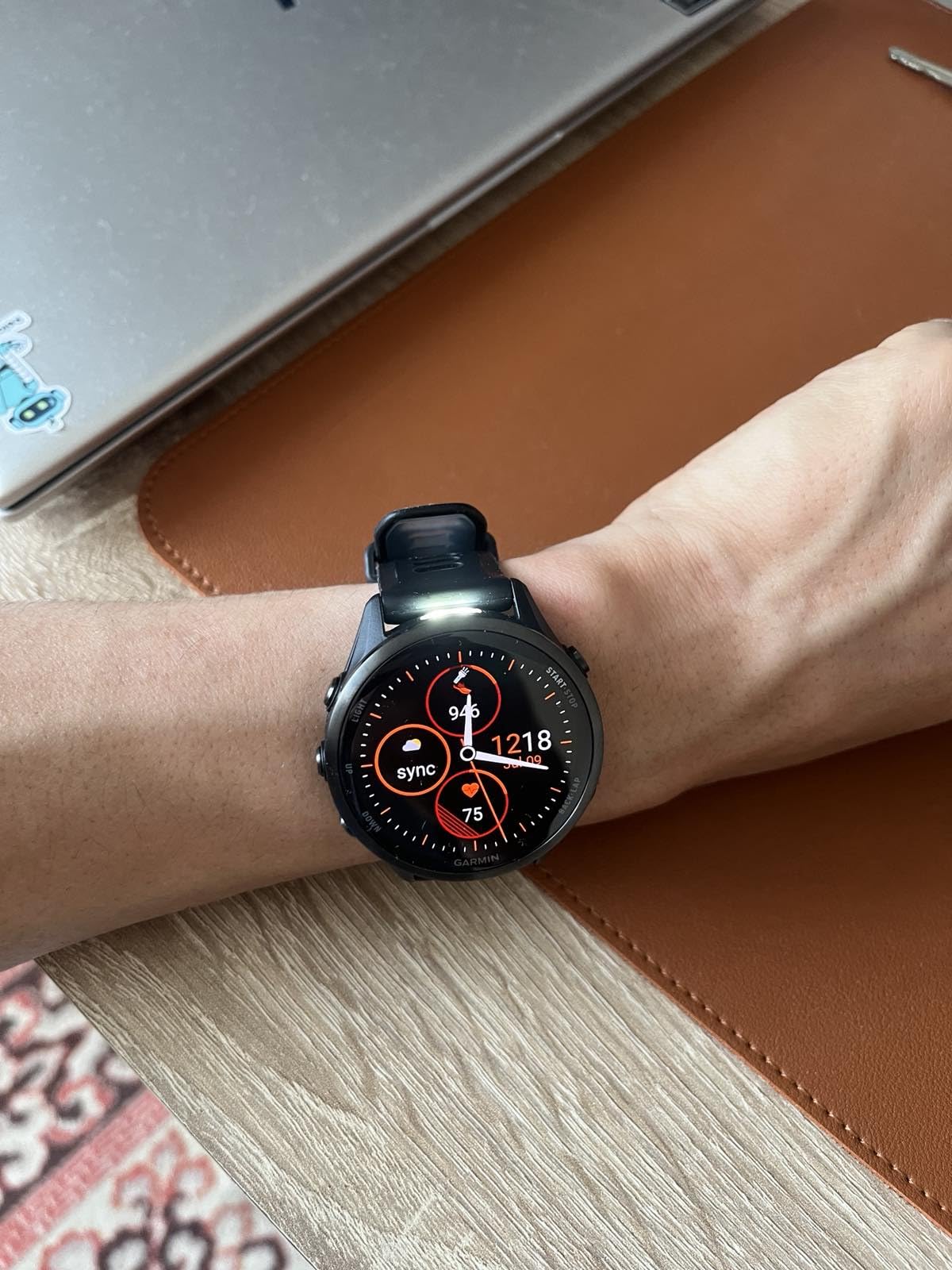
The Forerunner 970 is the watch for a runner whose priority is running data quality rather than adventure hardware. It is a lighter, more running-focused sibling of the fenix line, and it carries a titanium bezel with a sapphire lens, full-colour onboard maps and multi-band GPS at 47 mm.
Across 587 reviews at 4.6 stars with 87% five-star ratings, the recurring theme is that the display is simply bright enough in any condition and the sapphire shows no scratches in long-term use. Triathletes in particular call out the multisport auto-transition with transition times, which is a real endorsement for anyone who also rides or swims.
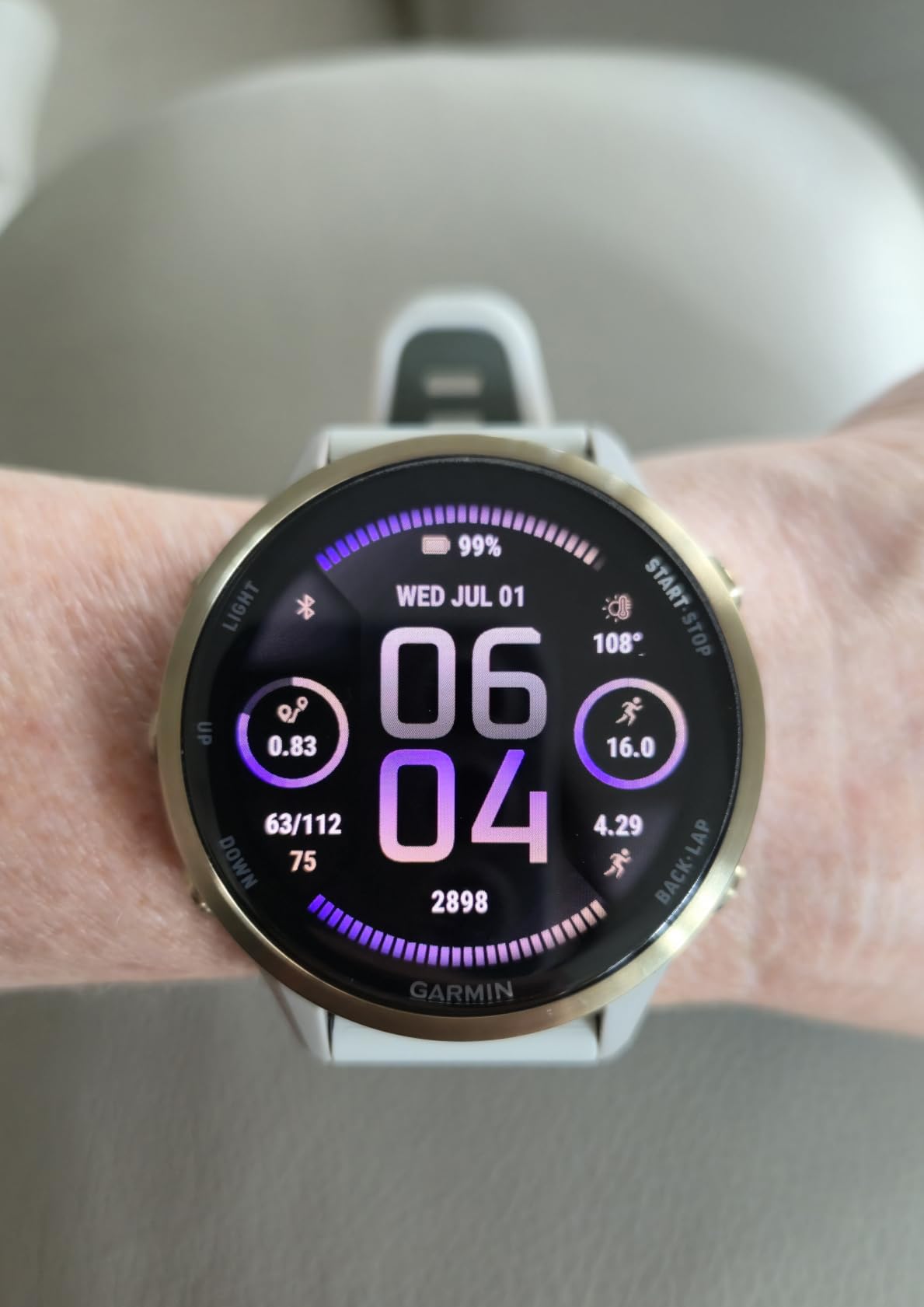
The metrics layer is where this watch earns its premium. Running economy, step speed loss and running tolerance sit alongside wrist-based running dynamics: cadence, stride length, ground contact time and running power, all measured from the wrist rather than a pod. Garmin Coach generates personalised running and triathlon plans, and the readiness score again pulls from sleep, recovery, training load and HRV.
Storage is 32 GB, which matters because full-colour maps and music both live there. The watch has a built-in microphone, speaker and voice assistant, so you can take calls from the wrist and use voice commands offline.
When the 970 outruns the fenix 8 for your training
If your week is structured intervals, tempo runs and long efforts with planned paces, the running-specific analytics here go further than anything in the rest of this list. The fenix 8 wins on general multisport breadth, but the 970 is the better instrument for answering why a session felt hard.
It is also the more refined daily object, since owners consistently describe it as light and comfortable enough to wear around the clock, and a watch you sleep in produces better readiness data the next morning.
What to check before you commit
Battery is the honest constraint: roughly 26 hours in GPS mode against 47 hours on the fenix 8. That comfortably covers a 50K or a 50-miler with margin, but it is not the watch for a 100-miler with a night section unless you plan around charging.
Two smaller friction points. The menu structure has a genuine learning curve if you are coming from a phone-first smartwatch, and some of the advanced economy metrics need the separately sold HRM 600 chest monitor to work properly.
We earn a commission, at no additional cost to you. CERTAIN CONTENT THAT APPEARS ON THIS SITE COMES FROM AMAZON. THIS CONTENT IS PROVIDED 'AS IS' AND IS SUBJECT TO CHANGE OR REMOVAL AT ANY TIME.
3. Garmin Enduro 3 Solar 51mm – the battery that stops being a factor
Garmin Enduro™ 3, Solar, 51 mm, Sapphire, Black UltraFit Nylon Strap
- 51 mm titanium case at 63 g
- 320 h GPS with solar charging
- Sapphire lens with LED flashlight
- Preloaded TopoActive maps
Pros
- Up to 90 days smart and 320 h GPS with solar
- 63 g titanium body is lighter than the size suggests
- Sapphire lens and titanium bezel for brutal conditions
- Preloaded topographic maps with round-trip routing
- UltraFit nylon band for multi-day wear
Cons
- 51 mm case will not fit a smaller wrist
- Solar figures assume steady exposure at 50000 lux
- Premium pricing against other ultra watches
We earn a commission, at no additional cost to you. CERTAIN CONTENT THAT APPEARS ON THIS SITE COMES FROM AMAZON. THIS CONTENT IS PROVIDED 'AS IS' AND IS SUBJECT TO CHANGE OR REMOVAL AT ANY TIME.
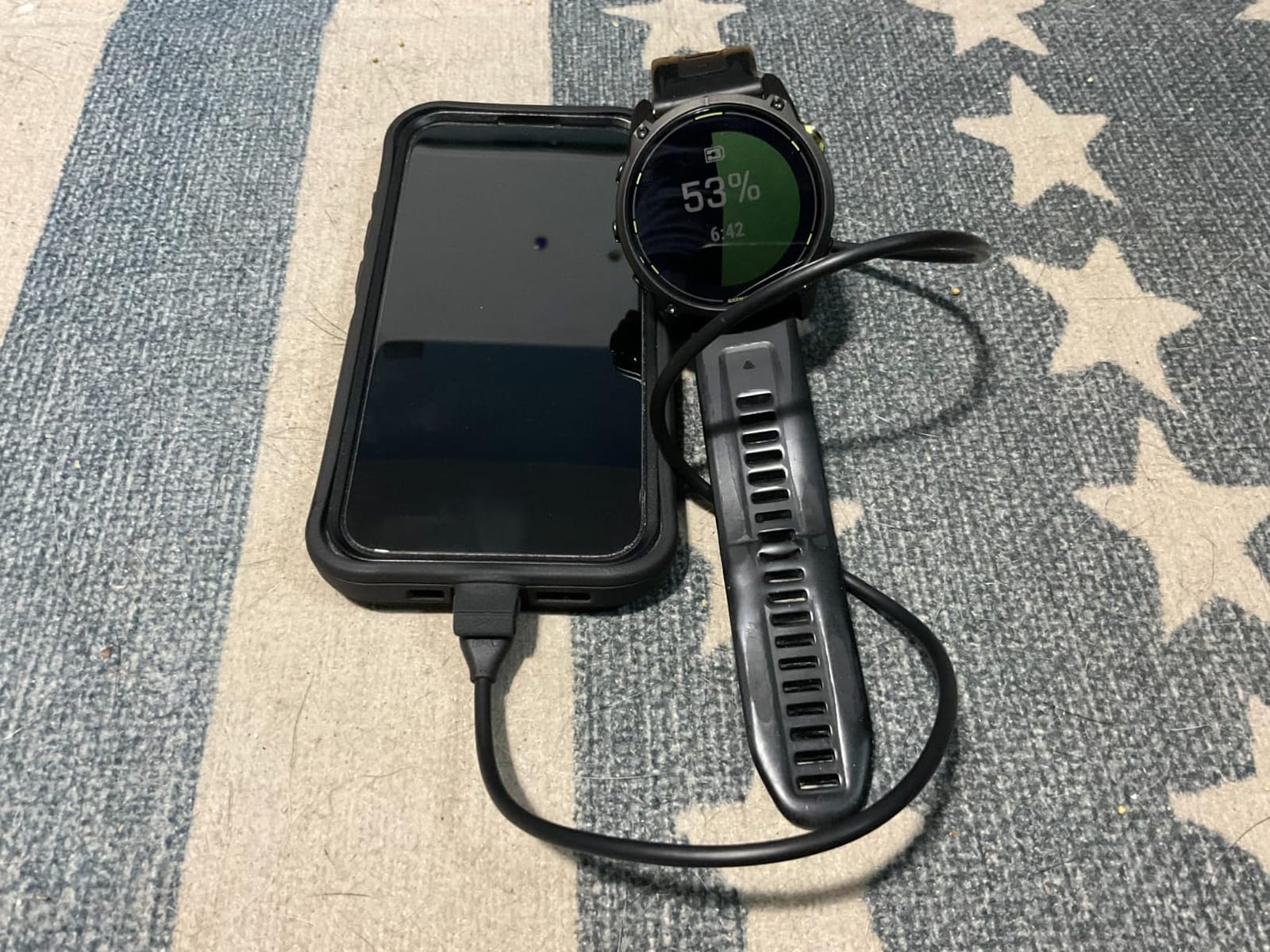
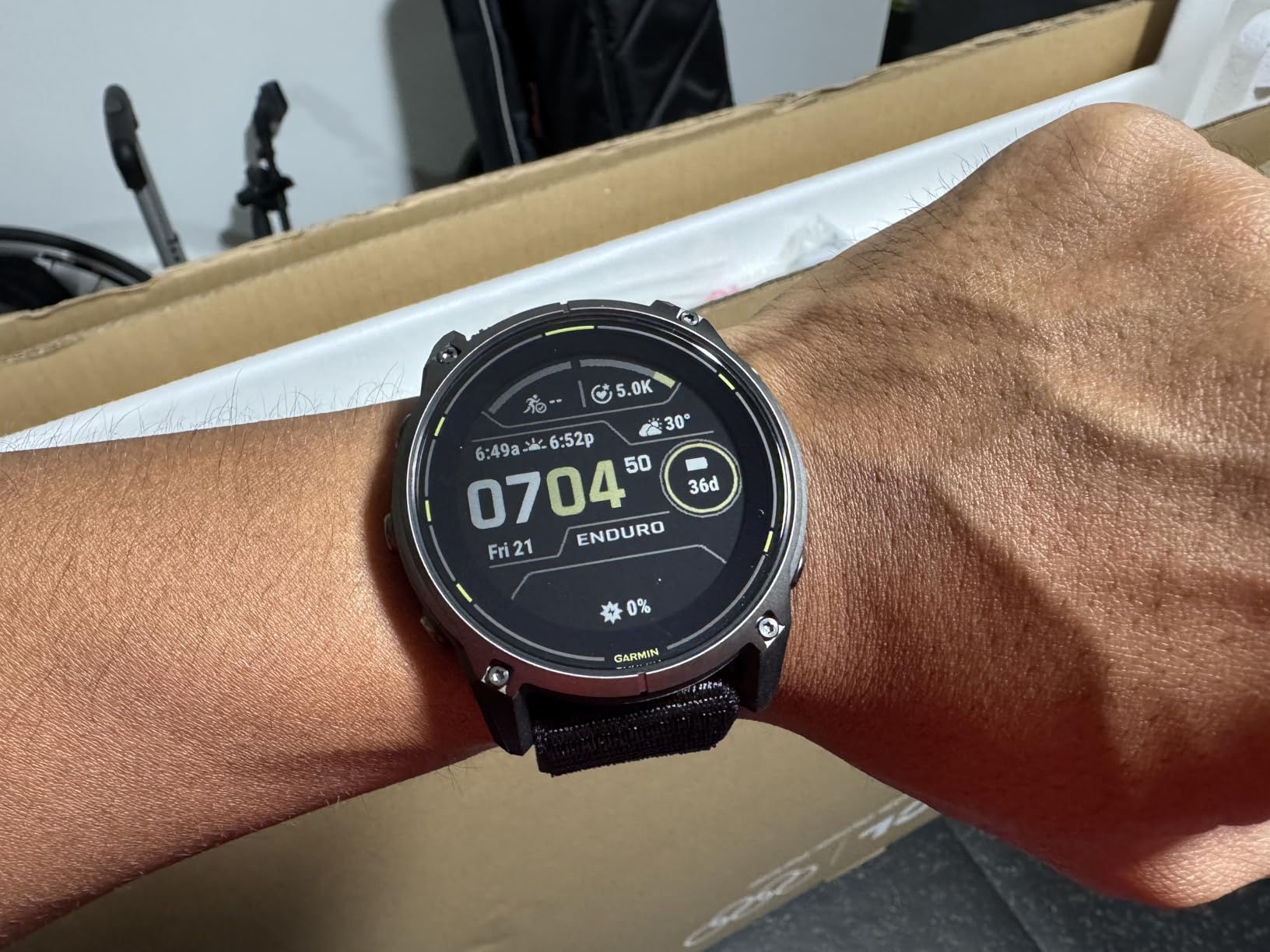
Everything about the Enduro 3 is designed around one question: what happens when the race runs past sunset, past the second night, past the point where a power bank is dead. The headline is 320 hours of GPS with solar charging, on top of up to 90 days in smartwatch mode, and that figure is the reason this watch exists.
What surprised us reading the specification is the weight: a 51 mm titanium case at 63 g. It is the largest watch in this guide and one of the lightest, because titanium and sapphire do more per gram than steel. Owners buying for ultra-endurance consistently highlight the combination of battery endurance, low weight and material durability across 283 reviews at 4.6 stars.
Navigation is not an afterthought here. TopoActive topographic maps are preloaded rather than downloaded, and dynamic round-trip routing continually recalculates a path home against your scheduled finish, which is genuinely useful when fatigue is making route judgement worse.
The always-on display, LED flashlight and UltraFit nylon band complete a package built for back-to-back races. Strength training plans and real-time stamina tracking carry the training side, and water resistance to 100 metres covers fording and storms.
Why this is the ultra-specific choice
No other watch here removes the charging question entirely. If your calendar contains a 100-miler, a multi-stage race or a self-supported traverse across a range, the 320-hour figure means the battery stops being part of your race plan, and the preloaded maps mean no phone is involved at any point.
It is also the watch that behaves best in bad weather and darkness, which is where trail ultras separate from trail day runs. Solar charging means that a week of exposed ridgeline running meaningfully extends the endurance, though see the caveat below.
The tradeoff you are signing up for
The 51 mm case is the reason reviewers flag it most often, and it is a genuine dealbreaker on a smaller wrist. This is not a watch that can be made to fit well below a certain wrist circumference; it overhangs.
Second, the solar claims assume regular outdoor exposure at 50000 lux, so a runner who trains mostly indoors or at night will not see the published numbers. And it sits at the top of the price range in this list, which is defensible for a 100-miler and hard to justify for a Saturday 15K.
We earn a commission, at no additional cost to you. CERTAIN CONTENT THAT APPEARS ON THIS SITE COMES FROM AMAZON. THIS CONTENT IS PROVIDED 'AS IS' AND IS SUBJECT TO CHANGE OR REMOVAL AT ANY TIME.
4. COROS PACE Pro – the value pick with dual-frequency GPS
COROS PACE Pro GPS Sport Watch, 1.3-inch AMOLED Touchscreen – Blue
- 1.3-inch AMOLED at 1500 nits
- Dual-frequency GPS
- 38 h outdoor and 31 h dual-frequency
- Offline topo maps, 32 GB, two-year warranty
Pros
- Dual-frequency GPS with a new satellite chipset
- 38 h outdoor and 31 h with dual-frequency
- 1500-nit always-on AMOLED
- Offline topo and landscape maps with turn-by-turn
- 49 g body with a two-year warranty
Cons
- Smaller screen and storage than higher-tier COROS models
- COROS app ecosystem less mature than Garmin Connect
- Touch-only input with no physical crown
We earn a commission, at no additional cost to you. CERTAIN CONTENT THAT APPEARS ON THIS SITE COMES FROM AMAZON. THIS CONTENT IS PROVIDED 'AS IS' AND IS SUBJECT TO CHANGE OR REMOVAL AT ANY TIME.
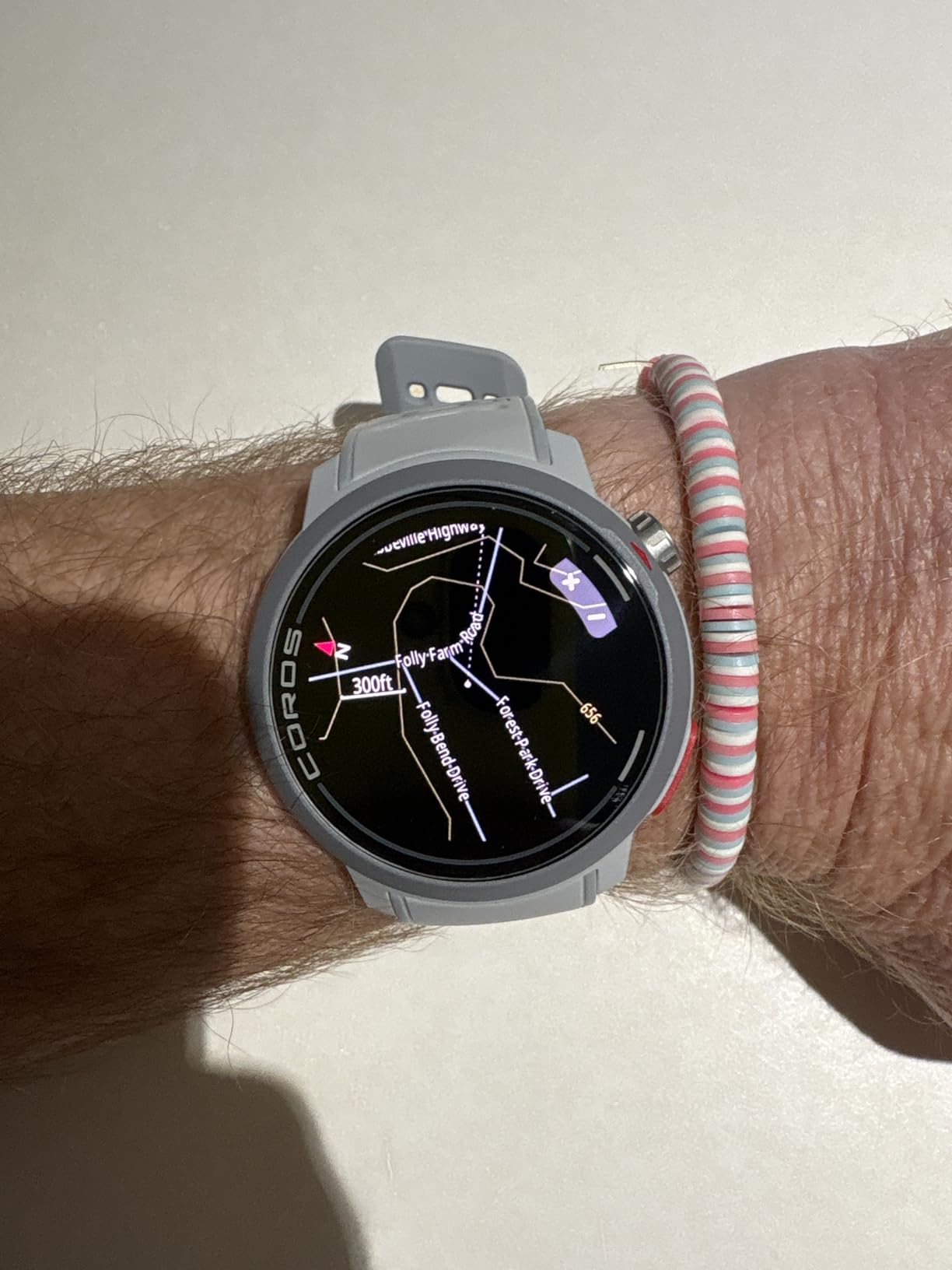
The PACE Pro is the watch to buy if your objection to Garmin is price, not capability. It carries dual-frequency GPS on a new satellite chipset, offline topographic and landscape maps with turn-by-turn navigation, and a 1.3-inch always-on AMOLED rated at 1500 nits, which is the brightest panel in this entire guide.
Across 880 reviews at 4.6 stars with 84% five-star ratings, the recurring theme is value delivered without compromise on the three things that matter on trail. The display is readable at any hour, the GPS holds up in city streets and on remote trails alike, and the battery outlasts most competitors on the same charge.
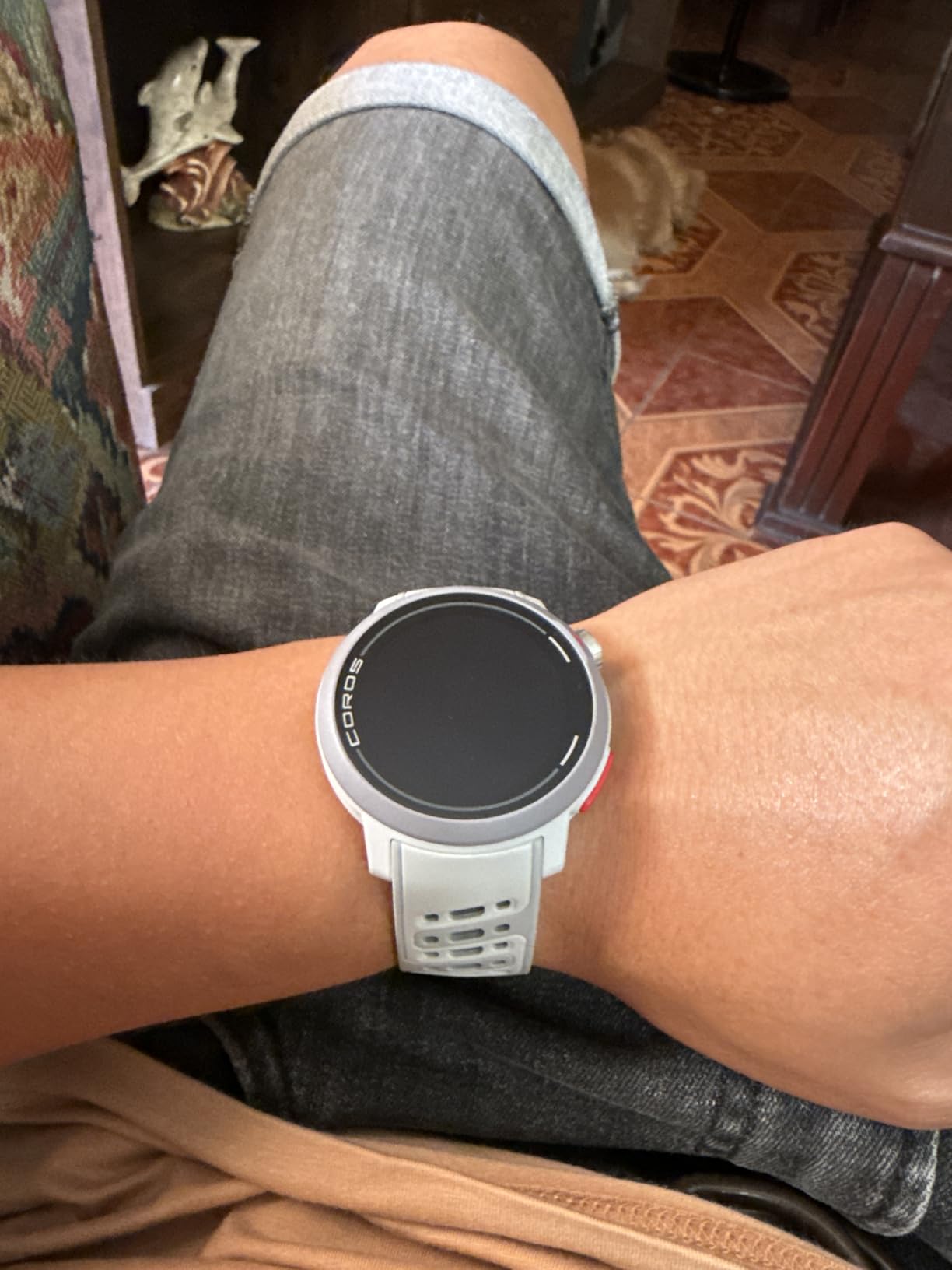
Battery here needs reading carefully, which is the point of this guide. The manufacturer gives 38 hours in outdoor activity mode, 31 hours with dual-frequency GPS enabled, and 20 days in typical daily use. Those are three different promises, and the 31-hour multi-band figure is the one that matters if you run under tree cover.
The processor is more than twice the performance of its predecessor with three times the zoom speed, which shows up in map panning. Storage is 32 GB, charging is USB-C with a keychain adapter so one cable covers all COROS devices, and the band is 22 mm silicone fitting wrists from 130 to 220 mm.
Where the PACE Pro beats the Garmin flagships
On raw value it is not close. Full-colour offline topographic mapping with turn-by-turn navigation at this tier usually means paying Garmin flagship money, and the two-year warranty is longer than most competitors in the class offer outright.
The 1500-nit display also beats the Garmin AMOLEDs in this list on paper, which matters on an exposed ridge at midday. At 49 g it is one of the lighter watches here and sits comfortably on smaller wrists than the 51 mm Enduro 3.
What you give up
The app is the honest gap. Reviewers repeatedly describe the COROS app as less mature than Garmin Connect, with fewer insights, less customisation and a thinner third-party integration list, and r/Coros threads make the same point about how data is presented after an activity.
Input is touch-only on this model with no physical crown, and the screen and storage are smaller than higher-tier COROS watches. A forum user also reported COROS curve and terrain data reading as noticeably imprecise against Garmin and Suunto, which is worth factoring in if you care about grade-adjusted metrics.
We earn a commission, at no additional cost to you. CERTAIN CONTENT THAT APPEARS ON THIS SITE COMES FROM AMAZON. THIS CONTENT IS PROVIDED 'AS IS' AND IS SUBJECT TO CHANGE OR REMOVAL AT ANY TIME.
5. COROS PACE 4 – the lightest watch here at 32 g
COROS PACE 4 Ultralight Sport GPS Watch (Black Silicone, Standard)
- 32 g with nylon band, 11.8 mm thin
- 1.2-inch AMOLED at 600 x 680
- 41 h continuous GPS, 19 days daily
- Breadcrumb navigation and turn-by-turn courses
Pros
- Exceptionally light at 32 g and 11.8 mm thin
- 41 h continuous GPS and up to 19 days daily
- Crisp AMOLED with resolution 164% higher than the PACE 3
- Digital crown and two buttons with a configurable action button
- Voice recording for hands-free notes
- Two-year warranty with continued software support
Cons
- Only 4 GB storage so no offline maps on this model
- Wrist heart rate is spotty on intervals
- Small screen with non-sapphire glass
We earn a commission, at no additional cost to you. CERTAIN CONTENT THAT APPEARS ON THIS SITE COMES FROM AMAZON. THIS CONTENT IS PROVIDED 'AS IS' AND IS SUBJECT TO CHANGE OR REMOVAL AT ANY TIME.
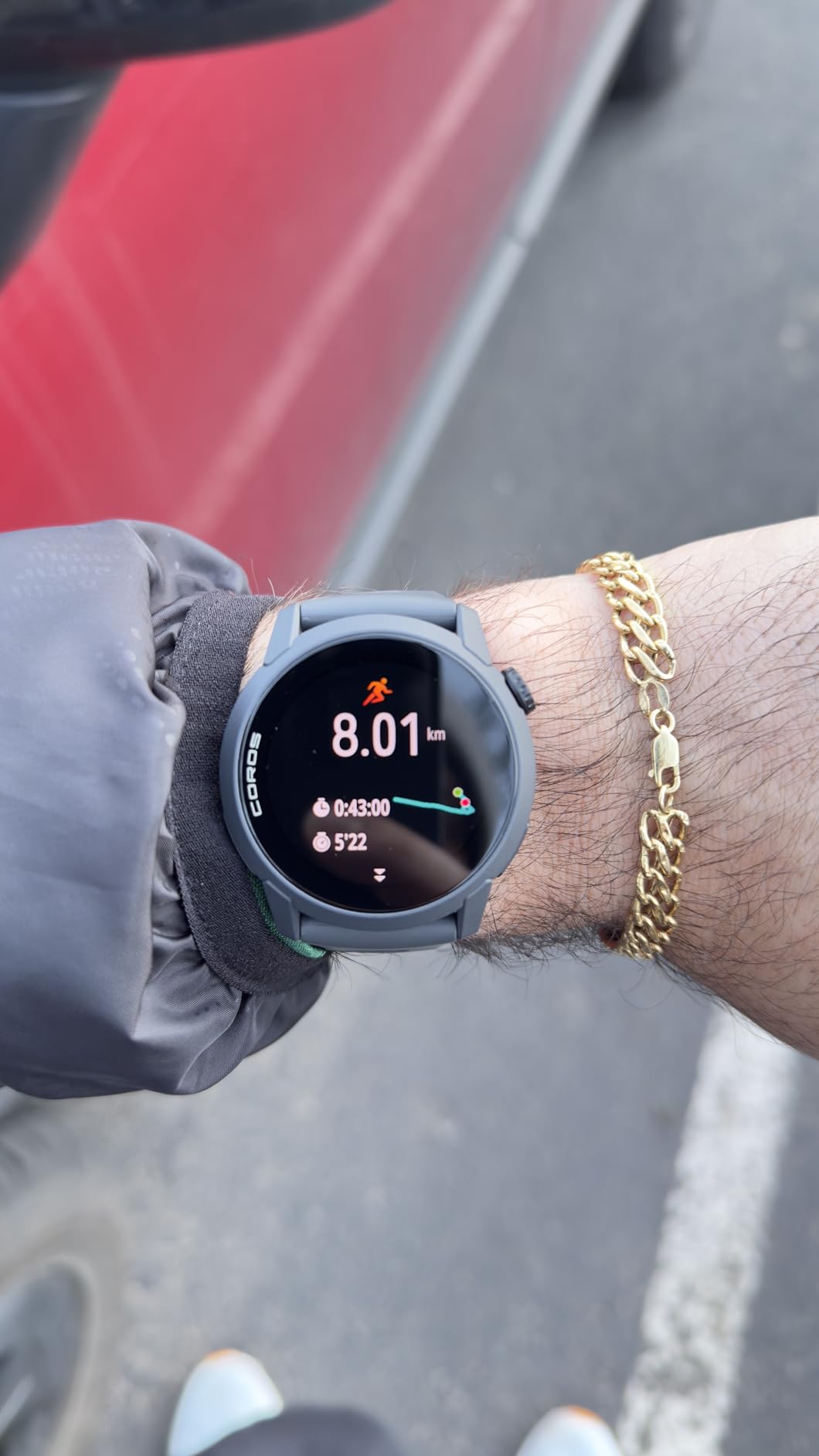
The PACE 4 exists for one reason: weight. At 32 g with the nylon band and 11.8 mm thin, it is the lightest watch in this guide, lighter than a gel, and for ultrarunners counting every gram over a hundred miles that is not a gimmick.
Everything else is unusually strong for the weight class. 41 hours of continuous GPS and up to 19 days of daily battery life, dual-frequency GPS with breadcrumb navigation and turn-by-turn courses, and a 1.2-inch AMOLED at 600 x 680 resolution, which the manufacturer states is 164% higher than the COROS PACE 3.
Control is better than a touch-only watch usually manages, with a tactile digital crown, two easy-to-reach buttons and a configurable action button. There is a voice recording tool for workout notes and voice control for alarms and target workouts, which sounds minor until you are mid-climb with both hands on poles.
Across 432 reviews at 4.5 stars, runners switching from an Apple Watch or an older Garmin call it exceptional value with clean routes and no random satellite dropouts. The app syncs quickly to Strava, Nike Run Club and Apple Health, and the brand commits to continued software support including map updates.
Best suited to long efforts and fasted runs
A watch you forget you are wearing changes how you run. At 32 g with an 11.8 mm profile, this disappears on the wrist through long efforts, overnight sleeps and every day in between, and the 19-day daily battery means you are not rationing.
Training load, recovery time, HRV, sleep stages and menstrual cycle tracking are all present, so the analytics are competitive even though the physical package is minimal.
Where it falls short for navigation
Storage is the decisive limitation: 4 GB, which on this model means no offline maps. You get breadcrumb navigation and stored courses with turn-by-turn directions, which is genuinely useful on a known route, but it is not the answer if you need to navigate terrain you have not run before.
Heart rate accuracy is the other recurring complaint, with reviewers reporting it as spotty during intervals and pace data lagging outside easy runs unless a foot pod is added. The screen is small, the glass is not sapphire, and the always-on display dims some metrics on certain faces.
We earn a commission, at no additional cost to you. CERTAIN CONTENT THAT APPEARS ON THIS SITE COMES FROM AMAZON. THIS CONTENT IS PROVIDED 'AS IS' AND IS SUBJECT TO CHANGE OR REMOVAL AT ANY TIME.
6. COROS APEX 4 42mm – sapphire over MIP for 100-mile alpine days
COROS APEX 4 (42mm) GPS Watch,1.2″ MIP, 34 Days Battery Life – Black
- 42 mm titanium case at 56 g
- Always-on MIP under sapphire
- 41 h all-systems GPS
- All-systems and dual-frequency GPS
Pros
- Sapphire glass over an always-on memory-in-pixel display
- All-systems plus dual-frequency GPS with vertical algorithms
- Topographic
- satellite and hydro maps with turn-by-turn
- 30x faster map rendering
- Voice Pins for hands-free notes mid-climb
Cons
- MIP display is less vibrant than AMOLED rivals
- 1.2-inch screen is small for reading topographic detail
- Lowest owner rating in this group
We earn a commission, at no additional cost to you. CERTAIN CONTENT THAT APPEARS ON THIS SITE COMES FROM AMAZON. THIS CONTENT IS PROVIDED 'AS IS' AND IS SUBJECT TO CHANGE OR REMOVAL AT ANY TIME.
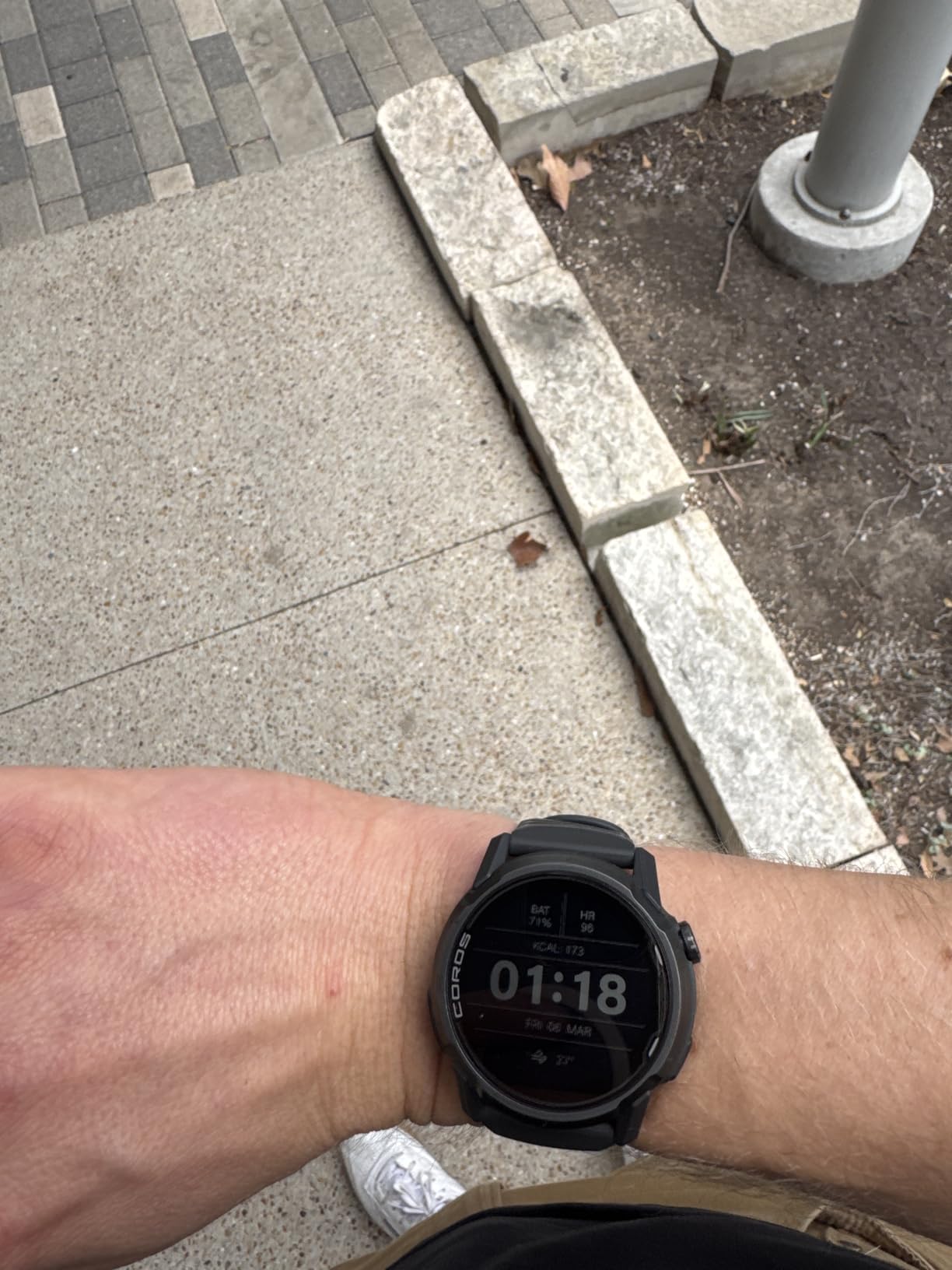
The APEX 4 42mm is the most purpose-built trail watch in this guide. It is the only one that pairs a titanium 42 mm case with sapphire glass over an always-on memory-in-pixel display, which is the durability-versus-legibility combination that makes sense on rock and scree rather than on a road.
The positioning story is unusually well specified: all-systems GPS plus dual-frequency GPS with vertical algorithms tuned for dense forests, couloirs and alpine terrain. That vertical focus is not marketing filler. On a steep alpine course, poor vertical accuracy corrupts every grade-adjusted metric you will ever look at.
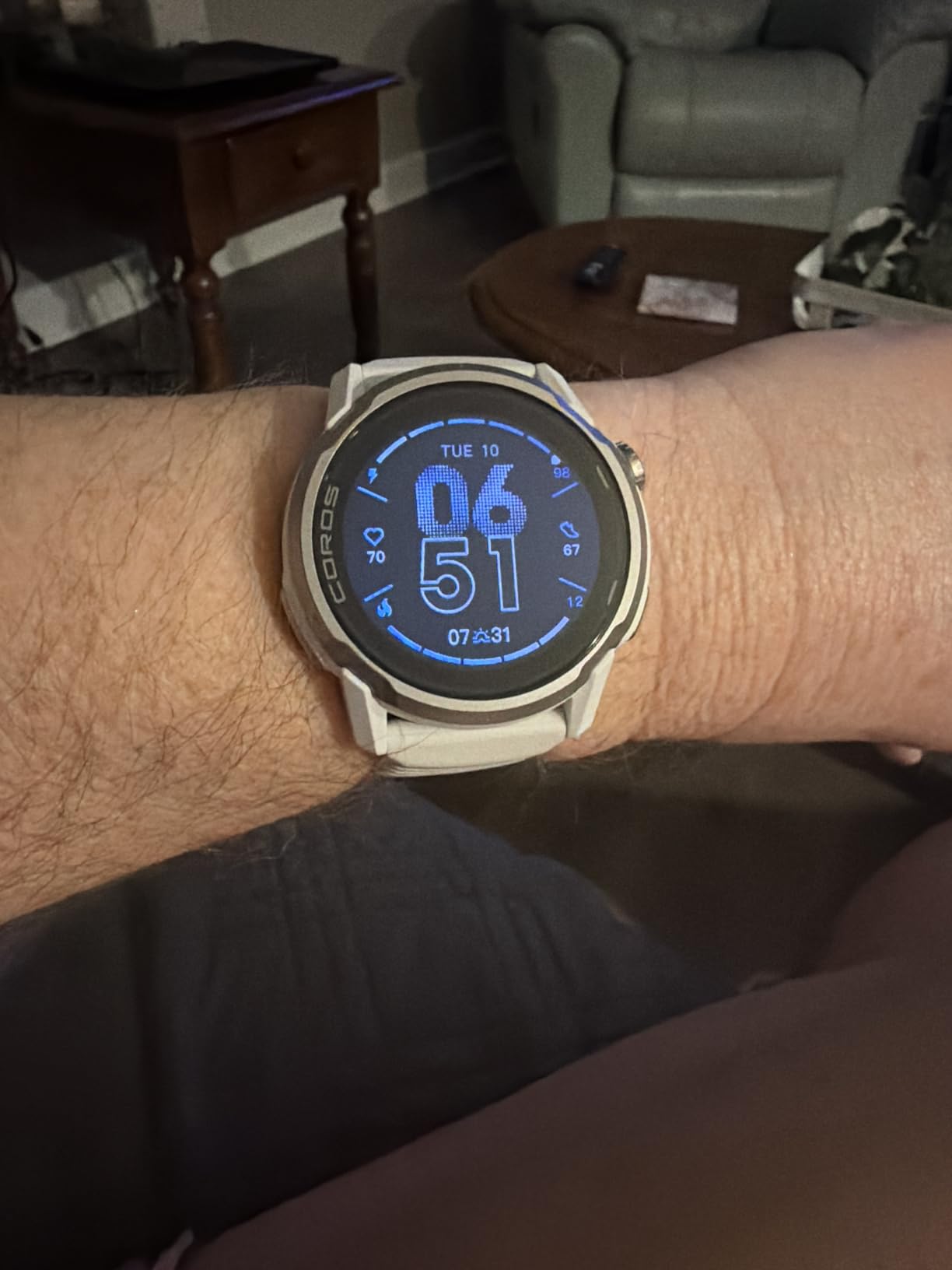
Mapping is where this watch earns its place. Topographic, landscape, satellite and hydro layers with turn-by-turn navigation that needs no cell service, two map layers at 15 metre zoom, and rendering described as 30 times faster than the previous generation, which is what makes panning a topographic layer usable rather than frustrating.
Battery is 41 hours of all-systems GPS, sized for 100-mile stage racing, and the body is 56 g with reinforced lugs and 32 GB of storage. Microphone and speaker add Voice Pins for recording beta notes hands-free mid-climb, plus calls and audible alerts, and there are dedicated modes for trail running, ski touring, alpine climbing and vertical training.
The case for MIP on technical ground
An always-on MIP display costs you colour richness and gains you visibility. On a shaded forest trail or in an early start with the sun still low behind the ridge, a transflective screen that does not need a backlight is easier to read at a glance than a dark AMOLED you are trying to angle.
Paired with sapphire glass, it is also the hardest-wearing screen-and-case combination here. The 42 mm size is the second-smallest in this guide and fits wrists that the 51 mm Enduro 3 never will.
Honest limitations
This watch has the lowest owner rating in the group at 4.3 across 151 reviews, with 65% five-star and a long tail of three- and four-star feedback. The complaints concentrate on the display: lower resolution, less vibrant colour than AMOLED rivals, and a 1.2-inch screen that is small for reading topographic detail quickly.
That is a real trade, not a defect. If you navigate by looking at the map at arm’s length while moving, the AMOLED watches serve you better. If you read the map when you stop, the APEX 4 is tougher and lasts longer.
We earn a commission, at no additional cost to you. CERTAIN CONTENT THAT APPEARS ON THIS SITE COMES FROM AMAZON. THIS CONTENT IS PROVIDED 'AS IS' AND IS SUBJECT TO CHANGE OR REMOVAL AT ANY TIME.
7. Suunto Race S – compact dual-band navigation with a digital crown
SUUNTO Race S GPS Sports Watch, 1.32” AMOLED 95+ Sports Modes, All Black
- 1.32-inch AMOLED at 466 dpi
- 60 g and 11.4 mm thick
- Dual-band GNSS on L1 and L5
- 30 h performance, 13 days daily
Pros
- Dual-band GNSS on L1 and L5 across five satellite systems
- Compact 60 g body at 11.4 mm
- Global offline maps with POI
- bearing and find-back
- Barometer-based storm alert plus altimeter and compass
- One-hour fast charge
Cons
- Stock strap can be too short for larger wrists
- Firmware updates have reset user settings
- No offline music storage
- Support slow to resolve connection issues
We earn a commission, at no additional cost to you. CERTAIN CONTENT THAT APPEARS ON THIS SITE COMES FROM AMAZON. THIS CONTENT IS PROVIDED 'AS IS' AND IS SUBJECT TO CHANGE OR REMOVAL AT ANY TIME.
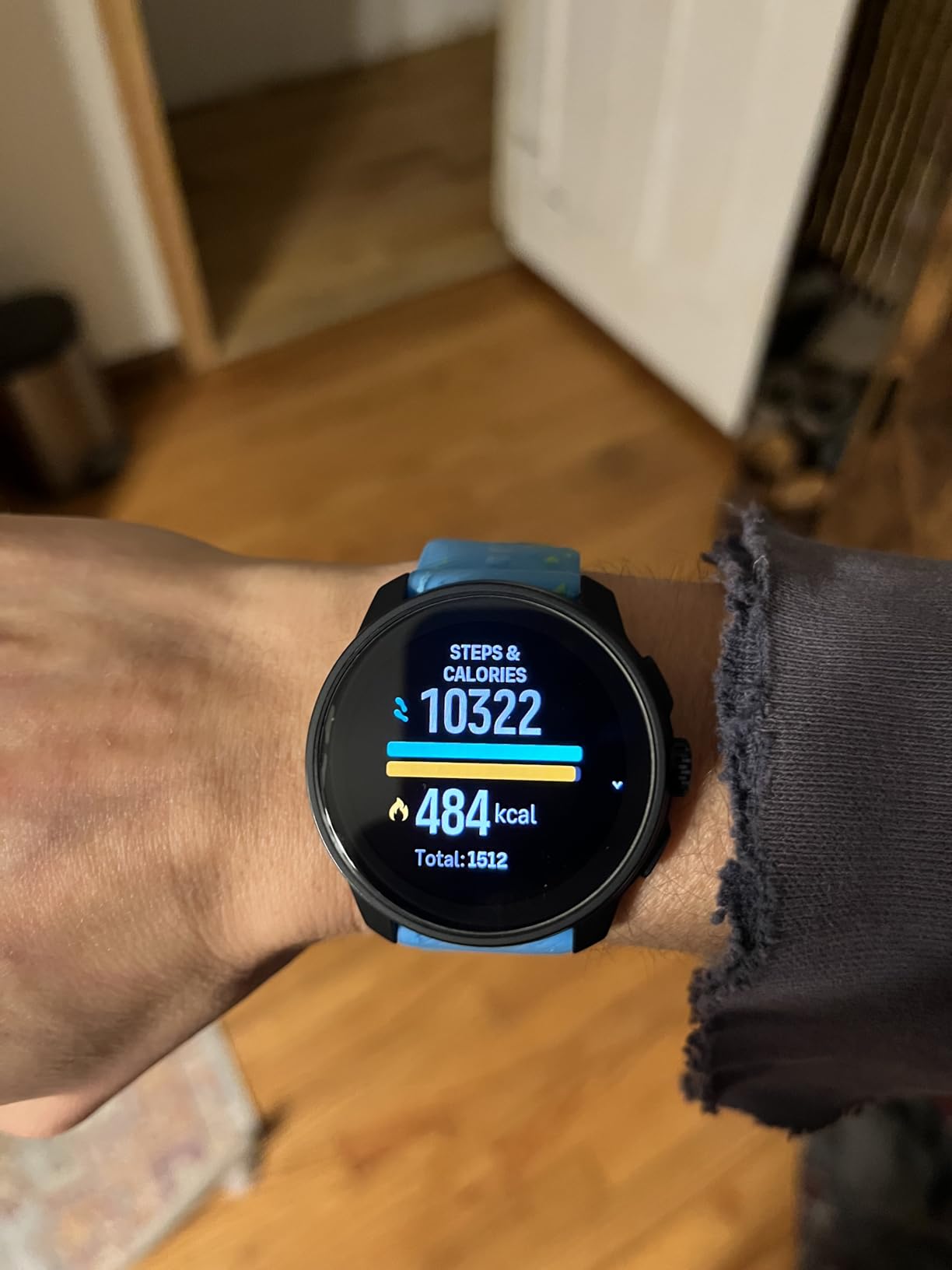
Suunto built navigation before most of this category existed, and the Race S shows it. The positioning specification is dual-band GNSS on L1 and L5 across GPS, GLONASS, Galileo, QZSS and BeiDou, which is the broadest constellation coverage in this guide alongside a 1.32-inch AMOLED at 466 dpi with a digital crown.
The body is 60 g and 11.4 mm thick, which is the combination that works on technical ground. A watch you can operate with gloves, using a crown rather than a touchscreen, is a genuinely different experience to swiping at a screen while balancing on a boulder.
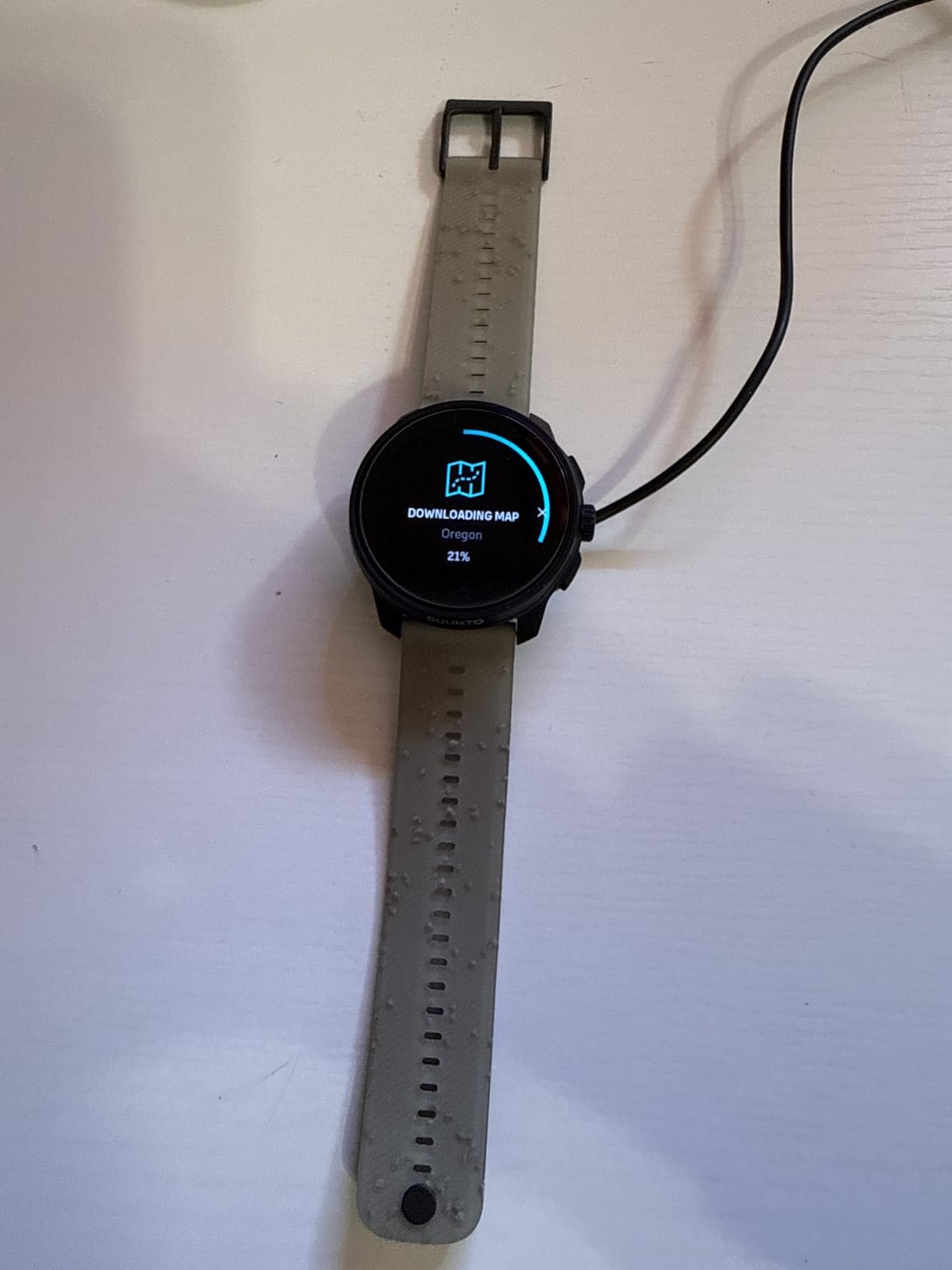
Navigation features include global offline maps with 2 km zoom-out, route navigation, points of interest, bearing and find-back. Find-back is the one that saves people: it draws a direct line to your start regardless of which path you took, and on a foggy descent that is worth more than a topo layer.
Safety instrumentation is unusually complete, with a barometer-based storm alert, weather forecast, sunrise and sunset alarms, altimeter and compass. Training is covered by more than 95 sport modes with TSS, CTL, HRV, VO2 max and TSB metrics plus an AI Coach in the app, and SuuntoPlus connects to more than 300 partner services.
When the Race S is the right tool
If navigation reliability is your primary concern, this is the watch to shortlist. Five constellations on two frequencies plus find-back and bearing gives you more ways to fix your position when the terrain is fighting you than any watch here outside the Garmin flagships.
Several owners report the watch holding accurate distance and heart rate data through 100-mile efforts, matching readings from their previous COROS and Garmin devices, which is a strong cross-brand validation. The one-hour fast charge means a 20-minute coffee stop gives you most of a day’s tracking back.
The Suunto-specific friction points
The stock strap is the most common practical complaint, described as short and not suiting larger wrists, so budget for a replacement band. Some users also report firmware updates resetting activity settings and preferences, and VO2 max readings that have stayed implausibly static for long periods.
Support has been slow to resolve connection issues for some owners, there is no offline music storage because internal space goes to maps, and a few find pairing with external heart rate straps difficult. A smaller community than Garmin’s is worth noting too, since troubleshooting advice is thinner when something goes wrong.
We earn a commission, at no additional cost to you. CERTAIN CONTENT THAT APPEARS ON THIS SITE COMES FROM AMAZON. THIS CONTENT IS PROVIDED 'AS IS' AND IS SUBJECT TO CHANGE OR REMOVAL AT ANY TIME.
8. Polar Grit X2 Pro – rugged build and Garmin-style routing
POLAR Grit X2 Pro Premium GPS Smart Sports Watch – Ultimate Outdoor Adventure Watch with Rugged Design, Advanced Navigation, Sports Tracking, and Heart Rate Technology, Night Black
- 1.39-inch AMOLED at 454 x 454
- MIL-STD-810H with sapphire crystal
- Dual-frequency GPS with topo maps
- Power-Save and Explore modes
Pros
- Dual-frequency GPS with downloadable topographic maps
- Turn-by-turn routing through Polar Flow and Komoot
- MIL-STD-810H durability with sapphire and steel bezel
- Power-Save and Explore modes for multi-day use
- Standard 22 mm interchangeable band
Cons
- Optical heart rate reported as off by up to 40 bpm
- Random restarts losing recorded activities
- Interface feels dated next to Garmin
- Support unresponsive on connection issues
We earn a commission, at no additional cost to you. CERTAIN CONTENT THAT APPEARS ON THIS SITE COMES FROM AMAZON. THIS CONTENT IS PROVIDED 'AS IS' AND IS SUBJECT TO CHANGE OR REMOVAL AT ANY TIME.
The Grit X2 Pro is the serious alternative to Garmin, and for a specific kind of runner it is the correct answer. If you want a watch that can be dropped off a ledge, cross a river and still work, the MIL-STD-810H rating with a sapphire crystal and stainless steel bezel is a durability claim the rest of this list cannot match.
Navigation is genuinely capable: dual-frequency GPS with downloadable topographic maps and turn-by-turn routing through Polar Flow, with Komoot support for route planning. That combination of rugged hardware and real routing is rare outside Garmin, and it is why this watch keeps appearing in trail-running purchase threads as the non-Garmin option.
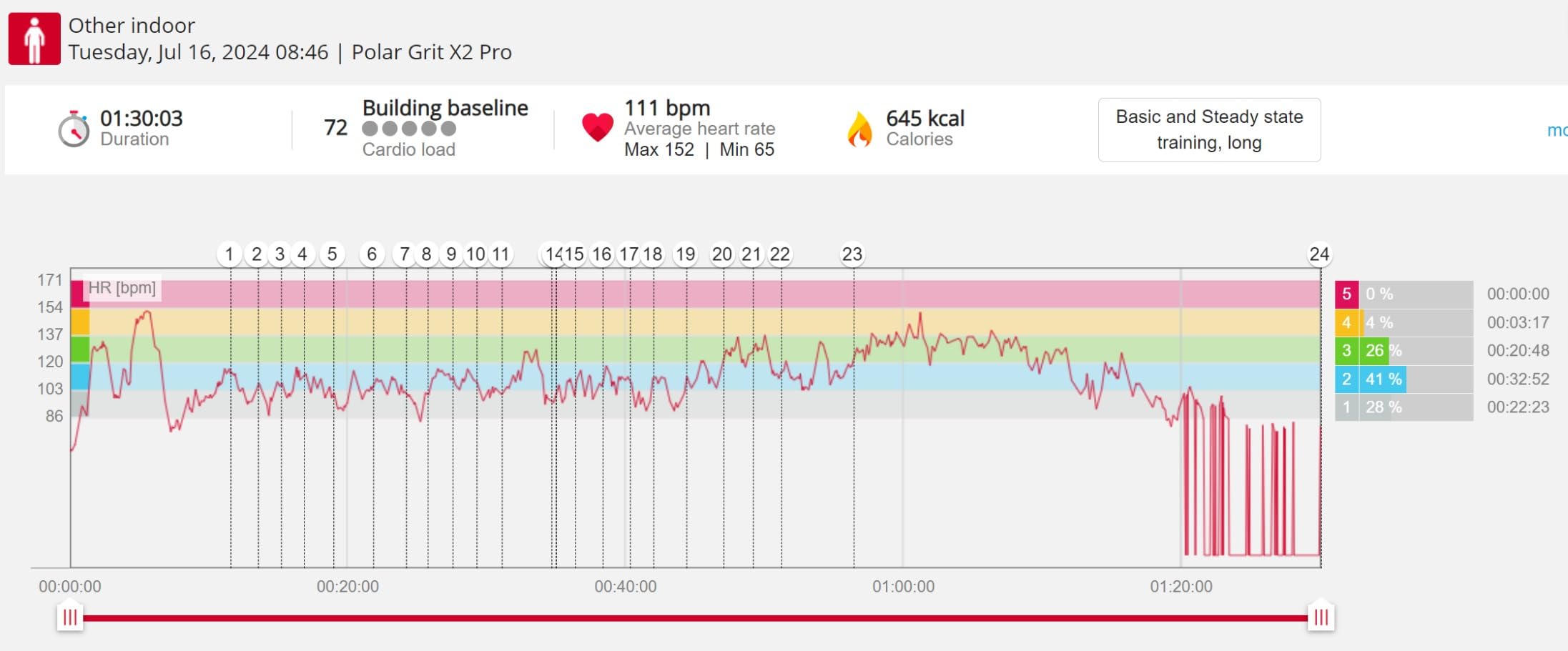
The 1.39-inch AMOLED at 454 x 454 with 15% extra visibility over the previous generation replaces an older transflective screen, and owners consistently note it is much brighter and easier to read. Power-Save and Explore modes stretch the battery across multi-day use, and the standard 22 mm band means strap swaps are straightforward.
Metrics lean technical: vertical speed, running power, training load and recovery, alongside wrist heart rate with SpO2 and skin temperature. The flat backside sensor is reported as more comfortable against the wrist than the previous generation’s curve. Water resistance is 100 metres with IP68, and the warranty runs two years.
Who should buy this instead of a Garmin
Buy the Grit X2 Pro if durability outranks display polish and you want navigation that does not require a Garmin account to plan well. The build is the feature, and the flip side is a watch that suits a rough, wet, technical life better than most.
At 79 g it is the second-heaviest watch here, so it is not the choice if grams matter on race day. The 400-nit panel is also the dimmest AMOLED in this group, which shows up on a sunlit open ridge.
The complaints you should read first
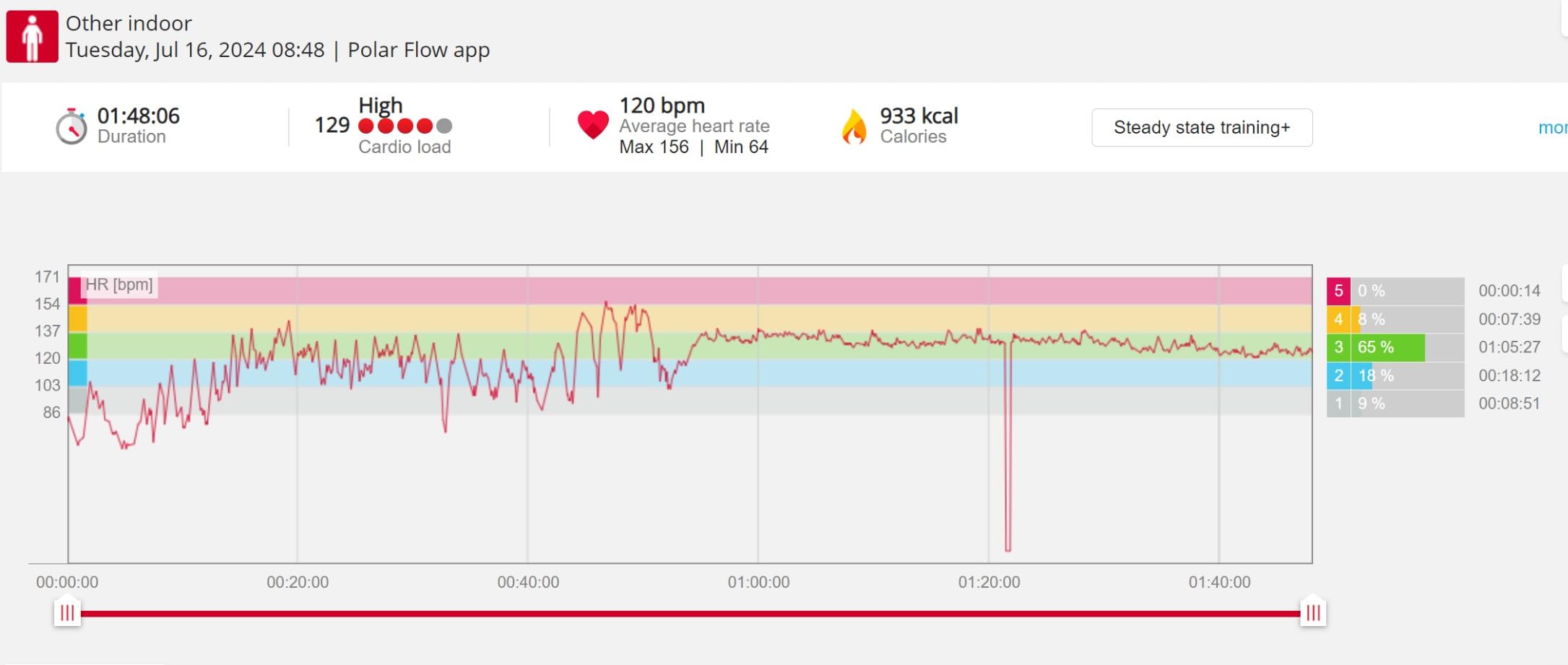
This watch carries the lowest rating of the Garmin-adjacent group at 4.2 across 194 reviews, with 73% five-star and a notable tail of one- and two-star reports. Optical heart rate inaccuracy is the big one, with readings reported as much as 40 bpm off.
Owners also report random restarts mid-activity that lose recorded activities and route data, screens becoming unresponsive after a month of use, tinny buttons that feel cheap for the price, and an interface that reads as dated next to Garmin. Polar’s support has been unresponsive on connection and repair issues for some owners, which matters if you are about to depend on this watch for navigation.
We earn a commission, at no additional cost to you. CERTAIN CONTENT THAT APPEARS ON THIS SITE COMES FROM AMAZON. THIS CONTENT IS PROVIDED 'AS IS' AND IS SUBJECT TO CHANGE OR REMOVAL AT ANY TIME.
9. Suunto 9 Peak Pro – 300 hours in tour mode for daily wear
SUUNTO 9 Peak and Peak Pro Sports GPS Watch for Demanding, Performance Driven Athletes and Adventurers
- 1.2-inch MIP at 1000 nits
- Multi-band GPS across four systems
- 40 h best GPS, 70 h endurance, 300 h tour
- Titanium, steel and sapphire at 100 m
Pros
- Multi-band GPS across four satellite systems
- 300 hours of battery in tour mode
- MIP display at 1000 nits stays readable in sun
- One-hour full charge plus two GPS hours from ten minutes
- Titanium
- steel and sapphire with 100 m rating
Cons
- Firmware updates have degraded battery life for some users
- Wrist heart rate has stopped reading for some owners
- Stock strap can come undone and be too short
- Buttons can dig into the wrist
We earn a commission, at no additional cost to you. CERTAIN CONTENT THAT APPEARS ON THIS SITE COMES FROM AMAZON. THIS CONTENT IS PROVIDED 'AS IS' AND IS SUBJECT TO CHANGE OR REMOVAL AT ANY TIME.
The 9 Peak Pro is the watch for someone who runs trail occasionally and hikes the rest of the week. Battery is the whole argument: 40 hours in best GPS mode, 70 hours in endurance mode and 300 hours in tour mode, with a one-hour full charge and a ten-minute quick charge that yields two hours of GPS training.
That endurance is possible because of the 1.2-inch MIP display at 1000 nits. Transflective panels draw far less power than AMOLED and stay readable in direct sunlight, which is exactly what owners single out as the watch’s best feature.
Positioning is multi-band across four satellite systems, described as locking quickly in tall buildings, mountains and canyons, which covers the two environments where single-band watches struggle most. The build is titanium, stainless steel and sapphire glass rated to 100 metres, which is flagship-level material at a mid-range price.
There are 97 sport modes with turn-by-turn navigation, weather alerts and avalanche maps, music control at the wrist when connected to a phone and earbuds, and connectivity to Strava, TrainingPeaks and more than 200 other fitness apps. The understated design is another consistent point of praise, since it suits the office as well as the mountain.
Best for a watch you wear every day
A watch you leave on the wrist collects better data than one you charge nightly, and the 19-day-class daily endurance here removes the friction entirely. Add the understated styling and this becomes the watch that ends up on the wrist for trail runs, travel, everyday training and everything between.
For a runner who wants one device for hiking and trail running without charging anxiety, the 300-hour tour mode and 1000-nit MIP combination is a coherent package that the AMOLED flagships cannot match on power.
The firmware problem is the deciding factor
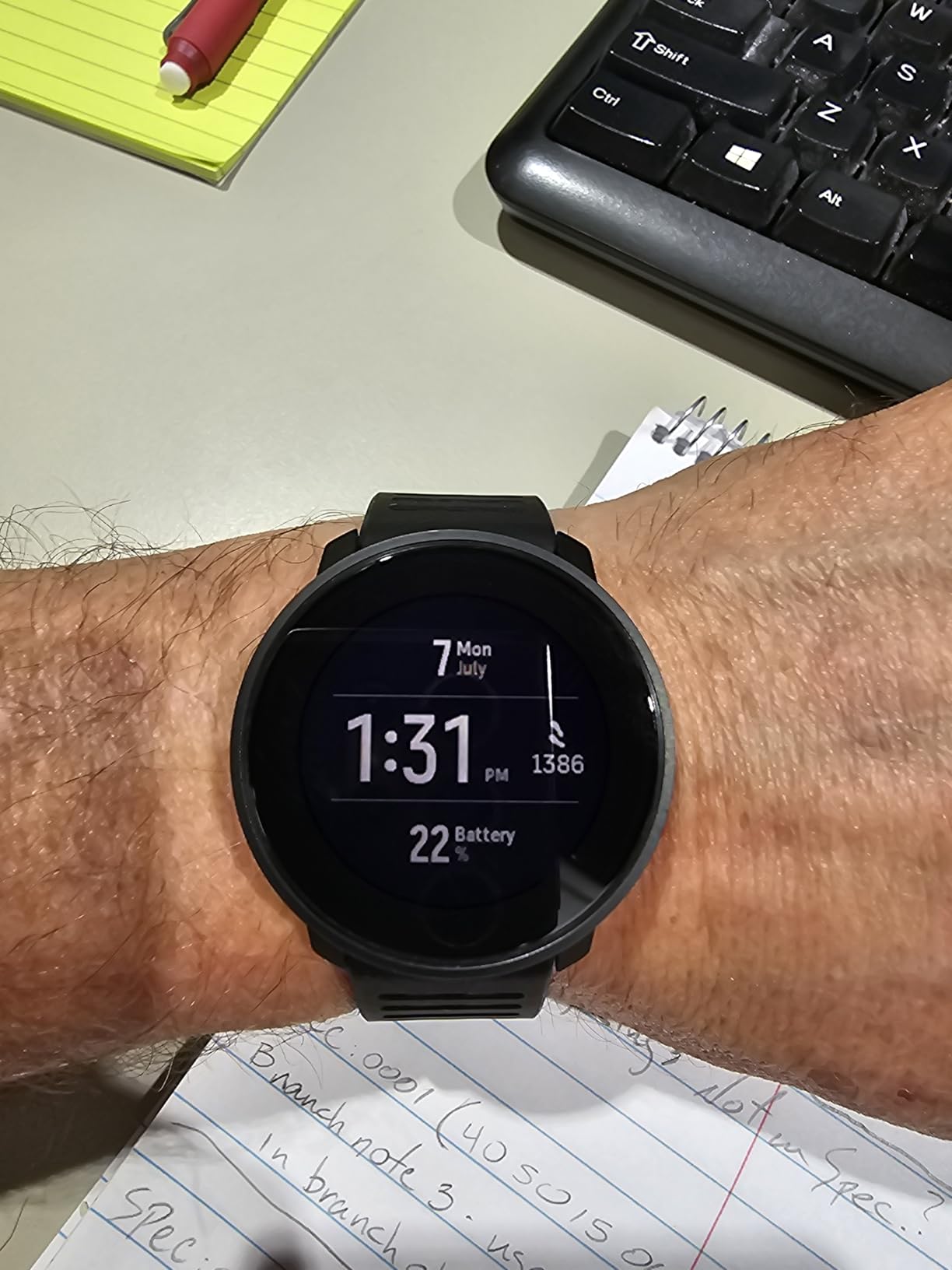
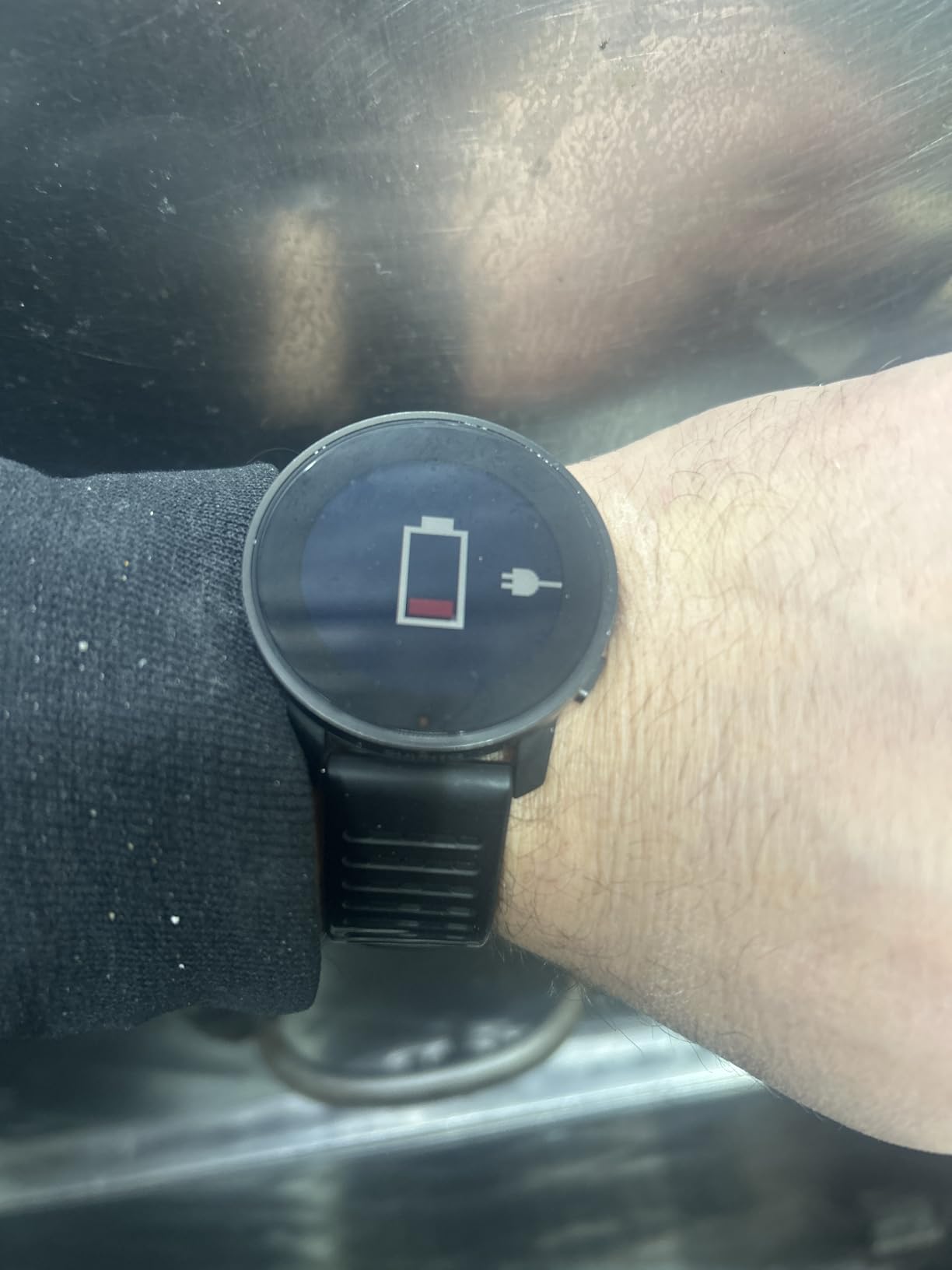
Across 868 reviews at 4.0 stars with 59% five-star, this watch has the lowest average in the group and the widest spread of sentiment. The dominant theme is firmware stability: owners report recent updates severely degrading the advertised battery life, which is exactly the failure mode that ruins an endurance watch.
Wrist heart rate has also stopped working or read incorrectly for some users, the stock strap can come undone and runs short on larger wrists, and the buttons can be painful against the wrist during long wear. Sleep tracking does not handle night awakenings and cannot be adjusted, and the charging cable is short, thin and proprietary.
We earn a commission, at no additional cost to you. CERTAIN CONTENT THAT APPEARS ON THIS SITE COMES FROM AMAZON. THIS CONTENT IS PROVIDED 'AS IS' AND IS SUBJECT TO CHANGE OR REMOVAL AT ANY TIME.
10. Suunto Run – a simple 36 g watch with no excess
SUUNTO Run GPS Sport Running Watch, Lightweight 1.32″ AMOLED Black Textile
- 36 g and 11.5 mm thick, 46 mm case
- 1.32-inch AMOLED with crown
- Dual-frequency GPS with breadcrumb
- 12 days daily, 20 h high-precision GPS
Pros
- Very light at 36 g with an 11.5 mm profile
- Compact 46 mm case suits smaller wrists
- Dual-frequency GPS with breadcrumb trail navigation
- Bright 1.32-inch AMOLED with crown and buttons
- Offline music playback with 4 GB storage
Cons
- Heart rate readings frequently inaccurate in workouts
- Swim distance and lap tracking unreliable
- Suunto app cannot build weekly or monthly plans
- Sleep
- stress and workload tracking are weak
We earn a commission, at no additional cost to you. CERTAIN CONTENT THAT APPEARS ON THIS SITE COMES FROM AMAZON. THIS CONTENT IS PROVIDED 'AS IS' AND IS SUBJECT TO CHANGE OR REMOVAL AT ANY TIME.
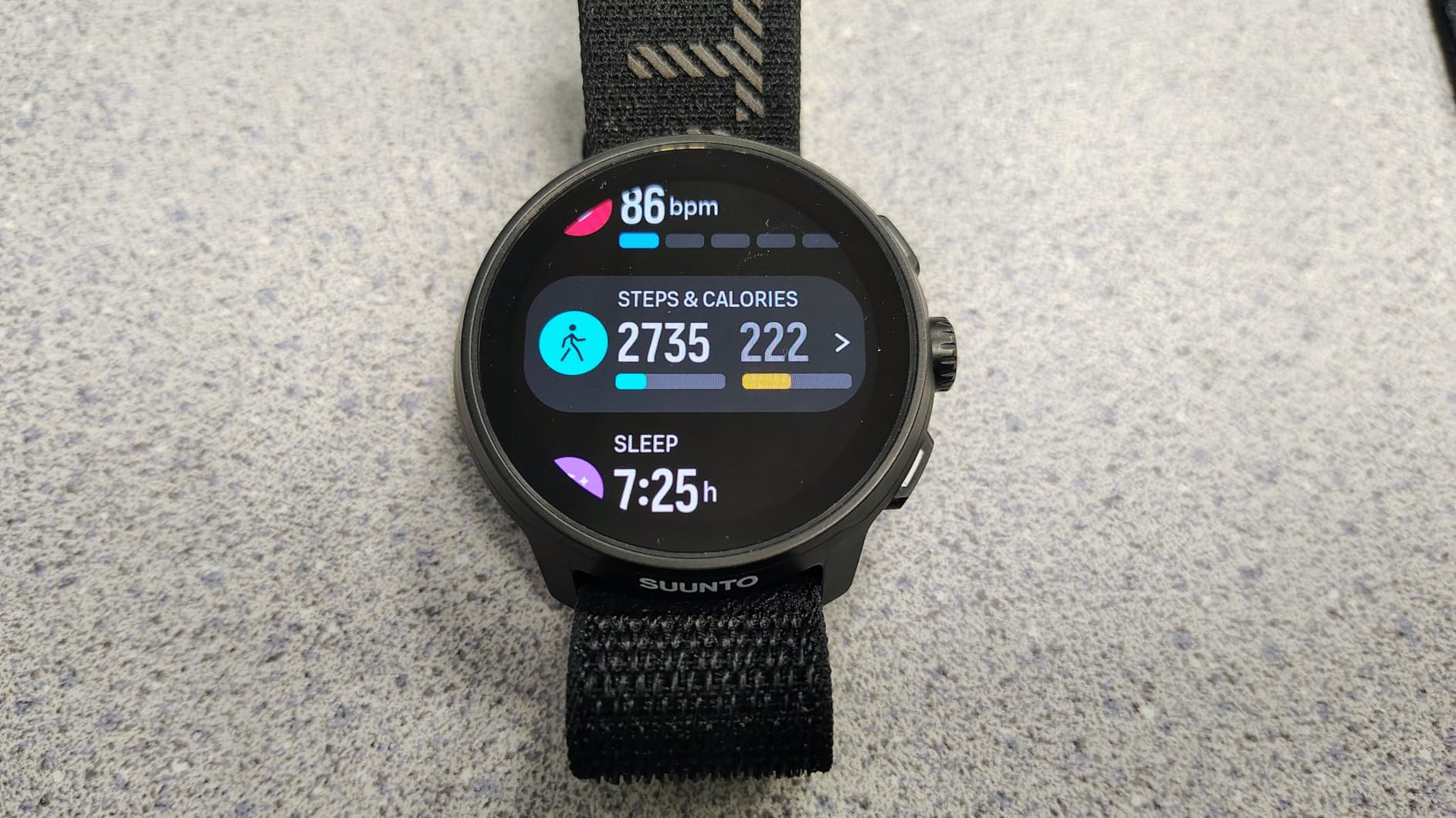
The Suunto Run is the simplest watch here and the least cluttered. It is 36 g with the textile velcro strap, 11.5 mm thick, 46 mm in diameter, with a 1.32-inch AMOLED touchscreen and crown. There are no rotating bezels to catch on vegetation and no feature list longer than a page, which some runners will value more than any of the mapping in this guide.
Positioning is dual-frequency GPS with a breadcrumb trail and navigation, with 12 days of daily activity and sleep tracking and 20 hours of high-precision GPS training on a charge. The one-hour fast charge means a lunch stop covers a long afternoon effort.
There is more than expected for the money. Offline music playback from 4 GB of storage, sport modes for hiking, cycling, yoga, tennis and boxing, and training load monitoring with post-exercise heart rate and a Training Stress Score. The velcro strap is genuinely useful for a watch that moves and for runners who cannot fasten a buckle with cold hands.
Across 143 reviews at 4.1 stars with 64% five-star, buyers wanting a cheap ultralight GPS running watch are largely satisfied with tracking quality, battery life and the 36 g weight. The two-year warranty and a straightforward European design with no gimmicks round out the package.
When simplicity is the right specification
At 46 mm this fits smaller wrists comfortably, which almost nothing else in this guide does, and breadcrumb navigation covers a familiar loop perfectly well. If your trail running happens on routes you know, a watch that just records the line cleanly is a legitimate answer.
Owners moving from a COROS or Garmin report the tracking and battery as a genuine step down in capability but not in reliability for basic running, and the 36 g weight is the quiet advantage on long days.
What you will want to work around
Heart rate is the recurring negative, with readings frequently over- and under-reporting during workouts. Swim distance and lap tracking are unreliable by roughly 25 yards, the crown and touchscreen are sensitive enough that owners keep the watch in lock mode to avoid accidental input, and there is no contactless payment.
The app is the bigger limitation for a training-focused runner, since it cannot create weekly or monthly training schedules or custom plans, and sleep, stress and workload tracking are not accurate. Offline music is a nice surprise, though transferring files from Windows is awkward and needs a phone workaround.
We earn a commission, at no additional cost to you. CERTAIN CONTENT THAT APPEARS ON THIS SITE COMES FROM AMAZON. THIS CONTENT IS PROVIDED 'AS IS' AND IS SUBJECT TO CHANGE OR REMOVAL AT ANY TIME.
How to Choose a GPS Watch for Trail Running
Most buyers in this category over-index on features they will never use on a mountain trail and under-index on the three that determine whether a race goes well. If you read one section of this guide, make it the GPS and battery material below.
What multi-band and dual-frequency GPS actually fix
GPS signals bend when they pass near solid objects, and that error is what produces the phantom 20-metre jumps and staircase elevation profiles that ruin a trail file. Satellites broadcast on more than one frequency, and a watch that listens on two at once can compare the arrival times and reject the corrupted signal.
On a road, a bad fix is a pace blip nobody notices. Under tree canopy, in a canyon, in a valley with high rock walls or on a snowfield, the same error is a wrong turn or a lost hour. That is why multi-band and dual-frequency chips matter more on trail than on pavement, and why they are worth paying for if that is your terrain.
Watch the wording, though. Multi-band and dual-frequency are frequently used interchangeably by brands and reviewers, and all-systems plus dual-frequency means the watch is using every constellation available as well as two frequencies. Ask one question of any battery figure: which mode was it measured in.
Battery planning by race distance
Do not compare a 20-hour figure in power-save mode against a 20-hour figure with multi-band running. Build the requirement from your slowest plausible finish time plus 30% for aid-station stops, lost signal re-acquisition and navigation fumbling.
For a 50K with a 9-hour cutoff, plan for 12 hours of GPS. For a 50-miler, 16 hours. For a 100-miler, 30 hours or more, and that is before a night section. A watch that meets the number with dual-frequency enabled, not in eco mode, is the only one that counts.
On this list, the COROS PACE 4 and COROS APEX 4 clear 41 hours of GPS, the fenix 8 gives 47 hours, and the Garmin Enduro 3 gives 320 hours with solar. The Garmin Forerunner 970 at roughly 26 hours covers a 50-miler comfortably but leaves a 100-miler tight.
Do you need full-colour maps or breadcrumbs
Decide this before you spend, because it determines which of these watches is right. Breadcrumb navigation draws the path you have already run and points you back to the start. It is excellent on a known loop and useless on a route you have not seen.
Full-colour topographic maps let you read terrain, spot a ridge, a drainage or a contour crossing you did not plan for. The Garmin fenix 8, Garmin Forerunner 970, Garmin Enduro 3, COROS PACE Pro, COROS APEX 4 and Suunto Race S all carry them. The COROS PACE 4 and Suunto Run offer breadcrumbs and stored courses only.
A fair middle path for a runner who navigates occasionally: buy breadcrumbs, and carry a phone with offline maps for the days you are somewhere new. Trail-running forums keep returning the same question about which watch works without a phone paired alongside it, and the honest answer is that breadcrumb-only models genuinely do.
AMOLED against MIP in direct sun
AMOLED gives you colour, dark themes, vivid map detail and a modern look, and it drains battery faster. MIP transflective screens reflect ambient light, stay readable in direct sun without a backlight, run for days, and look dated in menus.
Choose AMOLED if you read maps, run at dawn and dusk, or care about how the watch looks. Choose MIP if you run exposed ridgelines in full sun, want battery measured in days, or scratch resistance matters more than colour. The COROS APEX 4 42mm and Suunto 9 Peak Pro are the MIP options here.
Case size and wrist fit
This is the purchase blocker nobody mentions until the watch is on the wrist and cannot be forgotten. Case diameter runs from 42 mm on the COROS APEX 4 and 46 mm on the Suunto Run up to 47 mm on the Garmin fenix 8 and 51 mm on the Enduro 3.
Measure your wrist circumference with a tape measure before ordering. Below about 150 mm, stay at 42 to 46 mm and treat anything larger as a no. Overhang is not a style issue, it bounces on every footfall and it stops you wearing the watch.
Wrist heart rate on technical trail
Optical wrist heart rate is accurate on smooth, flat running. On steep, technical trail with poles, a heavy pack or high arm swing, the reading degrades noticeably, and the problem is worse at high cadence. Every watch in this guide has the same underlying issue; the difference is how much you care.
If you do intervals on rough ground, run a six-week block to see how bad it is before buying a chest strap. Also note that two watches here restrict external sensors: the Suunto Run has no offline music headroom and the Suunto Race S has been reported as difficult to pair with external heart rate straps.
App ecosystem and support reality
The watch logs the run; the app decides what you do with it. Garmin Connect is the deepest and most stable, with the largest owner community, which means more troubleshooting answers exist when something breaks. The COROS app is clean and fast with excellent Strava, Nike Run Club and Apple Health sync, but thinner on insights.
Polar and Suunto owners are loyal but come from much smaller online communities, and that is a genuine information-access risk when a firmware update misbehaves. If support responsiveness matters to you, weight the r/Garmin and r/Coros communities far more heavily than brand marketing.
Frequently Asked Questions
What is the best smart watch for trail running?
The Garmin fenix 8 47mm is the best all-round trail watch here, combining multi-band GPS with SatIQ, full topographic mapping with dynamic round-trip routing, a 47-hour GPS battery and a 1000-nit AMOLED in a case that fits most wrists. Runners who want lighter weight and the longest endurance should look at the Garmin Enduro 3, and runners prioritising value should look at the COROS PACE Pro.
Which Garmin is best for trail running?
For most trail runners the fenix 8 47mm is the strongest all-rounder, with multi-band GPS, full topo maps, a barometric altimeter, compass and 47 hours of GPS. The Forerunner 970 47mm is better if your priority is running analytics such as running economy and wrist running power, at about 26 hours of GPS. The Enduro 3 51mm is the choice for 100-mile and multi-day ultras, with 320 hours of solar-assisted GPS at 63 g.
What is the best GPS watch for running ultramarathons?
The Garmin Enduro 3 leads on endurance, with up to 320 hours of GPS with solar charging, a 63 g titanium case, sapphire lens, LED flashlight and preloaded TopoActive maps. For a 100-miler where charging between stages is possible, the COROS APEX 4 42mm offers 41 hours of all-systems GPS with sapphire over an always-on MIP display. Plan for your slowest plausible finish time plus 30 percent before choosing.
Is Suunto better than Garmin?
Neither is better in general. Suunto competes hard on navigation, with dual-band GNSS on L1 and L5 across five constellations on the Race S, plus offline maps, bearing and find-back, and on battery endurance with the 9 Peak Pro reaching 300 hours in tour mode. Garmin wins on the app ecosystem, training analytics depth, and the size of the community that answers support questions.
Is there a cheaper alternative to Garmin?
Yes. The COROS PACE Pro delivers dual-frequency GPS, 38 hours of outdoor battery or 31 hours with dual-frequency, a 1500-nit AMOLED and offline topographic maps with turn-by-turn navigation at a mid-tier price. The COROS PACE 4 goes lighter at 32 g with 41 hours of GPS, though its 4 GB of storage means no offline maps. The Suunto Run is the simplest option at 36 g.
What is the best watch for multisports?
The Garmin fenix 8 covers the widest multisport range with 100 metre water resistance, a 40 metre dive rating, 16 GB of storage and a full activity mode list, plus a speaker and microphone for wrist calls. The Garmin Forerunner 970 is specifically praised for triathlon auto-transition with transition times. The COROS APEX 4 42mm adds dedicated modes for ski touring, alpine climbing and vertical training.
Do I need maps on a running watch?
If you run routes you know well, breadcrumb navigation is enough, and the COROS PACE 4 and Suunto Run cover that with dual-frequency GPS and stored courses. If you navigate new terrain, race a marked course with junctions, or want the safety of seeing a drainage or ridge you did not plan for, buy full-colour topographic maps. The fenix 8, Forerunner 970, Enduro 3, COROS PACE Pro, COROS APEX 4 and Suunto Race S all carry offline mapping.
Is multi-band GPS worth it for trail running?
It matters more on trail than on road. Multi-band and dual-frequency operation compare two satellite frequencies at once, which lets the watch reject the signal-bending interference caused by tree canopy, rock walls, canyons and snowfields. The result is fewer phantom track jumps and steadier elevation. Check which mode each battery figure is measured in, because multi-band typically costs several hours of runtime versus standard GPS.
Final Verdict on the Best GPS Watches for Trail Running
The Garmin fenix 8 47mm is the best GPS watch for trail running overall, and it is not a close call: multi-band GPS, full topographic maps, round-trip routing, a 47-hour GPS battery, a 1000-nit AMOLED and a case that most wrists can wear. Buy it if you want one watch for trail, mountain days and everything in between.
Pick something else deliberately. Choose the Garmin Enduro 3 if your longest day is measured in days and you can wear 51 mm. Choose the Garmin Forerunner 970 if running analytics matter more than adventure hardware and 26 hours of GPS is enough. Choose the COROS PACE Pro if you want Garmin-class positioning and mapping at a mid-tier price. Choose the COROS PACE 4 at 32 g if weight is your priority, and the COROS APEX 4 42mm if you need sapphire over an always-on display for alpine routes. Choose the Suunto Race S for the best navigation specification outside Garmin, the Suunto 9 Peak Pro for battery measured in days, the Polar Grit X2 Pro for rugged build, and the Suunto Run for simplicity at 36 g.
Whichever you choose, buy it for the terrain you actually run, check which GPS mode each battery figure is measured in, and measure your wrist before you order. Those three checks eliminate almost every regret we saw in the owner reviews, and this roundup is updated for 2026 as new generations land.