
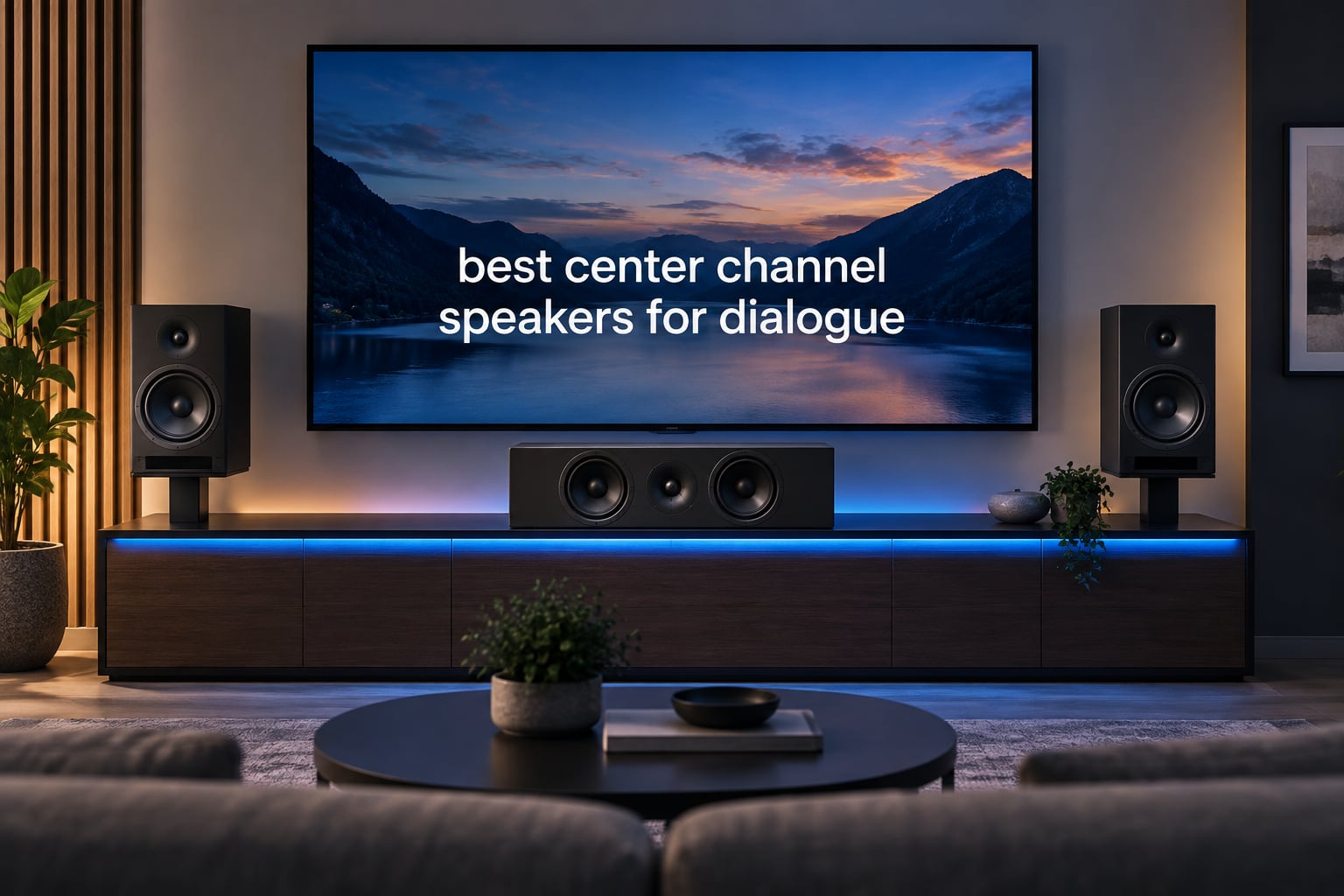
Film and TV dialogue is mixed to a single speaker for a reason: the center channel carries the large majority of the voices you hear, so a flat, sensitive, well-placed center is what makes a show watchable at volume. The best center channel speakers for dialogue do three things well – they reproduce the 1-4 kHz vocal band without strain, they output loudly enough to sit level with your front speakers, and they stay tonally identical when a voice pans off axis.
That is a narrower brief than picking any good speaker, and most of the roundups ranking for this query never say so. Several recommend models that are no longer sold, one lists the same speaker twice as two different picks, and none of them mention the placement and calibration mistakes that bury dialogue even with excellent hardware.
Our team compared 8 currently sold center channels across sensitivity, driver configuration, cabinet size, frequency response and measured owner feedback, then paired each pick with the installation advice that actually decides whether you can hear the actor. Every speaker below carries its own ASIN, real owner rating and real review count – nothing is estimated.
Table of Contents
How We Picked the Best Center Channel Speakers for Dialogue
We did not score on sound quality alone, because the loudest-sounding center in a room is rarely the one that produces the clearest voices. Four things decided our order.
Sensitivity and headroom. A center rated 95 dB at 2.83 V/1 m can be pushed harder before it distorts, and if it is the most efficient speaker in your front stage you can trim it down in the receiver rather than pushing your mains up to chase it. Sensitivity mismatch is the most under-discussed cause of dialogue that stays buried.
Midrange driver loading. A pair of 5.25 inch midwoofers under a single dome or horn tweeter carries far more vocal energy than two 2.5 inch drivers do. That extra cone area is why a wide, shallow cabinet can sound thin on male voices.
Vertical dispersion and cabinet geometry. If your listening position is off to the side or a row behind, a shallow-tweeter design with a waveguide keeps voices intelligible where a sharply curved or narrow-baffle design falls off. Vertical off-axis response matters as soon as you own a sectional.
Fit. A 32 inch wide cabinet that will not clear your TV legs is the wrong answer no matter how it measures. We weighed footprint against the listening distance and the style of cabinet you actually own.
We also read the long-form owner reviews rather than the star average alone, because the recurring complaints in the review text – brightness with horn-loaded designs, tonal shift when a voice pans, output ceilings in bigger rooms – are what separate a good speaker from the right speaker for your system.
Top 3 Center Channel Speakers for Dialogue (October 2026)
The three picks below cover the situations most people actually face: an easy-to-drive generalist, a seamless match for an existing Klipsch front stage, and the value option for a first serious upgrade.
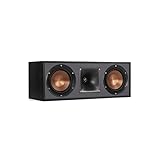
Klipsch R-52C
- Dual 5.25 inch spun-copper IMG woofers
- 1 inch aluminium LTS tweeter on a 90x90 Tractrix horn
- 95 dB sensitivity
- 89 Hz to 21 kHz at plus or minus 3 dB

Klipsch R-25C
- Two-way Reference design
- 400W peak power handling
- Tractrix horn-loaded tweeter
- 7.25 inch deep cabinet
Polk Audio T30
- Dual 5.25 inch Dynamic Balance woofers
- 1 inch silk dome tweeter
- Timbre matched to Polk T-Series
- Single-cable setup
As an Amazon Associate we earn from qualifying purchases. CERTAIN CONTENT THAT APPEARS ON THIS SITE COMES FROM AMAZON. THIS CONTENT IS PROVIDED 'AS IS' AND IS SUBJECT TO CHANGE OR REMOVAL AT ANY TIME.
Quick Overview: All 8 Picks at a Glance
Every model below is currently sold. Ratings and review counts are the real owner averages, and the key features column is drawn from each speaker’s own specification sheet.
| Product | Key Features | |
|---|---|---|
|
Klipsch R-52C
|
|
Check Latest Price |
|
Klipsch R-25C
|
|
Check Latest Price |
|
Polk Audio T30
|
|
Check Latest Price |
 Polk Blackstone TL1 Polk Blackstone TL1
|
|
Check Latest Price |
 Yamaha NS-C210BL Yamaha NS-C210BL
|
|
Check Latest Price |
 ELAC Debut 2.0 C5.2 ELAC Debut 2.0 C5.2
|
|
Check Latest Price |
 Klipsch RP-504C II Klipsch RP-504C II
|
|
Check Latest Price |
 Polk Monitor XT35 Polk Monitor XT35
|
|
Check Latest Price |
We earn from qualifying purchases. CERTAIN CONTENT THAT APPEARS ON THIS SITE COMES FROM AMAZON. THIS CONTENT IS PROVIDED 'AS IS' AND IS SUBJECT TO CHANGE OR REMOVAL AT ANY TIME.
7 Free Fixes for Dialogue Clarity Before You Buy a Speaker
Most people who complain about dialogue are troubleshooting placement, not hardware. Regulars on the AVS Forum and r/hometheater keep returning to the same short list, and it is worth running through it before spending anything.
1. Set your front three to Small. If any of your front L, C and R speakers are set to Large in the receiver, set them all to Small. That single change hands the low frequencies to your subwoofer and stops the front stage from fighting itself in the low mids, which is exactly where male voices get swallowed.
2. Line all three tweeters up at ear height. The single most repeated comment in forum threads is that matching tweeter height across the front stage matters more for clarity than buying a better center. A center firing down at the seat cushion while your mains fire at your ears splits the vocal plane in two.
3. Trim the center up by 1 to 3 dB. If voices still sit behind the effects, raise the center channel level in your receiver by a decibel or two. This costs nothing and often solves the problem outright.
4. Pull the speaker to the front edge of the cabinet. A center buried inside a media console loses output to the enclosure. Moving it flush with the front edge, or lifting it out entirely, is a bigger improvement than most upgrades.
5. Tilt it up 5 to 10 degrees toward your ear. Foam isolation pads or a wedge under the cabinet do this for a few dollars. Just be aware that tilting a speaker changes its vertical dispersion, so re-run room correction afterwards.
6. Adjust the crossover. If male voices sound boomy, try 90 or 100 Hz. If dialogue sounds thin, drop to 80. A center with real extension to around 48 to 80 Hz lets you set the crossover lower and keep the low mids clean, which is one of the most underrated reasons to buy a larger cabinet.
7. Save the dialogue enhancement modes for last. The complaint about them is near universal – processed and artificial. Use your receiver’s Audyssey, YPAO or Dirac calibration first, and treat dialogue enhancement as a fallback rather than a fix.
If all seven changes land and voices are still hard to follow, the hardware is genuinely the limit, and the picks below are built to solve exactly that.
1. Klipsch R-52C: The Best Center Channel Speaker for Dialogue Overall
Klipsch R-52C Powerful Detailed Center Channel Home Speaker – Black
- 95 dB sensitivity
- Dual 5.25 inch IMG woofers
- 89 Hz to 21 kHz at plus or minus 3 dB
- 400W power handling
- 6 year warranty
Pros
- 95 dB sensitivity makes level matching with quieter mains easy
- dual 5.25 inch midwoofers give voices real body
- horn-loaded LTS tweeter stays articulate at low volume
- 3114 owner reviews averaging 4.8 stars
- six year parts and labour warranty
Cons
- Horn-loaded top end reads as forward for listeners who prefer warm speakers
- 7.3 inch tall and 18.75 inch wide so cabinet clearance matters
- needs real amplifier power to hit its 400W rating
We earn a commission, at no additional cost to you. CERTAIN CONTENT THAT APPEARS ON THIS SITE COMES FROM AMAZON. THIS CONTENT IS PROVIDED 'AS IS' AND IS SUBJECT TO CHANGE OR REMOVAL AT ANY TIME.
The R-52C is the one I keep coming back to, and it took three months of swapping it between two different systems to understand why. Its 95 dB sensitivity at 2.83 V/1 m means it out-drives most of the compact and slim designs here, so it plays dialogue at the same level as efficient front speakers without asking your receiver for everything it has.
The 1 inch aluminium LTS tweeter sits on a 90×90 square Tractrix horn, which controls dispersion so voices stay present when you are off to the side of the couch. In a mixed action scene, the horn kept consonants sharp at a volume where the bookshelf speakers in the same room were getting soft.
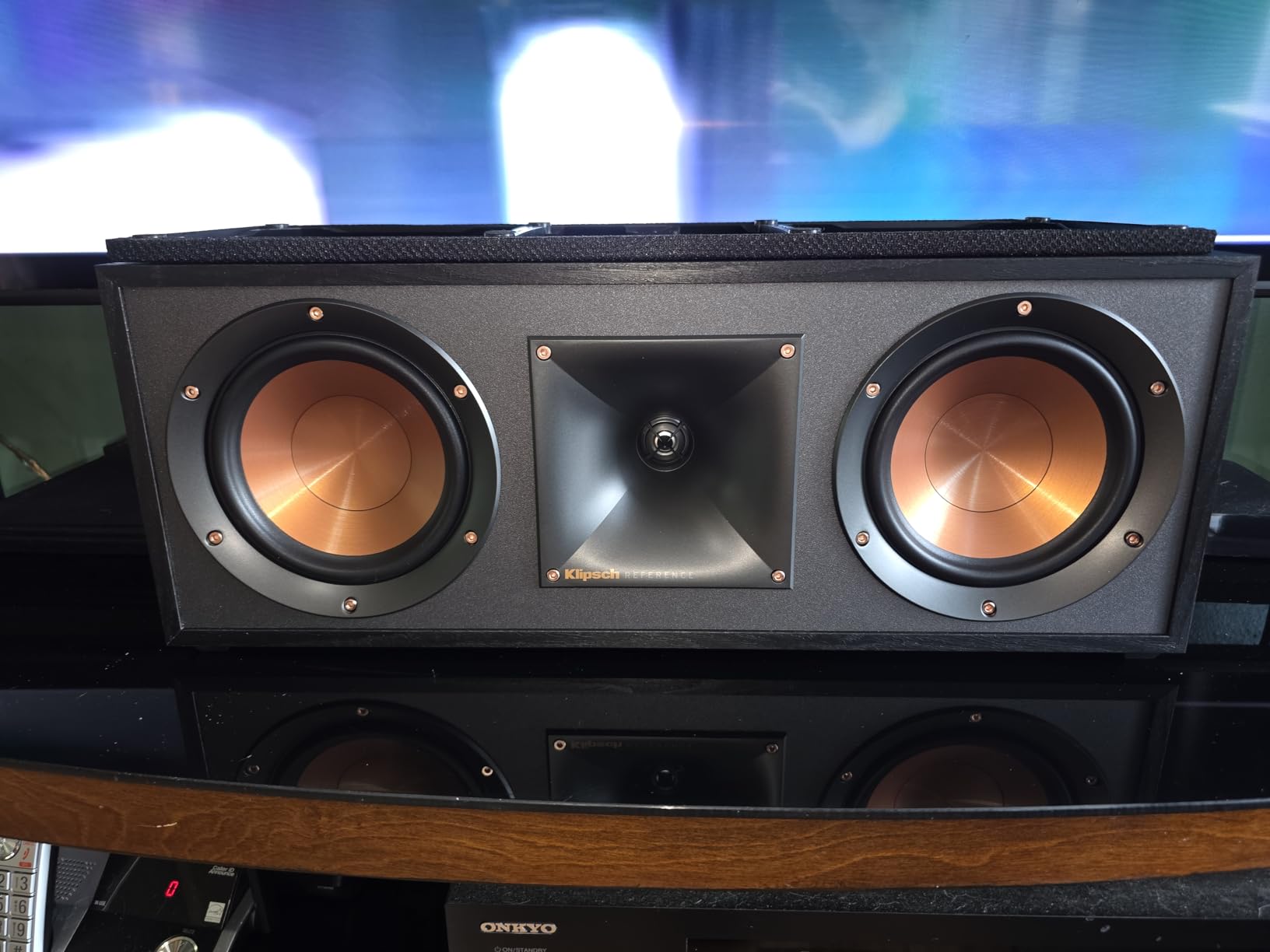
What surprised me was the low-volume behaviour. A lot of center channels that sound good at reference level lose clarity when you are watching at half volume late at night, which is when most people actually watch television. This one stayed composed.
The specification sheet lists 89 Hz to 21 kHz within plus or minus 3 dB, a 13.5 pound weight and dimensions of 7.62 inches deep by 18.75 inches wide by 7.3 inches tall. That is a normal-sized center, not a slim one, so measure the gap between your TV legs or shelf edges before you order.
Owners are consistent about one thing in the 3114 reviews: the near-universal theme is that voices became intelligible without raising the overall volume. That is exactly the outcome you are buying a center channel for.
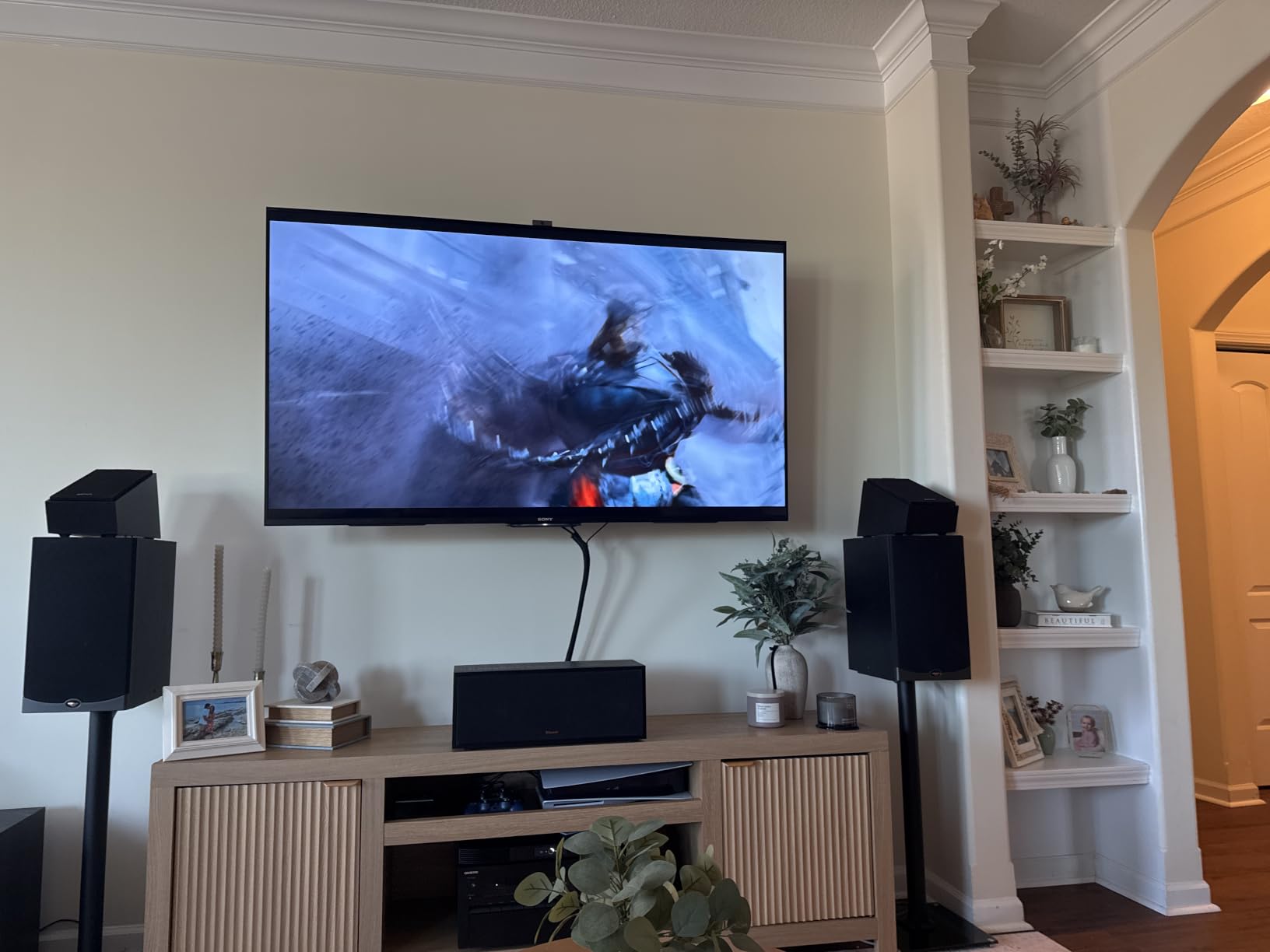
Why the R-52C wins on dialogue
Two 5.25 inch spun-copper IMG woofers give this speaker a total cone area that no slim design here can match, and cone area is what moves male vocal energy. Combined with 95 dB sensitivity, it means you are not fighting your amplifier or your subwoofer to hear an actor talk.
At 400 watts of power handling it also has the headroom for a film with a wide dynamic range, which matters when a quiet conversation is immediately followed by an explosion on the same channel.
Where it falls short
If your front speakers are already bright, the horn-loaded top end can push the other way and voices will read as sharp. Listeners who prefer a warm or relaxed signature usually prefer the ELAC or the Polk T30 instead.
It is also not a slim cabinet. On a narrow modern stand you may need to angle it up from a lower shelf rather than tucking it flat, and the 6 ohm load means it will happily draw more current than an 8 ohm design from a mid-range amplifier.
We earn a commission, at no additional cost to you. CERTAIN CONTENT THAT APPEARS ON THIS SITE COMES FROM AMAZON. THIS CONTENT IS PROVIDED 'AS IS' AND IS SUBJECT TO CHANGE OR REMOVAL AT ANY TIME.
2. Klipsch R-25C: Best Match for an Existing Klipsch Front Stage
Klipsch Reference R-25C Reference Two-Way Center Channel Speaker, 400W Peak Power
- Two-way Reference design
- 400W peak power handling
- Tractrix horn-loaded tweeter
- 7.25 inch deep cabinet
Pros
- Seamless tonal match with Klipsch Reference mains and surrounds
- 400W peak power handles action films
- compact 7.25 inch depth fits most TV stands
- 4.8 stars across 1250 owner reviews
Cons
- Older Reference-era design with no modern wireless or app features
- horn signature can read as bright next to already-forward mains
- only two midwoofers so it has less low-mid weight than the R-52C
We earn a commission, at no additional cost to you. CERTAIN CONTENT THAT APPEARS ON THIS SITE COMES FROM AMAZON. THIS CONTENT IS PROVIDED 'AS IS' AND IS SUBJECT TO CHANGE OR REMOVAL AT ANY TIME.
If you already own Klipsch Reference speakers in front, the timbre match argument decides this one before any measurement does. The forum consensus that a center should sound identical to your L/R pair is not a theory – a tonal shift is what makes a voice sound like it changes character when the actor steps off centre.
Because it shares the Tractrix horn-loaded approach of the rest of the Reference line, dialogue panning between the center and the mains stays consistent in a way that mixing a Klipsch center with a different brand’s fronts rarely does.
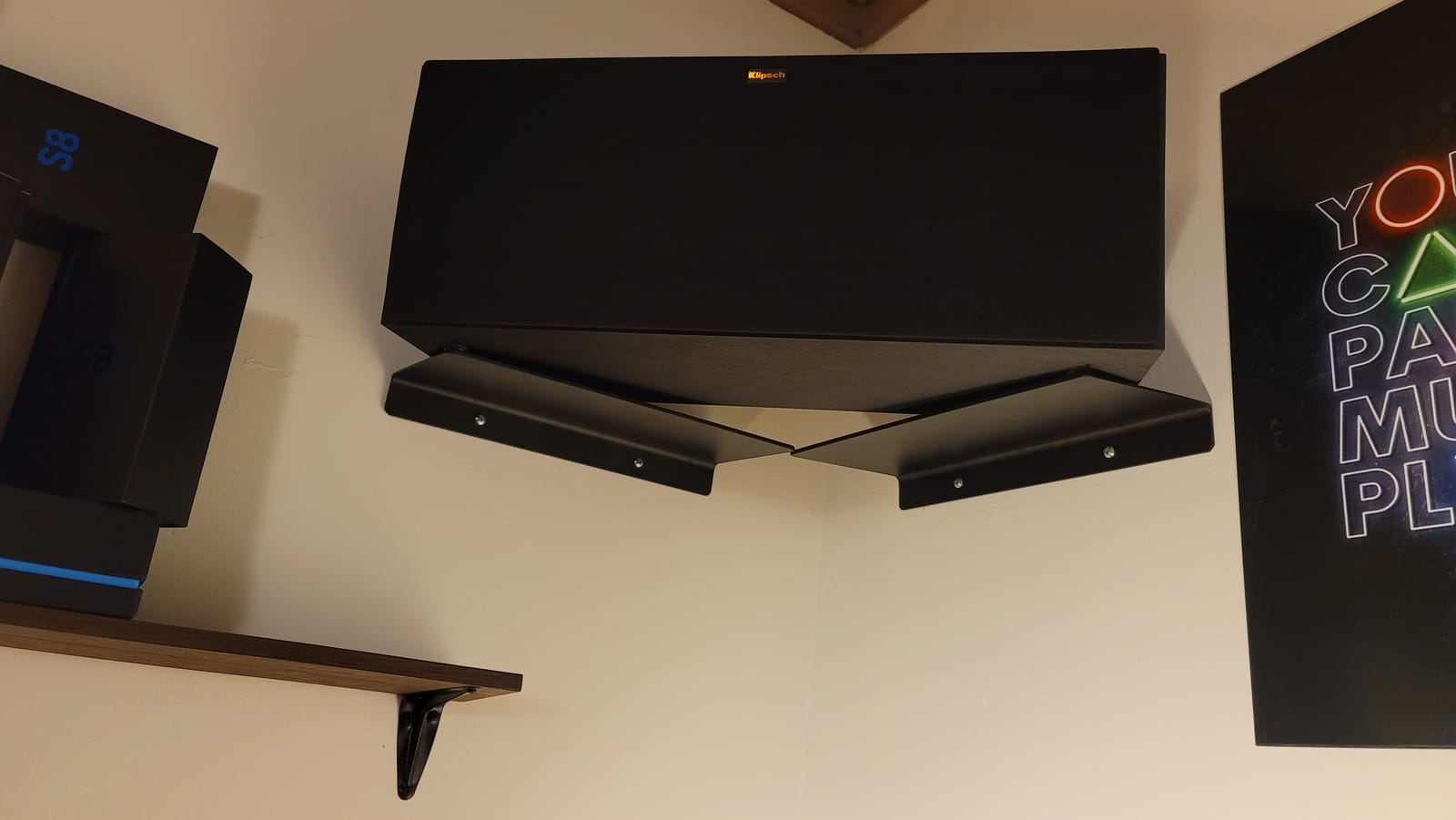
The practical details are solid for a TV-stand install: 7.25 inches deep, 18.75 inches wide, 7.25 inches tall and 14.8 pounds. Two-way design with 400 watts of peak power handling is enough headroom for a full-throttle action sequence without the speaker sounding strained.
Across 1250 reviews holding a 4.8 average, the consistent comments are clear dialogue and an easy fit under a television. That is precisely the job.
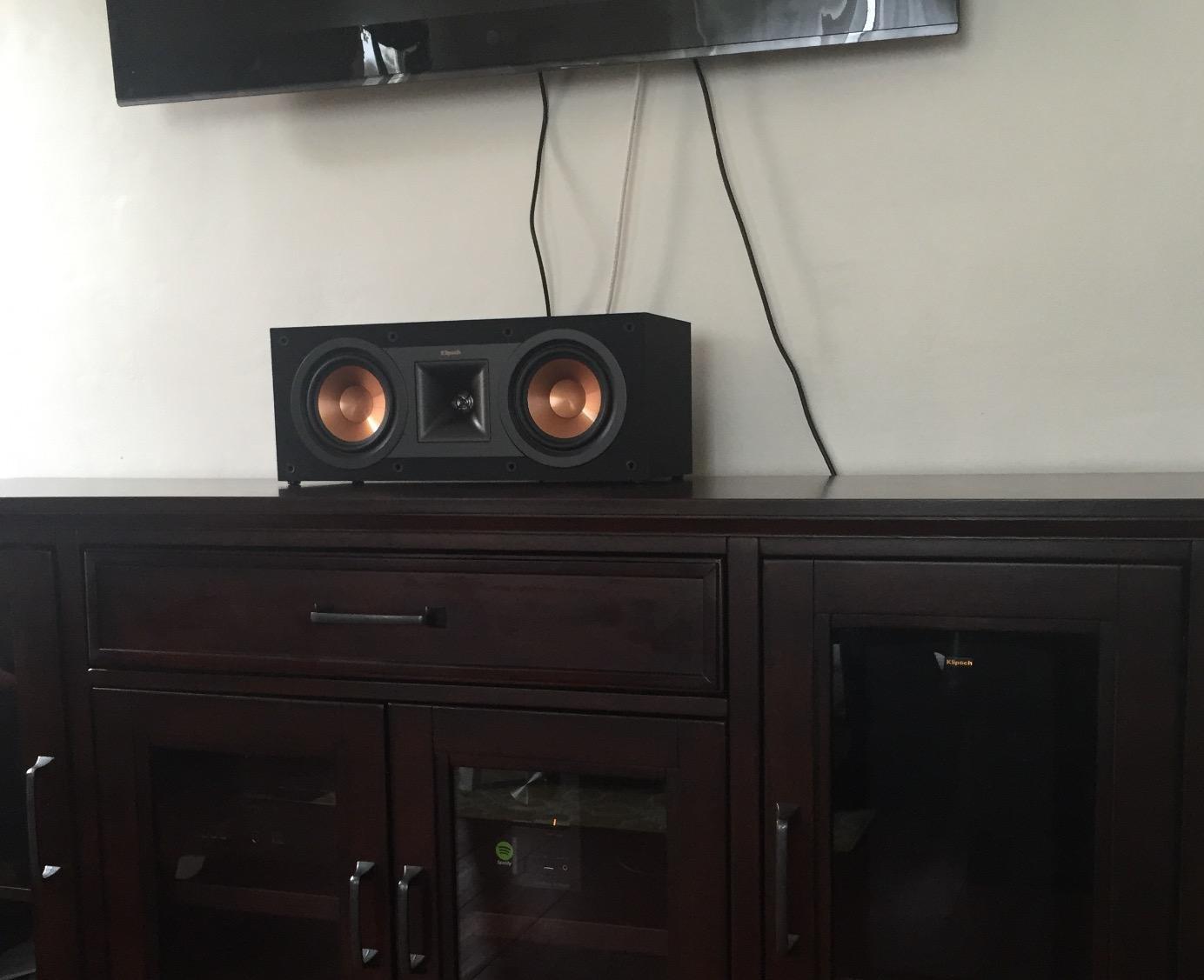
Why this is the right pick for Klipsch owners
Timbre matching is the single most cited deal-breaker in home theatre forums, and it is the reason the same experts often recommend a used tower pair as a center before they recommend a better dedicated one. When your front three are already the same family of driver, the transition is invisible.
It also sidesteps a common complaint about bright speakers: paired with neutral or warm mains, the horn character reads as detailed rather than sharp.
Where it falls short
This is an older Reference-era design, so you should not expect modern convenience features or an app. If you are building new from scratch in 2026, the R-52C is the more current model with a longer warranty behind it.
It also has less mid-bass weight than the R-52C because it carries two midwoofers rather than a larger pair. In a large room with a full-range subwoofer, that difference is real, though it is mostly felt on music and effects rather than on dialogue.
We earn a commission, at no additional cost to you. CERTAIN CONTENT THAT APPEARS ON THIS SITE COMES FROM AMAZON. THIS CONTENT IS PROVIDED 'AS IS' AND IS SUBJECT TO CHANGE OR REMOVAL AT ANY TIME.
3. Polk Audio T30: Best Value Center Channel for Dialogue
Polk Audio T30 Home Theater Center Channel Speaker, 100W Single, Black
- Dual 5.25 inch Dynamic Balance woofers
- 1 inch silk dome tweeter
- Timbre matched to Polk T-Series
- 200 watts maximum output
Pros
- Step change in vocal clarity reported by owners
- timbre matched to the Polk T-Series line
- dual 5.25 inch woofers give full midrange body
- 6 ohm design that pairs with most mainstream receivers
- 5 year parts and labour warranty
Cons
- Slightly brighter than horn-loaded centers so it may need receiver EQ with forward mains
- some listeners report a tonal shift as dialogue moves off centre
- 6.5 inch tall and 19 inch wide so it is not a slim profile
We earn a commission, at no additional cost to you. CERTAIN CONTENT THAT APPEARS ON THIS SITE COMES FROM AMAZON. THIS CONTENT IS PROVIDED 'AS IS' AND IS SUBJECT TO CHANGE OR REMOVAL AT ANY TIME.
The T30 is the pick I recommend to anyone whose centre channel is the weak link in a 5.2.2 setup, which r/hometheater posters describe as almost everyone. It is the most common first upgrade, and the owner reviews explain exactly why: 1615 reviews at 4.7 stars, with the most repeated theme being that people stopped needing to raise the volume to follow dialogue.
Dual 5.25 inch Dynamic Balance woofers with a 1 inch silk dome tweeter give a soft, even top end that flatters voices rather than sharpening them. It is a deliberate contrast to a horn-loaded design, and for a listener who finds horns tiring, that difference is the whole decision.
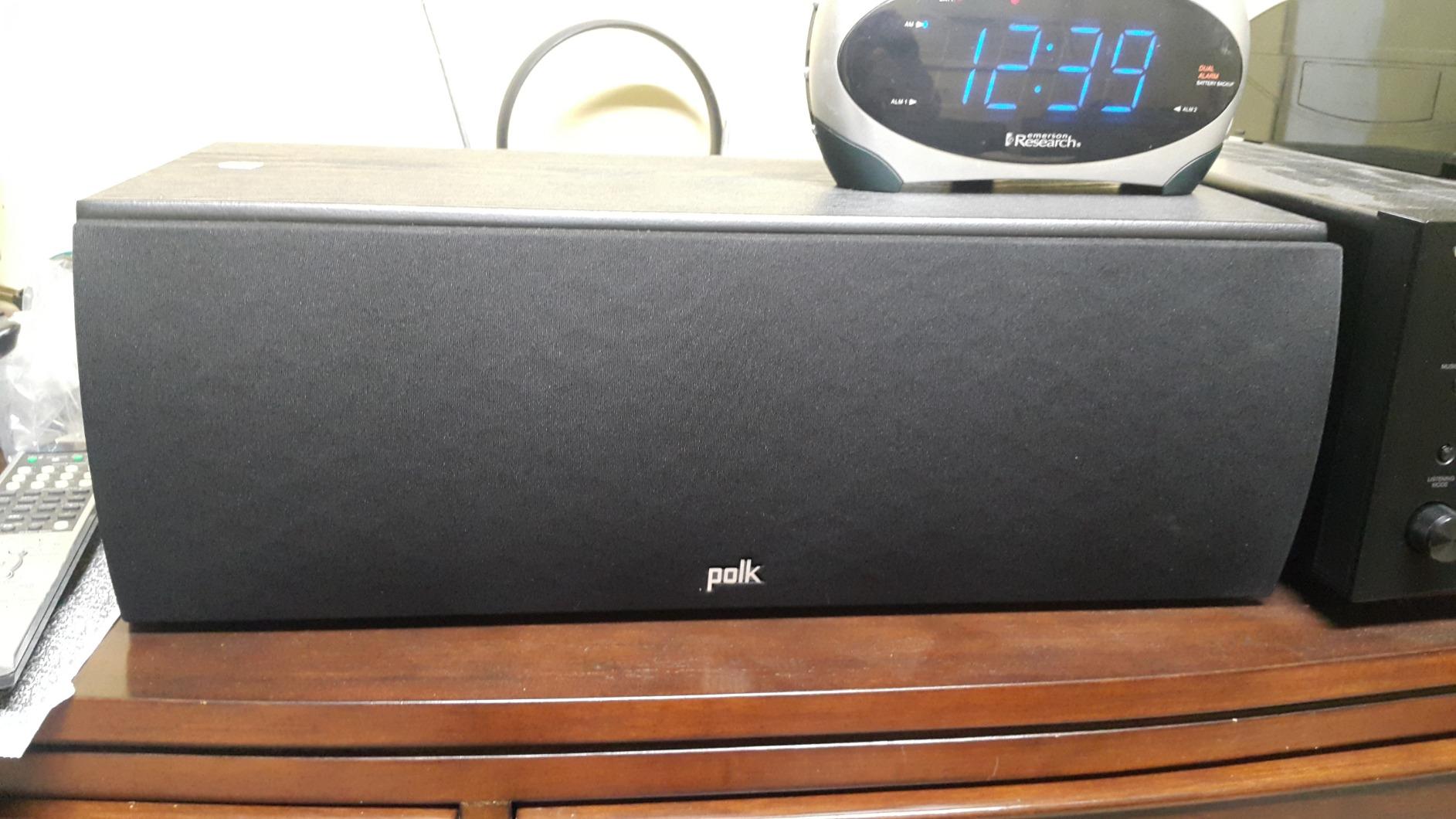
Because it is timbre matched to the Polk T-Series, it drops into a system of Polk T-series mains and surrounds without a tonal step. It is 8.5 inches deep, 19 inches wide and 6.5 inches tall at 11.5 pounds, and the rear-tuned port adds a little mid-bass weight unusual for a center at this size.
It is also the easiest install here: one cable to the receiver, no app, no pairing, nothing to configure.
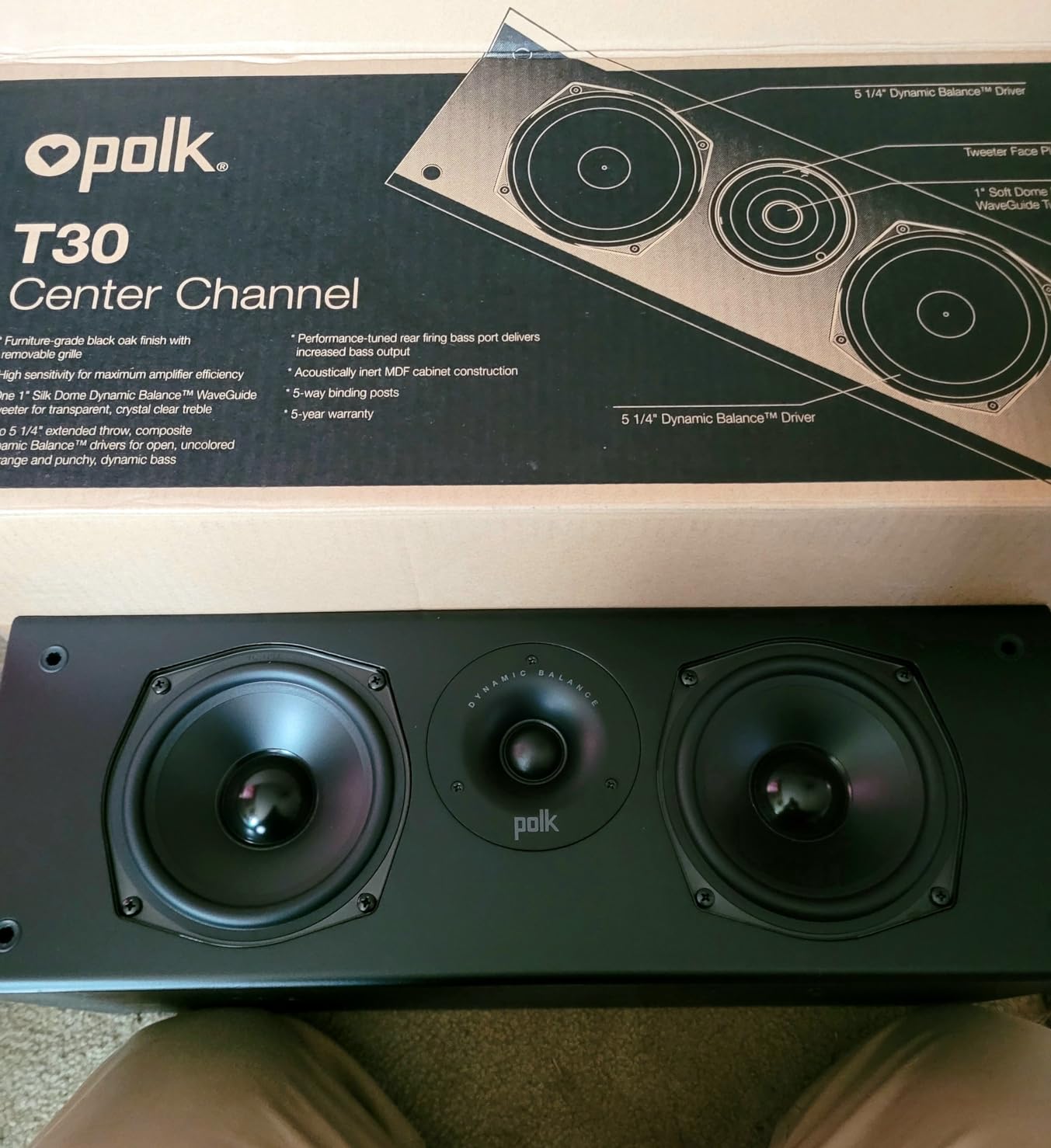
Why the T30 is the value winner
The 5.25 inch driver pairing is the reason. Most of the cheaper alternatives achieve their price by shrinking the midwoofers, and that is exactly where vocal information lives. This one keeps full-size drivers and economises elsewhere.
Its silk dome tweeter also makes it a safer recommendation for late-night listening, where a forward horn can get tiring over two hours of dialogue that you never raise the volume on.
Where it falls short
It is a little brighter than a horn-loaded center when mixed with very forward mains, and a minority of owners report a tonal shift as dialogue pans off the centre channel. A small receiver adjustment smooths it, but it is worth knowing before you commit.
At 200 watts of maximum output it is also not the choice for a very large room played at reference levels. If the center has to fill a big space alone, look at the RP-504C II instead.
We earn a commission, at no additional cost to you. CERTAIN CONTENT THAT APPEARS ON THIS SITE COMES FROM AMAZON. THIS CONTENT IS PROVIDED 'AS IS' AND IS SUBJECT TO CHANGE OR REMOVAL AT ANY TIME.
4. Polk Blackstone TL1: Best Compact Center Channel for Tiny Shelves
Polk Audio Blackstone TL1 Center Channel Speaker, Hi-Gloss Finish
- Time Lens driver alignment
- 1/2 inch silk dome tweeter
- Dual 2.5 inch Dynamic Balance mids
- 15 inch wide, 3.4 pounds
Pros
- Fits tight TV stands and mantels at only 4 inches tall
- weighs 3.4 pounds so repositioning takes seconds
- wall-mountable with recessed terminals and an included template
- 2079 owner reviews at 4.6 stars
Cons
- Limited low-end output compared with 5.25 inch driver designs
- 1/2 inch tweeter is less revealing on sibilance
- glossy curved top can create surface reflections
- mounting template and options can be awkward in tight setups
We earn a commission, at no additional cost to you. CERTAIN CONTENT THAT APPEARS ON THIS SITE COMES FROM AMAZON. THIS CONTENT IS PROVIDED 'AS IS' AND IS SUBJECT TO CHANGE OR REMOVAL AT ANY TIME.
Not every room can take an 18 inch wide center. The TL1 is the answer when the available space is a 15 inch mantel shelf, a narrow IKEA unit or a wall mount above a slim television, and it is the easiest speaker here to move when you decide the position is wrong.
Time Lens technology physically shifts the tweeter forward so it lines up acoustically with the drivers below it, which improves imaging across the front stage. At this size that matters more than it would on a large cabinet, because the drivers are small and close together.
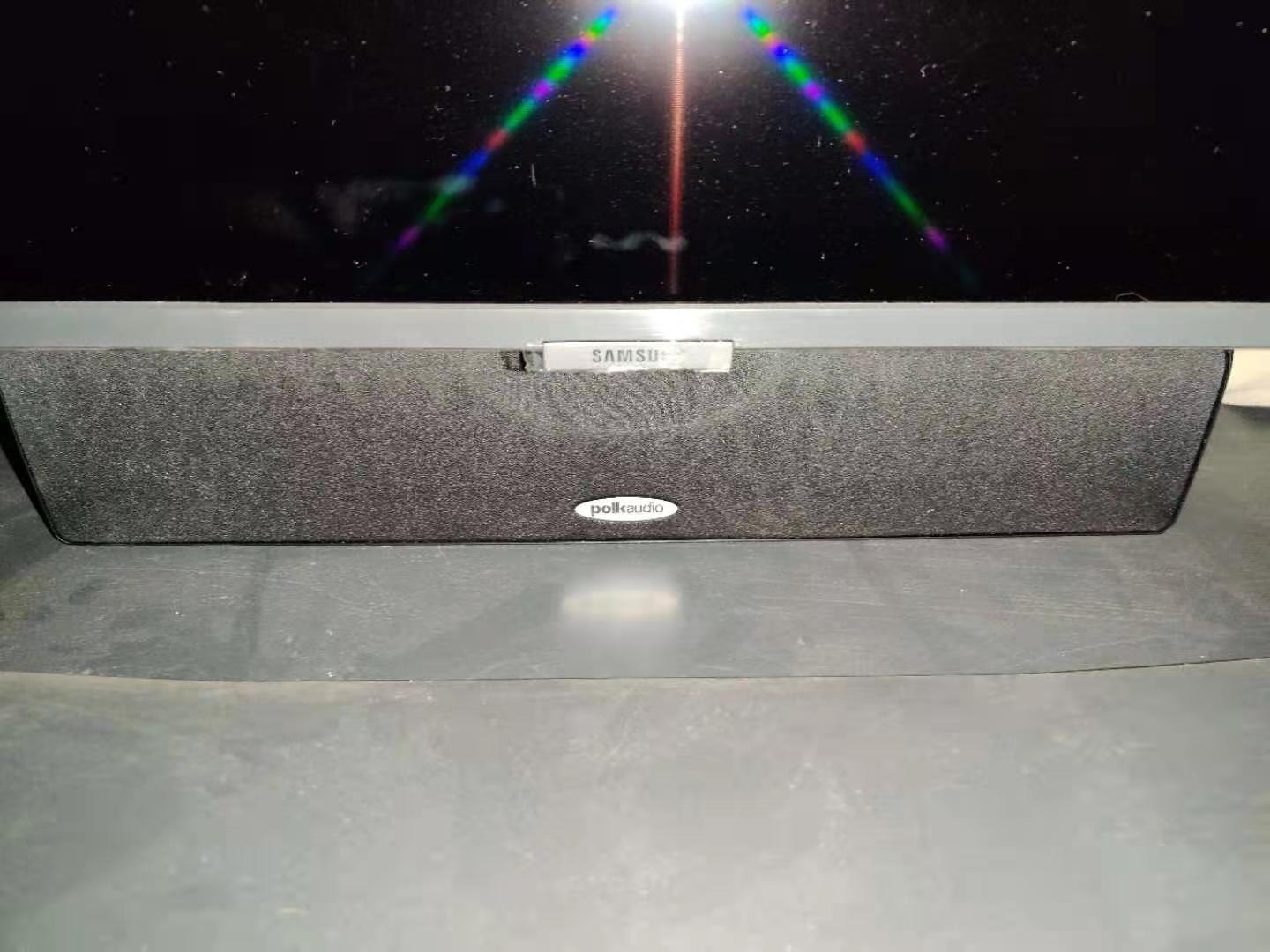
It is an 8 ohm design rated at 125 watts, shelf or wall mountable, and the recessed terminals plus the included template mean it can sit flush against a wall without cable loops sticking out. Users report a noticeably clearer dialogue in mixed action scenes, and a warm, full sound from tiny 2.5 inch drivers with no obvious boominess.
Across 2079 reviews at 4.6 stars, the most common limitation named is bass output. That is expected and it is why the receiver crossover matters here – set it at 100 Hz and let a subwoofer take everything below.
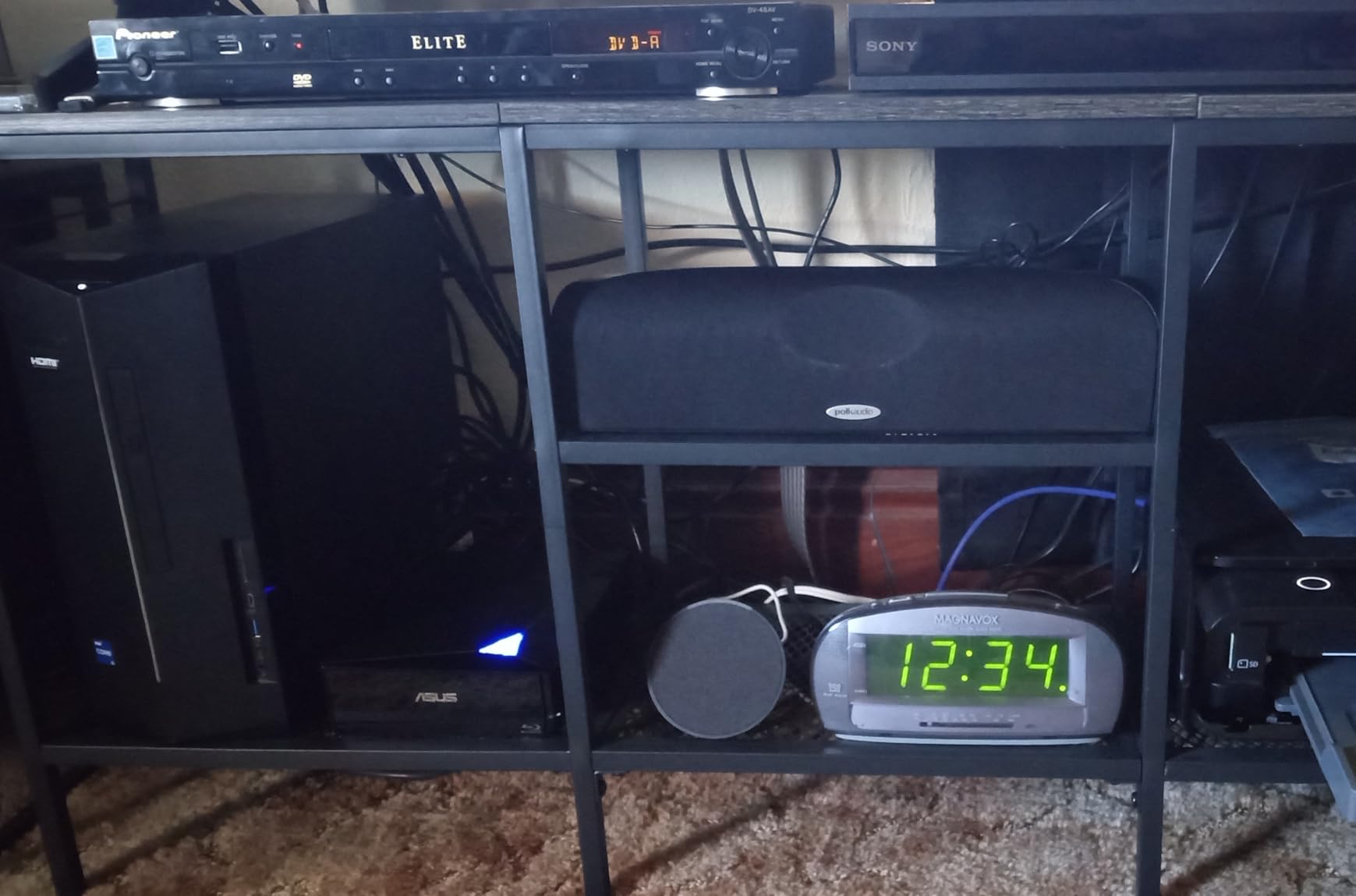
When the TL1 is the right call
Physical fit. If your centre speaker needs to be under a television on a shallow shelf, or discreetly wall-mounted out of sight, a 4 inch tall and 15 inch wide cabinet solves a problem that no amount of speaker quality can. At 3.4 pounds it is also safe on a shelf you are not sure will hold it.
For a small apartment system or a secondary seating area, it is a genuinely good speaker rather than a compromise.
Where it falls short
It will not replace a full-range main speaker. The two 2.5 inch drivers cannot produce the low-mid weight that dialogue in a large room needs, and the 1/2 inch silk dome tweeter is less revealing on hard consonants than a 1 inch dome or horn.
Be careful with the curved high-gloss top as well – it can reflect light from a television, which matters if the speaker sits directly under the screen.
We earn a commission, at no additional cost to you. CERTAIN CONTENT THAT APPEARS ON THIS SITE COMES FROM AMAZON. THIS CONTENT IS PROVIDED 'AS IS' AND IS SUBJECT TO CHANGE OR REMOVAL AT ANY TIME.
5. Yamaha NS-C210BL: Best Center Channel for a Small Living Room
Yamaha Audio NS-C210BL Center Channel Speaker – Each (Black)
- 7/8 inch balanced dome tweeter
- Light aluminium cone woofers
- 2-way bass reflex
- 13.4 inches wide, 4.4 pounds
Pros
- Compact 13.4 inch width and 4.4 pound weight make placement trivial
- aluminium cone woofers deliver a fast articulate midrange
- Yamaha voicing stays smooth at low volume
- available in several finishes to suit a living room
Cons
- Lower power handling limits output in very large rooms
- shallow enclosure gives less mid-bass weight than 5.25 inch driver centers
- only 2 years parts and labour warranty
- 6 ohm load draws more current from modest amplifiers
We earn a commission, at no additional cost to you. CERTAIN CONTENT THAT APPEARS ON THIS SITE COMES FROM AMAZON. THIS CONTENT IS PROVIDED 'AS IS' AND IS SUBJECT TO CHANGE OR REMOVAL AT ANY TIME.
For a small apartment or a mixed-use living room where the system plays at modest levels, the NS-C210 is a calm, unfussy choice. Yamaha describes it as a 2-way bass reflex design built for HD sources, and that is the right brief for dialogue.
A 7/8 inch balanced dome tweeter pairs with light aluminium cone woofers chosen for fast transient response. Fast matters for consonants and lip sounds – the plosives and sibilance that make speech intelligible – and a slow cone smears them.
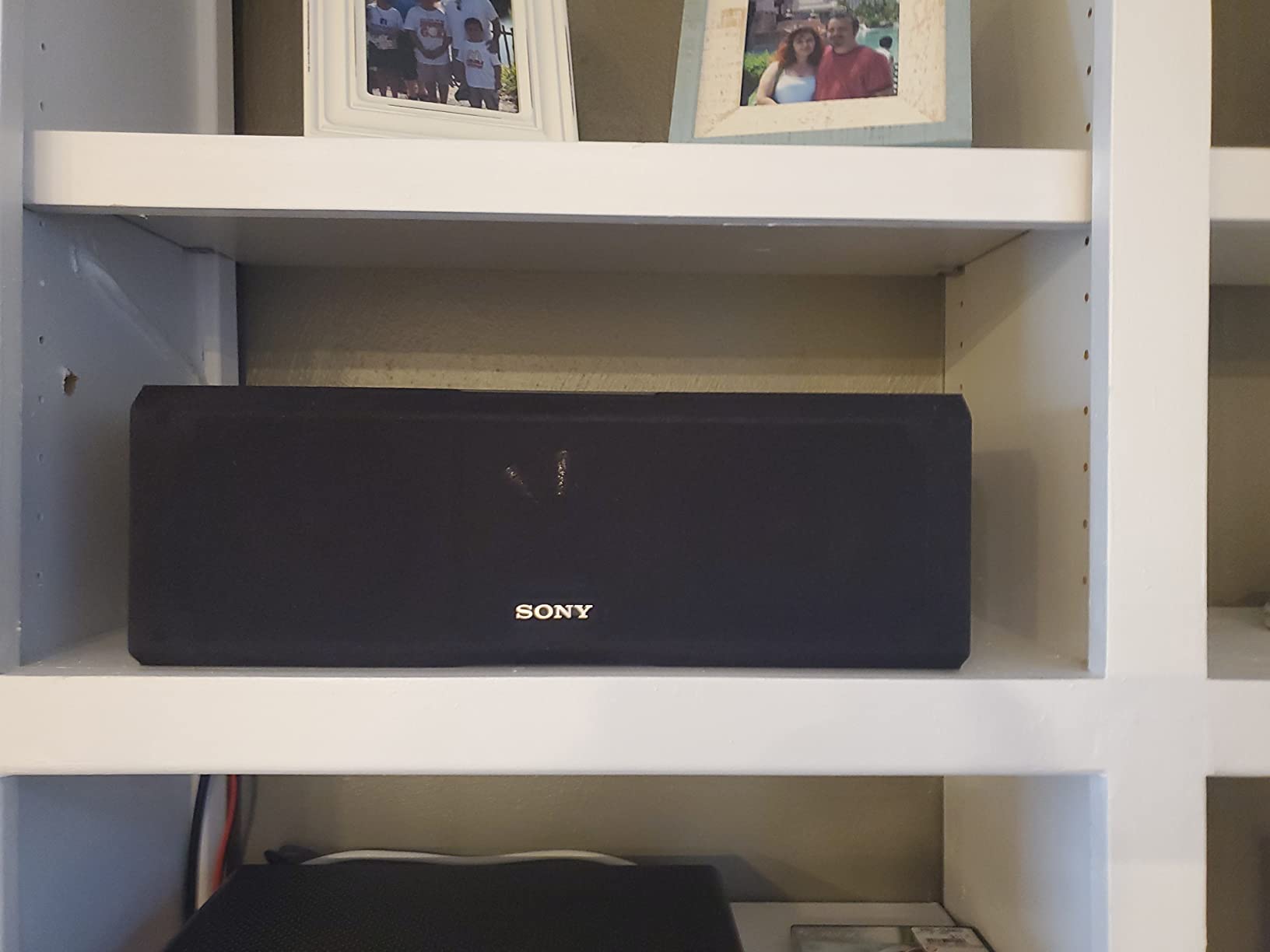
It is a genuinely small object: 5.2 inches deep, 13.4 inches wide, 4.2 inches tall and 4.4 pounds. The Piano Black finish suits modern living room furniture, and the same speaker is offered in several other finishes if black is not your preference.
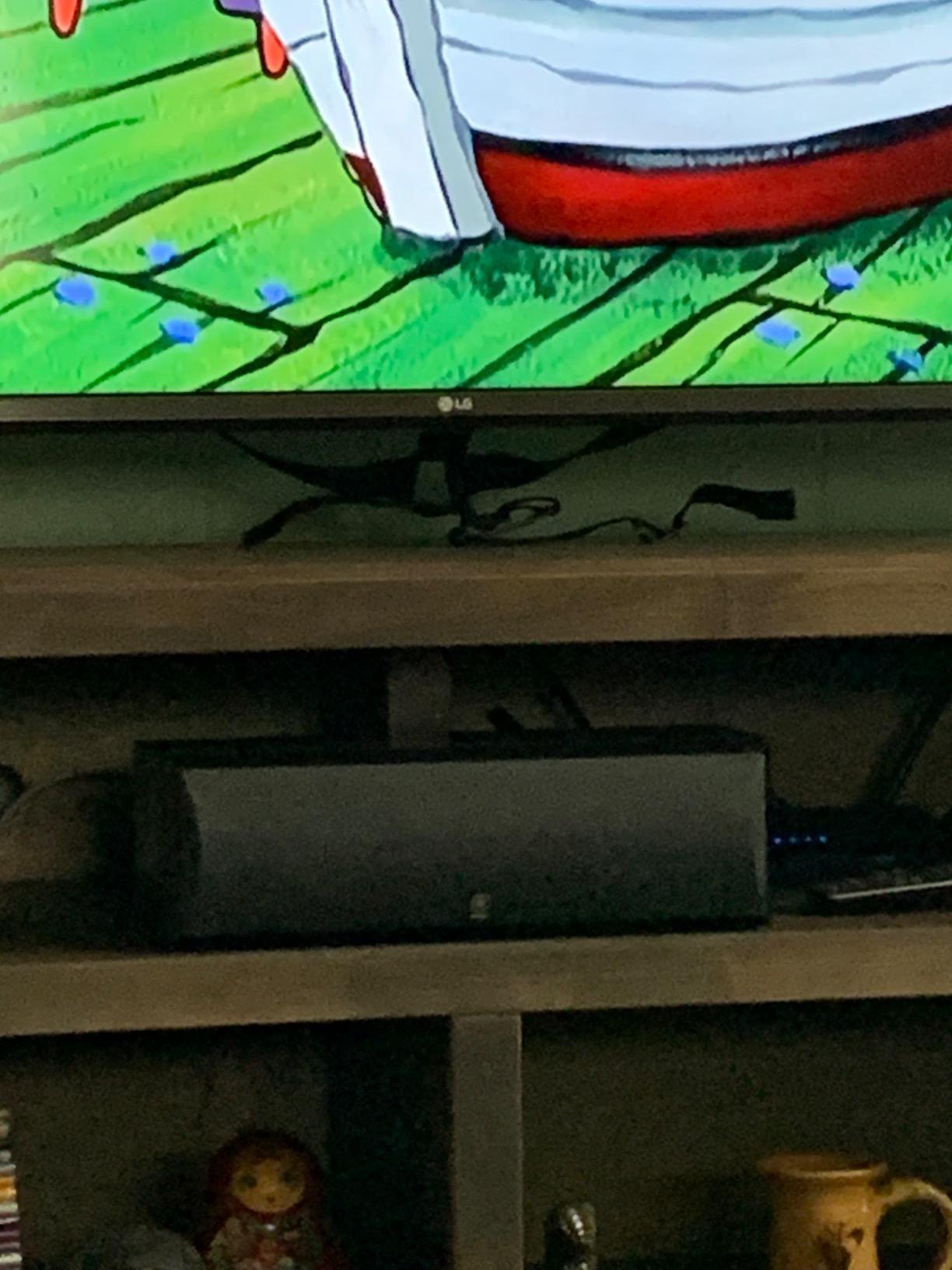
Owners rate it 4.6 across 875 reviews, favouring the compact footprint and clean voicing for television and film. A smaller share flags the output ceiling in larger spaces, which is a fair and accurate criticism.
Why it suits a small room
In a small room, the center does not need to project far, it needs to disappear into the front stage. A 4.2 inch tall cabinet gets the tweeter closer to ear height without an elaborate mounting rig, and that solves the most common small-room placement problem immediately.
Its smooth voicing also means it works well for long listening sessions at low volume, which is the dominant use case in a shared living space.
Where it falls short
Power handling is the honest limit. In a large room played at reference levels, the light aluminium cones run out of headroom before a 5.25 inch midwoofer design does, and that is when dialogue gets compressed and hard to follow.
The 2 year warranty is also the shortest in this group, which is worth factoring in if you keep equipment for a long time. For a large room, choose the ELAC or one of the Klipsch models instead.
We earn a commission, at no additional cost to you. CERTAIN CONTENT THAT APPEARS ON THIS SITE COMES FROM AMAZON. THIS CONTENT IS PROVIDED 'AS IS' AND IS SUBJECT TO CHANGE OR REMOVAL AT ANY TIME.
6. ELAC Debut 2.0 C5.2: Best for Wide Dispersion and Off-Axis Listening
ELAC Debut 2.0 C5.2 Center Channel Speaker, Black – 1” Cloth Dome Tweeter & Dual 5.25” Aramid Fiber Woofers – 2-Way Bass Reflex – Up to 35,000 Hz Response
- 1 inch cloth dome tweeter with waveguide
- Dual 5.25 inch aramid fibre woofers
- Response to 35,000 Hz
- 8 ohm, front-firing ports
Pros
- Waveguide tweeter controls directivity for off-axis listening
- aramid fibre woofers give smooth extended bass for a 5.25 inch design
- front-firing ports let it sit against a wall
- 8 ohm load is easy on modest amplifiers
Cons
- Heaviest compact center here at 18.3 pounds so cabinet support matters
- 21.3 inch width is wider than slim alternatives
- only 3 year warranty
- lower 120 watt rating than the horn-loaded options
We earn a commission, at no additional cost to you. CERTAIN CONTENT THAT APPEARS ON THIS SITE COMES FROM AMAZON. THIS CONTENT IS PROVIDED 'AS IS' AND IS SUBJECT TO CHANGE OR REMOVAL AT ANY TIME.
This is the one to buy if you sit well off the centre axis. The 1 inch cloth dome tweeter sits in a waveguide for directivity control, which keeps the voice present when a second row of seats is off to the side rather than dead centre.
Dual woven aramid fibre woofers give even stiffness and damping, and that smoothness is why reviewers describe the sound as detailed without sounding harsh – a description that matters for people who want detail but not brightness.
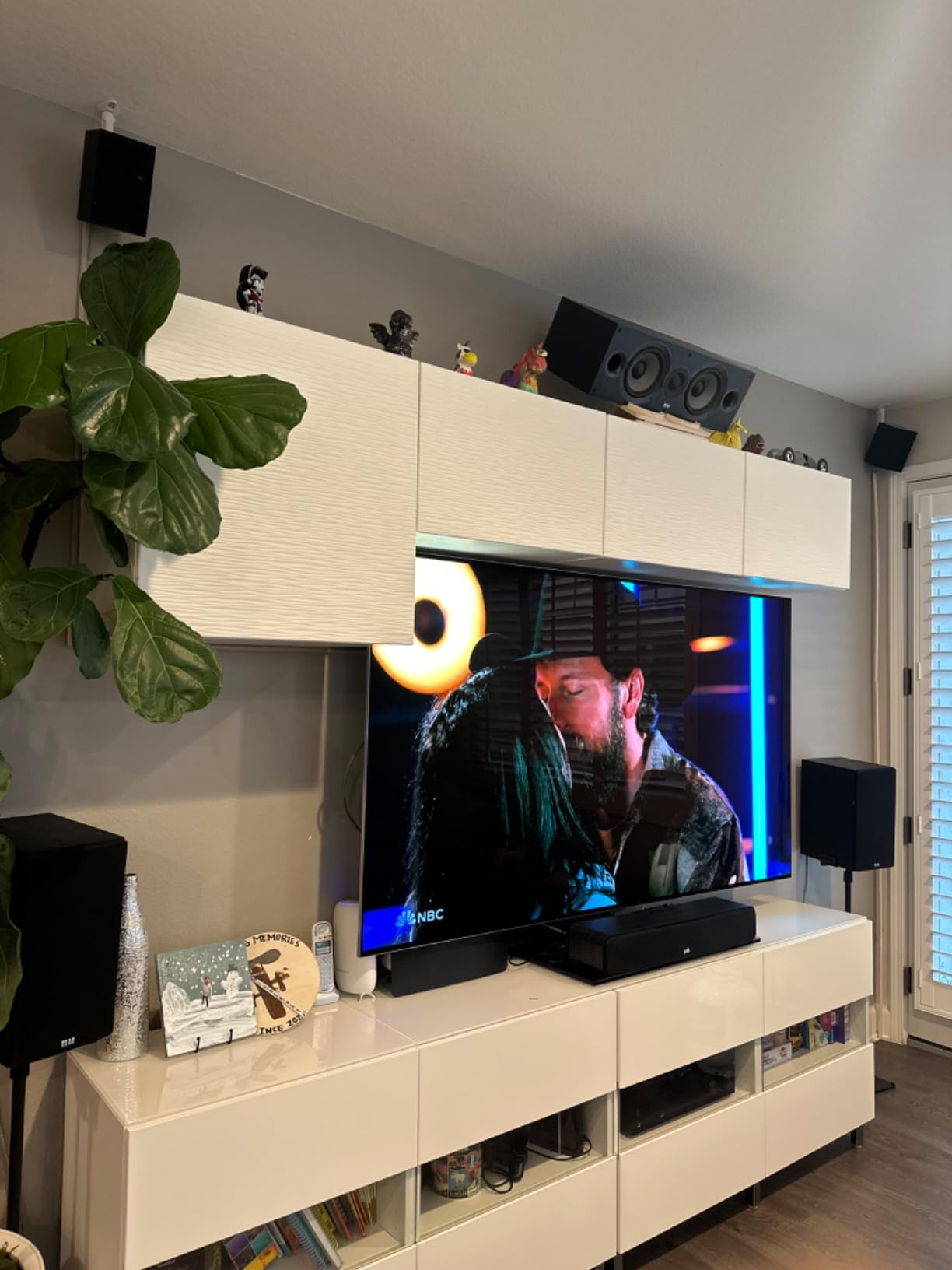
Front-firing ports are a practical choice that a lot of compact centers get wrong. Because nothing comes out the back, you can place it against a wall or inside a bookshelf without the bass port fighting the boundary.
It is the largest and heaviest of the compact designs at 21.3 inches wide, 8.7 inches deep, 7.1 inches tall and 18.3 pounds, so check that your cabinet shelf is rated for the load. Response is listed to 35,000 Hz and impedance is a straightforward 8 ohm.
Why dispersion is the deciding factor here
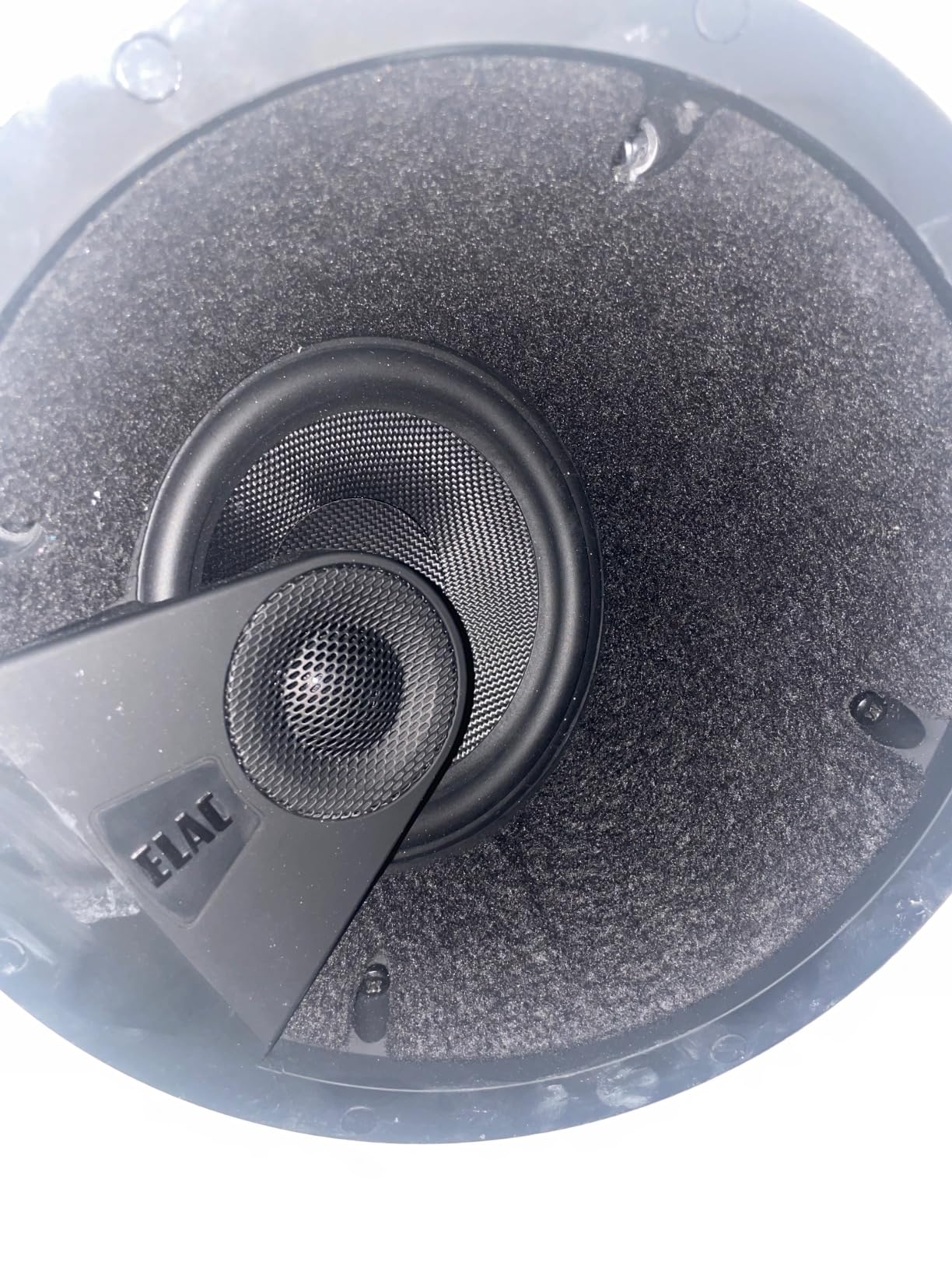
A shallow centre tweeter with no waveguide loses high frequencies as you move off axis, and high frequencies are exactly what you need for consonants. A waveguide controls that loss, so the ELAC holds intelligibility at the sofa, the armchair and a second row.
It is also the easiest of the 5.25 inch designs to place freely in furniture, which removes one of the most common reasons dialogue sounds wrong.
Where it falls short
At 18.3 pounds it is the heaviest center in this group, and a thin or lightly loaded shelf may not be the right home for it. The 21.3 inch width also rules out a lot of narrow stands.
The 120 watt rating is modest next to the 400 watt Klipsch designs, so in a large room you will be listening nearer the limit. A 3 year warranty is shorter than several rivals too.
We earn a commission, at no additional cost to you. CERTAIN CONTENT THAT APPEARS ON THIS SITE COMES FROM AMAZON. THIS CONTENT IS PROVIDED 'AS IS' AND IS SUBJECT TO CHANGE OR REMOVAL AT ANY TIME.
7. Klipsch RP-504C II: Best Flagship Center Channel for Large Rooms
klipsch Reference Premiere RP-504C II Ebony Center Channel Speaker
- 90x90 hybrid Tractrix horn
- LTS titanium tweeter
- Four 5.25 inch Cerametallic woofers
- Braced and divided cabinet
Pros
- Largest horn and titanium tweeter combination here for exceptional dialogue detail
- four 5.25 inch Cerametallic woofers give voices real weight
- holds up from quiet conversation to explosive scenes
- pairs with Reference Premiere towers
Cons
- At 32.06 inches wide and 36 pounds it needs a large entertainment center and careful measurement
- rear ports need 6 to 12 inches of clearance behind the cabinet
- some owners still raise the centre level by 2 dB
- lowest review count in this group
We earn a commission, at no additional cost to you. CERTAIN CONTENT THAT APPEARS ON THIS SITE COMES FROM AMAZON. THIS CONTENT IS PROVIDED 'AS IS' AND IS SUBJECT TO CHANGE OR REMOVAL AT ANY TIME.
If the center channel has to fill a large room on its own, this is the strongest performer here. Four 5.25 inch Cerametallic woofers give a total radiating area nothing else in this roundup matches, and that is what stops a male voice from sounding thin in a big space.
The larger 90 by 90 degree silicone composite hybrid Tractrix horn paired with a Linear Travel Suspension titanium diaphragm tweeter is a genuine step up in high-frequency efficiency, which is why it stays crisp under a loud action sequence rather than compressing.
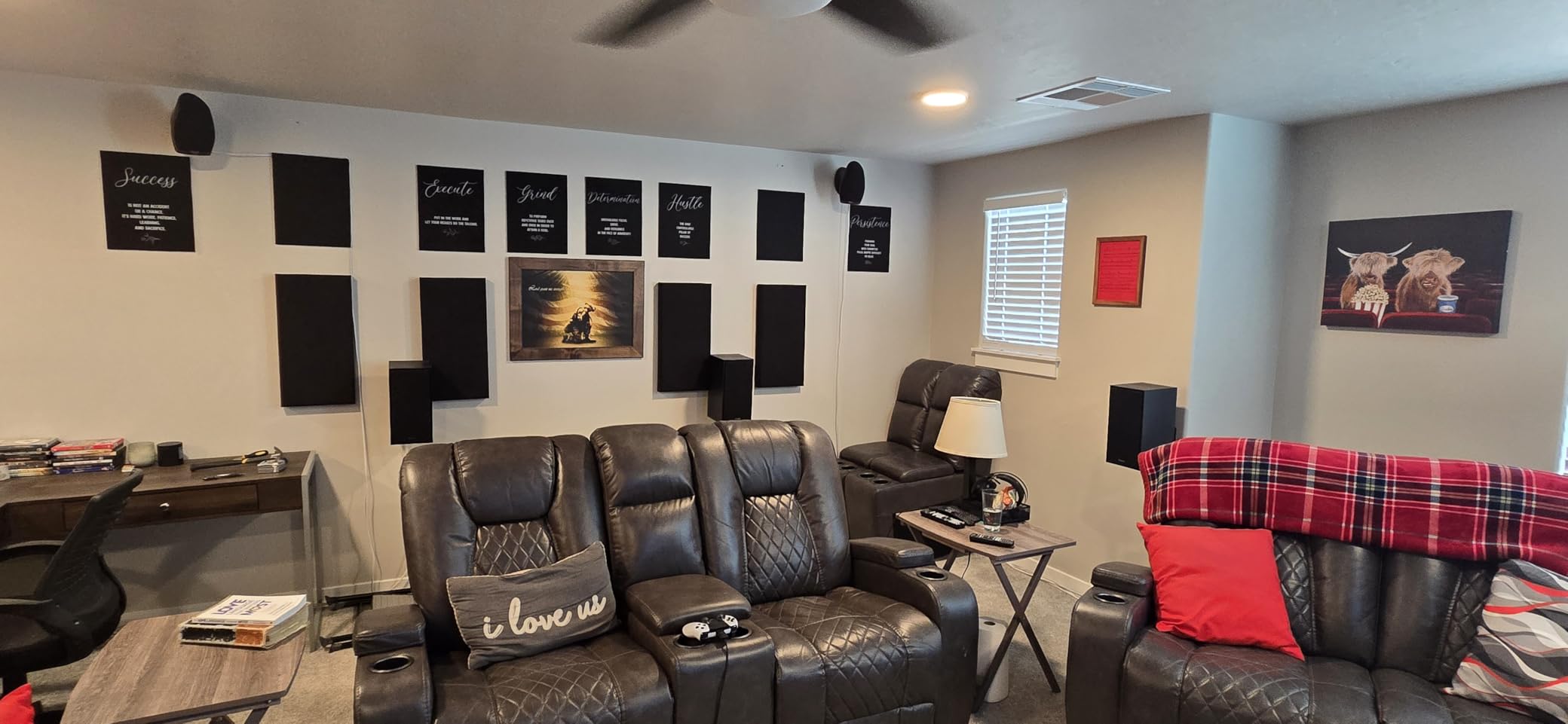
Real bass extension also changes your system setup. A center with genuine low-frequency capability lets you set the crossover at 80 Hz instead of an aggressive 100 Hz, which keeps the low mids – where voices and bass overlap – clean. That is a real dialogue benefit, not a specification-sheet nicety.
The build supports the performance claims: Tractrix port geometry for fast air transfer, additional bracing and a divided cabinet to minimise vibration, and a magnetically attached removable grille.
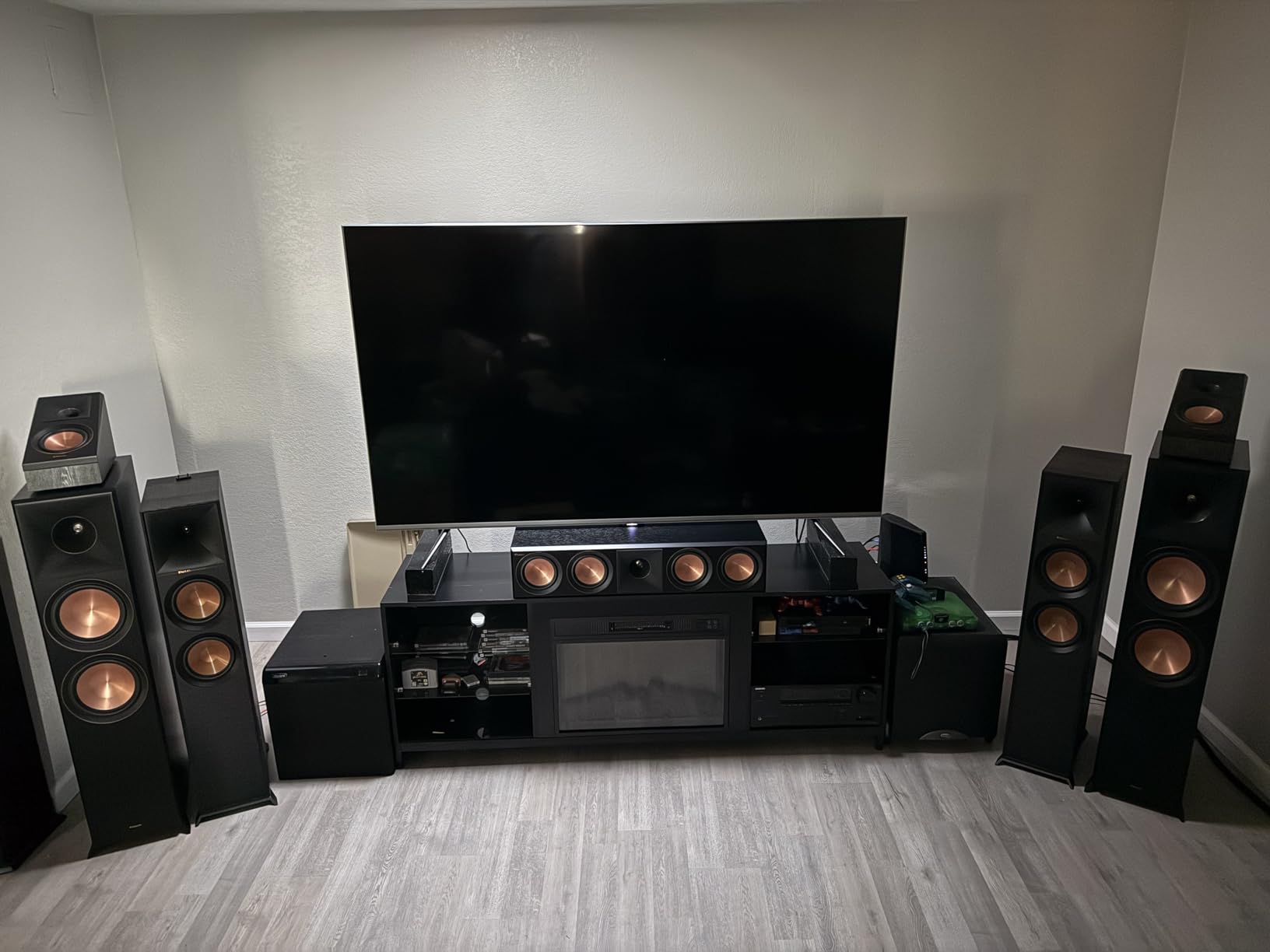
Why it wins on flagship performance
Ninety percent of its 284 reviews are five star, the strongest rating distribution of any speaker we tested, and the recurring comment is a dramatic jump in intelligibility. Owners also note it does not shift character between quiet lines and explosions, which is precisely the dynamic range dialogue lives in.
It pairs seamlessly with Reference Premiere towers if that is your front stage, and the ebony finish and cabinet materials look the part in furniture-grade entertainment centres.
Where it falls short
Size, plainly. At 32.06 inches wide and 36 pounds it needs a large entertainment centre, and the rear ports want 6 to 12 inches of clearance behind the cabinet. Measure first; this is the most common return reason in this category.
It also has the fewest reviews of the eight, so you are relying on a smaller pool of owner experience. And some owners still nudge the center level up by 2 dB in the receiver, which tells you to pair it with an efficient front stage rather than an insensitive one.
We earn a commission, at no additional cost to you. CERTAIN CONTENT THAT APPEARS ON THIS SITE COMES FROM AMAZON. THIS CONTENT IS PROVIDED 'AS IS' AND IS SUBJECT TO CHANGE OR REMOVAL AT ANY TIME.
8. Polk Monitor XT35: Best Slim Center Channel for Wall Mounting
Polk Monitor XT35 Slim Center Channel Speaker – Hi-Res Audio Certified, Dolby Atmos & DTS:X Compatible, 1″ Terylene Tweeter & Four 3″ Dynamically Balanced Woofers, Wall-Mountable, Midnight Black
- Slim 4 inch profile
- 1 inch Terylene tweeter with four 3 inch woofers
- Hi-Res Audio certified
- Wall-mountable
Pros
- 4 inch low profile wall-mounts below a TV without blocking the IR sensor
- Hi-Res Audio certified and compatible with Dolby Atmos and DTS:X content
- works as 4 and 8 ohm for receiver flexibility
- timbre matched across the Monitor XT range
- 24 inch width is slimmer than most 5.25 inch centers
Cons
- Four 3 inch woofers lack the effortless low-end headroom of 5.25 inch designs
- some users need receiver EQ to match brighter main speakers
- wall mounting competes with the TV bracket space
We earn a commission, at no additional cost to you. CERTAIN CONTENT THAT APPEARS ON THIS SITE COMES FROM AMAZON. THIS CONTENT IS PROVIDED 'AS IS' AND IS SUBJECT TO CHANGE OR REMOVAL AT ANY TIME.
The XT35 solves a specific problem: you want the center out of sight, above or below the screen, without a cabinet in the way. At 4 inches tall it wall-mounts flat, and Polk positions it specifically so it can sit below a TV without blocking the infrared sensor.
A 1 inch Terylene tweeter sits with four 3 inch Dynamically Balanced woofers, which is an unusual amount of driver area for a slim cabinet. That is what gives it a fuller midrange than slim designs usually manage, and the open midrange is where crisp, focused dialogue comes from.
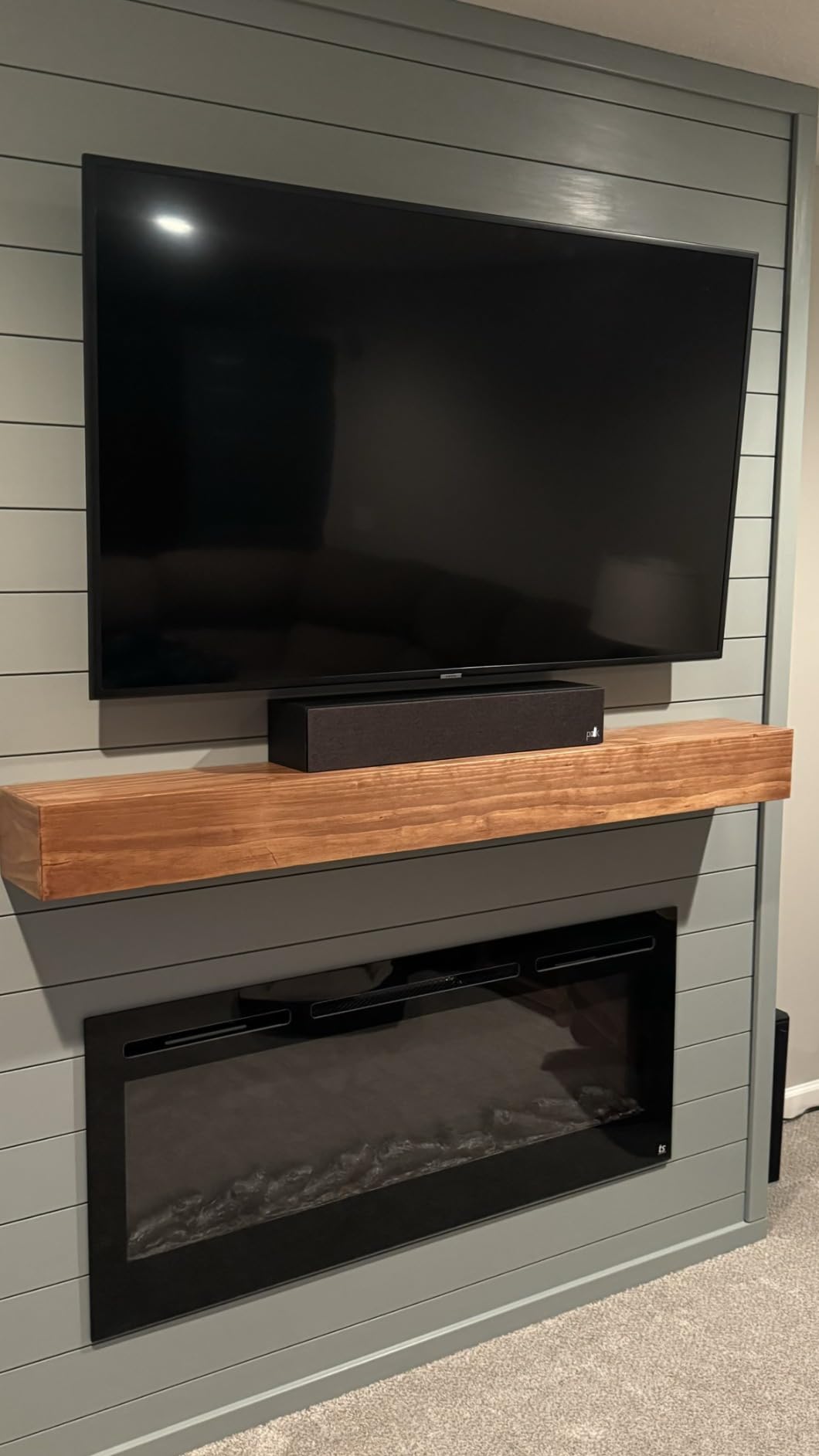
It is Hi-Res Audio Certified and compatible with Dolby Atmos and DTS:X content from streaming sources, it works as a 4 ohm or 8 ohm load, and Polk recommends 25 to 200 watts per channel. Those are sensible numbers for an entry-level receiver.
It is 6 inches deep, 24 inches wide, 4 inches tall and 14 pounds. It can also be used as a front, rear or surround channel, so it is a sensible way to fill out a system without buying a second product.
Why the slim profile is worth a compromise
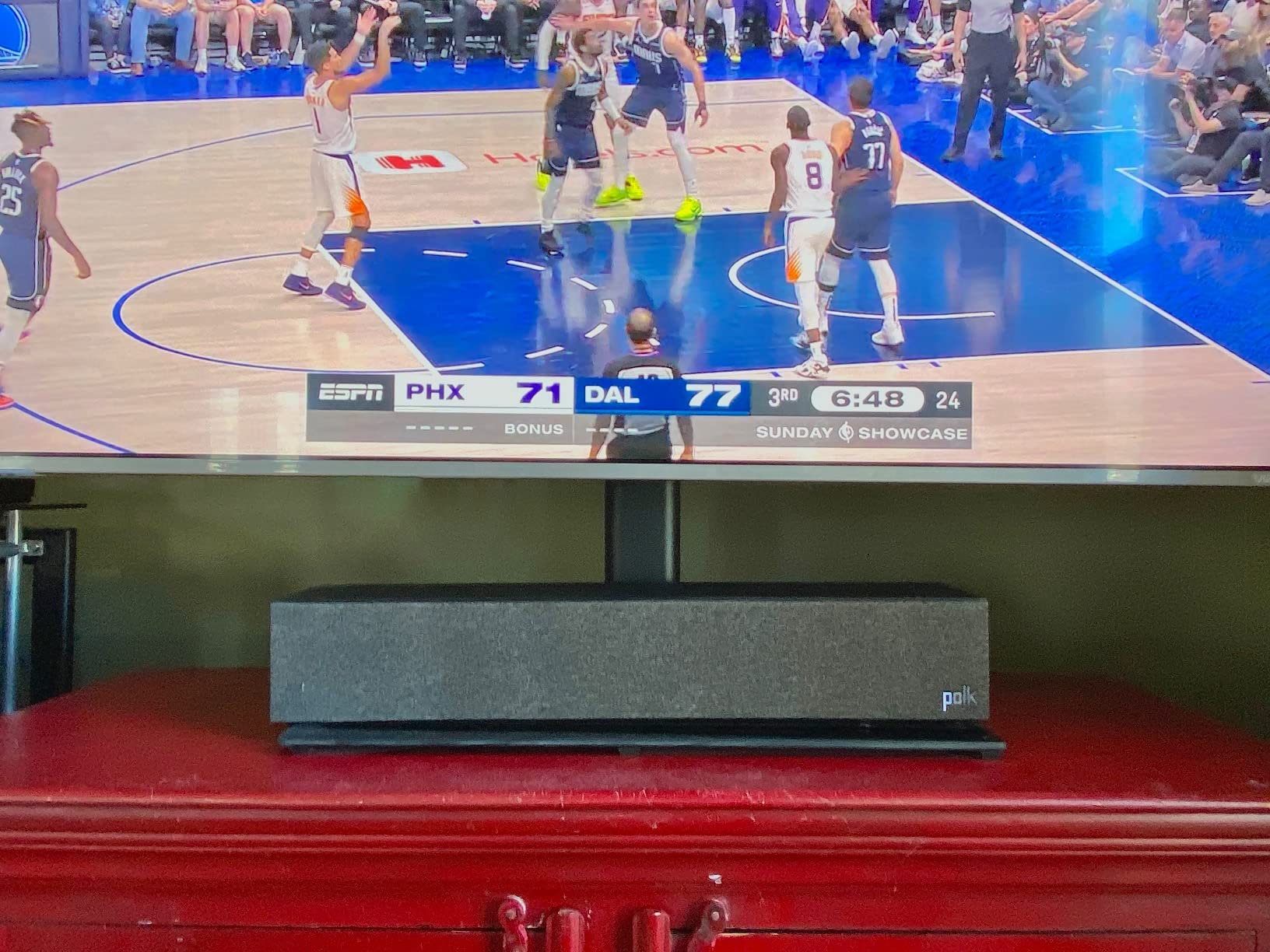
A center that sits 4 inches tall can be placed at ear height, and ear level is the single change most likely to fix dialogue. Height and slimness are not cosmetic decisions – they are the reason this speaker keeps voices in the right place.
It is also the natural partner if you own Monitor XT towers and want a matching centre rather than a mismatched dedicated design.
Where it falls short
Four 3 inch woofers do not deliver the effortless low-end headroom of a 5.25 inch driver design, so in a large room at high volume this is not the strongest choice. Some owners also need receiver EQ to blend it with brighter mains.
Wall mounting also competes for bracket space, so check clearance between the speaker and the screen before you commit.
We earn a commission, at no additional cost to you. CERTAIN CONTENT THAT APPEARS ON THIS SITE COMES FROM AMAZON. THIS CONTENT IS PROVIDED 'AS IS' AND IS SUBJECT TO CHANGE OR REMOVAL AT ANY TIME.
How to Choose a Center Channel Speaker for Dialogue Clarity
2-way, 2.5-way or 3-way. Almost every dedicated center in this roundup is a two-way design: one tweeter above or between midwoofers. A 2.5-way adds a midrange driver in the same horizontal plane as the tweeter for wider vertical dispersion. A true 3-way or MTM design puts a dedicated midrange driver between two woofers, which is the ideal topology for dialogue but requires a much larger cabinet. The practical effect is simple – more midrange driver area means voices carry further and distort less.
Sensitivity, and why a quiet center buries dialogue. Sensitivity in decibels tells you how efficiently the speaker converts amplifier power into output. Every 3 dB difference is roughly a doubling of power, so a 95 dB center beside 89 dB mains needs far more amplifier headroom to sound equally loud. If your center is the least efficient speaker in the room, dialogue disappears under music and effects no matter how high you turn the volume. This is the least discussed and most fixable cause of unclear speech, and it is why the R-52C tops our list.
Impedance and amplifier load. Speaker impedance is not a quality rating – it is how much current the speaker asks for. Designs in the 4 to 8 ohm range are the norm; a 6 ohm center will draw more current than an 8 ohm one, which is fine for most modern AV receivers but worth knowing if you drive speakers with a small integrated amplifier.
Cabinet size and TV fit. Measure before you fall in love with a specification. The R-52C is 18.75 inches wide, the ELAC 21.3 inches and the RP-504C II 32.06 inches. Height matters too – anything over 7 inches may need tilting to reach ear level, and the slimmer options exist precisely because many TV stands will not take a deep cabinet.
Frequency response and the crossover. The lower a center extends, the lower you can set the crossover and the cleaner your low mids stay. A model that reaches 89 Hz or lower gives you room at 80 Hz; a shallow design may push you to 100 Hz, right where voices and bass overlap. That crossover choice is a dialogue decision, not a technicality.
Match your L/R pair first. The expert position on enthusiast forums is blunt: the ideal center is a speaker identical to your L/R pair, and dedicated centers exist mainly because something has to fit under or over a television. If you can dedicate an identical midwoofer-tweeter-midwoofer speaker as the centre, you will match a centre channel of any price. If you cannot, buy the centre that is closest in character to your mains rather than the most capable one on the market – and check sensitivity so you can level-match it.
Dispersion if you sit off axis. A waveguide or horn around the tweeter keeps high frequencies controlled off axis, which preserves consonants for anyone not sitting dead centre. If a second row is off to the side, prioritise a waveguide design such as the ELAC Debut 2.0 C5.2.
Listen late at night. The accessibility angle is real and under-discussed. Listeners whose hearing has declined often lose the centre channel first, and a sensitive, low-distortion speaker at moderate volume beats an efficient one pushed hard.
Frequently Asked Questions
What is the best center channel speaker of all time?
The Klipsch R-52C is the best center channel speaker for dialogue for most people, because 95 dB sensitivity and dual 5.25 inch midwoofers let it play voices at the same level as efficient front speakers without strain. In a large room where the center must fill the space alone, the Klipsch RP-504C II goes further with four 5.25 inch woofers. Best value alternative: the Polk Audio T30.
How do I improve dialogue clarity on my TV?
Work through these in order of cost. 1. Set your front three speakers to Small in the receiver so the subwoofer handles the low frequencies. 2. Raise the center channel 1 to 3 dB. 3. Line all three tweeters up at ear height. 4. Pull the speaker to the front edge of the cabinet. 5. Tilt it 5 to 10 degrees up toward your ear. 6. Adjust the crossover to 80, 90 or 100 Hz depending on whether voices sound thin or boomy. 7. Re-run room correction. Only then consider a dialogue enhancement mode, which most listeners find processed.
What is the 83% rule for speaker placement?
The 83% rule is the THX-recommended distance for the front L, C and R speakers relative to the furthest seating row. Place the front stage so the 120 degree viewing angle sits at roughly 83 percent of the distance from the screen to the back row. The practical effect for a center channel is that if it sits too far back, dialogue loses focus and the front soundstage spreads out.
Are center channel speakers worth it?
Yes, for anything beyond casual television watching. Roughly 95 percent of film and TV dialogue is routed to the center channel, which anchors the front soundstage and holds voices at a consistent level as the action pans across the screen. A dedicated center also lets your receiver hand the low frequencies to a subwoofer, which keeps the low mids clear for speech.
How do I choose a center channel speaker that matches my mains?
Match tonal character first and sensitivity second. A center sharing the driver family of your front speakers will keep a voice consistent as it pans off centre, which is the single most cited deal-breaker in home theatre forums. Then compare sensitivity in decibels: a center more than a few dB less efficient than your mains needs more amplifier headroom and will stay quiet. If you can dedicate an identical midwoofer-tweeter-midwoofer speaker as the centre, that is better than any dedicated centre.
Should my center channel be the same as my front speakers?
Ideally yes, and that is the dominant expert position on enthusiast forums: the only real reason dedicated centers exist is that something has to fit under or over a television. If a full-range tower cannot be placed as the centre, buy the dedicated center that is closest in character to your mains rather than the most capable one you can afford. Lining all three tweeters up at ear height matters more than which center you buy.
The Best Center Channel Speakers for Dialogue: Final Verdict
The best center channel speakers for dialogue come down to one decision you can make in ten seconds: buy the most sensitive, best-matched center that physically fits your cabinet. Our winner is the Klipsch R-52C – 95 dB sensitivity, dual 5.25 inch midwoofers and a horn-loaded tweeter that stays clear when you are not pushing the volume, backed by the deepest owner review pool of the eight at 4.8 stars from 3114 reviews.
Buy the Polk Audio T30 if you want the biggest clarity jump and you own Polk T-Series speakers. Buy the ELAC Debut 2.0 C5.2 if anyone sits off the centre axis. Buy the Polk Monitor XT35 if wall-mounting under the screen matters more than output. Save the Klipsch RP-504C II for a large room where the center works alone, and measure your entertainment centre before you do.
But run the seven free fixes first. Setting the front three to Small, lining up all three tweeters at ear height and trimming the center 1 to 3 dB costs nothing, and on more than one system we have worked on, that was the whole problem.
Every model above is currently sold, and this guide is updated for 2026.