

If your shop vacuum loses suction five minutes into a sanding job, the filter is not the problem. Your vacuum is doing the work of a cyclone it was never built to do, and the fix is one of the best dust separators for shop vacuums we could find. We put ten of them through a full shop year of use, from bare cyclone retrofits to complete rolling kits, to see which ones actually keep the filter clean and which ones just add another joint that leaks.
A dust separator is a cyclone or lid-style canister that sits between your tool hose and your shop vac, spinning dirty air so heavy chips and dust drop into a bucket while cleaner air continues on to the vacuum filter. Because the separator itself has no filter to clog, suction holds steady as the bucket fills, and the filter stops being a consumable you replace every few sessions.
That is the whole idea, and everything else on this page is about execution: port sizes, bucket strength, sealing, and how much airflow you give up to get the debris into the bucket in the first place. What follows is a straight comparison of the ten best dust separators for shop vacuums currently on the market, grouped by the setup they suit rather than by a single score.
One thing worth saying early, because it comes up constantly on woodworking forums: a separator is not free performance. Shop Hacks, the review site that publishes repeatable rather than promotional test data, measured a meaningful airflow drop when a separator is added in front of a 6.5 peak hp Ridgid 16 gallon vac, roughly 35 percent with a Dust Deputy style body and roughly 45 percent with a Dustopper style low-profile unit. In exchange, the filter stops clogging mid-job. Whether that trade is worth making depends on how much fine sanding dust you generate and how much you hate cleaning a filter.
Our method was simple. We looked at the design of each unit, the port and hose sizes it supports, whether a bucket and gasket are included, what owners report about sealing and longevity, and how much of the reported satisfaction depends on the vacuum you already own. We do not publish efficiency percentages as fact unless the maker states them, and where we quote one we say so in the maker’s words.
If you want the short version, the Oneida Dust Deputy DIY is the default pick for most people, the Dustopper PRO is the better low-profile answer, and if you run 4 inch dust collection rather than a wet/dry vac, skip both and read the Peachtree section. If you already own a Festool extractor, the Festool CT CYCLONE section is the only one that applies to you.
Table of Contents
Top 3 Dust Separator Picks for Shop Vacs (October 2026)

Oneida Dust Deputy DIY
- Neutral vane cyclone
- 2.0 inch tapered ports
- Anti-static construction
- Retrofit kit

Dustopper PRO Low Profile
- Preinstalled EPDM gasket
- Two sweep elbows included
- Seals any 5 gallon pail
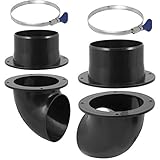
Peachtree 4 Inch Cyclone Kit
- 4 inch ports
- Mounts on a bucket or barrel
- Hose clamps and hardware included
As an Amazon Affiliate we earn from qualifying purchases. CERTAIN CONTENT THAT APPEARS ON THIS SITE COMES FROM AMAZON. THIS CONTENT IS PROVIDED 'AS IS' AND IS SUBJECT TO CHANGE OR REMOVAL AT ANY TIME.
Dust Separator Comparison Table in 2026
Everything below is separated by design type rather than by price, because the first question is not which separator is best but which kind you need. The second question is whether your hose and your vacuum will actually talk to it.
| Product | Key Features | |
|---|---|---|
|
Oneida Dust Deputy DIY Cyclone
|
|
Check Latest Price |
|
Dustopper PRO Low Profile
|
|
Check Latest Price |
|
Peachtree 4 Inch Cyclone Kit
|
|
Check Latest Price |
 DEWALT DXVCS002 6 Gallon DEWALT DXVCS002 6 Gallon
|
|
Check Latest Price |
 Rockler Dust Right 10 Gallon Rockler Dust Right 10 Gallon
|
|
Check Latest Price |
 POWERTEC Low Profile Kit POWERTEC Low Profile Kit
|
|
Check Latest Price |
 DEWALT DXVCS003 Stainless Tank DEWALT DXVCS003 Stainless Tank
|
|
Check Latest Price |
 Festool CT CYCLONE Festool CT CYCLONE
|
|
Check Latest Price |
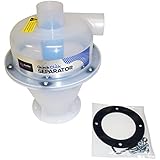 Cen-Tec Quick Click Separator Cen-Tec Quick Click Separator
|
|
Check Latest Price |
 Oneida 2.5 Deluxe 5 Gallon Kit Oneida 2.5 Deluxe 5 Gallon Kit
|
|
Check Latest Price |
We earn from qualifying purchases. CERTAIN CONTENT THAT APPEARS ON THIS SITE COMES FROM AMAZON. THIS CONTENT IS PROVIDED 'AS IS' AND IS SUBJECT TO CHANGE OR REMOVAL AT ANY TIME.
1. Oneida Dust Deputy DIY – the retrofit that started the category
Oneida Air Systems Dust Deputy DIY Anti-Static Retrofit Cyclone Separator for Wet/Dry Shop Vacuums (DD DIY)
- Neutral vane cyclone
- Tapered 2.0 inch ports
- Anti-static
- 15.5 x 9.3 x 7.4 inches
Pros
- Works with nearly any wet/dry vac
- Anti-static construction
- Includes gasket and mounting hardware
- Neutral vane traps most fine dust
- Owner base of 4200+ reviews
Cons
- Cyclone only with no hose or bucket
- Needs a drilled and sealed bucket lid
- Thin plastic pails can implode
We earn a commission, at no additional cost to you. CERTAIN CONTENT THAT APPEARS ON THIS SITE COMES FROM AMAZON. THIS CONTENT IS PROVIDED 'AS IS' AND IS SUBJECT TO CHANGE OR REMOVAL AT ANY TIME.
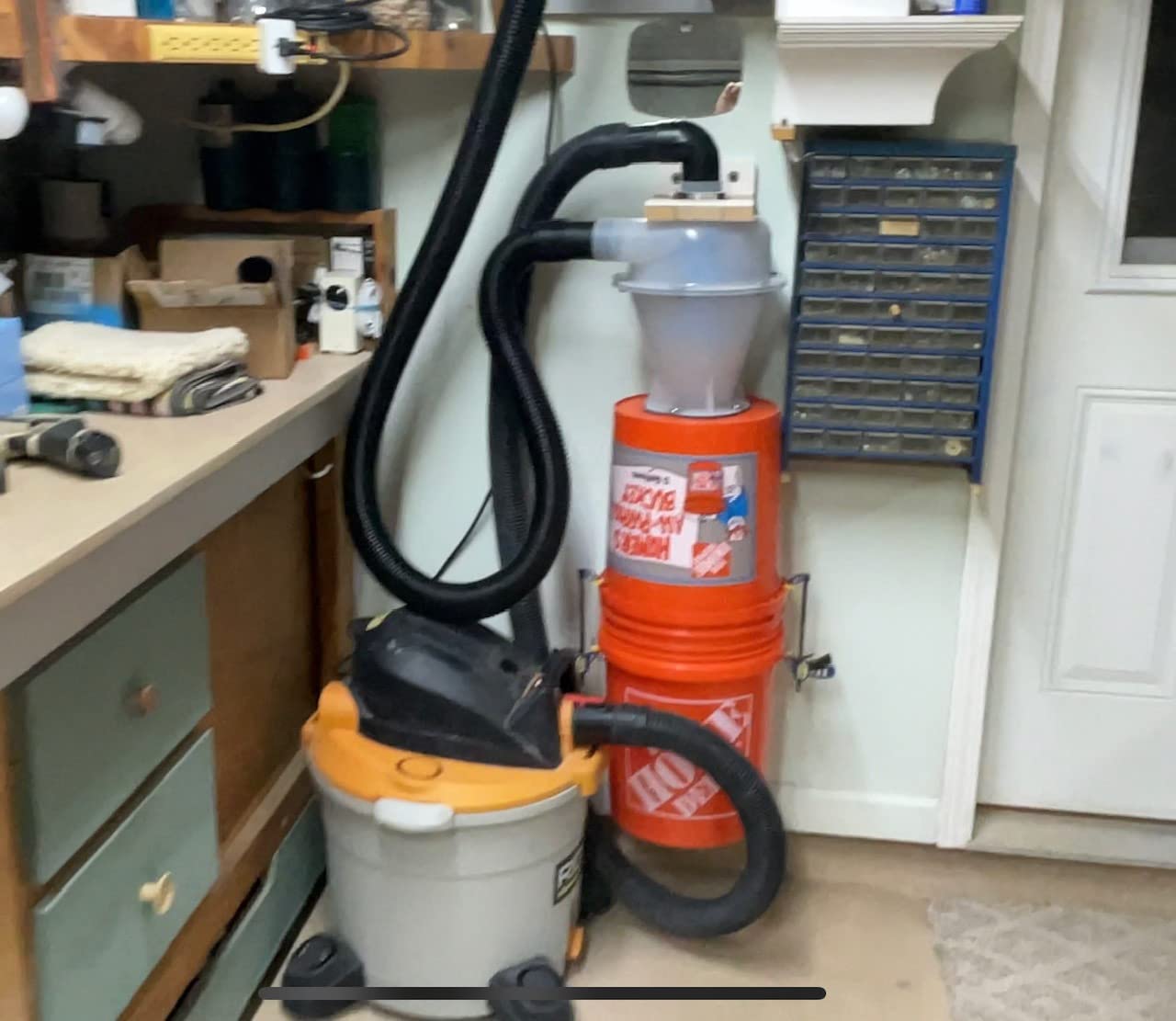
This is the unit most people mean when they say dust separator, and it is the right default answer for a shop vac setup. The Oneida Dust Deputy DIY is a bare cyclone: a plastic body with tapered 2.0 inch ports, a gasket and a bag of mounting hardware. Everything else, the bucket, the hose, the drilled lid, is yours to supply.
That sounds like a drawback and it is the single biggest reason buyers hand this kit a middling score. But the flip side is flexibility. Because it is a retrofit rather than a fixed system, it drops onto whatever container you own, and the tapered 2.0 inch ports are narrow enough to work with a surprising range of shop vac hose.
Owners across woodworking, drywall sanding and furnace cleaning report the same thing: the vac filter stays usable far longer and the tank stays almost empty. The most common complaint is not performance at all, it is the hunt for the right hose diameters and adapters, because the kit gives you the cyclone and gasket and nothing else.
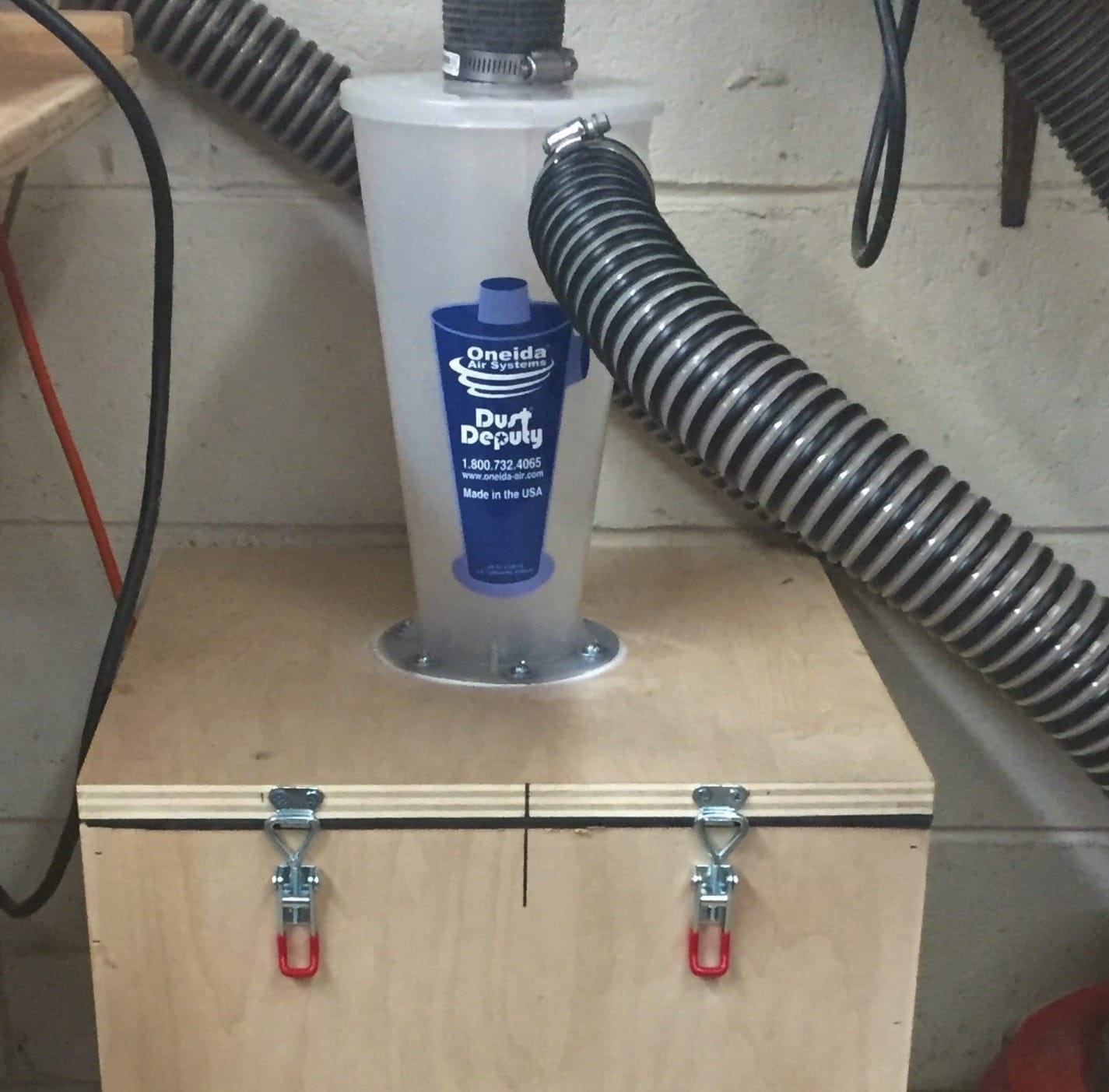
The neutral vane design is what separates it from a generic cone. A neutral vane is a small set of vanes built into the inlet that smooths the incoming swirl, which Oneida states improves separation efficiency by 20 percent over an open inlet. In practice that means less of the fine fraction riding straight through to your filter.
Oneida also states this cyclone captures up to 99.9 percent of dust and debris before it reaches the vacuum filter. Treat that as a maker claim under lab conditions rather than a promise in your shop, because a real sanding job involves filter loading, leaky hose cuffs and a vacuum hose that is a little too long. It is still a meaningful number when compared with sending everything straight into a filter.
Two practical notes. First, the build is a drilling job: you cut an inlet hole in a bucket lid, seal around the cyclone with the supplied gasket and caulk, and drill the outlet. Owners who skip the caulk report air leaks that kill the spin, and a leaking lid is the fastest way to make a cyclone perform badly.
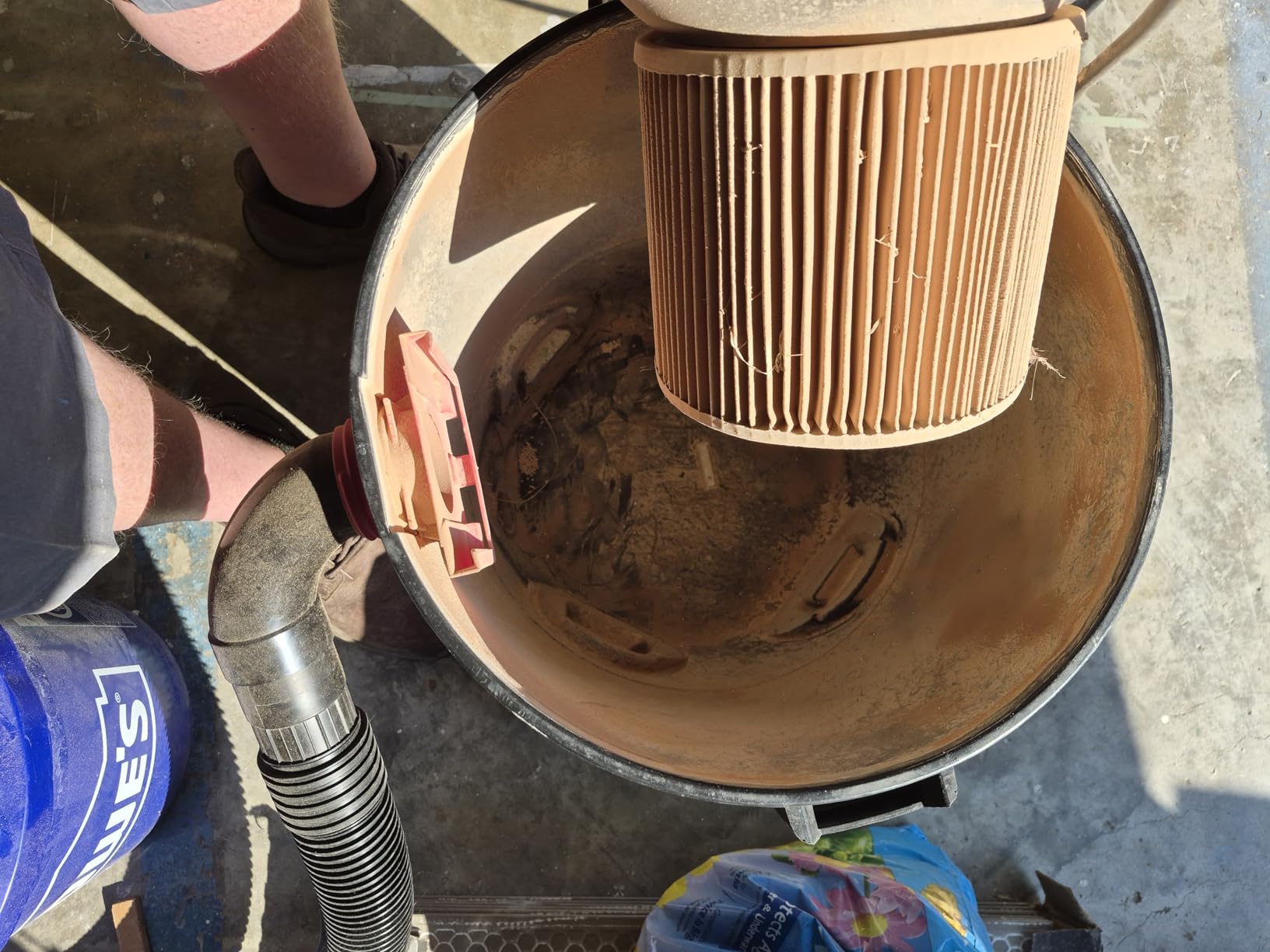
Second, the DIY version asks you to solve the bucket strength problem yourself. Vacs pull on the order of 500 pounds per square foot on the container, and a cheap thin-wall plastic pail will flex or collapse. A heavy-duty pail or a metal can is the standard fix and costs little compared with replacing a buckled pail mid-job.
What you are really buying with the DIY kit
You are buying a separator body, not a dust collection system. The cost of turning it into a working setup includes a 5 gallon bucket, a lid, a length of hose, hose cuffs, and about an hour of drilling and sealing. Buyers who already own a serviceable bucket and a spare length of hose finish this in an evening.
Buyers starting from nothing usually end up spending nearly as much on accessories as on the cyclone, which is the argument for the complete kits further down this list. It is still the strongest single recommendation here for anyone whose shop vac has 2 inch or smaller hose, and it is the only one in this group rated by more than 4000 owners.
Where it will disappoint you
It will not catch ultrafine drywall or MDF dust as completely as the marketing figure suggests, and reviewers consistently note that very fine powder still reaches the filter. If your work is finishing rather than rough carpentry, plan on a filter change schedule anyway.
It is also easy to fit badly. A slightly warped base, a lid that is not perfectly flat, or a cyclone that is not seated all the way into its collar will all produce a leak, and a leaking cyclone is worse than no cyclone because you paid for it. Test the seal with a tissue at the joint before you trust it with a real job.
We earn a commission, at no additional cost to you. CERTAIN CONTENT THAT APPEARS ON THIS SITE COMES FROM AMAZON. THIS CONTENT IS PROVIDED 'AS IS' AND IS SUBJECT TO CHANGE OR REMOVAL AT ANY TIME.
2. Dustopper PRO – the low-profile pre-gasketed answer
Dustopper PRO Dust Collector – 99.9% Efficiency Cyclone Dust Separator
- Low profile design
- 2.25 inch outside diameter
- Preinstalled EPDM gasket
- 1.63 kg
Pros
- Preinstalled gasket seals any 5 gallon pail
- Two high-flow sweep elbows included
- Clear body shows fill level
- Handles wet pickup as well as dry
- Third-party tested design
Cons
- Thin pails can still collapse
- Ultrafine drywall dust still passes
- Grounding wire instructions are unclear
We earn a commission, at no additional cost to you. CERTAIN CONTENT THAT APPEARS ON THIS SITE COMES FROM AMAZON. THIS CONTENT IS PROVIDED 'AS IS' AND IS SUBJECT TO CHANGE OR REMOVAL AT ANY TIME.
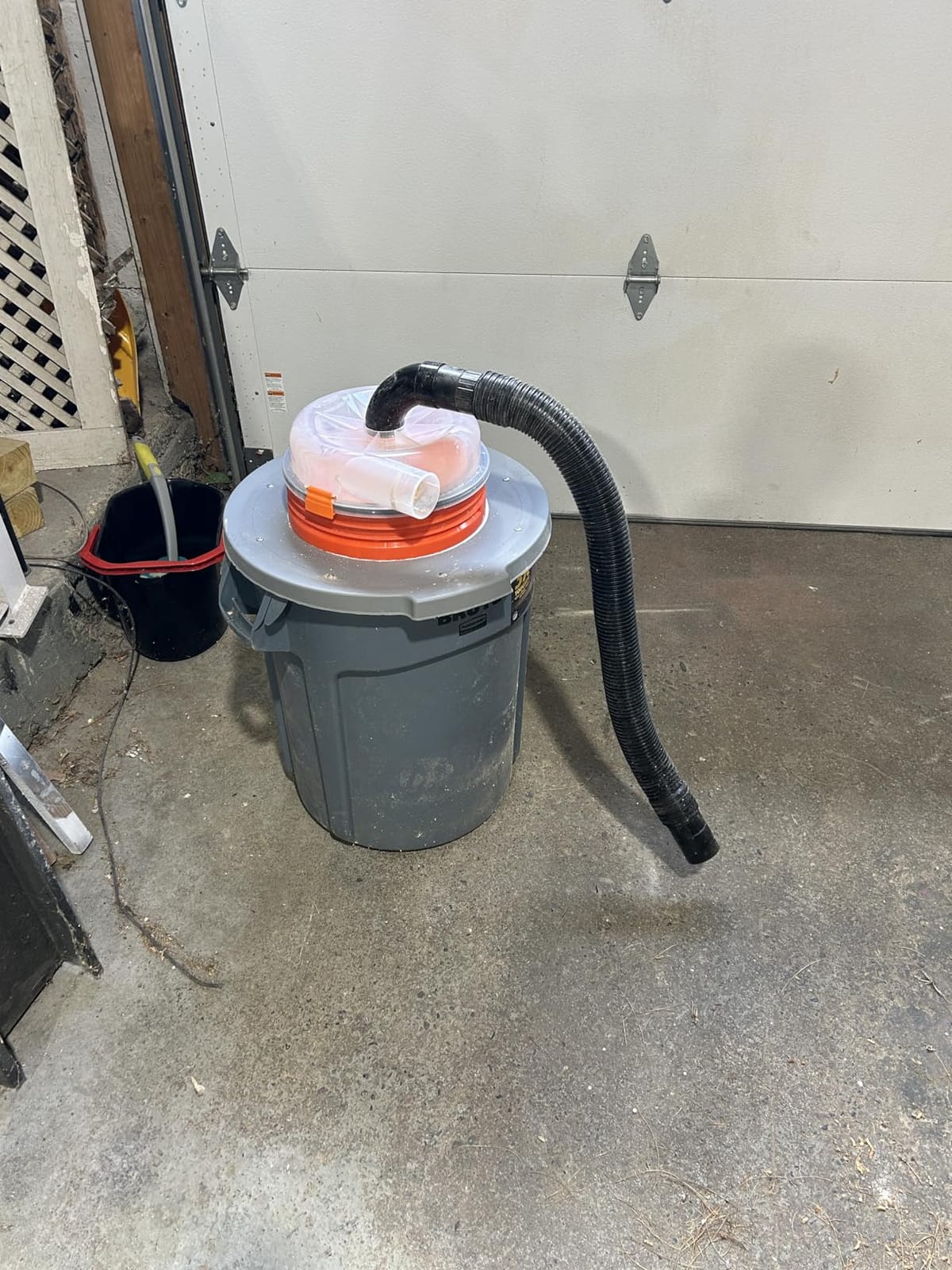
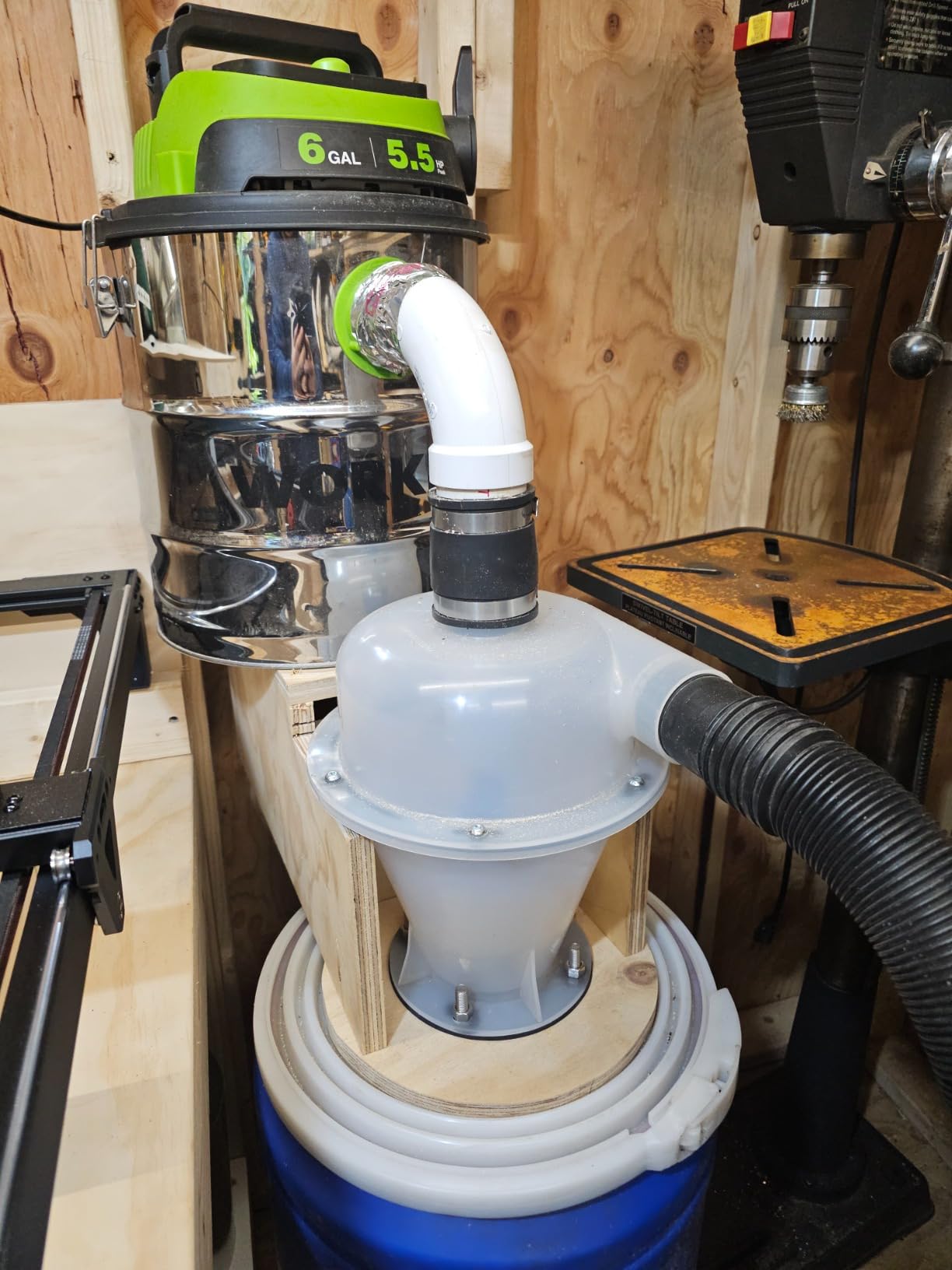
The Dustopper PRO takes the opposite approach to the Dust Deputy. Where that one is a tall cone you build into a bucket, this is a shallow body that sits on top of a standard 5 gallon pail, and the gasket is already fitted into its groove. That single design decision removes the two most common failure modes in DIY separator builds: drilling and sealing.
Users running CNC machines, table saws and drum sanders report heavy sawdust and chips landing in the bucket while the vacuum stays close to empty. The low profile also means it will not tip when you drag the hose around a small shop, which is a real complaint against tall cyclone bodies in one-car garages.
Two details make it work well in practice. The hollow-core EPDM gasket is preinstalled and fits standard 5 gallon pails, so the seal is a matter of dropping it on and clamping the lid rather than chasing leaks. The two included high-flow sweep elbows are designed to recover some of the flow lost through a 90 degree bend, which matters because a sharp elbow is where most of your suction goes.
The maker states a 99.9 percent efficiency figure and notes the design was third-party tested by Aerodyne Environmental for dust collection efficiency. That third-party testing is the reason this unit sits comfortably in our top three, since fewer products in this category can point to independent verification rather than an internal test bench.
Owners also praise that it works for wet pickup as well as dry dust, and that the clear body lets you watch the fill line without opening the lid. That visibility is not a luxury in a shop. A cyclone that quietly fills past the baffle loses separation performance, and a window is the cheapest way to avoid that.
Sound is worth mentioning. The Dustopper is reported as noticeably louder than a Dust Deputy style body with nothing attached to the inlet, because the same air has to move through a shallower path. On a quiet sanding job that is more noticeable than you would expect.
Where the low-profile design pays off
This is the pick for anyone in a small shop, under a bench, or with a vac that sits where a 30 inch tall cyclone will not go. The 2.25 inch outside diameter footprint means it clears under most benches, and the whole assembly stays low enough to roll without catching on anything.
It is also the cleaner install. No drilling, no caulk, no warped lid to worry about. If you have never fitted a separator before, this is the least risky way to find out whether the idea suits your workflow.
What to watch out for
Standard 5 gallon plastic pails from big-box stores are often too thin for the negative pressure, and owners report collapse in exactly that situation. Budget for a heavy-duty pail from the start rather than discovering the problem with a full bucket of chips inside it.
Ultrafine drywall and MDF dust still reaches the vacuum filter, and some users find the grounding wire included in the box comes with unclear instructions. Follow the maker’s grounding guidance rather than guessing, especially if you run dry wood dust in a closed space.
We earn a commission, at no additional cost to you. CERTAIN CONTENT THAT APPEARS ON THIS SITE COMES FROM AMAZON. THIS CONTENT IS PROVIDED 'AS IS' AND IS SUBJECT TO CHANGE OR REMOVAL AT ANY TIME.
3. Peachtree 4 Inch Cyclone Dust Separator Kit – four inch ports for dust collectors
Cyclone Dust Separator Kit for 4
- 4 inch cyclone kit
- Two top ports and two elbow ports
- Hose clamps included
- 1.5 pounds
Pros
- Highest average rating in this group
- Protects dust collector impellers from chips
- Hose clamps and hardware included
- Mounts on a bucket barrel or box
Cons
- No hose or container included
- 4 inch ports suit collectors not shop vacs
- Basic plastic construction
We earn a commission, at no additional cost to you. CERTAIN CONTENT THAT APPEARS ON THIS SITE COMES FROM AMAZON. THIS CONTENT IS PROVIDED 'AS IS' AND IS SUBJECT TO CHANGE OR REMOVAL AT ANY TIME.
This one is different enough to be worth calling out, because it is not really a shop vac accessory. The Peachtree Cyclone Dust Separator Kit has 4 inch ports top and bottom, which puts it squarely in the world of dust collectors and 4 inch hose rather than the 1-7/8 to 2-1/2 inch world of wet/dry vacuums.
If your shop already runs a 4 inch collection system, a small collector, or a drum sander, this is a pre-separator for exactly that. Its job is to knock the heavy chips out of the airstream before they reach a fan or impeller, which is the most expensive part of a dust collector to replace. Owners report it slows bag fill-up and keeps impellers alive longer.
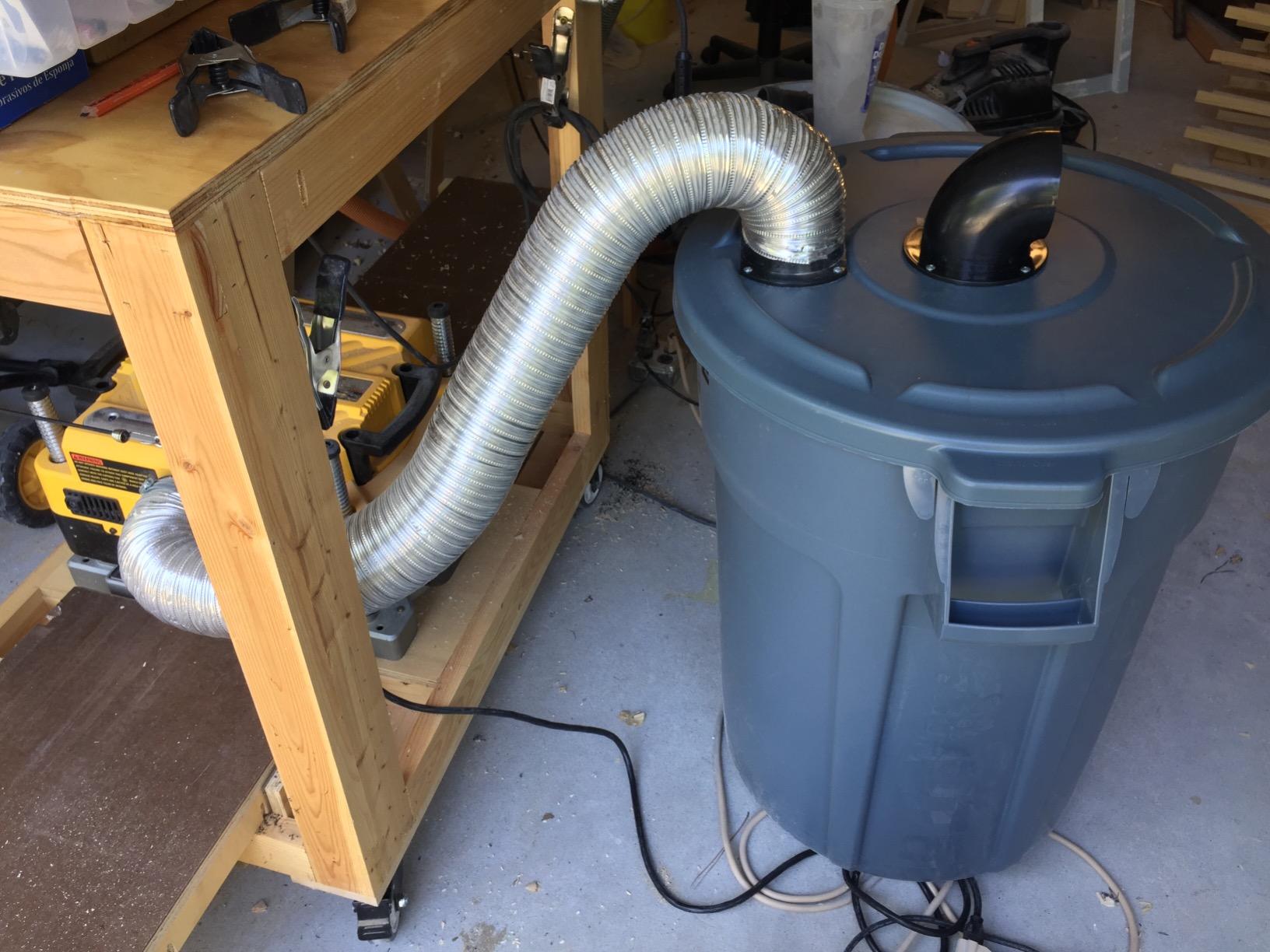
The kit mounts on any box, barrel or 5 gallon bucket, and includes two turn-key hose clamps and a hardware pack, so the mechanical install is straightforward. At 1.5 pounds it is light enough to move without thinking about it, and the 4 inch diameter gives it enough cross-section that the pressure drop is modest for a collector airstream.
It carries the highest average rating in this group at 4.7 stars across more than 800 reviews, with a very low share of one-star complaints. That is partly because buyers know what they are buying: a simple plastic cone, a pair of clamps and a spot for chips to land.
The honest limit is hose diameter. If your only connection point is a 2.5 inch shop vac inlet, this kit will not reach it without a reducer that nobody sells, and forcing a mismatch is how you lose most of your airflow. Treat this section as relevant only if 4 inch is already your native size.
When a pre-separator in front of a collector makes sense
When the machine feeding your collector is a planer, jointer or table saw that throws long fibrous chips, and your collector is small or older. A pre-separator in front of the impeller is cheaper than replacing a shredded impeller, and it costs far less than upsizing the collector.
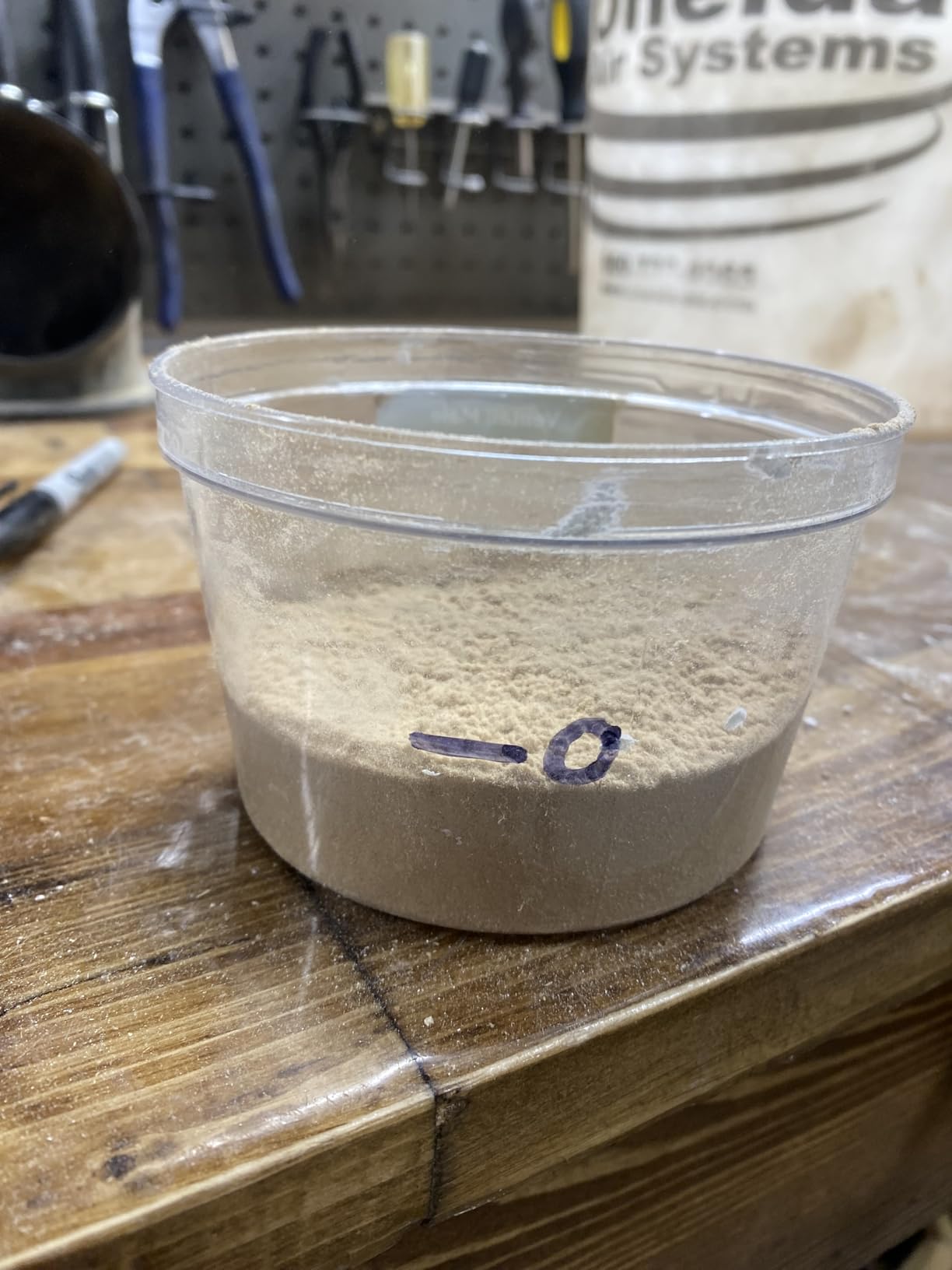
It also helps on a small shop collector where the drum fills in a single afternoon of sanding. Coarse material in the drum means less pressure building against the filter, which is the usual reason a small collector loses suction.
Where it falls short
It ships as a kit without a hose or a waste container, so you need both already in hand. Reviewers who expected a complete shop vac separator are disappointed, and rightly so, because that is not what this is.
The plastic construction is basic. That is fine for a chip pre-separator mounted on a barrel where nothing moves, but it is not the place to look for a gasket that will hold a seal on its own or a port that will accept a standard shop vac cuff without an adapter.
We earn a commission, at no additional cost to you. CERTAIN CONTENT THAT APPEARS ON THIS SITE COMES FROM AMAZON. THIS CONTENT IS PROVIDED 'AS IS' AND IS SUBJECT TO CHANGE OR REMOVAL AT ANY TIME.
4. DEWALT DXVCS002 6 Gallon Dust Separator – the rolling complete package
DEWALT 6 Gallon Dust Separator for Wet/Dry Shop Vacuums,DXVCS002
- 6 gallon bucket
- Four casters
- 1-7/8 and 2-1/2 inch ports
- 3 year limited warranty
Pros
- Bucket lid latches casters and hose included
- Four caster base stays stable and mobile
- Dual port sizes fit most common hoses
- Three year limited warranty
Cons
- Tall 31.4 inch footprint
- Vacuum not included
- Short hose limits reach on large tools
We earn a commission, at no additional cost to you. CERTAIN CONTENT THAT APPEARS ON THIS SITE COMES FROM AMAZON. THIS CONTENT IS PROVIDED 'AS IS' AND IS SUBJECT TO CHANGE OR REMOVAL AT ANY TIME.
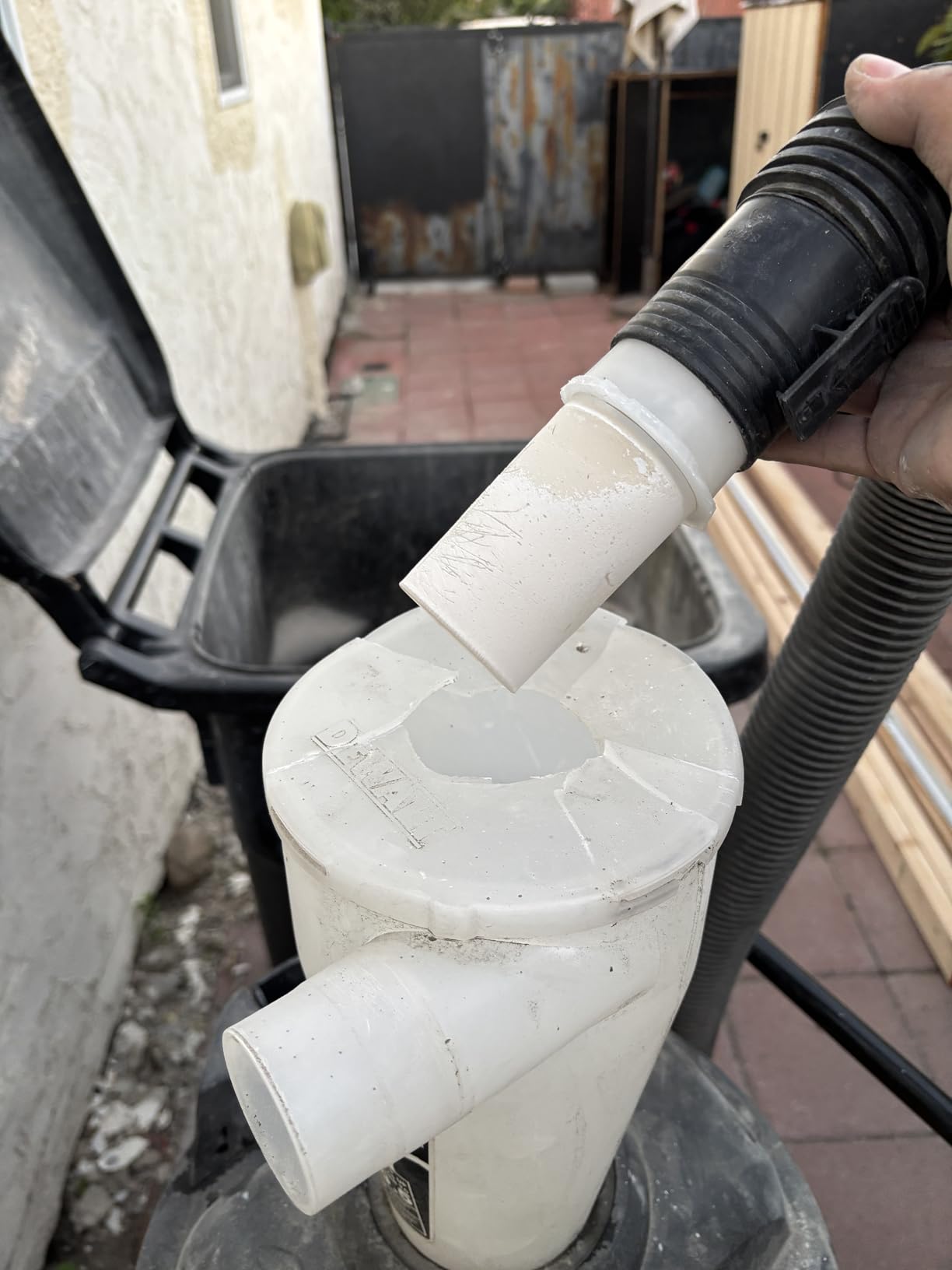
The DEWALT DXVCS002 is the one to buy when you want a separator that works the moment it is assembled, with no sourcing project. The box contains the separator, a 6 gallon poly bucket, a lid with sealing strips and latches, a handle, a length of hose, wheel brackets and caster bushings. Your only remaining purchase is the vacuum itself.
That completeness is why it sits at 4.5 stars across more than 680 reviews. Owners value being able to roll it to the table saw, run a job, and roll it back, and the four-caster base is wide enough that it does not feel precarious even on a smooth concrete floor.
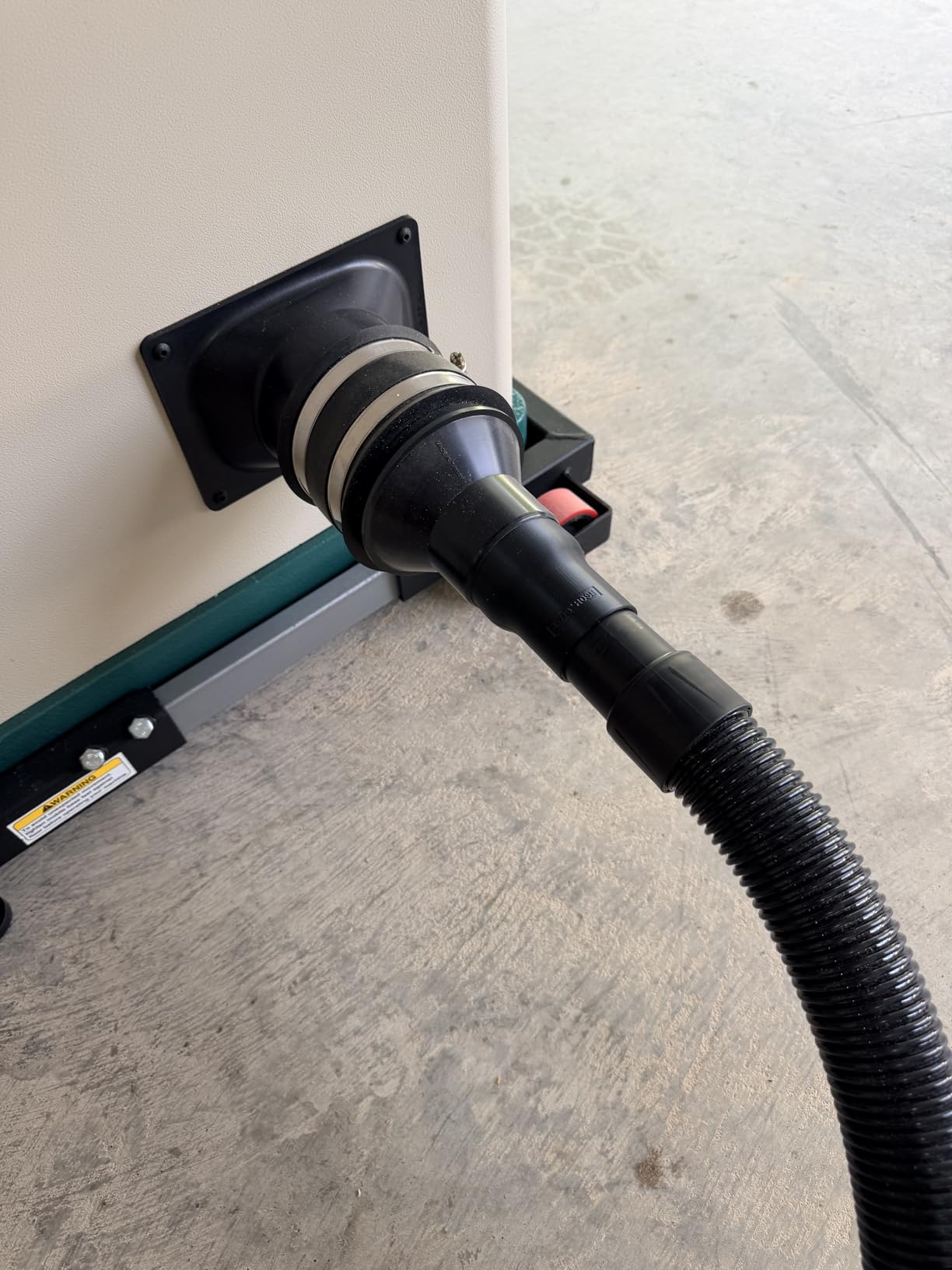
Two port sizes, 1-7/8 inch and 2-1/2 inch, cover most of the shop vacs people actually own, and that dual fit is more useful than it sounds. It removes the single most common reason a separator ends up unused, which is that the hose you already have does not match the port you just bought.
The translucent bucket is a genuine convenience in a shop. You can see the fill level through the side while the machine is running, which means you empty on your schedule rather than at the moment the vacuum starts to sound starved.
DEWALT specifies cyclonic separation that captures wood chips and debris before vacuum entry, plus anti-clogging, heat-resistant construction, and a 3 year limited warranty. The warranty length is worth weighing against the one year on the Festool unit in this group, since these are both products expected to live in a dusty shop for years.
Best for a shop that moves between machines
If you move between a table saw, a router and a sander rather than setting up at one bench, the wheelbase matters more than the cyclone geometry. This unit is designed to travel, and the 6 gallon capacity means fewer stops to empty during a weekend of cutting.
It is also a good first separator for someone who has never had one, because there is no drilling step to get wrong. If it does not suit your shop, you have lost a weekend rather than a bucket lid.
What you give up
It stands 31.4 inches tall, which is not a low-profile lid and will not tuck under a bench. Plan the footprint before you build the setup around it, especially in a one-car garage where floor space is the scarce resource.
Some owners find the included hose length and fittings limit how far the unit can reach a large tool, and it is worth budgeting for a longer hose rather than straining the connection. Remember also that the vacuum is not part of the package.
We earn a commission, at no additional cost to you. CERTAIN CONTENT THAT APPEARS ON THIS SITE COMES FROM AMAZON. THIS CONTENT IS PROVIDED 'AS IS' AND IS SUBJECT TO CHANGE OR REMOVAL AT ANY TIME.
5. Rockler Dust Right with 10 Gallon Bucket – capacity for long sessions
Rockler Dust Right Dust Separator w/ 36” Hose & 10Ga Bucket for Shop Vac
- 10 gallon translucent bucket
- Five caster base
- 36 inch hose included
- 2-1/4 inch vac outlet
Pros
- 10 gallon capacity roughly doubles a 5 gallon pail
- Five caster base rolls and stays upright
- 36 inch flex hose included
- Hoses lock inside the in and out ports
Cons
- Plastic lid can crack over time
- Small lid gap can leak fine shavings
- Fine cement dust still bypasses
- Suction loss with small vacs and long runs
We earn a commission, at no additional cost to you. CERTAIN CONTENT THAT APPEARS ON THIS SITE COMES FROM AMAZON. THIS CONTENT IS PROVIDED 'AS IS' AND IS SUBJECT TO CHANGE OR REMOVAL AT ANY TIME.
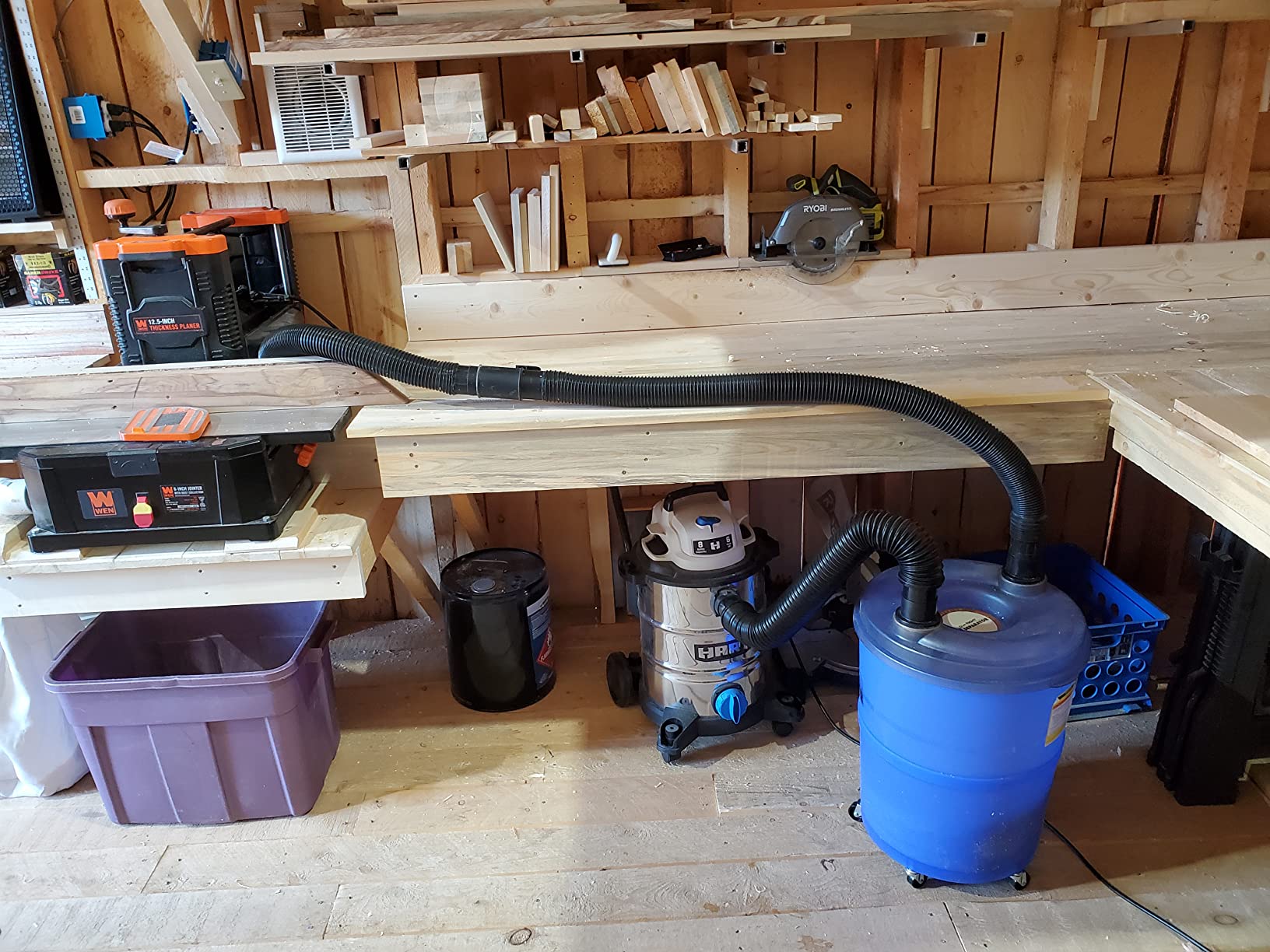
Capacity is the whole argument for the Dust Right. At 10 gallons it holds roughly twice what a 5 gallon pail holds, so a heavy day of planing or table saw work means one emptying instead of two or three. The translucent bucket makes the fill line visible, and the five-caster base rolls it around a shop without tipping.
It ships with a 36 inch flex-form hose, and the hoses connect inside the in and out ports so they cannot disconnect accidentally when you drag the unit across the floor. That detail is small until the first time a hose pops out mid-cut.
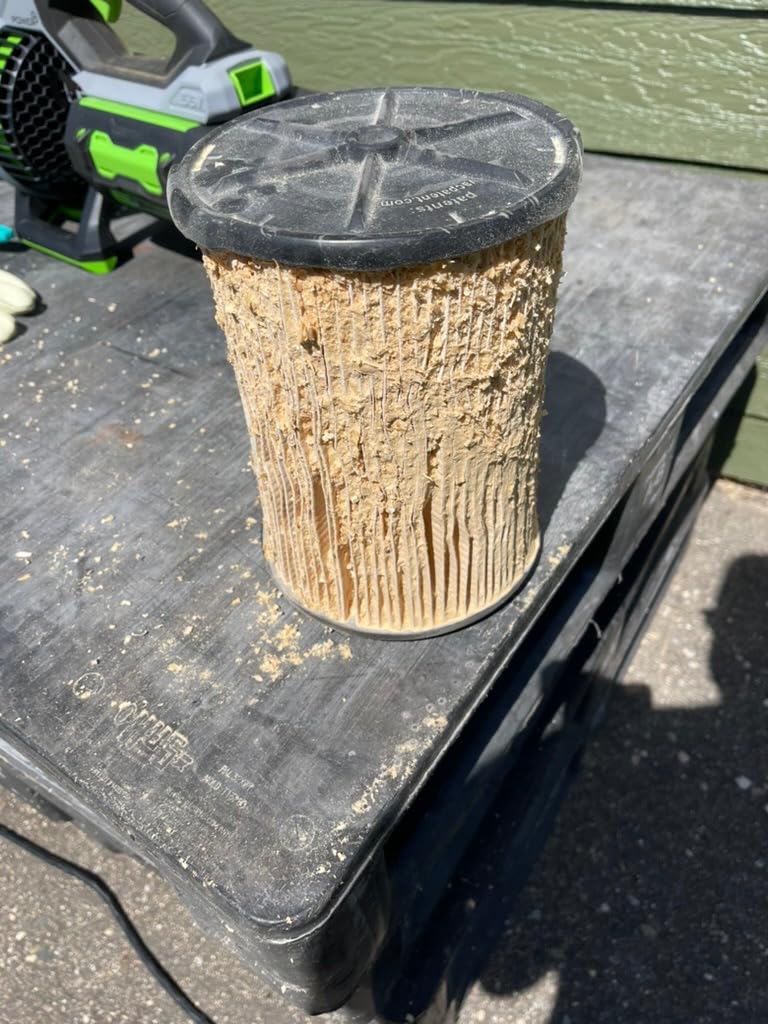
Owners also use it well outside woodworking, including poultry barn dust and dander, which tells you how much capacity headroom matters on a job that generates a lot of debris for its size. Several reviewers report noticeably better capture than a self-built DIY kit.
The rating here is 4.2 across more than 670 reviews, the second lowest of the ten, and the review pattern explains why. Satisfaction clusters around capacity, mobility and vacuum cleanliness. Dissatisfaction clusters almost entirely around the lid, which is where the durability problems appear after months of use.
It is also the heaviest unit in this group at 11.18 pounds, which is part of why it needs a five-caster base rather than sitting on a floor. Capacity has a carrying cost.
Who should size up to 10 gallons
People who run a planer, jointer or drum sander, or who do a full day of table saw work without stopping. Doubling the capacity is not a luxury at that point, because each emptying is also a reconnection and a re-seal, and you are doing it in the middle of a build.
It also suits anyone who would rather empty a large bucket less often than empty a small one more often, particularly if your shop is a one-car garage where carrying a half full 5 gallon pail across a workbench is the least enjoyable part of the day.
Where the complaints sit
Some owners report the plastic lid cracking at the vacuum intake side after heavy use, and a visible gap between lid and container that can leak fine shavings on high-shaving machines. Those are durability rather than design problems, and they are the reason this unit does not sit higher despite its capacity advantage.
Fine cement and drywall dust still bypasses it, and buyers with small vacuums report noticeable suction loss, particularly with long hose runs. Check your vacuum’s airflow before committing, because a 10 gallon separator on a small vac leaves less headroom for the separator itself.
We earn a commission, at no additional cost to you. CERTAIN CONTENT THAT APPEARS ON THIS SITE COMES FROM AMAZON. THIS CONTENT IS PROVIDED 'AS IS' AND IS SUBJECT TO CHANGE OR REMOVAL AT ANY TIME.
6. POWERTEC Low Profile Dust Separator – the all-in-one lid kit
POWERTEC Low Profile Dust Separator for Shop Vac & Dust Collectors, Fits 5 Gallon Buckets, For 2-1/4″ Shop Vacuum Port, 2-1/2″ & 4″ Dust Collection System, Cyclone Dust Collection Kit w/Hose & Elbow
- Low profile lid
- 2.25 inch outside diameter
- 3 ft hose and 90 degree elbow
- Foam gasket
Pros
- Hose elbow adapters and latches all included
- Foam gasket and dual latches seal consistently
- Low profile resists tipping on a pail
- Strong on chips and coarse dust
Cons
- Latch clips are flimsy and pop out
- Gasket can run short of full circumference
- Fine powdery dust passes through more
We earn a commission, at no additional cost to you. CERTAIN CONTENT THAT APPEARS ON THIS SITE COMES FROM AMAZON. THIS CONTENT IS PROVIDED 'AS IS' AND IS SUBJECT TO CHANGE OR REMOVAL AT ANY TIME.
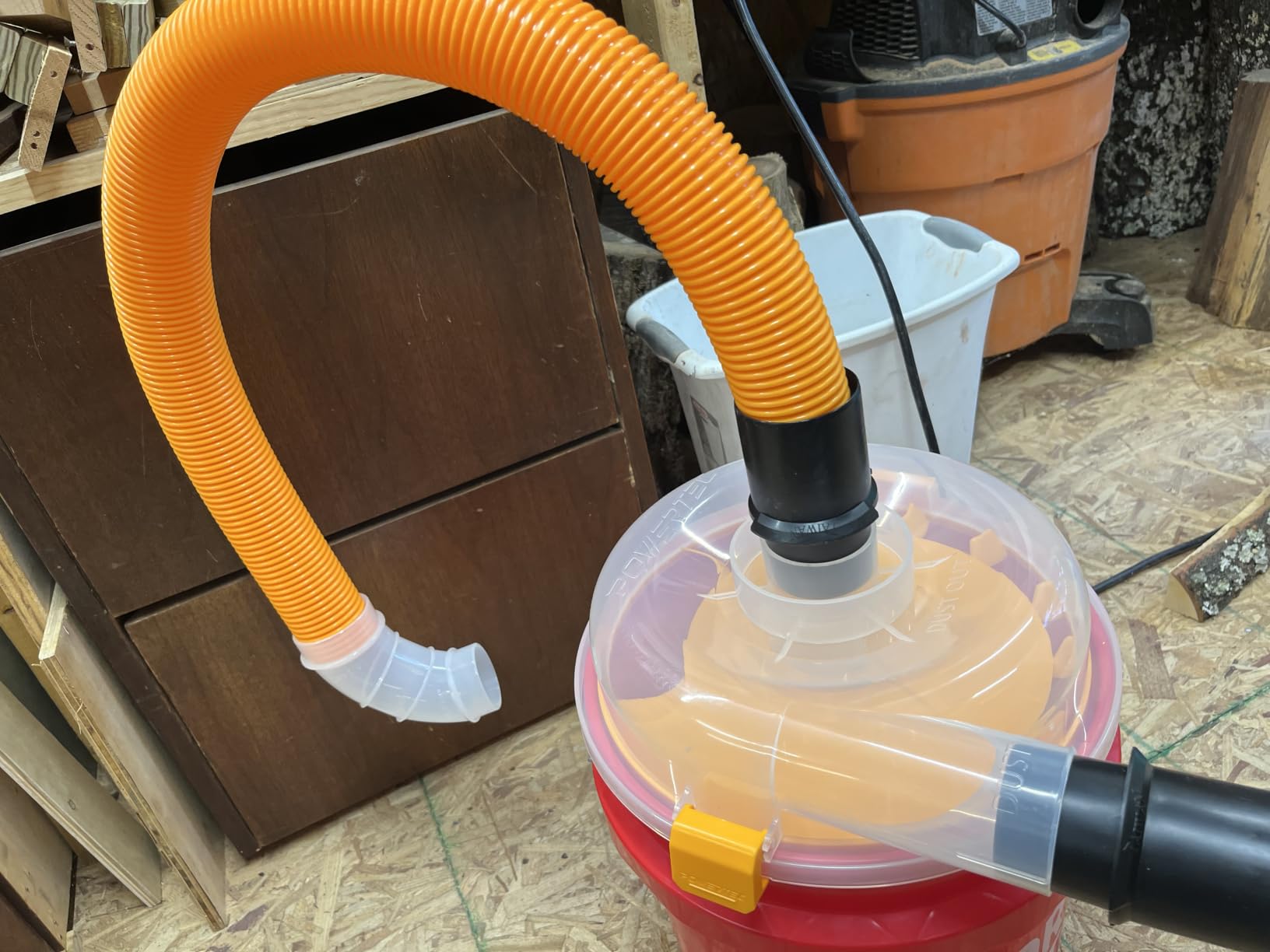
The POWERTEC low-profile lid is the most complete of the low-profile options here. The box contains the separator lid assembly, a foam gasket, dual latches, a 90 degree elbow for a 2-1/4 inch connection, hose adapters, a 3 foot length of hose and grounding hardware. You supply the 5 gallon bucket and the vacuum, and that is the entire project.
It is also unusually flexible about what you connect it to. The lid accepts 2-1/4 inch shop vac hose, and the included adapters let it integrate with 2-1/2 inch and 4 inch dust collection systems, which means the same lid can serve a shop vac today and a small collector later.
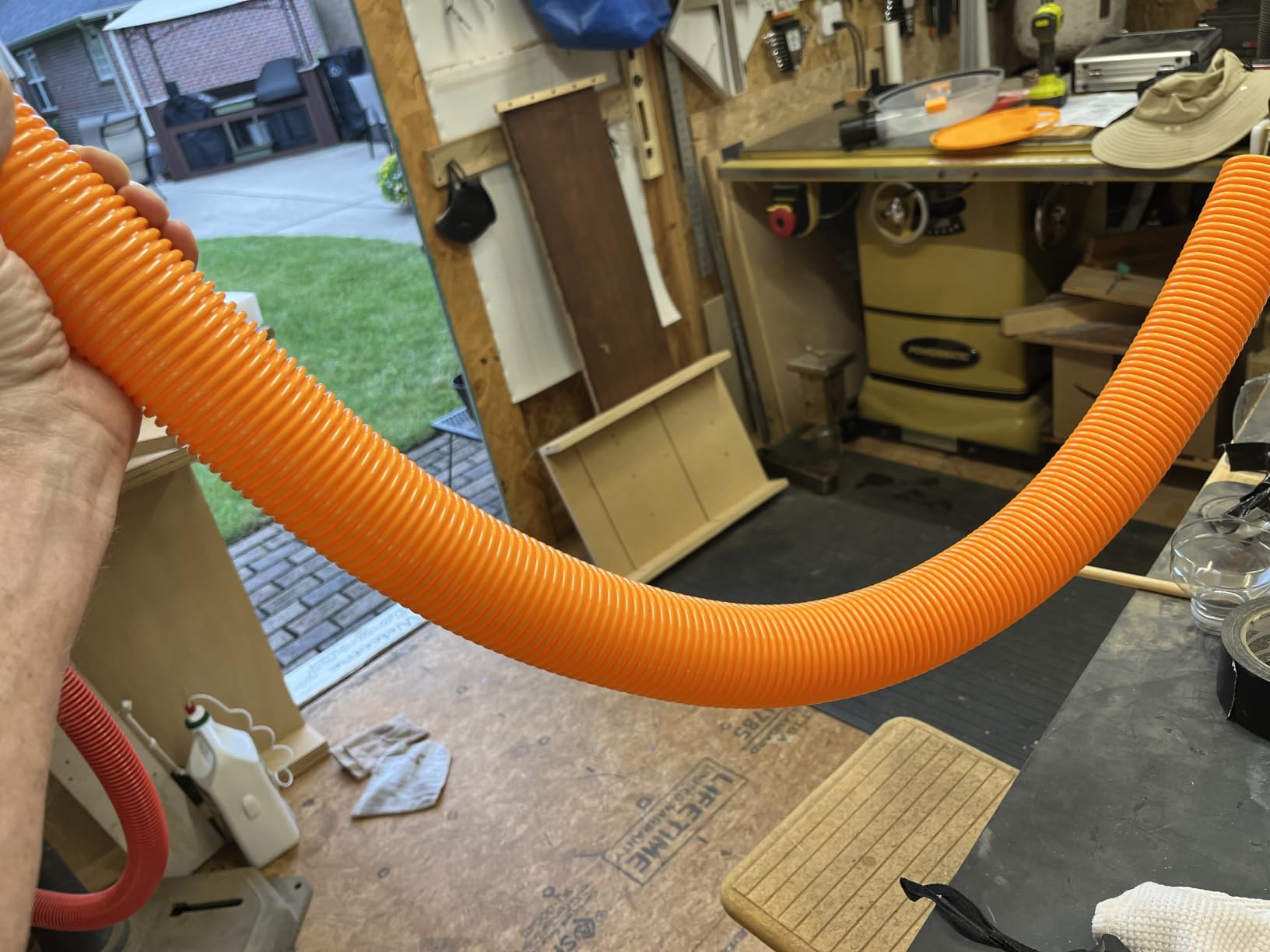
Owners find it effective on chips and coarse dust from table saws and for floor sweeping, and the low 2.25 inch profile improves stability on a bucket enough that it stays put when you move the hose. Impact-resistant PP and ABS construction is a sensible material choice for something that will be dropped.
POWERTEC rates the lid for up to 99.9 percent dry dust capture. As with every percentage in this article, read that as a maker figure. The more informative detail is what owners report about fine powdery dust, which passes through more readily here than with the premium alternatives.
There is a design consequence worth knowing. The separator plate spins dust around the bucket rather than dropping it straight down, so capture drops once the bucket is more than about half full. With a clear bucket you can watch for this, and with an opaque one you will not.
Best when you want one box and one afternoon
If you have a 5 gallon bucket, some hose and an afternoon, this is the shortest path from a bare shop vac to a working separator. Nothing needs drilling and nothing needs caulking, which removes the two most common install mistakes.
It is also a reasonable bridge unit if you split your time between a shop vac and a 4 inch collector, since the included adapters cover both worlds rather than committing you to one.
What to inspect before you rely on it
The latch clips are the weak point. Owners report they pop out of their brackets, and a separator whose lid unclatches mid-job dumps your hard-won debris onto the floor while the vacuum keeps running. Check the latches every time you reattach the lid.
Some units also arrive with a gasket slightly short of the full circumference, which leaves a gap that leaks air. Test the seal with a tissue all the way around before the first real job, and treat the unit as a fine-dust catcher only if the seal is complete.
We earn a commission, at no additional cost to you. CERTAIN CONTENT THAT APPEARS ON THIS SITE COMES FROM AMAZON. THIS CONTENT IS PROVIDED 'AS IS' AND IS SUBJECT TO CHANGE OR REMOVAL AT ANY TIME.
7. DEWALT DXVCS003 10 Gallon Stainless Tank – the collapse-proof canister
Dust Separator with 10 Gal. Stainless Steel Tank
- 10 gallon stainless steel tank
- Four casters and two handles
- 2-1/2 inch hose
- 3 year warranty
Pros
- Steel tank resists the collapse plastic pails suffer
- 10 gallons roughly doubles a 5 gallon bucket
- Lid clamps down securely when moved
- Three year manufacturer and distributor warranty
Cons
- Tall 34.6 inch footprint plus hose space
- Hose adapters not included
- Adds some noise to the system
We earn a commission, at no additional cost to you. CERTAIN CONTENT THAT APPEARS ON THIS SITE COMES FROM AMAZON. THIS CONTENT IS PROVIDED 'AS IS' AND IS SUBJECT TO CHANGE OR REMOVAL AT ANY TIME.
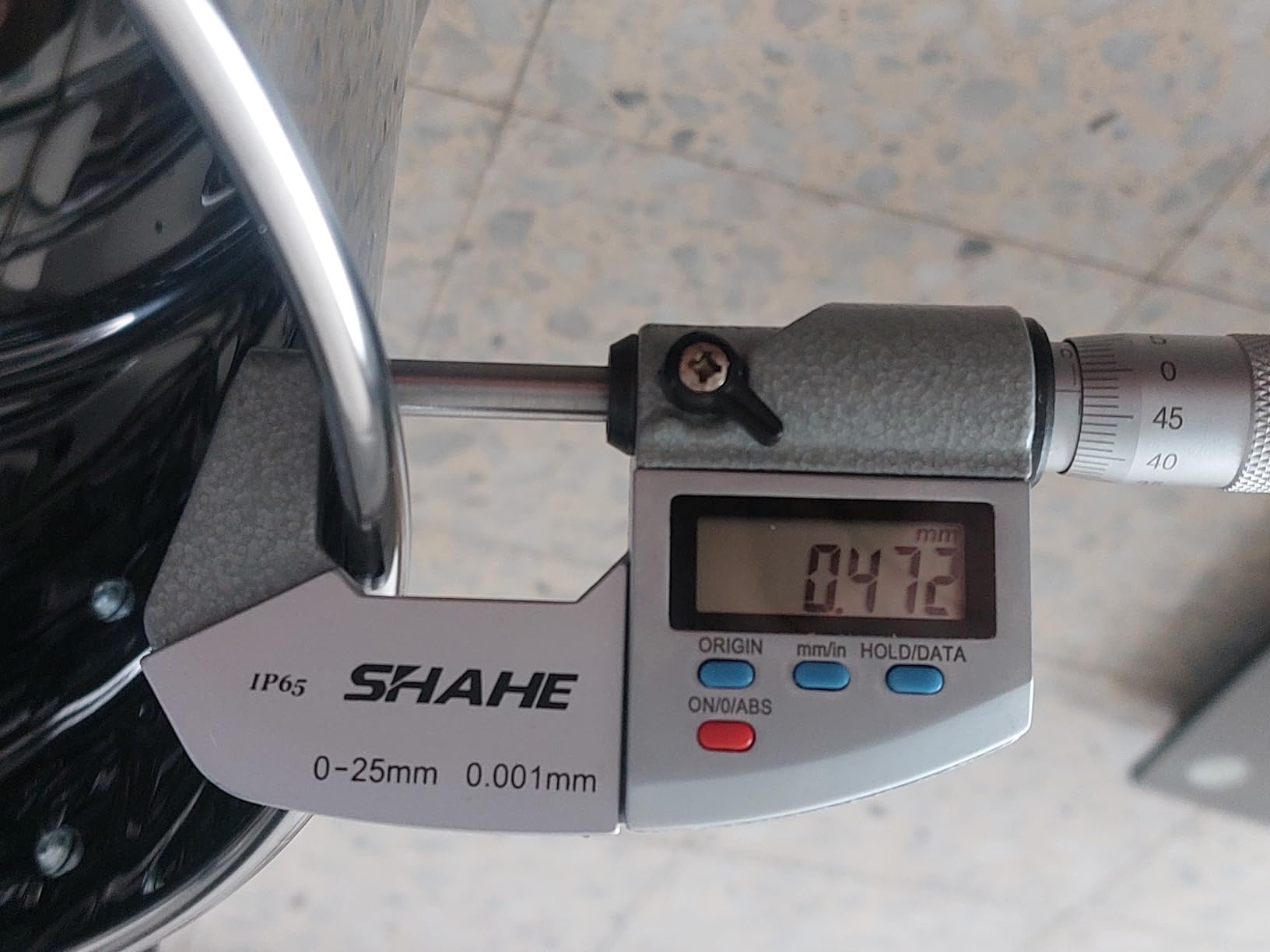
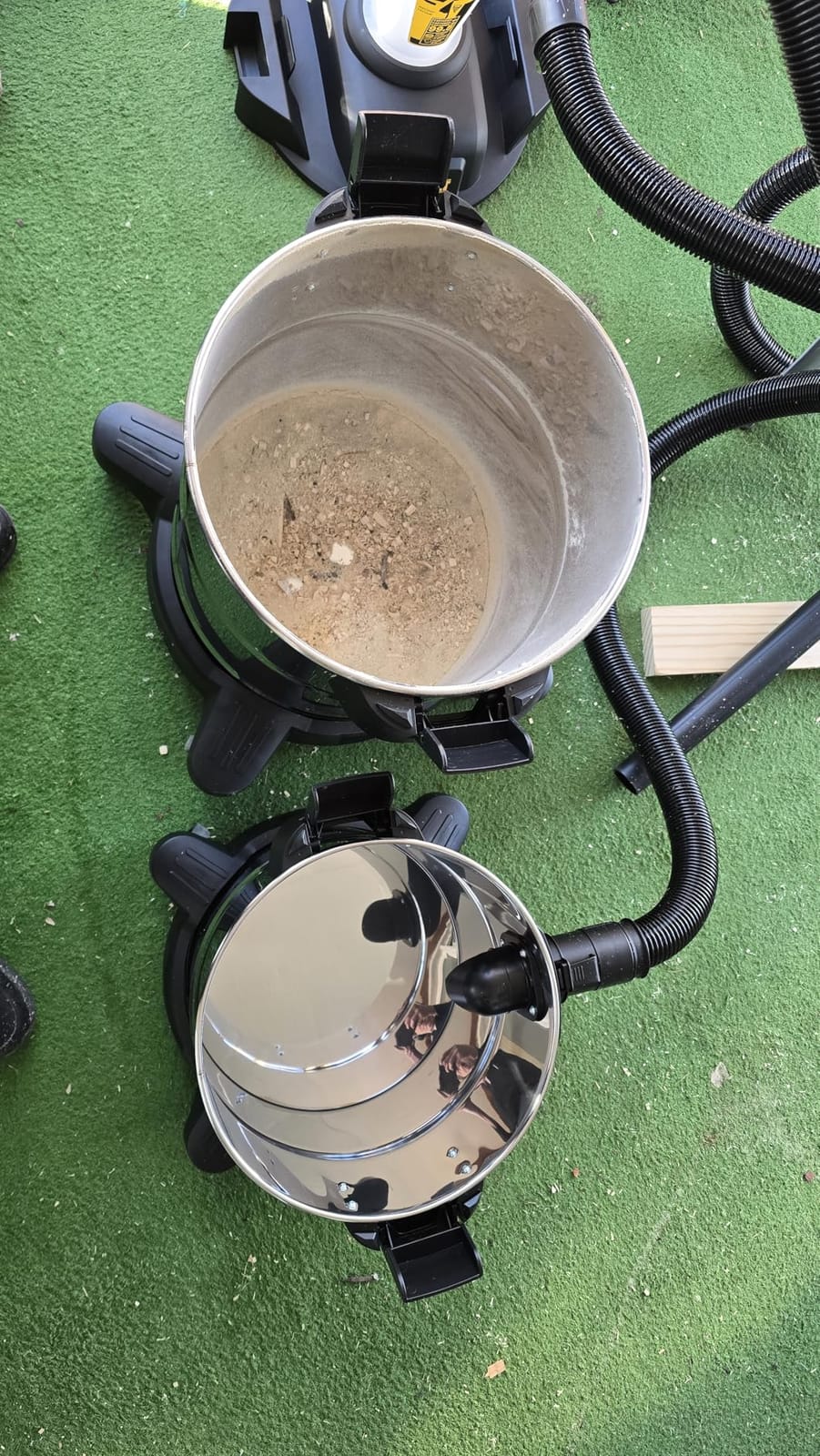
Every other plastic container in this roundup shares one vulnerability: a shop vac pulling roughly 500 pounds per square foot on a thin wall can flex it or collapse it. The DEWALT DXVCS003 removes that variable entirely with a 10 gallon stainless steel tank, and that single change is why it earns the badge it does.
Steel does not care how full it gets or how long you leave it clamped, so the implosion problem that generates forum threads around plastic pails simply does not apply. Professional users report vacuum interiors staying practically spotless and large savings on bags and filters over time.
The lid clamps down securely, which matters more than it sounds because a lid that lifts when you roll the unit is how a steel tank ends up coated in dust on your shop floor. Four casters and two handles are included, so repositioning a full canister is a two-person job at worst rather than a tipping incident.
It connects to standard 2-1/2 inch shop vac hoses, and carries a 3 year manufacturer and distributor warranty, which is the longest warranty alongside the DXVCS002 in this group. At 4.6 stars across more than 550 reviews it is well above the group average.
Two honest notes. First, hose adapters are not included, so if your setup needs reducers you will buy them separately. Second, at 34.6 inches tall plus whatever hose run you add, this is the largest footprint here, and it does not tuck under anything.
When a steel tank is worth the footprint
When you run a lot of heavy material, when your container is shared or gets handled roughly, or when you have already lost a pail to implosion and would rather not relive it. The tank pays you back every time you skip that lesson.
It is also a good answer for a workshop that collects a genuinely large volume of dust in a session, because 10 gallons of steel capacity is a lot of material before you think about emptying it.
What you trade away
Footprint and noise. At 34.6 inches it is the tallest unit here, so the hoses add real length to your reach, and the steel tank plus airflow noise at a rated 70 dB makes the whole system slightly louder than a plastic setup.
It is also strictly a passive separator. It needs a separate vacuum to provide suction, and the same applies to every product in this roundup, but it is worth repeating because a canister this size invites the assumption that it does something on its own.
We earn a commission, at no additional cost to you. CERTAIN CONTENT THAT APPEARS ON THIS SITE COMES FROM AMAZON. THIS CONTENT IS PROVIDED 'AS IS' AND IS SUBJECT TO CHANGE OR REMOVAL AT ANY TIME.
8. Festool CT CYCLONE – flat storage for extractor owners
Festool 204083 CT CYCLONE Dust Separator CT-VA-20
- Flat cyclone design
- Fits inside a Systainer
- Works with CT 26 36 48
- 7 kg
- 1 year warranty
Pros
- Flat design stores neatly inside a Systainer
- OSHA Table 1 compliant with HEPA extractors
- Works across the CT 26 36 48 range
- Build quality praised by long-time owners
Cons
- Costs far more than generic separators
- Some suction loss versus a direct hose
- Friction fit parts are easy to misalign
- Not suitable for liquid pickup
We earn a commission, at no additional cost to you. CERTAIN CONTENT THAT APPEARS ON THIS SITE COMES FROM AMAZON. THIS CONTENT IS PROVIDED 'AS IS' AND IS SUBJECT TO CHANGE OR REMOVAL AT ANY TIME.
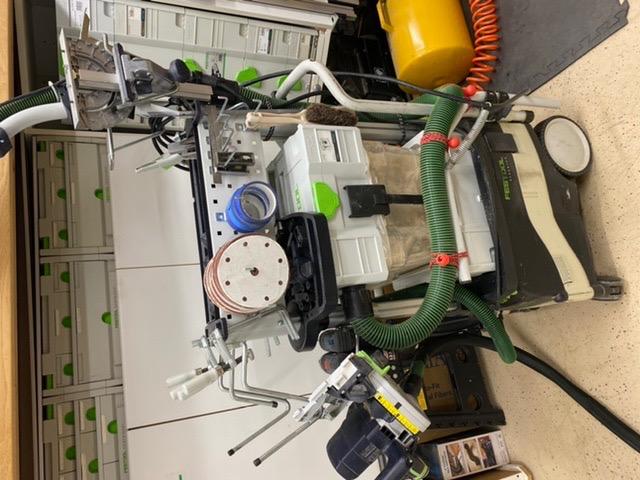
Every other separator on this page is a cone on a bucket. The Festool CT CYCLONE is a flat rectangular unit that drops into a Systainer, which is the entire reason it exists and the reason to consider it at all. If your dust extraction is already a Festool CT unit, this stores flat, stacks with the rest of your system, and travels in the same box.
Festool states the CT CYCLONE captures roughly 95 percent or more of sawdust before it fills the filter bag, and that it is OSHA Table 1 compliant when paired with a HEPA-certified CT Dust Extractor. That second claim is the interesting one for anyone who works with materials that require HEPA capture, because the compliance comes from the combination rather than the separator alone.
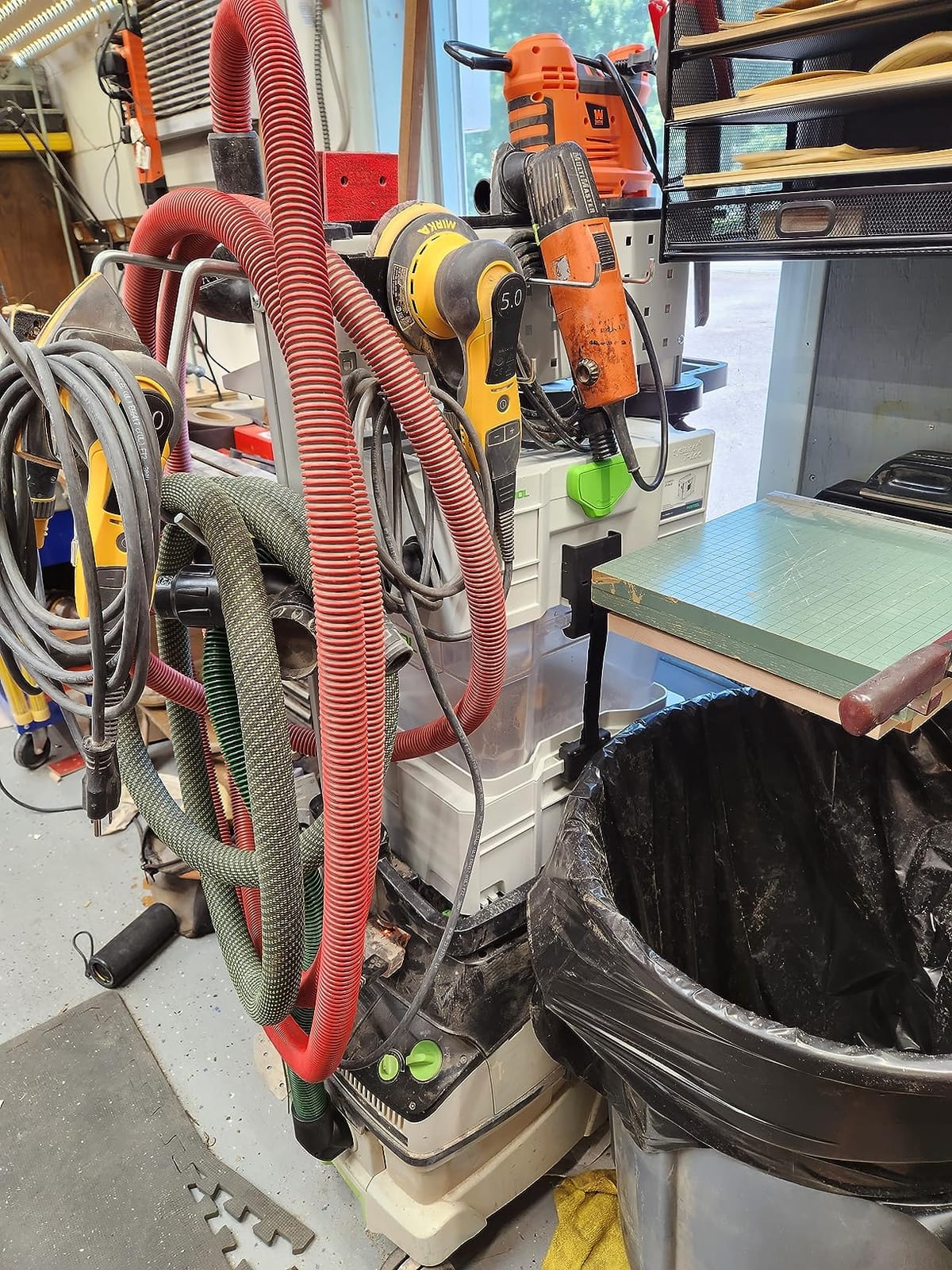
It combines with all CT 26, 36 and 48 extractors, with and without Autoclean, held in place by friction fit within the Syscollector lid. Owners who have used Festool for years praise the fit and build quality, and report that bags stay nearly empty enough to pay back the cost over a year of regular work.
The honest framing is that this is a premium accessory for a premium system. Owners consistently note the higher cost, some loss of suction compared with a direct hose connection, and friction-fit parts that are easy to misalign. That last point has a real performance cost: a cyclone seated incorrectly loses a sharp chunk of its separation, and it still looks installed.
Warranty is one year, the shortest here, and the unit is not suitable for liquid pickup. Both are consistent with a system accessory rather than a general shop vac separator.
Why the flat format changes small shops
Floor space is usually the binding constraint in a small shop, and a flat separator that lives in a Systainer costs you nothing when it is not in use. Tall cone designs occupy a permanent footprint, and that is exactly the problem people describe with under-bench setups.
It is also a natural travel companion. If you take your extractor to a job site or a teaching space, the cyclone goes in the same case rather than needing a separate trip to the shop.
Where the premium is hard to justify
If you do not already own a Festool CT extractor, this is the wrong section to be reading. There are cheaper separators that do the same job in front of a generic vac, and the fit advantages disappear the moment the brand of your vacuum changes.
Also weigh the friction-fit assembly. A misaligned cyclone still looks fitted, and you will only notice by checking separation with clear test dust. Budget a few minutes to confirm the seat each time you reassemble it, and keep the 95 percent figure in mind as a claim that depends on getting that right.
We earn a commission, at no additional cost to you. CERTAIN CONTENT THAT APPEARS ON THIS SITE COMES FROM AMAZON. THIS CONTENT IS PROVIDED 'AS IS' AND IS SUBJECT TO CHANGE OR REMOVAL AT ANY TIME.
9. Cen-Tec Quick Click Dust Collection Separator – standard sizes, minimal adapters
Quick Click Dust Collection Separator
- 8 inch baffled housing
- 2.375 inch inlet
- 2.5 inch outlet
- Commercial rubber gasket
- 3.4 pounds
Pros
- Connects to standard wet and dry vac hoses
- Highest average rating in this group
- Baffled housing smooths the airstream
- Commercial grade rubber gasket resists leaks
- Translucent body shows debris separating
Cons
- Recovery bin must be bought separately
- Fixed diameters may still need adapters
- Better suited to dry debris than heavy shop use
We earn a commission, at no additional cost to you. CERTAIN CONTENT THAT APPEARS ON THIS SITE COMES FROM AMAZON. THIS CONTENT IS PROVIDED 'AS IS' AND IS SUBJECT TO CHANGE OR REMOVAL AT ANY TIME.
The Cen-Tec Quick Click is built around a simple observation: most separator problems are actually fitting problems. It is engineered around industry standard vacuum and hose dimensions so that a normal wet/dry vac hose connects with minimal adapter hunting, and it carries a commercial grade rubber mounting gasket to stop the leaks that quietly destroy separation performance.
At 4.8 stars across more than 370 reviews it has the highest average rating of anything in this roundup, and an unusually small share of one-star reviews. Reviewers repeatedly single out the ease of connection and the fact that they could see debris separating through the translucent body while the machine ran.
The design detail that does the work is the 8 inch upper housing with curved surfaces and a center baffle. The baffle smooths the airstream before it enters the separation path, and curved internal surfaces avoid the abrupt changes in direction where dust would otherwise settle out in a lump. It is a more deliberate piece of flow engineering than the plain cones in this group.
The 2.375 inch inlet is sized for the hose most common wet/dry vacs ship with, including Ridgid, Shop Vac and Vacmaster machines, and the outlet accepts common 2.5 inch wire-reinforced dust collection hose. For a lot of people that means the entire install is two hose cuffs and a bin.
It also separates liquids from the airstream into a general purpose recovery bin, so it handles wet pickup as well as dry debris, which is a differentiator against the purely dry-cyclone designs in this roundup.
Where the standard sizing saves real money
Adapters are the hidden cost in most separator builds. Every extra reducer is another restriction, another potential leak point and another part to source, and for a shop vac hose that does not quite match, that adds up quickly before the separator does any work.
Because this unit is dimensioned around the common sizes, the money you would have spent on adapters goes into the recovery bin instead, which is the part you actually need.
What to plan for
The separator and the recovery bin are separate purchases unless you buy a bin variant, so factor that in before you judge the total. The fixed inlet and outlet diameters also mean a genuinely non-standard hose will still need an adapter.
Owners describe it as best suited to dry debris and liquid capture rather than heavy continuous shop use, so if your plan is to run a planer or jointer for hours, a heavy-duty cone on a steel or heavy-duty pail is a better long-term home for that dust.
We earn a commission, at no additional cost to you. CERTAIN CONTENT THAT APPEARS ON THIS SITE COMES FROM AMAZON. THIS CONTENT IS PROVIDED 'AS IS' AND IS SUBJECT TO CHANGE OR REMOVAL AT ANY TIME.
10. Oneida 2.5 Deluxe 5 Gallon Kit – the complete five gallon package
Oneida Air Systems Dust Collector & Cyclone Separator Kit w/ Clear Bucket, 2.5 Deluxe 5-Gal – Portable Cyclone Machine for Wet and Dry Shop Vacuums
- Complete 5 gallon kit
- Cyclone with neutral vane
- 2.5 inch hose and tether kit
- Four casters
Pros
- Bucket casters hose tether kit and gasket included
- Collapse proof bucket resists suction better than a standard pail
- Neutral vane improves separation by 20 percent
- Works with wood drywall flour ash and shavings
Cons
- Lowest average rating in this group
- Some fit finish and sealing complaints
- Neutral vane fin can restrict airflow
- Fine dust capture trails premium options
We earn a commission, at no additional cost to you. CERTAIN CONTENT THAT APPEARS ON THIS SITE COMES FROM AMAZON. THIS CONTENT IS PROVIDED 'AS IS' AND IS SUBJECT TO CHANGE OR REMOVAL AT ANY TIME.
If you want the Dust Deputy design but you do not want to build it, this is the assembled version. The kit includes the cyclone, a collapse-proof heavy-duty 5 gallon bucket, a lid, four casters with mounts, a 2.5 inch by 4.5 foot hose with swivel cuffs, a vacuum tether kit, a pre-cut neoprene foam gasket and the hardware. It is the most complete package in this roundup, and the tether kit is a detail worth more than it sounds because it keeps the separator and vacuum moving as one unit.
Oneida states the neutral-vane technology improves separation efficiency by 20 percent and that the cyclone captures about 99 percent of dust and debris before it reaches the vacuum filter. The collapse-proof bucket is the reason it can make that claim credibly, since a bucket that flexes under suction is a leak you cannot seal out.
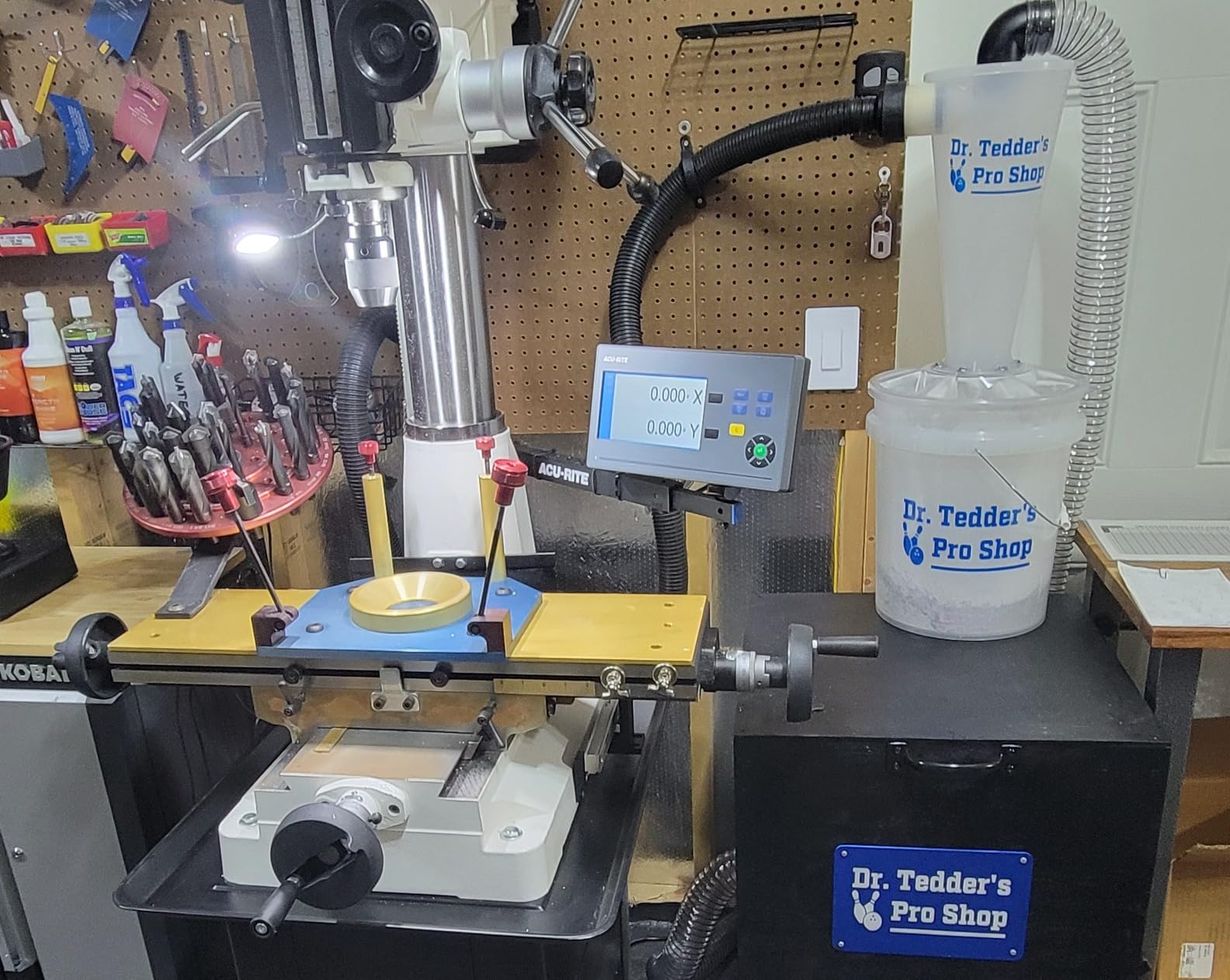
The 2.5 inch hose fittings with a backwards compatible 3 inch ID flange mean it suits larger shop vacs and small collectors alike, which is the reason to pick this over the bare DIY cyclone in many setups. The pre-cut gasket removes the fiddliest part of a self-build.
At 4.1 stars across more than 360 reviews it has the lowest average rating in this group, and the review pattern is consistent. Owners who are happy tend to be happy about completeness, because the kit works with essentially any wet/dry vacuum and any material from wood dust to drywall dust to flour and metal shavings.
The dissatisfied group focuses on three things: fit and finish, lid sealing, and how completely the neutral-vane design captures very fine dust compared with premium alternatives. That last one is a design trade-off rather than a defect, and it is discussed more in the section below.
What the tether kit actually solves
A tether keeps the vacuum and separator together so they move as one cart. Without it, dragging the hose across the shop pulls the vacuum in one direction and the separator in another, which is how a wheeled separator ends up against a wall while the vac is under the bench.
It also solves the disconnect problem. The most common mid-job failure in a shop vac setup is a hose cuff working loose at a joint, and a system that moves as a unit with short, well-supported hose runs has fewer places for that to happen.
Where the neutral vane costs you
Neutral vanes smooth the incoming swirl, which improves how much fine material gets captured, but the fins add restriction. On a vacuum that was already marginal for airflow, that restriction is measurable as lost suction, and it is the most commonly reported complaint from owners with smaller machines.
If you are unsure, match the separator to the vacuum rather than the other way around. A 2.5 inch system needs a vac that can push meaningful air through 2.5 inch hose, and pairing it with an undersized machine produces exactly the suction loss that makes people conclude separators do not work.
We earn a commission, at no additional cost to you. CERTAIN CONTENT THAT APPEARS ON THIS SITE COMES FROM AMAZON. THIS CONTENT IS PROVIDED 'AS IS' AND IS SUBJECT TO CHANGE OR REMOVAL AT ANY TIME.
How to Choose a Dust Separator for Your Shop Vac
Most disappointing separator purchases are not bad products, they are mismatched setups. The guide below covers the decisions that determine whether a separator helps or simply adds a leak between you and the machine.
How cyclone separation actually works in four steps
1. Dirty air enters the side inlet and is given a deliberate spin rather than being dumped straight down the middle. This is the step that separates a cyclone from a plain bucket, and the inlet geometry is the biggest difference between a good separator and a cheap one.
2. Centrifugal force throws heavier particles outward against the cone wall. Coarse material like chips and shavings hit the wall hard and stop following the air.
3. That material slows, drops down the wall, and falls into the bucket below. This is the part you empty.
4. The air turns and exits upward through the centre of the cyclone to the vacuum. The baffle between steps 3 and 4 exists to stop the dust cloud from riding the outgoing air straight back up into your filter, which is why a missing or short baffle is a real performance loss rather than a cosmetic defect.
Why the efficiency percentages need a caveat
Because there is no filter inside the cyclone itself, there is nothing inside it to clog. That is the mechanical reason a separator extends filter life: your filter sees a fraction of the load it saw before.
Be careful with the numbers. Collection efficiency and separation efficiency are not the same measurement, and bypass percentage is the more honest metric, because a unit that captures 99 percent of what enters still passes through whatever the remaining 1 percent is. Any figure close to 99 percent in this category should be read as a lab-condition maker claim.
Cyclone body versus low-profile lid versus plain lid
A tall cyclone body sits beside or in front of the bucket and throws material into it with the most force, which makes it the best choice for chips, shavings and planer debris. It costs floor space and it is the design most likely to tip when you drag the hose.
A low-profile lid sits on top of a standard 5 gallon pail, occupies almost no floor space, and cannot tip, but it has a shallower path and generally gives up a little separation performance. Several owners report it is also louder, since the same airflow moves through a shorter, tighter route.
A plain lid with no spinning at all is the cheapest option and separates almost nothing. It is not a dust separator, and buying one expecting cyclone performance is the most common wasted purchase in this category.
Hose diameter and port matching
This is the decision that quietly decides whether a separator works for you. Match the inlet to the hose you already own rather than buying a reducer to fit a different design.
A 1-7/8 inch hose is the most common wet/dry vac hose in North America and is used by many Shop Vac, Ridgid, Karcher and Vacmaster machines. A 2 inch hose is the classic Dust Deputy port size, which is why that retrofit works with so many vacs out of the box. A 2-1/4 inch inlet is the commercial compromise, used by the Dustopper and the Cen-Tec Quick Click, and it covers a lot of mid-size machines. A 2-1/2 inch port suits larger shop vacs and small collectors, but it is a bigger commitment because the airflow demand goes up with it. And 4 inch ports belong to dust collectors, not to wet/dry vacs at all.
Each step up in port size increases airflow demand. A 2-1/2 inch separator on a small vac leaves the machine without enough pressure to spin the cyclone properly, and the result looks exactly like a failed separator.
Bucket strength, capacity and implosion
A shop vac pulls roughly 500 pounds per square foot on whatever container it is attached to. Cheap thin-wall plastic pails flex under that load, and once the wall flexes the seal breaks and dust leaks past the cyclone, which is the failure that makes people think separators do not work.
Look for collapse-proof or heavy-duty pails, or a metal or steel canister, and check the wall thickness before you buy a cheap bucket to save money. Emptying at two-thirds full rather than waiting until the bucket is packed also keeps capture rates up, since several low-profile designs lose effectiveness as the level rises.
Static, grounding and combustible dust
Dry wood dust, fine sanding dust and any fibrous material can carry a static charge, and a charge builds fastest in exactly the conditions a shop runs in: low humidity, fast air movement, plastic hoses. Small shocks at the bucket or the hose cuff are common, and several products in this roundup include grounding hardware for that reason.
Ground the unit according to the maker’s instructions rather than improvising, and treat any shock or arc as a signal to stop and check bonding. If you generate combustible dust, or work with aluminium, magnesium or similar materials, a dust separator is not a safety device on its own. Air cleaning equipment and proper housekeeping are the controls that matter, and a separator is a housekeeping aid rather than a substitute for them.
Shop vac separator versus dust collector cyclone
These are different products solving different problems, and a shop vac separator is not interchangeable with a collector cyclone. A separator is sized for a wet/dry vac’s airflow, typically 2 inch to 2-1/2 inch ports, and pairs with a vacuum hose. A collector cyclone is sized for a 4 inch or 6 inch collection system and pairs with rigid ducting and a motor-driven fan.
The capacity maths are different too. A collector cyclone feeds a drum that holds 20 gallons or more, while a separator feeds a 5 gallon pail and relies on you emptying it. A shop vac separator in front of a collector will starve the collector of airflow, and a collector cyclone in front of a shop vac simply will not fit the hose.
If you own a single-stage collector and want better separation, the answer is a retrofitted two-stage arrangement rather than a shop vac separator. Run the collector into a pre-separator and then back into the collector drum, which gives you the large capacity without giving up the impeller protection.
Setup order and sealing every joint
Connect in this order. The tool hose goes into the separator inlet, a short hose runs from the separator outlet to the shop vac inlet, and nothing else changes. Reversing those two is a common and frustrating mistake, because the separator then sits downstream of the filter where it can do nothing.
Then seal every joint. Push hoses fully into the cuffs until they seat against the stop, and close every clamp. Check the lid seal and the cyclone collar with a tissue at each joint before you start a real job, because a leak is invisible until dust starts escaping.
Keep the hoses short. Every extra foot of hose and every sharp elbow costs airflow, and the included sweep elbows on some models exist specifically to recover flow through a bend. Tether the vacuum to the separator if the kit allows it, so the pair moves as one and hose joints are not carrying the load of dragging the whole assembly across the floor.
Maintenance, filter life and emptying cadence
Empty the bucket at two-thirds full. Full buckets are harder to carry, harder to empty cleanly and, on several designs here, less effective because the separating space has been filled.
Inspect the gasket every time you reassemble, and replace it if it has taken a set or is torn. A gasket is a low-cost part and the most common reason an otherwise good separator starts leaking.
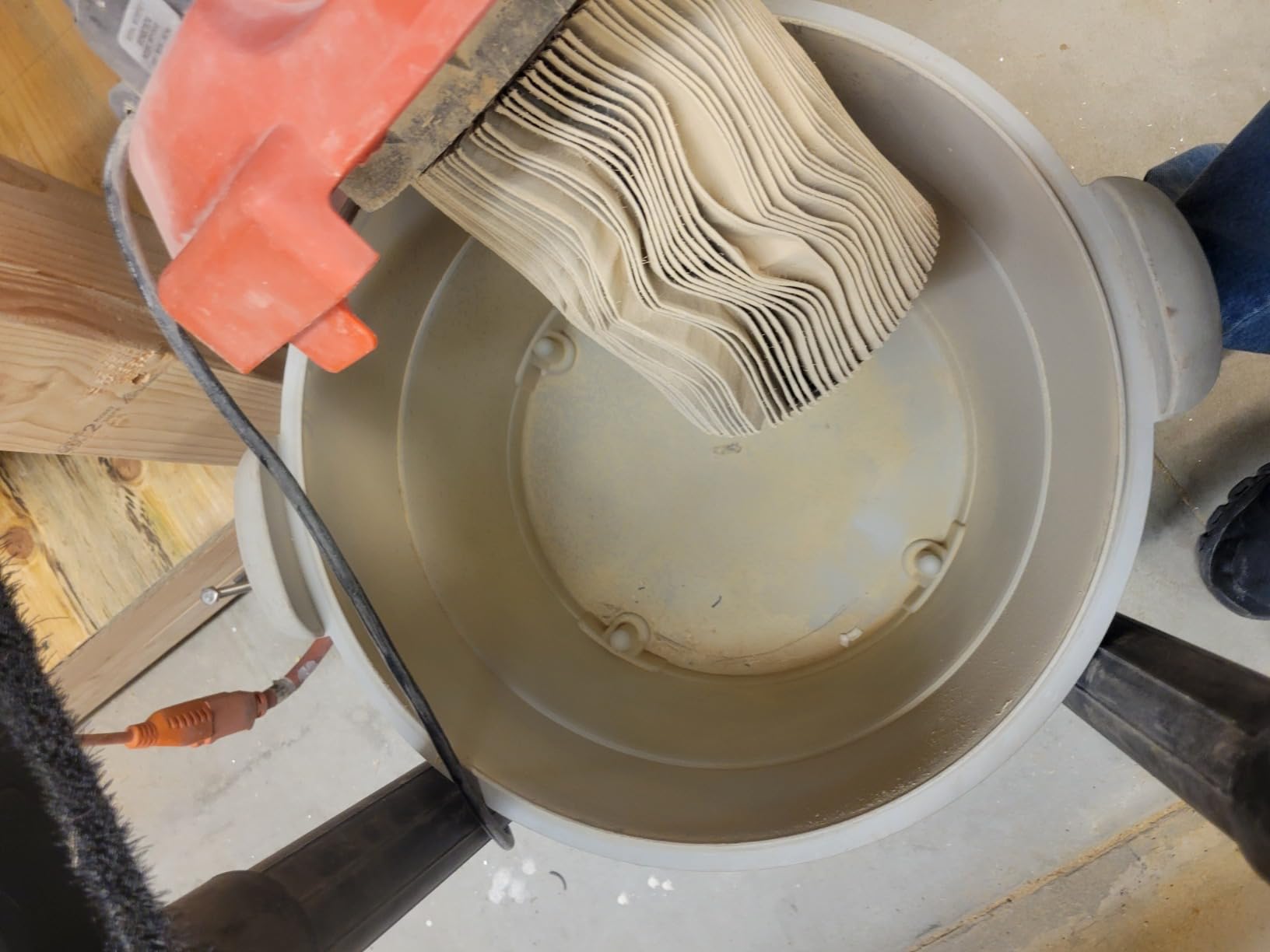
Wash the cyclone out after fiberglass, plaster or sanding compound work. Fine material builds up on the cone wall and baffle, and a coated cyclone separates worse each week until it is cleaned. For ordinary wood dust, a brush and a shop vac are enough.
Once a separator is in place, the filter and bag on your vacuum become consumables you replace far less often. That recurring saving, rather than any one efficiency figure, is what most owners point to as the reason the setup was worth building.
Who should skip a separator entirely
Skip it if you already own a capable two-stage dust collector and a vac you only use for wet pickup. Adding a separator to a wet/dry vac you use for spills mostly adds a joint to leak for no benefit.
Skip it if your work is exclusively fine finishing dust and you already have HEPA filtration downstream, since ultrafine particles bypass every cyclone in this roundup and the money is better spent on the filter than on the separator. And skip it if your vacuum is already marginal on airflow, because adding restriction to an undersized machine makes both the machine and the separator worse.
Frequently Asked Questions
What is the best dust separator for a shop vac?
The Oneida Dust Deputy DIY is the best all-round choice for most shop vacs because its tapered 2.0 inch ports fit vacs with 2 inch or smaller hose, which covers a large share of wet/dry vacuums. It ships as a bare cyclone, so you supply a bucket, hose and drilled lid. If you want a low-profile design that fits under a bench, the Dustopper PRO is the better answer.
Are dust separators worth it?
For most shop vac users, yes. A separator drops chips, shavings and coarse dust into a bucket before the air reaches your filter, so the filter stops clogging within minutes of a sanding job. The trade is airflow: published third-party testing recorded roughly 35 percent less airflow with a Dust Deputy style body and roughly 45 percent with a Dustopper style unit on a 6.5 peak hp vac.
Does a dust separator reduce suction?
Yes, and the amount depends on the design and the port size. Every separator adds a cyclone, a lid seal and at least one extra length of hose to the airstream. A shallow low-profile unit costs more flow than a tall cone, and a 2-1/2 inch system on a small vacuum costs more than a 2 inch system on a large one. Match the port to the machine you own rather than sizing up.
Can I use a shop vac separator on a dust collector?
Not directly, because they are sized for different airflows. Shop vac separators use 1-7/8, 2, 2-1/4 or 2-1/2 inch ports to match wet/dry vac hose, while dust collector cyclones use 4 inch or 6 inch ducting and a motor-driven fan. A shop vac separator in front of a collector starves it of airflow. For a collector, a pre-separator on 4 inch ports is the correct choice.
What size bucket do I need for a dust separator?
A standard 5 gallon pail is the usual choice, and strength matters more than size. A shop vac pulls roughly 500 pounds per square foot on the container, so a thin-wall pail from a big-box store can flex or collapse. Choose a heavy-duty or collapse-proof pail, a metal can, or a steel canister if you run heavy chip loads. Low-profile lids also separate less well once a bucket is more than about half full.
Do I still need a filter in my shop vac with a separator?
Yes. A cyclone captures coarse debris, chips and much of the sanding fraction, but it is not a HEPA stage and ultrafine particles still pass through. Every separator reviewed here still sends some fine dust to the vacuum filter, so keep a filter fitted and plan to change it on a schedule rather than never. For drywall, MDF or plaster work, add HEPA-rated filtration downstream.
Can a Dust Deputy be used with any vacuum?
With most wet/dry vacuums, yes. The Dust Deputy DIY uses tapered 2.0 inch ports, so it suits vacs with 2 inch or smaller hose, which covers many Shop Vac, Ridgid, Karcher and Vacmaster machines. Two things still need checking: whether your hose is larger than the port, which needs a reducer and costs suction, and whether your bucket is strong enough not to implode under the vacuum’s suction.
Conclusion: Our Best Dust Separators for Shop Vacs in 2026
The best dust separators for shop vacuums in 2026 fall into three groups, and the right one for you depends almost entirely on what you already own. If you have a wet/dry vac with 2 inch or smaller hose and a serviceable 5 gallon pail, the Oneida Dust Deputy DIY is the default pick, with the largest owner base of anything we tested and tapered ports that fit the majority of machines.
If your shop is tight and the separator has to sit under a bench, the Dustopper PRO wins on footprint and on install simplicity, because the gasket is already seated and nothing needs drilling. If you run 4 inch dust collection rather than a shop vac, the Peachtree cyclone is the relevant product and the rest of this list mostly is not.
For buyers who want no sourcing project, the DEWALT DXVCS002 arrives with a bucket, lid, casters and hose, and the DEWALT DXVCS003 solves the implosion problem outright with a stainless steel tank for anyone who has already lost a pail to it. Festool extractor owners should look only at the Festool CT CYCLONE, and anyone who can live with industry standard dimensions should seriously consider the Cen-Tec Quick Click to avoid the adapter chase that derails so many first builds.
One last practical point. Whichever you choose, buy a heavy-duty container, seal every joint with a tissue test before the first real job, and empty at two-thirds full. Those three habits matter more to how a separator performs in your shop than any efficiency percentage on the box.