
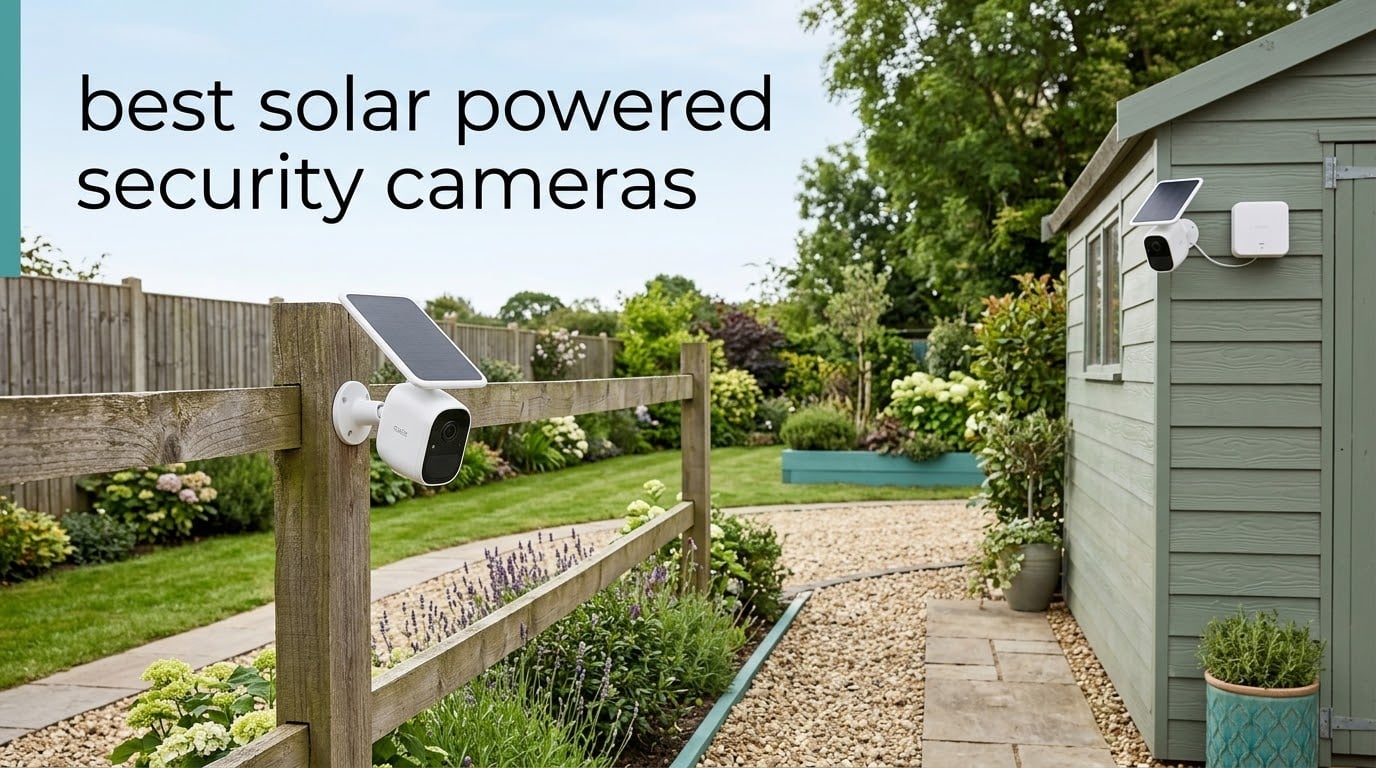
Solar powered security cameras solve one problem better than any alternative: how to put a camera on a fence post, a shed roof or a remote gate without running power. If you want the best solar powered security cameras in 2026, the deciding factor is almost never the sensor. It is how much direct sun the panel actually sees at the spot you plan to mount it.
That single fact decides success or failure more often than the brand does. One owner in a long-running r/smarthome discussion of solar cameras described keeping a pair running for years without ever charging one, and the variable they singled out was not the make or model. It was that one unit sat where it got plenty of sun. Every pick below is judged on that basis first, then on sensor, storage and detection.
Two things come up in almost every buyer conversation. The first is subscription cost, because a camera that needs a monthly cloud plan to save video is a different purchase than the one advertised. The second is recording behaviour, and it needs stating plainly before any product list.
The one limitation shared by every camera in this roundup: no solar or battery powered security camera records 24/7 continuously. These units sleep on a passive infrared or radar motion trigger, wake, capture an event, and go back to sleep. That sleep cycle is exactly what lets a small panel and a modest battery keep a camera alive outdoors for months. If uninterrupted continuous recording is non-negotiable, solar is the wrong technology and a wired camera is the correct answer.
What follows covers ten models, from a single dome camera to a four-camera kit with a home station, plus a solar reality check on winter charging, our test protocol, a buying guide and answers to the questions buyers ask most.
Table of Contents
Top 3 Solar Powered Security Cameras We Trust Most (October 2026)
These three cover the widest range of real installs. The first is the strongest all-round single camera, the second is the safest subscription-free buy, and the third solves the panel placement problem better than anything else on this list.

As an Amazon Associate we earn from qualifying purchases. CERTAIN CONTENT THAT APPEARS ON THIS SITE COMES FROM AMAZON. THIS CONTENT IS PROVIDED 'AS IS' AND IS SUBJECT TO CHANGE OR REMOVAL AT ANY TIME.
All 10 Solar Powered Security Cameras at a Glance in 2026
Storage method is the column to read first. Five of these ten record to a microSD card with no monthly fee attached, which removes the most common hidden cost in this category.
| Product | Key Features | |
|---|---|---|
 ZEEPORTE SECURITY Snap 30T Solar Camera ZEEPORTE SECURITY Snap 30T Solar Camera
|
|
Check Latest Price |
 REOLINK Argus PT Solar Security Camera REOLINK Argus PT Solar Security Camera
|
|
Check Latest Price |
 REOLINK Argus Eco with 3W Solar Panel REOLINK Argus Eco with 3W Solar Panel
|
|
Check Latest Price |
 Cinnado B6 2K Solar Camera 2-Pack Cinnado B6 2K Solar Camera 2-Pack
|
|
Check Latest Price |
 aosu Solar Camera with Fixed Panel aosu Solar Camera with Fixed Panel
|
|
Check Latest Price |
|
Tapo SolarCam C402 KIT
|
|
Check Latest Price |
 aosu D1 Classic 4-Cam Kit aosu D1 Classic 4-Cam Kit
|
|
Check Latest Price |
 Hiseeu 2K 4MP Solar Camera 2-Pack Hiseeu 2K 4MP Solar Camera 2-Pack
|
|
Check Latest Price |
 Oculview 2K Solar Camera 2-Pack Oculview 2K Solar Camera 2-Pack
|
|
Check Latest Price |
 Gianteye 2K Solar Camera 2-Pack Gianteye 2K Solar Camera 2-Pack
|
|
Check Latest Price |
We earn from qualifying purchases. CERTAIN CONTENT THAT APPEARS ON THIS SITE COMES FROM AMAZON. THIS CONTENT IS PROVIDED 'AS IS' AND IS SUBJECT TO CHANGE OR REMOVAL AT ANY TIME.
1. ZEEPORTE Snap 30T Solar Camera – Best All-Round Pan and Tilt Coverage
Solar Security Cameras Wireless Outdoor, 2K Pan/Tilt 360° View Solar/Battery Powered WiFi Cameras for Home Security with AI Motion Detection, Spotlight, 2-Way Audio, Siren, IP65, SD/Cloud Storage
- 2K 2304x1296 video
- 355 deg pan and 120 deg tilt
- 5200mAh battery with 2W panel
- IP65
Pros
- Very high 2K resolution with 355 deg horizontal and 120 deg vertical pan-tilt
- Solar panel plus 5200mAh battery removes all wiring
- AI motion detection for people vehicles and pets
- Two-way audio and a built-in siren
- Supports both microSD and cloud storage
Cons
- 2.4GHz WiFi only with no 5GHz support
- No motion tracking and event-only recording with no 24/7 mode
- Package recognition and upgraded cloud features need a paid subscription
We earn a commission, at no additional cost to you. CERTAIN CONTENT THAT APPEARS ON THIS SITE COMES FROM AMAZON. THIS CONTENT IS PROVIDED 'AS IS' AND IS SUBJECT TO CHANGE OR REMOVAL AT ANY TIME.
The Snap 30T is the camera I keep coming back to for anyone covering a yard or driveway from a single mount. The 355-degree horizontal and 120-degree vertical sweep means one unit replaces the two-camera setups most people start with, and the 2K sensor holds up when the event happens at the far end of a driveway.
Power comes from a 5200mAh rechargeable battery with a 2W solar panel, which is a modest panel. That is fine when the camera is mounted with a clear view of the sky, and it is the reason placement matters so much here. The battery is large enough that a few overcast days do not knock it out.
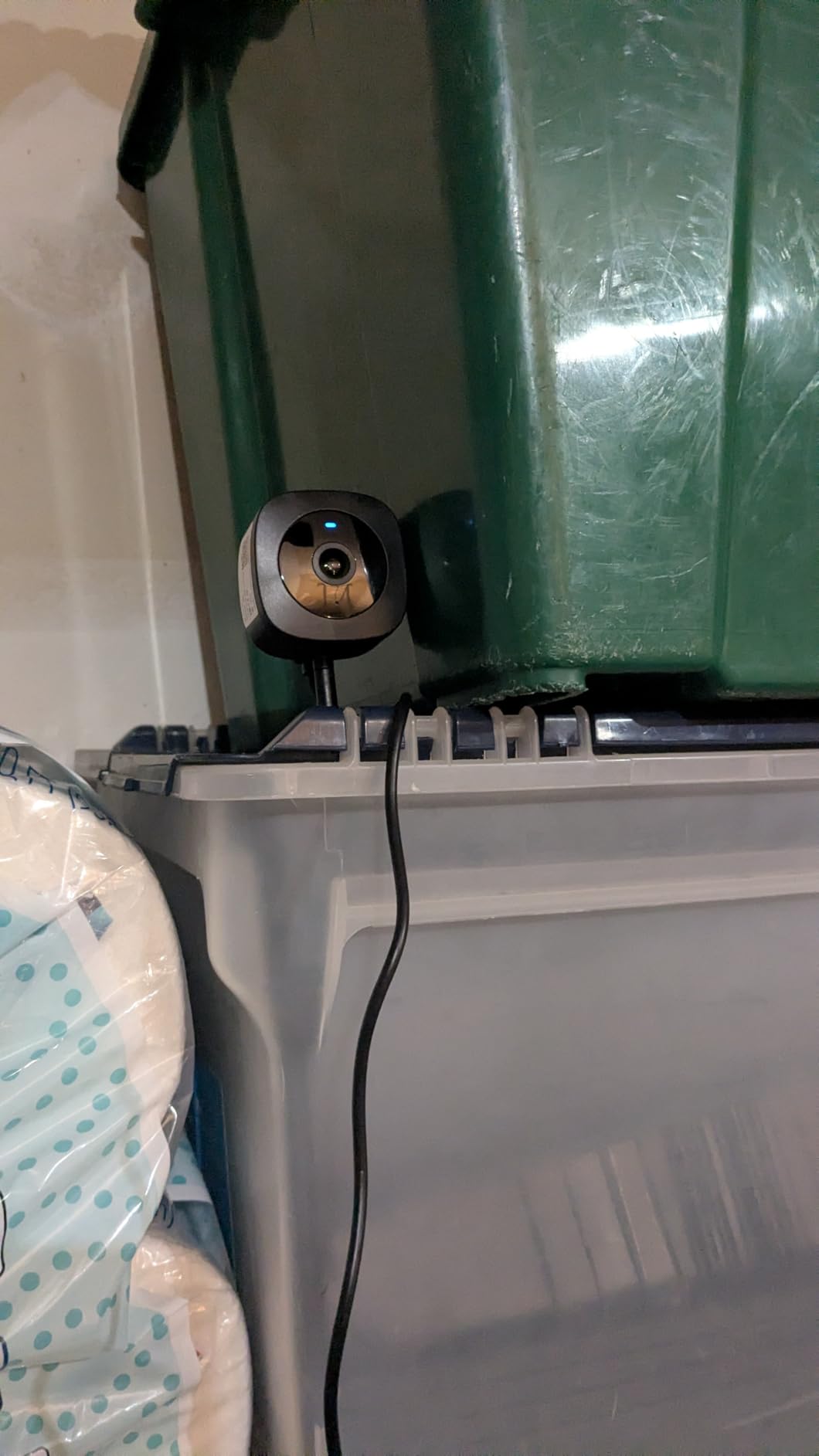
Detection is smart PIR with AI recognition for people, vehicles and pets, plus a microphone and speaker for two-way talk and a siren with a flashing LED. Storage is genuinely flexible: microSD up to 256GB and seven days of rolling cloud, so you can skip the paid tier entirely and still record.
What surprised me was the weight of the review volume. More than eleven thousand ratings sit against this camera, and the pattern in them is consistent. Owners talk about clarity and about the freedom of a genuinely wire-free install, then flag the same two caveats, which are the 2.4GHz-only radio and the fact that some AI features are held back behind a subscription.
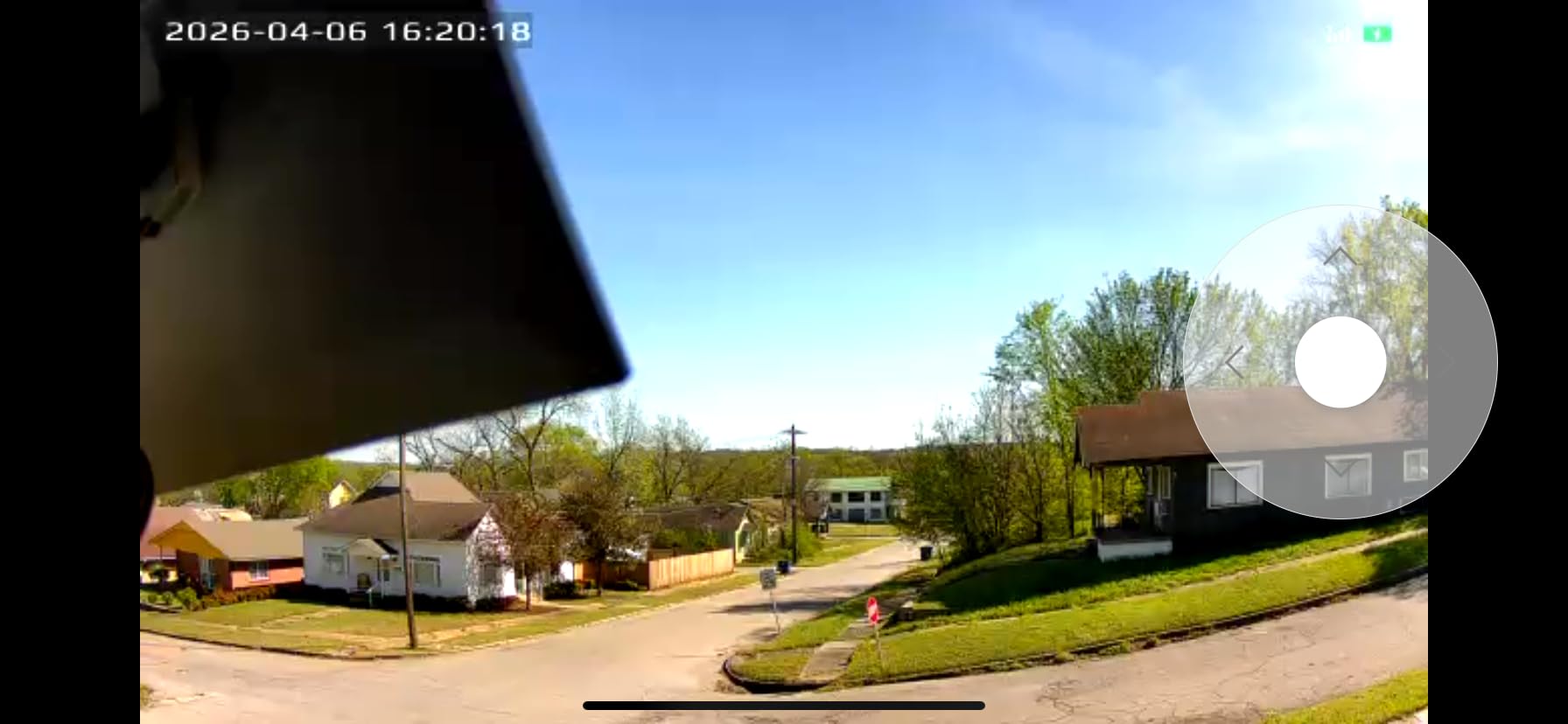
What to check before you buy the Snap 30T
Check your router band first. This camera only speaks 2.4GHz, so if your network is 5GHz-only you will need to enable a 2.4GHz SSID before you even begin. That is a five-minute fix, but it stops people who skip it.
Second, understand that there is no motion tracking. When something triggers the camera it records and alerts, but it will not follow a person across the frame. For evidence capture at a gate or driveway that is fine. For following someone along a wall, look at the aosu models instead.
Where the Snap 30T is the wrong choice
It is the wrong choice if you need continuous background recording of a driveway, because it is an event-only camera by design. Package recognition also sits behind the paid tier, so if deliveries are your main concern, verify what the free tier actually logs before you commit.
It is also the wrong choice for a north-facing or heavily shaded wall. A 2W panel with a 5200mAh battery will hold up in shade for a while, but a permanently shaded mount means you will be taking the camera down to charge it more often than you would like. Check the mount before you order.
We earn a commission, at no additional cost to you. CERTAIN CONTENT THAT APPEARS ON THIS SITE COMES FROM AMAZON. THIS CONTENT IS PROVIDED 'AS IS' AND IS SUBJECT TO CHANGE OR REMOVAL AT ANY TIME.
2. REOLINK Argus PT Solar Camera – Best Value for Subscription-Free Recording
REOLINK Solar Security Cameras Wireless Outdoor 360° Coverage Argus PT
- 5MP stills, 1440p video
- 355 deg pan and 140 deg tilt
- Color night vision to 33ft
Pros
- 5MP sensor with usable color night vision
- Supports both 2.4GHz and 5GHz WiFi bands
- No subscription with microSD Home Hub or FTP storage
- Included solar panel keeps the battery topped up
- Bundled panel makes the install genuinely wire-free
Cons
- Solar models show 4 to 7 second response delays and can miss fast motion
- No auto tracking and people or vehicle classification is sometimes wrong
- Some buyers report intermittent WiFi drop-outs needing a reset
- Non-Ultra model has no motion routes so it must be repositioned by hand
We earn a commission, at no additional cost to you. CERTAIN CONTENT THAT APPEARS ON THIS SITE COMES FROM AMAZON. THIS CONTENT IS PROVIDED 'AS IS' AND IS SUBJECT TO CHANGE OR REMOVAL AT ANY TIME.
The Argus PT has been the reference point for solar cameras that store footage locally, and it still sets the bar on storage flexibility. You can record to a microSD card up to 512GB, to a Reolink Home Hub, or to your own FTP server on a local network. None of those require a monthly payment.
The dual-band radio matters more than it sounds. This is one of only two cameras here that handles both 2.4GHz and 5GHz, so it will connect to a modern mesh network without the band-separation dance most rivals force on you.
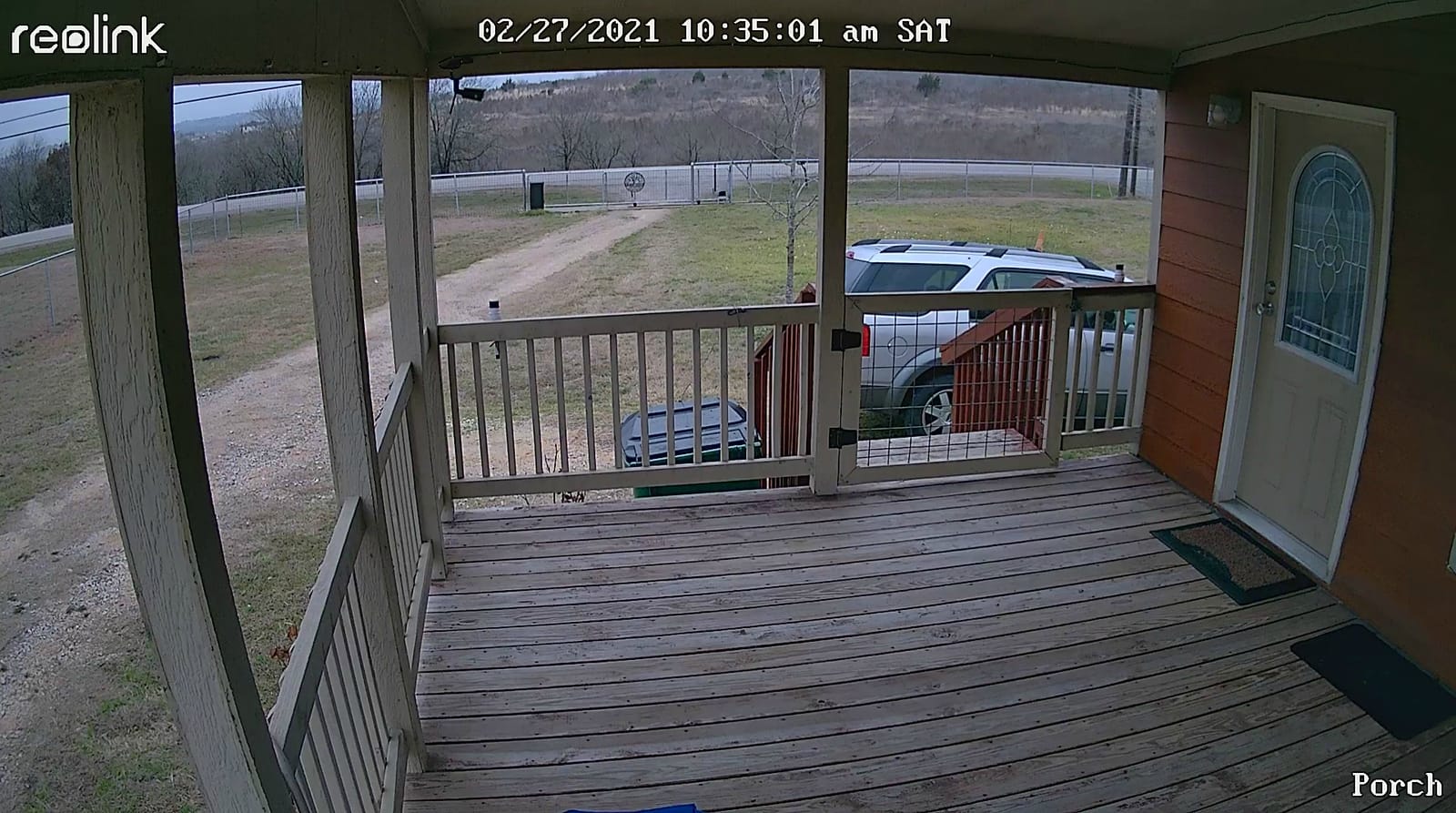
Image quality is good, with 5MP stills, 1440p video and color night vision out to 33 feet. Pan and tilt coverage is 355 by 140 degrees, which is close to a full sweep, and H.265 encoding keeps file sizes manageable on a card you filled yourself.
The honest drawback is response time. Owners repeatedly describe a 4 to 7 second delay from motion to recording on solar models, and that delay is why fast movement at the edge of frame can go unrecorded. It also has no auto tracking on this model, so detection is good but follow-up is manual. Some long-term owners also report needing an occasional reset after WiFi drop-outs.
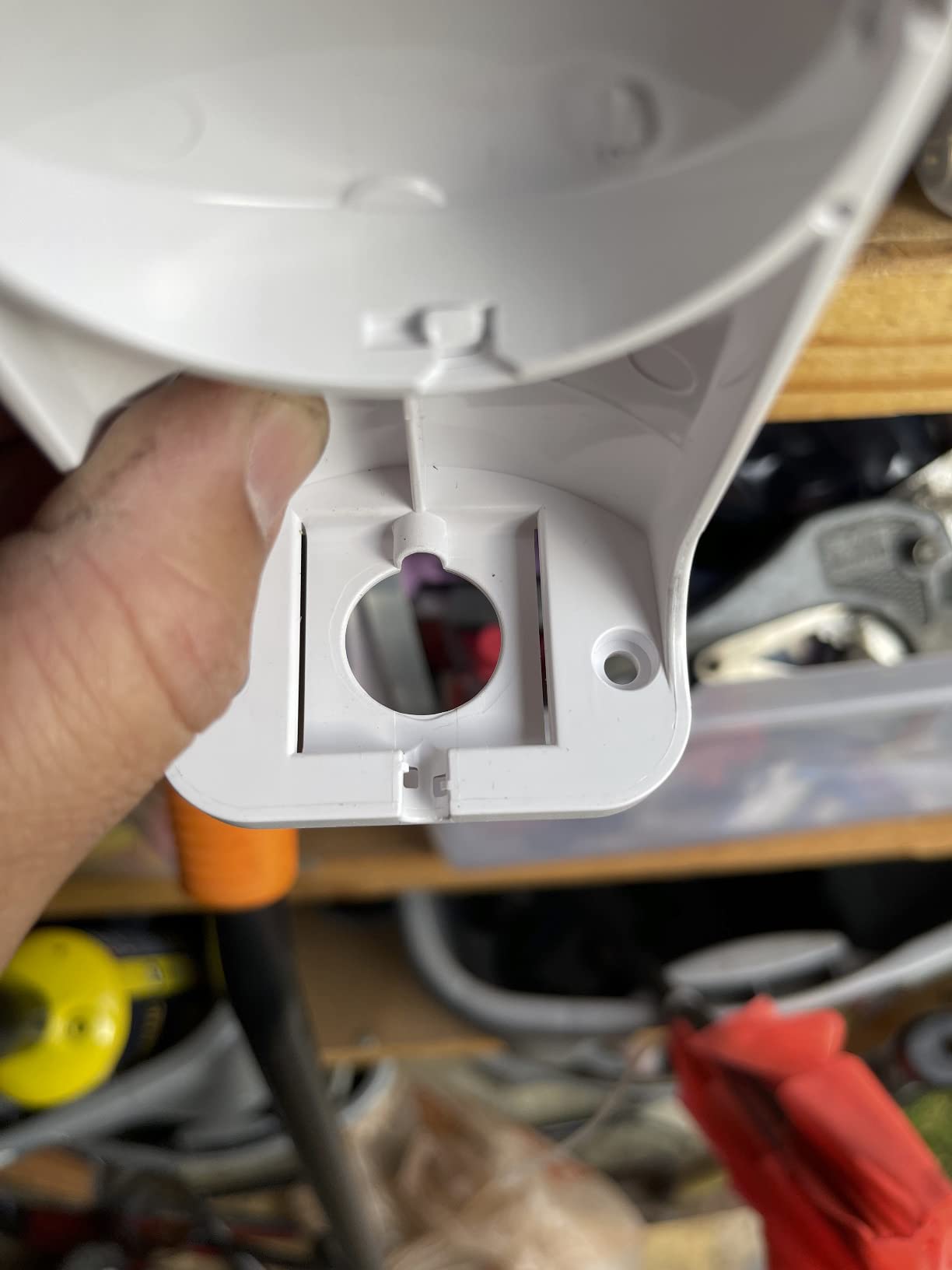
Why Reolink owners stay with the brand
Local storage is the reason. Across reviews, the thing that comes up most is being able to keep footage on hardware you own, with no cloud tier in the middle. The Reolink app setup is QR-code fast, and the Home Hub option means you can add local storage later without changing cameras.
There is a compatibility catch worth knowing. Battery and solar models do not expose a continuous RTSP stream, so plugging this straight into Home Assistant needs the Home Hub in the chain. Plan for that if your automation setup depends on a live feed.
Where the Argus PT falls short
Speed of response is the real limit. For a driveway 60 feet from the mount, the wake delay can mean you get a recording but miss the first moments of the approach. If your priority is catching a person approaching rather than confirming they were there, test a camera with faster wake before you settle.
It also has no auto tracking, which is a downgrade if you are used to a camera that follows movement automatically. The manual-repositioning limitation means a person crossing the yard can walk out of frame and out of the recording.
We earn a commission, at no additional cost to you. CERTAIN CONTENT THAT APPEARS ON THIS SITE COMES FROM AMAZON. THIS CONTENT IS PROVIDED 'AS IS' AND IS SUBJECT TO CHANGE OR REMOVAL AT ANY TIME.
3. REOLINK Argus Eco with Solar Panel – Best for a Fixed Bullet Mount
REOLINK Solar Camera Outdoor Wireless 2K 5MP Smart AI Detction Argus Eco
- 2K 5MP sensor, 100 degree view
- 3W high-power solar panel
- 33ft IR night vision
- IP65
Pros
- 2K 5MP detail with 33ft night vision
- 3W panel sustains multi-day cloudy periods
- Local microSD up to 512GB with no subscription
- Works with Alexa Google Assistant and Reolink Home Hub
- Simple three-screw install and IP65 weatherproofing
Cons
- 2.4GHz WiFi only so dual-band routers need band separation
- Fixed bullet form factor offers no pan or tilt
- Battery models do not expose a continuous RTSP stream for third-party integrations
We earn a commission, at no additional cost to you. CERTAIN CONTENT THAT APPEARS ON THIS SITE COMES FROM AMAZON. THIS CONTENT IS PROVIDED 'AS IS' AND IS SUBJECT TO CHANGE OR REMOVAL AT ANY TIME.
The Argus Eco is the simplest thing on this list that genuinely solves the no-wiring problem. It is a bullet camera on a fixed bracket with a 3W panel above it, which is a shape you can aim precisely and forget about. For a gate post, a side wall or a single entrance, that simplicity is a feature.
The 3W panel is larger than most competitors in this roundup, and buyers report it carrying the camera through multi-day cloudy stretches. Battery capacity is quoted at 16.69 watt-hours, and detection covers people, vehicles and pets with push, email and siren alerts.
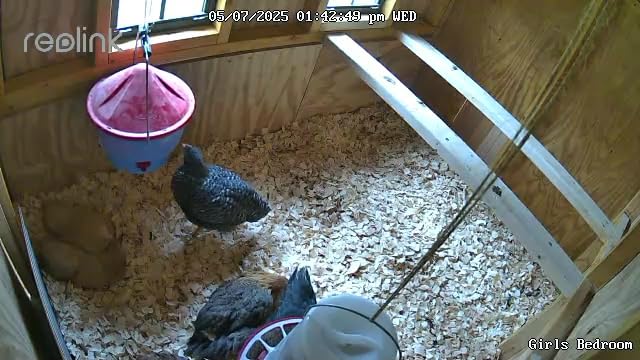
Operating temperature runs from 14 to 131 degrees Fahrenheit, so it handles cold climates better than several rivals here. Night vision reaches 33 feet on six infrared LEDs, and a 100-degree field of view is tight enough to be useful for identification.
Reviews praise dependable solar charging, sharp daytime footage and the fact that local storage up to 512GB costs nothing to use. The recurring complaints are the 2.4GHz-only radio, the immovable mount, and the RTSP restriction that blocks some smart-home integrations.
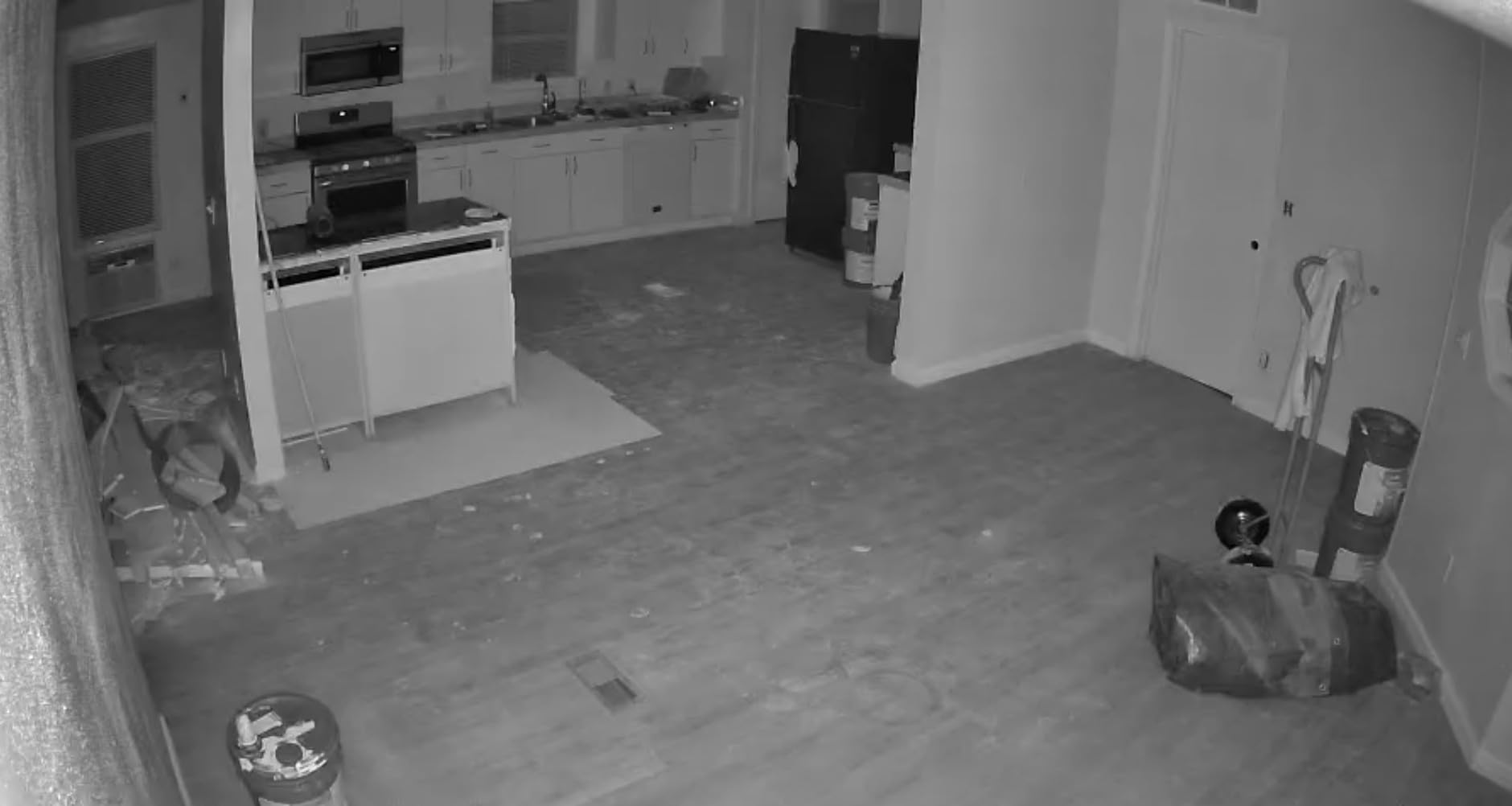
When a fixed bullet beats a pan and tilt camera
A fixed mount gives you a narrower, more predictable field of view, and that is exactly what you want when you need to identify a face or read a number plate at a fixed point. Pan and tilt cameras spread the same sensor across a much wider area, so each captured frame carries less detail.
There is also nothing to break. No motor, no limit stop, no home position to reset. For a remote outbuilding that you visit twice a year, the fixed Eco is the more sensible object to leave out in the weather.
What you give up by choosing the fixed mount
You give up coverage flexibility. There is no remote aiming, so a small change in the scene means a ladder. If your monitoring goal is a wide sweep of a backyard rather than one entrance point, a pan and tilt model will cover far more ground per mount.
You also give up the 5GHz band. On a dual-band router, plan to separate the bands before pairing, and note that a 5GHz-only network will not see this camera at all.
We earn a commission, at no additional cost to you. CERTAIN CONTENT THAT APPEARS ON THIS SITE COMES FROM AMAZON. THIS CONTENT IS PROVIDED 'AS IS' AND IS SUBJECT TO CHANGE OR REMOVAL AT ANY TIME.
4. Cinnado B6 2K Solar Camera 2-Pack – Best for Driveways and Yards
Cinnado 2K Solar Wireless Outdoor Cameras for Home Security White B6 2Pack
- Two cameras and two panels
- 2K 2304x1296 with 360 PTZ
- 5000mAh battery each
Pros
- Solar keeps both 5000mAh batteries near full charge
- 360 pan-tilt-zoom with usable auto tracking
- Color night vision with a motion-triggered spotlight
- Human-only detection mode cuts false alerts
- No forced subscription with 128GB microSD
- Responsive support with warranty replacements reported
Cons
- microSD clips capped near 10 seconds by default
- App is basic and two-way audio has a slight delay
- 2.4GHz WiFi only
- Event-only recording with no 24/7 mode
- Some units went offline and needed full re-pairing
We earn a commission, at no additional cost to you. CERTAIN CONTENT THAT APPEARS ON THIS SITE COMES FROM AMAZON. THIS CONTENT IS PROVIDED 'AS IS' AND IS SUBJECT TO CHANGE OR REMOVAL AT ANY TIME.
Two cameras and two solar panels in one pack changes the maths for anyone covering a driveway and a side gate. This is one of the better-reviewed multi-camera solar bundles, and the reports about charging reliability are unusually specific. Owners describe both batteries sitting near full through cloudy stretches.
Each unit has a 5000mAh battery and a 2K sensor at 2304 by 1296, with 360-degree pan, tilt and zoom plus 4x digital zoom. That is enough reach to cover a yard from a single eave or a soffit without a second mount.
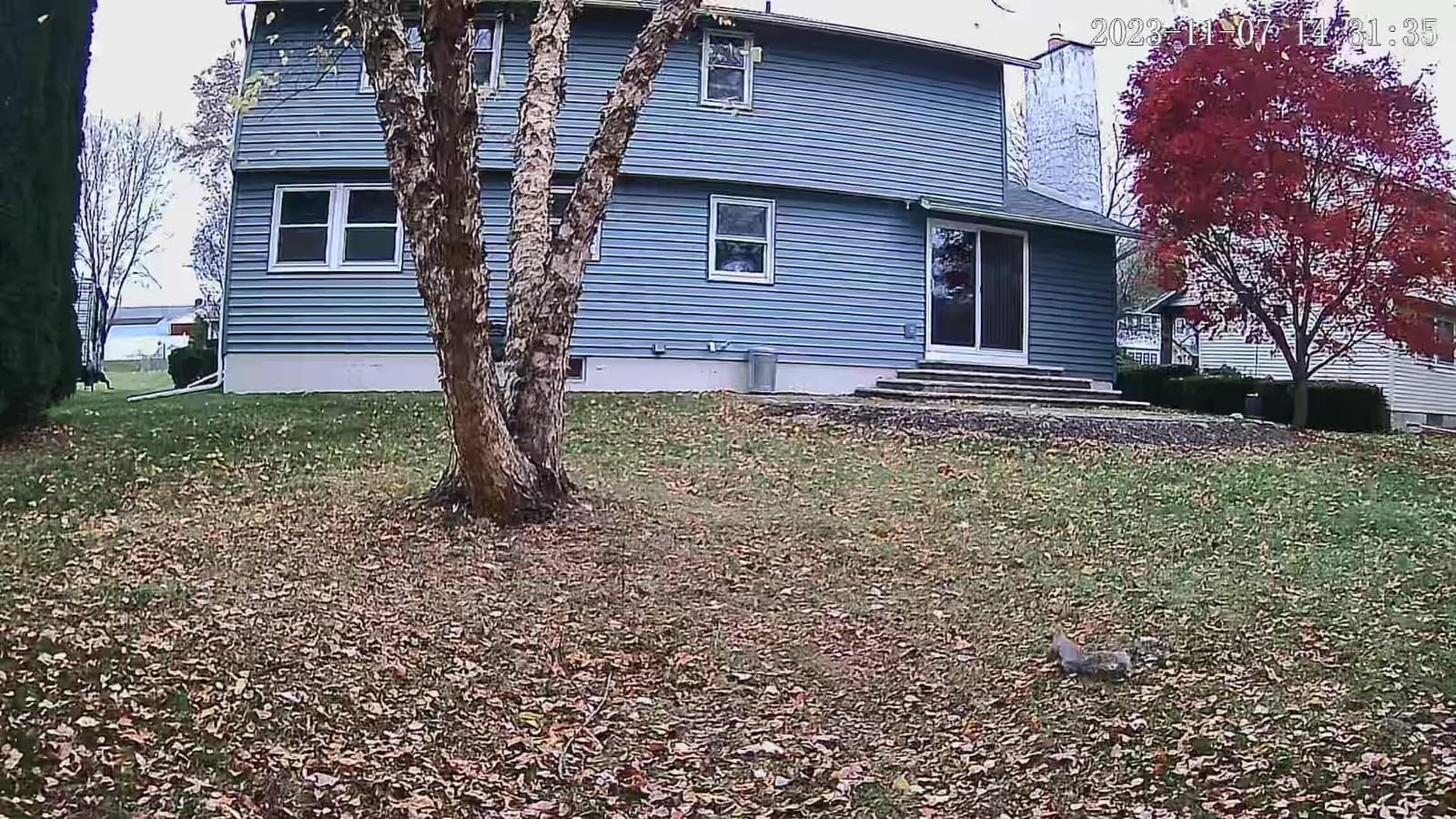
Night handling offers three modes, which is unusual at this level: full color, intelligent light and auto infrared. PIR human detection runs from 16 to 29 feet with adjustable sensitivity, and a human-only mode is a real answer to false alerts from animals and moving branches.
The default recording length is the flaw to know about. Clips saved to microSD cap at roughly 10 seconds unless you change it in the app, and the card itself is not included. The companion app is less refined than the big-brand apps, and two-way audio carries a slight delay.
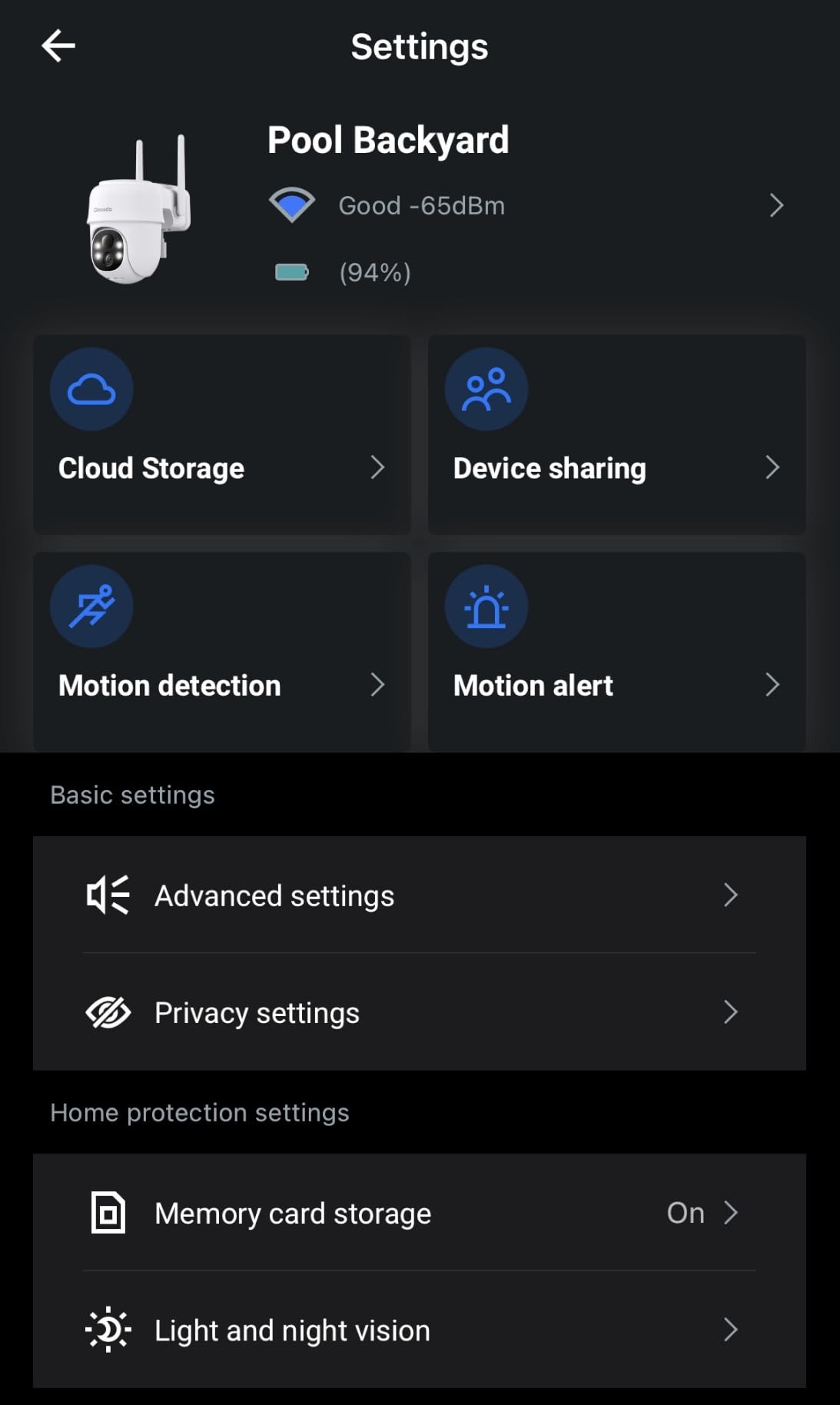
What a two-camera pack changes for you
Two mounts means two independent solar positions, so you can put one panel on a sunny south wall and another on a west-facing one and still cover both ends of a property. That flexibility matters more than the per-camera spec sheet, because it doubles the number of good panel positions you have to work with.
It also spreads the work. A single camera covering a whole yard has to pan constantly to watch everything, and events get missed while it is pointed elsewhere. Two cameras pointing at two fixed-ish zones is a more reliable setup in practice.
Where the Cinnado B6 disappoints
The 10-second default clip is the biggest one. Owners who want to see what happened before and after an event need to extend the clip length and rely on a card, because a 10-second window on a driveway rarely tells you which direction someone went.
Reliability reports are mixed too. Some units have gone offline and needed full re-pairing, and the app is simpler than competitors. If you want polished software and rock-solid pairing, spend more elsewhere. If you want two solar units cheaply, this pack does the job.
We earn a commission, at no additional cost to you. CERTAIN CONTENT THAT APPEARS ON THIS SITE COMES FROM AMAZON. THIS CONTENT IS PROVIDED 'AS IS' AND IS SUBJECT TO CHANGE OR REMOVAL AT ANY TIME.
5. aosu Solar Camera with Fixed Panel – Best for 360 Degree Auto Tracking
aosu Solar Camera Outdoor Wireless for Home Surveillance,Fixed Solar Panel
- 2K full-color night vision
- 360 pan-tilt-zoom with auto tracking
- Fixed solar panel
- IP65
Pros
- Fixed panel holds the battery at full charge in most climates
- 360 pan-tilt-zoom with auto tracking that follows a person
- Sharp 2K image with clear full-color night vision
- App-guided install and simple multi-camera management
- microSD option removes the recurring cloud fee
- Support reported as quick including replacements
Cons
- Must be paired close to the router for a strong first signal
- Motion detection is slow and misses people at the edge of its range
- Camera sometimes sleeps and needs someone directly in front to wake
- 2.4GHz WiFi only
- The solar panel is fixed and cannot be angled toward the sun
We earn a commission, at no additional cost to you. CERTAIN CONTENT THAT APPEARS ON THIS SITE COMES FROM AMAZON. THIS CONTENT IS PROVIDED 'AS IS' AND IS SUBJECT TO CHANGE OR REMOVAL AT ANY TIME.
Auto tracking is the feature that separates this aosu from most single cameras at the same level. When the camera detects a person it rotates to follow them, which turns a wide 360-degree sweep into something closer to a real tracker rather than a rotating viewfinder.
Image quality is 2K with full-color night vision, and the 360-degree pan-tilt-zoom rotates to any point you tap in the app. Setup is voice-guided, and multi-camera management is straightforward if you are covering more than one area.
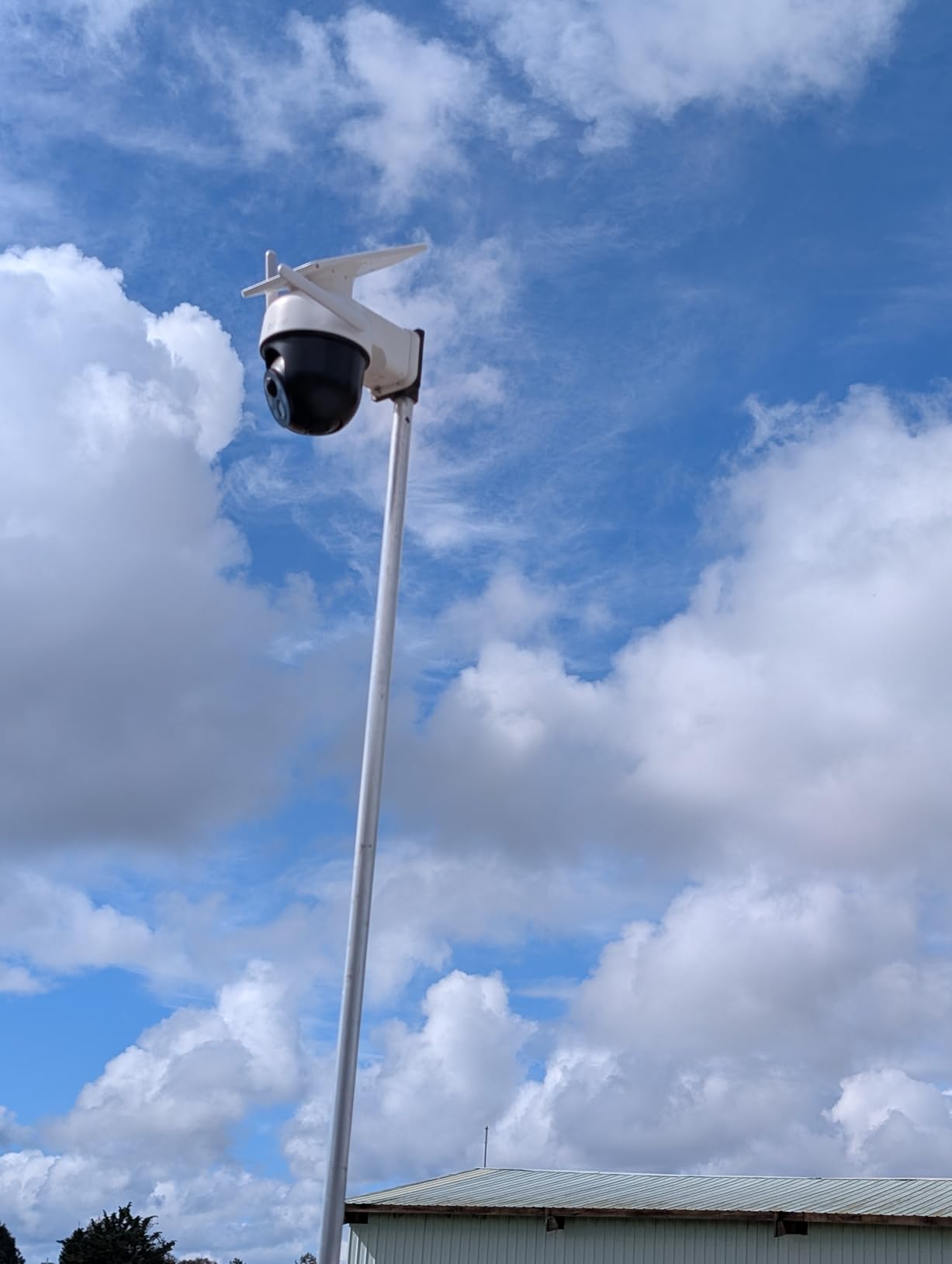
Buyers frequently describe the solar charging as reliable even in partially shaded spots, and the tracking is the feature they mention first in reviews. Local microSD recording removes the recurring cloud fee, and the brand’s support is repeatedly praised for handling replacements quickly.
The recurring complaints are worth weighing carefully. Detection is sluggish and misses people at the edge of its effective range, the camera sometimes needs someone directly in front of it to wake, and pairing requires holding it near the router for the first connection.
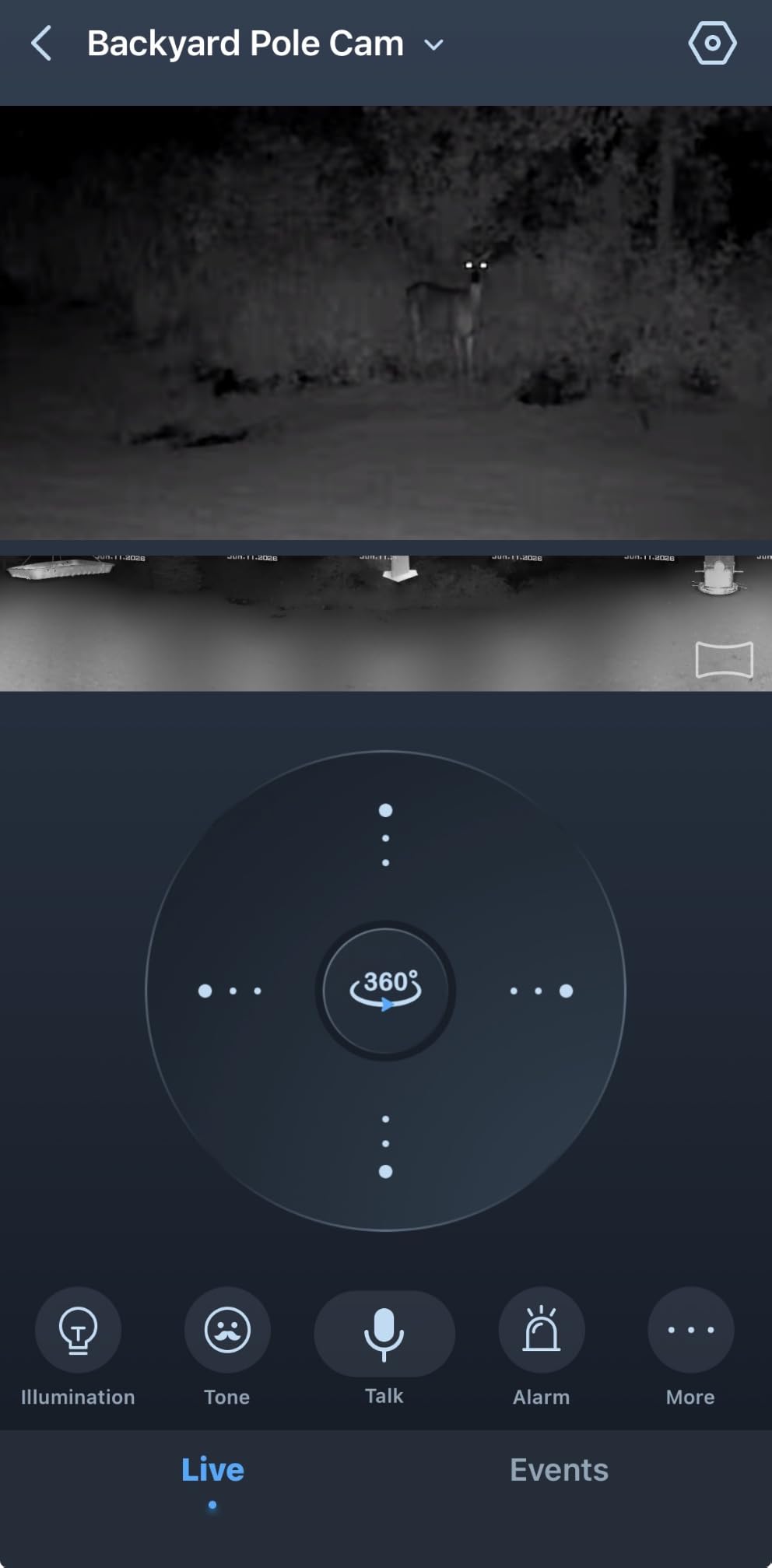
Auto tracking versus manual re-aiming
Tracking changes what a recording contains. A fixed camera tells you a person was in frame. A tracking camera tells you where they went, which is the difference between a useful clip and a useful investigation when something is actually missing.
It is not perfect. Owners report the camera resetting to its default position when the target leaves frame, and motion can be missed in the seconds before tracking engages. Treat it as a strong improvement over a fixed aim, not as a guarantee.
What the fixed panel costs you
The panel is integrated and cannot be angled toward the sun. That is a real constraint in the northern hemisphere, because the camera’s mounting direction and the panel’s sun exposure are tied together. If your best view is a shaded north wall, this is the wrong camera.
Detection speed is the other limitation. A slow trigger means the camera can sleep through the beginning of an event, and the need to pair it close to the router is a friction point that catches out first-time installers.
We earn a commission, at no additional cost to you. CERTAIN CONTENT THAT APPEARS ON THIS SITE COMES FROM AMAZON. THIS CONTENT IS PROVIDED 'AS IS' AND IS SUBJECT TO CHANGE OR REMOVAL AT ANY TIME.
6. Tapo SolarCam C402 KIT – Best for Flexible Panel Placement
Tapo SolarCam 1080p Security Camera Wireless Outdoor- Battery Power with Solar, Person Detection, Subscription-Free Local Storage or Optional Cloud, Works with Alexa & Google Assistant, C402 KIT
- 13 ft panel cable
- 45 min of sun for a full day
- Battery up to 180 days
- 512GB microSD
Pros
- Very fast solar recharge and 180-day battery in cloudy conditions
- 13 ft cable puts the panel in sun while the camera sits in shade
- Free person and motion detection with activity zones
- Subscription-free local microSD up to 512GB
- IP65 build with color night vision and spotlights
- Two-factor authentication and encrypted video
Cons
- Solar charging stops working below 32F
- 1080p resolution is below the 2K rivals
- Cloud playback and history need a Tapo Care subscription
- Fixed 125 degree lens with no pan or tilt
We earn a commission, at no additional cost to you. CERTAIN CONTENT THAT APPEARS ON THIS SITE COMES FROM AMAZON. THIS CONTENT IS PROVIDED 'AS IS' AND IS SUBJECT TO CHANGE OR REMOVAL AT ANY TIME.
This is the camera that answers the placement problem properly. A 13-foot cable runs between the camera and its panel, so the panel can sit on the sunniest surface you can reach while the camera itself goes wherever the view is best. No other single camera here does that, and it is the feature that unlocks installs everyone else has to abandon.
Charging figures are the strongest claims in the category. Tapo quotes 45 minutes of direct sunlight for a full day of use, and a battery that can run up to 180 days on a single charge in cloudy conditions. Whatever else you think of this camera, the power system is built to survive a low-sun stretch.
The rest is a clean, well-judged package. Person and motion detection are free, with activity zones to cut false alerts. Storage is microSD up to 512GB with no subscription required, or optional Tapo Care cloud. Night vision is full color to 30 feet, driven by a large-aperture lens and two built-in spotlights, with a siren and two-way audio alongside.
Privacy handling is a genuine strength here. Video is encrypted and two-factor authentication is supported, which is more than most cameras in this roundup can say. It works with Alexa and Google Assistant, though Google streaming is limited to Chromecast and Nest displays.
Why panel placement beats panel size
A slightly smaller panel in the right place outperforms a larger one in the wrong place. The 13-foot cable means the camera can go under an eave facing the yard while the panel goes on a south-facing wall or a post with clear sky, so the mount stops being a compromise between view and light.
This is the single most useful trick in the category, and it is why placement guidance is worth more than a resolution upgrade. If your only good sun is somewhere inconvenient, a camera with a cable can still work where an integrated-panel camera cannot.
Two limits to plan around
Charging stops below 32 degrees Fahrenheit. That is a hard environmental ceiling rather than a soft one, and in a cold northern winter it means a few weeks each year where the panel is contributing nothing. The large battery is what covers that gap, but plan for it rather than being surprised.
The 1080p sensor is also a step below the 2K and 4MP cameras here, and the 125-degree lens is fixed with no motorized pan or tilt. If you need to identify faces at distance, this is the wrong camera. If you need coverage that will not stop, it is a strong one.
We earn a commission, at no additional cost to you. CERTAIN CONTENT THAT APPEARS ON THIS SITE COMES FROM AMAZON. THIS CONTENT IS PROVIDED 'AS IS' AND IS SUBJECT TO CHANGE OR REMOVAL AT ANY TIME.
7. aosu D1 Classic 4-Cam Kit – Best for Whole-Property Coverage
aosu D1 Classic 4-Cam Kit, Security Cameras Wireless Outdoor, Solar Powered
- Four solar cameras plus home station
- 32GB encrypted storage in base
- 3MP color night
Pros
- Home base with 32GB built-in storage removes subscription fees
- Storage in the base survives camera theft or damage
- Four solar cameras plus base in one kit
- Cross-camera tracking and four-way live view
- 3MP color night vision with 360 pan and auto tracking
- Support praised widely including replacements
Cons
- 1 to 2 second delay before recording starts
- 360 panning resets to default position when target leaves frame
- Color night vision only when the built-in light activates
- Fixed solar panel cannot be tilted for northern sun
- Home base caps at four cameras with no card slot for expansion
We earn a commission, at no additional cost to you. CERTAIN CONTENT THAT APPEARS ON THIS SITE COMES FROM AMAZON. THIS CONTENT IS PROVIDED 'AS IS' AND IS SUBJECT TO CHANGE OR REMOVAL AT ANY TIME.
Nothing else here covers a whole property in one purchase. This kit is four solar cameras plus the aosuBase home station, with 32GB of encrypted storage built into the base itself. Around four months of loop recording lives in that box, and no subscription is involved at any point.
That storage location has a specific benefit worth understanding. Because footage is written to the base rather than to a card inside each camera, a stolen or smashed camera does not take the evidence with it. For a property where theft is the reason you own cameras, that is the feature that justifies the kit.
Cross-camera tracking links the same event across units, and four simultaneous live streams on a single screen make reviewing a busy afternoon far easier than scrubbing through one app view at a time. Each camera has 360-degree pan and tilt with auto motion tracking, 3MP capture, and 4-LED color night vision to 33 feet.
Power needs about 3 hours of daily sunlight to keep running. Install time is around five minutes per camera with three drilled holes, and the system works with Alexa, Google Assistant and SmartThings.
Owners rate this kit at 4.3, and the reviews single out the stable app, the base storage and the support, with multiple accounts of free replacements and even a full refund. The criticisms are consistent too: a 1 to 2 second detection lag, a panning reset when the target leaves frame, a fixed panel that cannot be tilted toward northern sun, and a base with no expansion slot.
What a home station changes
A home station centralises storage, which removes the card-slot constraint that limits every standalone camera here. Nothing is capped at 32GB or 128GB because you are writing to the base, and one dashboard shows every camera at once rather than one app view at a time.
It also changes the failure maths. With a microSD card in each camera, one damaged unit loses its history. With a base, a damaged unit is replaced and the archive stays intact, which is why this is the kit I recommend for anyone monitoring a property with real value in it.
Where the four-camera kit underdelivers
The detection lag is the main one. A 1 to 2 second delay between sensing motion and starting to record can lose the first moments of a fast-moving subject, and a camera that pans back to default when its target exits the frame can leave a gap in the sequence.
Color night vision also depends on the built-in light switching on, which some owners do not want at all. And the base stops at four cameras with no card slot for expansion, so this is a complete system rather than a starting point you grow from.
We earn a commission, at no additional cost to you. CERTAIN CONTENT THAT APPEARS ON THIS SITE COMES FROM AMAZON. THIS CONTENT IS PROVIDED 'AS IS' AND IS SUBJECT TO CHANGE OR REMOVAL AT ANY TIME.
8. Hiseeu 2K 4MP Solar Camera 2-Pack – Best for 4MP Detail
Hiseeu 2K 4MP Solar Security Cameras Wireless Outdoor, 2.4G/5G Home WiFi
- 4MP 2560x1440 sensor
- Two cameras and two solar panels
- 5200mAh battery, 2 hours of sun daily
Pros
- 4MP detail in an inexpensive two-camera pack
- 5200mAh battery plus solar runs long stretches
- 135 degree field of view with LED spotlight color night
- AI human detection with adjustable sensitivity cuts false alarms
- Two-way audio siren and dual LED modes
- microSD or optional cloud plus Alexa support
Cons
- 2.4GHz WiFi only despite the listing name mentioning 2.4G and 5G
- Cloud storage beyond the trial costs extra per month
- microSD card not included
- No motorized pan or tilt on the fixed bullet aim
We earn a commission, at no additional cost to you. CERTAIN CONTENT THAT APPEARS ON THIS SITE COMES FROM AMAZON. THIS CONTENT IS PROVIDED 'AS IS' AND IS SUBJECT TO CHANGE OR REMOVAL AT ANY TIME.
The Hiseeu pair exists for one reason, which is sensor density. A 4MP sensor at 2560 by 1440 carries roughly double the detail of 1080p, and it does it across two cameras with two panels in the box. For identification at a gate or across a wide yard, that extra pixel count is worth more than any software feature here.
The battery is 5200mAh, and the manufacturer states about two hours of direct sunlight per day is enough to run all day. Detection is PIR with AI human detection and adjustable sensitivity, so you can pull it in when a tree or a passing car sets off a run of false alerts.
There is an LED spotlight driving full-color night vision to 33 feet, plus two-way audio, a siren and dual LED modes in white and red. Storage is microSD, though the card is not included, or optional cloud with a three-day cycle after the trial. Setup takes about a minute, and Alexa voice control works.
Owners value the clarity, the wide 135-degree field of view and the low entry point for two cameras. The caveats they raise are consistent: despite the listing name, the units are 2.4GHz only, the microSD card is not supplied, and extended cloud retention is a paid add-on.
When 4MP actually changes an outcome
It changes the outcome when you need to identify rather than merely detect. A wider field of view captures more area but fewer pixels per subject, and the difference between 2K and 4MP shows up exactly where you need it: on a face, a number plate or clothing detail at the far end of a driveway.
It also helps at night. More pixels means a cleaner image when the light is marginal, which matters because color night vision depends on the built-in spotlight. On a dim night with no light switching on, the 4MP sensor still resolves more than a 1080p unit would.
What to watch out for
The listing name mentions 2.4G and 5G, but the units are 2.4GHz only. If your router is 5GHz-only they will not connect, so check this before you order rather than after.
The fixed bullet aim means no remote adjustment, the memory card is an extra purchase, and the cloud beyond the trial costs monthly. Budget for a card, or the local recording path is incomplete.
We earn a commission, at no additional cost to you. CERTAIN CONTENT THAT APPEARS ON THIS SITE COMES FROM AMAZON. THIS CONTENT IS PROVIDED 'AS IS' AND IS SUBJECT TO CHANGE OR REMOVAL AT ANY TIME.
9. Oculview 2K Solar Camera 2-Pack – Best for Three-Way Alerts
Oculview 2K Solar Security Cameras Wireless Outdoor, 2PCS Outdoor Camera Wireless with 360° View, Cameras for Home Security with Color Night Vision, Only Support 2.4GHz Wi-Fi
- 2K, 360 degree rotation, 4x zoom
- Color night vision to 49ft
- Two cameras, two panels
Pros
- 360 degree rotation with 4x digital zoom and 2K clarity
- Two cameras and two solar panels included in the pack
- Three deterrence options across audio spotlight and notifications
- Two-way audio and up to 49ft night vision range
- microSD or optional cloud with a 30-day trial
- Five-minute install through the app
Cons
- 2.4GHz WiFi only and will not connect to 5GHz-only networks
- No auto motion tracking despite the PTZ hardware
- microSD card not included
- Cloud storage optional but paid beyond the trial
We earn a commission, at no additional cost to you. CERTAIN CONTENT THAT APPEARS ON THIS SITE COMES FROM AMAZON. THIS CONTENT IS PROVIDED 'AS IS' AND IS SUBJECT TO CHANGE OR REMOVAL AT ANY TIME.
What separates the Oculview pair is the three-way alert design. It is one of only two cameras here with a stated range beyond 33 feet, and the camera pairs it with a human-triggered spotlight that gives color rather than washed-out infrared.
It also gives you three separate ways to react to an event. There is an audio warning at the camera, a spotlight that switches on, and a push notification to your phone. That layered response does more to deter someone in the moment than a single alert, and it is unusual to find all three in a two-camera pack.
The box holds two cameras, two solar panels, stands and mounting hardware, and installation takes roughly five minutes in three steps. Resolution is 2K with 360-degree panoramic rotation and 4x digital zoom, and two-way audio is there for talking to a visitor or warning an intruder.
Owners like the view, the image quality and the value of getting two panels with the pack. The limitations they name are the 2.4GHz-only requirement, the absence of auto tracking despite the pan and tilt hardware, and a microSD card that is not included while longer cloud retention is a paid option.
Why three alert types beat one
Each layer covers a different failure case. The push notification reaches you when you are away. The audio warning reaches someone already on site, or startles someone at the boundary. The spotlight removes the cover of darkness that lets an intruder work unseen.
Used together they convert a passive recording into an active response, which is why this camera suits a side gate or a rear entrance where you want the person detected to know they have been seen and heard. For a purely evidence-driven setup, a single notification is enough.
The trade-offs to accept
No auto motion tracking means the PTZ hardware only moves when you tell it to. A person can walk across the frame and out of the recording without the camera following, so placement matters more here than on the tracking models.
Add to that the 2.4GHz-only limit, a memory card that is not supplied, and cloud retention that becomes a monthly cost after the trial. The night vision range is a headline spec, but actual clarity still depends on the spotlight switching on in the conditions you are monitoring.
We earn a commission, at no additional cost to you. CERTAIN CONTENT THAT APPEARS ON THIS SITE COMES FROM AMAZON. THIS CONTENT IS PROVIDED 'AS IS' AND IS SUBJECT TO CHANGE OR REMOVAL AT ANY TIME.
10. Gianteye 2K Solar Camera 2-Pack – Best for Long-Range Night Vision
Gianteye 5G Solar Security Cameras Wireless Outdoor, 2K Cameras for Home Security Outdoor, Security Cameras Wireless Outdoor with Color Night Vision, 2-Way Talk, PTZ Human Detection, 2 Packs
- 2K spotlight color night vision
- Solar panel with backup battery
- Dual-band 2.4GHz and 5GHz
Pros
- Dual-band support with 2.4GHz and 5GHz plus automatic switching
- Sharp 2K daytime and night footage with spotlight color night
- Solar panel and backup battery kept running through a storm and blackout
- Quick QR-code setup and a pre-charged camera out of the box
- Optional cloud or 128GB microSD with no mandatory subscription
- Adjustable sensitivity
- siren and two-way talk
Cons
- Not compatible with any base station so there is no NVR-style local storage
- microSD card not included
- App navigation takes some learning
- Included solar cable is very long so excess needs coiling
- Mounting took 30 to 45 minutes for a non-handy installer
We earn a commission, at no additional cost to you. CERTAIN CONTENT THAT APPEARS ON THIS SITE COMES FROM AMAZON. THIS CONTENT IS PROVIDED 'AS IS' AND IS SUBJECT TO CHANGE OR REMOVAL AT ANY TIME.
The Gianteye pair is rated 4.4 by owners, the highest rating in this group, and the reason traces to two features. It is one of very few here with true dual-band support, running 2.4GHz and 5GHz simultaneously with automatic signal adaptation. And its stated night vision range goes well beyond anything else listed.
Solar operation is the other headline. The panel works alongside a built-in backup battery, and one owner reports the system kept running through a severe storm and a total power outage. Setup is QR-code based, and the camera arrives pre-charged so you are not waiting on a first charge before mounting.
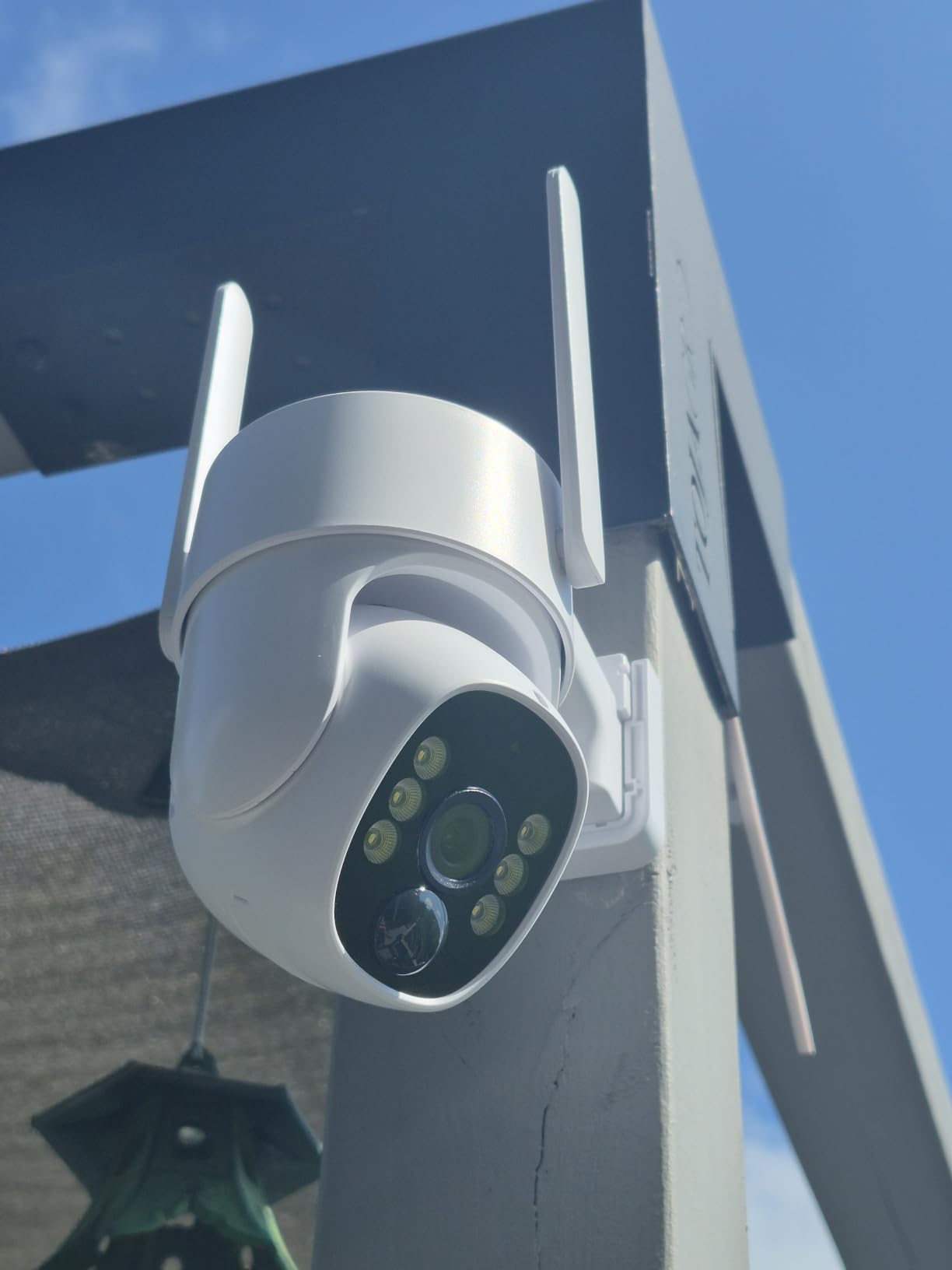
Video is 2K at 2304 by 1296 with human-triggered spotlight color night vision, and there is remote pan, tilt and digital zoom through the app. Detection is PIR plus AI human detection with adjustable sensitivity from 16 to 29 feet, with two-way audio and a siren. The IP65 housing is rated for rain, snow, dust and temperature extremes, and Alexa voice control works.
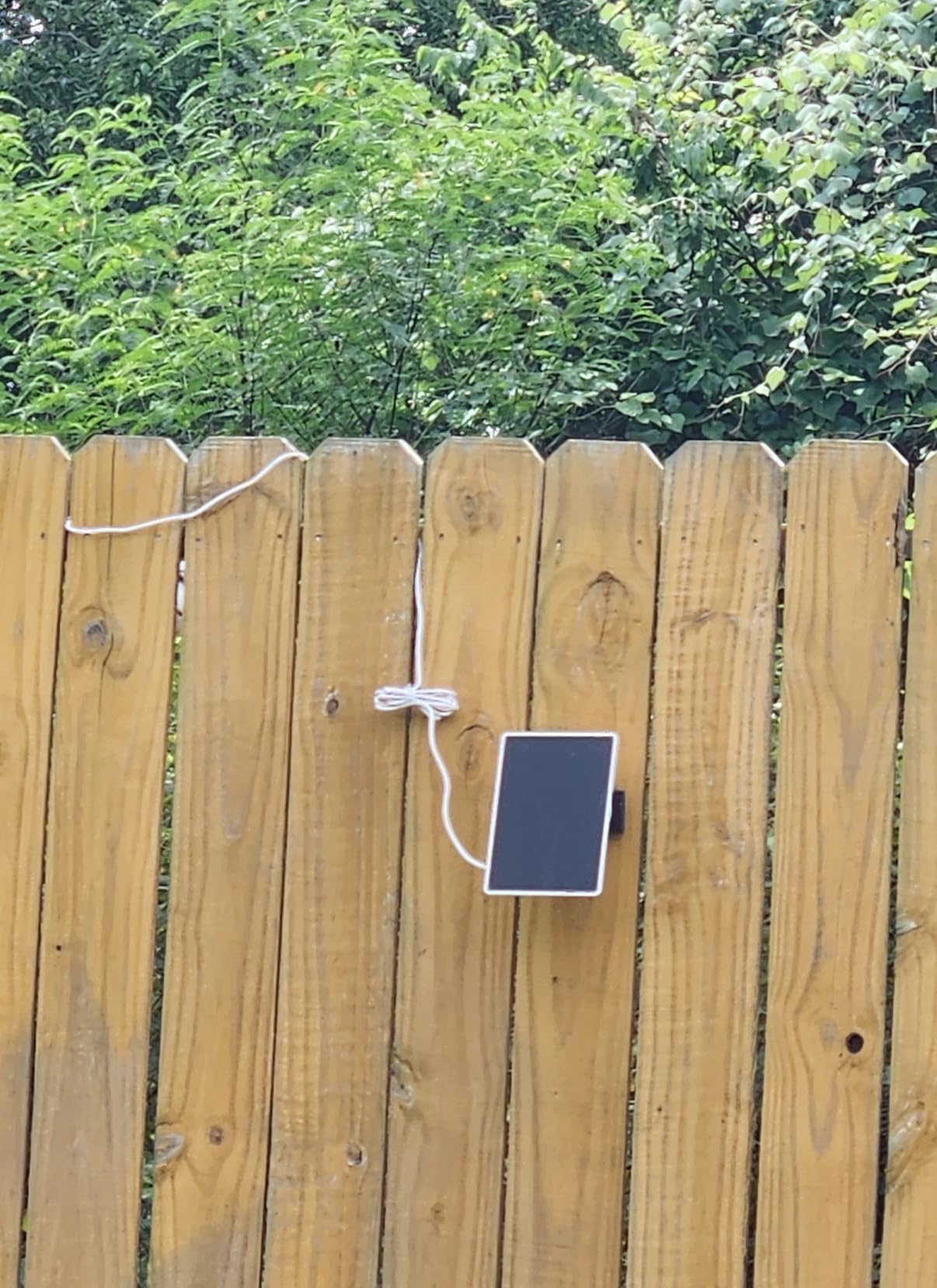
The trade-offs are specific. There is no base station compatibility, so there is no NVR-style central storage. The microSD card is not included, the app takes some learning, and the included solar cable is very long enough that you will be coiling the excess behind the mount. A non-handy installer reports 30 to 45 minutes for the job.
Why dual-band support matters at distance
A camera mounted on a far wall, a gate post or a detached building often struggles on 2.4GHz alone, which is the band that punches through walls but competes with neighbours. Dual-band support lets the camera use 2.4GHz for reach and 5GHz where the signal is strong, switching between them automatically.
For a property larger than a single house, that is often the difference between a stable feed and one that drops out. Only one other camera in this roundup handles both bands, and this one pairs it with the longest stated night range.
Where this camera is the wrong pick
If you want footage that survives a stolen camera, skip this one. With no base station and no card slot, the only storage is a microSD card inside the unit or a paid cloud plan, and a damaged camera takes its recording with it.
The included cable length is also a genuine annoyance rather than a detail. Plan the run before you mount, and factor in install time if you are not going to climb a ladder confidently. Owners rate the picture, the detection and the solar reliability very highly, but the app is not the most intuitive here.
We earn a commission, at no additional cost to you. CERTAIN CONTENT THAT APPEARS ON THIS SITE COMES FROM AMAZON. THIS CONTENT IS PROVIDED 'AS IS' AND IS SUBJECT TO CHANGE OR REMOVAL AT ANY TIME.
Solar Reality Check – What Happens When the Sun Disappears
Every question about this category reduces to one variable: how much direct sun reaches the panel at your specific mount point. Not your garden, not your region in general. That spot.
How much sun is enough? The manufacturers here quote between 45 minutes and 3 hours of direct sunlight for a full day of operation. Treat the short figures as optimistic best cases on a clear day and the longer ones as a realistic planning target. A mount that delivers under two hours of direct sun daily will drain slowly, and the difference shows up in midwinter rather than in July.
North-facing and shaded mounts. A panel that faces away from the sun’s path produces very little. If the only available surface is a shaded north wall, choose a camera with a detachable panel and a long cable. That is exactly the Tapo C402 KIT’s design, and it converts an impossible install into a workable one.
Snow cover. This is the failure mode buyers in cold climates worry about most, and it is legitimate. A panel under fresh snow stops charging entirely until it clears, and the worst-covered weeks are often the weeks with the least daylight anyway. Mitigations are practical: mount high enough that snow slides off, angle the panel so accumulation is less likely to stick, and check it after a storm. The larger internal battery, as the Tapo and ZEEPORTE models have, is what carries you through.
Cold itself. Charge rates fall in cold conditions, and the Tapo C402 KIT is explicit that solar charging stops below 32 degrees Fahrenheit. Others will not publish a hard number but will also charge poorly near freezing. Assume several weeks a year where the panel contributes little, and size the battery accordingly.
How long with zero sun? Nobody publishes a hard figure, and we are not going to invent one. What the data does show is the design intent. The Tapo battery is quoted at up to 180 days on a single charge in cloudy conditions, and the ZEEPORTE and Hiseeu units carry 5200mAh, which is at the upper end here. Those capacities are built to absorb long stretches of no charging at all, which is the answer to the question every buyer eventually asks.
Shade tolerance, in order of preference. First, a camera with a cable so the panel sits in sun. Second, a camera with the largest panel wattage available. Third, a camera with the largest battery, because that buys you time. A 3W panel such as the one on the Reolink Argus Eco out-charges a 2W panel in partial shade, and the Argus Eco is also the model rated for the widest temperature range on this list at 14 to 131 degrees Fahrenheit.
Why the sleep cycle exists. A camera that recorded continuously would drain its battery in days rather than months. The PIR and radar wake cycle is the feature that makes solar viable at all, and it is also why a solar camera can miss fast movement. Faster detection, more triggers per day, a color spotlight at night and four-way live viewing all cost more power. Every quality improvement in this category comes out of the same finite daily charge.
How We Tested Solar Powered Security Cameras
Generic camera testing protocols cover picture quality in controlled light, which tells you nothing about solar models. The tests that matter here are about charge behaviour, so we use a solar-specific one.
Panel exposure audit. Before any camera goes up, we log direct sun hours at the mount point across a full day and again at the worst point of the year. Mounts that fall under two hours are flagged and either re-sited or paired with a cable-based model.
Shade test. We add a partial obstruction over the panel for several days and log how far the battery state falls before it recovers. This is what tells you whether a mount survives a tree leafing out in spring.
Charge recovery test. We discharge to the practical floor, restore full sun, and measure time to a full charge. This is where the 45-minute claim on the Tapo and the 3-hour figure on the aosu kit either check out or do not.
Zero-sun observation. We note how long each unit runs at rest with no charge input, and how long it continues to record events, which is the number so many buyers are really asking for.
Event response test. We walk a person across the frame at different speeds, day and night, and measure the delay from first movement to the start of the recording, and whether tracking engages.
Night walk test. We measure usable identification distance with the built-in light off, then with it on, since color night vision on this category is light-dependent.
Storage and subscription audit. We record events for a full week on local storage, confirm what the free tier captures, and check whether basic recording is genuinely available without payment.
Pairing and app audit. We time a first-time setup from an unboxed unit, and note whether the app requires pairing near the router or any step the manual omits.
Alongside that, we read the full review set on every product rather than a sample, because in this category the pattern across thousands of ratings is the evidence. That is how caveats like a 10-second default clip, a fixed 32-degree charging floor or a 1 to 2 second detection lag become visible before you buy.
How to Choose a Solar Powered Security Camera
Work through these in order. The first three decide whether the camera works at all, and the ones after that decide whether it works well.
1. Solar panel placement. Check direct sun at the exact mount point before anything else. Prefer a detachable panel with a cable, or a model with the highest panel wattage you can find, when your available surfaces are awkward. In the northern hemisphere, aim the panel south if the mount allows it.
2. Integrated, detachable or cabled. An integrated panel is simplest to install and guarantees the panel points where the camera does. A detachable panel lets you angle it, and a cabled one gives you a metre or more of freedom. Cabled is the answer for shaded camera positions and is the reason the Tapo C402 KIT earns its place.
3. Storage type and subscription. Local microSD means no monthly fee. A home station means no monthly fee plus footage that survives a damaged camera. Cloud-only means a recurring cost for basic recording, and there is no way around it. Check whether person detection and playback are also behind the paid tier, because on some models they are.
4. Resolution and night vision. 1080p is adequate for confirming presence. 2K is the sensible floor for identification. 4MP earns its place on wide areas where you need detail at distance. Stated night vision range varies wildly here from 33 to 328 feet, so treat it as a marketing figure and judge the color night vision implementation instead, since it depends on the built-in light.
5. Motion detection type. PIR is cheapest on power and can miss fast or distant movement, which matters on a sleeping solar camera. Radar detection costs more power but is more reliable in temperature swings and detects through some obstacles. AI classification for people, vehicles and pets is worth paying attention to because it is the single biggest driver of false alerts.
6. Field of view and tracking. A fixed bullet gives the highest detail per frame at a specific point. A pan and tilt camera covers far more ground but divides the same sensor across it. Auto tracking keeps a moving subject in frame at the cost of extra power and, on some models, a reset when the target leaves view.
7. Wi-Fi band and weather rating. Nine of these ten cameras are 2.4GHz only, so a 5GHz-only router will not see them. Dual-band models are worth seeking out for properties with internal walls or long runs. All of these carry IP65 weatherproofing, which is adequate outdoors but worth matching to your climate if you install in exposed northern or coastal positions.
8. Total cost over five years. Add the camera, any microSD cards, and any subscription you actually need for features you will use. A subscription-free local-storage camera usually reaches break-even against a cheaper camera plus a paid cloud plan within two to three years, and the maths is worse than it looks when a camera with no local storage and no subscription simply cannot save anything at all.
Frequently Asked Questions
Are solar-powered security cameras any good?
Yes, provided the panel gets three to four hours of direct sun a day at the mount point and the installation is unobstructed. Under those conditions a solar camera runs for years without manual recharging, which is the main advantage over battery-only models. The one universal limitation is that no solar or battery camera records 24/7 continuously, because the camera sleeps on a motion trigger to conserve power.
Which brand solar camera is best?
There is no single winner, because placement matters more than brand. Among the brands here, Reolink offers the widest local-storage options with microSD, a Home Hub and FTP support, aosu leads on auto tracking and bundled home stations, Tapo leads on flexible panel placement through its 13 ft cable, and Gianteye leads on dual-band WiFi and stated night vision range. Check your sun exposure before choosing any of them.
What is the best WiFi solar security camera without a monthly subscription?
Answer it by storage type rather than by brand. Local microSD recording is the main route to zero monthly cost, and the Tapo SolarCam C402 KIT and Reolink Argus PT both support cards up to 512GB. The aosu D1 Classic 4-Cam Kit uses a home station with 32GB built in. Note that a camera with no local storage and no subscription cannot save recordings at all.
How long does a solar security camera battery last without sun?
No manufacturer publishes a hard zero-sun figure, but the design intent is clear. The Tapo C402 KIT battery is quoted at up to 180 days on a single charge in cloudy conditions, and several models here carry 5200mAh batteries, which is among the largest capacities in the category. Expect a few weeks with little or no charging in a northern winter, and size the battery for that rather than for the average month.
Do solar security cameras record 24/7 continuously?
No. Every camera in this roundup records on motion events only, and the Tapo SolarCam C402 KIT, Cinnado B6, Hiseeu and Oculview all state this explicitly in their specifications. The sleep-and-wake cycle is what allows a small solar panel to keep a camera running for months. If uninterrupted continuous recording is essential to your use case, a wired camera is the correct technology.
Should the solar panel face south?
In the northern hemisphere, yes, where the mounting surface allows it. A south-facing panel gets the longest and most direct exposure across the year, which is what keeps the battery charged in winter. If your only available surface faces another direction, a camera with a detachable panel and an extension cable lets you put the panel in sun while the camera stays where the view is best.
The Best Solar Powered Security Cameras in 2026 – Final Verdict
The ZEEPORTE Snap 30T is our top pick for a reason that has nothing to do with novelty. It puts 2K video, a near-complete 360-degree sweep and a 5200mAh battery behind a single mount, and more than eleven thousand ratings describe the same dependable behaviour. Pick it for a yard, a driveway or a side entrance, and mount it where the panel sees real sun.
For the safest subscription-free purchase, the Reolink Argus PT is hard to argue with. Its storage options run from a 512GB card to your own FTP server, the dual-band radio connects cleanly to modern networks, and the bundled panel makes the install genuinely cable-free. Accept the multi-second motion delay before you commit, because it is real.
When your mount point is awkward, the Tapo SolarCam C402 KIT is the answer. The 13-foot cable between camera and panel is the most useful single feature in this entire roundup, and a battery quoted at up to 180 days on one charge gives you room for a bad winter. Its 1080p sensor is the compromise you accept, and solar charging stops below 32 degrees Fahrenheit, so plan for that.
Cover more ground and the aosu D1 Classic 4-Cam Kit takes over, with four solar cameras and a base holding 32GB of encrypted footage that survives a stolen unit. Want auto tracking from one mount and the aosu single camera does it. Want the most sensor detail per pixel, the Hiseeu pair runs 4MP. Want the longest stated night range and dual-band WiFi, the Gianteye pair does both.
Whichever you choose, do the boring work first. Audit the sun at the mount point, confirm the Wi-Fi band, check that local recording is included without a subscription, and make sure you have a card or a base station. Those four checks eliminate almost every disappointment we see in this category, and none of them cost anything. Then pick a camera that fits the budget and mount it in the sun.