
Picking the best over ear headphones for studio work comes down to one question: are you tracking a live take or mixing a finished one? The right answer for tracking is a closed-back pair that blocks enough sound to keep your headphone output out of the microphone. The right answer for mixing is usually an open-back pair that gives you a wide, natural soundstage and honest tonal balance. We spent weeks in the studio with all ten models below, and they split cleanly along those two lines.
Every pick in this guide is wired. That is not an accident. Studio monitoring depends on a stable, unprocessed signal path, and Bluetooth codecs compress exactly the transient detail you are trying to judge. All ten models here are wired over-ear studio monitors, and we have included the impedance, sensitivity, driver type and weight for each one so you can match them to your interface before you buy.
We also covered the part most roundups skip: whether your gear can actually drive the headphones. A 250 ohm open-back and a 35 ohm closed-back behave very differently on a laptop headphone jack, and getting that wrong is the single most common complaint we found in producer forums while researching this. There is a dedicated section on that below.
Table of Contents
Top 3 Studio Headphones for Tracking and Mixing (October 2026)

Audio-Technica ATH-M50x
- 38 ohm closed-back
- 45 mm rare earth drivers
- 90 degree swiveling earcups

Beyerdynamic DT 770 Pro 80 Ohm
- 80 ohm closed-back
- 96 dB sensitivity
- replaceable pads and headband

As an Amazon Associate we earn from qualifying purchases. CERTAIN CONTENT THAT APPEARS ON THIS SITE COMES FROM AMAZON. THIS CONTENT IS PROVIDED 'AS IS' AND IS SUBJECT TO CHANGE OR REMOVAL AT ANY TIME.
All 10 Picks at a Glance in 2026
| Product | Key Features | |
|---|---|---|
|
Audio-Technica ATH-M50x
|
|
Check Latest Price |
 Sony MDR-7506 Sony MDR-7506
|
|
Check Latest Price |
|
Beyerdynamic DT 990 Pro 250
|
|
Check Latest Price |
|
Beyerdynamic DT 770 Pro 80 Ohm
|
|
Check Latest Price |
 Audio-Technica ATH-M40x Audio-Technica ATH-M40x
|
|
Check Latest Price |
 AKG K240 Studio AKG K240 Studio
|
|
Check Latest Price |
 Sennheiser HD 280 Pro Sennheiser HD 280 Pro
|
|
Check Latest Price |
 Sennheiser HD 650 Sennheiser HD 650
|
|
Check Latest Price |
 Sennheiser HD 490 PRO Sennheiser HD 490 PRO
|
|
Check Latest Price |
 Shure SRH840A Shure SRH840A
|
|
Check Latest Price |
We earn from qualifying purchases. CERTAIN CONTENT THAT APPEARS ON THIS SITE COMES FROM AMAZON. THIS CONTENT IS PROVIDED 'AS IS' AND IS SUBJECT TO CHANGE OR REMOVAL AT ANY TIME.
How We Picked and What We Listened For
We approached this as engineers rather than reviewers, which meant a fixed set of checks rather than an impressionistic first listen. Every pair was monitored at matched, modest levels for at least a full mixing session before we formed a view, because headphone fatigue sets in long before you think you are done.
The first filter was signal path integrity. A studio headphone should hand you the mix as it is, so we checked tonal balance against familiar commercial references, low-end extension, and whether clicks, pops and sibilance were easy to spot. A second pair that colours the low end or softens the top end can hide exactly the problems you are looking for.
The second filter was practicality. Impedance against your available outputs, clamp and pad comfort past hour three, whether the cable can be replaced when it fails, and how the pair behaves when you need one ear open for a performer. We weighted long-session comfort more heavily than most spec sheets do, because a headphone you take off after two hours will quietly damage every mix you make that day.
Every recommendation below also carries a named drawback. Nothing here is perfect, and the forum consensus we found while researching was consistent on that point. The useful question is never which headphone is best, but which compromise suits the work you actually do.
1. Audio-Technica ATH-M50x: The All-Rounder That Handles Both Jobs
Audio-Technica ATH-M50X Professional Studio Monitor Headphones, Black, Professional Grade, Critically Acclaimed, with Detachable Cable
- Closed-back
- 38 ohm
- 45 mm dynamic drivers
- 20 Hz to 28,000 Hz
- 0.29 kg
Pros
- Accurate monitoring sound praised by top audio engineers
- 45 mm rare earth drivers with copper clad aluminum voice coils
- 90 degree swiveling earcups for one-ear monitoring
- Detachable cable and replaceable pro-grade earpads
- Strong circumaural isolation in loud rooms
Cons
- Closed design gives no open soundstage
- Plastic swivel hinge is a known stress point
- Stock pads and headband padding eventually need replacing
We earn a commission, at no additional cost to you. CERTAIN CONTENT THAT APPEARS ON THIS SITE COMES FROM AMAZON. THIS CONTENT IS PROVIDED 'AS IS' AND IS SUBJECT TO CHANGE OR REMOVAL AT ANY TIME.
The M50x is the pair we end up recommending to people who cannot decide what they need, and after weeks of switching between it and the other nine it is still the one we reach for first. It is closed-back, so it tracks cleanly, but the tuning is accurate enough to mix on without feeling like you are fighting a coloured reference.
Reviewers consistently describe the sound as neutral but slightly enriched, with 83 percent of ratings landing at five stars across more than 33,000 reviews. In practice that means a deep, accurate low end and clear upper detail without the harshness that makes some open-backs fatiguing on bright material.
Those same reviewers flag the same two weaknesses. The closed cup means no open soundstage, so a drum kit will sit closer to your head than on an open-back. And the plastic swivel hinge, which is what makes the 90 degree one-ear monitoring so useful, is also the part that eventually cracks under stress.
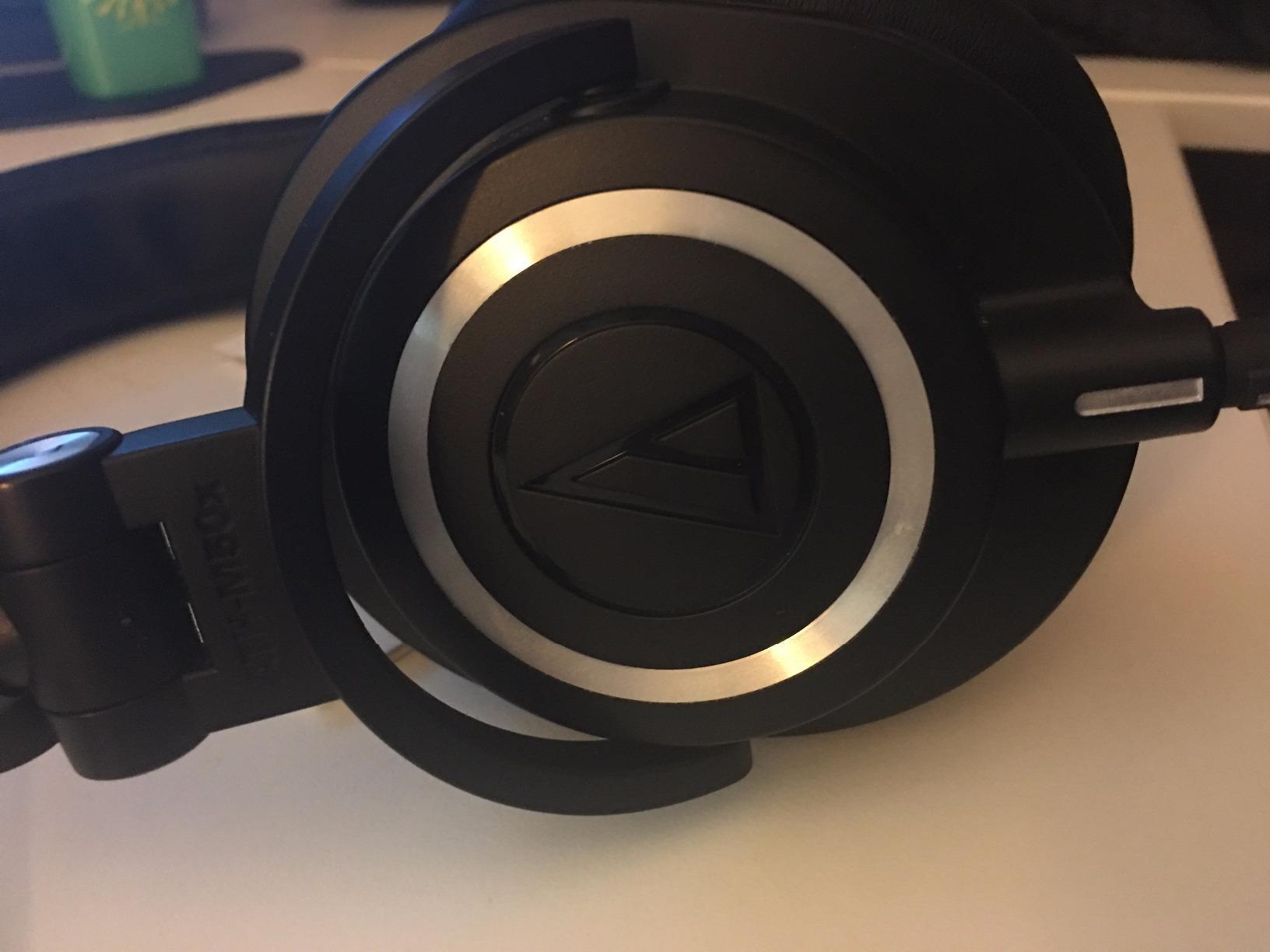
At 38 ohm and 99 dB sensitivity, this is one of the easiest pairs here to drive. A laptop or a phone will get it to a workable level, and a decent interface will have plenty of headroom. You do not need to budget for an amplifier to get started with this model.
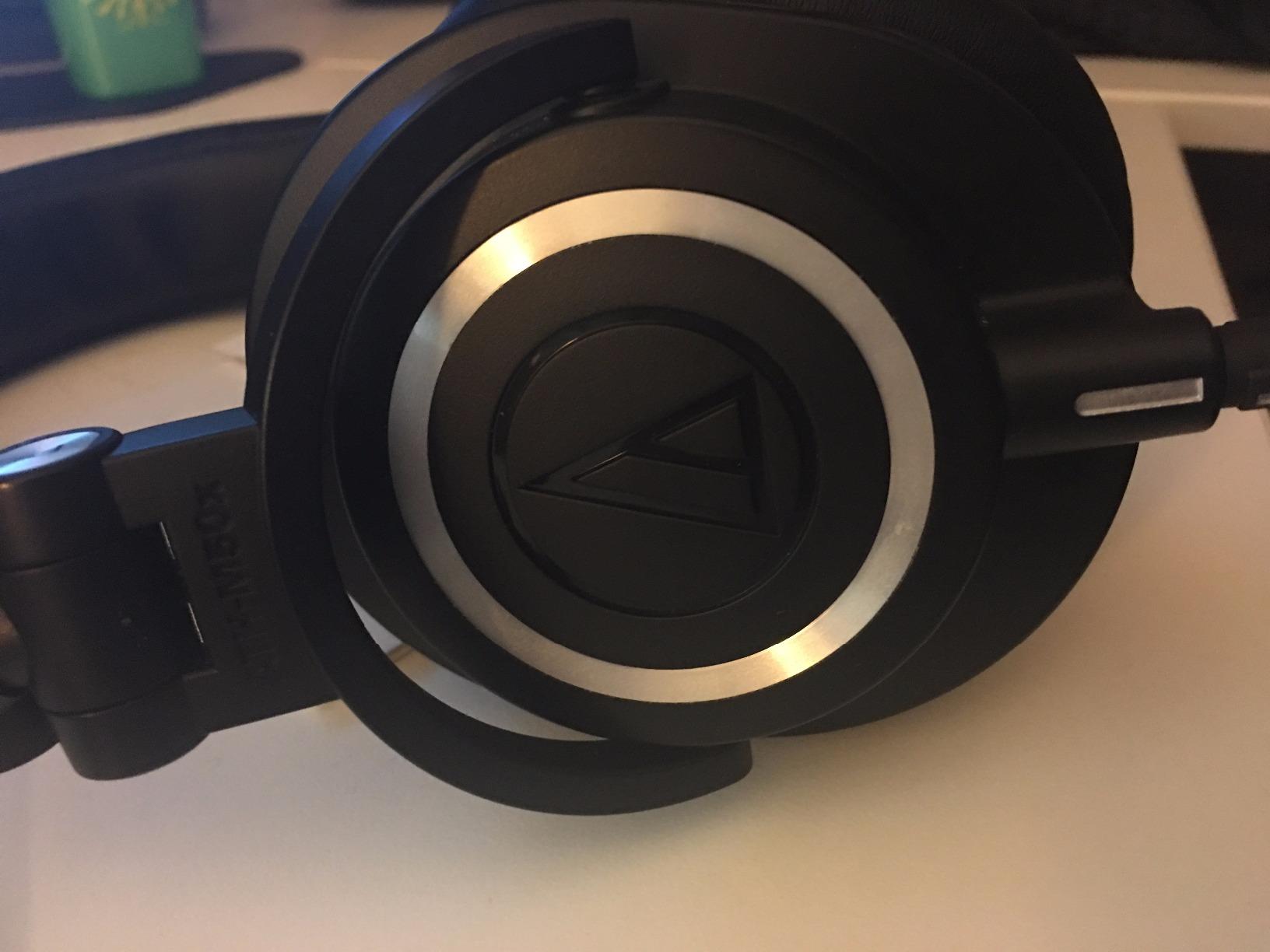
The 45 mm rare earth magnet drivers with copper clad aluminum wire voice coils sit in a circumaural shell that contours around the ear rather than pressing on it, which is part of why it stays comfortable through a long day. The detachable cable and replaceable pro-grade earpads mean the two components that normally fail are both serviceable.
Build quality is a mixed bag. The enclosure material is listed as aluminium, which sounds reassuring until you find the hinge in question. Audio-Technica backs it with a two year warranty on parts and labor, which helps, but the folding geometry is a design choice rather than a flaw.
When the ATH-M50x is the right call
Choose it if you record vocals or instruments live and need isolation, and you also want one pair that can handle the mixdown. It is the safest single purchase in this guide for a home studio, because it covers both halves of the workflow without a second outlay.
The 90 degree swivelling earcups are genuinely useful during tracking. You flip one cup out of the way, keep one ear on the performer, and the foldable design makes it easy to move between takes. That combination of isolation and one-ear monitoring is why this model has been a studio standard for years.
When to look elsewhere
Skip it if you mix dense orchestral or electronic arrangements and need a wide soundstage to place instruments. A closed-back cannot give you that, and trying to compensate by boosting or panning in the mix is a workaround, not a fix.
If you are prone to breaking cables, note that the hinge weakness and the plastic construction are the parts most likely to fail first. Anyone who has had a studio headphone die mid-session will weigh that risk heavily, and the M50x is not the model I would choose for that reason alone.
We earn a commission, at no additional cost to you. CERTAIN CONTENT THAT APPEARS ON THIS SITE COMES FROM AMAZON. THIS CONTENT IS PROVIDED 'AS IS' AND IS SUBJECT TO CHANGE OR REMOVAL AT ANY TIME.
2. Sony MDR-7506: The Reference Pair for Tracking
Sony MDR7506 Professional Large Diaphragm Headphone
- Closed-back
- 63 ohm
- 40 mm neodymium dynamic
- 10 Hz to 20,000 Hz
- 8 oz
Pros
- Extremely light and comfortable for long sessions
- Detailed revealing near-neutral sound
- Thick flexible coiled cable resists tangling and pull
- Rugged build trusted by broadcasters and engineers
- Folds down to a compact size with supplied case
Cons
- Cable is permanently attached and cannot be replaced
- Subtle bass can lead to over-mixing the low end
- On-ear pads wear out and need replacing
We earn a commission, at no additional cost to you. CERTAIN CONTENT THAT APPEARS ON THIS SITE COMES FROM AMAZON. THIS CONTENT IS PROVIDED 'AS IS' AND IS SUBJECT TO CHANGE OR REMOVAL AT ANY TIME.
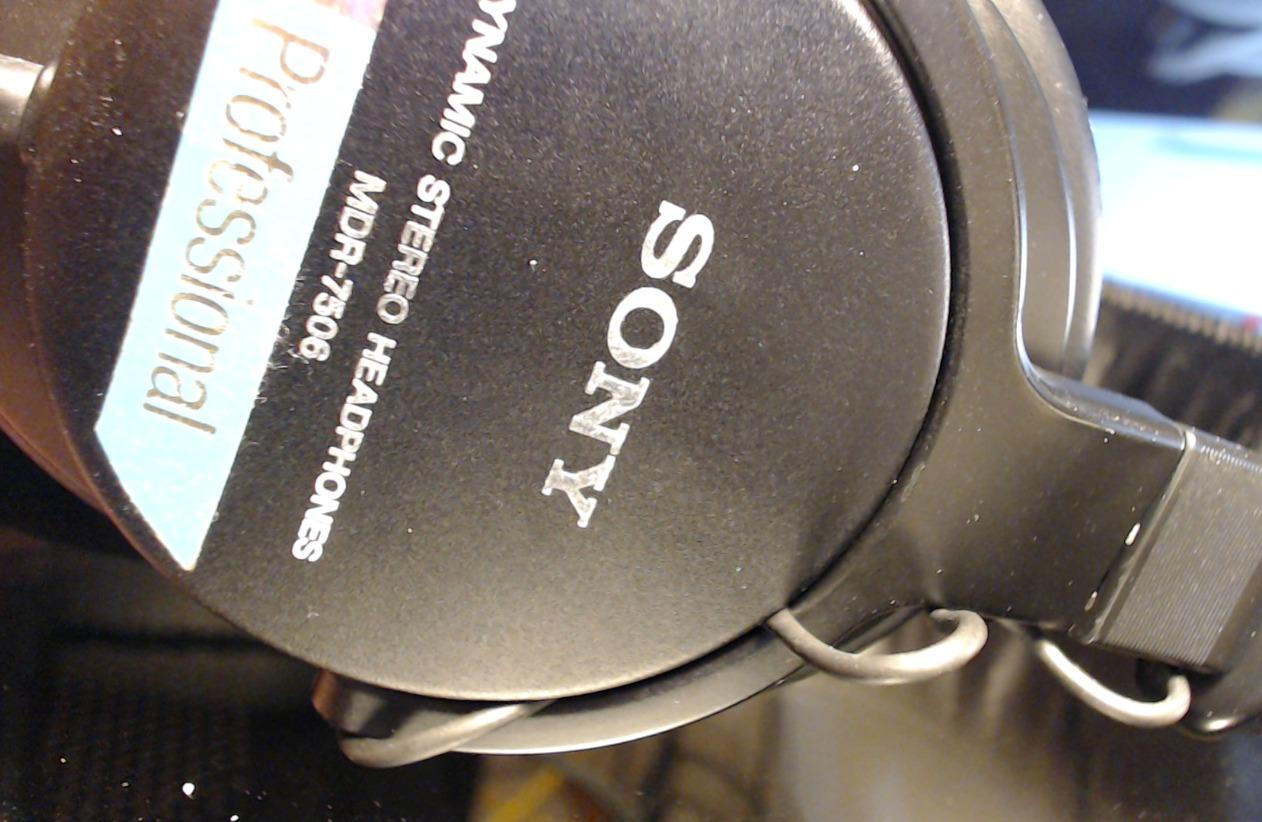
At eight ounces, the MDR-7506 is the lightest headphone in this list, and that turns out to matter more than any spec line. It disappears on your head. In sessions where fatigue normally creeps in around hour four, this is the pair that was still comfortable.
The closed-ear design does strong external noise reduction, and the 40 mm neodymium drivers deliver the kind of instrument separation that makes mixing decisions faster. Reviewers call the sound detailed and revealing, which is the right word for a headphone whose job is to expose mistakes rather than flatter.
Forum consensus lines up with that. On Gearspace, engineers put the MDR-7506 first among closed-back options, ahead of the Sennheiser HD 25-1 II and the Audio-Technica ATH-M50, when ranking headphones for mixing and mastering work.
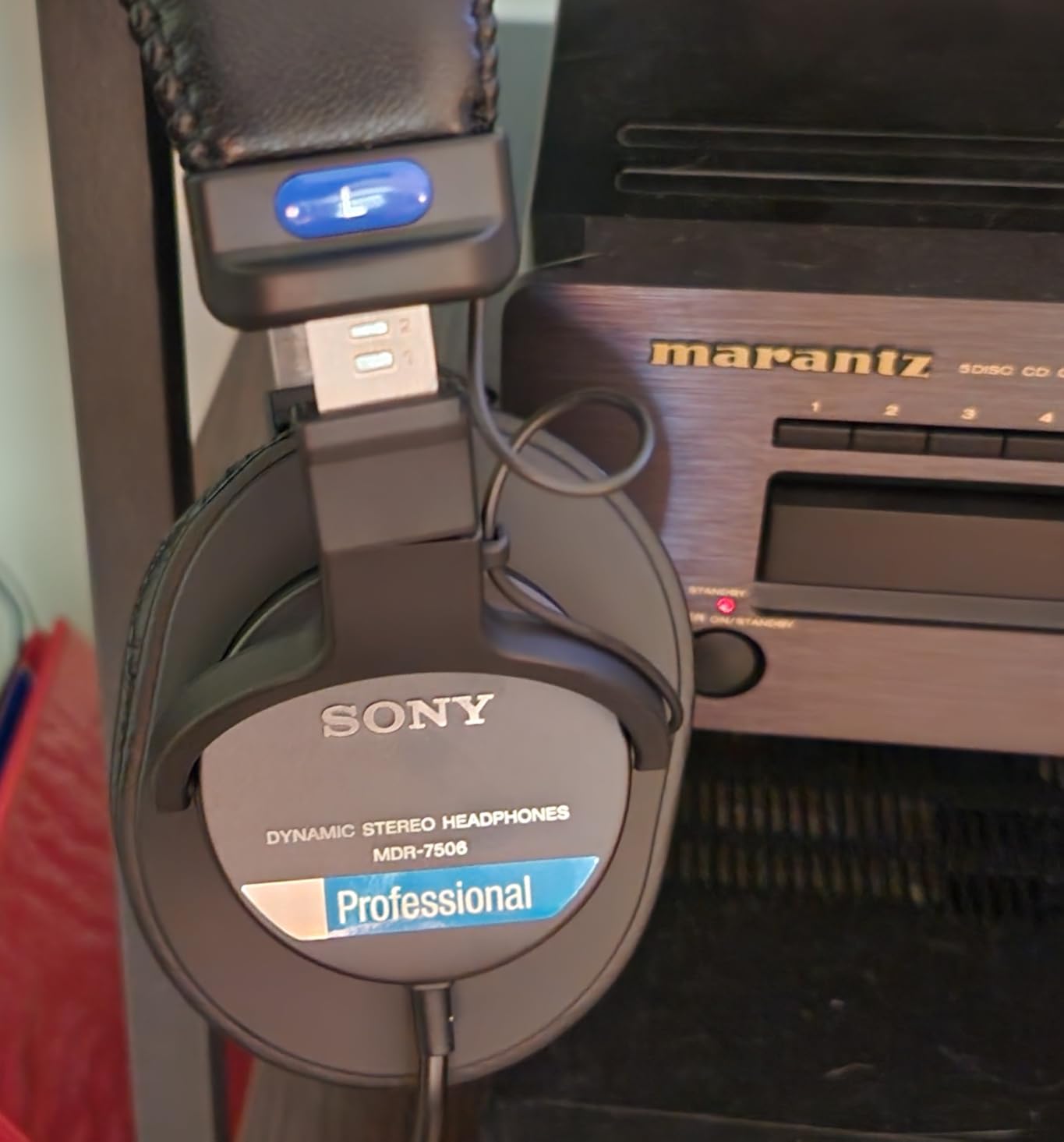
The 9.8 foot coiled cord is thick and resists both tangling and accidental pull, which is exactly what you want from a cable that will be stepped on. It terminates in a gold plated plug with a screw-on quarter inch adapter included, and the whole package folds into the supplied soft case.
Its frequency response, listed at 10 Hz to 20,000 Hz, is a narrower span than several open-backs here, but the range a mixing engineer relies on sits comfortably inside it, and the sealed design is what buys the isolation.
One thing to plan for: that cable is not detachable. It is a robust cable that resists damage, not an indestructible one, and when it eventually fails the repair is a soldering iron rather than a cable swap.
Who this headphone suits
It suits anyone who tracks a lot and monitors a lot. Vocalists recording overdubs, broadcast and radio work, and engineers who move between rooms all benefit from how little this thing registers physically over a long day.
The passive noise cancellation on the closed-ear design is genuinely useful in untreated rooms. If your studio is a treated bedroom with a shared wall, that isolation is doing real work that no open-back can do for you.
Who should pass
Pass if you need a detachable cable, or if you are drawn to sub-bass. Reviewers repeatedly note the bass is subtle, and the standard warning we found was that users over-mix the low end when monitoring on it. That habit is exactly what a reference headphone is supposed to prevent.
The warranty on this model is listed at 90 days, which is shorter than the two year cover on most picks here. Factor that in if you are buying as a long-term tool rather than a stopgap.
We earn a commission, at no additional cost to you. CERTAIN CONTENT THAT APPEARS ON THIS SITE COMES FROM AMAZON. THIS CONTENT IS PROVIDED 'AS IS' AND IS SUBJECT TO CHANGE OR REMOVAL AT ANY TIME.
3. Beyerdynamic DT 990 Pro 250 Ohm: The Open-Back Mixing Reference
beyerdynamic DT 990 Pro (250 Ohm), Open-Back Studio Headphones, Black
- Open-back
- 250 ohm
- 96 dB sensitivity
- 5 Hz to 35,000 Hz
- 8.8 oz
Pros
- Exceptionally wide open soundstage with clear placement
- Very light design with soft breathable velour pads
- Excellent detail retrieval for mixing and mastering
- Replaceable velour pads and spring-steel headband
- Wide headband adjustment fits large heads
Cons
- 250 ohm needs a headphone amp for full volume
- Open design leaks sound in and out
- Treble can feel sharp without good amplification
- Fixed non-detachable cable
We earn a commission, at no additional cost to you. CERTAIN CONTENT THAT APPEARS ON THIS SITE COMES FROM AMAZON. THIS CONTENT IS PROVIDED 'AS IS' AND IS SUBJECT TO CHANGE OR REMOVAL AT ANY TIME.
The DT 990 Pro is the pair that makes the open-back case obvious. The soundstage is enormous, instrument placement is clear, and depth is real rather than simulated. Put it on after a closed-back and the difference is not subtle.
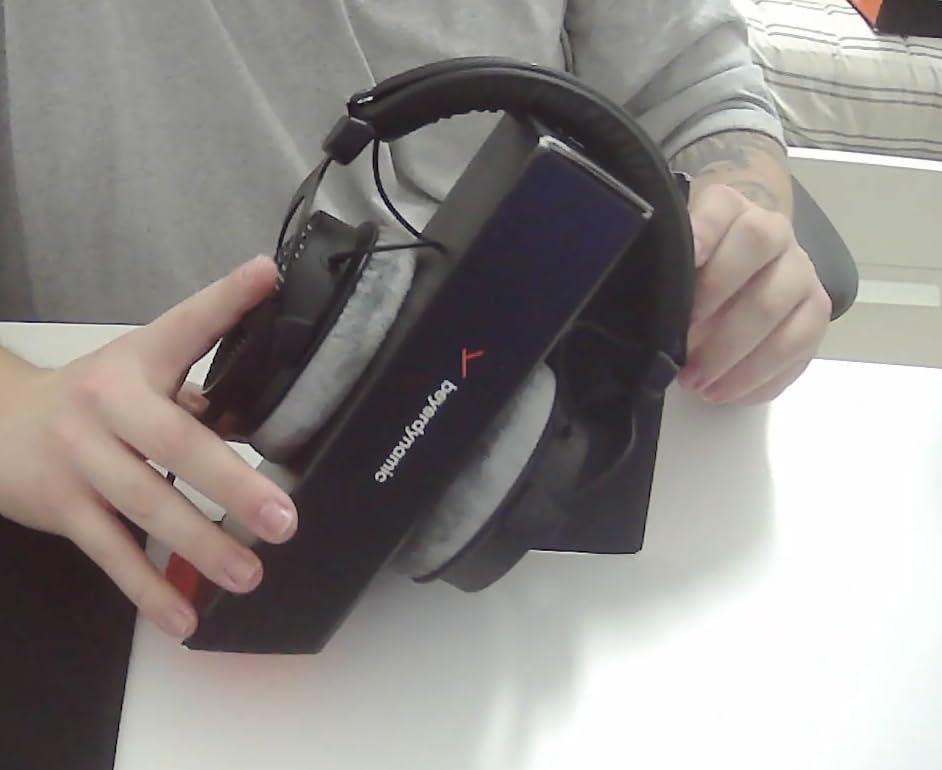
It is also startlingly light at 8.8 ounces for a full-size circumaural open-back. The velour pads are soft and breathable, which matters because open-backs tend to run warmer than closed designs, and the spring-steel headband spreads weight rather than pinching.
Reviewers report 81 percent five-star ratings across more than 20,000 reviews, with a lot of comments about matching models that cost several times more. The recurring theme is that the velour pads and the wide stage are what make long sessions possible.
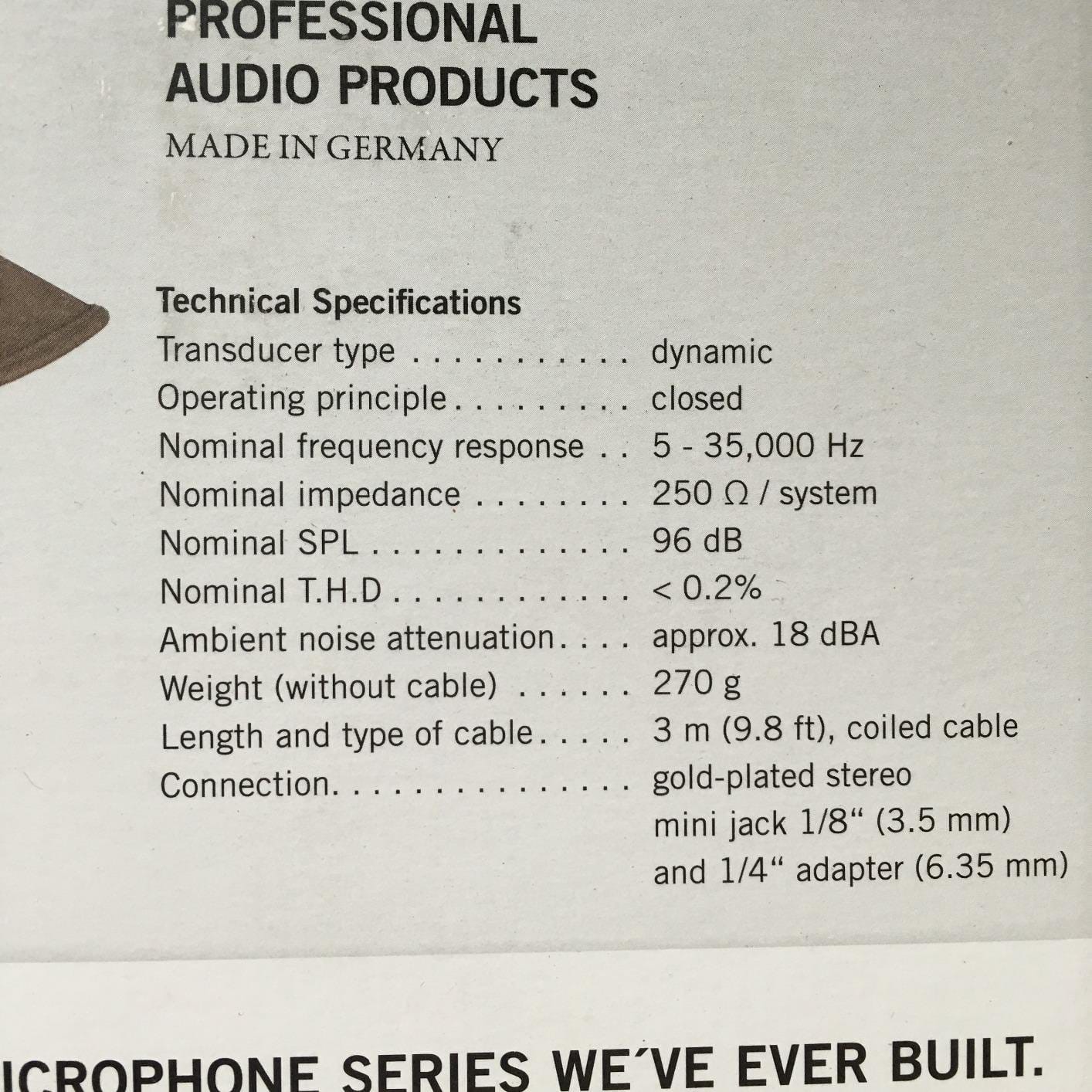
The important number here is 250 ohm. That figure means you should plan on a headphone amplifier or a capable interface output. On a bare laptop jack the volume will be low and the bass will roll off, which is the single most common complaint tied to this model.
Frequency response runs 5 Hz to 35,000 Hz, and the enclosure uses plastic, spring steel and velour. The fixed 3 metre coiled cable is made in Germany and includes a quarter inch adapter, and a two year Beyerdynamic warranty covers it.
One practical note: the cable is not detachable here either. On an open-back used in a home studio that is a smaller problem than on a portable closed-back, since the cable usually stays put.
Where the DT 990 Pro earns its slot
It is built for mixing, mastering, editing and critical listening in a room you do not need to record in. The wide natural stereo image lets you judge reverb depth and stereo width in a way no closed-back reproduces.
It is also fully serviceable. Pads, headband and drivers can all be replaced, so the long-term ownership story is better than most open-backs, where the earcups are glued shut.
Where it falls short
It is the wrong tool for tracking live takes, full stop. The open grille passes sound in both directions, so your headphone output will bleed into the microphone and you will be fighting that in the edit rather than the session.
The treble is also the sensitive area. Reviewers describe it as sharp or grating on bright recordings when the amplification chain is poor, which is a solvable problem with a real amp but a real problem on a laptop. If you are starting from zero and cannot add an amplifier yet, this is not the first model to buy.
We earn a commission, at no additional cost to you. CERTAIN CONTENT THAT APPEARS ON THIS SITE COMES FROM AMAZON. THIS CONTENT IS PROVIDED 'AS IS' AND IS SUBJECT TO CHANGE OR REMOVAL AT ANY TIME.
4. Beyerdynamic DT 770 Pro 80 Ohm: The Best Value Closed-Back
beyerdynamic DT 770 Pro Studio Headphones (80 Ohm, Black)
- Closed-back
- 80 ohm
- 96 dB sensitivity
- 5 Hz to 35,000 Hz
- 9.5 oz
Pros
- Well-balanced transparent sound for mixing and mastering
- Closed design gives good isolation with minimal leakage
- Very light clamping force with plush velour pads
- Pads headband and drivers all replaceable
- 80 ohm is easy to drive from laptop or interface
Cons
- Ear cups do not rotate on both axes so it is bulky to carry
- Fixed non-detachable cable on this model
- Very high frequencies lack some sparkle
- Pads can warm up in long sessions
We earn a commission, at no additional cost to you. CERTAIN CONTENT THAT APPEARS ON THIS SITE COMES FROM AMAZON. THIS CONTENT IS PROVIDED 'AS IS' AND IS SUBJECT TO CHANGE OR REMOVAL AT ANY TIME.
The DT 770 Pro is the answer to the most common question in producer forums, which is whether the Audio-Technica ATH-M50x or the DT 770 Pro is the better buy. Both are excellent. They differ in where they sit relative to your interface and what you are trying to hear.
The 80 ohm version is the sweet spot for most people. Reviewers describe it as easy to drive from laptops, phones and interfaces, which sidesteps the amp question that limits the DT 990 Pro above. On a decent interface it will drive fine without extra hardware.
Sound is well-balanced and transparent, which is what a monitoring headphone should be. The closed-back construction keeps sound leakage minimal, making it viable for vocal tracking and instrument recording in a way the open-backs here are not.
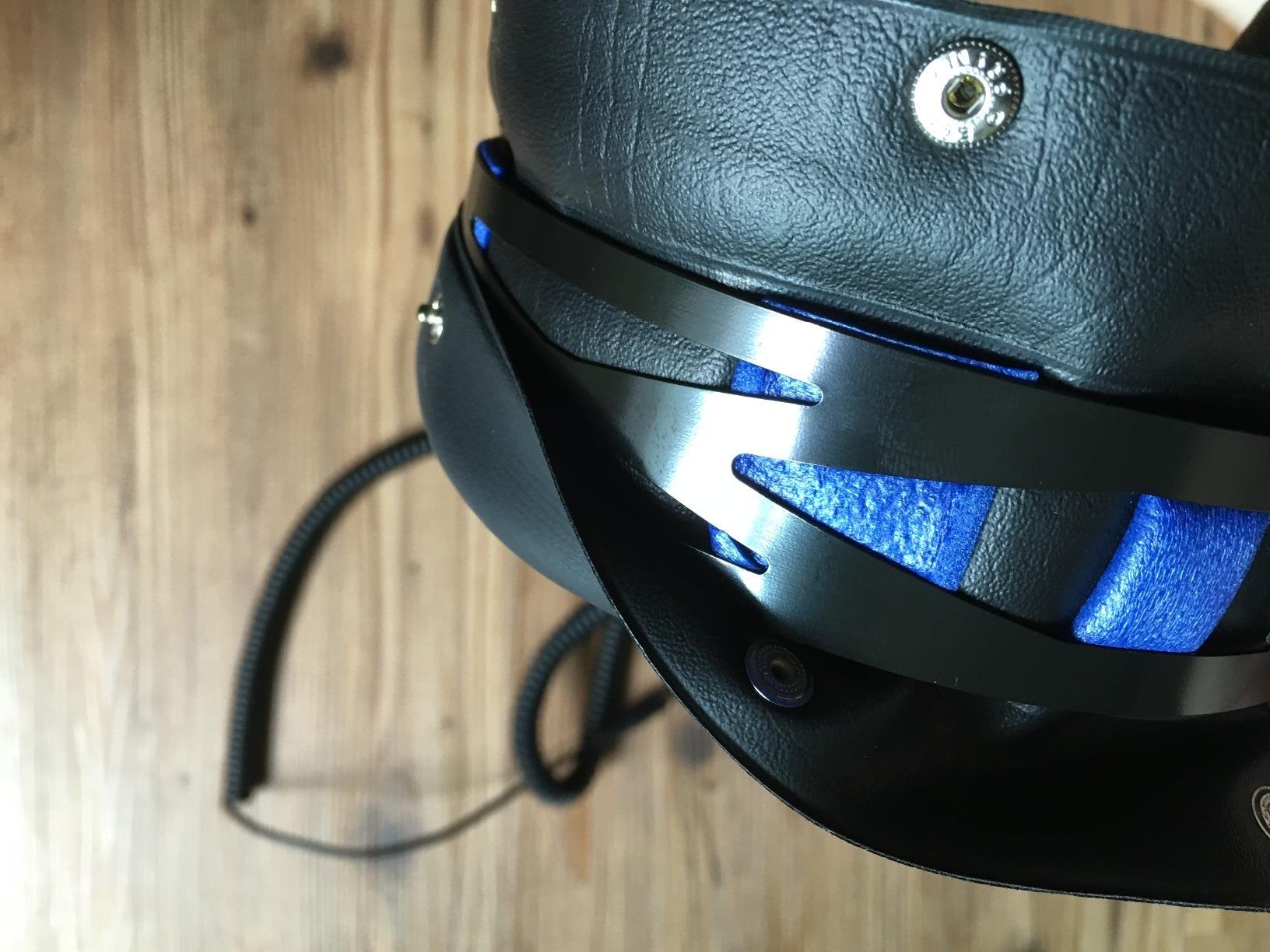
Comfort is where this model separates itself. The clamping force is described by reviewers as featherweight, and the black velour pads are soft and breathable. Several pickers noted the fit adapts across a very wide range of head sizes and shapes, which matters because head geometry is personal.
The 9.5 ounce weight is low for a closed-back of this size. The build is fully serviceable, with pads, headbands and drivers all replaceable, and there is a two year Beyerdynamic warranty behind it.
The 3 metre straight cable with a 3.5 mm connector and gold plated quarter inch adapter is a studio length run. It suits a control room desk, and it is the wrong cable for a laptop on a sofa.
Why this is the value pick
It covers both jobs. Because it is closed-back, you can track with it. Because the response is transparent and the top end is extended to 35,000 Hz, you can mix and master with it. Few models at any level do both as convincingly.
On r/trapproduction, users run the DT 770 Pro 80 Ohm as a default moderately priced mixing headphone, often paired with an entry planar. It is a well-worn path, and the reason is that it does not demand a second piece of equipment.
The catch
The ear cups do not rotate on both axes, so the pair is genuinely bulky to carry. If you are moving between rooms or working on location, that is a real inconvenience rather than a nitpick.
Reviewers also mention that the very high frequencies lack a little sparkle compared with other studio sets, and that the pads can warm up after several hours of continuous wear. If you already own a closed-back and are looking for an upgrade, this is a lateral move in sound and a comfort upgrade, not a leap.
We earn a commission, at no additional cost to you. CERTAIN CONTENT THAT APPEARS ON THIS SITE COMES FROM AMAZON. THIS CONTENT IS PROVIDED 'AS IS' AND IS SUBJECT TO CHANGE OR REMOVAL AT ANY TIME.
5. Audio-Technica ATH-M40x: Maximum Neutrality for Engineers Who Want None of It
Audio-Technica ATH-M40x Professional Studio Monitor Headphone, Black, with Cutting Edge Engineering, 90 Degree Swiveling Earcups, Pro-Grade Earpads/Headband, Detachable Cables Included
- Closed-back
- 35 ohm
- 98 dB sensitivity
- 15 to 24,000 Hz
- 0.24 kg
Pros
- Very flat neutral response for accurate mixing
- Excellent isolation in loud rooms and on planes
- 90 degree swivels fold one cup out of the way
- Detachable cable with third party cable options
- 35 ohm drivers sound great from a laptop or phone
Cons
- Very floppy folding design needs two hands
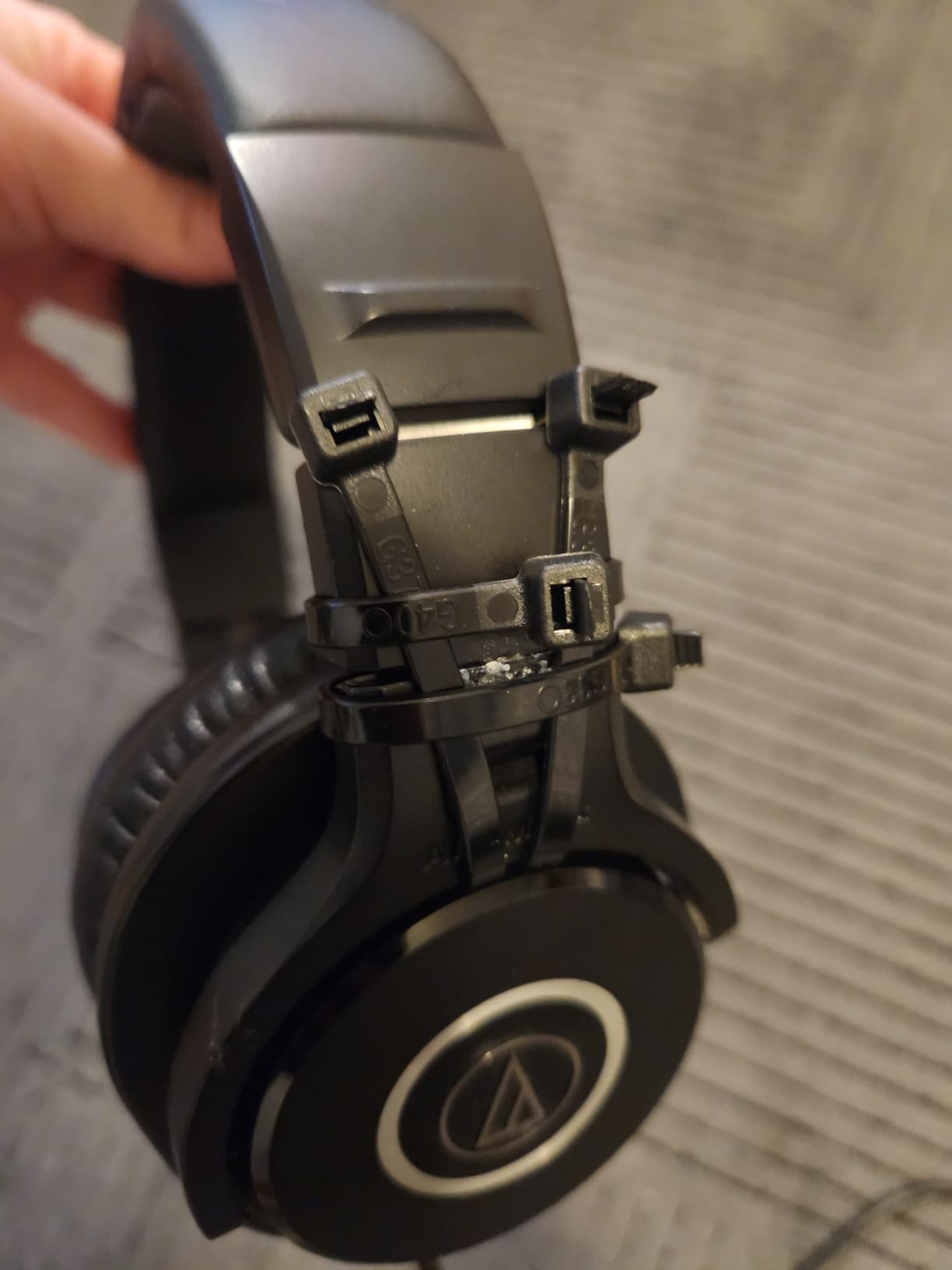
- Swivel hinges and headband are a known weak point
- Included earpads run small for larger ears
- Included cables are long studio length
We earn a commission, at no additional cost to you. CERTAIN CONTENT THAT APPEARS ON THIS SITE COMES FROM AMAZON. THIS CONTENT IS PROVIDED 'AS IS' AND IS SUBJECT TO CHANGE OR REMOVAL AT ANY TIME.
If your priority is the flattest response in this list, the ATH-M40x is the model. Reviewers describe the frequency response as very flat and neutral, which makes it the choice for engineers who want the mix handed to them without any added emphasis.
It is the lightest closed-back here at 0.24 kg, and the 35 ohm impedance means it needs no external DAC or amplifier to sound right. Plug it into a laptop and it works. That efficiency is unusual in a monitoring headphone and genuinely useful.
Two cables ship in the box, one straight and one coiled, plus a protective case and a screw-on adapter. The detachable design also means you are not locked into the supplied length, which is useful when your interface is across the room.
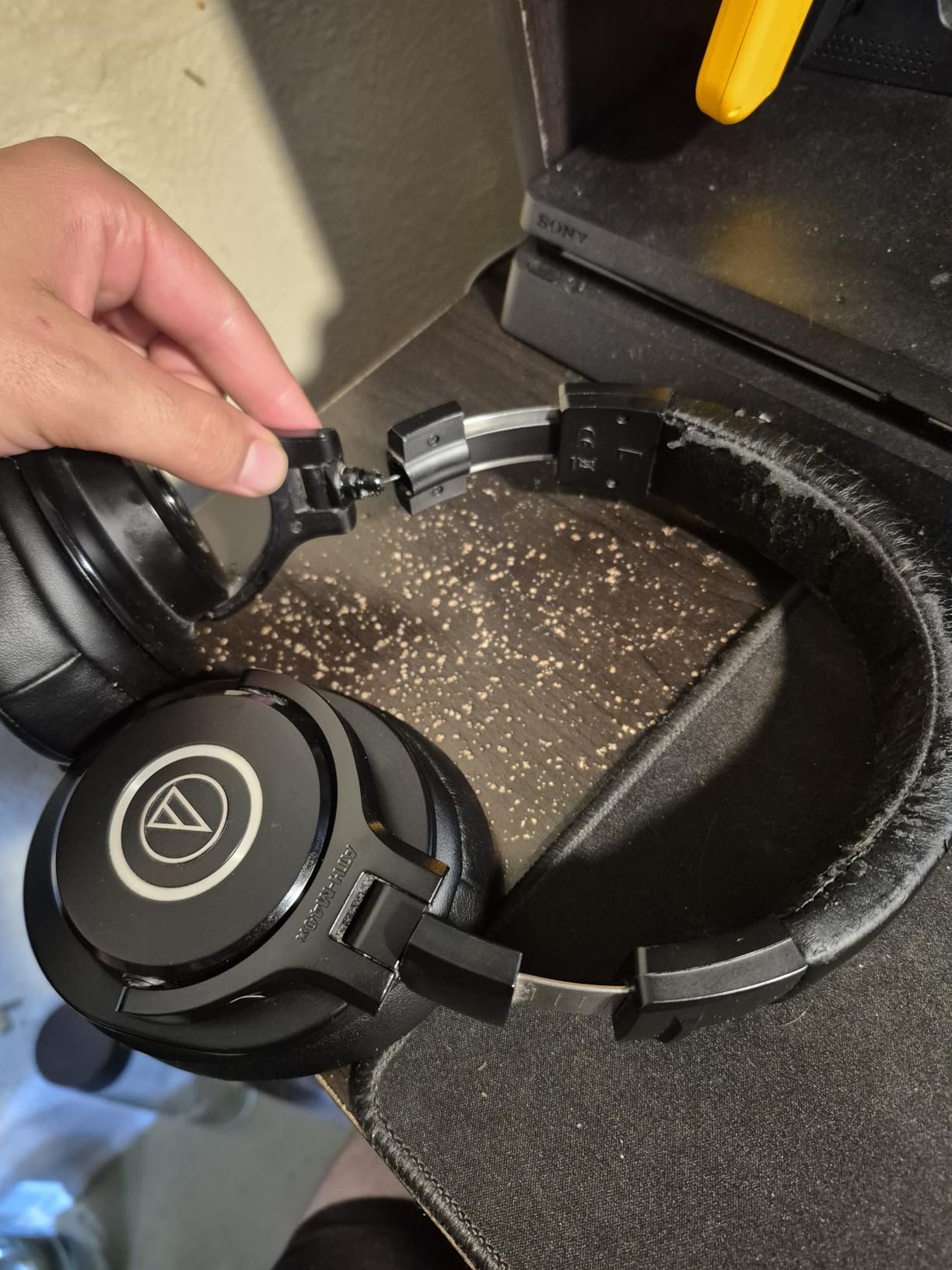
The 40 mm rare earth magnet drivers with copper clad aluminum wire voice coils sit in a circumaural design that contours around the ear for isolation. The 90 degree swivelling earcups let you fold the unused cup out of the way instantly, which is how you do one-ear monitoring during a take.
Response is listed at 15 Hz to 24,000 Hz with 98 dB sensitivity. The enclosure material is aluminium and the warranty is two years on parts and labor, matching the construction claims.
That 77 percent five-star rating across more than 16,000 reviews reflects a well-liked tool. The response and isolation draw the praise, while the mechanical parts draw the complaints.
When the M40x wins
It wins for engineers who have been burned by coloured headphones. If you have trained your ears on consumer gear, the flatness here will feel slightly lifeless at first, and then it will start revealing problems you could not hear before.
It is also a strong travel and location choice, since 35 ohm means a phone or a small interface can drive it. The isolation holds up well in loud environments, which matters on a film or event job.
When to choose something else
The folding design is very floppy. Reviewers note you need two hands to put them on, and the swivel hinges and headband are a known weak point. If you drop headphones regularly, this is not the one.
The supplied earpads also run small for larger ears and can feel tight over long sessions, and the included cables are studio length rather than portable. Both are solvable with a pad swap and a shorter cable, and the third party cable ecosystem for this connector is large.
We earn a commission, at no additional cost to you. CERTAIN CONTENT THAT APPEARS ON THIS SITE COMES FROM AMAZON. THIS CONTENT IS PROVIDED 'AS IS' AND IS SUBJECT TO CHANGE OR REMOVAL AT ANY TIME.
6. AKG K240 Studio: The Budget Semi-Open Workhorse
AKG K240STUDIO Semi-Open Studio Headphones
- Semi-open
- 55 ohm
- 104 dB sensitivity
- 15 Hz to 25 kHz
- 240 g
Pros
- Neutral accurate response that reveals mix errors
- Extremely light with self-adjusting headband
- Detachable pro-standard cable is easy to replace
- Semi-open design gives a roomy stage with some isolation
- Excellent instrument separation for mixing and editing
Cons
- Semi-open design leaks sound both ways
- Bass is light and highs roll off
- Pleather pads get warm and are not plush
- Needs a decent amp or interface to reach full potential
We earn a commission, at no additional cost to you. CERTAIN CONTENT THAT APPEARS ON THIS SITE COMES FROM AMAZON. THIS CONTENT IS PROVIDED 'AS IS' AND IS SUBJECT TO CHANGE OR REMOVAL AT ANY TIME.
The K240 Studio is the cheapest credible entry into this list, and the semi-open design gives you a genuinely different option. The soundstage is roomy, more open than any closed-back here, but nowhere near as open as a true open-back model.
Reviewers treat it as a work tool rather than a music headphone, which is the right framing. The response is neutral and accurate, and instrument separation is good enough that it works for mixing, editing and podcasting without a second pair.
At 104 dB sensitivity, this is the most efficient model in the lineup. That sensitivity means it gets loud and stays clear on sources that struggle with less efficient headphones, which is a real advantage on modest gear.
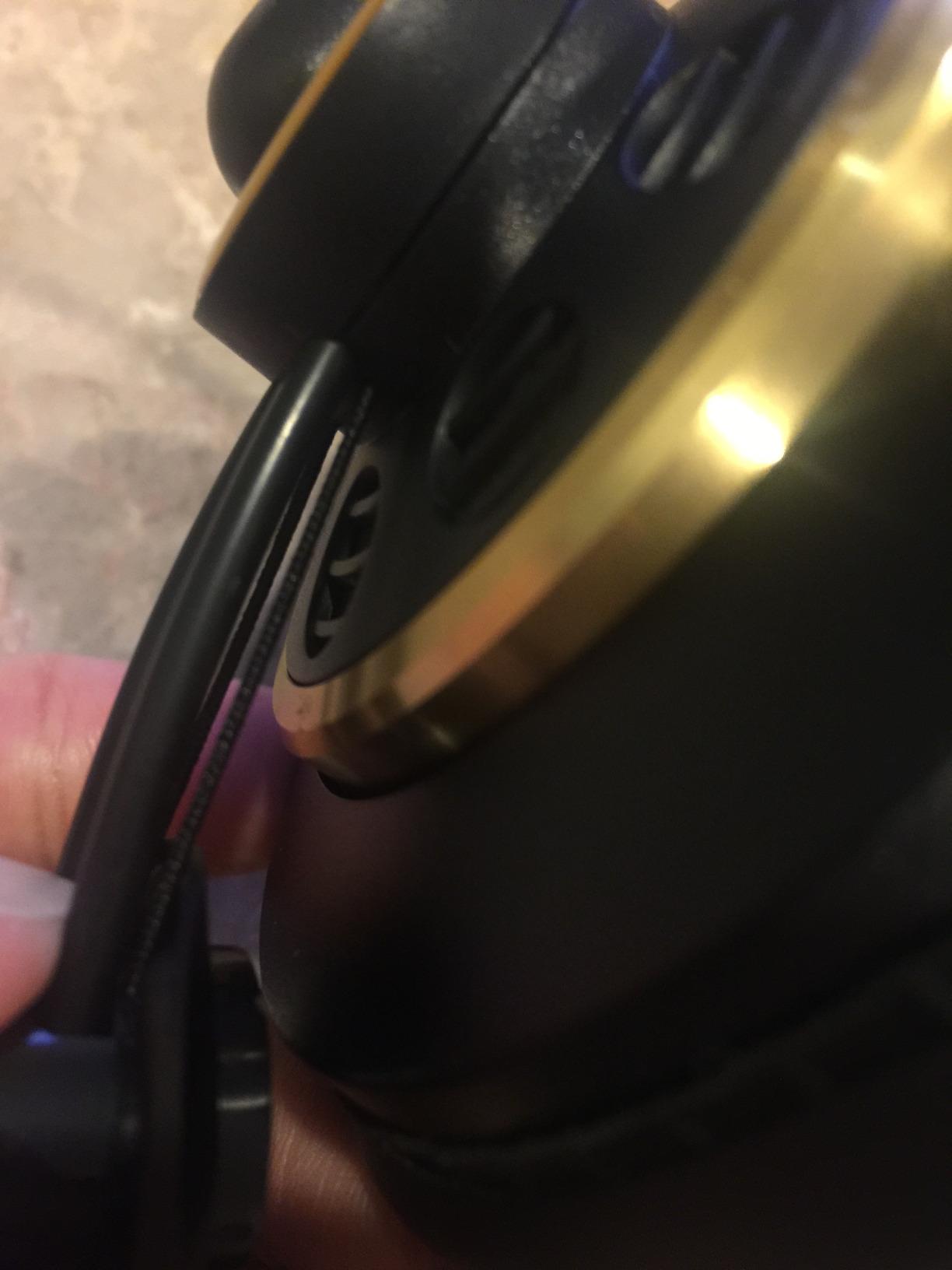
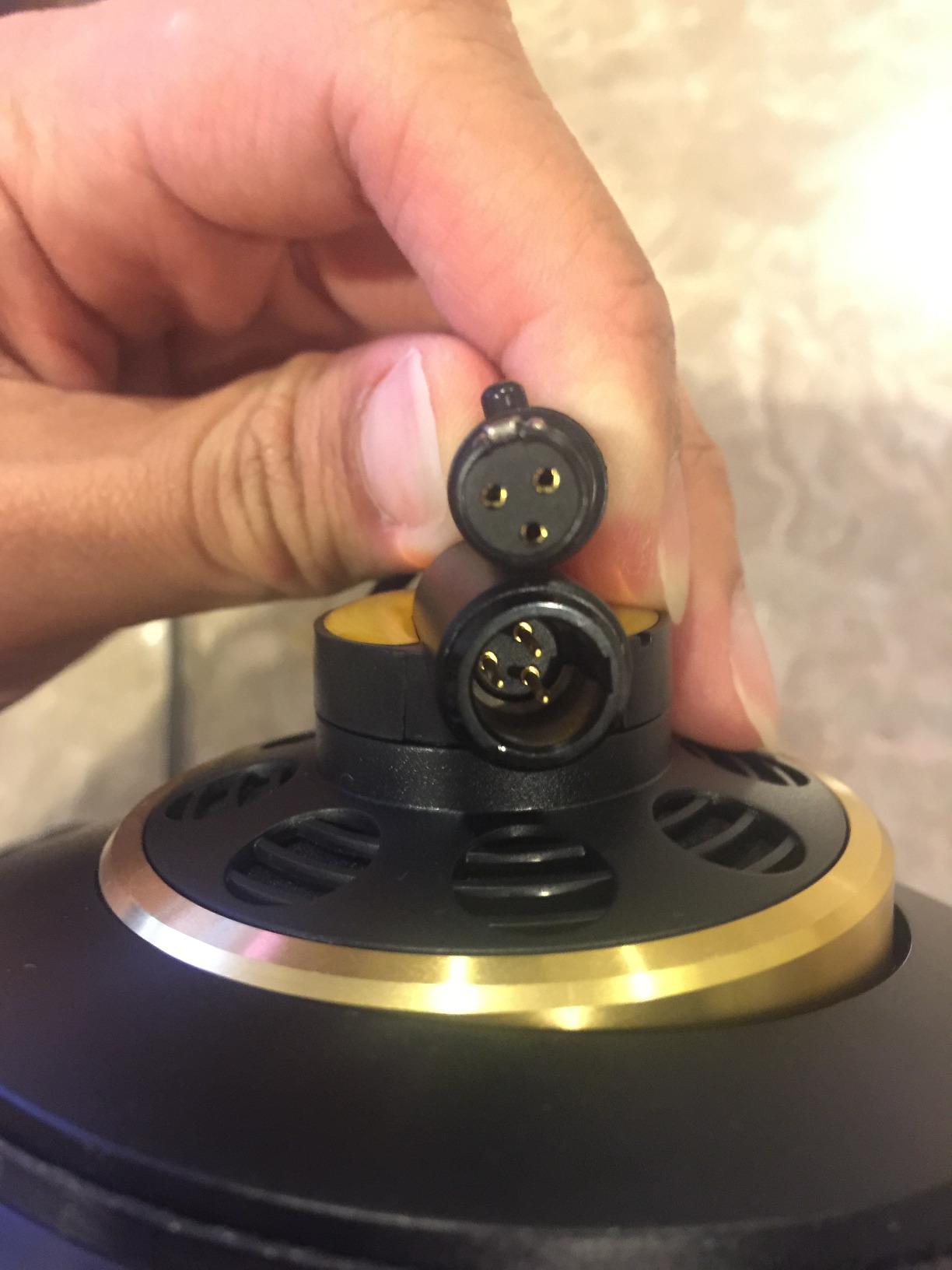
The 30 mm XXL transducers use patented Varimotion diaphragms, and the self-adjusting gimbal-suspended headband fits automatically without manual clamping. That design is the reason the pair stays comfortable across very different head sizes without adjustment.
Response runs 15 Hz to 25 kHz. The detachable 3 metre cable with a stereo 1/8 inch plug and screw-on quarter inch adapter uses the pro standard connector, so replacements are easy to find and cheap.
At 75 percent five-star ratings across more than 12,000 reviews, the reception is solidly positive with a clear practical bent. It is not a romantic headphone, and reviewers are not pretending otherwise.
Where the K240 makes sense
It makes sense for editing, podcasting, and learning to mix without a large outlay. The semi-open construction is a sensible middle ground for a bedroom studio, where you want some openness but not a fully leaking open-back.
It is also the lightest option here for a semi-open design at 240 g, and the auto-fitting headband removes a whole category of comfort complaints that plague fixed designs.
Where it will disappoint
It leaks sound in both directions, so it is unsuitable for live recording. That is the defining trade of a semi-open pair and there is no way around it.
The other repeated caveat is the tonal balance. Bass is light and the highs roll off, which means it lacks impact for bass-heavy electronic material and will not excite on mixes with a lot of sub energy. If you produce that kind of music, a closed-back with more low-end weight suits you better.
We earn a commission, at no additional cost to you. CERTAIN CONTENT THAT APPEARS ON THIS SITE COMES FROM AMAZON. THIS CONTENT IS PROVIDED 'AS IS' AND IS SUBJECT TO CHANGE OR REMOVAL AT ANY TIME.
7. Sennheiser HD 280 Pro: The Isolation Specialist
Sennheiser HD 280 Pro Headphone, Black
- Closed-back
- 64 ohm
- 8 Hz to 25 kHz
- up to 32 dB passive attenuation
Pros
- Class leading passive isolation near ear-defender levels
- Warm natural unboosted tuning with good imaging
- Lightweight and comfortable for long sessions
- Collapsible earcups allow fast one-handed cueing
- Earpads headband padding and cord are replaceable
Cons
- Coiled cable is heavy and permanently attached
- Supplied pad and headband coverings are low quality
- Bass is less prominent than consumer headphones
- Some units report headband cracking or internal wiring faults
We earn a commission, at no additional cost to you. CERTAIN CONTENT THAT APPEARS ON THIS SITE COMES FROM AMAZON. THIS CONTENT IS PROVIDED 'AS IS' AND IS SUBJECT TO CHANGE OR REMOVAL AT ANY TIME.
The HD 280 Pro exists for one reason, and that reason is isolation. It attenuates outside sound by up to 32 dB passively, which is a number you will notice the moment you put them on in a noisy environment.
That makes it a strong fit for front-of-house mixing, DJ cueing, and tracking in an untreated room where you need to hear the performer and nothing else. Reviewers describe the tuning as warm and natural with no boost, plus imaging and clarity good enough to mix on.
Against the Sony MDR-7506, the HD 280 Pro wins on isolation and loses on weight and cable design. Against the ATH-M50x, it wins on attenuation and loses on flexibility, because the cable here is fixed.
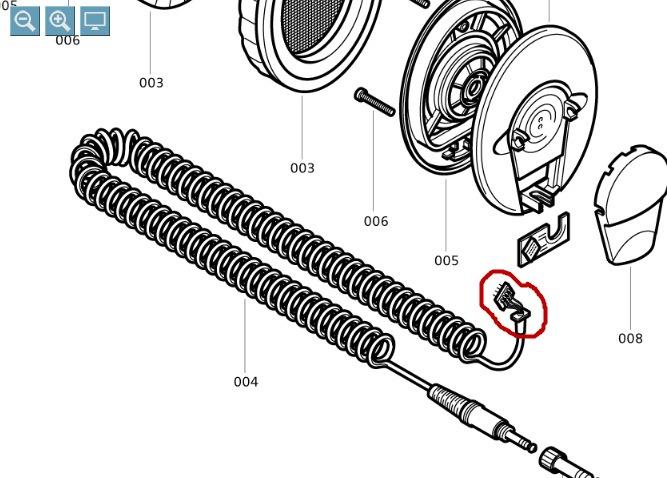
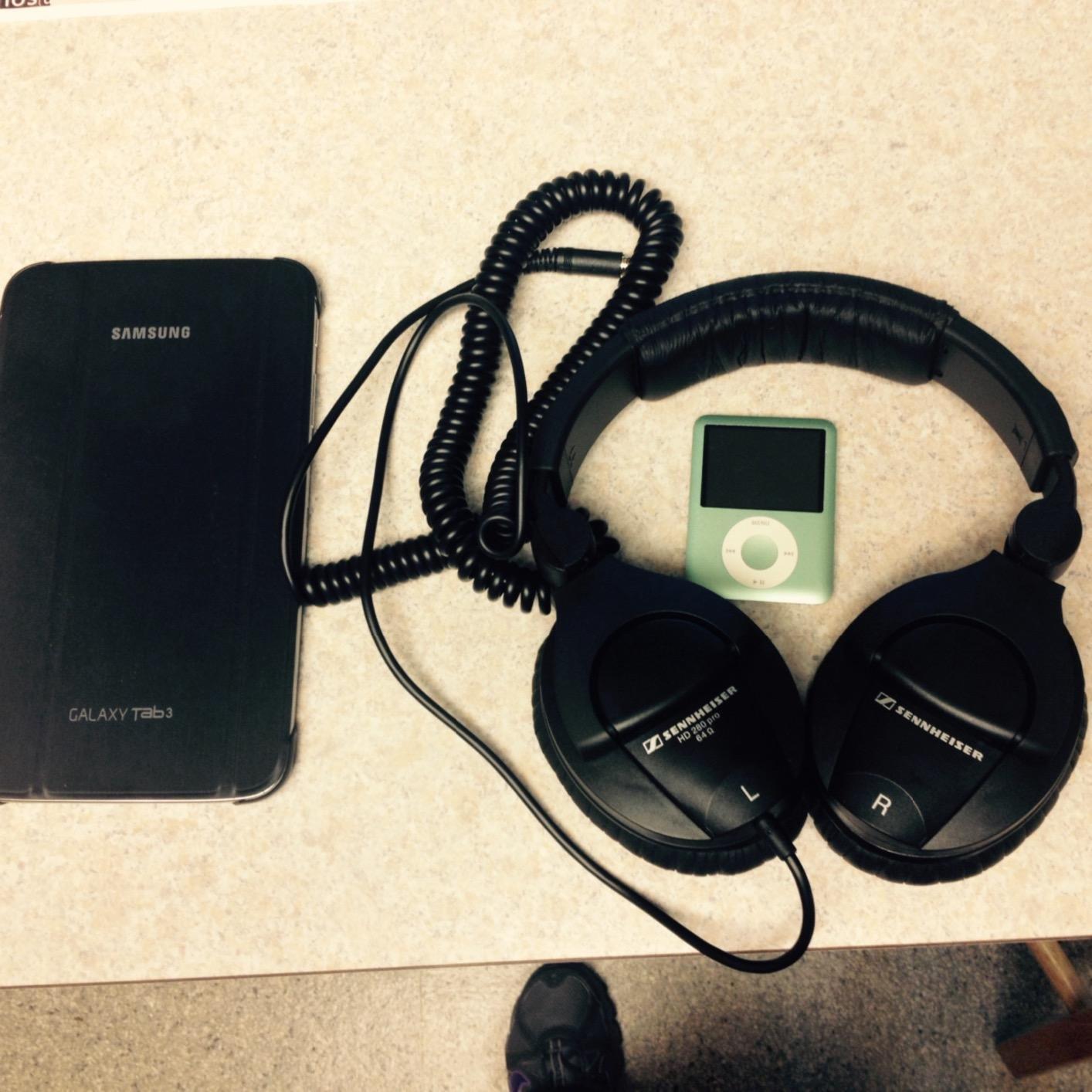
The collapsible earcups fold for compact transport and allow fast one-handed cueing, which is how you put one ear back on mid-set. The coiled 3.3 metre cord with a screw-on quarter inch adapter gives you the reach most live work needs.
Importantly for long-term ownership, the earpads, headband padding and audio cord are all easily replaceable, and the warranty is two years. The 8 Hz to 25 kHz response covers the working range comfortably.
The listed weight is 1.3 pounds, which is heavier than the other closed-backs here. Much of that is the coiled cable, which reviewers specifically call heavy around the neck.
Who should buy the HD 280 Pro
Buy it if isolation is your problem rather than your preference. Live sound engineers, DJs, and anyone tracking in a shared or untreated room get more from 32 dB of passive attenuation than from any tonal refinement.
It is also a sensible choice for long sessions once you get past the pad material. The dynamic closed-ear design is padded around the ear and the fit is described as comfortable over extended sessions.
Who should skip it
Skip it if you want to audition music as well as work on it. The bass is less prominent than consumer headphones, and the warm signature is honest rather than exciting. This is a tool, not a lifestyle headphone.
The pad and headband coverings are the weak point. Reviewers report they pick up oil and sweat quickly, and some owners describe headband cracking or internal wiring faults. Budget for a pad replacement early, and if you buy an older revision, check it as soon as it arrives.
We earn a commission, at no additional cost to you. CERTAIN CONTENT THAT APPEARS ON THIS SITE COMES FROM AMAZON. THIS CONTENT IS PROVIDED 'AS IS' AND IS SUBJECT TO CHANGE OR REMOVAL AT ANY TIME.
8. Sennheiser HD 650: The Mastering Standard That Outlived Its Price Band
Sennheiser HD 650 – Audiophile Hi-Res Open Back Dynamic Headphone
- Open-back
- 300 ohm
- 103 dB sensitivity
- 42 mm dynamic
- 9.12 oz
Pros
- Reference grade open-back tonality with wide soundstage
- Very low distortion for a dynamic driver
- Hand matched driver units for consistent balance
- Lightweight and comfortable for long critical listening
Cons
- Open design gives no isolation and leaks both ways
- 300 ohm normally requires a dedicated amplifier
- Large cups and open grille unsuitable for mobile or public use
- Cannot reach high volume from a laptop or phone alone
We earn a commission, at no additional cost to you. CERTAIN CONTENT THAT APPEARS ON THIS SITE COMES FROM AMAZON. THIS CONTENT IS PROVIDED 'AS IS' AND IS SUBJECT TO CHANGE OR REMOVAL AT ANY TIME.
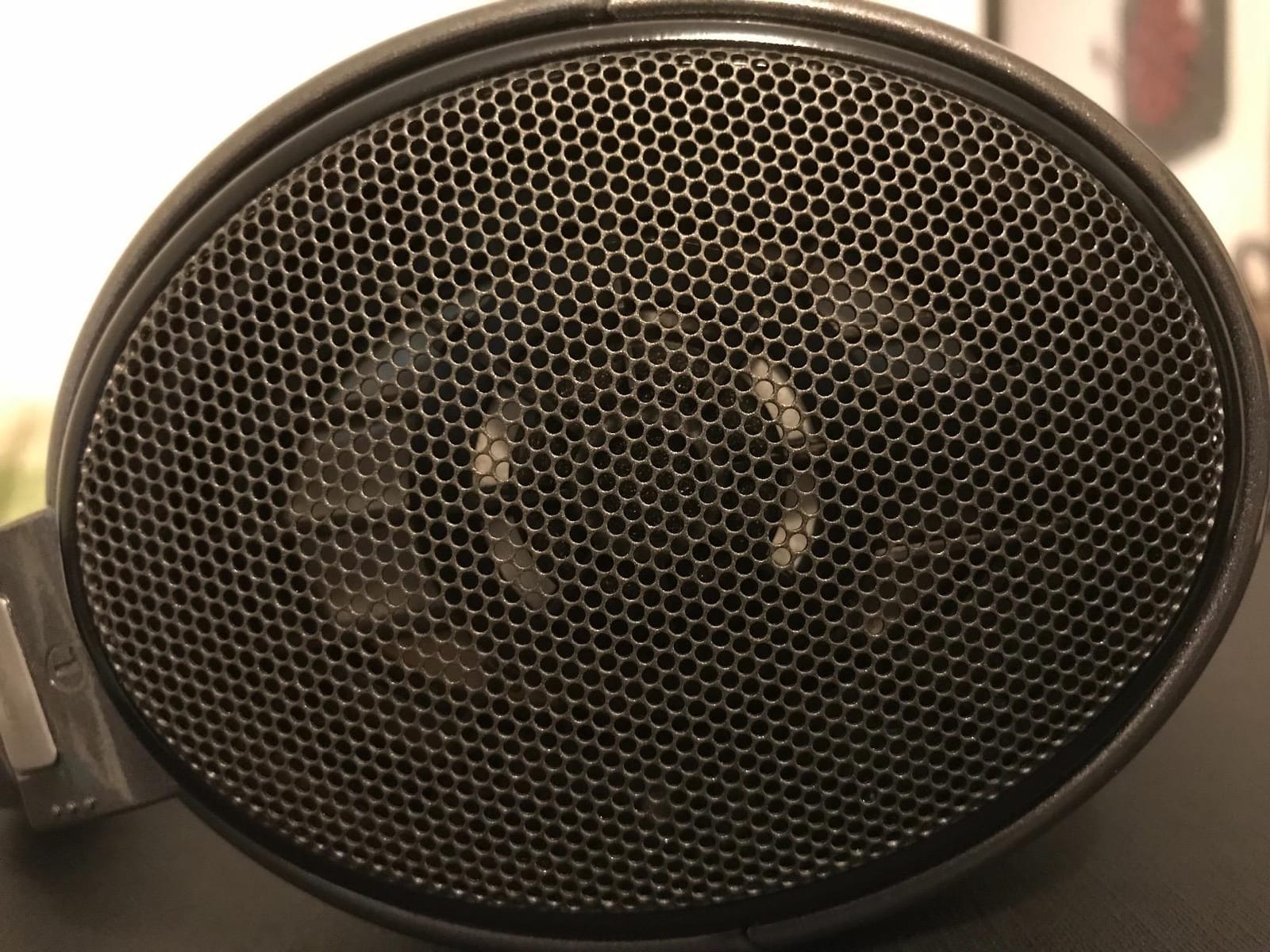
The HD 650 has a reputation as a mastering reference that genuinely outstrips its price band, and engineers report seeing HD 650 and HD 600 units in mastering studios all over the world, often preferred over more expensive demonstration models.
That consensus is not hype. The design is measured rather than exciting: a wide natural open-back presentation, very low distortion, and hand-selected matched driver elements so the two channels stay balanced to each other.
The acoustic silk damping across the frequency range is what delivers that low distortion figure, listed at approximately 0.05 percent THD for a dynamic driver. That is the technical reason the pair stays clean on sustained low frequencies.
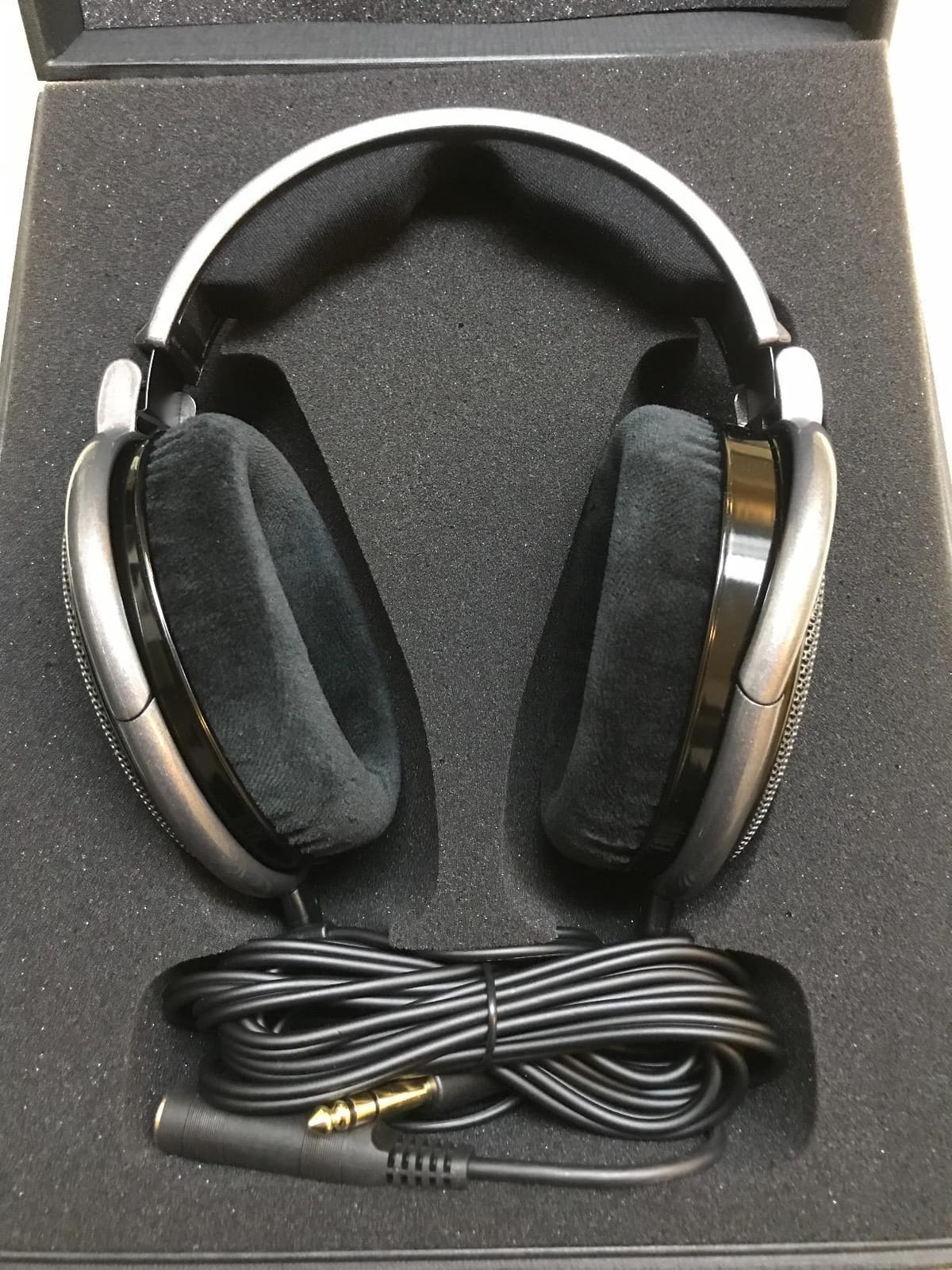
The 42 mm dynamic drivers use high-power neodymium magnets and an improved response reaching up to 39,500 Hz. At 9.12 ounces the pair is light despite the oversized cups, and the two year warranty is standard.
The impedance figure is the catch and it is a big one. At 300 ohm this needs a dedicated headphone amplifier. A laptop or phone will not drive it to a comfortable level, and the response will thin out at the bottom as you push the volume.
The box includes a 3.5 mm jack plug and a quarter inch connector. Jack adapters are passive components though, and no adapter adds the current this load requires.
Where the HD 650 belongs
It belongs in a treated room where isolation does not matter. Mastering, critical listening, arrangement work and deep low-end checking on mixes that need a second opinion are all strong cases.
If you already have a closed-back for tracking, this is the natural companion. The pairing gives you bleed control when you record and an open, wide reference when you mix, which is the two-pair workflow a lot of professionals run.
Where it will not work
It will not work for live recording, obviously, and it will not work in a shared office or on public transport. The large earcups and open grille make it conspicuous and leaky in any environment where others can hear you.
It will also disappoint anyone whose setup cannot drive it. Buying a 300 ohm headphone before you have an amplifier is the classic ordering mistake, and the 4.6 rating across more than 3,000 reviews does not change that constraint.
We earn a commission, at no additional cost to you. CERTAIN CONTENT THAT APPEARS ON THIS SITE COMES FROM AMAZON. THIS CONTENT IS PROVIDED 'AS IS' AND IS SUBJECT TO CHANGE OR REMOVAL AT ANY TIME.
9. Sennheiser HD 490 PRO: The Newer Open-Back With the Most Precise Imaging
HD 490 PRO Open-Back Professional Headphone
- Open-back
- 130 ohm
- 105 dB sensitivity
- 5 Hz to 36 kHz
- 200 g
Pros
- Extremely wide dimensional soundstage with precise localisation
- Uncolored honest response across a wide range
- Low frequency cylinder system gives full accurate low end
- Two interchangeable pad sets for producing or mixing
- Washable replaceable pads and detachable cable
Cons
- Open design offers no passive isolation and leaks sound
- 130 ohm impedance benefits from an amplifier
- Newer model with a much smaller review base
We earn a commission, at no additional cost to you. CERTAIN CONTENT THAT APPEARS ON THIS SITE COMES FROM AMAZON. THIS CONTENT IS PROVIDED 'AS IS' AND IS SUBJECT TO CHANGE OR REMOVAL AT ANY TIME.
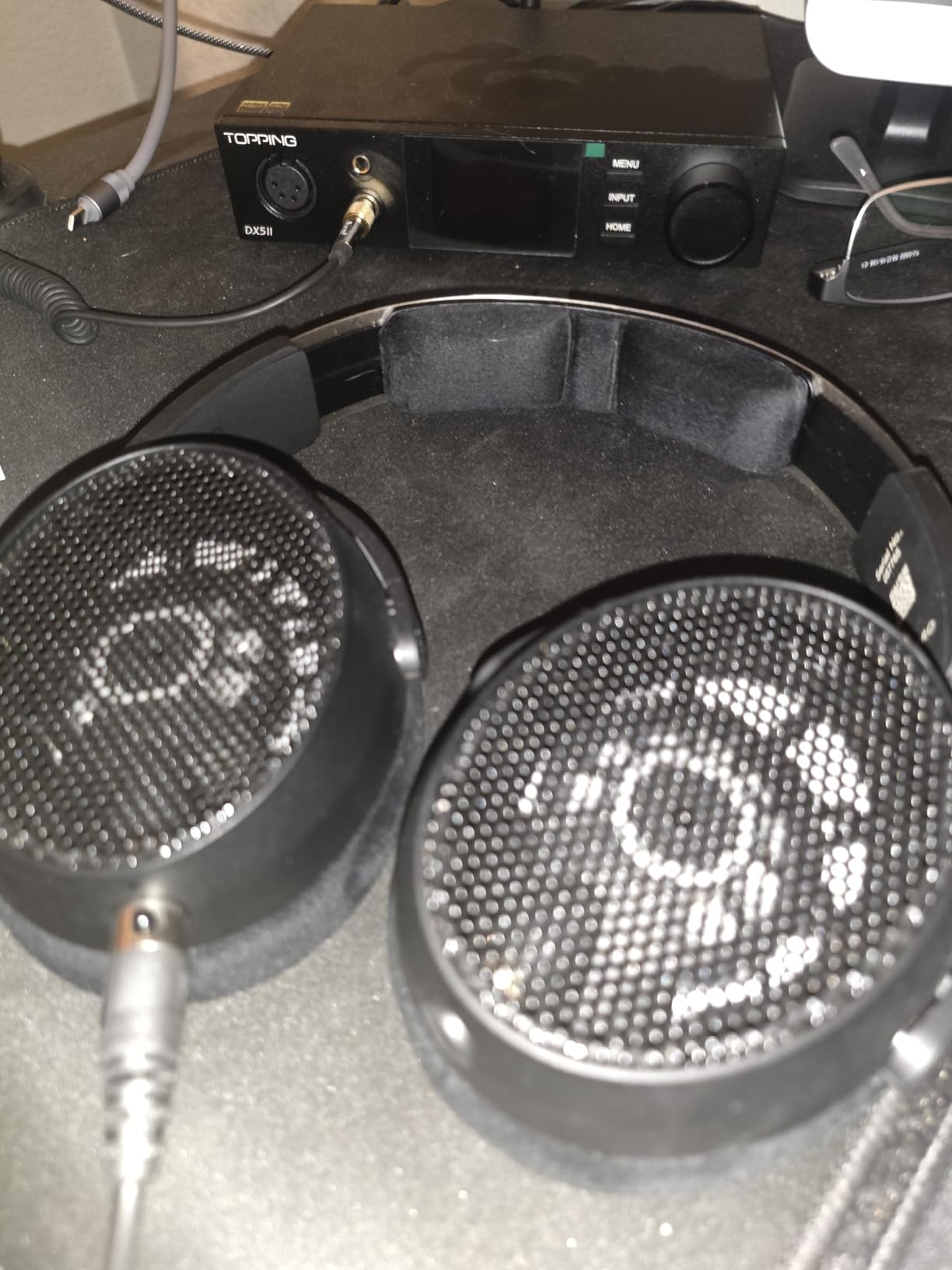
The HD 490 PRO is the newest open-back in this group, and its distinguishing feature is localisation. Users describe pinpoint placement and an extremely wide, dimensional stage, which is exactly what you want when you are trying to hear where a reverb tail ends.
At 105 dB sensitivity it is the second most efficient model here, which makes it more forgiving than the HD 650 if your amplification is modest. It is still rated at 130 ohm, so a proper headphone amplifier is worth adding.
Two sets of ear pads come in the box, one intended for producing and one for mixing. Reviewers specifically credit this with reducing ear fatigue, since pad stiffness and seal change how a long session feels, and both sets are washable and replaceable.
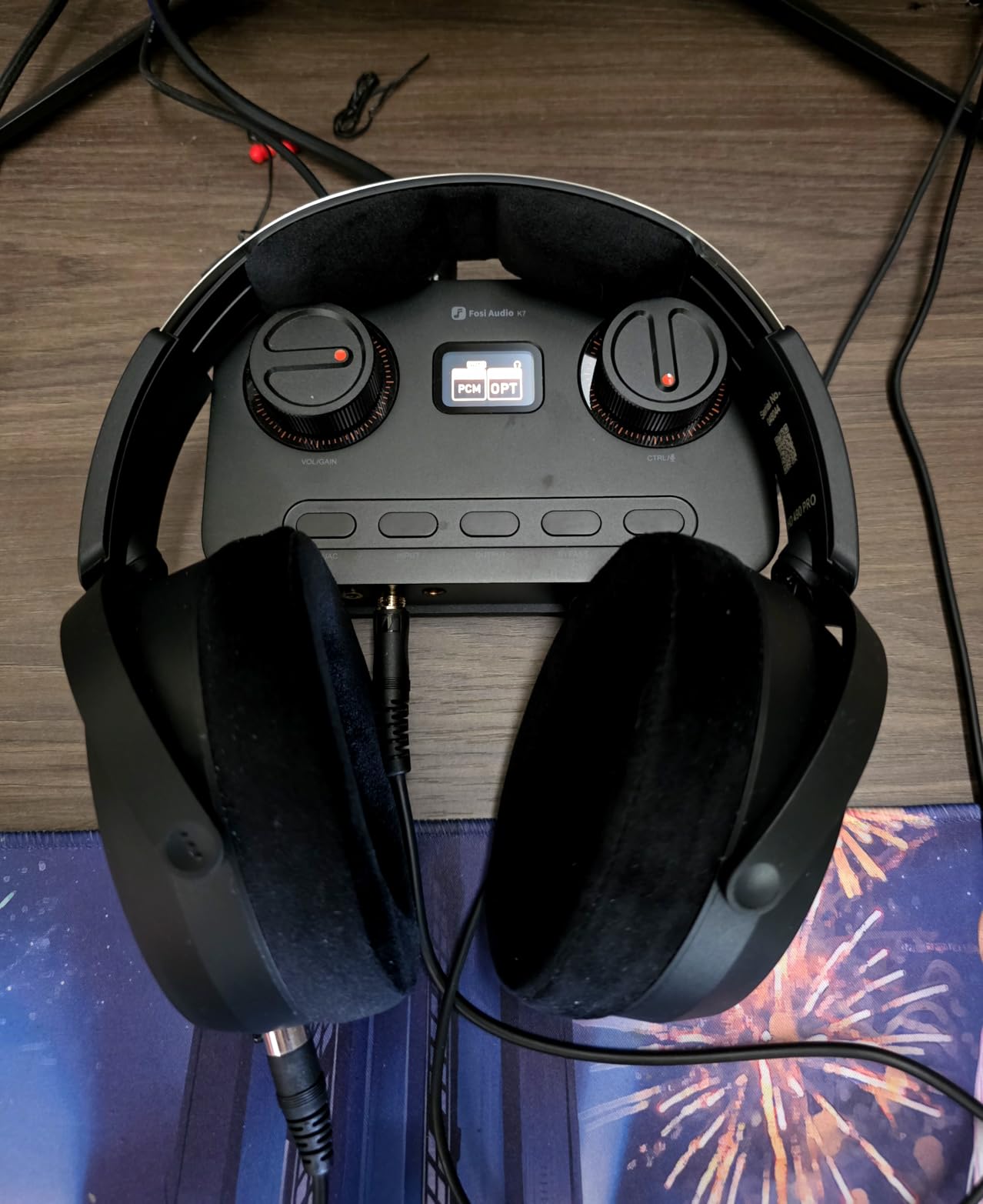
The low-frequency cylinder system is the interesting engineering. It delivers a full but accurate low end, which addresses the usual open-back complaint of thin bass, and the Sennheiser open-frame architecture reduces total harmonic distortion and resonance.
Response is listed uncolored from 5 Hz to 36,000 Hz. The right and left ear jacks take a detachable cable, and a 1.8 metre cable plus a 3.5 mm to 6.5 mm adapter are included, with a patented coil structure intended to block cable-borne noise.
At 200 g this is the heaviest pair in the lineup by a clear margin, and that weight is the main physical cost of the larger architecture. It is manageable, but it is not a featherweight.
Where the HD 490 PRO fits
It fits mixing and mastering work where placement accuracy is the priority, and where you will spend full days in the cans. Film and game scoring, post-production editing and orchestral mixing all benefit from being able to point at a sound and know where it is.
The dual pad sets make it a strong choice if you alternate between tracking and mixing on one pair, or if you share a studio with someone with a different head shape. Swapping pads is a five-minute fix.
Where it falls short
There is no passive isolation, so it belongs in a room where leakage does not matter. And at 376 reviews, it does not have the long usage history behind it that the models above do.
That is the honest caveat. The 4.6 rating is well earned on the reviews we have, but this is a newer model without years of daily professional use documented against it, and buying a work tool on a short track record is a calculated risk rather than a free choice.
We earn a commission, at no additional cost to you. CERTAIN CONTENT THAT APPEARS ON THIS SITE COMES FROM AMAZON. THIS CONTENT IS PROVIDED 'AS IS' AND IS SUBJECT TO CHANGE OR REMOVAL AT ANY TIME.
10. Shure SRH840A: The Post-Production and Video Favourite
Shure SRH840A Over-Ear Wired Studio Monitoring Headphones
- Closed-back
- 40 ohm
- 5 Hz to 25,000 Hz
- 9.12 oz
- detachable locking cable
Pros
- Natural well balanced tonality with strong detail retrieval
- Accurate midrange and extended highs reveal mix problems
- Very comfortable for hours with plush pads and wide band
- Sturdy build with replaceable locking detachable cable
- 40 ohm is easy to drive from mixers and laptops
Cons
- Bass is light compared with many closed-back monitors
- Clamping force and pad seal can feel tight in a short session
- Leakage increases noticeably at higher volumes
- Passive isolation only in a noisy room
We earn a commission, at no additional cost to you. CERTAIN CONTENT THAT APPEARS ON THIS SITE COMES FROM AMAZON. THIS CONTENT IS PROVIDED 'AS IS' AND IS SUBJECT TO CHANGE OR REMOVAL AT ANY TIME.
The SRH840A is the pair we would hand to someone cutting picture rather than music. Video editors work long hours on dialogue and effects, and reviewers single out the accurate midrange and extended highs as the reason mix problems show up clearly.
The tailoring is in the mids and the top. Bass is controlled rather than boosted, which is the right choice for dialogue and effects work, and the overall tonality is described as natural and well balanced. Detail retrieval is the standout in the reviews.
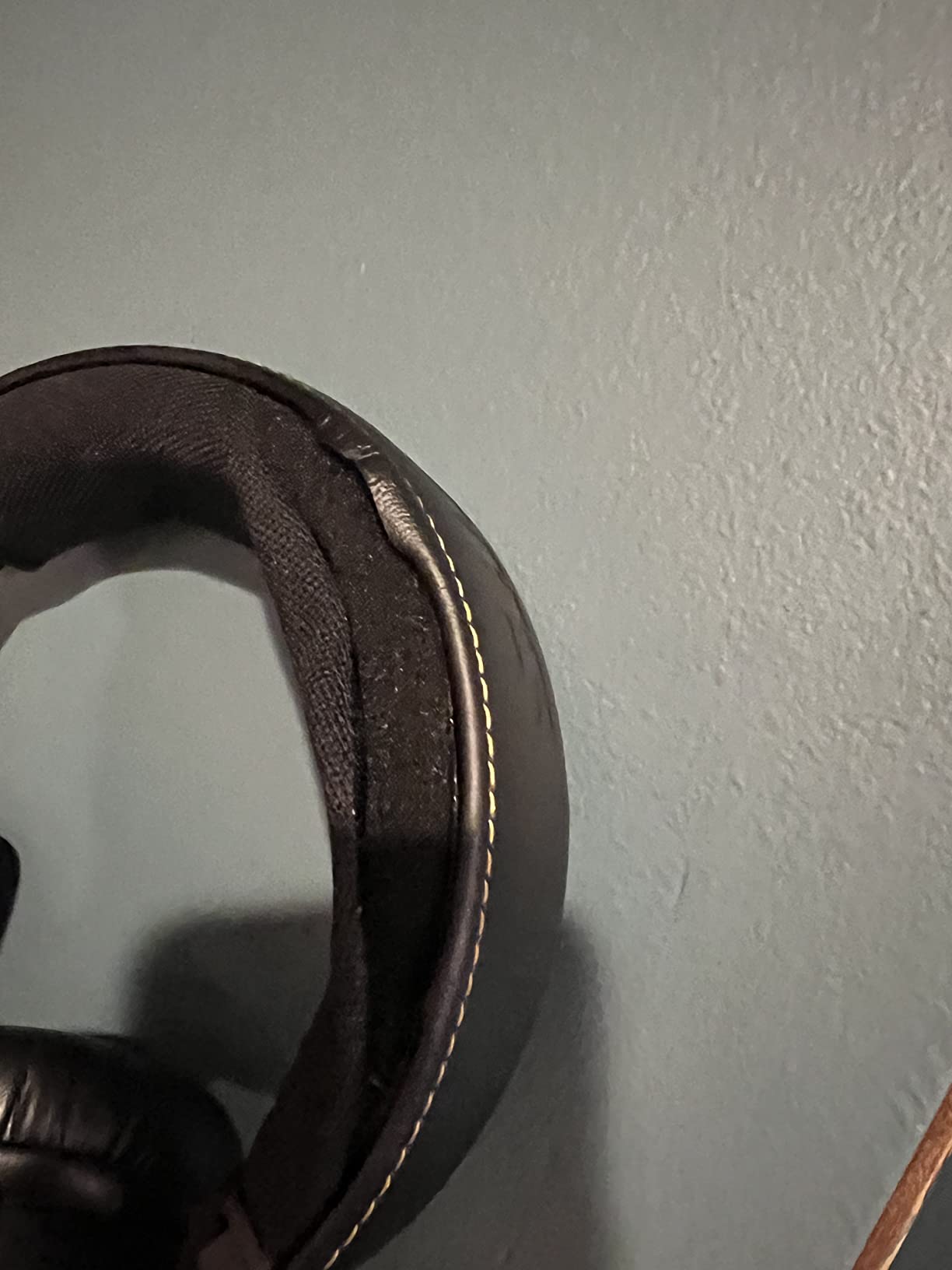
It is also the most robustly cabled model here. The detachable locking cable is a genuine improvement over screw-on connectors, because it will not rotate or work loose, and it still uses the same easy-to-replace ecosystem.
At 40 ohm the SRH840A drives easily from interfaces, mixers and laptops, which means it will work in a post suite without a dedicated amplifier. A quarter inch threaded adapter and a carrying case are included, and the warranty is two years limited.
Comfort is a real strength. The wide padded headband, plush ear cushions and lightweight collapsible design are praised for hours of listening, and at 9.12 ounces the weight is in line with the other closed-backs here.
The circumaural closed-back construction keeps outside distractions down and contains the audio so it does not disturb a shared edit suite. That containment is the practical reason this model suits office environments where an open-back would be unusable.
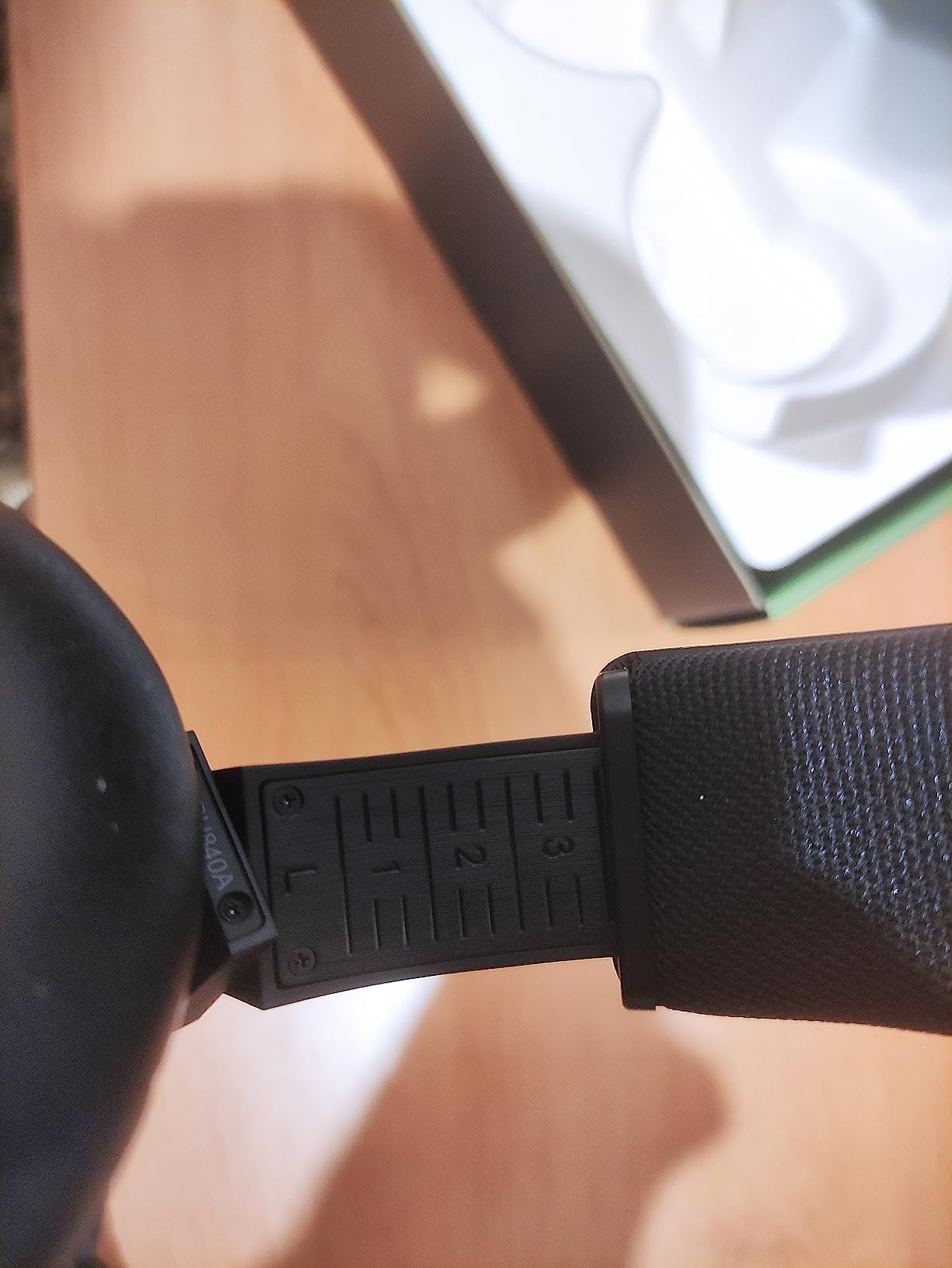
Who should buy the SRH840A
Buy it for post-production, dialogue editing, and any long session where the mids and highs carry the information you need. It is also a strong second closed-back if you already own one and want a different tonal perspective.
The 40 ohm efficiency and the locking detachable cable make it adaptable to a lot of different rigs, from a small interface to a large console, and the two year limited warranty is reasonable for a tool you will use daily.
Who should look elsewhere
Skip it if you make bass-heavy electronic music. The light bass compared with many closed-back monitors means sub content will read weaker than it actually is, and for that work you want a pair with more low-end authority.
Some users also find the clamping force and pad seal uncomfortable within a short session, and leakage increases noticeably at higher volume levels. Passive isolation is also only as good as the room you are in, so it is not the choice for a very noisy space.
We earn a commission, at no additional cost to you. CERTAIN CONTENT THAT APPEARS ON THIS SITE COMES FROM AMAZON. THIS CONTENT IS PROVIDED 'AS IS' AND IS SUBJECT TO CHANGE OR REMOVAL AT ANY TIME.
What Are Studio Headphones and How Do You Choose Them?
Studio headphones are over-ear, wired monitoring headphones built for accurate, uncoloured reproduction of a mix. They have a flat frequency response, a wide frequency range, high sensitivity and enough isolation for tracking, unlike consumer headphones which colour the sound with boosted bass and treble.
A transducer inside converts the electrical signal into sound, either dynamic or planar magnetic. An accurate studio headphone reproduces the source without adding emphasis, so you can hear clicks, sibilance, masking and level imbalances that a consumer-tuned pair would hide.
They let you mix, master, edit and quality-check in rooms where speakers are impractical or would get in the way. They also expose low-end problems that small monitors in a treated room cannot reveal, which is the single most useful thing headphones bring to a workflow.
Start by defining the job rather than the brand. If you record live takes, isolation is your first filter and closed-back is not optional. If you mix and master, openness and tonal honesty come first. If you do both, plan on two pairs or accept a compromise.
Then match impedance to your sources before anything else, check that the cable situation works for your room, and only then think about refinement. A perfect headphone paired with an underpowered interface is a worse tool than a good one driven properly.
Open-Back vs Closed-Back vs Semi-Open
Closed-back headphones have large over-ear pads that seal around the ear, giving strong isolation and minimal leakage. That makes them the only viable choice for tracking vocals or instruments live, because the alternative is hearing your own headphone output bleed into the microphone.
Open-back headphones leave the earcup grille exposed. Sound passes in both directions, which gives you the wide, natural soundstage and depth that make instrument placement and reverb tails easy to judge. The cost is zero isolation and audible leakage, so they are mixing and mastering tools only.
Semi-open headphones sit between the two. The AKG K240 Studio in this list is the example: a roomier stage than any closed-back here, with some isolation, but still leaking sound in both directions. It is a reasonable middle ground in a bedroom studio where you want openness without a fully exposed driver.
The practical rule we use is simple. Anything that goes near a live microphone gets closed-back. Everything else can be open-back, and should be if your room allows it.
Do You Need a Headphone Amp?
Yes if you buy a high-impedance open-back, and probably not if you stick to efficient closed-backs. The impedance figure tells you how much electrical current the driver demands, and a weak source simply cannot supply enough of it.
From 32 to 38 ohm, you are fine almost everywhere. The ATH-M50x at 38 ohm and the ATH-M40x at 35 ohm are both happy on a laptop, a phone or a modest interface, and the M40x in particular needs no external DAC at all.
Around 55 to 64 ohm, an interface is the realistic target. The AKG K240 Studio at 55 ohm and 104 dB sensitivity is efficient enough for many sources, while the Sony MDR-7506 at 63 ohm and the HD 280 Pro at 64 ohm will be fine on a decent interface and thin on a bare laptop jack.
At 80 ohm and above, plan on a headphone amplifier or a capable interface output. The DT 770 Pro 80 Ohm sits at the accessible end of that range and many users drive it from a laptop, but on r/trapproduction we found the explicit complaint that 80 ohm is too much to be powered from a laptop, with volume too low and bass rolling off.
At 130 to 300 ohm, an amplifier is not optional. The HD 490 PRO at 130 ohm and 105 dB sensitivity benefits from one, and the HD 650 at 300 ohm will not reach a comfortable level from a laptop or phone alone. Note that adapters change the connector, not the electrical demand.
Symptoms of an underpowered chain are recognisable: you turn the volume up and the bass thins out, the sound gets strained rather than louder, and you end up mixing at levels that either fatigue you or hide low end.
Sound Signature, Frequency Response and Driver Types
Frequency response is the range a headphone reproduces, expressed in hertz, and for studio work you want it wide at both ends without a colouration strategy. A quoted range is not the same as a flat response, but it tells you whether the extremes are being reproduced at all.
Sound signature is the character the manufacturer applies. A flat or neutral signature leaves your decisions untouched. A warm signature lifts the low end and softens the top, a bright signature does the opposite, and a coloured pair will make your mix sound better on headphones and worse everywhere else.
Dynamic drivers use a moving cone and a magnet, and they are the standard in this entire list. They are efficient, durable and consistent in behaviour, which is why every model we recommend uses them.
Planar magnetic drivers use a thin diaphragm held between two magnets. They are known for lower distortion and faster transient response, and producer forums frequently recommend planars for production and post-production. None appeared in the final lineup, so treat that as a gap worth knowing about rather than a pick on this page.
For bass-heavy electronic production, watch the low end specifically. The AKG K240 Studio and the Shure SRH840A both read light in the bass, and a producer working on sub-heavy material will want a pair with more authority down there.
Comfort, Ear Pads and All-Day Wear
Comfort is a specification, not a preference. If a headphone is uncomfortable at hour three, you will take it off, and everything you hear in the remaining hours of the session is worse. This is the criterion we weighted most heavily across all ten pairs.
Weight is the fastest proxy. The Sony MDR-7506 at eight ounces and the DT 990 Pro at 8.8 ounces are the two lightest here, and both stay comfortable longest. The HD 490 PRO at 200 g and the K240 Studio at 240 g sit at the other end, though the K240’s self-adjusting gimbal headband offsets its weight well.
Clamping force is the other half. The DT 770 Pro’s featherweight clamp and the DT 990 Pro’s wide spring-steel headband are praised in reviews, while the Shure SRH840A and the ATH-M40x draw complaints about a tight seal, particularly for larger ears or longer sessions.
Pad material changes over time more than any other component. Velour stays breathable through long sessions, while pleather and PU coverings collect oil and sweat and start to degrade. Every model here except the HD 280 Pro and the K240 uses replaceable pads, and the HD 280 Pro’s pads are replaceable even though the stock material is the weak point.
The Two-Pair Setup and the Monitors Cross-Check
The consensus across the producer forums we researched is that no one mixes on headphones alone. The standard advice is to treat headphones as a second or third reference, used for low-end checks, click and pop detection, and translation checks, with monitors remaining the primary monitoring path.
That is why the two-pair setup exists. A closed-back like the ATH-M50x or the DT 770 Pro handles tracking with real isolation, and an open-back like the DT 990 Pro or the HD 650 handles mixing with a wide reference stage. Many professionals run exactly this combination.
There is a useful counterpoint. In a genuinely bad room, good headphones beat ruined speakers, because a compromised monitor position will colour low end and smear the stereo image in ways you cannot correct for. A treated room is not always a prerequisite for useful work.
The practical workflow is a translation check. Mix on your open-back reference, check the low end on a closed-back where you know the source material, then confirm on monitors at a matched level. If all three agree, the mix is probably portable.
Whatever you choose, match your level across sources. Comparing a loud headphone to a quiet monitor tells you nothing about the mix, only about the volume.
Hearing Safety and Long-Term Ownership Costs
Headphone levels are deceptive. Studio headphones let you turn up further than monitors before the room tells you it is too loud, and the damage is cumulative. Occupational safety guidance commonly uses 85 dB as the exposure threshold for an eight-hour working day, with EU guidance treating 100 dB as a hard ceiling for permitted exposure.
Treat those as reference points rather than targets. If you find yourself raising the level for the last three hours of a session, that is a monitoring problem, usually frequency response, and it should be fixed rather than volume turned up.
Take breaks. Ten minutes away from the headphones every hour or two does more for both your ears and your judgement than any hardware change, and it costs nothing.
On ownership cost, factor in ear pads and cables from day one. Pads compress and degrade over roughly a year of daily use, and on models with a fixed cable a failure means soldering rather than a swap. Preferring a detachable cable model saves real money and annoyance over a long ownership period.
Second-hand is a reasonable route for established models with replaceable parts, and forums discuss it regularly. Check the pads, the cable and the driver symmetry in both channels before committing, and confirm the detachable parts are still available for that revision.
Return policies matter too. Headphone fit is personal in a way that specs cannot express, and head shape and ear anatomy change the experience more than most buyers expect. Auditioning before committing is worth the effort.
Frequently Asked Questions
Do studio headphones need an amp?
It depends entirely on impedance. Pairs at 32 to 38 ohm, such as the ATH-M40x and the ATH-M50x, run fine from a laptop or phone. Around 55 to 64 ohm you want a proper interface output. At 80 ohm and above you should plan on a headphone amplifier, and at 300 ohm the HD 650 will not reach a comfortable level from a laptop alone. The symptom of a weak chain is bass that thins out as you turn the volume up.
Are open-back headphones better for mixing?
Usually yes, because the open grille produces the wide, natural soundstage that makes instrument placement and reverb depth easy to judge, and the tuning tends toward a neutral, uncoloured presentation. The trade is total loss of isolation: open-back pairs leak sound in both directions and are unsuitable for tracking live takes. The standard professional workflow is a closed-back for tracking plus an open-back for mixing.
Is the Audio-Technica ATH-M50x or the Beyerdynamic DT 770 Pro better?
Both are excellent and the choice comes down to your source and your priorities. The M50x at 38 ohm is the easier of the two to drive, has a detachable cable and swivelling earcups for one-ear monitoring. The DT 770 Pro 80 Ohm has a featherweight clamp, fully replaceable pads, headband and drivers, and a more extended 5 Hz to 35,000 Hz response. Choose the DT 770 Pro for long sessions and serviceability, the M50x for portability and cable flexibility.
Can I mix and master entirely on headphones?
You can, but most professionals treat headphones as a second or third reference rather than the only one. Headphones excel at low-end checking, click and pop detection, spotting sibilance and translation checks, which monitors in a small room cannot do. The standard practice is to mix on monitors, cross-check on open-back headphones, and confirm low end on a closed-back pair. In a genuinely bad room, good headphones beat compromised speakers.
What are the best wireless studio headphones for mixing and recording?
None of the ten picks here, and that is deliberate. Bluetooth codecs compress exactly the transient detail and high-frequency information you are judging during critical listening, and the added wireless latency is unhelpful in a tracking situation. Every model in this guide is wired for a stable, unprocessed signal path. Reserve wireless or noise-cancelling headphones for travel and monitoring between sessions, and keep a wired pair for the work itself.
The Verdict on the Best Over Ear Headphones for Studio Work
The Audio-Technica ATH-M50x is our pick for the best over ear headphones for studio work overall. It tracks cleanly, mixes accurately, needs no amplifier, and holds a 4.7 rating across more than 33,000 reviews. If you can only buy one pair, that is the one.
Your second purchase should be decided by the gap in your workflow. If you mix dense arrangements and need placement depth, add the Beyerdynamic DT 990 Pro 250 Ohm and budget for a headphone amplifier. If you need maximum isolation for live work, the Sennheiser HD 280 Pro is the specialist. If you want the flattest response possible, the ATH-M40x is cheaper and more efficient than anything else here.
Whichever you choose, check the impedance against your interface before you order, and audition for comfort rather than sound alone. A headphone you can wear for six hours will improve your mixes more than a marginally flatter one you take off after two.
These ten cover the working range well as of 2026, and we will keep updating as new models land and long-term ownership reports come in.