
The best electric toothbrush for receding gums is the Oral-B Pro 1000, because its gum pressure control automatically stops the brush pulsating when you press too hard, and it delivers that safeguard without the premium-tier extras. If you want sonic vibration instead of rotation, the Philips Sonicare 4100 is the stronger buy, and if you want a dedicated Gum Care mode across the whole session, the Sonicare 5300 adds that for a step up.
Here is the part most roundups leave out: receded gum tissue does not grow back. No electric toothbrush, manual brush or device of any kind will bring it back. What a brush can do is slow further loss by reducing the one factor you control at home, which is how hard you press.
We also want to be straight about the evidence. A 2026 systematic review found no clear difference between powered and manual brushes on recession progression, and rated the certainty of that finding as very low. That does not make electric brushes pointless for you. It means the reason to spend more is pressure feedback, soft bristles and gum-focused modes, not a promise of healing.
We compared all ten brushes in this roundup on pressure feedback type, bristle softness, mode range, battery and grip. We also read the community threads people with receding gums actually write in, including r/DentalHygiene and r/PeriodontalDisease, because people in those threads care about which brush head not to buy.
Table of Contents
Top 3 Picks for Electric Toothbrushes for Receding Gums (October 2026)

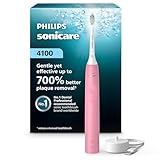

Philips Sonicare 5300
- Dedicated Gum Care mode
- Pressure sensor cuts vibration
- G2 Gum Care head
As an Amazon Associate we earn from qualifying purchases. CERTAIN CONTENT THAT APPEARS ON THIS SITE COMES FROM AMAZON. THIS CONTENT IS PROVIDED 'AS IS' AND IS SUBJECT TO CHANGE OR REMOVAL AT ANY TIME.
All 10 Picks Compared in 2026
| Product | Key Features | |
|---|---|---|
|
Oral-B Pro 1000
|
|
Check Latest Price |
|
Philips Sonicare 4100
|
|
Check Latest Price |
|
Philips Sonicare 5300
|
|
Check Latest Price |
 Oral-B Smart 5000 Oral-B Smart 5000
|
|
Check Latest Price |
 Oral-B iO Series 3 Oral-B iO Series 3
|
|
Check Latest Price |
 Oral-B iO Gentle Care heads Oral-B iO Gentle Care heads
|
|
Check Latest Price |
 SURI Pro SURI Pro
|
|
Check Latest Price |
 Sonicare ProtectiveClean Sonicare ProtectiveClean
|
|
Check Latest Price |
 Philips Sonicare 6700 Philips Sonicare 6700
|
|
Check Latest Price |
 PRO-SYS VarioSonic Plus+ PRO-SYS VarioSonic Plus+
|
|
Check Latest Price |
We earn from qualifying purchases. CERTAIN CONTENT THAT APPEARS ON THIS SITE COMES FROM AMAZON. THIS CONTENT IS PROVIDED 'AS IS' AND IS SUBJECT TO CHANGE OR REMOVAL AT ANY TIME.
1. Oral-B Pro 1000 – Best Overall for Receding Gums
Oral-B Pro 1000 Rechargeable Electric Toothbrush, Pink
- Automatic gum pressure control
- Sensitive mode
- Round head
- 30 second quadrant timer
Pros
- Stops pulsating automatically when you press too hard
- Sensitive mode for tender gums
- Round head reaches the gumline and back teeth
- Quadrant timer every 30 seconds
- Long battery with LED charge indicator
Cons
- Only three cleaning modes
- Replacement heads sold separately
- Pressure control cuts power rather than explaining why
We earn a commission, at no additional cost to you. CERTAIN CONTENT THAT APPEARS ON THIS SITE COMES FROM AMAZON. THIS CONTENT IS PROVIDED 'AS IS' AND IS SUBJECT TO CHANGE OR REMOVAL AT ANY TIME.
The Pro 1000 is the reason we made it the first choice. Its headline feature is not power or a screen, it is gum pressure control, which automatically stops the brush pulsating when you press too hard. For someone whose gumline has already moved back, that is the single most useful behaviour change an electric brush can enforce.
In practice the round Oral-B head sits flat against a tooth and sweeps the gumline rather than raking across it.
The handle weighs 9.28 ounces with listed dimensions of 4.37 by 2.17 by 9.96 inches, so it sits properly in the hand rather than feeling like a stick. The quadrant timer pulses every 30 seconds so you do not abandon one quadrant because the gums got tender there first.
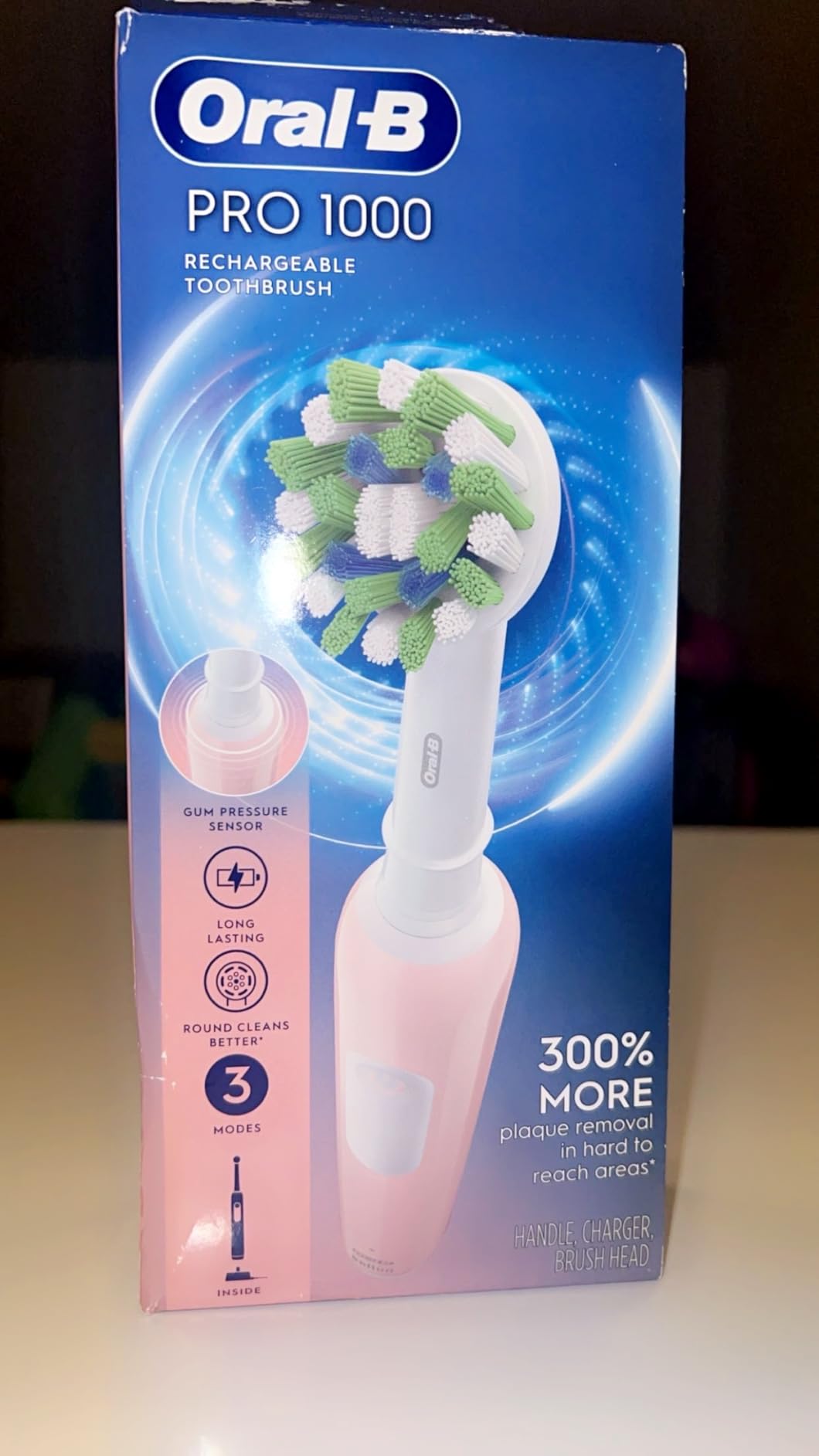
The three modes cover Daily Clean, Sensitive and Deep Clean. Sensitive lowers the intensity, which matters more than people expect because the oscillating action is doing mechanical work whether you want it or not. There is no illuminated display showing the active mode, so you set it by feel and check the ring once.
Two honest limitations. The mode count is thin next to the Smart 5000 and the iO Series 3, and replacement heads are sold separately, so the running cost of this brush depends entirely on which head you choose. That head choice is the single most important purchase decision on this whole page, and we cover it in the buying guide.
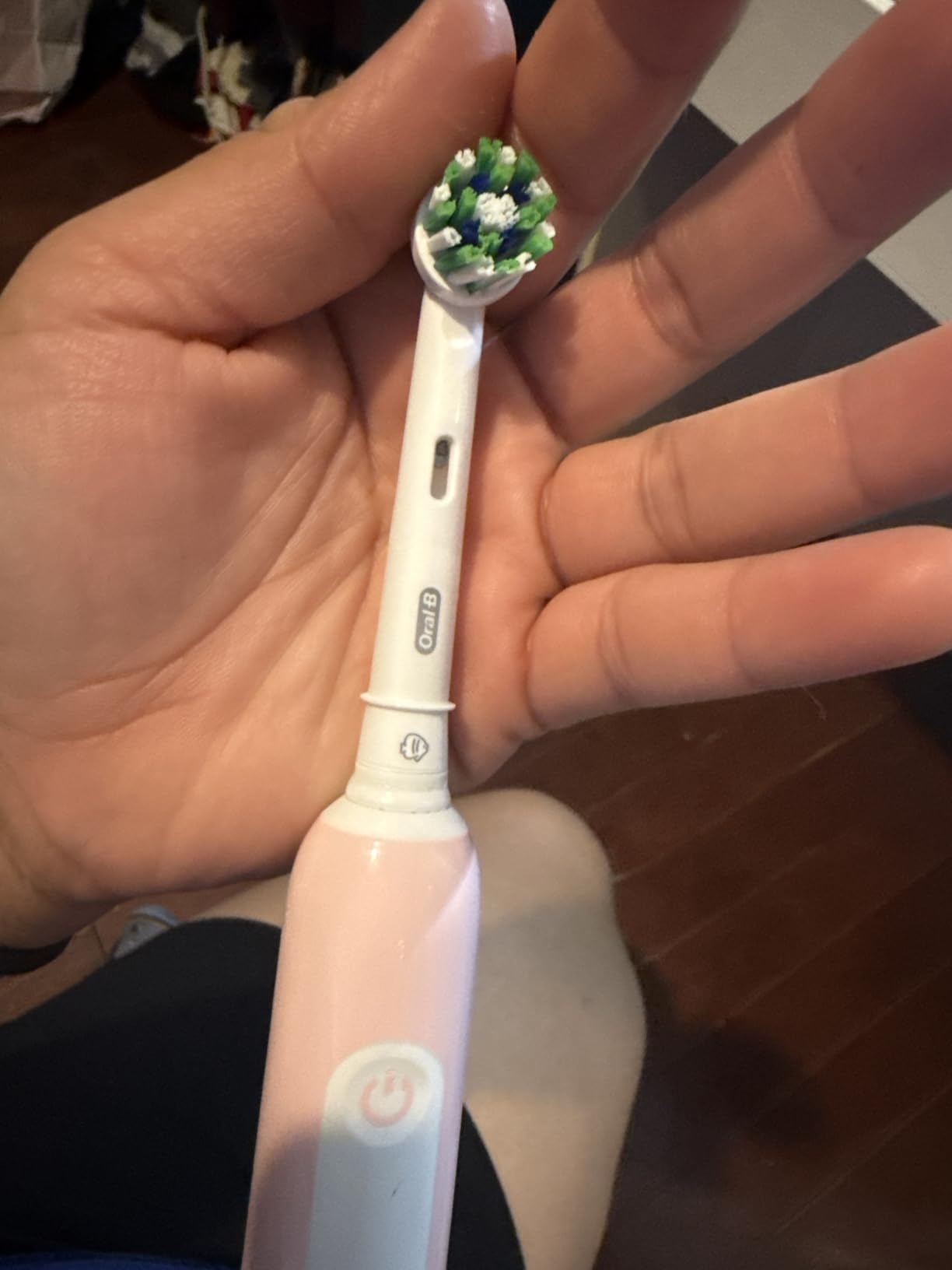
What the Pro 1000 gets right for a sensitive gumline
The automatic cut is what makes this the safe first electric brush. You cannot accidentally lean on it and keep going, because the moment you press, the pulsating stops. Reviewers with early recession describe exactly that as the feature that changed their brushing.
It is also the easiest pick here to live with daily. Three modes, one button logic, an LED charge indicator and a battery that owners consistently describe as lasting. Nothing to learn, nothing to charge nightly, no app to argue with.
Where it falls short
The pressure control is invisible and silent, so it corrects you without teaching you. A brush that shows you the alert, or that changes what you feel, tends to build a better habit than one that simply stops working for a moment and then resumes at the same force.
Reviewers also point out that only three modes is limiting if you want a dedicated gum mode separate from a general sensitive mode. If that distinction matters to you, step up to the Smart 5000 or the Sonicare 5300.
We earn a commission, at no additional cost to you. CERTAIN CONTENT THAT APPEARS ON THIS SITE COMES FROM AMAZON. THIS CONTENT IS PROVIDED 'AS IS' AND IS SUBJECT TO CHANGE OR REMOVAL AT ANY TIME.
2. Philips Sonicare 4100 – Best Value Sonic Pick for Receding Gums
Philips Sonicare 4100 Rechargeable Electric Toothbrush, Deep Pink
- Pressure sensor pulses the handle
- C2 soft bristles
- SmarTimer and QuadPacer
- 14 day battery
Pros
- Pressure sensor pulses the handle when you press too hard
- C2 head uses soft flexible bristles
- EasyStart ramps power up gradually
- Up to 14 days per charge
Cons
- Power adapter not included
- Replacement heads are relatively pricey
- Some owners report weaker power than older Sonicare models
We earn a commission, at no additional cost to you. CERTAIN CONTENT THAT APPEARS ON THIS SITE COMES FROM AMAZON. THIS CONTENT IS PROVIDED 'AS IS' AND IS SUBJECT TO CHANGE OR REMOVAL AT ANY TIME.
The 4100 is the sonic counterpart to the Pro 1000 and the most common recommendation for this condition. Its pressure sensor pulses the handle when you apply too much force, which is a different feedback style from the Oral-B: you feel a stutter rather than losing power, so you learn more about what you were doing.
Fluid action pulses between the teeth and along the gumline at high frequency rather than scrubbing across it. The C2 Optimal Plaque head in the box has soft, flexible, stain-removal bristles, which is a compromise worth knowing about. Stain removal filaments are firmer than a dedicated sensitive head.
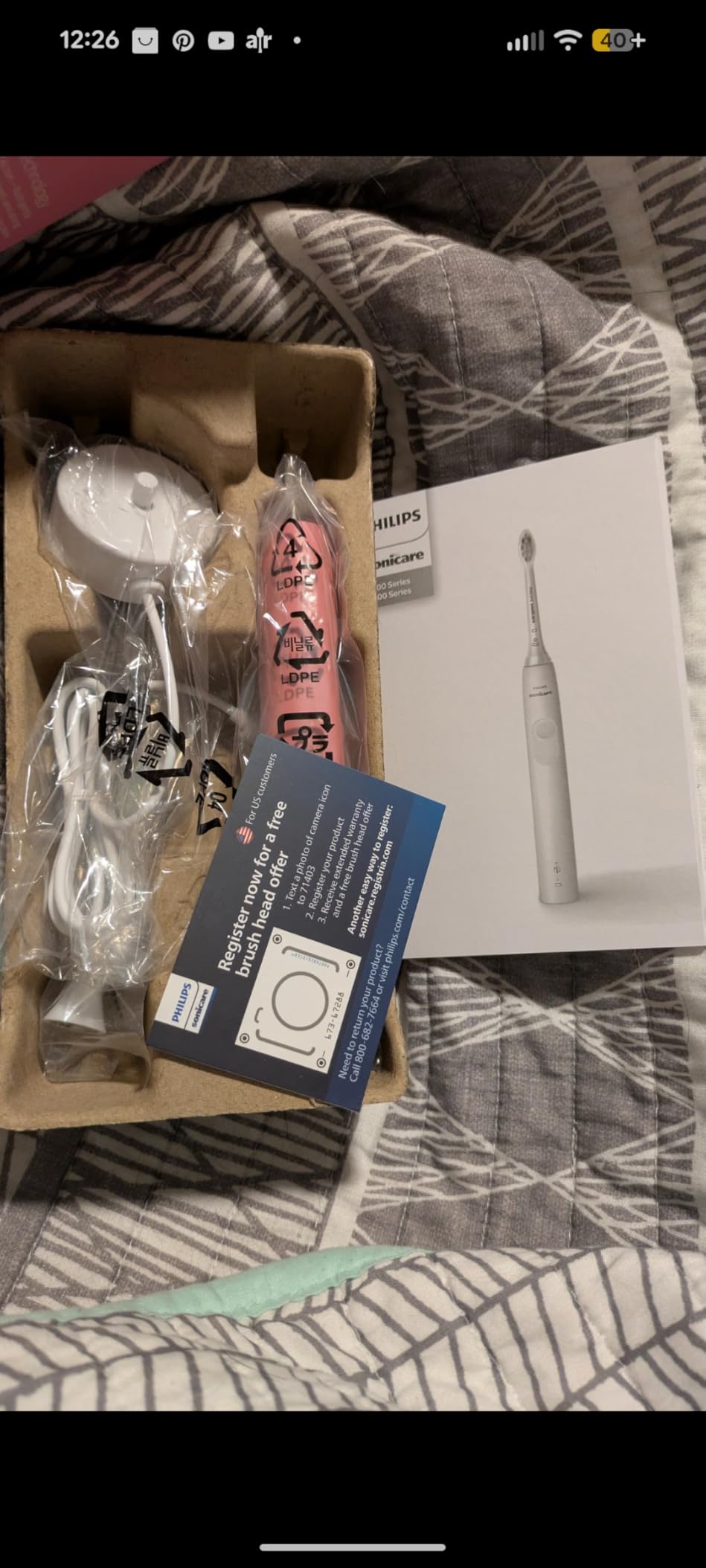
SmarTimer and QuadPacer handle pacing, and the handle also tracks how often and how hard you brush to trigger a head replacement reminder. Battery life is up to 14 days on a full charge, which owners confirm, and the lithium-ion cell is included.
The catch most reviewers mention first is that the power adapter is not in the box. You need a USB wall plug. Head replacement cost is also on the higher side, so a three-year ownership figure is worth calculating before you commit, especially since most people swap to the softest head available for this condition.
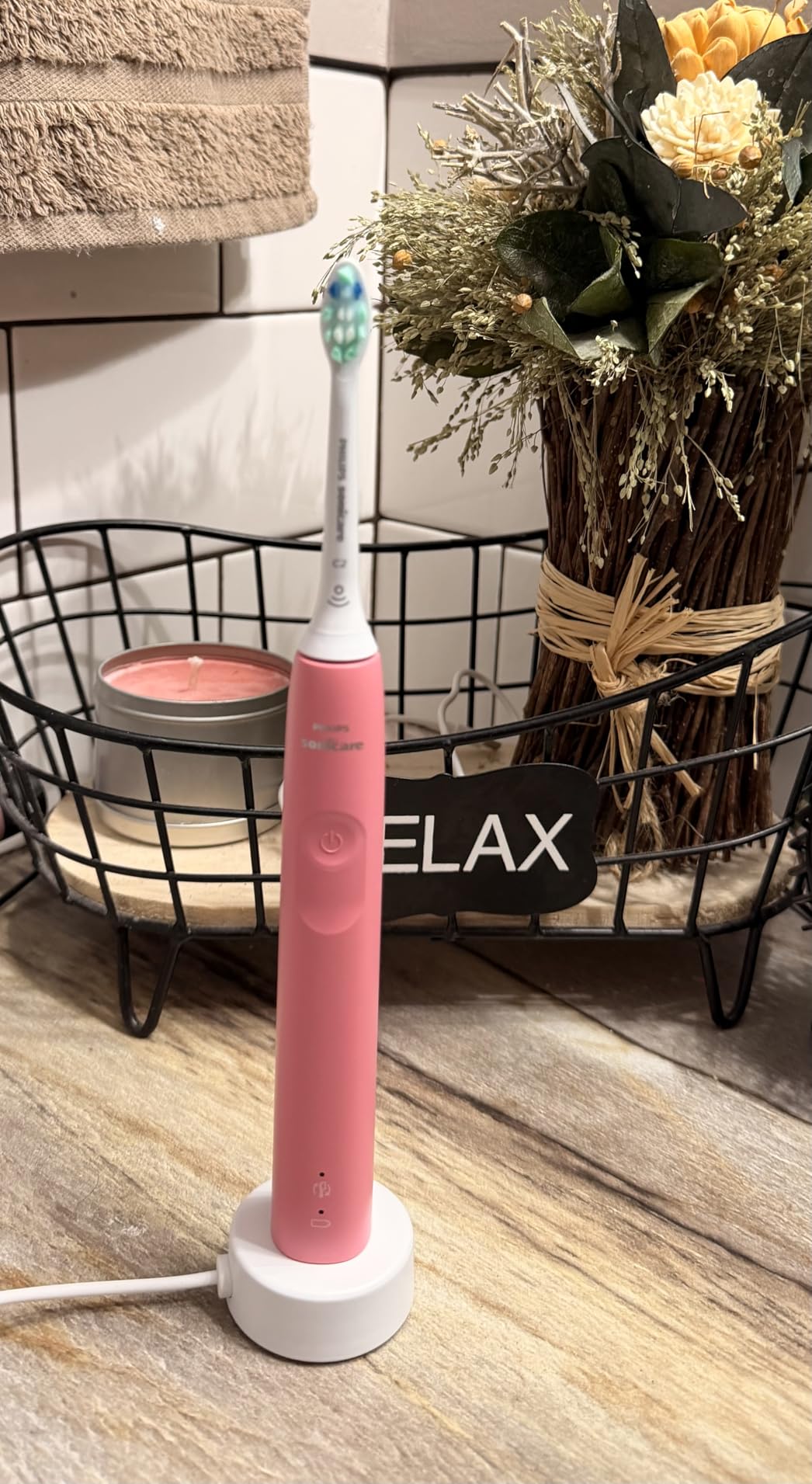
Why people who brush too hard end up recommending it
The handle pulse is immediate and hard to ignore. That matters for the person who has been told by a dentist they press too hard and cannot tell whether they are doing it again. The pulse gives you a physical correction mid-stroke rather than after the fact.
There is also the r/DentalHygiene argument for sonic brushes specifically. A hygienist in that thread recommended Philips Sonicare because it vibrates rather than mechanically spinning, and framed that as a better fit for recession. It is a mechanism argument rather than a brand preference, and it holds up more than most.
What to watch out for
Buy a soft or extra-soft head, not the C2 stain-removal head that comes in the box, if your gums are already tender. That single swap is the difference between a comfortable two minutes and a session you cut short at the back teeth.
A small number of owners report less vibration power than older Sonicare models, and the missing adapter is a genuine annoyance on day one. Neither affects the gum-protection case, but both are fair reasons to choose the 5300 instead if you are buying anyway.
We earn a commission, at no additional cost to you. CERTAIN CONTENT THAT APPEARS ON THIS SITE COMES FROM AMAZON. THIS CONTENT IS PROVIDED 'AS IS' AND IS SUBJECT TO CHANGE OR REMOVAL AT ANY TIME.
3. Philips Sonicare 5300 – Most Versatile for a Dedicated Gum Mode
Philips Sonicare 5300 Rechargeable Electric Toothbrush, 3 Brush Head, Black
- Clean White and Gum Care modes
- Pressure sensor halts vibration
- G2 Gum Care head included
Pros
- Dedicated Gum Care mode for a full gentle session
- Pressure sensor halts sonic vibrations when pressing hard
- G2 Optimal Gum Care head in the box
- Two weeks of use per charge
Cons
- Full charge takes more than eight hours
- Handle is bulky on the counter
- Travel case does not fit the charger
We earn a commission, at no additional cost to you. CERTAIN CONTENT THAT APPEARS ON THIS SITE COMES FROM AMAZON. THIS CONTENT IS PROVIDED 'AS IS' AND IS SUBJECT TO CHANGE OR REMOVAL AT ANY TIME.
The 5300 is the model to buy if you want the whole session aimed at your gums rather than just protecting you within a general clean. It runs Clean, White and Gum Care modes, and the Gum Care mode is the reason it sits at number three here.
The pressure sensor on this one halts the sonic vibrations when you press hard, which is a stronger intervention than a warning pulse. The box includes a G2 Optimal Gum Care head alongside two DiamondClean heads, so you are not forced to start on a stain-removal head if you swap the extras out.
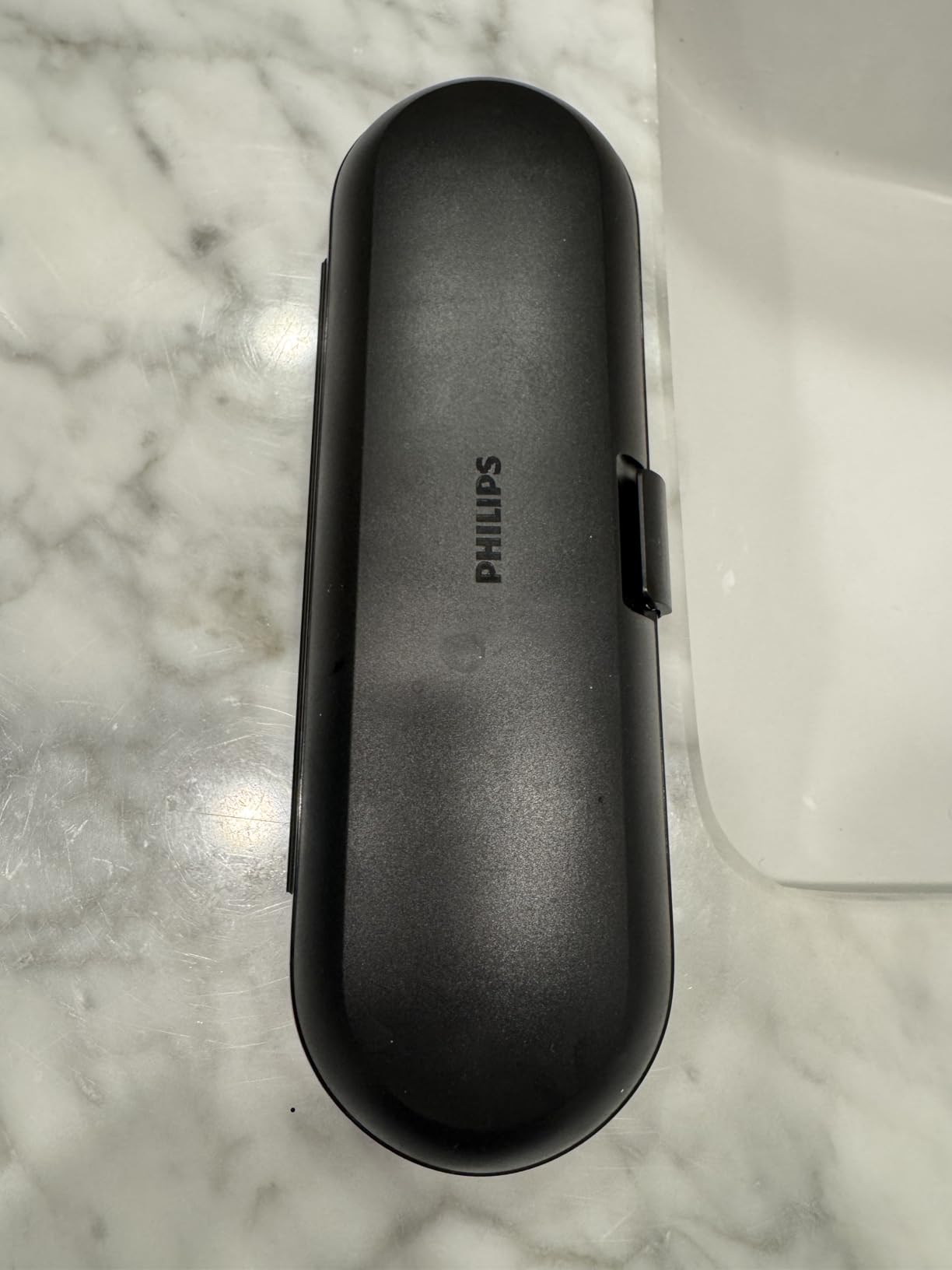
BrushSync head replacement reminders, the two-minute Smartimer and QuadPacer are all present, and owners report multi-week battery life from a single charge. The build is sturdy and well weighted at 13.3 ounces, which helps more than you would expect for someone with reduced grip strength.
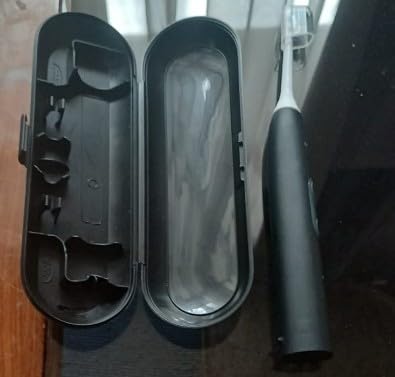
Several reviewers report a full charge taking more than eight hours once the battery indicator starts flashing, and the handle is bulky enough to occupy real counter space when docked. The travel case does not fit the charger, which matters if you plan to travel with it.
Why a whole-session gum mode beats a warning light
A gentle mode that lowers intensity for two full minutes gives you permission to keep brushing tender areas instead of abandoning them. That is the practical failure mode with recession: people brush the sore quadrant badly because they stopped early.
Cutting the vibration entirely when you press hard also stops you from repeatedly grinding the same spot. Combined with the G2 Gum Care head, this is the most complete gentle setup in the sonic half of this roundup.
Where it falls short
The charging behaviour is the biggest complaint, and an eight-hour charge is a poor experience when you assumed a lithium-ion brush would top up quickly. Some owners also find the reminder tones excessive, though the sensor and reminders can be switched off.
It is not the cheapest way to own a pressure-sensing sonic brush once you count replacement heads. If your priority is a sensor and a good clean rather than a dedicated gum mode, the 4100 gets you most of the way for less.
We earn a commission, at no additional cost to you. CERTAIN CONTENT THAT APPEARS ON THIS SITE COMES FROM AMAZON. THIS CONTENT IS PROVIDED 'AS IS' AND IS SUBJECT TO CHANGE OR REMOVAL AT ANY TIME.
4. Oral-B Smart 5000 – Best for Visible Pressure Feedback
Oral-B Smart 5000 Electric Toothbrush, White
- Pressure sensor lights on brush and phone
- Five modes including Gum Care
- Bluetooth feedback
Pros
- Pressure sensor lights up on the brush and your phone
- Gum Care and Sensitive modes both included
- Real-time brushing feedback via Bluetooth
- Includes charger and travel case
Cons
- Bluetooth features widely seen as limited value
- No illuminated display for the active mode
- Replacement heads costlier than some competing brands
We earn a commission, at no additional cost to you. CERTAIN CONTENT THAT APPEARS ON THIS SITE COMES FROM AMAZON. THIS CONTENT IS PROVIDED 'AS IS' AND IS SUBJECT TO CHANGE OR REMOVAL AT ANY TIME.
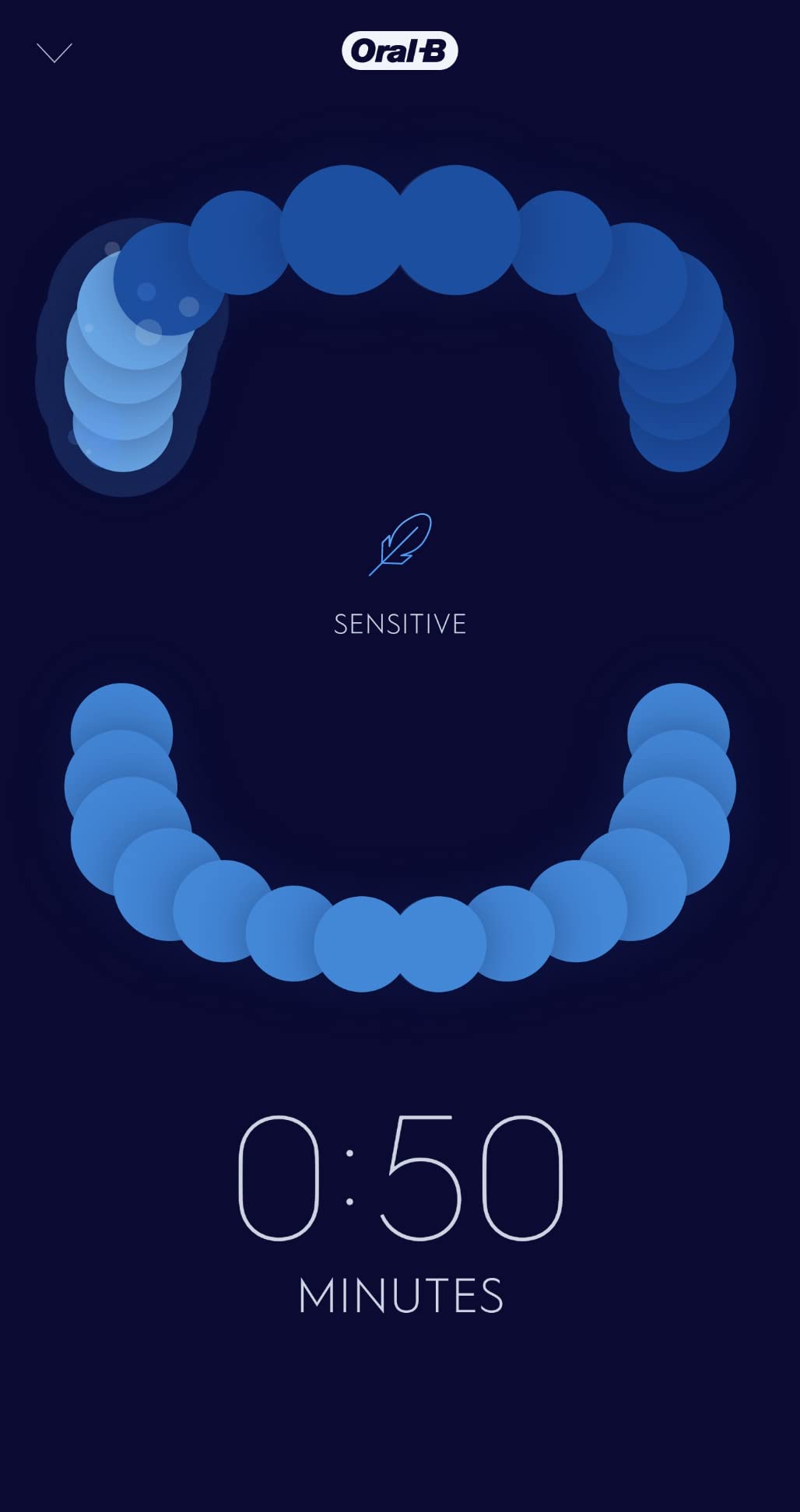
The Smart 5000 is the pick for people who do not trust themselves to notice a haptic signal. Its pressure sensor lights up on the brush and on your phone when you are brushing too hard, which makes the alert the easiest one in this roundup to notice at a glance.
It carries five modes: Daily Clean, Gum Care, Sensitive, Whitening and Deep Clean, giving it the widest mode range in this roundup, with a dedicated Gum Care mode separate from Sensitive.
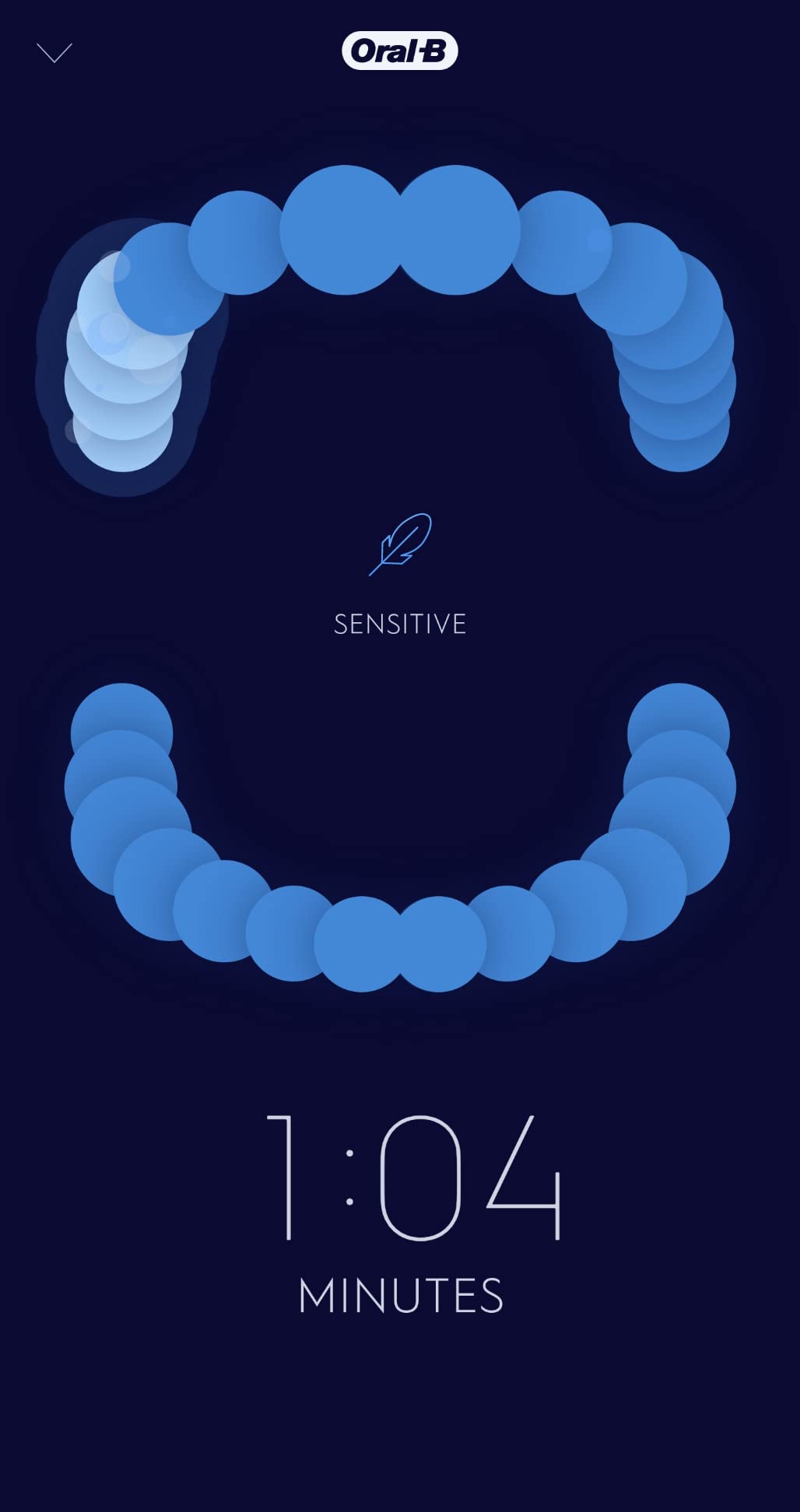
The three-dimensional action oscillates, rotates and pulsates to break up plaque along the gumline. It runs on two included lithium polymer batteries, and the listed dimensions are 7.68 by 3.9 by 9.96 inches at a listed weight of one pound.
Be honest about the app. Owners consistently describe the Bluetooth feedback as useful for the first fortnight and of limited practical value after that. Most households end up ignoring the phone and relying on the light on the handle, which is exactly the outcome you would hope for anyway.
Who this suits better than a haptic warning
If you have never once felt a pressure pulse, a light you can see in a bathroom mirror is a better tool. It also works if your hands are numb, your grip is weak or you have limited vision, because it does not depend on detecting a small change in vibration.
The five modes make it the most flexible brush for a household where one person has recession and another does not. Each person can run their own session without fighting over the setting.
Where it falls short
There is no illuminated display showing which of the five modes is active, so with that many settings you identify the mode by feel or by counting button presses. That is more error-prone than a three-mode brush.
Replacement heads cost more than some competing brands, and the included plastic case is bulky enough that many owners just leave it in the box. Over three years the head cost is what turns a mid-range handle into an expensive habit.
We earn a commission, at no additional cost to you. CERTAIN CONTENT THAT APPEARS ON THIS SITE COMES FROM AMAZON. THIS CONTENT IS PROVIDED 'AS IS' AND IS SUBJECT TO CHANGE OR REMOVAL AT ANY TIME.
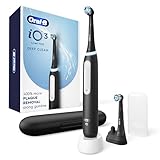
5. Oral-B iO Series 3 – Best for a Motor-Speed Pressure Cut
Oral-B iO Series 3 Limited Deep Clean Rechargeable Electric Toothbrush for Adults, Black, 3 Modes, Smart Pressure Sensor, Plaque Removal and Gum Care, 2 Replacement Brush Heads, Travel Case
- Smart iO sensor slows the motor
- Smooth spinning with micro-vibrations
- Sensitive mode
- Light ring
Pros
- Smart sensor visibly slows the motor when you press hard
- Smooth spinning motion with gentle micro-vibrations instead of harsh scrubbing
- Sensitive mode plus round head that hugs each tooth
- Handle does not auto-stop at two minutes
Cons
- No illuminated display for the active mode
- Some owners report the charge holding shorter than expected
- Around ten percent of reviews describe motor and battery failures
We earn a commission, at no additional cost to you. CERTAIN CONTENT THAT APPEARS ON THIS SITE COMES FROM AMAZON. THIS CONTENT IS PROVIDED 'AS IS' AND IS SUBJECT TO CHANGE OR REMOVAL AT ANY TIME.
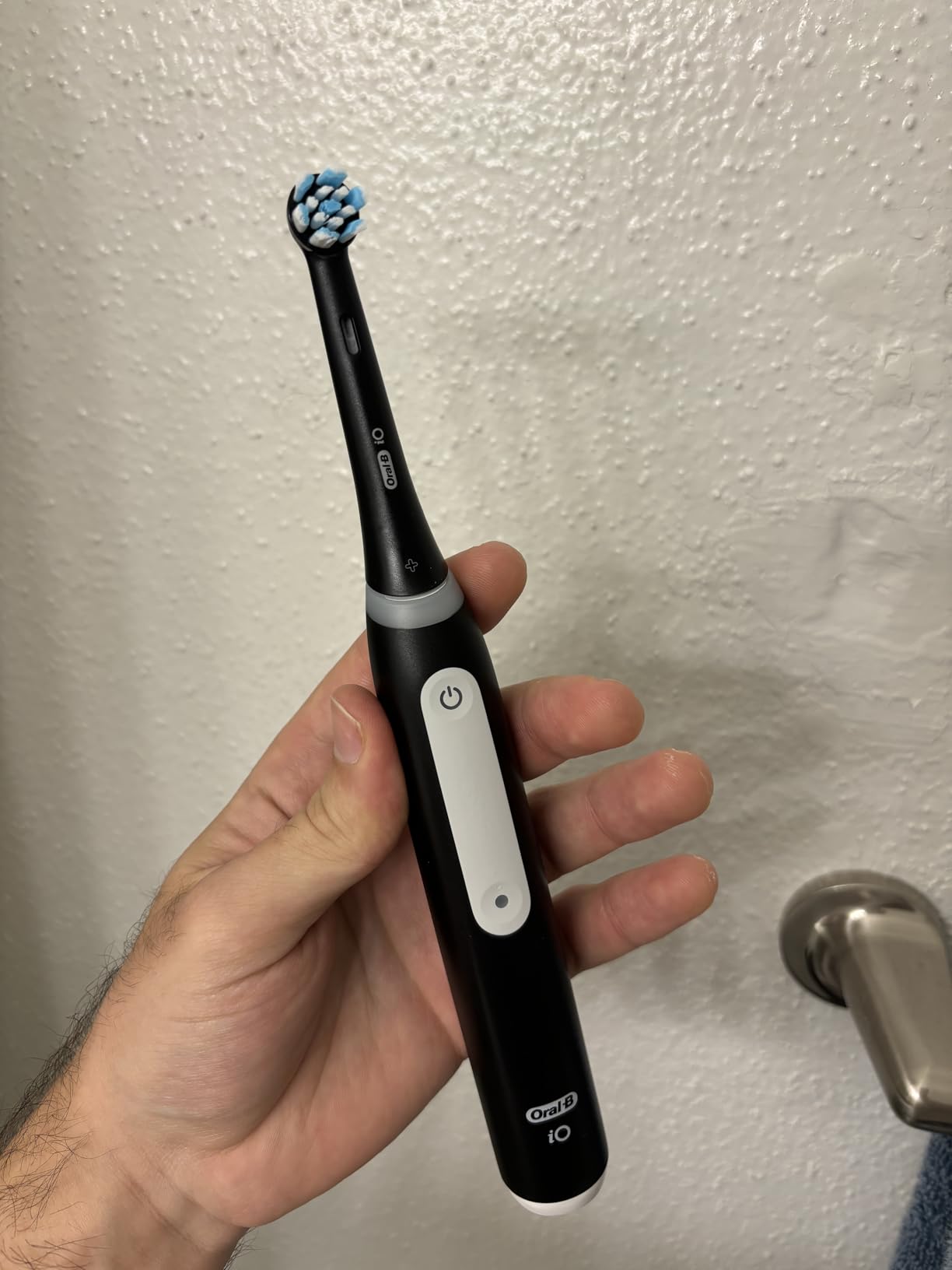
The iO Series 3 changes its action rather than just warning you. When the Smart iO sensor registers too much pressure the motor visibly slows, and owners with early recession call that slowdown the standout feature of the brush.
The motion is smooth spinning with gentle micro-vibrations rather than harsh scrubbing, which is the mechanical argument for the iO generation. The round head hugs each tooth surface and reaches back molars without you having to angle the handle awkwardly.
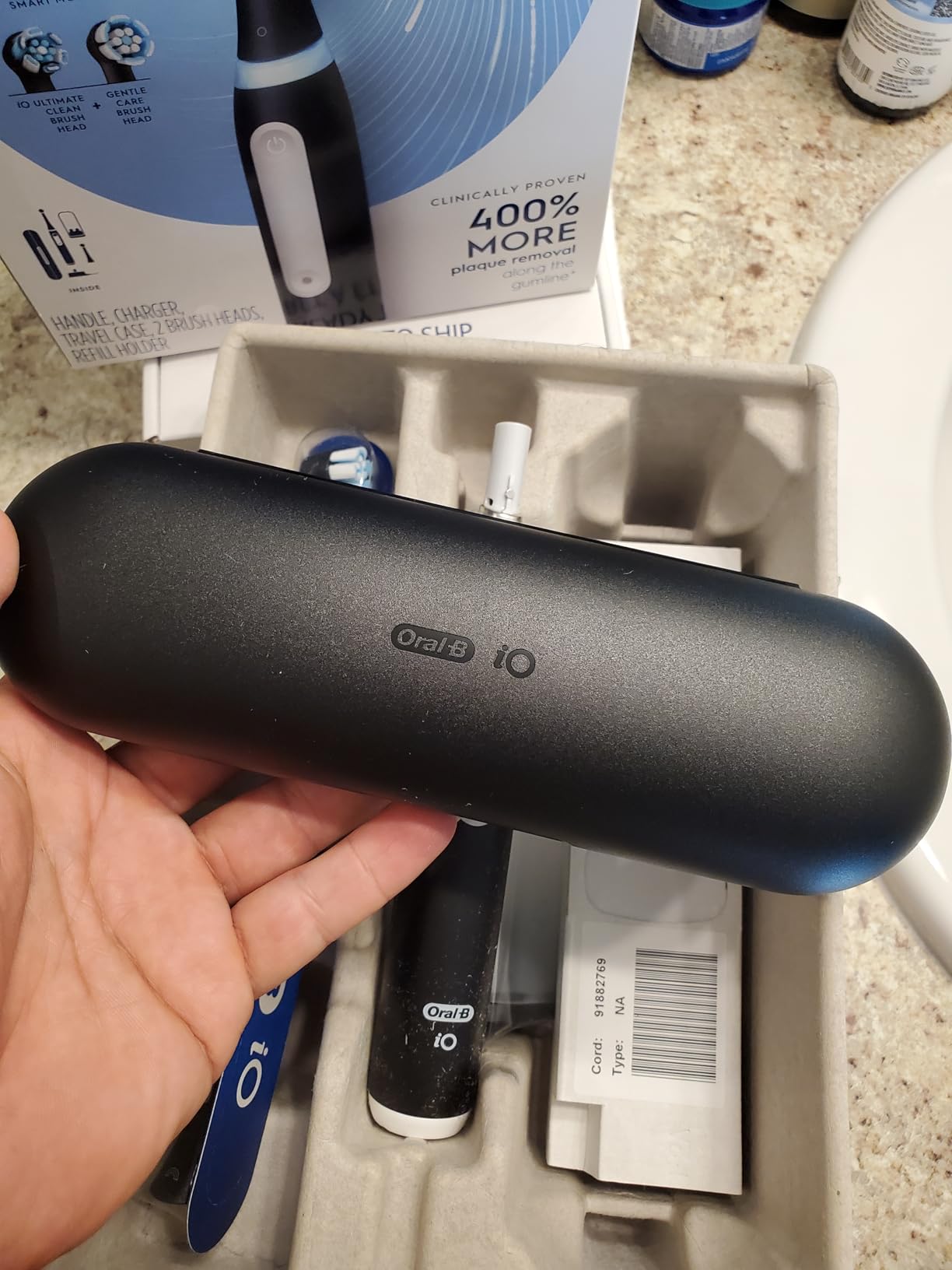
Three modes cover Daily Clean, Sensitive and Whitening. The light ring acts as a two-minute timer and raises a head change alert every three months, and the included lithium-ion battery plus two spare heads and a case mean you have a spare head before the first one frays.
One useful detail for this audience: the handle does not auto-stop at two minutes, so you can keep working on a tender area rather than having the brush cut you off mid-stroke.
Why a slowdown teaches more than a warning
A light tells you that you are pressing too hard. A slowdown tells you that you were pressing too hard and shows you what less pressure feels like, immediately, in the same stroke. Reviewers tend to keep that reference point and need less conscious thought afterwards.
The iO light ring timer and head change alert also mean you are not guessing when the head was last replaced. Worn bristles are a big part of why people press harder than they think, so the reminder is more than housekeeping.
Where it falls short
This brush carries one of the lower average ratings in the roundup, with a notable cluster of one-star reviews describing motor and battery failures within a year. Only the PRO-SYS VarioSonic Plus+ rates lower, so this is a reliability signal worth taking seriously before you commit to the iO platform rather than the simpler Pro 1000.
There is still no illuminated display for the active mode, and some owners find the charge holds shorter than expected. If reliability history matters more to you than the smoothest possible motion, the Pro 1000 has a far larger and calmer review base.
We earn a commission, at no additional cost to you. CERTAIN CONTENT THAT APPEARS ON THIS SITE COMES FROM AMAZON. THIS CONTENT IS PROVIDED 'AS IS' AND IS SUBJECT TO CHANGE OR REMOVAL AT ANY TIME.
6. Oral-B iO Gentle Care Heads – Best Head Choice for a Tender Gumline
Oral-B iO Gentle Care
- Gentle Care round heads
- Tender gum positioning
- Highest average rating here
Pros
- Highest average rating of any brush or head in this roundup
- Round Oral-B head design suited to full tooth coverage
- Gentle Care positioning aimed at sensitive mouths
Cons
- This is a replacement head pack rather than a handle
- Listed product details give very few feature specifics
- Spec listing is inconsistent and mentions one AA battery
We earn a commission, at no additional cost to you. CERTAIN CONTENT THAT APPEARS ON THIS SITE COMES FROM AMAZON. THIS CONTENT IS PROVIDED 'AS IS' AND IS SUBJECT TO CHANGE OR REMOVAL AT ANY TIME.
We are including this one deliberately, because the head you fit matters more to a receded gumline than most handle features. This is a pack of Oral-B iO Gentle Care round heads, not a powered brush, and Gentle Care is positioned for sensitive mouths and tender gums.
If you already own an iO handle, swapping to the Gentle Care head is the most direct upgrade you can make. Swapping a stain-removal head for a Gentle Care head changes how the brush meets your gumline, and it is the change community members describe as stopping the bleeding at their next maintenance visit.
The listed dimensions are 2.91 by 0.9 by 9.21 inches with a listed weight of 1.13 ounces. It carries the highest average rating in this roundup at 4.7, with the bulk of reviews concentrated at five stars.
Two caveats to be straight about. The product detail page is thin on specifications, and it lists a single AA battery requirement in a field that makes no sense for a pack of heads, so treat the spec sheet as unreliable. This is also not a substitute for a handle if you do not already own one.
Why head choice is the cheapest intervention available
A dense whitening or stain-removal head is stiffer than anything a sensitive mouth needs, and stiffer filaments encourage more pressure because they feel less effective. In one detailed community exchange, the reply traced a periodontal patient’s continued bleeding back to the whitening head supplied with the brush rather than the electric technology, noting that dense heads glide right over deeper gum pockets.
Rule of thumb across this whole roundup: buy the softest head the brand makes for your handle and never use the whitening head that came in the box if your gums are tender. It is the single highest-value change on this page and it costs less than one dentist visit.
Where it falls short
It only fits iO handles, so if you run a Pro 1000 or any Sonicare model this is not the pack you need. And because it is a consumable rather than a device, you will be buying it again every few months, which is the honest cost consideration.
Reviewers who already own several Oral-B heads describe the Gentle Care positioning as aimed at sensitive mouths, which is exactly the framing most people with recession should be choosing on.
We earn a commission, at no additional cost to you. CERTAIN CONTENT THAT APPEARS ON THIS SITE COMES FROM AMAZON. THIS CONTENT IS PROVIDED 'AS IS' AND IS SUBJECT TO CHANGE OR REMOVAL AT ANY TIME.
7. SURI Pro – Best Sustainable Pick for Receding Gums
SURI Pro Sonic Electric Toothbrush | Over 4+ Weeks Battery | UV Cleaning Travel Case | Pressure Sensor | Aluminium Body | 2-Minute Timer | Plant-Based Head | Green
- Pressure sensor for over-brushing
- Plant based brush head
- UV cleaning travel case
- 4 weeks battery
Pros
- Pressure sensor marketed specifically for people worried about receding gums
- Over four weeks of battery per charge with USB-C recharging
- Slim quiet aluminium body that is comfortable to hold
- Plant based heads with a recyclable return programme
Cons
- Long bristles make a 45 degree gumline angle harder to hold
- Extra heads are not included so replacements are separate
- Some owners are sceptical the UV case really sanitises
We earn a commission, at no additional cost to you. CERTAIN CONTENT THAT APPEARS ON THIS SITE COMES FROM AMAZON. THIS CONTENT IS PROVIDED 'AS IS' AND IS SUBJECT TO CHANGE OR REMOVAL AT ANY TIME.
The SURI Pro is the direct-to-consumer option, and its pressure sensor is marketed explicitly at people worried about receding gums. That framing is unusual in this category and it is the reason it makes the list despite a much smaller review base.
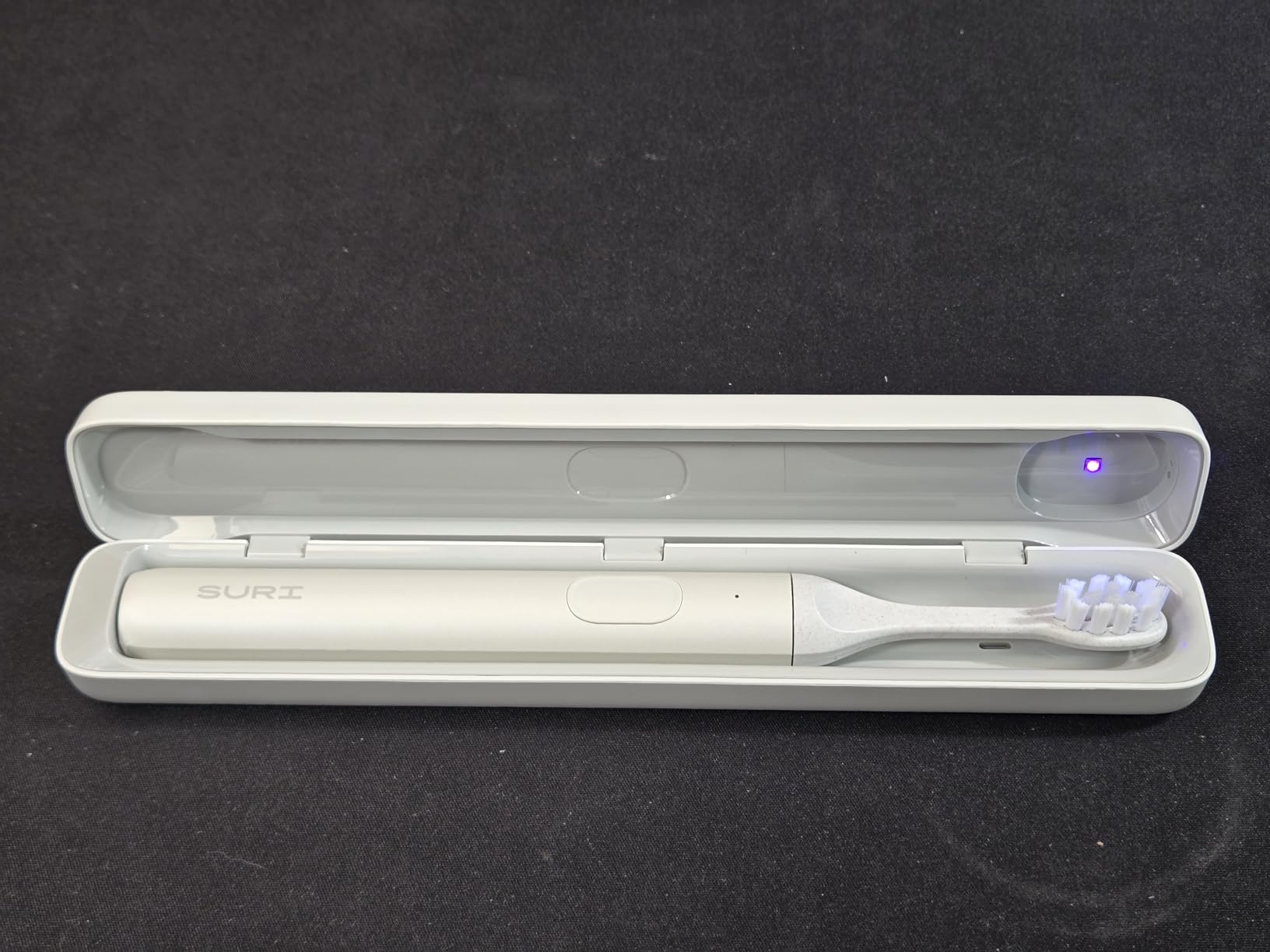
The handle is a slim, quiet aluminium body that sits comfortably in the hand and is easy to store away from standing water. Battery life runs past four weeks per charge with USB-C recharging, which is the longest in this roundup by a wide margin.
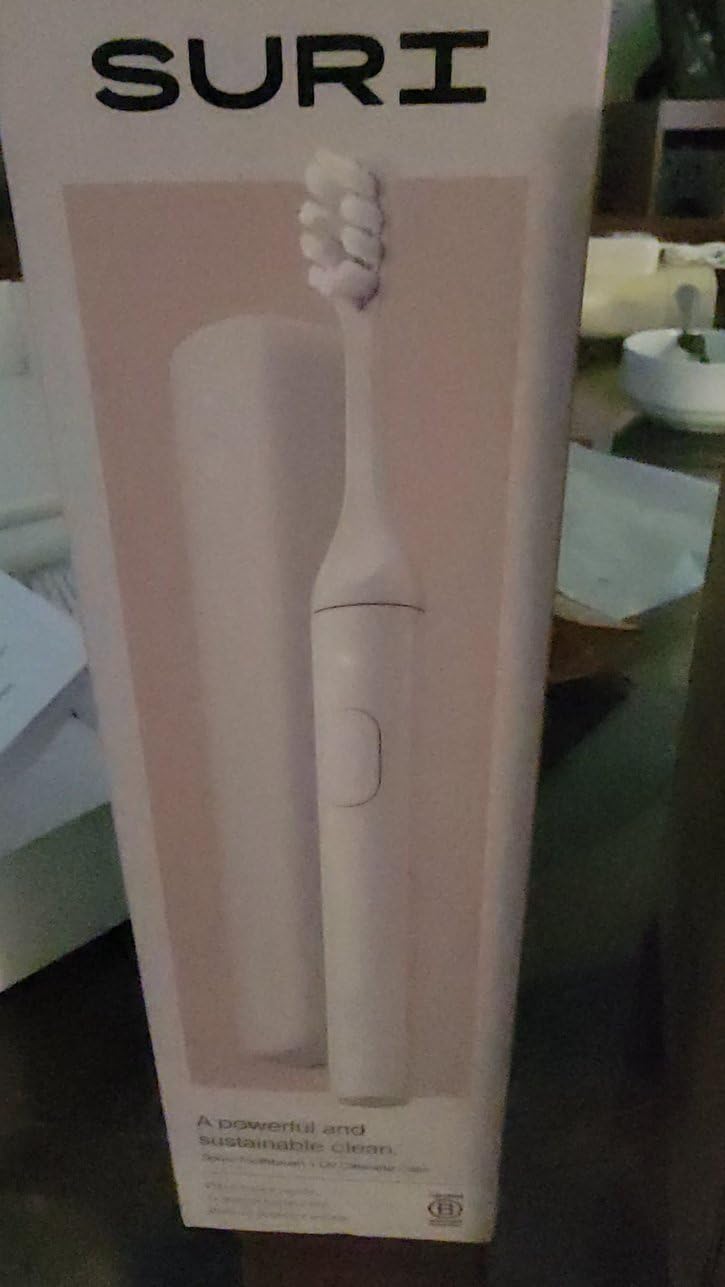
The brush heads are plant based with a recyclable return programme, and the UV-C travel case sanitises the head in about a minute while charging the brush. The brand states the brush is clinically tested to reduce gum inflammation in as little as 15 days.
Two practical catches for this audience. The bristles are long, which several owners note makes it harder to hold a 45-degree angle to sweep deep gum pockets, and no extra heads come in the box, so replacements are a separate purchase from day one.
Why the slim handle matters more than it sounds
Recession skews older, and older hands grip less firmly. A thin aluminium body needs less force to hold than a bulky plastic handle, which is a real advantage for people who already struggle to control pressure.
A month of battery between charges also removes one failure mode. If your toothbrush dies mid-session you tend to finish with whatever is nearest, and that is usually a manual brush used far too hard.
Where it falls short
That long-bristle angle issue is the one to think about carefully if you have deep pockets. The technique depends on getting the head at 45 degrees to the gumline, and longer filaments make that harder to hold steady.
The review base is far smaller than the big two brands at around 2100 reviews, and some owners are openly sceptical that the UV case sanitises the head as advertised. Judge it as a well-built brush rather than as a proven clinical device.
We earn a commission, at no additional cost to you. CERTAIN CONTENT THAT APPEARS ON THIS SITE COMES FROM AMAZON. THIS CONTENT IS PROVIDED 'AS IS' AND IS SUBJECT TO CHANGE OR REMOVAL AT ANY TIME.
8. Philips Sonicare ProtectiveClean – Budget Pick With Real Sonic Power
Philips Sonicare ProtectiveClean Removes up to 2X More Plaque, Long Lasting 14 Day Battery Life Rechargeable Electric Toothbrush
- Two Series plaque control handle
- QuadPacer and SmarTimer
- 14 day battery
- 110-220V charger included
Pros
- Owners rate the vibration power above the similarly numbered 4100
- QuadPacer and SmarTimer deliver the full two minutes without an app
- One-speed simplicity suits people who do not want settings
- 14 day battery and a slim handle that packs for travel
Cons
- Only one speed so there is no gentle mode
- No pressure sensor so it cannot warn you about over-brushing
- Replacement heads not included and must be bought separately
We earn a commission, at no additional cost to you. CERTAIN CONTENT THAT APPEARS ON THIS SITE COMES FROM AMAZON. THIS CONTENT IS PROVIDED 'AS IS' AND IS SUBJECT TO CHANGE OR REMOVAL AT ANY TIME.
This is the least expensive route into genuine sonic vibration in the roundup, and owners who have bought it repeatedly call it the strongest of the budget Sonicare options. The 2 Series plaque control handle delivers more vibration than the similarly numbered 4100, which is the opposite of what the model numbers suggest.
It removes up to twice the plaque of a manual brush and is described as safe on sensitive areas, braces, fillings and crowns. QuadPacer and SmarTimer deliver the full two minutes without any app involvement at all.
We included it with a clear warning. There is no pressure sensor, so it cannot tell you that you are brushing too hard, and there is only one speed, which means there is no gentle mode for particularly tender gums. For someone whose problem is overbrushing, those two absences matter.
Where it still works well
One-speed simplicity is genuinely an advantage for some people. No modes to learn, no buttons to press, no charger app, and the 110-220V charger is included in the box, which is more than several brushes on this list manage.
The 14-day battery and slim dimensions make it a good travel brush or a sensible second handle for someone who needs one in two bathrooms.
Why we would not make it your only toothbrush
Without pressure feedback you are relying entirely on your own sense of force, and that sense is the thing that is already failing you. This is the one pick in the roundup we would not recommend to a person who has been told they brush too hard.
Replacement heads are not included, and because you will be buying soft heads for it rather than the ProResults head in the box, the ownership cost lands immediately. Pair it with a good habit or use it as a travel brush.
We earn a commission, at no additional cost to you. CERTAIN CONTENT THAT APPEARS ON THIS SITE COMES FROM AMAZON. THIS CONTENT IS PROVIDED 'AS IS' AND IS SUBJECT TO CHANGE OR REMOVAL AT ANY TIME.
9. Philips Sonicare 6700 – Best for a Visible Pressure Ring and Three Heads
Philips Sonicare 6700 Rechargeable Electric Toothbrush, 3 Brush Head, White
- Visual pressure sensor light ring
- Ultra-soft S2 head plus two G3 Gum Care heads
- 21 day battery
Pros
- Visual pressure sensor light ring gives an unambiguous over-pressure warning
- Box includes two G3 Premium Gum Care heads and an S2 Sensitive head
- Sensitive mode with three intensity levels
- 62000 bristle movements per minute with fluid action along the gumline
Cons
- Power adapter is not included and charging needs a USB plug
- BrushPacer prompts every 20 seconds instead of using quadrants
- Smallest review base in the roundup at 198 reviews
We earn a commission, at no additional cost to you. CERTAIN CONTENT THAT APPEARS ON THIS SITE COMES FROM AMAZON. THIS CONTENT IS PROVIDED 'AS IS' AND IS SUBJECT TO CHANGE OR REMOVAL AT ANY TIME.
The 6700 is the most complete head package in this roundup. It comes with two G3 Premium Gum Care heads and an S2 Sensitive head with 3000-plus ultra-soft bristles, so you never have to use a whitening head on a tender gumline.
The pressure sensor here is a light ring at the base of the handle, which is the easiest of the four sensor styles to notice without concentrating. It alerts you when you are pressing too hard and the light is visible in a mirror.
Three modes run Clean, Sensitive and White, each with three intensity levels, so you can dial the force down precisely rather than relying on a single gentle setting. Bristle movements run at 62000 per minute with fluid action along the gumline, and battery life reaches up to 21 days with a charging travel case included.
Two caveats. The power adapter is not included, and the BrushPacer prompts every 20 seconds rather than dividing the session into four quadrants, which is a change from what owners learned on earlier Sonicare models.
Why three intensity levels beat one sensitive mode
A single Sensitive setting is a blunt instrument. If it is gentle enough for your worst day it may be too weak on a good day, and most people compensate by pressing harder, which defeats the purpose.
Three levels let you keep effective plaque removal on the days your gums feel fine and drop to the lowest only when they do not. That is the behaviour pattern that protects tissue over years rather than weeks.
Where it falls short
With only 198 reviews it has by far the smallest base here, so long-term durability is not well documented. It is also the newest model in the roundup, which means you are trusting a recent release rather than a platform with years of feedback.
The missing adapter and the unfamiliar pacing prompts are minor, but combined with the thin review history this is a watch-this-one pick rather than a set-and-forget one.
We earn a commission, at no additional cost to you. CERTAIN CONTENT THAT APPEARS ON THIS SITE COMES FROM AMAZON. THIS CONTENT IS PROVIDED 'AS IS' AND IS SUBJECT TO CHANGE OR REMOVAL AT ANY TIME.
10. PRO-SYS VarioSonic Plus+ – Best for Fine Intensity Control
PRO-SYS® VarioSonic Plus+ Sensitive Kit Professional Electric Toothbrush for Sensitive Teeth, Rechargeable with Pressure Sensor and Timer, Customizable Intensity Powered Toothbrush with Travel Case
- Five modes plus variable intensity
- Feather-soft soft and ultra-soft heads
- Quiet motor
Pros
- Five modes plus fully variable intensity for the finest speed control in this roundup
- Kit includes feather-soft soft and ultra-soft slim heads
- Quiet motor several owners find less irritating than an Oral-B
- Two-minute timer with 30 second quadrant reminders
Cons
- Recurring reports of the brush switching off mid-session and losing charge capacity
- Several reviewers report weak or unresponsive customer support
- Charger needs a USB wall plug that is not included
We earn a commission, at no additional cost to you. CERTAIN CONTENT THAT APPEARS ON THIS SITE COMES FROM AMAZON. THIS CONTENT IS PROVIDED 'AS IS' AND IS SUBJECT TO CHANGE OR REMOVAL AT ANY TIME.
The VarioSonic Plus+ is the pick for genuinely severe sensitivity. It offers five brushing modes plus fully variable intensity, which is the finest speed control of any brush in this roundup, and the sensitive kit includes feather-soft, soft and ultra-soft slim heads so you can match the filament to the day.
That head choice matters more than the mode list. Owners with recession and sensitivity pick their own filament, which turns a one-size brush into three different brushes depending on how the gums feel that morning.
The motor is quiet, which several owners with crown work find less irritating than an Oral-B. The two-minute timer includes 30-second quadrant reminders, and the package ships with a travel case and an included lithium-ion battery.
We have to be blunt about reliability. Reviews are sharply split: owners with severe sensitivity love it, while a cluster report the brush switching off mid-session and losing charge capacity within a year. Several also report weak or unresponsive customer support when a unit fails, and the charger needs a USB wall plug you supply yourself.
Why variable intensity is the feature nobody else offers
On a day when your gums are raw, a preset Sensitive mode still imposes one fixed level. Variable intensity lets you drop below it. That is the difference between a brush you can tolerate for two minutes and one you shorten to forty seconds.
Combined with three filament choices in the box, this is the most adjustable setup here for someone whose sensitivity swings week to week rather than staying constant.
Where it falls short
The power-cut complaints are the deciding factor. A brush that stops mid-session when your gums are already sore is a bad experience, and the small review base at 181 means we cannot weigh those reports against a long reliability record.
With the lowest rating in the roundup and the thinnest review history, we would only recommend this one if you have tried a mainstream pressure-sensing brush and found it too aggressive. Treat it as a specialist tool, not a safe default.
We earn a commission, at no additional cost to you. CERTAIN CONTENT THAT APPEARS ON THIS SITE COMES FROM AMAZON. THIS CONTENT IS PROVIDED 'AS IS' AND IS SUBJECT TO CHANGE OR REMOVAL AT ANY TIME.
How Pressure Sensors Work and Which Type You Will Actually Notice
A pressure sensor measures the force you apply and signals you when you pass a threshold. That is the whole idea, and it matters because self-regulating brushing force is genuinely hard, which is why the reason to pay more is feedback rather than cleaning power.
Four mechanisms appear across this roundup, and they are not equally effective:
Haptic pulse (Sonicare 4100). The handle stutters under your finger. Subtle, and it teaches you something if you are paying attention.
Automatic speed or power cut (Oral-B Pro 1000, iO Series 3). The motor slows or stops pulsating. The most reliable correction because it changes what you feel immediately, though it stops rather than explains.
Visible light on the handle (Oral-B Smart 5000). A light appears when you press too hard. Obvious, works without concentration, good for weak grip or reduced vision.
Base light ring (Sonicare 6700). Same idea, positioned where you can see it in a mirror.
So is a pressure sensor necessary? For someone who has been told they brush too hard, it is the most useful feature on any of these brushes and the one we would not compromise on. For someone with mild recession and good awareness, a sensitive mode and soft bristles may be enough.
One honest note from the community: a thread asking for electric toothbrush recommendations for fragile gums said reviews seem all over the place, particularly on pressure sensors. That inconsistency is real. Some owners call sensors unreliable, others call them the feature that fixed their habit. The difference is usually whether the alert style matches how you receive information.
Bristle Softness and Why the Whitening Head Is the Wrong Choice
Soft or extra-soft bristles are the baseline for this condition, and the ADA baseline for brushing generally. Nothing above that baseline matters as much as the filament you fit, which is why every brush here is only as good as the head you choose.
Here is the rule: buy the softest head your handle takes, and do not use the stain-removal or whitening head that came in the box if your gums are tender. Dense whitening filaments are stiffer, stiffer bristles feel less effective, so you press harder, and that is precisely the loop you are trying to escape.
Charcoal and whitening bristles fall into the same category. There is no evidence they damage gums in healthy mouths, but for an already compromised gumline the softer option is the obvious choice at no real cost.
One reassuring detail for anyone starting interdental cleaning: in two separate community threads, people whose gums looked smaller a few weeks in were told the mildly inflamed tissue had now shrunken to a healthier texture. Resolved inflammation can reveal the true gumline. That is not new recession, even though it looks alarming in the mirror.
Oral-B vs Sonicare for Receding Gums
This is one of the most common questions in the category, and the honest answer is that the mechanism matters more than the brand.
Oral-B uses an oscillating-rotating-pulsating action with a round head. The head spins and pulses against each tooth, wrapping around it, which some people find more powerful and others find more aggressive on exposed root surfaces. The round head also reaches the gumline and back teeth that rectangular manual heads miss.
Sonicare uses side-to-side sonic vibration with a long tapered head. A dental hygienist in an r/DentalHygiene thread recommended Sonicare specifically because it vibrates rather than mechanically spinning, and framed that as a better fit for receding gums. Tapered bristles reach between teeth and flex rather than push, which is gentler on tissue that is already thin.
Our read: choose Sonicare if you are worried about abrasion and prefer a lighter contact, and choose Oral-B if you want mechanical coverage of each tooth and value automatic power cut as feedback. Either brand works if you fit a soft head and back off the pressure.
The bigger variable is the head, not the badge. A firm head on the gentler handle is worse for your gums than an extra-soft head on the more powerful one.
How to Brush With Receding Gums Without Making It Worse
Angle the head at 45 degrees to the gumline so the bristles meet the tooth where it meets the tissue. Small circles and short strokes beat long scrubbing, which is the motion most associated with recession.
Brush for two minutes, twice a day. Use the quadrant timer so the tender quadrant gets the same time as the healthy one instead of being skipped.
Replace the head every three to four months, and sooner if the bristles splay. Worn bristles are a leading reason people press harder than they intend, so the replacement reminder on a brush is worth using.
Once recession widens the gaps, add an interdental brush. Use the largest size that slides in comfortably and never force a brush into a space it does not fit; if it will not go in without pressure, size down or floss that contact instead. The European Federation of Periodontology recommends interdental brushes as part of daily cleaning for people with periodontal conditions.
Expect the first two weeks to be a little rough. One detailed reply in an r/DentalHygiene thread advises persisting with interdental brushes for at least two weeks daily, after which bleeding and pain should subside noticeably if not completely. Quitting in week one is the most common reason they never get started properly.
Battery Life, Grip Strength and Replacement Head Cost
Listed battery figures run from about two weeks per charge on the Sonicare 4100 up to more than four weeks on the SURI Pro. For older users that matters in a specific way: a brush that dies mid-session gets finished off with whatever is nearby, usually a manual brush used far too hard.
Grip strength deserves more attention than it gets. Listed weights run from 1.13 ounces for a single Gentle Care head up to 1.23 pounds for the iO Series 3, and the heavier handles take more conscious effort to hold steady. The slim aluminium SURI Pro body is the easiest of the powered picks here to hold lightly, while the Sonicare 5300 stays well weighted in the hand despite its bulk.
Replacement head cost is the hidden decision between a cheap and an expensive brush, and it is the number most roundups skip. Heads are replaced every three to four months, so roughly three a year, and many brands sell multi-packs at a discount that changes the arithmetic entirely.
Add head cost to handle cost over three years before you choose, and do it per handle rather than per product. A premium handle with a cheap head line can undercut an entry brush over time, and an entry brush with expensive heads can cost more than you expected. Brand loyalty to a head ecosystem is usually worth more than the handle you saved on.
When to Stop Shopping and See a Dentist
A new electric brush is a reasonable response to mild recession and a hard brushing habit. It is not a response to any of the following, and we would rather say that plainly than sell you a brush you do not need.
Recession that is new, or visibly getting worse over months rather than years
Recession limited to one tooth, especially if it looks stretched or pushed out of line
Bleeding that does not settle within two weeks of gentler brushing
Any tooth that feels loose or shifts when you push it
Sensitivity to cold or hot that is new and sharp rather than a dull background ache
Gaps between teeth opening visibly, or a root surface that catches food
Those are periodontal findings, not brushing findings. A periodontist can measure recession depth, check for bleeding on probing and tell you whether the cause is plaque-driven inflammation, an aggressive brush, a grinding habit or tooth position. If the diagnosis is periodontal disease, treatment addresses the disease and the toothbrush becomes a supporting tool.
For cases that need it, a gum graft is the clinical path for restoring lost tissue. No brush substitutes for it, and no brush on this page will regrow anything. We also want to close the loop on electric versus manual: the honest evidence review found no clear difference between powered and manual brushes on recession progression, so the argument for going electric is feedback and technique, not a cleaner mechanism.
One more community point worth repeating. Hygienists in these threads often push back on the idea of reverting to a manual brush, warning that people tend to brush way too hard with one. If you already press hard, soft manual is not automatically the safer answer.
Frequently Asked Questions
Can you use an electric toothbrush if you have receding gums?
Yes. Electric brushes are widely recommended for receding gums because pressure sensors and soft bristles reduce the mechanical trauma that drives further loss. Use a soft or extra-soft head, select a sensitive or gum care mode, and angle the head 45 degrees to the gumline.
Which is better for receding gums, Oral-B or Sonicare?
Both work, and the mechanism matters more than the brand. Oral-B uses oscillating-rotating-pulsating action with a round head that wraps each tooth. Sonicare uses sonic vibration with a tapered head that flexes rather than pushes. Dental hygienists often prefer sonic for recession because it vibrates rather than mechanically spinning.
Can I regrow receding gums?
No. Receded gum tissue does not regenerate, and no toothbrush, electric or manual, will bring it back. A brush can slow further progression by reducing inflammation and mechanical trauma. If recession is new or worsening, a periodontal evaluation is the correct next step, and a gum graft is the clinical path for restoring tissue.
Does an electric toothbrush cause a receding gum line?
No. Aggressive brushing pressure and abrasive technique cause recession, not the powered technology. A 2026 systematic review found no clear difference between powered and manual brushes on recession progression, with very low certainty of evidence. The real failure mode to watch is a stiff stock whitening head rather than the brush itself.
Is a pressure sensor necessary for an electric toothbrush?
For someone who has been told you brush too hard, it is the most valuable feature available. Sensors come in four styles: haptic handle pulse, automatic motor speed or power cut, a light on the handle, and a base light ring. The cut and the visible light are easiest to notice, which matters if you have weak grip or reduced vision.
What do dentists recommend for receding gums?
The baseline is soft or extra-soft bristles, brushing twice daily for two minutes at a 45 degree angle to the gumline, replacing the head every three to four months, and cleaning between teeth with interdental brushes. They also recommend a periodontal evaluation when recession is new, worsening, localised to one tooth, or accompanied by bleeding, mobility or sharp sensitivity.
Our Verdict for Electric Toothbrushes for Receding Gums in 2026
The Oral-B Pro 1000 is the best electric toothbrush for receding gums overall. Its automatic gum pressure control stops the brush pulsating when you press too hard, its round head reaches the gumline properly, and it has the largest review base in this roundup by a wide margin. That combination of a real safeguard and a settled reliability record is what we want in someone’s mouth twice a day for years.
If you prefer sonic vibration, take the Philips Sonicare 4100 for the handle-pulsing pressure sensor and soft C2 bristles, or step up to the Sonicare 5300 when you want a full Gum Care mode and three-part head package. If you cannot feel subtle feedback, the Oral-B Smart 5000 and Sonicare 6700 both show you a light instead, and both come with soft or gum-focused heads.
Whichever you choose, the head is the decision that matters most. Fit the softest head your handle takes, replace it every three to four months, angle at 45 degrees and use the full two minutes twice a day. And if the recession is new, worsening or localised to one tooth, book the periodontal appointment before you buy another toothbrush.