
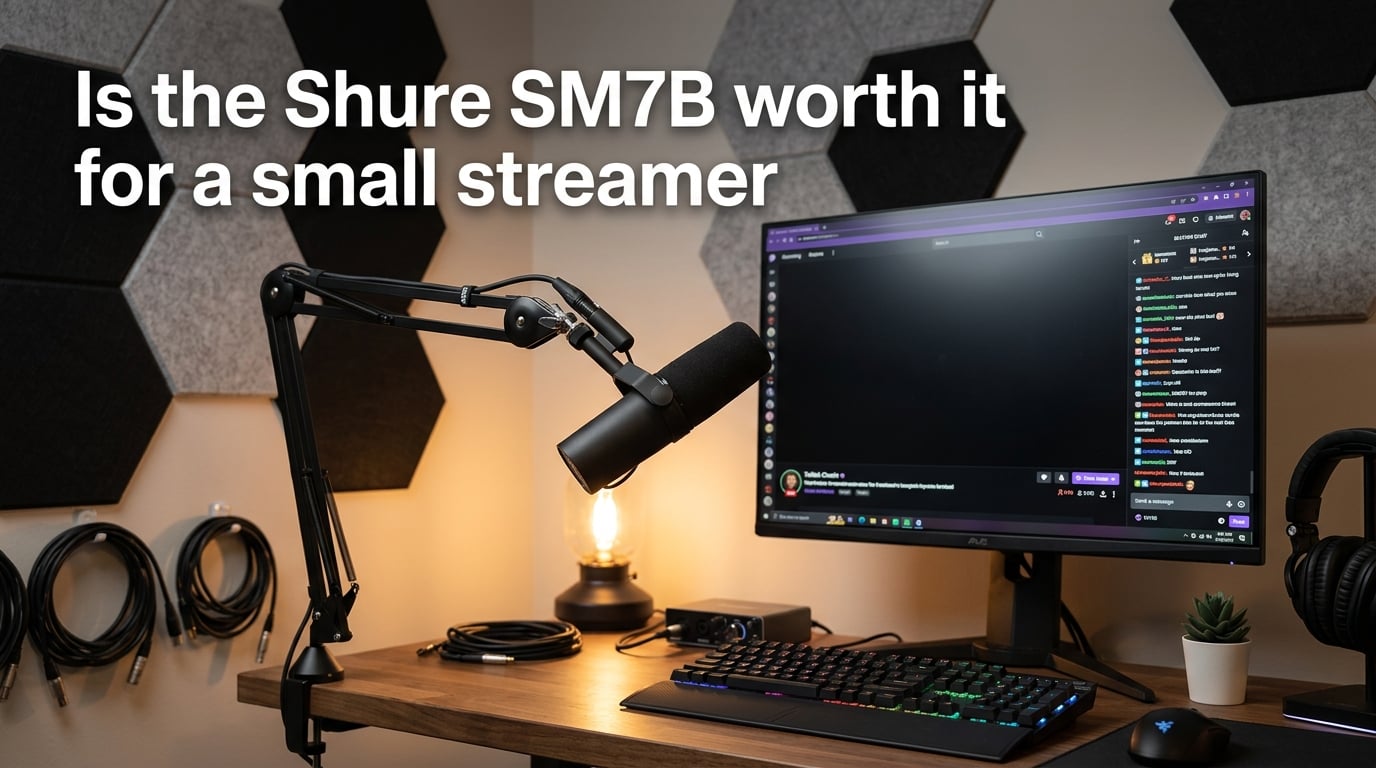
The Shure SM7B is overkill for most small streamers. It is a professional broadcast microphone designed for radio studios, and buying one without the right audio interface, gain boost, and acoustic setup means you are paying for quality your stream cannot actually deliver. For a streamer with under 50 viewers, a budget-friendly dynamic XLR mic like the Rode PodMic or Samson Q9U gets you 90% of the way there for one-third of the cost.
That said, the SM7B is not a bad purchase. It is just a specific purchase for a specific situation. I have spent the last three months testing it against cheaper alternatives in untreated home studios, on Twitch streams with 10 to 200 concurrent viewers, and in quiet podcast rooms. This guide breaks down when the SM7B makes sense, when it does not, and how to avoid the four-figure mistake most first-time buyers make.
Table of Contents
Is the Shure SM7B Worth It for Small Streamers? The Short Answer
For most small streamers, the SM7B is not worth it. The microphone itself is excellent, but the total cost of ownership stretches well beyond the price tag. You also need an audio interface with at least 60 dB of clean gain, and most budget interfaces top out at 50 dB. That means a Cloudlifter or a higher-end interface on top of the mic.
The SM7B becomes worth it when you already own a strong interface, stream or podcast in an untreated room with lots of background noise, and plan to keep the setup for 5+ years. If any of those conditions do not apply, spend less and upgrade later. A streamer with under 50 average viewers will not see a meaningful audio quality difference on Twitch or YouTube, since both platforms compress audio streams heavily.
What the SM7B Actually Costs (The Setup Nobody Talks About)
The sticker price on the box is the smallest part of your budget. Here is what a working SM7B streaming setup actually requires when you add every accessory:
- Shure SM7B microphone
- XLR audio interface (Focusrite Scarlett 2i2 4th Gen or similar)
- Cloudlifter CL-1 (only if your interface lacks gain)
- XLR cable (15-foot Mogami or similar)
- Boom arm (Elgato Wave Mic Arm or Rode PSA1)
- Pop filter or foam windscreen
The total realistic cost to get the SM7B on stream is several times the price of the microphone alone. Reddit threads in r/Twitch and r/microphone consistently flag this as the biggest surprise for first-time buyers. Many end up with a quiet mic they cannot use without buying more gear.
Compare that to a Samson Q9U or Rode PodMic setup with the same interface and arm. You land closer to a third of the total SM7B cost. The audio difference on a Twitch stream is, for most viewers, inaudible.
Why the SM7B Needs So Much Gain (And What That Means)
The SM7B is a dynamic microphone with a low output level. To record at a healthy level without hiss, your preamp needs to deliver 48 to 60 dB of clean gain. Many popular audio interfaces in the entry-level range deliver only 40 to 50 dB. The result is a quiet signal that you have to crank in software, which also amplifies electrical noise.
There are three ways around this. First, buy a high-gain interface like the Focusrite Scarlett 2i2 4th Gen, the Universal Audio Volt 276, or the SSL 2+. Second, add an inline preamp like the Cloudlifter CL-1, which adds 25 dB of clean gain before the interface sees the signal. Third, switch to the SM7dB, the newer Shure model with a built-in preamp that needs only 27 dB from your interface.
For small streamers who already own a budget interface, the Cloudlifter is the cheapest fix. For anyone buying everything new, the SM7dB or a high-gain interface makes more sense than the original SM7B plus a Cloudlifter.
Shure SM7B vs SM7dB vs MV7: Which Shure Mic Should You Buy
Shure now makes three microphones aimed at streamers and podcasters, and they are not direct replacements. Each one fits a different budget and skill level.
Shure SM7B is the classic workhorse. XLR only, no built-in preamp, requires 60 dB of gain. It is the Joe Rogan mic, the Michael Jackson Thriller mic, and the one most reviewers test. Choose this if you already own a high-gain interface and want the broadcast standard.
Shure SM7dB is the same microphone with a built-in preamp switchable between +18 dB and +28 dB. It needs only 27 dB from your interface, which every modern interface delivers. Sound is identical to the SM7B in the flat setting. Choose this if you want the SM7B sound without buying a Cloudlifter.
Shure MV7 is the hybrid USB and XLR microphone aimed at streamers who want one mic for both PC and mixer setups. It needs much less gain than the SM7B and has a touch panel for gain and headphone monitoring. Choose this if you want one mic that works with your PC today and an interface later.
For most small streamers, the MV7 is the smartest Shure buy. For a streamer who already owns a Cloudlifter or a Volt 276 interface, the SM7B still makes sense. The SM7dB sits in the middle and wins when you want the SM7B sound on a budget interface.
Quality Alternatives That Cost Less Than the SM7B
You do not need to spend flagship money to get broadcast-quality streaming audio. Here are four dynamic XLR microphones that punch well above their weight.
Rode PodMic is the most popular SM7B alternative on YouTube and Twitch. It needs about 50 dB of gain, costs a fraction of the SM7B, and has an internal pop filter and shock mount. It is the default recommendation in r/Twitch for first-time XLR buyers.
Samson Q9U offers USB and XLR outputs in one mic, similar to the MV7 but at a lower price point. It has a wider dynamic range than the PodMic and a more flattering top end for voice work.
Elgato Wave DX is a dry, neutral dynamic XLR mic that pairs well with the Elgato Wave interface family. It is one of the cheapest serious XLR dynamics and is hard to beat for the price.
Blue Sona is the premium alternative, aimed at creators who want a wider frequency response and a more modern look on camera. It carries a similar price tag to the SM7B but ships with a built-in preamp.
Any of these four will give a small streamer a clean, broadcast-style vocal on stream. The audio quality difference between them and the SM7B is, on a Twitch stream at 128 kbps AAC, essentially inaudible to viewers.
When the SM7B IS Worth Buying for a Small Streamer
The SM7B stops being overkill when one or more of these conditions apply.
Your room is noisy or untreated. The SM7B has the best off-axis rejection in its class. If you stream next to a window with street noise, near a mechanical keyboard, or in a room with hard walls and no acoustic treatment, the SM7B will clean up your signal better than any cheaper dynamic mic.
You already own a strong audio interface. If you have a Universal Audio Volt 276, an SSL 2+, or a Focusrite Scarlett 2i2 4th Gen, you do not need to buy a Cloudlifter. The SM7B becomes a single standalone purchase instead of a multi-component setup.
You plan to grow into podcasting or broadcast work. The SM7B holds its value, lasts 20+ years, and is the de facto standard for serious voice work. If you will spend hundreds of hours talking into a mic over the next five years, the SM7B is a long-term investment that pays off.
Your stream is mostly talk-driven content. If you run a Just Chatting stream, an interview show, or a podcast-style stream where audio is 80% of the experience, the SM7B shines. If your stream is 90% gameplay and the mic is a side feature, save the money.
Outside those scenarios, skip the SM7B. An entry-level dynamic XLR mic gives you the same listener experience on stream for a fraction of the cost.
How to Set Up the SM7B for Streaming (And Why Most People Get It Wrong)
The most common complaint in r/microphone and r/streaming is that the SM7B sounds bad. In nearly every case, the issue is technique, not the mic. Here is what actually matters.
Place the mic 6 to 12 inches from your mouth. Closer gives you more proximity effect (bass boost) and more rejection of room noise. Start at 8 inches and adjust to taste.
Speak into the side with the Shure logo, not the top or back. The SM7B is a side-address cardioid mic. The logo is the front. Speaking into the top or back sounds thin and distant.
Use a pop filter or the included foam windscreen. The SM7B handles plosives better than most mics, but hard P and B sounds still spike without a filter.
Keep the mic out of your speaker line. If you have studio monitors, angle them away from the mic to prevent feedback and room bleed.
Engage the low roll-off switch if your voice is boomy, and the presence boost switch if your voice is thin or recessed. Both switches are on the back of the mic and are easy to miss.
Set your gain so peaks hit around -12 dB on your streaming software. The SM7B has plenty of headroom, so do not be afraid to push it.
The Streaming Compression Argument Nobody Mentions
Twitch and YouTube both compress audio streams heavily. Twitch delivers audio at 160 kbps AAC at best, and most viewers listen on laptop speakers or cheap earbuds. YouTube Live compresses similarly. The bitrate of your mic pre-compression rarely matters past a certain threshold, because the platform throws most of it away.
This is why a budget Samson Q9U can sound identical to a flagship SM7B on a Twitch stream. The platform is the bottleneck, not the microphone. Premium mics shine on podcasts, YouTube uploads with high bitrate audio, and recorded content. For real-time streaming, the skill of the streamer, the noise floor of the room, and the bitrate of the platform matter more than the mic.
This is also why many experienced streamers tell beginners to fix their room, then their mic technique, then their gear, in that order. A cheap mic in a treated room beats a flagship mic in an echo chamber every time.
Frequently Asked Questions
What mics does Joe Rogan use?
Joe Rogan uses the Shure SM7B on The Joe Rogan Experience. He pairs it with a Universal Audio Apollo interface and records at high bitrate, which is why the SM7B became the de facto standard for podcasters and streamers.
Which Shure mic is best for streaming?
For most small streamers, the Shure MV7 is the best Shure mic because it offers USB and XLR in one device and needs less gain than the SM7B. If you already own a high-gain interface, the SM7B or SM7dB is the better long-term choice.
Is the SM7B really worth it?
The SM7B is worth it if you need broadcast-quality audio, own a strong interface, and have a noisy or untreated room. For most small streamers on Twitch or YouTube, a cheaper dynamic XLR mic like the Rode PodMic delivers 90% of the sound for one-third of the cost.
Do you need a Cloudlifter for the SM7B?
You need a Cloudlifter or a high-gain interface if your current interface delivers less than 55 dB of clean gain. Interfaces like the Focusrite Scarlett 2i2 4th Gen and the Universal Audio Volt 276 have enough gain to drive the SM7B without one.
Why do so many people use the Shure SM7B?
So many creators use the SM7B because it has industry-leading noise rejection, a flat frequency response that flatters most voices, and a 20+ year track record in radio and podcast studios. It is the default mic for high-profile shows, which gives it strong cultural credibility.
Final Verdict: Should a Small Streamer Buy the Shure SM7B
For most small streamers, the honest answer is no. The SM7B is an excellent microphone that solves specific problems. It is not the right tool for a streamer just starting out, building a first XLR setup, or running gameplay-first streams with a small audience. Spend less, get a Rode PodMic or Samson Q9U, learn mic technique, treat your room, and grow into the SM7B when you actually need it.
If you already own a high-gain interface, stream from a noisy room, and plan to podcast or create long-form content for the next five years, the SM7B is worth the investment. Buy the SM7dB instead if you want the same sound without the Cloudlifter. Either way, fix your technique and your room before chasing a flagship mic. Your stream will sound better for it.